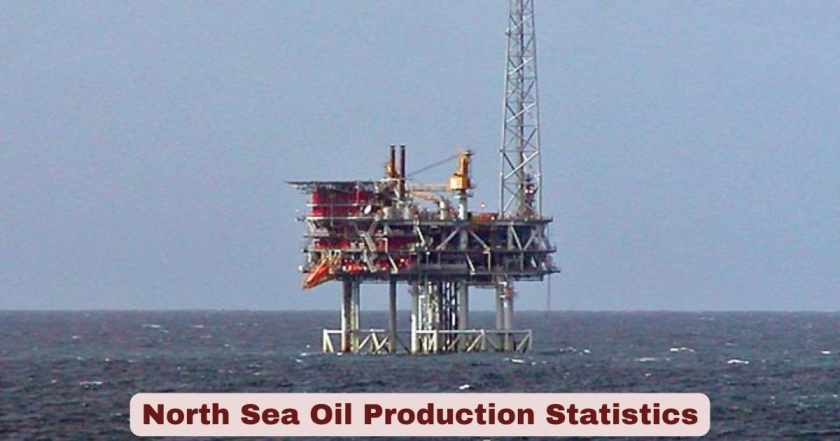
North Sea Oil Production 2026
The North Sea, one of the world’s most mature and intensively developed offshore petroleum basins, continues to play a critical role in Europe’s energy security in 2026 despite decades of production decline. In January 2026, the Norwegian Continental Shelf (NCS) — which accounts for the overwhelming majority of North Sea oil output — produced an average of 2.219 million barrels per day of oil, natural gas liquids (NGL), and condensate, according to preliminary data released by the Norwegian Offshore Directorate on February 20, 2026. This represents a sharp 11.5% increase from the 1.99 million barrels per day produced in January 2025 and reflects the highest monthly Norwegian oil production since 2009. Over the full year 2025, Norway produced 239.2 million standard cubic metres of oil equivalents (Sm³ o.e.) of marketable petroleum, making it the highest annual production since 2009 and approximately 10% below the record year of 2004, when production reached 264.2 million Sm³ o.e.
By stark contrast, the United Kingdom Continental Shelf (UKCS) — once a major global oil producer that peaked at 4.5 million barrels of oil equivalent per day (boed) in 1999 — has declined to just 1.09 million boed in 2024, with production projected to fall further to approximately 1.0 million boed in 2025 and 0.66 million boed by 2029 according to the North Sea Transition Authority (NSTA). UK crude oil production specifically averaged 0.56 million barrels per day in 2024, down from 0.63 million bpd in 2023, and is projected to decline to 0.53 million bpd in 2025. By the end of 2024, a total of 47.7 billion barrels of oil equivalent (boe) had been extracted from the UKCS since production began, with remaining proven and probable reserves (2P) estimated at just 2.9 billion boe — representing only 19% of the total oil and gas extracted from the basin to date. These contrasting trajectories reflect fundamental differences in resource endowments, investment climates, and national energy policies between Norway and the UK, with Norway maintaining robust state support for petroleum development while the UK has imposed increasingly stringent windfall taxes and banned new licensing rounds.
Key North Sea Oil Production Facts 2026
| Fact Category | Detail |
|---|---|
| Norwegian Oil Production (January 2026) | 2.219 million bpd (oil, NGL, condensate) |
| Norwegian Oil Production (January 2025) | 1.99 million bpd |
| Year-on-Year Growth (Jan 2025–Jan 2026) | +11.5% |
| Norwegian Total Petroleum Production 2025 | 239.2 million Sm³ o.e. (highest since 2009) |
| Norwegian Total Petroleum Production 2024 | 240.7 million Sm³ o.e. |
| Norwegian Gas Production 2025 | 121.8 billion Sm³ |
| Norwegian Gas Share of Total Production | ~50% (measured in oil equivalents) |
| Norwegian Peak Production Year | 2004: 264.2 million Sm³ o.e. |
| Norwegian 2025 vs. Peak (2004) | ~10% below peak |
| UK Total Production 2024 | 1.09 million boed |
| UK Crude Oil Production 2024 | 0.56 million bpd |
| UK Crude Oil Production 2023 | 0.63 million bpd |
| UK Crude Oil Production 2025 (NSTA Projection) | 0.53 million bpd |
| UK Crude Oil Production 2029 (NSTA Projection) | 0.40 million bpd |
| UK Peak Production Year | 1999: 4.5 million boed |
| UK 2025 Production vs. 2000 | Down approximately 75% |
| UK Cumulative Production (End 2024) | 47.7 billion boe |
| UK Remaining 2P Reserves (End 2024) | 2.9 billion boe |
| UK Contingent Resources (2C) | 6.2 billion boe |
| UK Prospective Resources | 4.6 billion boe (+31% from 2023) |
| UK Total 2024 Annual Production | 401 million boe |
| Largest Norwegian Field | Johan Sverdrup: ~690,000 bpd |
| Johan Sverdrup 2024 Production | 260 million barrels (record) |
| Johan Sverdrup Share of Norwegian Output | ~33% (one-third) |
| Johan Sverdrup Total Reserves | 2.7 billion boe |
| Johan Sverdrup CO₂ Emissions | 0.67 kg per barrel (global avg: 15 kg) |
| Largest UK Field | Buzzard: ~80,000 bpd |
| Norwegian Fields in Production (End 2025) | 97 fields (69 North Sea, 25 Norwegian Sea, 3 Barents Sea) |
| UK Operating Cost per Barrel (2024) | £19.49/boe (up from £13.82 in 2020) |
| UK Operating Cost per Barrel (2023) | £18.39/boe |
| Deep Water Operating Cost (>125m) | £23.8/boe |
| Shallow Water Operating Cost (<50m) | £17.3/boe |
| North Sea Active Drilling Rigs (January 2015) | 173 active rigs (world’s most active offshore region) |
| Harsh Environment Semi-Submersible Day Rate (2023) | $400,000/day |
| UK Capital Expenditure (2022) | £5.5 billion |
| UK Tax Revenue (2022–23) | £9.8 billion |
| UK Windfall Tax Rate (October 2024) | 38% (up from 35%) |
| UK Total Tax Rate on North Sea | 78% (among highest globally) |
| Norway State Pension Fund Value (2024) | $1.6 trillion |
| North Sea Jobs (UK) | ~200,000 total |
| Direct Offshore Workers (North Sea) | ~30,000 |
| Average UK Offshore Worker Salary | £65,000/year |
| UK Flaring Reduction Since 2018 | 50% |
| UK North Sea Carbon Intensity | 21 kg CO₂/barrel |
| Active UK Licenses (2023) | 300+ |
| Monthly Production Peak (Historical) | January 1985: 84.9 million barrels |
| Historical Cumulative Production (1960–2014) | 42 billion boe |
| Estimated Remaining Recoverable (Total) | 10–20 billion boe (UKCS) |
Sources: Norwegian Offshore Directorate – Production Figures (February 2026), Norwegian Offshore Directorate – Resource Accounts 2025 (February 2026)
The statistical profile of North Sea oil production in 2026 tells a tale of two basins moving in opposite directions. Norway’s 2.219 million bpd in January 2026 — the highest monthly figure since 2009 — is driven overwhelmingly by the extraordinary performance of the Johan Sverdrup field, which now accounts for approximately one-third of Norway’s total oil production and produced a record 260 million barrels in 2024 alone, the highest annual oil production ever from a Norwegian field. The field, discovered in 2010 and brought online in 2019, is the third-largest oil field on the Norwegian Continental Shelf with total reserves of 2.7 billion boe, and its production is delivered with a carbon intensity of just 0.67 kg CO₂ per barrel — nearly 23 times cleaner than the global average of 15 kg per barrel — due to its connection to Norway’s onshore power grid. Alongside Johan Sverdrup, Norway operates 97 producing fields as of end-2025, spread across the North Sea (69 fields), Norwegian Sea (25 fields), and Barents Sea (3 fields), with 19 ongoing development projects underway to sustain production into the 2030s.
Meanwhile, the UK sector is in structural decline, with 2024 production of 1.09 million boed representing just 24% of peak 1999 output. The NSTA’s October 2025 production projections anticipate a steady erosion of output, with crude oil production falling from 0.56 million bpd in 2024 to 0.40 million bpd by 2029 — a 29% decline over five years. Unit operating costs on the UKCS have risen relentlessly, from £13.82 per barrel in 2020 to £19.49 per barrel in 2024, reflecting the increasing expense of maintaining aging infrastructure and extracting oil from depleted reservoirs. The government’s decision to increase the Energy Profits Levy (windfall tax) to 38% in October 2024, bringing the total tax rate on North Sea oil and gas to 78%, has further dampened investment appetite, as has the ban on new licensing rounds announced by the Labour government in 2024. By the end of 2024, the UK had extracted 47.7 billion boe cumulatively, leaving just 2.9 billion boe of 2P reserves — meaning the basin is approximately 94% depleted on a reserves basis.
Norwegian North Sea Oil Production Statistics 2026
| Month / Year | Oil + NGL + Condensate (million bpd) |
|---|---|
| January 2026 | 2.219 |
| December 2025 | 2.017 |
| January 2025 | 1.990 |
| December 2024 | 2.017 |
| November 2024 | 1.975 |
| October 2024 | 1.988 |
| September 2024 | 1.720 |
| August 2024 | 1.982 |
| July 2024 | 2.079 |
| Average 2024 | ~2.0 million bpd |
| Annual Production 2025 | 239.2 million Sm³ o.e. |
| Annual Production 2024 | 240.7 million Sm³ o.e. |
| Annual Production 2023 | ~235 million Sm³ o.e. (estimated) |
| Peak Year (2004) | 264.2 million Sm³ o.e. |
| Peak vs. 2025 | -10% |
Sources: Norwegian Offshore Directorate – Production Figures (monthly releases February 2023–February 2026), Norwegian Offshore Directorate – Resource Accounts 2025, Norwegianpetroleum.no – Production Forecasts
Norwegian oil production has demonstrated remarkable resilience over the past two years, with monthly output consistently hovering around the 2.0 million bpd mark throughout 2024 and surging to 2.219 million bpd in January 2026. This upward trajectory defies the long-term decline that followed the 2004 peak, when Norway produced 264.2 million Sm³ o.e. — approximately 10% higher than the 239.2 million Sm³ o.e. recorded in 2025. The current production resurgence is almost entirely attributable to the Johan Sverdrup field, which reached its plateau production target of 755,000 bpd in May 2023 and has sustained output at or near that level ever since. The field’s Phase 2 — which added a new process platform (P2), five subsea templates, and 28 new wells — came fully online in 2022, and Phase 3, approved in July 2025 with a NOK 13 billion ($1.27 billion) investment, is scheduled to begin production in Q4 2027 and will add eight new subsea wells to sustain plateau output.
What makes the Norwegian performance particularly impressive is the geological maturity of the basin. The Norwegian Continental Shelf has been producing oil and gas since 1971, and many of its largest fields — including Ekofisk, Statfjord, Gullfaks, and Oseberg — are decades old and well past their peak output. Yet through a combination of aggressive investment in enhanced oil recovery (EOR), subsea tiebacks to existing infrastructure, infill drilling in mature fields, and the development of major new discoveries like Johan Sverdrup, Norway has managed to arrest the decline and even achieve modest production growth. The 97 fields currently in production include not just legacy giants but also 19 ongoing development projects, many of which involve extracting additional reserves from existing fields through well interventions, development drilling, and tieback opportunities. Norway’s production is also increasingly gas-heavy, with natural gas accounting for approximately 50% of total petroleum output measured in oil equivalents, and 2025 gas sales reaching 121.8 billion Sm³ — critical volumes for European energy security following the disruption of Russian gas supplies.
UK North Sea Oil Production Statistics 2026
| Year | Total Production (million boed) | Crude Oil (million bpd) |
|---|---|---|
| 1999 (Peak) | 4.5 | — |
| 2000 | ~4.0 | — |
| 2021 | 1.33 | 0.77 |
| 2022 | 1.25 | 0.71 |
| 2023 | 1.18 | 0.63 |
| 2024 | 1.09 | 0.56 |
| 2025 (NSTA Projection) | 1.00 | 0.53 |
| 2026 (NSTA Projection) | 0.93 | 0.50 |
| 2027 (NSTA Projection) | 0.86 | 0.46 |
| 2028 (NSTA Projection) | 0.80 | 0.43 |
| 2029 (NSTA Projection) | 0.66 | 0.40 |
| 2030 (NSTA Projection) | — | 0.37 |
Sources: NSTA – Production Projections (October 2025), Rigzone – NSTA Expects UK Crude Oil Output to Continue Dropping (March 2025), POST Parliament – North Sea Oil and Gas, Energy Institute Statistical Review of World Energy 2024
The UK North Sea production trajectory is one of uninterrupted decline, with total output falling from a 1999 peak of 4.5 million boed to 1.09 million boed in 2024 — a 76% collapse over 25 years. Crude oil production specifically has dropped from 0.77 million bpd in 2021 to 0.56 million bpd in 2024, and the NSTA projects it will fall to 0.40 million bpd by 2029 and 0.37 million bpd by 2030. This represents a 34% decline from 2024 to 2030 alone, and the downward trajectory shows no signs of stabilizing. The annual production of 401 million boe in 2024 is less than 1% of the 47.7 billion boe extracted cumulatively since production began, underscoring the extent to which the basin is running dry. Unlike Norway, which has major new fields like Johan Sverdrup to offset legacy declines, the UK has no large-scale greenfield developments in the pipeline capable of materially reversing the trend.
The NSTA’s projections assume some level of ongoing drilling and field development activity, but even these assumptions are increasingly questionable given the political and fiscal environment. The Labour government’s ban on new licensing rounds, implemented after the July 2024 election, means no new exploration acreage will be awarded, and the increase in the Energy Profits Levy from 35% to 38% in October 2024 — bringing the total tax rate on North Sea producers to 78% — has made the UK one of the least attractive offshore basins in the world from an investment standpoint. Industry body Offshore Energies UK (OEUK) has argued that with “significant changes to tax, licensing, and regulatory approvals,” the basin could sustain higher production, but even their optimistic “high case” scenario still shows steep declines. The NSTA’s baseline projection is that UK oil output will fall to 94% below 2025 levels by 2050, or 91% with new drilling — in other words, North Sea oil in the UK is approaching functional extinction within the next quarter-century.
Johan Sverdrup Field Statistics 2026
| Metric | Data |
|---|---|
| Location | Utsira High, North Sea (160 km west of Stavanger, Norway) |
| Discovery Year | 2010 |
| Production Start | 5 October 2019 (Phase 1) |
| Operator | Equinor (42.6%) |
| Partners | Aker BP (31.5%), Petoro (17.3%), TotalEnergies (8.44%) |
| Total Reserves | 2.7 billion boe |
| Ranking (Norwegian Continental Shelf) | 3rd largest oil field |
| Plateau Production Capacity | 755,000 bpd (reached May 2023) |
| Current Production (December 2025) | 690,000 bpd |
| 2024 Annual Production | 260 million barrels (record for a Norwegian field) |
| Share of Norwegian Oil Output | ~33% (one-third) |
| CO₂ Emissions Per Barrel | 0.67 kg (global average: 15 kg) |
| Water Depth | 110–120 metres |
| Reservoir Depth | 1,900 metres |
| Phase 1 Startup | October 2019 |
| Phase 2 Startup | 2022 |
| Phase 3 FID | July 2025 |
| Phase 3 Investment | NOK 13 billion ($1.27 billion) |
| Phase 3 Production Start | Q4 2027 |
| Phase 3 New Wells | 8 subsea wells |
| Total Production Wells (Current) | 41 (as of mid-2024) |
| Employment Generated (Construction) | 150,000 person-years (2015–2025) |
| Norwegian Content (Phase 1 Contracts) | 70% |
| First-Year Production Value (2019) | NOK 50 billion |
Sources: Equinor – Johan Sverdrup Development, Norwegianpetroleum.no – Field Johan Sverdrup, Wikipedia – Johan Sverdrup Oil Field, NS Energy Business – Johan Sverdrup Phase 3, Offshore Magazine – Johan Sverdrup Expansion, Discovery Alert – North Sea Oil Loadings December 2025
The Johan Sverdrup field is the crown jewel of Norway’s petroleum portfolio and the single most important asset in the North Sea in 2026. Discovered in 2010 through the combination of two adjacent discoveries — Avaldsnes and Aldous Major South — the field was recognized as the largest oil find in the North Sea in decades and was promptly named after Johan Sverdrup, the father of Norwegian parliamentarism. With 2.7 billion boe of recoverable reserves, the field is larger than many entire national oil endowments, and its 2024 production of 260 million barrels represents the highest annual oil output ever recorded from a Norwegian field — surpassing the historic peaks of legacy giants like Ekofisk and Statfjord. At its current production rate of approximately 690,000 bpd, Johan Sverdrup alone produces nearly 35% of Norway’s total oil output, making it the backbone of the country’s petroleum economy and a critical source of European energy supply.
What sets Johan Sverdrup apart from most North Sea fields is its carbon intensity: at 0.67 kg CO₂ per barrel, the field produces oil with a carbon footprint 95% lower than the global average of 15 kg per barrel, achieved through the field’s connection to Norway’s onshore power grid rather than reliance on gas-fired turbines. This “power from shore” approach eliminates virtually all direct emissions from production, making Johan Sverdrup oil among the cleanest barrels in the world. The field’s Phase 1 (startup October 2019) and Phase 2 (startup 2022) are now fully operational, and Phase 3, which received a Final Investment Decision (FID) in July 2025, will add eight new subsea wells tied back to the P2 platform at a cost of NOK 13 billion, with production expected to begin in Q4 2027. This investment will sustain the field’s plateau production and ensure Johan Sverdrup remains Europe’s single largest oil source well into the 2030s.
North Sea Reserves and Resources Statistics 2026
| Basin / Category | UK Continental Shelf (UKCS) | Norwegian Continental Shelf (NCS) |
|---|---|---|
| Cumulative Production (to end 2024) | 47.7 billion boe | ~8 billion Sm³ o.e. (historical est.) |
| Proven + Probable Reserves (2P) | 2.9 billion boe | 4.6 billion Sm³ o.e. (Norwegian sector) |
| Contingent Resources (2C) | 6.2 billion boe | Included in 15.7 trillion Sm³ o.e. total |
| Prospective Resources | 4.6 billion boe (+31% from 2023) | Included in 15.7 trillion Sm³ o.e. total |
| Total Remaining Potential | 10–20 billion boe (various estimates) | 7.1 billion Sm³ o.e. (remaining) |
| % of Basin Extracted (2P basis) | ~94% (47.7 / 50.6) | ~53% (historical) |
| 2024 Annual Production | 401 million boe | 240.7 million Sm³ o.e. |
| Years of Remaining Production (2P only) | 7.2 years (at 2024 rate) | 19.1 years (at 2024 rate) |
| Reserves Decline 2023–2024 | -12.1% | Not reported |
| New Field Approvals (2024) | 2 fields (< 50 million boe added) | 19 ongoing projects |
Sources: NSTA – UK Oil and Gas Reserves and Resources End of 2024, Norwegian Offshore Directorate – Resource Accounts 2025, POST Parliament – North Sea Oil and Gas, World Oil – North Sea Recoverable Resources Rise 31% After Licensing Round
The reserves and resources picture for the North Sea reveals a basin nearing the end of its productive life in the UK, while Norway retains significant remaining potential. The UKCS has now extracted 47.7 billion boe cumulatively, leaving just 2.9 billion boe of proven and probable (2P) reserves — the classification that represents oil and gas with a 90% or greater probability of being commercially recovered under current conditions. At the 2024 production rate of 401 million boe per year, these 2P reserves represent just 7.2 years of remaining production, though this calculation is somewhat misleading since production is declining rapidly. The NSTA also reports 6.2 billion boe of contingent resources (2C) — discovered resources that are not yet commercially mature — and 4.6 billion boe of prospective resources (undiscovered), bringing the total remaining potential to approximately 13.7 billion boe. However, under the UK government’s ban on new licensing, the vast majority of these prospective resources will never be developed.
Between 2023 and 2024, UK 2P reserves declined by 12.1% due to ongoing production and only two new field development plans being approved, which added less than 50 million boe to reserves. The 31% increase in prospective resources from 2023 to 2024 is largely attributable to the inclusion of additional exploration areas from the 33rd Licensing Round, but these licenses were issued before the new government took power, and no further rounds will occur. Norway, by contrast, has 4.6 billion Sm³ o.e. of 2P reserves in the Norwegian sector alone (excluding the Norwegian Sea and Barents Sea), and cumulative production as of 2007 had extracted approximately 60% of total Norwegian North Sea reserves, meaning the Norwegian sector is roughly half as depleted as the UK sector on a percentage basis. Norway’s 19 ongoing development projects as of end-2025 underscore the continuing investment appetite in the Norwegian sector, driven by more favorable fiscal terms and explicit state support for petroleum development.
North Sea Economic and Employment Statistics 2026
| Metric | UK | Norway |
|---|---|---|
| Unit Operating Cost per Barrel (2024) | £19.49/boe | Not disclosed (significantly lower) |
| Unit Operating Cost per Barrel (2023) | £18.39/boe | — |
| Unit Operating Cost per Barrel (2020) | £13.82/boe | — |
| Deep Water Operating Cost (>125m) | £23.8/boe | — |
| Shallow Water Operating Cost (<50m) | £17.3/boe | — |
| Capital Expenditure (2022) | £5.5 billion | Significantly higher |
| Capital Expenditure Peak (2013) | £18 billion | — |
| Tax Revenue (2022–23) | £9.8 billion | Vastly higher |
| Windfall Tax Rate (October 2024) | 38% (EPL) | None |
| Total Tax Rate on Petroleum | 78% | ~78% (but structured differently) |
| Projected Tax Revenue (2030–31) | £0.1 billion (OBR forecast) | — |
| State Petroleum Fund Value | None | $1.6 trillion (2024) |
| Total Jobs Supported | ~200,000 | ~150,000 (construction 2015–2025) |
| Direct Offshore Workers | ~30,000 | — |
| Average Offshore Worker Salary | £65,000/year | Higher (estimated) |
| BP North Sea Profit (2023) | Part of $13.8 billion global | — |
| Harsh Environment Rig Day Rate (2023) | $400,000/day | $400,000/day |
Sources: NSTA – UKCS Unit Operating Cost Dashboard, POST Parliament – North Sea Oil and Gas, WifiTalents – North Sea Oil Industry Statistics 2026, UK Office for Budget Responsibility (OBR) – March 2026 Forecast, Norwegian Sovereign Wealth Fund Reports
The economic and employment profile of North Sea oil reveals a basin under intense cost pressure in the UK and a mature but still-profitable sector in Norway. UK unit operating costs have risen relentlessly, from £13.82 per barrel in 2020 to £19.49 per barrel in 2024 — a 41% increase in just four years. This cost escalation is driven by the geological maturity of the UKCS, where aging platforms require constant maintenance, depleted reservoirs necessitate enhanced recovery techniques, and declining production spreads fixed costs across fewer barrels. Deep water fields (those in water depths exceeding 125 metres) are particularly expensive to operate, with unit costs of £23.8 per barrel compared to £17.3 per barrel for shallow water fields (<50m). These rising costs are compounded by the UK government’s decision to increase the Energy Profits Levy (windfall tax) to 38% in October 2024, bringing the total tax rate on North Sea producers to 78% — among the highest petroleum tax rates anywhere in the world.
The impact on investment has been severe. UK capital expenditure in the North Sea peaked at nearly £18 billion in 2013 but had fallen to just £5.5 billion in 2022 — a 70% decline. The Office for Budget Responsibility (OBR), the UK’s independent fiscal watchdog, forecast in March 2026 that total UK oil and gas revenues will fall from £6 billion in 2024–25 to just £0.1 billion by 2030–31, reflecting the combination of declining production, shrinking tax base, and falling prices (at baseline assumptions). By contrast, Norway has used its petroleum wealth to build the Government Pension Fund Global, which reached a value of $1.6 trillion in 2024 and is the largest sovereign wealth fund in the world. The North Sea oil and gas industry supports approximately 200,000 jobs in the UK and roughly 150,000 person-years of employment were generated during the 2015–2025 construction phase of Johan Sverdrup alone in Norway, with 70% of contracts awarded to Norwegian suppliers in Phase 1, underscoring the domestic economic multiplier effects.
North Sea Major Oil Fields Production 2026
| Field | Country | Operator | Production (bpd) | Status |
|---|---|---|---|---|
| Johan Sverdrup | Norway | Equinor | ~690,000 | Producing (Phases 1+2 online; Phase 3 in development) |
| Buzzard | UK | NEO Energy (formerly Repsol Sinopec) | ~80,000 | Producing (restarted Dec 2025 after maintenance) |
| Ekofisk Complex | Norway | ConocoPhillips | ~200,000 (estimated) | Producing (multiple satellite fields) |
| Oseberg Area | Norway | Equinor | ~150,000 (estimated) | Producing (hub development) |
| Troll | Norway | Equinor | Oil + significant gas | Producing |
| Gullfaks | Norway | Equinor | Declining | Producing |
| Forties | UK | BP | ~60,000 (estimated, blend) | Producing (historic field, declining) |
| Clair | UK | BP | Unknown | Producing (Clair Phase 3 approved 2024) |
| Rosebank | UK | Equinor | Not yet producing | Approved 2024 (controversial, largest undeveloped) |
Sources: Discovery Alert – North Sea Oil Loadings December 2025, Wikipedia – North Sea Oil, Norwegianpetroleum.no – Activity on Norwegian Shelf, WifiTalents – North Sea Oil Industry Statistics
The field-by-field production breakdown reveals the Johan Sverdrup field’s overwhelming dominance in the modern North Sea. At approximately 690,000 bpd, Johan Sverdrup alone produces nearly seven times more oil than the UK’s largest field, Buzzard, which outputs around 80,000 bpd. Buzzard, operated by NEO Energy (formerly Repsol Sinopec), is one of the few remaining UK fields producing at significant scale, and even it has faced operational challenges — the field was shut down for extended maintenance beginning in early September 2025 and only restarted in December 2025, causing its contribution to the Forties Pipeline System blend to drop from a typical 16.9% to just 6.2% during the shutdown. Other major Norwegian fields include the Ekofisk Complex (operated by ConocoPhillips), a collection of multiple satellite fields tied into central processing infrastructure, and the Oseberg Area (operated by Equinor), a hub development supporting numerous discoveries.
In the UK, the legacy fields that once dominated production — Forties, Brent, Ninian, and Piper — are now shadows of their former selves, producing at a small fraction of their peak rates or, in some cases, completely shut down. The Forties field, discovered in 1970 and once the UK’s largest producer, now contributes only modest volumes to the Forties Pipeline System, which itself carries a blend of crude from multiple North Sea fields. The most controversial recent development is the Rosebank field, a large undeveloped discovery west of Shetland operated by Equinor, which received development approval in 2024 despite fierce opposition from environmental groups. Rosebank is the largest undeveloped oil field in UK waters, but its approval came under the previous Conservative government; whether it will actually proceed to development under the current Labour government’s more restrictive policies remains uncertain. Norway’s Yggdrasil project, operated by Aker BP, represents another major ongoing development in the Norwegian North Sea, with subsea infrastructure installation underway in 2024–2025.
Disclaimer: The data research report we present here is based on information found from various sources. We are not liable for any financial loss, errors, or damages of any kind that may result from the use of the information herein. We acknowledge that though we try to report accurately, we cannot verify the absolute facts of everything that has been represented.