What Is Neuromorphic Computing?
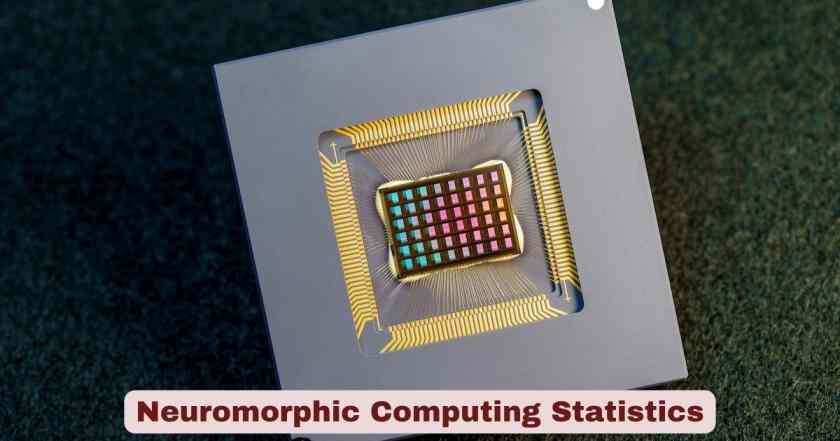
Neuromorphic computing is a paradigm of chip design and algorithm development that draws its fundamental architecture from the structure and function of the human brain rather than the decades-old Von Neumann model — the separation of memory and processor that has defined conventional computing since the 1940s. Where a traditional CPU or GPU shuttles data back and forth between a central processor and separate memory banks to perform calculations, a neuromorphic system places memory and compute side by side, processing information through networks of electronic neurons and synapses that fire in asynchronous, event-driven spikes — much as biological neurons transmit signals only when something worth signalling actually happens. This architecture eliminates the “Von Neumann bottleneck,” the bandwidth and energy penalty incurred every time data must travel between processor and memory — and in an era when AI workloads are consuming electricity at industrial scale, that elimination has moved from an academic interest to a commercially urgent engineering priority. In 2026, neuromorphic computing sits at the inflection point that practitioners have been anticipating for a decade: hardware has matured to the point of real-world deployment, energy comparisons with conventional silicon are no longer theoretical, and the industry’s transition from “neuromorphic winter” to what researchers are calling the “Neuromorphic Spring” is accelerating in ways that are measurable in venture capital, government funding, and actual product shipments.
The market statistics for neuromorphic computing in 2026 span a wide range depending on how research firms define the category — whether they are counting purpose-built neuromorphic chips only, or the broader ecosystem of brain-inspired architectures including IBM’s NorthPole and Intel’s Loihi family. Research and Markets values the neuromorphic computing market at $1.81 billion in 2025 growing to $2.23 billion in 2026 at a 23.3% CAGR. Research Nester values the 2025 market at $4.89 billion, projecting $6.28 billion in 2026 at a 31.6% CAGR through 2035. MarketsandMarkets, focusing on the narrower chip market, values it at $28.5 million in 2024 growing to $1.33 billion by 2030 at an extraordinary 89.7% CAGR. Mordor Intelligence’s neuromorphic chip market specifically projects expansion from $0.34 billion in 2025 to $0.51 billion in 2026, reaching $4.08 billion by 2031 at 51.57% CAGR. The diversity of estimates reflects genuine definitional differences rather than sloppy analysis — and what all of them agree on is the explosive trajectory. The technology that IBM’s Carver Mead conceptualised in the late 1980s has become in 2026 an active global industrial competition, with Intel, IBM, BrainChip, Qualcomm, and a growing ecosystem of well-funded startups each pursuing different paths to make brain-inspired hardware commercially indispensable.
Interesting Facts About Neuromorphic Computing in 2026
Here are the most striking and verified facts about neuromorphic computing in 2026 — drawn from MarketsandMarkets, Research Nester, Mordor Intelligence, Research and Markets, Grand View Research, Electroiq, Quick Market Pitch, Financial Content, Intel Labs, Interesting Engineering, Open Neuromorphic, and other verified sources as of April 2026.
| # | Fact | Detail |
|---|---|---|
| 1 | Global neuromorphic computing market (2025) | $1.81 billion — Research and Markets; $4.89 billion — Research Nester; $3.272 billion — Market Research Future |
| 2 | Global neuromorphic computing market (2026) | $2.23 billion — Research and Markets (+23.3%); $6.28 billion — Research Nester |
| 3 | Neuromorphic chip market (2026, Mordor) | $0.51 billion — growing from $0.34 billion in 2025 at 51.57% CAGR through 2031 |
| 4 | MarketsandMarkets chip market CAGR | 89.7% CAGR from 2024 to 2030 — fastest-growth estimate across major research firms |
| 5 | Intel Loihi 2 vs NVIDIA Jetson Orin Nano | 75× lower latency and 1,000× higher energy efficiency on state-space model workloads — most comprehensive neuromorphic vs conventional AI comparison — Quick Market Pitch (July 2025) |
| 6 | IBM NorthPole energy efficiency vs GPU | 25× improvement in frames per second per watt vs a GPU on comparable process node — benchmark tasks for image recognition — Financial Content / Uplatz (2025) |
| 7 | Intel Hala Point system | Deployed at Sandia National Laboratories (2024); uses 1,000+ Loihi 2 processors; simulates 1.15 billion neurons; achieves 15 TOPS/W on standard AI benchmarks |
| 8 | Intel Loihi 2 chip specs | 128 neural cores, 6 embedded processors, up to 1 million neurons and 120 million synapses per chip — Open Neuromorphic / Intel |
| 9 | IBM TrueNorth (2014 legacy) | 1 million neurons, 256 million synapses, 65 mW power draw, 58 Giga-synaptic ops/s |
| 10 | BrainChip Akida Pulsar | World’s first mass-market neuromorphic microcontroller; delivers 500× lower energy and 100× latency reduction vs conventional AI cores — Quick Market Pitch (2025) |
| 11 | Neuromorphic pump fault detection | German case study on Loihi: 97% fault-detection accuracy using just 0.0032 J per inference vs 11.3 J on x86 CPU — a ~1,000× power reduction — Interesting Engineering |
| 12 | Venture funding surge (2025) | Neuromorphic computing venture funding exceeded $200 million in Series A and B rounds in 2025 — 3× increase from 2024 — Quick Market Pitch (July 2025) |
| 13 | EU Horizon Europe funding (May 2025) | European Union allocated €1.5 billion ($1.68 billion) to support neuromorphic computing development — Technavio (May 2025 press release cited) |
| 14 | North America market share (2024) | North America holds 37%–39.31% of global neuromorphic computing market — Grand View Research / Mordor Intelligence |
| 15 | Edge deployment dominance (2025) | 59.47% of neuromorphic chip market revenue comes from edge devices (vs cloud) — Mordor Intelligence |
| 16 | BrainChip — NASA licence | BrainChip’s Akida 2.0 architecture licensed by NASA for space-grade AI applications where power is the most critical constraint — Financial Content (January 2026) |
| 17 | Mercedes-Benz neuromorphic estimate | Mercedes R&D reports neuromorphic vision system could reduce autonomous-driving compute energy by ~90% compared to today’s stack — Interesting Engineering |
| 18 | Aerospace and defense end-user dominance | 29.73% of 2025 neuromorphic chip market revenue from aerospace and defense — Mordor Intelligence |
| 19 | Analog vs digital energy comparison | Analog in-memory neuromorphic arrays demonstrate 100-to-1,000-fold lower joules per multiply-accumulate operation compared to GPU inference racks — Mordor Intelligence |
| 20 | IBM NorthPole production | IBM moved NorthPole architecture into production for 2026 — Financial Content (January 2026) |
Source: MarketsandMarkets — Neuromorphic Computing Market (2024); Research Nester — Neuromorphic Computing Market 2035 (September 2025); Research and Markets — Neuromorphic Computing Market 2026; Mordor Intelligence — Neuromorphic Chip Market (February 2026)
The 75× latency and 1,000× energy efficiency advantages of Intel’s Loihi 2 over NVIDIA’s Jetson Orin Nano on state-space model workloads are the numbers that crystallise why the “Neuromorphic Spring” label is not hype. These are not marginal efficiency gains that might eventually matter when energy prices rise further — they are categorical differences in the architecture’s relationship with energy and time. The Jetson Orin Nano, which is itself a highly optimised edge AI chip designed specifically for low-power deployment, is being outperformed by four orders of magnitude on energy per inference when the workload is matched to neuromorphic strengths. The important qualification is “matched workload” — neuromorphic chips do not uniformly outperform conventional processors across all task types, and the current strength is concentrated in sparse, event-driven tasks where the brain-inspired architecture’s sparse firing patterns translate directly into fewer operations and therefore dramatically less energy. But the range of tasks fitting that profile is expanding rapidly as spiking neural network algorithms mature and application developers find the right problem-hardware pairing.
The €1.5 billion EU Horizon Europe commitment to neuromorphic computing represents the most significant government investment in the technology by any jurisdiction, and it signals that European policymakers have decided that neuromorphic is not a niche research programme but a strategic industrial priority. The investment reflects both a genuine scientific conviction that brain-inspired computing is the next fundamental computing paradigm and a geopolitical calculation that Europe cannot afford to cede leadership in a field where the United States (Intel, IBM, Qualcomm) and China (state-backed ventures at multiple universities and research institutes) are investing aggressively. For European neuromorphic startups — including Innatera Nanosystems in the Netherlands, Prophesee in France, and SynSense in Switzerland — that funding represents an ecosystem-building opportunity that could accelerate commercialisation timelines by years.
Neuromorphic Computing Market Size Statistics 2026
| Market Parameter | Data / Source |
|---|---|
| Global market (2024) | $28.5 million — MarketsandMarkets (chip-focused); $2.77 billion — Market Research Future |
| Global market (2025) | $1.81 billion — Research and Markets; $3.272 billion — Market Research Future; $4.89 billion — Research Nester; $7.83 billion (incl. hardware/software/services) — Electroiq |
| Global market (2026) | $2.23 billion — Research and Markets (+23.3%); $6.28 billion — Research Nester; $6.30 billion hardware segment alone — Electroiq |
| Global chip market only (2025) | $0.34 billion — Mordor Intelligence |
| Global chip market only (2026) | $0.51 billion — Mordor Intelligence |
| US market (2024) | $1.76 billion — Electroiq |
| US market (2025) | $2.13 billion — Electroiq |
| US market (2026) | $2.59 billion — Electroiq |
| Global market (2030 forecast) | $1.325 billion — MarketsandMarkets; $4.96 billion — Research and Markets (22.2% CAGR); $20.27 billion — Grand View Research (19.9% CAGR) |
| Global market (2031 forecast) | $4.08 billion chip market — Mordor Intelligence (51.57% CAGR) |
| Global market (2034 forecast) | $12.33 billion (US market) — Electroiq; $16.15 billion global — Fortune Business Insights |
| Global market (2035 forecast) | $76.18 billion — Research Nester (31.6% CAGR); $17.3 billion — Market Research Future (18.12% CAGR) |
| CAGR range (across research firms) | 18.12% to 89.7% — wide range reflects different market scope definitions |
| Hardware segment (2025) | Contributes $5.1 billion (Electroiq); dominant revenue share — all research firms agree on hardware leadership |
| Software segment (2025) | $1.67 billion — Electroiq; expected to grow at 94.0% CAGR — MarketsandMarkets |
| Services segment (2025) | $1.06 billion — Electroiq |
| North America share (2024) | 37%–39.31% of global market — Grand View Research / Mordor Intelligence |
| Asia Pacific share (2024) | 27.50%–29% — fastest-growing regional CAGR at 52.49% (Mordor) |
| Europe share (2024) | 20%–25.40% of global market — Electroiq / Fortune Business Insights |
| Edge deployment vs cloud (2025) | 59.47% edge; 40.53% cloud — Mordor Intelligence neuromorphic chip data |
Source: MarketsandMarkets — Neuromorphic Computing Market (2024); Research Nester — Neuromorphic Computing Market 2035 (September 2025); Research and Markets — Neuromorphic Computing Market 2026; Mordor Intelligence — Neuromorphic Chip Market (February 2026); Grand View Research — Neuromorphic Computing Market 2030; Market Research Future — Neuromorphic Computing Market (February 2026); Fortune Business Insights — Neuromorphic Computing Market; Electroiq — Neuromorphic Computing Statistics 2025 (November 2025)
The enormous range of market size estimates — from MarketsandMarkets’ chip-focused $28.5 million in 2024 to Research Nester’s $4.89 billion in 2025 — deserves direct explanation rather than cherry-picking the most convenient number. The core definitional question is: what counts as “neuromorphic computing”? The narrowest definition counts only purpose-built neuromorphic accelerators — chips specifically architected around spiking neural networks, event-driven processing, and co-located memory-compute. By this definition, the market is small (hundreds of millions) because commercially shipping neuromorphic chips are still a nascent category. The broader definition includes all brain-inspired computing architectures — IBM’s NorthPole, analogue in-memory computing, event-based vision sensors, and the software and services ecosystems surrounding them — which produces multi-billion-dollar valuations. Neither definition is wrong; they answer different questions. For this article, the most practically useful anchor is the intermediate range: the overall neuromorphic computing ecosystem (hardware plus software plus services) in 2025 is valued at approximately $1.8 billion to $7.8 billion depending on scope, and the neuromorphic-specific chip market alone is approximately $300–500 million — both growing at rates that range from strong to extraordinary.
The Asia Pacific region’s projection as the fastest-growing neuromorphic computing market — with Mordor Intelligence forecasting a 52.49% CAGR through 2031 — reflects the convergence of several powerful regional forces. China’s state-backed neuromorphic research programmes at Tsinghua University and the Chinese Academy of Sciences have produced competitive architectures, with the Darwin chip family claiming billions of simulated neurons. Japan’s AiMOS programme and South Korea’s memory manufacturing leadership (SK hynix and Samsung both developing neuromorphic memory architectures) add further regional depth. India’s government investment under the Digital India programme positions it as a growth market for neuromorphic deployment even if not yet a major design centre. The cumulative weight of these investments means Asia Pacific is not simply following Western technology development — it is running a parallel and increasingly competitive race on multiple fronts simultaneously.
Neuromorphic Computing Key Technologies and Chips Statistics 2026
| Technology / Chip Parameter | Data |
|---|---|
| Intel Loihi 2 — neural cores | 128 neural cores + 6 embedded microprocessors per chip — Open Neuromorphic |
| Intel Loihi 2 — neurons per chip | Up to 1 million neurons and 120 million synapses — Open Neuromorphic / Intel |
| Intel Loihi 2 — speed vs predecessor | 10× faster processing than Loihi 1 — Intel Labs |
| Intel Loihi 2 — Kapoho Point board | 8-chip board; supports AI models with up to 1 billion parameters or optimisation problems with up to 8 million variables — Intel |
| Intel Hala Point — scale | 1,152 Loihi 2 chips assembled; simulates 1.15 billion neurons — 2024 deployment at Sandia National Laboratories |
| Intel Hala Point — efficiency | 15 TOPS/W on standard AI benchmarks; Intel claims 50× faster with 100× less energy than GPUs — Financial Content / Interesting Engineering |
| Intel Pohoiki Beach | Earlier Intel system — 8 million neurons — predecessor to Hala Point |
| IBM TrueNorth — neurons/synapses | 1 million neurons, 256 million synapses, 65 mW power, 58 Giga-synaptic ops/s — Interesting Engineering |
| IBM NorthPole — energy efficiency | 25× improvement in frames per second per watt vs GPU on same process node — image recognition tasks — Financial Content / Uplatz |
| IBM NorthPole — design approach | Co-locates memory and compute to eliminate the Von Neumann bottleneck; targets deep learning inference rather than SNNs |
| IBM NorthPole — production status | Moved into production for 2026 — Financial Content (January 2026) |
| IBM neuromorphic R&D commitment | Committed approximately $30 million to next-gen NorthPole neuromorphic R&D — Interesting Engineering |
| BrainChip Akida — power consumption | Consumes milliwatts — ideal for wearables and embedded systems — Elprocus (August 2025) |
| BrainChip Akida vs Loihi 2 (cybersecurity) | Akida: 1 watt vs Loihi 2: 2.5 watts on comparable intrusion detection tasks; Akida shows higher streaming throughput — Quick Market Pitch (July 2025) |
| BrainChip Akida Pulsar | World’s first mass-market neuromorphic microcontroller; 500× lower energy and 100× latency reduction vs conventional AI cores — Quick Market Pitch |
| BrainChip Akida 2.0 | Licensed by NASA for space-grade AI (late 2025) — Financial Content |
| BrainChip GenAI funding | Secured $25 million to commercialise “Akida GenAI” targeting 1.2-billion-parameter LLMs on-device — Financial Content |
| BrainChip Series B (2025) | $35 million Series B funding; expanded ecosystem with Andes Technology (RISC-V) and Edge Impulse (ML toolchain) — Quick Market Pitch |
| Innatera SNP (CES 2025) | Spiking Neural Processor; sub-milliwatt power dissipation; sub-millisecond latency; partnerships with major automotive suppliers — Quick Market Pitch |
| Innatera Series B (2025) | $20 million raised; real-world ambient intelligence deployments — Quick Market Pitch |
| Digital chip type share (2025) | Digital processors: 43.56% of neuromorphic chip market — Mordor Intelligence |
| Mixed-signal CAGR (2026–2031) | 52.19% — fastest-growing chip type — Mordor Intelligence |
| ReRAM architecture share (2025) | 23.67% of 2025 chip revenue; CAGR 52.11% through 2031 — Mordor Intelligence |
| SpiNNaker (EU Human Brain Project) | Largest implementation: 1 million ARM cores connected via custom packet-switched communication fabric — Uplatz |
Source: Open Neuromorphic — Loihi 2 profile; Intel Labs — Neuromorphic Computing page; Financial Content — Intel Loihi 3 and the Neuromorphic Spring (January 2026); Quick Market Pitch — Neuromorphic Computing July 2025; Mordor Intelligence — Neuromorphic Chip Market (February 2026); Interesting Engineering — Brain Chip Computing AI (November 2025); Elprocus — Top Neuromorphic Chips in 2025 (August 2025); Uplatz — Loihi 2 Ecosystem Analysis (December 2025)
The architectural divergence between IBM’s NorthPole and Intel’s Loihi 2 is not a disagreement about which design is better — it is an honest acknowledgement that the field has not yet determined the optimal form of brain-inspired computing for commercial applications. NorthPole takes brain-inspired principles (memory-compute colocation, low numerical precision) and applies them to the existing deep learning paradigm — neural networks of the kind already trained using PyTorch and TensorFlow can run on NorthPole without reimplementation. This makes it immediately accessible to the millions of developers who already know deep learning frameworks. Loihi 2, by contrast, implements genuine spiking neural networks — closer to the biological original but requiring developers to learn a different programming model and algorithm family. The trade-off is fundamental access versus fundamental efficiency: NorthPole works with today’s AI ecosystem; Loihi 2 achieves greater theoretical efficiency at the cost of requiring a paradigm shift in how AI applications are programmed. Which design philosophy wins commercially will depend on whether the software ecosystem for SNNs — Intel’s Lava framework, PyNN, Brian2, Nengo — can reach the seamlessness of the deep learning toolchain.
The pump fault detection case study that achieved 97% accuracy using 0.0032 joules per inference on Loihi — against 11.3 joules on a conventional x86 CPU — is the kind of specific, real-world benchmark that moves neuromorphic from a laboratory curiosity to an industrial deployment candidate. The ~3,500× energy reduction with the same accuracy on a genuine industrial monitoring task means that a factory deploying thousands of vibration sensors for predictive maintenance could, in principle, run those sensors on tiny batteries for months or years without replacement, rather than wiring them to power infrastructure. The economics of that at scale — across the billions of IoT sensors that industry is deploying globally — represent the commercial opportunity that has drawn $200 million in venture funding to the space in 2025 alone and €1.5 billion from the European Commission.
Neuromorphic Computing Applications and Industry Statistics 2026
| Application / Industry Parameter | Data |
|---|---|
| Aerospace and defense end-user share (2025) | 29.73% of chip market revenue — leading end-user vertical — Mordor Intelligence |
| Consumer electronics CAGR (2026–2031) | 52.66% — fastest-growing end-user segment — Mordor Intelligence |
| Image processing application share (2023) | 45.5% of global market by application — Grand View Research |
| Automotive sector CAGR | Fastest-growing vertical in MarketsandMarkets forecast; autonomous vehicle sensor fusion key driver |
| Edge deployment share (2025) | 59.47% of neuromorphic chip revenues from edge devices — Mordor Intelligence |
| BMW Research deployment | Implementing Loihi 2 clusters for real-time traffic sign recognition — Quick Market Pitch (2025) |
| Lockheed Martin testing | Testing Innatera SNP processors for autonomous drone navigation — Quick Market Pitch (2025) |
| Mercedes-Benz neuromorphic study | Neuromorphic vision system could reduce autonomous-driving compute energy by ~90% — Interesting Engineering |
| BrainChip — voice recognition (“Hey Mercedes”) | Akida SNNs recognise voice commands using milliseconds and tens of µJ vs hundreds of milliseconds and µJ on traditional controllers — Interesting Engineering |
| Ericsson partnership | Ericsson Research using Intel Loihi 2 technology to develop custom telecommunications AI models to optimise telecom architecture — Intel Labs |
| BrainChip — telecom partnership (July 2025) | BrainChip secured major contract with a telecommunications provider for neuromorphic technology in edge devices — Market Research Future |
| Intel + Cornell University | Trained Loihi to identify hazardous chemicals based on their scents — MarketsandMarkets case study |
| Intel + ALYN Hospital (Israel) | INRC project with Open University of Israel for hospital AI applications — Intel Labs |
| IBM + university partnership (August 2025) | IBM announced strategic partnership to co-develop neuromorphic solutions for healthcare AI (medical diagnostics and treatment) — Market Research Future |
| Prophesee + BrainChip | Partnership for event-based gesture recognition demonstrated at Embedded World 2025 — Quick Market Pitch |
| Innatera + automotive suppliers | Partnerships announced for autonomous vehicle sensor fusion — Quick Market Pitch (CES 2025) |
| NimbleAI project (EU funded) | EU Horizon Europe funded research to design a 3D neuromorphic chip — April 2023, EE Times Europe cited by Fortune Business Insights |
| Cybersecurity applications | BrainChip Akida demonstrates commercial viability in intrusion detection systems at 1W vs 2.5W for Loihi 2 — Quick Market Pitch |
| Event-based vision | Fastest-growing application area — Prophesee partnering with BrainChip for gesture recognition; excels in automotive safety and industrial monitoring — Quick Market Pitch |
| IBM + BrainChip partnership (November 2024) | Integrated BrainChip’s Akida neuromorphic system with IBM’s Power10 processors — Technavio |
| Groq Series C (February 2025) | Neuromorphic computing startup Groq secured $100 million Series C — led by SoftBank Vision Fund 2 — Technavio |
| IHWK + Microchip Technology (September 2023) | Developing neuromorphic platform for autonomous cars, generative AI models, voice processing, medical diagnosis, security/surveillance, commercial drones — Fortune Business Insights |
Source: Mordor Intelligence — Neuromorphic Chip Market (February 2026); Grand View Research — Neuromorphic Computing Market; MarketsandMarkets — Neuromorphic Computing Market; Quick Market Pitch — Neuromorphic Computing July 2025; Intel Labs — Neuromorphic Computing page; Interesting Engineering — Brain Chip Computing AI (November 2025); Market Research Future — Neuromorphic Computing Market (February 2026); Technavio — Neuromorphic Computing Market (June 2025); Fortune Business Insights — Neuromorphic Computing Market
The aerospace and defense sector’s 29.73% share of neuromorphic chip revenues in 2025 reflects a practical reality that often gets lost in the consumer technology excitement surrounding the field: military and government applications typically adopt advanced computing technologies years before consumer markets because their use cases — autonomous surveillance drones, sensor fusion for unmanned vehicles, real-time signal intelligence — are precisely the sparse, event-driven, power-constrained workloads that neuromorphic chips excel at. A battlefield drone that must process visual input in real time, make navigation decisions instantly, and operate for hours on battery power is the ideal customer for a chip that consumes milliwatts while delivering millisecond-latency event detection. Lockheed Martin’s testing of Innatera’s SNP for autonomous drone navigation and the general military interest in neuromorphic for edge intelligence are not casual experiments — they represent a serious evaluation of whether brain-inspired hardware can solve the energy-latency problem that currently limits autonomous military systems.
The convergence of consumer electronics (52.66% CAGR — the fastest-growing end-user segment) and edge deployment (59.47% of current revenues) describes the commercial trajectory that will drive neuromorphic from a specialised technology into a broadly deployed one. The scenario where neuromorphic chips become standard components in smartphones, earbuds, smartwatches, and home appliances — running always-on voice recognition, gesture detection, and anomaly monitoring without meaningful battery drain — is not years away from a technical standpoint. BrainChip’s Akida Pulsar is already a production microcontroller designed for exactly this deployment profile. The question is how quickly the software ecosystem, customer education, and cost curves align to make neuromorphic the default choice for edge AI rather than a premium speciality option.
Neuromorphic Computing Companies and Funding Statistics 2026
| Company / Funding Parameter | Data |
|---|---|
| Intel (Loihi series) | Research leadership with Loihi 2 deployments at Sandia Labs; partnerships with Microsoft Research, Thales, Ericsson; Lava open-source framework — Quick Market Pitch |
| IBM (NorthPole / TrueNorth) | NorthPole into production 2026; ~$30 million committed to next-gen R&D; strategic partnership with leading university for healthcare AI (August 2025) — Interesting Engineering / Market Research Future |
| BrainChip Holdings (ASX: BRN) | $35 million Series B; Akida ships in M.2 form factors and embedded modules; NASA licence; $25M for Akida GenAI; BrainChip + IBM Power10 partnership |
| Innatera Nanosystems (Netherlands) | $20 million raised (2025); SNP processor targeting sub-milliwatt ambient intelligence; partnerships with automotive suppliers — Quick Market Pitch |
| Groq | $100 million Series C (February 2025) — SoftBank Vision Fund 2; scaling neuromorphic computing platform — Technavio |
| Prophesee (France) | Event-based vision systems; partnered with BrainChip for gesture recognition at Embedded World 2025 — Quick Market Pitch |
| SynSense (Switzerland) | Pushing neuromorphic IP for edge AI; “hundreds of millions in private funding” — Interesting Engineering |
| Qualcomm Technologies | Named as “star player” in global market alongside Intel and IBM — MarketsandMarkets |
| Hewlett Packard Enterprise | Listed as key player in neuromorphic computing market — Research Nester / Technavio |
| Samsung Electronics | Listed as key player; memory expertise relevant to neuromorphic architectures — Research Nester |
| SK hynix | Listed as key player — Technavio; South Korean memory leadership |
| GrAI Matter Labs | Listed as significant player by Technavio |
| Numenta | Listed as competitor — Technavio |
| HRL Laboratories | Listed as key player — Research Nester |
| Aspinity | Listed as key player — Research Nester; edge audio neuromorphic |
| Total venture funding (2025) | Exceeded $200 million in Series A and B rounds — 3× increase from 2024 — Quick Market Pitch (July 2025) |
| EU Horizon Europe (May 2025) | €1.5 billion ($1.68 billion) allocated to neuromorphic technology — Technavio |
| US CHIPS Act relevant support | $39 billion in CHIPS Act funding for US semiconductor industry supports neuromorphic chip development — Fortune Business Insights |
| China — Made in China 2025 | State-backed initiatives positioning China as global neuromorphic manufacturing hub — Grand View Research |
| Intel INRC | Intel Neuromorphic Research Community — global collaborative research effort spanning academic groups, government labs, research institutions, and companies — Intel Labs |
| IBM NorthPole competitive pressure | Forcing major AI labs to reconsider hardware roadmaps especially for AR glasses and mobile robotics — Financial Content (January 2026) |
| BrainChip + Andes Technology (RISC-V) | Ecosystem expansion for RISC-V integration enabling neuromorphic deployment on open-source processor architectures — Quick Market Pitch |
Source: Quick Market Pitch — Neuromorphic Computing July 2025; Financial Content — Intel Loihi 3 and Neuromorphic Spring (January 2026); Market Research Future — Neuromorphic Computing Market (February 2026); MarketsandMarkets — Neuromorphic Computing Market; Technavio — Neuromorphic Computing Market; Interesting Engineering — Brain Chip Computing AI (November 2025); Intel Labs — Neuromorphic Computing; Research Nester — Neuromorphic Computing Market
The 3× increase in venture funding for neuromorphic computing in 2025 — from baseline levels in 2024 to over $200 million in Series A and B rounds alone — is perhaps the most reliable indicator of where informed capital thinks the technology is headed. Venture capital at Series A and B rounds is not speculative seed funding for unproven ideas — it is growth capital deployed into companies that have already demonstrated technical feasibility and are working to scale commercial adoption. BrainChip’s $35 million Series B, Innatera’s $20 million, and Groq’s $100 million Series C together represent investors placing multi-hundred-million-dollar bets that neuromorphic computing has crossed the threshold from research prototype to commercial product. The SoftBank Vision Fund 2’s participation in Groq’s round is particularly notable: the Vision Fund is one of the largest technology investment vehicles in the world, and its involvement signals that the market opportunity is large enough to justify institutional-scale capital deployment rather than specialist angel or early-stage investment.
Intel’s Neuromorphic Research Community (INRC) is the institutional infrastructure that has kept neuromorphic computing from fracturing into incompatible silos during the long years when the technology was too immature to attract commercial investment. By bringing together academic groups, government labs, research institutions, and companies under a shared research collaboration framework — and by providing those partners access to Loihi chips and the Lava software framework — Intel has effectively been subsidising the neuromorphic ecosystem’s development in exchange for building the community of developers and researchers who will ultimately make Loihi-family chips commercially useful. The INRC’s research ranging from hazardous chemical detection at Cornell to hospital AI applications in Israel demonstrates the breadth of that investment — and the partnerships that flow from it with Ericsson, Lockheed Martin, BMW Research, and Sandia National Laboratories are the commercial and government relationships that will translate INRC research into procurement decisions.
Note: Market size estimates for neuromorphic computing vary significantly across research firms due to differences in scope definition — whether the estimate includes only purpose-built neuromorphic chips, or the broader neuromorphic ecosystem including software, services, and brain-inspired architectures for conventional deep learning. Figures cited in this article are attributed to their specific sources and readers are encouraged to consult primary market research reports for detailed methodology.
Disclaimer: The data research report we present here is based on information found from various sources. We are not liable for any financial loss, errors, or damages of any kind that may result from the use of the information herein. We acknowledge that though we try to report accurately, we cannot verify the absolute facts of everything that has been represented.