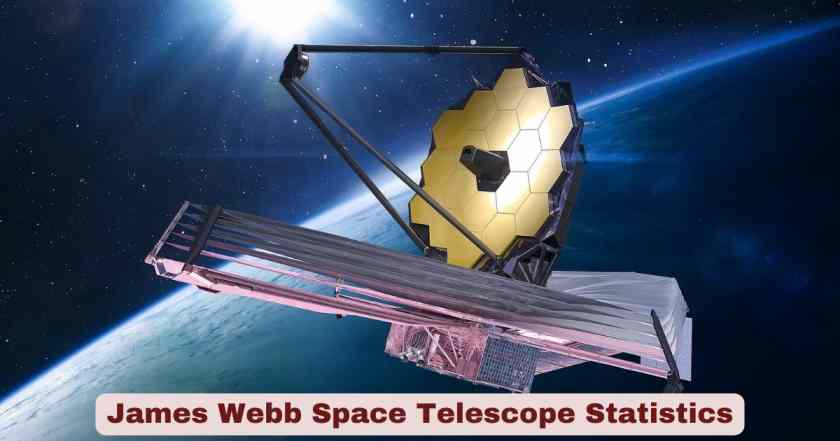
What is James Webb Space Telescope?
The James Webb Space Telescope (JWST), often simply called Webb, is the largest, most powerful, and most complex space observatory ever launched by humanity. Named after NASA’s second administrator, James E. Webb, who led the agency from 1961 to 1968 during the historic Apollo era, Webb is a joint mission developed and operated by NASA, the European Space Agency (ESA), and the Canadian Space Agency (CSA). Launched on December 25, 2021, at 7:20 AM EST from ESA’s spaceport in Kourou, French Guiana, aboard an Ariane 5 rocket, Webb traveled roughly 1.5 million kilometers (approximately 1 million miles) from Earth to reach its permanent home at the Sun-Earth L2 Lagrange point — a gravitationally stable vantage point that allows it to maintain a constant view of deep space without interference from the Sun, Earth, or Moon. Unlike the Hubble Space Telescope, which orbits just 560 kilometers above Earth, Webb operates in the infrared spectrum across a wavelength range of 0.6 to 28.5 micrometers, enabling it to peer through cosmic dust clouds, detect the glow of the universe’s most ancient galaxies, and study the atmospheres of worlds orbiting distant stars with an unprecedented level of sensitivity and clarity.
What truly sets the James Webb Space Telescope apart is the staggering ambition behind its engineering. Its primary mirror — a 6.5-meter (21.3 feet) gold-plated beryllium segmented array composed of 18 hexagonal mirror segments — collects nearly six times more light than the Hubble Space Telescope’s 2.4-meter mirror, allowing it to detect objects 10 to 100 times fainter than Hubble ever could. The telescope was so large at construction that it had to be folded origami-style to fit inside the Ariane 5 rocket’s payload fairing, then autonomously unfolded once in space — a feat of engineering that involved over 300 single-point-failure mechanisms, all of which had to work flawlessly. Webb also carries a 5-layer sunshield the size of a tennis court (21.2 m × 14.2 m) coated in aluminum and doped silicon, which reduces the temperature between its hot Sun-facing side (approximately 85°C) and its cold instrument side (approximately −233°C) by nearly 600 degrees Fahrenheit — an isolation factor equivalent to SPF 1 million sunscreen. Since beginning full science operations in mid-2022, Webb has delivered a relentless torrent of groundbreaking discoveries, reshaping our understanding of the earliest galaxies, planetary atmospheres, star formation, dark matter, and the very structure of the cosmos — all within its first few years of operation, with potentially 20 or more years of total mission life ahead.
Interesting Facts About the James Webb Space Telescope 2026
| Fact | Detail |
|---|---|
| Full Name | James Webb Space Telescope (JWST) |
| Named After | James E. Webb, NASA Administrator 1961–1968 |
| Mission Partners | NASA, ESA (European Space Agency), CSA (Canadian Space Agency) |
| Launch Date | December 25, 2021 |
| Launch Vehicle | Ariane 5 rocket, Kourou, French Guiana |
| Orbit Location | Sun-Earth L2 Lagrange Point |
| Distance from Earth | ~1.5 million km (1 million miles) |
| Primary Mirror Diameter | 6.5 meters (21.3 feet) |
| Mirror Segments | 18 hexagonal gold-coated beryllium segments |
| Light-Collecting Area | ~25 m² (270 sq ft) — about 6× Hubble |
| Total Mass at Launch | 6,500 kg (14,300 lbs) |
| Sunshield Size | 21.2 m × 14.2 m (tennis-court sized) |
| Sunshield Layers | 5 layers of Kapton E |
| Wavelength Range | 0.6 to 28.5 micrometers (visible red to mid-infrared) |
| Operating Temperature (instruments) | ~−233°C (40 Kelvin) |
| MIRI Detector Temperature | Less than 7 Kelvin |
| Science Instruments | 4: NIRCam, NIRSpec, MIRI, FGS/NIRISS |
| On-Board Storage (SSD) | 68 GB (usable life: ~60 GB by end of mission) |
| Faintness Detection Capability | Objects 10 billion times fainter than naked-eye stars |
| Sensitivity vs. Hubble | 10–100× fainter objects detectable |
| Angular Resolution | Better than 0.1 arc-seconds at 2 micrometers |
| Mirror Precision | Aligned to 1/10,000th the thickness of a human hair |
| Sunshield Temperature Differential | ~600°F (333°C) across 5 layers |
| Countries That Contributed | 14 countries (plus 29+ U.S. states) |
| Primary Contractor | Northrop Grumman |
| Science Operations Center | Space Telescope Science Institute (STScI), Baltimore |
| Original Name | Next Generation Space Telescope (NGST) |
| Design Life | 10 years (goal); 20+ years now projected |
| Full Science Operations Start | Mid-2022 |
| Most Distant Galaxy Confirmed (2026) | MoM-z14, redshift z = 14.44, only 280 million years after the Big Bang |
| Annual Operations Budget (from 2024) | ~$187 million/year |
| Total Mission Cost | ~$10 billion ($9.7 billion per GAO) |
Source: NASA Science, ESA Webb Fact Sheet, NASA NSSDCA, U.S. GAO
The James Webb Space Telescope is, by every measurable standard, the most ambitious scientific instrument humanity has ever placed in orbit. From the extraordinary precision of its 18 gold-coated hexagonal mirror segments — each one aligned to a tolerance of 1/10,000th the thickness of a human hair — to its capacity to detect objects 10 billion times fainter than the faintest stars visible to the naked eye, Webb represents the pinnacle of five decades of planning, engineering, and international scientific collaboration. What makes these facts particularly striking is the sheer scale of the effort behind them: 14 countries contributed to Webb’s construction, and Northrop Grumman served as primary contractor for a project that ultimately cost the world ~$10 billion and involved more than 29 U.S. states. Every single number in this table reflects a conscious, hard-won engineering or scientific decision made to ensure Webb could accomplish its central mission — to peer back to within 280 million years of the Big Bang itself.
What the raw facts in this table also reveal is a telescope that dramatically exceeded expectations before it had even completed its first year of science operations. The 20+ year projected operational lifetime — up from the original baseline 10-year goal — is a direct result of the extraordinary precision of the Ariane 5 rocket launch on Christmas Day 2021, which was so accurate that far less fuel was needed for the journey to L2 than originally budgeted. The 68 GB solid-state drive, the 5-layer Kapton E sunshield maintaining a temperature gap of nearly 600°F across its layers, and the MIRI cryocooler chilling detectors to below 7 Kelvin — these are not abstract technical achievements but the physical backbone of every single discovery Webb has made and will continue to make for decades to come.
James Webb Space Telescope Budget & Cost Statistics 2026
| Budget Category | Amount |
|---|---|
| Total Mission Cost (NASA GAO confirmed) | ~$9.7 billion |
| Initial Estimated Budget (early planning, ~1990s) | ~$500 million |
| Budget by 2008 (preliminary design review) | Over $1 billion spent; total estimated at $5 billion |
| Independent Comprehensive Review Panel (ICRP) estimate | $6.5 billion (earliest possible launch: late 2015) |
| Final Total Development & Launch Cost | ~$9.7 billion (GAO); widely cited as ~$10 billion |
| Annual Operations Budget (FY2024 onward) | ~$187 million/year |
| Projected 5-year Operations Total | ~$1.1 billion |
| NASA FY2025 Budget for Webb + Chandra combined | $317 million |
| Proposed FY2025–2026 Operations Budget Cut | ~20% reduction under consideration |
| ESA Contribution | NIRSpec instrument, MIRI optical bench, Ariane 5 launch |
| ESA Guaranteed Observing Time | Minimum 15% of total Webb observing time |
| CSA Contribution | FGS/NIRISS instrument |
| Primary Contractor | Northrop Grumman |
| Science Operations Center | Space Telescope Science Institute (STScI) |
Source: U.S. GAO Reports (GAO-21-406), NASA FY2025 Budget Request, Space.com (AAS 2025 town hall reporting), ESA Webb Factsheet
The $9.7 billion total cost of the James Webb Space Telescope is simultaneously the most-cited criticism and the most dramatic understatement of the project’s value. When the JWST project formally began in the early 1990s under the name “Next Generation Space Telescope,” initial estimates hovered around $500 million — a figure that would balloon by a factor of nearly 20 over the following three decades. By the time the U.S. Government Accountability Office conducted its final pre-launch review, the confirmed total sat at $9.7 billion, with NASA citing the broader ~$10 billion figure publicly. The cost overruns were staggering and drew significant Congressional scrutiny — the project nearly faced cancellation in 2011 — yet every dollar ultimately contributed to an observatory that has delivered scientific results far exceeding any reasonable projection. Beginning in FY2024, NASA committed to $187 million per year in operational funding, representing a shift from capital expenditure to sustained mission support.
The budget situation in 2026 carries an undercurrent of tension that the scientific community has been vocal about. Despite Webb performing far better than anticipated — with an operational lifespan now projected at 20+ years rather than the original baseline 10 — the telescope faces proposed cuts of approximately 20% to its operations budget, as disclosed at the 245th American Astronomical Society (AAS) meeting in January 2025. Tom Brown, who leads the Webb mission office at STScI, described the situation as “extremely worrisome,” noting that such cuts would affect virtually every aspect of mission operations at a time when the telescope is only approaching the midpoint of its primary science mission. For context, the NASA FY2025 budget allocated $317 million to fund both Webb and the Chandra X-ray Observatory combined — a figure that underscores the federal budget pressures affecting even the most scientifically productive observatories in NASA’s fleet.
James Webb Space Telescope Key Technical Specifications 2026
| Parameter | Specification |
|---|---|
| Primary Mirror Diameter | 6.5 m (21.3 ft) |
| Mirror Segments | 18 hexagonal gold-coated beryllium |
| Segment Size (flat-to-flat) | 1.32 meters |
| Mirror Material | Beryllium (gold-plated) |
| Light-Collecting Area | ~25 m² (~6× Hubble’s ~4.0 m²) |
| Hubble Mirror Diameter (comparison) | 2.4 m (2.7× smaller than JWST) |
| Wavelength Range | 0.6 – 28.5 micrometers |
| Hubble Wavelength Range (comparison) | 0.1 – 2.5 micrometers |
| Diffraction Limit | Above 2 micrometers |
| Angular Resolution | Better than 0.1 arc-seconds @ 2 µm |
| Operating Temperature (instruments) | ~40 Kelvin (~−233°C) |
| MIRI Detector Temperature | < 7 Kelvin |
| Sunshield Dimensions | 21.2 m × 14.2 m |
| Sunshield Layers | 5 (Kapton E with Al + doped-Si coatings) |
| Sunshield Temp. (hot side) | ~85°C (~185°F) |
| Sunshield Temp. (cold side) | ~−233°C (~−388°F) |
| Total Observatory Mass | 6,500 kg |
| Onboard Data Storage (SSD) | 68 GB |
| Science Instruments | 4: NIRCam, NIRSpec, MIRI, FGS/NIRISS |
| NIRCam Wavelength | 0.6 – 5.0 µm |
| NIRSpec Wavelength | 0.6 – 5.3 µm |
| MIRI Wavelength | 5.0 – 28.5 µm |
| FGS/NIRISS Wavelength | 0.8 – 5.0 µm |
| Backplane Stability | 32 nanometers (1/10,000th of human hair) |
| Orbit | L2 Lagrange Point (~1.5 million km from Earth) |
| Designed Mission Life | 10 years (goal); 20+ years now projected |
| Data Transfer Rate | ~28.6 Gb per day downlinked to Earth |
Source: NASA NSSDCA, ESA Webb Factsheet, NASA Telescope Overview (webbtelescope.org), NASA Goddard Science Fact Sheet
The technical specifications of the James Webb Space Telescope read less like a hardware inventory and more like a catalogue of world records. The 6.5-meter primary mirror — segmented into 18 hexagonal gold-plated beryllium tiles, each 1.32 meters flat-to-flat — gives JWST a light-gathering area roughly 6 times greater than Hubble, allowing it to collect enough infrared photons to detect objects emitting light that departed their source when the universe was a mere fraction of its current age. The beryllium substrate was chosen for its remarkable strength-to-weight ratio and cryogenic stability: at the ~40 Kelvin temperatures at which Webb operates, beryllium barely changes its dimensions, ensuring the optical system maintains its precise alignment in the cold vacuum of deep space. The MIRI (Mid-Infrared Instrument) pushes the thermal requirements even further, with its detectors requiring cooling to below 7 Kelvin — colder than most of outer space — achieved through an innovative closed-cycle cryocooler system that has no precedent in prior space observatories.
Perhaps the most overlooked technical achievement in the entire JWST program is the sunshield: a 21.2 m × 14.2 m structure comprising 5 layers of Kapton E coated with aluminum and doped silicon, which creates a temperature difference of nearly 600°F between its two faces. This passive thermal management system is what makes all of Webb’s science possible — without it, the telescope’s own thermal emission would completely overwhelm the faint infrared signals it is trying to detect from the most distant corners of the observable universe. The 32-nanometer stability of Webb’s backplane — the rigid structure that holds its mirror segments — represents another extraordinary feat: it is required to remain essentially motionless to a tolerance of 1/10,000th the diameter of a human hair, even while being bombarded by micrometeoroid strikes and fluctuating thermal conditions in deep space. As of 2026, four years into science operations, every one of these systems continues to function at or above design specifications.
James Webb Space Telescope Galaxy Discoveries 2026
| Discovery / Statistic | Data |
|---|---|
| Most Distant Galaxy Confirmed (2026) | MoM-z14 — redshift z = 14.44 |
| Age of MoM-z14 (lookback time) | Light emitted just 280 million years after the Big Bang |
| MoM-z14 Discovery Date | First imaged May 16, 2025; peer-reviewed confirmation January 2026 |
| MoM-z14 Effective Radius | Only 241 light-years (~1% the size of the Milky Way) |
| Previous Distance Record Holder | JADES-GS-z14-0 — redshift z = 14.32 (~300 million years post-Big Bang) |
| Most Distant Confirmed Galaxy Before JWST | ~redshift z = 10 (~560 million years after Big Bang) |
| JADES Program — Galaxy Candidates Found | Hundreds of galaxy candidates within the first 650 million years |
| Earliest Confirmed Galaxy Before JWST | ~400 million years after Big Bang (pre-JWST record) |
| Age of the Universe | 13.8 billion years |
| Webb Dark Matter Map (2026, COSMOS field) | Contains ~10× more galaxies than ground-based maps; ~2× more than Hubble’s equivalent |
| New Red Galaxy Record (March 2026) | EGS-z11-R0 — most distant red galaxy confirmed, redshift ~11.45 (~400 million years post-Big Bang) |
| EGS-z11-R0 Stellar Mass | 1.6–4 billion solar masses |
| EGS-z11-R0 Star-Formation Rate | 10–40 solar masses per year |
| Jellyfish Galaxy Discovery (2026) | Most distant jellyfish galaxy ever observed — 8.5 billion years ago (University of Waterloo study, March 2026) |
| Early Bright Galaxies vs. Pre-JWST Predictions | Roughly 100× more luminous early galaxies found than theoretical models predicted |
| Confirmed Galaxy Existence Epoch | As early as 280 million years after Big Bang — JWST’s own record (MoM-z14) |
| Webb Cosmic Dawn Program | Studying the first few hundred million years after the Big Bang continuously |
| Galaxy MoM-z14 paper | Published in Open Journal of Astrophysics, January 2026 |
Source: NASA Science (JADES blog, May 2024), Wikipedia MoM-z14, Live Science (Jan 2026), phys.org (March 2026 EGS-z11-R0), ScienceDaily (University of Waterloo, March 2026), Scientific American (Jan 2026)
The galaxy discovery statistics accumulated by the James Webb Space Telescope since 2022 have done something remarkable: they have not just extended our observational reach — they have forced a fundamental rethinking of how galaxies formed in the early universe. The confirmation of MoM-z14 in January 2026 at a redshift of z = 14.44 places this galaxy’s observable light at just 280 million years after the Big Bang — a figure so early in cosmic history that, before JWST launched, most theoretical models did not predict even the preconditions for galaxy formation to exist yet. The galaxy’s effective radius of just 241 light-years — roughly 1% the size of the Milky Way — makes it a compact, extraordinarily luminous system, brighter, denser, and more chemically rich than any model predicted for such an early epoch. The fact that JWST broke its own distance record (formerly held by JADES-GS-z14-0 at z = 14.32) in less than a year speaks to the pace at which this telescope is reshaping the cosmic frontier.
What the James Webb Space Telescope galaxy statistics of 2026 collectively reveal is that the early universe was far more active, more structured, and more chemically evolved than the scientific community had ever anticipated. The discovery of EGS-z11-R0 in March 2026 — the most distant red galaxy ever confirmed, at redshift ~11.45 and a stellar mass of 1.6–4 billion solar masses — demonstrates that dust-rich, mature stellar populations were already present just 400 million years after the Big Bang. Meanwhile, JWST’s unprecedented dark matter map of the COSMOS field contains ~10 times more galaxies than maps produced by ground-based telescopes and twice as many as Hubble’s equivalent map — delivering the highest-resolution view ever captured of the cosmic web structure that underpins all visible matter in the universe. As researchers from the University of Waterloo noted in March 2026 with the detection of the most distant jellyfish galaxy ever observed — existing 8.5 billion years ago — JWST continues to find records that, mere months earlier, would have been considered beyond the telescope’s reach.
James Webb Space Telescope Exoplanet Statistics 2026
| Metric | Data |
|---|---|
| First JWST Science Result | Transmission spectrum of WASP-39b — first unambiguous CO₂ detection in an exoplanet atmosphere |
| WASP-39b Distance from Earth | 1,120 light-years |
| First Sulfur Dioxide (SO₂) Detection in Exoplanet Atmosphere | WASP-39b (detected by JWST) |
| TRAPPIST-1 System | 7 Earth-sized rocky planets, 3 in habitable zone — JWST primary target |
| TRAPPIST-1d Atmosphere Finding (2026) | No Earth-like atmosphere detected by JWST |
| K2-18b Finding | Detected CO₂ and methane — potential biosignature candidates |
| Exoplanet Cycle 1 Telescope Time (JWST GO) | ~23% of all GO time allocated to exoplanet science |
| Exoplanet Cycle 4 Telescope Time | Released March 2025 — continued significant allocation to exoplanet science |
| JWST Exoplanet Spectra Accumulated (2025–2026) | Dozens of exoplanets — hot Jupiters to sub-Neptunes to rocky super-Earths |
| Smallest Planet with JWST Spectrum | Rocky planets with radii near Earth-size around M-dwarf stars |
| 29 Cygni b Direct Imaging (2026) | 15 Jupiter masses — confirmed planet formation (not stellar), found carbon & oxygen |
| Total Confirmed Exoplanets (NASA Archive, 2025) | 6,065 confirmed planets |
| Research Papers on Exoplanets (2022) | ~2,000 papers/year (up from ~800 in 2010) |
| Exoplanet Atmosphere Detections | Signatures consistent with atmospheres around planets 2.5× Earth’s radius |
| JWST Exoplanet Observing Modes | Transit transmission spectroscopy, eclipse emission, direct imaging/coronagraphy |
Source: ESA Webb Press Releases, NASA Exoplanet Archive (2025 News), arxiv.org JWST Exoplanet Highlights (May 2025), PNAS (April 2026), IOPscience Exoplanet Archive Paper (Aug 2025)
The exoplanet science delivered by the James Webb Space Telescope represents, arguably, the most publicly transformative chapter in the telescope’s young history. When JWST released its very first science result — a transmission spectrum of the hot Jupiter WASP-39b showing the first unambiguous detection of carbon dioxide (CO₂) in any exoplanet atmosphere — it announced a new era in planetary science. For the first time, atmospheric chemistry was not an exceptional achievement requiring years of effort for a single target but a routine observational mode that Webb could apply across a growing catalogue of worlds. By 2025–2026, JWST has accumulated transmission and emission spectra for dozens of exoplanets, spanning the full diversity of planetary types from massive hot Jupiters to sub-Neptunes and rocky super-Earths orbiting M-dwarf stars. The TRAPPIST-1 system — with its seven Earth-sized rocky planets, three of which reside in the stellar habitable zone — has become a cornerstone of Webb’s exoplanet program, with the 2026 finding that TRAPPIST-1d does not host an Earth-like atmosphere representing both a scientific result and a reminder that habitability assessment requires patience and multiple targets.
The numbers behind JWST’s exoplanet contributions in 2026 reflect just how comprehensively the telescope has reshaped the field. The NASA Exoplanet Archive crossed 6,065 confirmed planets in 2025, and the rate of atmospheric characterization papers — roughly 2,000 per year — underscores how Webb has become the linchpin of a global research community. The direct imaging of 29 Cygni b — a 15 Jupiter-mass object whose atmospheric chemistry of carbon and oxygen confirms bottom-up planetary formation rather than stellar fragmentation — exemplifies how JWST is answering questions not just about atmospheres but about the very origins of planets. With ~23% of Cycle 1 General Observer time allocated to exoplanet science, and similar proportions maintained in subsequent cycles, the commitment of the astronomical community to using Webb for planetary science is unambiguous. Every spectrum obtained, every molecular detection confirmed, and every atmosphere ruled out or characterized brings humanity measurably closer to answering the fundamental question: are we alone?
James Webb Space Telescope Solar System & Stellar Discoveries 2026
| Discovery / Observation | Details |
|---|---|
| Uranus Ionosphere 3D Mapping (Feb 2026) | First-ever vertical structure map of Uranus’s upper atmosphere using NIRSpec; average temperature ~426 Kelvin (~150°C) |
| Uranus Ionosphere Measurement Altitude | Up to 5,000 km above visible cloud tops |
| Uranus Auroras (2026) | Two bright auroral bands near magnetic poles detected; dark region between bands linked to magnetic field transitions |
| Uranus Atmosphere Cooling Trend | Upper atmosphere continues to cool — trend confirmed since 1990s, now measured in 3D |
| Sagittarius A (Milky Way Black Hole) Observations* | 48 hours of observations over one year; continuous flares and brightness bursts detected |
| Sagittarius A Observations Date* | February 18, 2025 — unprecedented accretion disk light show recorded |
| Interstellar Comet 3I/ATLAS | Studied by JWST in 2025 — 3rd interstellar object ever detected |
| Organic Molecules in Ultra-Luminous Galaxy (Jan 2026) | Detected benzene, methane, and methyl radical — first methyl radical detected outside the Milky Way |
| Butterfly Nebula (NGC 6302) New Details | New JWST observations revealed dusty torus, outflowing jets, and dynamic structured nebula details |
| Supernova Progenitor Identified (Red Supergiant) | First-ever identification of a supernova progenitor invisible to Hubble — found in a nearby galaxy |
| Helix Nebula | Clearest-ever infrared image of this dying star’s remnants captured by JWST |
| Galaxy 10-Billion-Year Disk History | June 2025 — JWST spotted thin and thick galactic disks 10 billion years ago — never seen before |
| Gamma-Ray Burst Confirmation (730 Mya Universe) | Confirmed gamma-ray burst source when universe was 730 million years old — generated by exploding massive star |
| Life-Building Blocks in Neighboring Galaxy (Nov 2025) | Complex organic molecules frozen in ice found around a young star in a neighboring galaxy — first-ever such detection |
| Protostars Catalogued | Hundreds of protostars previously invisible to optical telescopes catalogued by JWST |
| Massive Black Hole at z=12.34 (2025) | ~10⁷·² solar mass black hole in galaxy GHZ2, less than 400 million years after Big Bang — most distant black hole confirmed |
Source: ScienceDaily (ESA/Northumbria University, Feb 2026), ScienceDaily (Organic Molecules, Feb 2026), ESA Webb Press Releases, NASA Webb Blogs, phys.org, ScienceDaily (Jan 2026 — black hole gas jets)
The breadth of JWST’s solar system and stellar science in 2026 underscores something that often gets overshadowed by the telescope’s headline galaxy discoveries: Webb is simultaneously the most powerful planetary observatory, stellar nursery explorer, and nebula imager ever deployed. The February 2026 mapping of Uranus’s ionosphere is a perfect case study. Using NIRSpec to monitor the ice giant for nearly one full planetary rotation, researchers at Northumbria University led by Paola Tiranti mapped the vertical structure of Uranus’s upper atmosphere up to 5,000 km above the visible cloud tops — a feat that Voyager 2’s 1986 flyby could never have achieved. The resulting data confirmed that Uranus’s upper atmosphere maintains an average temperature of around 426 Kelvin (~150°C), continues the long-term cooling trend first identified in the 1990s, and hosts two bright auroral bands near its magnetic poles whose structure is directly shaped by the planet’s unusually tilted magnetic field. This is not a secondary result — it is a fundamental contribution to ice giant science that will anchor planetary models for decades.
The organic chemistry discoveries of 2026 are equally remarkable. In January 2026, JWST peered through the dust-cloaked core of a nearby ultra-luminous infrared galaxy and detected benzene, methane, and the methyl radical — the first time the methyl radical had ever been identified outside the Milky Way. Separately, in November 2025, Webb found complex organic molecules frozen in ice around a young star in a neighboring galaxy, marking the first such detection in an extragalactic environment. Together, these results suggest that the building blocks of chemistry — and perhaps biology — are far more widespread across the cosmos than previously understood. Meanwhile, the 48-hour observation campaign of Sagittarius A* revealed a continuous “light show” of flares and brightness bursts from the Milky Way’s central black hole, with researchers linking the observed variability to magnetic reconnection in the accretion disk — physics analogous to solar flares but on a scale orders of magnitude more extreme. The discovery of a ~10⁷·² solar mass black hole in galaxy GHZ2 at redshift z = 12.34 — less than 400 million years after the Big Bang — pushed the frontier of known black hole formation timing to its earliest confirmed point yet.
James Webb Space Telescope Dark Matter Mapping Statistics 2026
| Metric | Data |
|---|---|
| Dark Matter Map Published | January 2026 — published in Nature Astronomy |
| Lead Institution | UC Riverside (Bahram Mobasher et al.) |
| Survey Field | COSMOS (Cosmic Evolution Survey) field — constellation Sextans |
| Sky Area Covered | ~2.5× the full Moon’s area |
| Galaxies in JWST Map vs. Ground-Based Maps | ~10× more galaxies in JWST map |
| Galaxies in JWST Map vs. Hubble Map | ~2× more galaxies than Hubble’s equivalent 2007 map |
| Original Hubble Dark Matter Map of COSMOS | Published 2007 |
| Resolution vs. Hubble | Higher resolution + deeper than Hubble’s COSMOS map |
| Structure Revealed | Cosmic web — galaxy clusters, filaments, groups tracing dark matter distribution |
| Ordinary Matter (% of universe) | ~4% of all matter in the universe |
| Dark Matter Prevalence | Constitutes the dominant matter component governing large-scale structure |
| COSMOS Telescopes Involved | At least 15 ground- and space-based telescopes have observed this field |
| New Dark Matter Clumps | Revealed new, finer clumps not visible in prior Hubble data |
| Cosmic Reionization Mapping (2025–2026) | Spectroscopic mapping of hundreds of galaxies in the reionization epoch ongoing |
| Cosmic Dawn Observations | Studying the period within the first billion years after the Big Bang continuously |
Source: UC Riverside News (Jan 26, 2026), Nature Astronomy (Jan 2026), New Space Tracker (April 2026)
The dark matter mapping achievement of January 2026 represents a landmark application of JWST’s capabilities to one of the most fundamental mysteries in all of physics. Published in Nature Astronomy, the new dark matter map of the COSMOS field — produced by a team including astronomer Bahram Mobasher at UC Riverside and his students — contains roughly 10 times more galaxies than maps of the same region produced by ground-based observatories, and twice as many as the pioneering Hubble Space Telescope dark matter map of the same area made back in 2007. The increased galaxy count directly translates into higher resolution and deeper sensitivity in the dark matter reconstruction: where Hubble showed broad, blurry clumps of invisible matter, JWST reveals finer structure, sharper boundaries, and new concentrations that were simply too faint or too small for any prior instrument to resolve. The cosmic web — the vast network of galaxy clusters, connecting filaments, and low-density voids that represents the large-scale gravitational skeleton of the universe — emerges from the JWST data with unprecedented clarity.
What makes the JWST dark matter statistics of 2026 so scientifically significant is what they reveal about the relationship between ordinary matter and its invisible gravitational scaffold. Ordinary matter — everything made of protons, neutrons, and electrons, including every star, planet, galaxy, and nebula — constitutes only about 4% of the universe’s total matter content. Dark matter, which interacts with regular matter only through gravity, shapes and constrains the distribution of that 4% on every scale from galaxy clusters millions of light-years across down to the substructure of individual halos. By mapping the COSMOS field at resolution and depth far surpassing what the 15 or more ground- and space-based telescopes that previously studied this region could achieve, JWST is providing the first truly detailed empirical picture of how dark matter has sculpted the universe we see — not as a theoretical abstraction but as a measurable, spatially resolved physical reality.
James Webb Space Telescope Science Publications & Impact Statistics 2026
| Metric | Data |
|---|---|
| JWST Refereed Publications List | Maintained by Space Telescope Science Institute (STScI) |
| Full Science Operations Start | Mid-2022 |
| Years of Full Science Operations (as of April 2026) | Nearly 4 years |
| Exoplanet Research Papers Per Year (2022) | ~2,000 papers/year (up from ~800 in 2010 post-Kepler) |
| Astronomers Served Worldwide | Thousands across 14+ countries |
| European Astronomers’ Guaranteed Share of Observing Time | Minimum 15% of total JWST observing time (ESA contribution) |
| JWST Observation Cycles Completed/Active | Cycles 1–4 (Cycle 4 GO program released March 2025) |
| Cycle 1 Exoplanet GO Time | ~23% of all GO time |
| First Science Release Date | July 12, 2022 (first full-color images and spectroscopic data) |
| First Image Revealed (President Biden) | Webb’s First Deep Field — July 11, 2022 |
| Initial First Images Released | Carina Nebula, WASP-96b spectrum, Southern Ring Nebula, Stephan’s Quintet, Webb’s First Deep Field |
| Significant Science Discoveries Per Year | Multiple per month across all science themes |
| Webb Science Themes | Early universe, galaxy evolution, stellar lifecycles, planetary systems |
| Proposed Budget Cut Impact (2026) | ~20% operational cut could affect all mission areas if implemented |
| Mission Life Projection | 20+ years (extended from 10-year baseline due to precise launch) |
| Operating Efficiency vs. Design | Performing at or above all design specifications as of 2026 |
Source: STScI Science Publications Page, NASA Science (Webb first images blog), New Space Tracker (April 2026), Space.com AAS 2025 reporting, ESA Webb Factsheet, IOPscience (Aug 2025)
The publication and scientific impact statistics of the James Webb Space Telescope in 2026 tell the story of a mission that has fundamentally altered the pace and scope of observational astronomy in less than four years. The Space Telescope Science Institute maintains a continuously updated list of all refereed publications with significant JWST content — a list that grows by dozens of entries every month. The broader context for this productivity is the global infrastructure it has enabled: thousands of astronomers across 14 or more countries now have access to Webb data, and the guaranteed minimum 15% share of observing time for European astronomers — a contractual provision tied to ESA’s contributions of the NIRSpec instrument, the MIRI optical bench, and the Ariane 5 launch vehicle — ensures that Webb’s productivity is geographically distributed. The first full science release on July 12, 2022 — which included the iconic “Cosmic Cliffs” image of the Carina Nebula, the first deep field image revealed by President Biden on July 11, and the first-ever spectroscopic detection of CO₂ on an exoplanet — announced to the world that JWST had arrived, and arrived performing better than anyone had dared to publicly predict.
The trajectory of JWST’s scientific output through 2026 reflects an observatory that has moved far beyond early validation and into sustained, high-cadence discovery. With Cycle 4 of the General Observer program released in March 2025 and science programs targeting everything from the atmospheres of rocky super-Earths to the kinematics of galaxies forming during cosmic reionization, the queue of approved science programs ensures that Webb will continue generating landmark results for the foreseeable future. The concern that shadows this extraordinary productivity — the proposed ~20% operational budget cut discussed at the January 2025 AAS meeting — represents the single greatest institutional risk to the mission: not a hardware failure, not a micrometeoroid strike, not an instrument malfunction, but the possibility that the funding required to fully exploit the telescope’s remaining 15+ years of operational life may be constrained by federal budget pressures at precisely the moment when JWST’s scientific returns are approaching their peak.
Disclaimer: The data research report we present here is based on information found from various sources. We are not liable for any financial loss, errors, or damages of any kind that may result from the use of the information herein. We acknowledge that though we try to report accurately, we cannot verify the absolute facts of everything that has been represented.