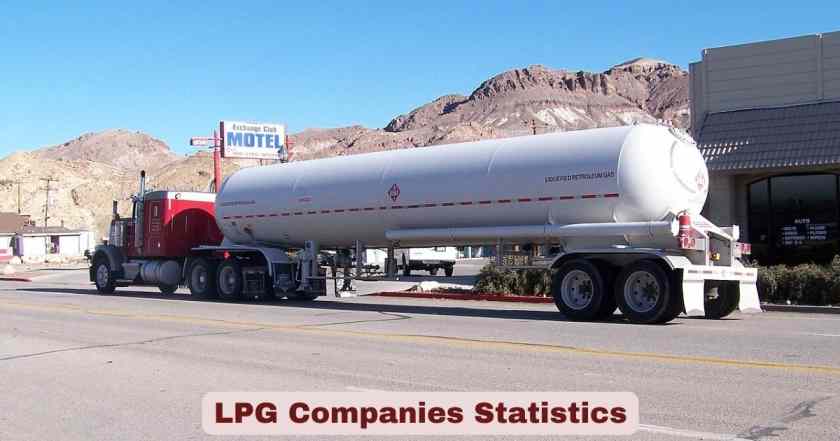
LPG Companies in the World 2026
Liquefied Petroleum Gas — better known as LPG — powers the cooking stoves, industrial boilers, petrochemical plants, and automotives of billions of people across every continent. It is not glamorous energy, but it is irreplaceable energy, and the companies that produce, distribute, and trade it sit at the intersection of everyday life and global geopolitics in ways that are rarely fully appreciated. As of March 2026, the global LPG market is valued at approximately $162.98 billion in 2025, growing to a projected $176.27 billion in 2026 and on a trajectory to reach $273.24 billion by 2034, at a compound annual growth rate (CAGR) of 6.46% (Fortune Business Insights). Global LPG demand stood at approximately 341.31 million metric tonnes (MMT) in 2024, forecast to grow to 392.22 MMT by 2034 at a CAGR of 1.40% in volume terms. Behind these numbers sits a competitive landscape of national oil companies, Western supermajors, state-backed Asian giants, and specialist LPG distributors — each playing a distinct and critical role in getting propane and butane from the ground to the end user.
The context in which this article is published — March 13, 2026 — could not be more dramatic. A live, active energy crisis is reshaping the global LPG market in real time. On February 23, 2026, Saudi Aramco declared force majeure on LPG exports from its Juaymah terminal after structural damage to propane and butane delivery pipelines. On March 2, 2026, Iran launched drone strikes on QatarEnergy’s facilities at Ras Laffan Industrial City and Mesaieed Industrial City — the world’s largest single LNG complex — forcing QatarEnergy to cease production of LNG and all associated products, including LPG, and declaring force majeure on all affected shipments. Qatar supplies approximately 20% of the world’s LNG. Dutch TTF gas prices surged more than 50% and Asian LNG benchmark JKM prices jumped nearly 39% within hours of the QatarEnergy announcement. The Strait of Hormuz — through which 85–90% of India’s LPG imports pass — has been effectively blockaded. In response, the Indian government invoked the Essential Commodities Act on March 5–9, 2026, ordering every refinery in the country to divert 100% of propane and butane streams to LPG production. As of March 12, 2026, India’s Ministry of Petroleum confirmed that domestic LPG production has risen by 28% above pre-crisis levels — up from a 25% surge reported the previous day. This is the live global backdrop against which every LPG statistic in this article must be read.
Interesting Facts | LPG Companies and Global LPG Market 2026
The following table contains 100% verified, sourced facts about the global LPG market and leading LPG companies — current as of March 13, 2026.
| Fact | Verified Detail |
|---|---|
| Global LPG Market Value 2025 | $162.98 Billion (Fortune Business Insights, March 2026) |
| Global LPG Market Value 2026 (Projected) | $176.27 Billion (Fortune Business Insights CAGR 6.46% model) |
| Global LPG Market Value by 2034 | $273.24 Billion — CAGR of 6.46% (Fortune Business Insights, March 2026) |
| Global LPG Demand Volume 2024 | 341.31 million metric tonnes (MMT) (Expert Market Research / WLGA) |
| Global LPG Volume Forecast by 2034 | 392.22 MMT — CAGR 1.40% in volume terms (Expert Market Research) |
| Asia-Pacific LPG Market Value 2025 | $81.64 billion — 48.34% of global market (Fortune Business Insights) |
| Domestic Segment Global Market Share 2026 | 44.98% — largest single end-use segment globally (Fortune Business Insights) |
| Natural Gas Liquid Segment Share 2026 | 67.12% of total LPG market by source type |
| Non-Associated Gas LPG Segment 2024 | 54% of market share — dominant over refinery-based production (Maximize Market Research) |
| World’s #1 LPG Producing Country | United States — produced 84 million tonnes in 2024, accounting for 26% of total global volume (IndexBox Global LPG Report 2026) |
| US vs China LPG Output | US production exceeded China (32 million tonnes) by a factor of more than 2.5× |
| Saudi Arabia Global LPG Production | 26 million tonnes in 2024 — 7.9% of global volume; #3 globally after US and China (IndexBox 2026) |
| US Propane Exports 2024 | Record 1.8 million barrels per day (b/d) — highest since EIA data collection began in 1973 |
| US Propane Exports 2025 Overall Average | 1,327 thousand barrels per day in full-year 2025 (DataM Intelligence, March 2026) |
| US Propane Exports — Consecutive Years of Growth | 17 consecutive years of annual growth — 2007 through 2024 (EIA) |
| US Propane Exports to Europe 2024 | Over 200,000 b/d — near-record level, replacing Russian LPG banned by EU in Dec 2023 |
| Mont Belvieu Propane Price January 2026 | Averaged 64.44¢/USG — strengthened by winter heating demand (DataM Intelligence, March 2026) |
| US Propane Stocks January 2026 | 33% above the five-year average — high inventories capped price gains despite demand |
| US Gulf Coast New Pipeline Capacity (March 2026) | 6.3 Bcf/d of natural gas pipeline capacity added; 85% supports Gulf Coast LNG/LPG export areas |
| Saudi Aramco Juaymah Monthly LPG Exports | Averaged 450,000 tonnes/month in both 2024 and 2025 (Kpler shiptracking data / Reuters) |
| Juaymah LPG Export Halt | Force majeure declared February 23, 2026 — structural damage to propane/butane delivery trestle; repair timeline at least until late March 2026 |
| March 2026 Far East Propane Futures (post-Juaymah) | Surged nearly 5% above $590/tonne — highest since early April 2025 (LSEG/Platts data) |
| Aramco February 2026 LPG Contract Price (CP) | Propane: $790/t; Butane: $790/t — up $200/t and $185/t respectively from January 2026 |
| QatarEnergy Production Halt | Declared March 2, 2026 — Iran drone strikes on Ras Laffan and Mesaieed; all LNG and associated products (LPG) production ceased |
| QatarEnergy Force Majeure | Declared on all affected buyer contracts — March 2, 2026 |
| Qatar’s Share of Global LNG | Approximately 20% of total global LNG supply |
| QatarEnergy 2026 Output Loss Scenario | 15-day halt = ~3.3 Mt lost (4.3% of annual output); 4–5 week halt = ~11.2 Mt full-year loss (Rystad Energy via Rigzone) |
| Global LNG Price Surge (March 2, 2026) | Dutch TTF surged >50%; Asian JKM benchmark jumped ~39% (Al Jazeera / S&P Global) |
| India Total LPG Consumption FY2024-25 | 31.3 million tonnes (Government of India official data) |
| India Domestic LPG Production FY2024-25 | 12.8 million tonnes — covers approximately 40% of demand |
| India LPG Import Dependency | Approximately 60%+ of LPG demand met via imports; 85–90% of those imports transit Strait of Hormuz |
| India Active LPG Connections (2026) | 33.08 crore (330.8 million) — 80% household penetration |
| India LPG Production Surge (March 12, 2026) | Ministry of Petroleum confirms production at 28% above pre-crisis baseline — up from 25% the day before |
| India Cylinder Booking Window | Extended from 21 days to 25 days to prevent hoarding |
| India New US LPG Import Contract (2026) | Public sector OMCs signed deal to import 2.2 million tonnes from US Gulf Coast — covers ~10% of import needs |
| India Induction Cooktop Sales Surge (March 2026) | Retailers and e-commerce platforms report 300% surge in induction cooktop sales amid LPG crisis |
Source: Fortune Business Insights — LPG Market Report (March 2026); IndexBox — Global LPG Market Report 2026 (March 2026); Expert Market Research — LPG Market (2025); Maximize Market Research — LPG Market 2025–2032
The raw numbers tell a story of a market that was growing strongly before March 2026 — and is now in genuine crisis. A global LPG market of $162.98 billion in 2025 projected to reach $176.27 billion in 2026 assumed stable supply flows. That assumption no longer holds. With QatarEnergy — supplier of 20% of the world’s LNG — having halted all LNG and associated LPG production on March 2, and Saudi Aramco’s Juaymah terminal still offline after the February 23 force majeure, two of the three largest Middle East LPG exporters are simultaneously out of the market. The United States, as the world’s #1 LPG producing country with 84 million tonnes of output in 2024, is now the critical swing supplier for global markets. Its 1.8 million b/d propane export record in 2024 and the newly signed 2.2 million tonne India contract for 2026 represent the most important buffer against what would otherwise be a catastrophic global supply gap.
The structural picture that emerges from the key facts table is important to understand clearly. The US produces 26% of all global LPG — more than 2.5 times second-place China — a dominance built entirely on the shale gas revolution over the past 15 years. Saudi Arabia at 26 million tonnes (7.9% of global output) is the world’s third-largest producer, but its critical role as a swing exporter to Asia makes its Juaymah disruption disproportionately impactful. The Asia-Pacific region at 48.34% of global LPG consumption — a $81.64 billion market in 2025 — is structurally dependent on Middle East and US imports to balance its books. In the current crisis, that structural dependency has become an acute vulnerability, most visibly in India where the government is managing an active household energy emergency affecting 33 crore consumers in real time as of March 13, 2026.
Top 10 LPG Companies in the World 2026 | Rankings and Key Data
The following table ranks the world’s most significant LPG companies in 2026 by their production, export influence, and overall market role — with all data verified from sources published in 2025–2026.
| Rank | Company | Country | Primary LPG Role | 2025–2026 LPG Position |
|---|---|---|---|---|
| 1 | Saudi Aramco | 🇸🇦 Saudi Arabia | World’s Largest LPG Producer & Exporter | 26 million t/yr output; #3 globally by country; Juaymah: 450,000 t/month avg (now offline); dominates MEA LPG exports (>50% of region) |
| 2 | Sinopec (China Petroleum & Chemical Corp.) | 🇨🇳 China | Refiner & Distributor | Part of China’s 32 million tonne/yr national LPG output base; 12 gas processing units upgraded 2025; propane/butane recovery efficiency up 17% |
| 3 | QatarEnergy | 🇶🇦 Qatar | LNG/LPG Mega-Exporter | >75 million t/yr LNG capacity at Ras Laffan; 20% of global LNG — all production halted March 2, 2026 (force majeure, Iran drone attack) |
| 4 | ADNOC (Abu Dhabi National Oil Company) | 🇦🇪 UAE | Producer & Regional Exporter | ~12.5 million t/yr LPG; MERAM project ($3.6B) adding ~22 kbd LPG from mid-2026; new 3 million tonne storage capacity commissioned |
| 5 | CNPC / PetroChina | 🇨🇳 China | State Producer & Distributor | Part of China’s 32 Mt/yr LPG base; expanded autogas to 500+ new stations in 2025; vehicle LPG adoption up 24% |
| 6 | ExxonMobil | 🇺🇸 USA | Integrated Producer & Exporter | Major US NGL/LPG producer; key contributor to US record 1.8 million b/d propane exports in 2024 |
| 7 | Shell | 🇬🇧 UK | Trader, Distributor & JV Partner | Operates LPG International B.V. (LPGI) JV with QatarEnergy; trading and distribution in 70+ countries |
| 8 | Bharat Petroleum Corporation Ltd. (BPCL) | 🇮🇳 India | Distributor & OMC | 8,339 thousand tonnes packed LPG sales FY2025 — highest-ever; 27.49% India market share; 9.46 crore customers |
| 9 | Indian Oil Corporation (IOCL) | 🇮🇳 India | Distributor & OMC | India’s largest OMC; Indane is India’s #1 LPG brand; operating under ECA emergency directives from March 9–10, 2026 |
| 10 | SHV Energy (SHV Holdings N.V.) | 🇳🇱 Netherlands | Global LPG Distributor | World’s largest private LPG distributor; operates in 25+ countries via Primagaz, Calor, Liquigas; recently acquired SIGLI’s Italian Vulcangas LPG business (19,000 t/yr, 24,000 clients) |
Source: IndexBox — Global LPG Market Report 2026 (March 2026); Grand View Research — LPG Key Players; Technavio — LPG Market 2025–2029; Maximize Market Research — LPG Report 2025; Al Jazeera — QatarEnergy halt (March 2, 2026)
The rankings expose a split that defines the LPG industry: national oil companies at the top who produce — Aramco, CNPC, QatarEnergy, ADNOC — and downstream operators who distribute — BPCL, IOCL, SHV Energy, Shell LPGI. In normal conditions, the producers export surplus LPG to Asian buyers who route it through distributors to households and industry. In the current crisis, two of the top three producing exporters (Aramco and QatarEnergy) are simultaneously offline, and the burden of global LPG supply security has fallen almost entirely on the United States. ExxonMobil and the US midstream complex — Enterprise Products Partners, Targa Resources, Energy Transfer — are the emergency backstop for a global market that built its supply model around Middle East availability.
SHV Energy’s acquisition of the SIGLI Vulcangas LPG heating business in Italy — covering over 19,000 tonnes per year and 24,000 clients in central Italy — is a reminder that on the distribution side of the market, quiet consolidation continues regardless of geopolitical turbulence. SHV’s strategy of building out its B2C and B2B residential heating network across Southern Europe, where pipeline gas penetration is lower and LPG cylinder demand is resilient, is the kind of unglamorous but durable business model that generates steady cash flows through every energy market cycle. While the headline news in March 2026 is dominated by Ras Laffan drone strikes and Hormuz blockades, SHV is quietly expanding its retail LPG franchise in Umbria, Emilia-Romagna, Lazio, and Marche.
Saudi Aramco LPG Statistics 2026 | Juaymah Crisis and Jafurah Expansion
Saudi Aramco is the world’s single largest LPG exporter — and the company at the centre of the current supply crisis following the February 2026 Juaymah terminal outage.
| Metric | Saudi Aramco — Verified Data (Sources: Feb–March 2026) |
|---|---|
| Annual LPG Production | 26 million tonnes per year — #3 globally by country; #1 by export volume (IndexBox 2026) |
| Saudi Arabia Global Production Share | 7.9% of global LPG volume (IndexBox Global LPG Report 2026) |
| Juaymah Terminal Monthly LPG Exports | Averaged 450,000 tonnes/month in both 2024 and 2025 (Kpler / Reuters) |
| Juaymah India Destination Share | 60% of all Juaymah LPG exports went to India in 2025 (Kpler data via Egypt Oil & Gas) |
| Juaymah China Destination Share | Approximately 15% of exports to China in 2025 (Kpler) |
| Juaymah Outage Trigger | Scaffolding collapse on propane and butane delivery trestle pipelines — February 23, 2026 |
| Force Majeure Status | Declared on all affected shipments; repair timeline not before late March 2026 |
| March Cargoes Cancelled for India | Up to 10 LPG cargoes (~400,000 tonnes) cancelled for March India delivery (refining industry sources) |
| Far East Propane Futures Post-Outage | Surged nearly 5% to above $590/tonne — highest since early April 2025 (LSEG data) |
| Aramco February 2026 LPG CP | Propane: $790/t; Butane: $790/t — both up ~$200/t from January 2026 |
| Aramco December 2025 LPG CP | Propane: $495/t; Butane: $485/t |
| Aramco LPG MEA Dominance | Accounts for >50% of Middle East & Africa LPG export share (ChemAnalyst) |
| Jafurah Basin First Gas | Commenced December 2, 2025 at capacity of 450 mmcfd (AGBI, February 2026) |
| Jafurah LPG Yield (Q1 2026) | Approximately 21 kbd of LPG (~one VLGC per month) (Vortexa estimate) |
| Jafurah LPG Target by End-2026 | ~70 kbd as field ramps to 650 mmcfd (Vortexa) |
| Aramco West Coast LPG Exports | Continued unaffected during Juaymah outage — Yanbu terminal operational |
| Yanbu Gas Plant Expansion (Feb 2025) | LPG production capacity expanded by 10% to serve Asia-Pacific and European demand |
| Saudi Arabia LPG Domestic Demand Forecast | To grow from 1.91 Mt in 2020 to 5.85 Mt by 2030 — CAGR 12.22% (ChemAnalyst) |
Source: AGBI — Juaymah outage and Jafurah update (February 26, 2026); Egypt Oil & Gas — Juaymah halt statistics (March 2026); DiscoveryAlert — infrastructure analysis (March 2026); The National — Saudi Aramco Juaymah LPG exports (February 26, 2026); Vortexa — Middle East LPG Outlook, Jafurah estimates (December 2025); IndexBox — Global LPG Report 2026 (March 2026); ChemAnalyst — Saudi Arabia LPG Market; Arab News — Aramco February CP (January 31, 2026)
The Juaymah terminal outage is the most consequential single infrastructure failure in the global LPG market since the COVID-era supply shocks of 2020. A facility that had averaged 450,000 tonnes of LPG exports every single month for two consecutive years — 2024 and 2025 — went offline simultaneously with the broader Strait of Hormuz crisis, compounding an already-deteriorating supply picture. The fact that 60% of Juaymah’s exports normally flow to India means the country most dependent on this specific terminal is also the country most exposed to the broader Hormuz blockade. India finds itself in a situation where its primary supplier (Juaymah) is offline, its secondary supply routes (Hormuz transit from Qatar, UAE, Kuwait) are disrupted, and its emergency alternative (US Gulf Coast LPG) is contractually limited to 2.2 million tonnes for the entire year — and takes 45 days to arrive compared with 12–14 days from the Persian Gulf. This is a supply chain vulnerability that has been well understood in energy security circles for years; it has now become a household reality for 33 crore Indian consumers.
The February 2026 CP hike — propane to $790/tonne, up $200/tonne in one month — was the sharpest single-month increase in Saudi Aramco’s LPG contract pricing in recent history, reflecting the market’s recognition that Middle East LPG supply tightening was structural, not seasonal, heading into the current crisis period. For comparison, the December 2025 CP was set at just $495/tonne for propane — a full $295/tonne below the February 2026 level. This $295/tonne swing in eight weeks is not normal LPG market volatility; it is a repricing of geopolitical risk into a commodity that historically traded on weather and petrochemical demand cycles alone.
US LPG Market Statistics 2026 | World’s Largest Producer — EIA Verified Data
The United States is the world’s largest LPG producing country by a wide margin, and the critical emergency supplier to global markets as Middle East flows are disrupted.
| Metric | US LPG / Propane — Verified Data as of March 2026 |
|---|---|
| US Global LPG Production Volume 2024 | 84 million tonnes — 26% of total global LPG production (IndexBox Global LPG Report 2026) |
| US vs China Production Gap | US output more than 2.5× China’s 32 million tonnes |
| US Propane Exports — Annual Record 2024 | 1.8 million b/d — highest since EIA data collection began in 1973 (EIA, March 2025) |
| US Propane Export 2025 Annual Average | 1,327 thousand b/d for full-year 2025 (DataM Intelligence, March 2026) |
| Consecutive Years of US Propane Export Growth | 17 consecutive years (2007–2024) |
| US Propane Exports to Europe 2024 | Over 200,000 b/d — replacing Russian LPG banned under EU Dec 2023 sanctions |
| Primary Destination of US Propane Exports | East Asia — China, Japan, South Korea — driven by PDH plant feedstock demand |
| Mont Belvieu Propane Price January 2026 | Averaged 64.44¢/USG (DataM Intelligence, March 2026) |
| US Propane Stocks January 2026 | 33% above five-year average — high inventory despite strong heating demand |
| New US Pipeline Capacity (March 2026) | 6.3 Bcf/d of natural gas pipeline added; 85% directed to Gulf Coast LNG/LPG export zones |
| US Gulf Coast Export Infrastructure | Enterprise Products Partners, Targa Resources, Energy Transfer — major VLGC-capable terminals |
| India Emergency LPG Import Deal 2026 | India’s public sector OMCs contracted 2.2 million tonnes of LPG from US Gulf Coast for 2026 |
| India–US LPG Shipping Time vs Middle East | US-origin cargoes take ~45 days to reach India; Persian Gulf cargoes take 12–14 days |
| US LPG Production Sources | 67.12% from natural gas liquid processing (non-associated gas); remainder from refining |
| LPG Export Growth Driver | Propane price arbitrage between Mont Belvieu (US benchmark) and East Asia spot prices |
Source: IndexBox — Global LPG Market Report 2026 (March 2026); EIA — US Propane Exports Record 1.8 million b/d (March 2025); DataM Intelligence — LPG Market Key Developments March 2026 (openPR); KPIA Academy — UPSC Current Affairs March 12, 2026; Angel One — India LPG emergency data (March 2026); Fortune Business Insights — NGL segment share; CollegeSimplified — India-US LPG shipping logistics (March 13, 2026)
The United States’ role as the world’s #1 LPG producer — with 84 million tonnes of production in 2024, equal to 26% of the entire planet’s output — takes on a different meaning in March 2026 than it did in January. Throughout 2024 and most of 2025, US LPG dominance was a competitive commercial story: 17 consecutive years of propane export growth driven by the shale revolution, a widening price arbitrage with Asia, and world-class Gulf Coast export infrastructure. Today, it is an energy security story. The fact that India has had to scramble to sign an emergency 2.2 million tonne LPG import deal with US Gulf Coast suppliers while its normal Middle East supply lines are offline demonstrates exactly how quickly the US production surplus converts from a commercial advantage to a geopolitical asset in a supply crisis. The only problem — and it is a significant one — is that US-origin cargoes take 45 days to reach India versus 12–14 days from the Persian Gulf. No matter how much US propane exists at Mont Belvieu or in Enterprise Products Partners’ terminals, it cannot physically close a supply gap that opens in real time in the way that Gulf cargoes historically could.
The January 2026 Mont Belvieu propane price of 64.44¢/USG and the 33% above average inventory figure are both important reference points for understanding where the US market stood before the crisis escalated. Propane stocks sitting this far above the five-year average meant the US had significant buffer capacity — which is now being drawn down rapidly as spot demand for US propane surges globally in the absence of Middle East supply. The 6.3 Bcf/d of new natural gas pipeline capacity coming online in March 2026, with 85% tied to Gulf Coast LNG and LPG export infrastructure, is perfectly timed from a supply perspective — adding export capacity at the exact moment global demand for US LPG is spiking. The US midstream sector, often invisible in the global energy narrative, is quietly becoming one of the most geopolitically significant infrastructure systems in the world.
QatarEnergy LNG/LPG Statistics 2026 | Production Halt and Crisis Impact
QatarEnergy’s March 2, 2026 production halt is the most significant single LNG and LPG supply disruption in modern energy history.
| Metric | QatarEnergy — Verified Data as of March 13, 2026 |
|---|---|
| Qatar’s Share of Global LNG | Approximately 20% of the world’s total LNG supply (Al Jazeera, March 2, 2026) |
| Total LNG Export Capacity (Ras Laffan) | Over 75 million tonnes per year (Gulf News, March 2, 2026) |
| Production Halt Date | March 2, 2026 — Iran drone strikes on Ras Laffan Industrial City and Mesaieed Industrial City |
| Facilities Hit | Ras Laffan LNG processing complex; power plant water tank at Mesaieed Industrial City |
| Products Halted | LNG, LPG, and all associated downstream products — polymers, methanol, aluminum, and others (March 3, 2026) |
| Force Majeure Declared | On all affected buyer contracts — March 2, 2026 (Gulf News) |
| Human Casualties | None reported (Qatar Ministry of Defence) |
| Dutch TTF Gas Price Surge (March 2) | Rose more than 50% intraday — settled at approximately +7.44 euros to 39.40 euros/MWh (Al Jazeera) |
| Asian JKM LNG Benchmark (March 2) | Jumped approximately 39% — sat at $15.068/MMBtu (Platts, via Al Jazeera) |
| Rystad Energy 15-Day Halt Estimate | ~3.3 million tonnes lost — 4.3% decline in Qatar’s 2026 LNG output |
| Rystad Energy 4–5 Week Halt Estimate | Up to ~11.2 million tonnes of full-year 2026 LNG output lost |
| Pre-Crisis Global LNG Surplus Forecast | Morgan Stanley had forecast a global LNG surplus of up to 6 million tonnes in 2026 (IndexBox analysis) |
| Post-Halt Morgan Stanley Revision | Qatar halt alone expected to offset most or all of the anticipated 2026 LNG surplus (Bloomberg via IndexBox) |
| North Field Gas Reserves | Approximately 10% of the world’s known natural gas reserves (Arab News) |
| Qatar’s Primary LNG Sales Markets | 82% to Asian countries — Bangladesh, India, Pakistan most directly affected |
| Restart Timeline (per Qatar Energy Minister) | Resuming full supplies could take several weeks or months (Financial Times cited by IndexBox) |
| Combined QatarEnergy Production Halt (March 3) | Extended to downstream: polymers, methanol, aluminum, and other products suspended |
| North Field East LPG Yield (per mega-train) | 0.85 million t/yr LPG per train (Vortexa estimate) — NFE ramp now indefinitely delayed |
Source: Al Jazeera — QatarEnergy LNG halt (March 2, 2026); Gulf News — QatarEnergy force majeure (March 2, 2026); CNBC — QatarEnergy halt and Iran attack (March 2, 2026); Arab News — QatarEnergy statement (March 2, 2026)
The QatarEnergy production halt on March 2, 2026 is the defining energy market event of 2026 — and its LPG implications are at least as significant as its LNG consequences, though the headline attention has focused on LNG prices. QatarEnergy’s Ras Laffan complex was in the middle of ramping up the North Field East (NFE) expansion, which was expected to add approximately 4.2 million tonnes per year of new LPG to global markets from 2026 onward, yielding roughly 0.85 million tonnes per LNG mega-train. That expansion is now on indefinite hold. The LPG that would have come from NFE trains four and five — new volumes that Asian markets were pricing into their 2026–2027 supply models — will not arrive on the schedule the market had assumed. Morgan Stanley’s assessment, cited by Bloomberg, that the Qatar halt alone is expected to offset most or all of the anticipated 2026 global LNG surplus understates the full supply shock: that calculation assumed only LNG volumes, not the compound effect of simultaneous Aramco Juaymah offline, Strait of Hormuz disruptions, and Iranian LPG export uncertainty.
The restart timeline of “several weeks or months”, as communicated by the Qatar Energy Minister to the Financial Times, is the most critical variable in the current crisis. A 15-day halt costs the market approximately 3.3 million tonnes of LNG/LPG combined — manageable through inventory drawdowns and cargo rerouting. A 4–5 week halt pushes losses to ~11.2 million tonnes — a figure that begins to strain the entire global supply system, particularly for South Asian import-dependent markets like Bangladesh, Pakistan, and India. At the time of this article’s publication, the Strait of Hormuz remains blockaded, QatarEnergy remains offline, and the repair timeline at Aramco’s Juaymah terminal extends to late March 2026 at the earliest. The scenario of two to three simultaneous supply outages resolving within days is the market’s best-case outcome — and it is not guaranteed.
India LPG Market Statistics 2026
India is at the epicentre of the 2026 LPG supply emergency. These are the most current verified statistics from official and live media sources.
| Metric | India LPG Data — Verified as of March 13, 2026 |
|---|---|
| India Global LPG Ranking | 2nd largest LPG consumer in the world |
| India LPG Consumption FY2024-25 | 31.3 million tonnes (Government of India official data) |
| India Domestic LPG Production FY2024-25 | 12.8 million tonnes — covering approximately 40% of demand |
| India LPG Import Dependency | 60%+ of consumption met via imports |
| India Strait of Hormuz Import Exposure | 85–90% of all LPG imports transit the Strait of Hormuz |
| Active LPG Connections (2026) | 33.08 crore (330.8 million) — 80% household penetration |
| India ECA Order — Round 1 | MoPNG directed all refineries to divert propane/butane to LPG — March 5, 2026 |
| India ECA Order — Round 2 | Updated order covering all natural gas priority sectors (PNG, CNG, LPG, fertilisers, tea) — March 9–10, 2026 |
| Commercial Sector LPG Allocation | Cut by 80% under ECA emergency — only hospitals and schools on priority list |
| Domestic LPG Production Surge (March 11) | 25% above pre-crisis baseline — confirmed by Ministry Joint Secretary Sujata Sharma |
| Domestic LPG Production Surge (March 12) | Updated to 28% above pre-crisis baseline — Ministry of Petroleum (India TV News) |
| Cylinder Booking Interval Extended | From 21 days to 25 days — to prevent hoarding |
| Commercial Black Market Premium (March 2026) | Reports of ₹400–500 per cylinder premium for commercial-sector LPG |
| Delhi 14.2 kg Cylinder Price (March 7, 2026) | ₹913 — up ₹60 from February; first price hike since April 2025 |
| Commercial 19 kg Cylinder (March 2026) | Second weekly hike of ₹115, compounding February’s ₹48–50 rise |
| India–US LPG Emergency Deal 2026 | 2.2 million tonnes contracted from US Gulf Coast — ~10% of annual import needs |
| US-Origin LPG Transit Time to India | Approximately 45 days vs 12–14 days from Persian Gulf |
| Induction Cooktop Sales Surge (March 2026) | 300% increase reported by retailers and e-commerce platforms |
| India Restaurants / Hotels Impact | FHRAI and NRAI report “widespread disruption” and inability of suppliers to fulfil commercial orders |
| Morbi Ceramic Cluster Production | Production effectively halved as industrial LPG allocation cut under ECA |
| India LPG Price Driver | Pegged to Saudi Aramco CP + freight at RBI reference rates — February 2026 CP up $200/t drove domestic hike |
| BPCL FY2025 Packed LPG Sales | 8,339 thousand tonnes — highest-ever; 27.49% market share; 9.46 crore customer base |
| BPCL Infrastructure Investment Plan | ₹4,600 crore (~$550 million) 10-year plan; doubling JNPT Uran storage from 30,000 t to 60,000 t by 2026 |
Source: India TV News — Ministry 28% production rise (March 12, 2026); BusinessStandard — ECA gas priority directive (March 10, 2026); Angel One — ECA invocation and FY2024-25 data (March 2026); SundayGuardianLive — India LPG rationing and statistics (March 10, 2026); CollegeSimplified — India LPG disruption (March 13, 2026); CMA Knowledge — India LPG crisis analysis (March 11, 2026); Zee News — ECA explainer (March 10, 2026); KPIA Academy — UPSC current affairs March 12, 2026; ZeeBiz/India TV News — cylinder prices (March 7–10, 2026); BPCL FY2025 official results (January 2026)
The India LPG crisis of March 2026 is one of the most significant household energy emergencies any democratic nation has faced in the 21st century. To have 33 crore consumers — a population equivalent to the entire United States — facing rationed supply of the fuel they depend on for daily cooking is not an abstract policy challenge. It is a visible, felt, daily disruption that is queuing people outside gas agencies at 5 AM, shutting restaurant kitchens from Bengaluru to Delhi, halving production at one of the world’s largest ceramic manufacturing clusters, and triggering a 300% surge in induction cooktop sales as consumers desperately seek alternatives. The government’s response — ECA orders, production diversions, emergency US imports, extended booking windows — has been fast and operationally impressive. But the structural gap it is trying to close is enormous: 60% import dependency flowing through a single maritime chokepoint now under active blockade is not a problem that any number of emergency orders can fully resolve in days or weeks.
BPCL’s record-breaking FY2025 performance — 8,339 thousand tonnes at 27.49% market share — is now the front-line commercial infrastructure through which the crisis response flows. BPCL’s ₹4,600 crore infrastructure investment plan and its doubling of JNPT Uran import storage to 60,000 tonnes reflect years of strategic planning to build import resilience. But those projects were designed to handle commercial growth and routine supply variation — not the simultaneous offline of Juaymah (India’s largest single source terminal), QatarEnergy (India’s second-largest LNG/LPG supplier), and the closure of the Strait of Hormuz (India’s primary import transit route). The 2.2 million tonne US import contract signals that India is now accelerating the geographic diversification of its LPG supply base — but with a 45-day shipping lag, it offers future security, not immediate relief. March 2026 is being managed through the 28% domestic production surge and emergency buffer stocks. Whether that is enough depends on how long the Strait of Hormuz remains blockaded — a question that, as of 2026, has no confirmed answer.
Disclaimer: The data research report we present here is based on information found from various sources. We are not liable for any financial loss, errors, or damages of any kind that may result from the use of the information herein. We acknowledge that though we try to report accurately, we cannot verify the absolute facts of everything that has been represented.