
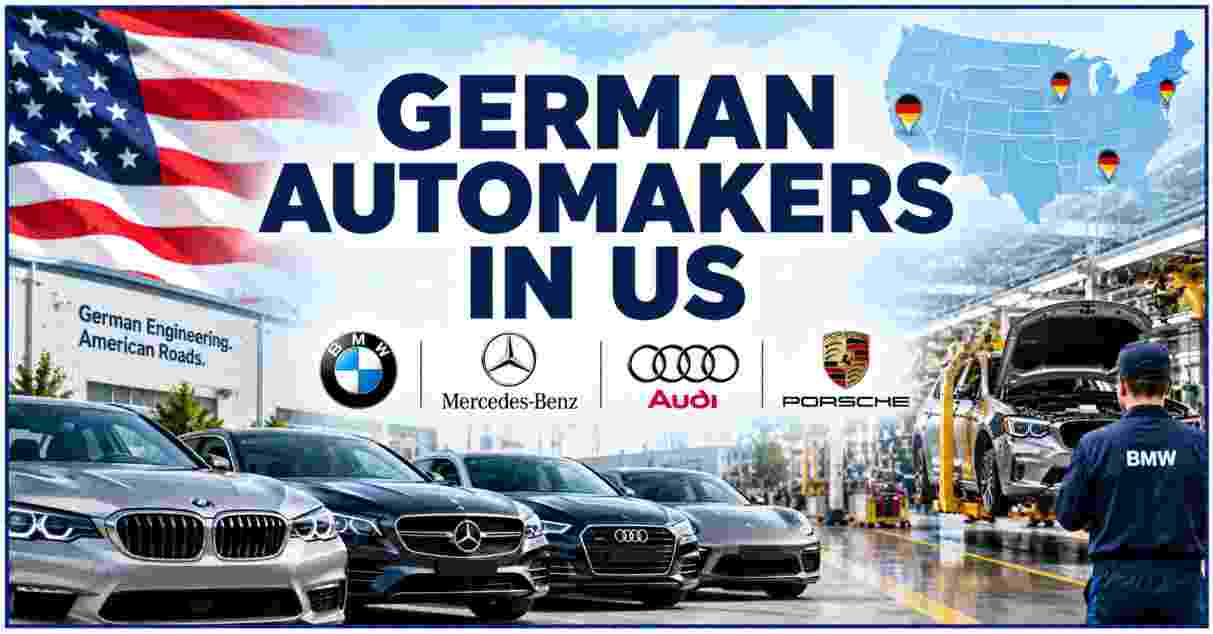
German Automakers in the US sold about 935,000 vehicles in the first nine months of 2026, roughly 7.8% of the market, with BMW at 287,154 brand sales (+4.3%) and the Volkswagen Group’s Volkswagen, Audi and Porsche brands down 12.4% in the third quarter. On October 24, 2026, Audi announced a $4 billion Georgia plant for 200,000 SUVs a year and about 4,500 jobs, with production in the early 2030s.
German Automakers in America 2026 – Introduction
German Automakers in the US are splitting into winners and laggards in 2026. BMW delivered 100,210 vehicles in the third quarter, up 3.4%, and Mercedes-Benz USA sold 76,200 passenger cars, up 4%. The Volkswagen Group’s three core brands sold 133,956, down 12.4%, as ID.4 electric sales collapsed and Audi fell 15%. The US market overall slipped 0.4% in the quarter and 1.2% through September, so German brands are not simply riding the market.
Production is moving to the US. Mercedes plans $4 billion in Alabama by 2030, BMW’s Spartanburg plant built 412,799 vehicles in 2025, and Audi’s new Georgia plant would end its status as the last major German luxury brand without US assembly. This report collects the latest verified numbers on sales, market share, plants, jobs and tariffs as of October 25, 2026. Company sales releases cover different brands and scopes, so each table names its source.
Interesting Facts About German Automakers in the US 2026
GERMAN BRANDS' US SALES CHANGE, Q3 2026 VS Q3 2025 (1 block = 1 percentage point)
Mercedes-Benz cars | +████ +4.0%
BMW                | +███ +3.4%
Volkswagen         | -███████████ -10.9%
Porsche            | -█████████████ -12.9%
Audi               | -███████████████ -15.0%
| Fact | 2026 Data |
|---|---|
| BMW brand US sales, Q3 2026 | 100,210 (+3.4%) |
| Mercedes-Benz USA passenger car sales, Q3 2026 | 76,200 (+4%) |
| Volkswagen, Audi and Porsche US sales, Q3 2026 | 133,956 (-12.4%) |
| BMW brand US sales, January-September 2026 | 287,154 (+4.3%) |
| Audi US sales, January-September 2026 | 107,667 (-16%) |
| German brands’ combined US share, January-September (calculated) | About 7.8% |
| BMW Spartanburg production, 2025 | 412,799 vehicles |
| Audi’s planned Georgia plant | $4 billion, 200,000 vehicles a year |
| US tariff on EU-built cars (Section 232 deal rate) | 15% |
Source: BMW Group, Mercedes-Benz USA (October 16, 2026), Volkswagen Group of America, Audi of America and Porsche Cars North America Q3 2026 releases; BMWBlog (October 14, 2026); Cox Automotive; CNBC (October 24, 2026); share calculated.
The table shows a split market. BMW and Mercedes grew in the third quarter, at 3.4% and 4%, while Volkswagen, Porsche and Audi fell 10.9%, 12.9% and 15.0%. Together the five brands sold about 310,000 vehicles in the quarter, roughly 4% fewer than a year earlier by calculation. BMW leads the German brands by brand count, with 287,154 sales through September.
Tariffs and the electric-vehicle slump explain much of the gap. The EU deal rate of 15% applies to cars built in Germany, and Audi imports every vehicle it sells in the US. Audi’s new Georgia plant, announced on October 24, would move production into the US from the early 2030s. Until then, importers carry the tariff cost, and brands with US plants, such as BMW and Mercedes, do better.
German Car Sales in the US 2026: Third-Quarter Results by Brand
Q3 2026 US SALES BY GERMAN BRAND (1 block = 5,000 vehicles)
BMW                | ████████████████████ 100,210
Volkswagen         | ████████████████ 78,179
Mercedes-Benz cars | ███████████████ 76,200
Audi               | ████████ 39,751
Porsche            | ███ 16,026
| Brand | Q3 2026 US Sales | Change vs Q3 2025 |
|---|---|---|
| BMW | 100,210 | +3.4% |
| Volkswagen | 78,179 | -10.9% |
| Mercedes-Benz (passenger cars) | 76,200 | +4% |
| Audi | 39,751 | -15% |
| Porsche | 16,026 | -12.9% |
| Volkswagen, Audi and Porsche combined | 133,956 | -12.4% |
| Mercedes-Benz vans (separate) | 9,600 | – |
| Mercedes-Benz USA total retail | 85,800 | +3% |
| Five brands combined (calculated, excludes vans) | About 310,000 | About -4% |
Source: Volkswagen Group of America, Audi of America, Porsche Cars North America and BMW of North America Q3 2026 releases via autoevolution (October 2026); Mercedes-Benz USA (October 16, 2026); combined total calculated.
BMW led in the third quarter with 100,210 vehicles, up 3.4%, and has grown its lead over Lexus every quarter of 2026. Mercedes-Benz USA sold 76,200 passenger cars, up 4%, helped by a 47% jump in S-Class and 12% growth in its core segment. Volkswagen sold 78,179 vehicles, down 10.9%. Audi sold 39,751, down 15%, and Porsche sold 16,026, down 12.9%.
The Volkswagen Group’s three core brands sold 133,956 against 152,866 a year earlier, a drop of 12.4%. Volkswagen sold 11,481 fewer ID.4 electric crossovers than a year earlier. Porsche’s Cayenne rose 36% to 5,837, ahead of the Macan at 5,519, but 718 deliveries fell to 537 from 1,553. Mercedes added 9,600 vans, which are not counted in passenger-car comparisons.
German Automakers’ US Market Share 2026: Year-to-Date Sales Through September
YEAR-TO-DATE US SALES, JANUARY-SEPTEMBER 2026 (1 block = 10,000 vehicles)
VW Group (VW, Audi, Porsche) | ████████████████████████████████████████ about 399,000
BMW brand                    | █████████████████████████████ 287,154
Mercedes-Benz USA total      | █████████████████████████ 248,700
Audi                         | ███████████ 107,667
| Brand or Group | Jan-Sep 2026 US Sales | Change vs 2025 | Share of 12.02 Million (calculated) |
|---|---|---|---|
| Volkswagen, Audi and Porsche (approximate) | About 399,000 | – | 3.3% |
| BMW brand | 287,154 | +4.3% | 2.4% |
| Mercedes-Benz USA total (includes vans) | 248,700 | -1% | 2.1% |
| Mercedes-Benz passenger cars | 221,200 | – | 1.8% |
| Audi | 107,667 | -16% | 0.9% |
| Three German groups combined (approximate) | About 935,000 | – | 7.8% |
| Toyota Motor (includes Lexus; Cox Automotive) | 1,886,096 | +1.1% | 15.6% |
| Lexus (included in Toyota Motor above) | 262,768 | -3% | 2.2% |
Source: BMW of North America and Mercedes-Benz USA Q3 2026 releases; BMWBlog (October 14, 2026); Good Car Bad Car for Volkswagen Group first-half sales; Cox Automotive (September 2026) for the 12.02 million industry total; shares and approximations calculated.
German groups held about 7.8% of the US market through September, based on roughly 935,000 sales against 12.02 million industry sales. The Volkswagen Group’s three core brands total about 399,000, built from 265,230 in the first half plus 133,956 in the third quarter. That makes them about 3.3% of the market, ahead of BMW at 2.4% and Mercedes-Benz at 2.1%. BMW has outsold Lexus by 24,386 vehicles through September.
Growth runs the other way. BMW is up 4.3%, Mercedes-Benz USA is down 1%, and Audi is down 16%. The US market is down 1.2% to 1.9% depending on the measure, with Toyota at 15.6% share and the Detroit Three at just over 36%, the lowest on record, according to Cox. The group totals mix brand and company scopes: BMW excludes MINI, and Mercedes includes vans.
German Automakers’ Electric Vehicle and Model Mix in the US 2026
MODEL AND EV SIGNALS, Q3 2026 (1 block = 500 vehicles)
VW ID.4 sales decline     | ███████████████████████ -11,481
Porsche Cayenne           | ████████████ 5,837
Porsche Macan             | ███████████ 5,519
Porsche 718, Q3 2025      | ███ 1,553
Porsche 718, Q3 2026      | █ 537
| Metric | Figure |
|---|---|
| Volkswagen ID.4 decline, Q3 2026 vs Q3 2025 | 11,481 fewer sales |
| Porsche Cayenne sales, Q3 2026 | 5,837 (+36%) |
| Porsche Macan sales, Q3 2026 | 5,519 |
| Porsche 718 sales, Q3 2026 (Q3 2025: 1,553) | 537 |
| Mercedes-Benz S-Class growth, Q3 2026 | +47% |
| Mercedes-Benz core segment growth, Q3 2026 | +12% |
| BMW X3 and X5 combined sales, year to date | 123,895 |
| US electric vehicle sales, Q3 2026 | 262,649 (6.4% share) |
| US battery electric sales, year to date (change) | -29.2% |
Source: Volkswagen Group of America and Porsche Cars North America Q3 2026 releases via autoevolution; Mercedes-Benz USA (October 16, 2026); Cox Automotive and Kelley Blue Book (October 2026); Foley and Lardner (October 14, 2026).
Electric models drove the German declines. Volkswagen sold 11,481 fewer ID.4s in the third quarter, which explains more than the brand’s whole drop, and Audi’s electric slump accounts for more than its entire third-quarter fall. US battery electric sales are down 29.2% this year, and the market’s Q3 volume of 262,649 is 6.4% of sales. Federal tax credits ended in 2025, which removed a price cushion for imported EVs.
Gas and hybrid models are filling the gap. The Cayenne rose 36% to 5,837, the S-Class rose 47%, and Mercedes’ core SUVs rose 12%. The Porsche 718 is the weak spot, down to 537 from 1,553. BMW’s X3 and X5 are the volume engines: the BMW SUVs found 123,895 buyers through September, more than Audi’s whole US range. German brands now depend on large SUVs built in the US.
German Car Plants in the US 2026: Spartanburg, Tuscaloosa, Chattanooga and Georgia
US PLANT OUTPUT AND CAPACITY (1 block = 10,000 vehicles per year)
BMW Spartanburg (2025 output)    | █████████████████████████████████████████ 412,799
Mercedes Tuscaloosa (2023 output)| ██████████████████████████████ about 295,000
Audi Georgia (planned capacity)  | ████████████████████ 200,000
Scout Blythewood (added capacity)| ███ 25,000
| Plant | Key Figures |
|---|---|
| BMW Spartanburg, South Carolina | 412,799 vehicles in 2025 (+4.2%); more than 11,000 jobs; about 1,500 vehicles a day |
| BMW Spartanburg exports | About 50% of output, to nearly 120 countries |
| Mercedes-Benz Tuscaloosa, Alabama | About 6,100 employees; about 295,000 vehicles in 2023 |
| Mercedes GLC move to Alabama | Production expected from late 2027; full speed by 2029 |
| Volkswagen Chattanooga, Tennessee | About 4,000 workers; 1 million Atlas built |
| Volkswagen ID.4 production | Ended April 2026 after more than 100,000 built |
| Audi Georgia plant (announced October 24, 2026) | $4 billion; 200,000 SUVs a year; production in the early 2030s |
| Scout Motors Blythewood, South Carolina | $2 billion plant; 25,000 more vehicles a year planned |
| Porsche | No US assembly plant |
Source: BMW Group Plant Spartanburg and BMWBlog (March 13, 2026); Mercedes-Benz USA and Business Alabama; Assembly Magazine (April 9, 2026) and CarBuzz; Reuters and CNBC (October 24-25, 2026).
BMW Spartanburg is the largest German plant in the US and the largest BMW plant in the world. It built 412,799 vehicles in 2025, up 4.2%, and assembles about 1,500 a day. About 50% go to export markets. Mercedes builds the GLE, GLS and electric SUVs in Tuscaloosa, and the GLC is due to move there from Germany from late 2027, with full speed in 2029. Volkswagen’s Chattanooga plant ended ID.4 assembly in April 2026 and will build the next-generation Atlas.
Audi’s announcement is the biggest change. The plant would assemble the Q7, Q8 and Q9 at 200,000 vehicles a year, while Scout adds 25,000 at its South Carolina site. Audi has said it imports all of its US vehicles, and its CEO called the plant a business decision, not one against Germany. The brand’s tariff bill was about EUR 1.2 billion last year. Production starts in the early 2030s, so tariffs will keep applying to imports for years.
German Automakers’ Jobs and US Investment in 2026: Plants, Payrolls and Pledges
US JOBS AT GERMAN CAR PLANTS (1 block = 500 jobs)
BMW Spartanburg (current)      | ██████████████████████ 11,000+
Mercedes Tuscaloosa (current)  | ████████████ about 6,100
Audi Georgia (planned)         | █████████ about 4,500
VW Chattanooga (current)       | ████████ about 4,000
| Metric | Figure |
|---|---|
| BMW Spartanburg employees | More than 11,000 |
| Mercedes-Benz Tuscaloosa employees | About 6,100 |
| Volkswagen Chattanooga workers | About 4,000 |
| Audi Georgia plant jobs (planned) | About 4,500 |
| Mercedes-Benz US investment plan through 2030 | Over $7 billion |
| Mercedes-Benz Tuscaloosa investment through 2030 | $4 billion |
| Audi Georgia plant investment | $4 billion |
| BMW EV investment in South Carolina | $1.7 billion ($1 billion plant, $700 million battery plant) |
| Volkswagen Group German job cuts planned | 50,000, with four plants closing 2031 to 2034 |
Source: BMW Group; Mercedes-Benz and Business Alabama (March 31, 2026); CarBuzz (April 2026); CNBC (October 24-25, 2026); Wards Auto.
The three existing plants employ about 21,000 people: more than 11,000 at BMW, about 6,100 at Mercedes and about 4,000 at Volkswagen. Audi’s Georgia plant would add about 4,500 jobs, and Mercedes has pledged over $7 billion through 2030, including $4 billion for Tuscaloosa. BMW has committed $1.7 billion to build electric models and batteries in South Carolina.
The investment comes with a trade-off at home. Volkswagen plans to cut 50,000 jobs in Germany and close four plants between 2031 and 2034, and Audi’s Neckarsulm plant is one of them. Audi’s CEO said Georgia takes no task from Germany. A Republican senator said the plant would not have come without tariffs. Spending is a hedge against the 15% import tariff rather than a sign of rising US demand.
US Tariffs on German Cars 2026: Rates, Costs and Threats
REPORTED TARIFF COSTS TO GERMAN AUTOMAKERS, 2025 (1 block = EUR 0.2 billion)
Volkswagen Group        | ████████████████████ EUR 4.0B
Audi (VW Group)         | ██████ EUR 1.2B
Mercedes-Benz           | █████ EUR 1.0B
Bernstein, extra at 25% | █████████████ EUR 2.6B
| Metric | Figure |
|---|---|
| US Section 232 tariff on EU-built cars (deal rate) | 15% |
| Baseline Section 232 auto tariff for countries without a deal | 25% |
| EU 15% rate fully in force | July 1, 2026 |
| Threat to raise EU auto tariffs (May 1, 2026) | 25%, not implemented |
| Volkswagen Group tariff hit, 2025 | EUR 4 billion |
| Audi tariff cost, 2025 | EUR 1.2 billion |
| Mercedes-Benz tariff cost, 2025 | About EUR 1 billion |
| Mercedes-Benz group operating profit, 2025 | EUR 5.8 billion (more than halved) |
| German car exports to the US, first three quarters of 2025 | -14% |
| Bernstein estimate of extra cost if tariffs rose to 25% | EUR 2.6 billion |
Source: Reuters via TheStreet (May 2026) and Dealership Guy (May 4, 2026); Global Banking and Finance (March 2026); Dealership Guy (December 30, 2025); tariff guide summaries (October 2026).
The EU-US deal set a 15% all-in tariff on EU-built cars, retroactive to August 1, 2025 and fully in force from July 1, 2026. That compares with 27.5% before the deal and a baseline 25% for countries without one. Volkswagen Group absorbed a EUR 4 billion hit in 2025, Audi EUR 1.2 billion, and Mercedes about EUR 1 billion. The Audi figure is part of the Group total, so the numbers should not be added.
The threat of more is live. On May 1, 2026, the President said he would raise EU auto tariffs to 25%, which Bernstein estimated would cost German carmakers about EUR 2.6 billion in operating profit. The increase had not taken effect in the sources reviewed. German car exports to the US fell 14% in the first three quarters of 2025, and Mercedes’ group operating profit more than halved to EUR 5.8 billion, partly from tariffs.
German Automakers in the US FAQ 2026
How many cars do German automakers sell in the US in 2026?
About 935,000 through September, or roughly 7.8% of the 12.02 million vehicles sold. That counts BMW’s brand, Mercedes-Benz USA, and Volkswagen, Audi and Porsche. The figure is approximate.
Which German car brand sells the most in the US?
By brand, BMW leads with 287,154 sales through September 2026. By group, Volkswagen, Audi and Porsche combined sold about 399,000.
How did BMW do in the US in Q3 2026?
BMW delivered 100,210 vehicles in the third quarter, up 3.4%. That brings year-to-date sales to 287,154, up 4.3%.
How did Mercedes-Benz do in the US in Q3 2026?
Passenger car sales were 76,200, up 4%. With 9,600 vans, total retail sales were 85,800, up 3%.
How did Volkswagen, Audi and Porsche do in the US in Q3 2026?
They sold 133,956 vehicles combined, down 12.4%. Volkswagen sold 78,179, Audi 39,751 and Porsche 16,026.
Why are Audi sales falling in the US?
Electric vehicle sales collapsed, and tariffs hit an all-import lineup. Audi sold 107,667 vehicles through September, down 16%.
Which German automakers build cars in the US?
BMW (Spartanburg, South Carolina), Mercedes-Benz (Tuscaloosa, Alabama) and Volkswagen (Chattanooga, Tennessee). Audi announced a Georgia plant. Porsche builds none.
How many jobs do German automakers provide in the US?
BMW employs more than 11,000 at Spartanburg, Mercedes about 6,100 in Tuscaloosa, and Volkswagen about 4,000 in Chattanooga.
What is Audi building in Georgia?
A $4 billion plant for 200,000 Q7, Q8 and Q9 SUVs a year, with about 4,500 jobs. Construction begins next year, and production starts in the early 2030s.
What is the US tariff on German cars in 2026?
15% under the EU deal, in force fully since July 1, 2026. A threatened rise to 25% had not taken effect.
How much have tariffs cost German automakers?
Volkswagen Group took a EUR 4 billion hit in 2025, and Mercedes about EUR 1 billion. Audi’s EUR 1.2 billion is part of the Volkswagen total.
How many electric vehicles are sold in the US in 2026?
Kelley Blue Book estimates 262,649 in the third quarter, about 6.4% of new-vehicle sales. Battery electric sales are down 29.2% year to date.
What is Mercedes doing about tariffs?
Moving GLC production from Germany to Alabama from late 2027 and investing $4 billion in Tuscaloosa as part of a $7 billion US plan through 2030.
Disclaimer: The data research report we present here is based on information found from various sources. We are not liable for any financial loss, errors, or damages of any kind that may result from the use of the information herein. We acknowledge that though we try to report accurately, we cannot verify the absolute facts of everything that has been represented.