Where does CTE research stand in 2026?
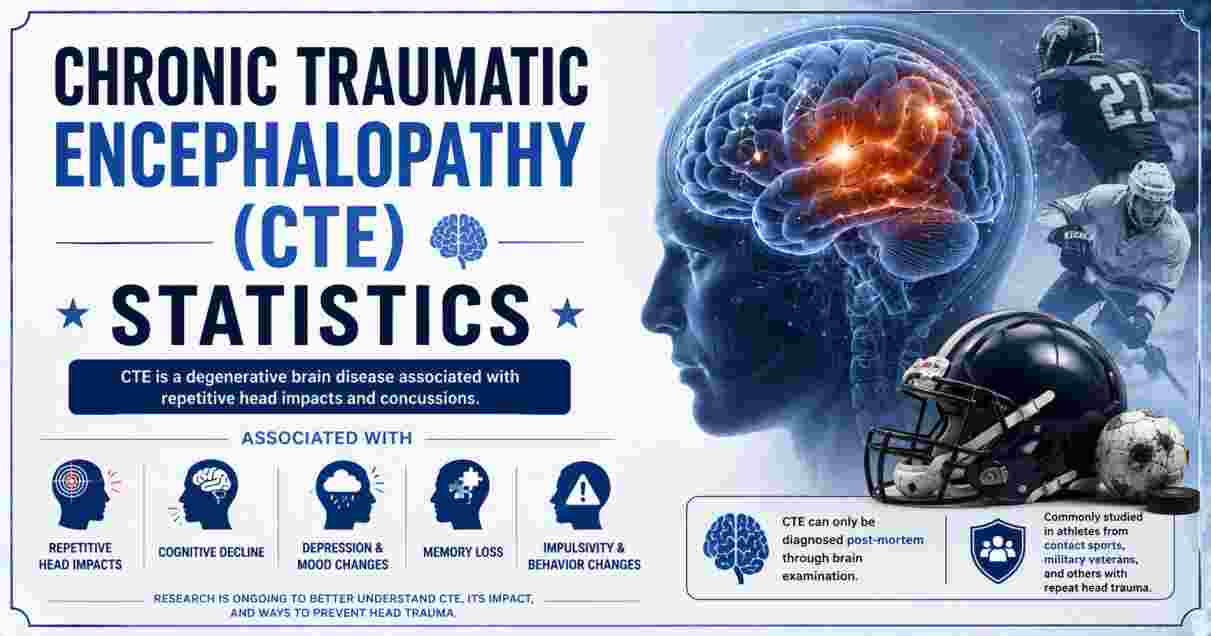
Chronic traumatic encephalopathy (CTE) is a progressive, degenerative brain disease caused by repeated head impacts, and it can currently only be definitively diagnosed after death through postmortem neuropathological examination of brain tissue. The disease is defined by an abnormal buildup of a protein called hyperphosphorylated tau (p-tau) clustered around small blood vessels at the depths of the brain’s cortical folds — a pattern distinct from the tau changes seen in normal aging or Alzheimer’s disease. Because a living diagnosis remains impossible, nearly everything known about CTE comes from brain donation programs, most prominently the UNITE Brain Bank at Boston University, which has amassed one of the largest CTE tissue collections in the world from donated brains of former athletes, military veterans, and others exposed to repetitive head trauma.
2026 has brought the most rigorous population-level data on CTE ever published. A landmark study released on August 25, 2026 in The BMJ, led by researchers from Harvard Medical School, Massachusetts General Hospital, and Boston University, analyzed all 1,712 identified former NFL players who died between 2008 and 2021 — not just those who donated their brains — to calculate a genuinely population-based prevalence estimate for the first time. The findings confirm what smaller brain-bank studies had long suggested: CTE is a serious and probably underappreciated occupational hazard for professional football players, while remaining exceptionally rare, at under 1%, in the general population.
Interesting Facts About CTE in the US 2026
| Fact Category | Key Data Point |
|---|---|
| Minimum CTE prevalence, NFL players who died 2016-2021 | 24.5% — the study’s conservative population-based estimate |
| Minimum CTE prevalence, NFL players who died 2008-2021 | 18.5% across the full study period |
| NFL brains donated (2016-2021) found to have CTE | 215 of 235 donated brains — 91% |
| Range of true NFL CTE prevalence (BMJ estimate) | Between 25% and 98%, depending on donation selection bias assumptions |
| CTE prevalence in the general population | Less than 1% — per community brain bank studies |
| Stage IV CTE association with dementia | 44% higher risk of clinician-adjudicated dementia |
| Former NFL players who died, 2016-2021 (total cohort) | 878 players |
| All-level football brain donor CTE rate (2017 JAMA study) | 177 of 202 donated brains — 87%, including 99% of former NFL players specifically |
| CTE cases historically linked to boxing | 45.1% of all published pathologically confirmed cases (pre-2015 systematic review) |
Source: The BMJ (2026), Boston University CTE Center / UNITE Brain Bank, JAMA (2017)
The August 2026 BMJ study represents a turning point in CTE research because, for the first time, it accounts for the full population of deceased NFL players rather than only those whose families chose to donate their brains — a selection process long suspected of inflating prevalence estimates in earlier research. Even under the study’s most conservative assumptions, at least 24.5% of NFL players who died between 2016 and 2021 had confirmed CTE, and the true figure could run as high as 98% depending on how strongly brain donation correlates with a family’s suspicion that a loved one had the disease. This range is enormous, but even its lower bound represents a rate of neurodegenerative disease far higher than almost any occupational exposure tracked in American public health, drawing direct comparisons in the study’s coverage to asbestos-linked lung disease and coal miners’ black lung disease.
The contrast with the general population rate of under 1% is what makes these NFL figures so striking. A comparable 2018 Boston University study of 164 brains donated through the Framingham Heart Study — a study of ordinary community members, not athletes — found just a single case of CTE, and that one individual had also played college football. This gap between elite football players and the general public is the central evidentiary basis for the medical field’s conclusion that repetitive head impacts, not any single dramatic concussion, are the primary driver of CTE risk, a distinction that shapes both the disease’s four-stage classification system and the prevention strategies discussed later in this report.
CTE Symptoms in the US 2026
| Symptom Category | Specific Features |
|---|---|
| Cognitive symptoms (core) | Episodic memory loss, impaired executive function, reduced attention, eventual dementia |
| Behavioral symptoms (core) | Verbal or physical aggression, impulsivity, explosivity, violence, paranoia |
| Mood symptoms (core) | Depression, feelings of hopelessness, anxiety, apathy, suicidality |
| Motor symptoms (less common) | Parkinsonism, ataxia (impaired coordination), dysarthria (slurred speech) |
| Supportive features | Impulsivity, anxiety, apathy, paranoia, headache, documented decline, delayed symptom onset |
| Age-based symptom pattern — younger | Mood and behavior symptoms tend to predominate |
| Age-based symptom pattern — older | Cognitive impairment and executive dysfunction tend to predominate |
Source: NINDS-NIBIB consensus diagnostic criteria; StatPearls/NIH Bookshelf; Acta Neuropathologica (2023)
Clinically, CTE is understood through three “core” symptom domains — cognitive, behavioral, and mood — with motor symptoms appearing less frequently and typically later in the disease’s course. What makes recognizing CTE clinically difficult is that its symptom pattern shifts with age at onset: younger individuals, often still in their 30s and 40s, more commonly present with mood and behavioral symptoms such as explosivity, depression, or impulsivity, while older individuals more typically show cognitive impairment and executive dysfunction resembling other forms of dementia. This age-dependent presentation is one reason CTE symptoms are so frequently mistaken for unrelated psychiatric conditions.
The overlap with common mental health diagnoses is substantial and clinically significant: mood and behavioral symptoms attributed to CTE can be difficult to distinguish from depression, anxiety, other mental health disorders, or post-concussion syndrome, while the cognitive decline pattern bears real similarities to Alzheimer’s disease. Because no blood test, brain scan, or other tool can confirm CTE while a person is alive, clinicians instead rely on a research framework called Traumatic Encephalopathy Syndrome (TES), discussed in more detail in the section on diagnosis below, to describe a suspected clinical presentation consistent with underlying CTE pathology.
CTE Stages and Diagnostic Criteria in the US 2026
McKee CTE Staging System — Pathological Severity (I to IV)
Stage I    ████████ 1-2 isolated cortical lesions
Stage II   ████████████████ 3+ cortical lesions
Stage III  ████████████████████████ Multiple lesions + medial temporal lobe involvement
Stage IV   ████████████████████████████████ Widespread p-tau pathology; highest dementia risk
| CTE Stage | Pathological Description | Dementia Risk (Odds Ratio) |
|---|---|---|
| Stage I (mild) | One to two isolated p-tau lesions at the depths of cortical sulci, typically frontal | Not significantly associated |
| Stage II | Three or more cortical p-tau lesions, spreading to temporal and parietal lobes | Not significantly associated |
| Stage III | Multiple lesions with involvement of medial temporal lobe structures | 2.12 times higher odds of dementia |
| Stage IV (severe) | Widespread p-tau pathology across medial temporal lobe and diencephalon | 4.48 times higher odds of dementia |
| NINDS-NIBIB alternative scale | Simplified “Low CTE” vs. “High CTE” classification | High CTE = widespread pathology |
Source: McKee et al. CTE staging criteria; NINDS-NIBIB consensus panel (2016, refined 2021)
The McKee staging system, the most widely used framework for classifying CTE severity, runs from Stage I, involving just one or two isolated lesions typically confined to the frontal cortex, up through Stage IV, characterized by widespread tau pathology extending into deep brain structures like the diencephalon. Research specifically linking pathological stage to clinical outcome has found that Stage III and Stage IV CTE are independently associated with dementia, with Stage IV carrying more than four times the odds of dementia compared to those without CTE, while Stage I and Stage II pathology were not significantly associated with either cognitive symptoms or dementia in the same analysis. This finding matters enormously for how the disease is understood: having some CTE pathology, especially at the lower stages, does not automatically mean a person will experience severe clinical symptoms.
Since a living diagnosis of CTE itself remains impossible, the field instead uses Traumatic Encephalopathy Syndrome (TES), a set of research diagnostic criteria refined by a 2021 NINDS consensus panel to describe the likely clinical presentation of the underlying disease. TES diagnosis requires a documented history of repetitive head impacts, at least one core clinical feature (cognitive impairment or neurobehavioral dysregulation), a progressive course, and supportive features such as impulsivity, anxiety, apathy, or documented decline — all in the absence of another condition that better explains the symptoms. Even with these refinements, one validation study found that TES criteria had a sensitivity of 79% and specificity of 84% against confirmed neuropathological diagnosis overall, though accuracy was markedly better in people who died after age 50 (93% sensitivity) than those who died younger (42% sensitivity), underscoring that the clinical framework remains an imperfect proxy for the pathology it is trying to predict.
CTE in NFL and Football Players in the US 2026
CTE Prevalence Across Levels of Football Competition (2017 JAMA Study)
High School        ██████ 21% (3 of 14)
College            ███████████████████████ 91% (48 of 53)
Semi-Professional  ██████████████ 64% (9 of 14)
NFL                ████████████████████████████ 99% (110 of 111)
| Football Level | CTE Rate Found |
|---|---|
| Pre-high school | 0 of 2 brains examined |
| High school | 21% (3 of 14 brains) |
| College | 91% (48 of 53 brains) |
| Semi-professional | 64% (9 of 14 brains) |
| Canadian Football League (CFL) | 88% (7 of 8 brains) |
| National Football League (NFL) | 99% (110 of 111 brains) |
| 2026 BMJ study — NFL, 2016-2021 cohort | 91% of the 235 donated brains had confirmed CTE |
| If applied to today’s active rosters | Roughly 400 of 1,696 current NFL players, by one estimate |
Source: JAMA (2017); The BMJ (2026); UNITE Brain Bank, Boston University CTE Center
The 2017 JAMA study, which remains one of the most frequently cited pieces of CTE research, found a clear dose-response relationship between level of football competition and CTE prevalence: from 0% among the small number of pre-high-school players examined, rising sharply through high school, college, and semi-professional ranks, and reaching 99% among former NFL players. This pattern is consistent with the field’s broader understanding that CTE risk accumulates with cumulative exposure to repetitive head impacts over a playing career, rather than being triggered by any single dramatic hit. The 2026 BMJ study’s finding that 91% of donated NFL brains from the 2016-2021 period had confirmed CTE closely echoes this earlier work, even while using a larger and more rigorously defined cohort.
What makes the newest research particularly consequential is its attempt to project findings onto today’s active player population. If the study’s conservative 25% minimum prevalence estimate holds for current NFL rosters, applying that rate to the roughly 1,696 players on 32 regular-season rosters — not even counting practice squad players — would suggest at least 400 current or recent NFL players could eventually be diagnosed with CTE after death. Public health experts quoted in coverage of the study have explicitly compared this level of occupational disease risk to historically severe industrial hazards like asbestos exposure and coal mining, noting that few other American workplaces carry a comparable rate of serious, irreversible disease tied directly to job performance. Anyone researching the broader landscape of head injury in the US may also find the Traumatic Brain Injury Statistics in US report useful, since TBI and CTE share overlapping causes even though they are classified as distinct conditions.
CTE Causes and Risk Factors in the US 2026
CTE Case Distribution by Sport/Exposure (Pre-2015 Systematic Review)
Boxing                █████████████████████████████████████ 45.1%
American Football     ████████████████████████████████████ 41.2%
Ice Hockey            ███ 3.3%
Wrestling             ██ 2.0%
Military Veterans     ████ 3.9%
Other/Miscellaneous   ████ 4.6%
| Risk Factor / Exposure | Data |
|---|---|
| Repetitive head impacts (RHI) | Established primary cause; single concussions alone are not sufficient |
| Boxing | 45.1% of published confirmed cases historically (pre-2015 review) |
| American football | 41.2% of published confirmed cases historically |
| Ice hockey | 3.3% of published cases |
| Military veterans | 3.9% of published cases; often overlapping with contact-sport history |
| Blast exposure alone (no sports history) | Found in 0 of 10 CTE-positive military brains in a 2018 NEJM analysis |
| Domestic violence, seizures, head-banging | Documented but less common non-sport sources of repetitive head trauma |
| Other contact sports with documented cases | Rugby union, rugby league, soccer, wrestling, martial arts, bull riding |
Source: PLOS One systematic review (2015); New England Journal of Medicine (2018)
Repetitive head impacts, not isolated traumatic brain injuries, remain the consistently identified cause of CTE across every major study population. A systematic review of all 153 pathologically confirmed CTE cases published before 2015 found that boxing (45.1%) and American football (41.2%) together accounted for the overwhelming majority of documented cases, with ice hockey, wrestling, and military veterans making up smaller shares. Since that review, the case list has expanded to include rugby union, rugby league, soccer, martial arts, and even a bull rider, reinforcing that CTE risk tracks with cumulative exposure to sub-concussive and concussive impacts across a wide range of physical activities rather than any single sport.
The relationship between military blast exposure and CTE has proven more complicated than initially assumed. A 2018 study published in the New England Journal of Medicine examined 225 autopsied brains from service members and veterans and found CTE-related lesions in only 10 of them — and critically, all 10 of those cases had a documented history of contact sports participation, while none of the cases involving blast exposure alone, without a sports history, showed CTE pathology. This finding led researchers to conclude that service members with blast exposure are not necessarily at elevated CTE risk purely from that exposure, even though many veterans experience overlapping symptoms — cognitive dysfunction, behavioral change, mood disorders, and substance abuse — that closely resemble the CTE clinical picture and may instead reflect PTSD, traditional TBI, or a combination of conditions. This overlap is one reason the Veteran Suicide Statistics in US report is a useful companion resource, since mood dysregulation and suicidality are shared features across CTE, PTSD, and other trauma-linked conditions affecting the veteran population.
CTE and Long-Term Neurological Outcomes in the US 2026
| Outcome Metric | Data |
|---|---|
| Stage IV CTE and dementia risk | 4.48 times higher odds of clinician-adjudicated dementia |
| Stage III CTE and dementia risk | 2.12 times higher odds of clinician-adjudicated dementia |
| Stage I/II CTE and dementia risk | Not significantly associated with dementia or cognitive symptoms |
| Cognitive symptom correlation | Higher CTE stage associated with greater informant-reported cognitive decline |
| Mood/behavioral symptom correlation | No significant association found with CTE stage in some analyses |
| Causes of death among historical CTE cases | 78 natural causes, 19 accidental, 14 suicides (of 111 with known cause) |
| Age range at death, historical CTE case series | 17 to 98 years old; largest cluster in the 60-69 age bracket |
Source: Acta Neuropathologica; PLOS One systematic review (2015)
The relationship between CTE pathology and dementia strengthens sharply at the higher disease stages, with Stage IV carrying more than four times the odds of clinician-diagnosed dementia and Stage III carrying just over double the odds, while lower-stage pathology shows no clear statistical link to either dementia or broader cognitive symptoms. This stage-dependent pattern is one of the most clinically important findings in recent CTE research because it suggests that not everyone with confirmed CTE pathology will develop severe, life-altering symptoms — the disease’s clinical impact appears to depend heavily on how far the underlying tau pathology has spread through the brain by the time of death, rather than on the mere presence of any CTE lesions at all.
Historical case-series data on causes of death among people with confirmed CTE — drawn from the 111 cases in a pre-2015 systematic review where cause of death was documented — found that natural causes accounted for the majority at 78 cases, with 19 accidental deaths and 14 suicides rounding out the total. The wide age range at death, from 17 to 98 years old with the largest single cluster in the 60s, reflects the disease’s status as a genuinely progressive, age-interacting condition rather than one confined to any single life stage. Given the mood and behavioral symptoms — including depression and suicidality — documented as core features of the CTE clinical picture, researchers and clinicians continue to study how CTE pathology may contribute to mental health crises among affected populations, an area of ongoing investigation that connects to broader dementia research, including findings summarized in the Signs of Early Dementia Statistics report on how traumatic brain injury factors into modifiable dementia risk more broadly.
CTE Diagnosis Limitations and Selection Bias in the US 2026
| Methodological Factor | Explanation |
|---|---|
| Convenience sample bias | Most historical CTE research relies on brains donated by families, not random selection |
| Suspected-symptom donation bias | Families are more likely to donate when a loved one showed visible cognitive/behavioral decline |
| 2026 BMJ study correction | Analyzed all 1,712 identified deceased former NFL players, not only donors |
| Resulting prevalence range | 18.5% to 24.5% minimum, with true prevalence potentially as high as 98% |
| General population brain bank comparison | Less than 1% CTE prevalence in non-selected community samples |
| Diagnosis only possible | Postmortem, via neuropathological examination — no living diagnostic test exists |
Source: The BMJ (2026); Boston University CTE Center
One of the most important scientific developments reflected in the 2026 data is the field’s own reckoning with selection bias in earlier CTE prevalence estimates. Because brain donation has historically been driven by families who already suspected something was wrong — often after a former athlete displayed visible memory loss, mood swings, or aggressive behavior — studies built entirely on donated brains almost certainly overstate the true prevalence of CTE within the broader population of everyone who ever played a given sport. The 2026 BMJ study’s core methodological innovation was to start from the complete population of all deceased former NFL players, whether or not their families chose to donate, and use donation-based CTE rates alongside statistical modeling to estimate a population-wide range.
This approach produced two important numbers: a conservative minimum prevalence of 24.5% for players who died between 2016 and 2021, which remains high even after fully correcting for the assumption that every non-donating family would have found no CTE, and a theoretical maximum of 98%, which would apply only if non-donors had CTE rates identical to donors. The true figure almost certainly sits somewhere between these bounds, and researchers explicitly caution that the actual prevalence is likely higher than the conservative 24.5% floor, since some families of non-donors likely had children, spouses, or parents who died without ever exhibiting symptoms severe enough to prompt a brain donation request in the first place. This same selection-bias caution applies broadly across neurodegenerative disease research, and it’s a consideration worth keeping in mind alongside population-level findings summarized in reports like the Traumatic Brain Injury Statistics in US analysis, where hospital-based and brain-bank data sources can produce meaningfully different prevalence pictures depending on how each study’s sample was selected.
Disclaimer: The data research report we present here is based on information found from various sources. We are not liable for any financial loss, errors, or damages of any kind that may result from the use of the information herein. We acknowledge that though we try to report accurately, we cannot verify the absolute facts of everything that has been represented.