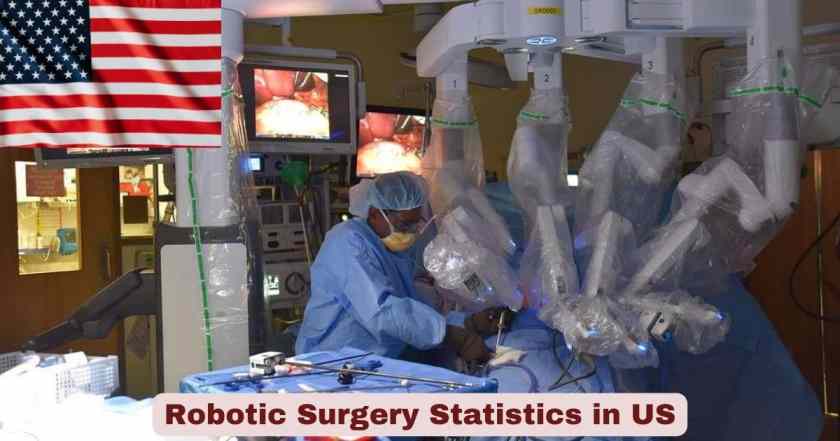
Robotic Surgery in America 2026
Robotic surgery in America has crossed from medical innovation into mainstream medicine with a speed that even its early proponents did not fully anticipate. As of 2026, more than 3.15 million surgical procedures were performed using da Vinci robotic systems alone in 2025 — an 18% increase over 2024 — and the global surgical robots market is now valued at approximately $9.05 billion to $16.07 billion depending on the scope of measurement used, with every credible research firm projecting double-digit annual growth through the next decade. In the United States — the world’s single largest robotic surgery market — the US Surgical Robots Market was valued at $4.58 billion in 2025 and is projected to reach $15.46 billion by 2035, growing at a CAGR of 12.92%. The country’s healthcare infrastructure, depth of surgical training programs, high volume of procedures, and strong reimbursement framework have made the US the engine of global robotic surgery adoption. Approximately 85% of teaching hospitals in the US have now adopted robotic surgery techniques, and more than 45% of surgeons were performing robotic procedures as of recent data — a figure that continues to climb as the technology diversifies into orthopedics, neurosurgery, cardiac surgery, and general surgery beyond its traditional stronghold in urology and gynecology.
The landscape of robotic surgery in 2026 is defined by three converging forces: explosive procedure volume growth, expanding competition that is beginning to challenge Intuitive Surgical’s long-standing dominance, and a mounting body of clinical evidence that both validates the technology’s benefits and continues to probe its cost-effectiveness. Intuitive Surgical — maker of the market-defining da Vinci Surgical System — reported full-year 2025 revenue of approximately $10.06 billion, a 21% increase over 2024’s $8.35 billion, with the company now projecting a further 13% to 15% worldwide da Vinci procedure growth in 2026. The company’s cumulative installed base has grown to over 11,000 da Vinci systems globally, with more than 20 million procedures performed since the platform’s FDA clearance in 2000. At the same time, Medtronic’s Hugo robotic system received FDA clearance in December 2025, CMR Surgical’s Versius Plus received FDA clearance in February 2026, and Stryker’s Mako reached a milestone of two million cumulative orthopedic procedures. The era of market competition in robotic surgery has definitively arrived — and for hospitals, payers, patients, and surgeons, the implications of that shift are only beginning to unfold.
Key Facts & Highlights: Robotic Surgery Statistics in the US 2026
The table below captures the most essential, verified facts about robotic surgery statistics in the US in 2026, drawn from official SEC filings, peer-reviewed medical literature, FDA records, and verified market research.
| Fact | Detail |
|---|---|
| Total da Vinci Procedures Performed (Full Year 2025) | ~3,153,000 — up ~18% from ~2,683,000 in 2024 |
| US da Vinci Procedure Growth (2025) | 18% growth in US general surgery procedures |
| International da Vinci Procedure Growth (2025) | 23% growth outside the US |
| International Share of Global da Vinci Procedures | Approximately 35% of all da Vinci procedures |
| Cumulative da Vinci Procedures (all-time, as of 2025) | Over 20 million procedures performed since 2000 |
| 2026 Worldwide da Vinci Procedure Growth Forecast | 13% to 15% (Intuitive Surgical official 2026 guidance) |
| Intuitive Surgical Full-Year 2025 Revenue | Approximately $10.06 billion — up 21% from $8.35 billion in 2024 |
| Intuitive Surgical Full-Year 2024 Revenue | $8.35 billion — up 17% from $7.12 billion in 2023 |
| da Vinci Systems Placed in 2025 | 1,721 systems — vs. 1,526 in 2024 (up ~13%) |
| da Vinci 5 Systems Placed in 2025 | 870 da Vinci 5 systems — vs. 362 in 2024 (up 140%) |
| da Vinci Installed Base (as of June 30, 2025) | 10,488 systems — up 14% year-over-year |
| Total da Vinci Systems Installed (globally, 2026 estimate) | Over 8,000+ da Vinci units installed worldwide |
| Total da Vinci Systems in 69 Countries (as of end 2021) | 6,730 systems — rapidly expanded since |
| US Surgical Robots Market Value (2025) | $4.58 billion |
| US Surgical Robots Market Projection (2035) | $15.46 billion — CAGR of 12.92% |
| Global Surgical Robots Market Value (2025) | $8.24 to $11.33 billion (varies by scope; multiple verified sources) |
| Global Surgical Robots Market Value (2026 estimate) | $9.05 billion (Mordor Intelligence) / $16.07 billion (Towards Healthcare) |
| Global Surgical Robots Market Projection (2031) | $13.90 billion at CAGR of 8.96% (Mordor Intelligence) |
| Global Robotic Surgery Market Projection (2035) | $38.27 billion — CAGR of 12.95% (SNS Insider, April 13, 2026) |
| Teaching Hospitals Adopting Robotic Surgery (US) | Approximately 85% of all US teaching hospitals |
| Surgeons Performing Robotic Surgery (as of 2022) | Approximately 45% of surgeons — up from 8.7% in 2012 |
| Hospitals with 500+ Beds Adopting Robotic Surgery | 15.1% — reflecting program maturity threshold |
| Prostatectomies Performed Robotically (US, current) | Approximately 85% to 87% of all radical prostatectomies |
| Hysterectomies Performed Robotically (US, 2018 data) | 60.8% — share has continued growing |
| Top Surgical Specialty by Market Share (2024) | Urology — more than 27% of global robotic surgery market |
| Orthopedics Market Share (2025) | Leading segment at approximately 36.41% to 41.62% of surgical robots market |
| Orthopedics Growth (2024) | Led by orthopedic robotic procedures — 36.41% share in 2025 (Mordor Intelligence) |
| Neurosurgery CAGR Forecast (2026–2035) | 13.48% — highest growth segment (SNS Insider) |
| North America Market Share (Global Robotic Surgery, 2025) | 42.71% — largest regional share |
| Asia-Pacific CAGR (Fastest Growing Region) | 9.88% CAGR — fastest growing region globally |
| Hospital Share of End-User Market (2025) | 73.53% of all surgical robot demand — hospitals dominate |
| Ambulatory Surgical Center (ASC) CAGR | 9.88% — fastest growing end-user segment |
| ASCs’ Share of US Surgical Volume | Approximately 72% of all surgical volume in the US |
| Stryker Mako Cumulative Procedures | 2 million cumulative orthopedic procedures performed (milestone reached 2025) |
| Medtronic Hugo FDA Clearance | December 2025 — US market entry begins |
| CMR Surgical Versius Plus FDA Clearance | February 2026 — advanced visualization and articulation |
| Medtronic Stealth AXiS Spine Robot FDA Clearance | February 2026 — sub-millimeter pedicle-screw placement |
| da Vinci System FDA Clearance Date (Original) | July 11, 2000 — first robotic surgical system FDA-cleared in the US |
| Robotic Surgery CPT Code (New 2026) | New Category III CPT code for lymphovenous bypass (LVB) surgery — effective January 1, 2026 |
| Robotic Colorectal Surgery: Complications vs. Open | 14.1% vs. 21.2% complication rate — robotic significantly lower |
| Robotic Colorectal Surgery: Hospital Stay vs. Open | 6.7 days vs. 8.4 days — robotic 1.7 days shorter |
| Robotic vs. Laparoscopic: Conversion Rate (to open) | 0.8% to 5% depending on procedure and surgeon experience |
| Overall Complication Rate (Robotic Surgery) | 4% to 9% overall; major complications less than 1% |
| Surgical Site Infection Rate (Robotic) | 0.8% to 2.5% — significantly lower than open surgery |
| Robotic Prostatectomy: Blood Loss Reduction | Approximately 72% reduction in mean estimated blood loss vs. open surgery |
| Robotic Hysterectomy: Infection Risk Reduction | 50% reduced risk of surgical site infection vs. open surgery |
| Robotic Colorectal: Nerve-Sparing Success | Approximately 15% higher than laparoscopic approach |
| 30-Day Readmission Rate (Robotic Partial Nephrectomy) | Approximately 3% — significantly lower than open techniques |
| da Vinci System Purchase Price Range | $1.5 million to $2.5 million per system |
| Annual Service / Maintenance Cost | $100,000 to $300,000 per year |
| Disposable Instruments Cost per Procedure | $600 to $3,500 per surgical procedure |
| Incremental Cost vs. Laparoscopic Surgery | $3,000 to $6,000 more per procedure on average |
| Additional Cost vs. Laparoscopy (Colectomy) | Average $3,568 additional cost per colectomy vs. laparoscopic |
Source: Intuitive Surgical SEC Filing — Preliminary Full Year 2025 Results (Form 8-K, January 14, 2026); Intuitive Surgical SEC Filing — Q4 2025 Earnings Release; SNS Insider — “Surgical Robots Market Size Projected to Attain USD 38.27 Billion by 2035” (April 13, 2026)
The range of numbers in this table reflects both the extraordinary scale of the robotic surgery industry and the meaningful variation between different measurement frameworks. The $4.58 billion US market figure from SNS Insider measures only surgical robotic systems and related services sold specifically in the US, while the broader global figures incorporate all geographies, consumables, and service contracts. What is not in dispute is the trajectory: every credible source points toward sustained double-digit compound annual growth through 2035. The 18% US general surgery procedure growth in 2025, verified directly from Intuitive Surgical’s SEC filings, is the most reliable single data point in the entire robotic surgery landscape — it is audited financial data, not a market estimate. Combined with the 23% international growth in the same year and a cumulative base of over 20 million da Vinci procedures, these numbers confirm that robotic surgery has reached the kind of scale where it is no longer an emerging technology — it is simply surgery, for a rapidly growing proportion of the procedures performed in American operating rooms.
The adoption rate statistics are equally striking when traced over time. The fact that only 8.7% of surgeons were performing robotic surgeries in 2012 — compared to approximately 45% in 2022 — represents a generational shift in surgical training, credentialing, and patient expectation that happened in roughly a decade. Medical schools now routinely incorporate robotic surgery training into their curricula, and with over 78% of US surgeons expressing interest in adopting robotic techniques, the adoption curve has clearly not plateaued. The 85% adoption rate at US teaching hospitals ensures that the pipeline of trained robotic surgeons will continue to expand, feeding adoption at smaller and community hospitals where penetration is still building. The new CPT reimbursement code effective January 1, 2026 for lymphovenous bypass surgery — covering both manual and robotic-assisted procedures — also signals that the reimbursement landscape is slowly expanding to recognize robotic approaches, which has historically been one of the field’s most significant barriers to broader adoption.
Intuitive Surgical & da Vinci Platform Statistics in the US 2026
No single company has shaped robotic surgery in the United States more completely than Intuitive Surgical, and no platform has more thoroughly defined a medical technology category than the da Vinci Surgical System. The table below captures the core financial and operational metrics from Intuitive Surgical’s official SEC filings and investor communications.
| Metric | Full Year 2025 | Full Year 2024 | Full Year 2023 | YoY Change (2024 → 2025) |
|---|---|---|---|---|
| Total Revenue | ~$10.06 billion | $8.35 billion | $7.12 billion | +21% |
| Total da Vinci Procedures | ~3,153,000 | ~2,683,000 | ~2,286,000 | +18% |
| US General Surgery Procedure Growth | +18% | +19% | — | Sustained high growth |
| International Procedure Growth | +23% | +23% | — | Consistent expansion |
| da Vinci Systems Placed (Full Year) | 1,721 systems | 1,526 systems | 1,370 systems | +13% |
| da Vinci 5 Systems Placed | 870 systems | 362 systems | — | +140% (rapid ramp) |
| Ion Systems Placed (Full Year) | 195 systems | (available since 2022) | — | Growing lung biopsy platform |
| Ion Procedure Growth (2025) | +51% worldwide | — | — | Fastest-growing Intuitive platform |
| Q4 2025 Revenue | ~$2.87 billion | $2.41 billion | $1.93 billion | +19% |
| Q4 2025 da Vinci Procedure Growth | +17% vs. Q4 2024 | +18% vs. Q4 2023 | — | Consistent double-digit growth |
| Q3 2025 da Vinci Procedure Growth | +19% vs. Q3 2024 | — | — | Above full-year average |
| da Vinci Installed Base (June 30, 2025) | 10,488 systems | ~9,200 systems | ~8,050 systems | +14% |
| 2026 Procedure Growth Guidance | 13% to 15% worldwide | — | — | Official company guidance |
| Q4 2025 Instruments & Accessories Revenue | ~$1.66 billion | $1.41 billion | $1.14 billion | +17% |
| Full Year 2025 I&A Revenue (est.) | Increased +19% | ~$5.08 billion (2024) | $4.28 billion (2023) | Annuity revenue growth |
| Q4 2025 Systems Revenue | Up significantly vs. 2024 | $655 million (Q4 2024) | $480 million (Q4 2023) | Strong systems placement |
| Operating Lease Placements (Q4 2025) | 250 systems under operating lease | 222 systems (Q4 2024) | — | Growing lease share |
| Usage-Based Lease Placements (Q4 2025) | 150 systems under usage-based lease | 140 systems (Q4 2024) | — | Pay-per-use model growing |
Source: Intuitive Surgical Inc. — SEC Form 8-K, Preliminary Full Year 2025 Results (January 14, 2026); Intuitive Surgical Inc. — SEC Form 8-K, Q3 2025 Earnings Release; Intuitive Surgical Inc. — SEC Form 8-K, Q2 2025 Earnings Release
The financial trajectory of Intuitive Surgical is one of the most consistent and compelling growth stories in all of American healthcare. Revenue growing from $7.12 billion in 2023 to $8.35 billion in 2024 to $10.06 billion in 2025 — a compound rate of roughly 19% per year — reflects both the organic expansion of robotic procedure volume and the structural shift toward higher-value systems like the da Vinci 5, which commanded 303 placements in Q4 2025 alone out of 532 total systems placed that quarter. The da Vinci 5 represents the company’s most significant hardware refresh in years, featuring enhanced imaging, AI-assisted workflow optimization, and improved ergonomics for surgeons — and its rapid uptake (870 systems in 2025 vs. 362 in 2024, a 140% increase) signals that hospitals are actively upgrading their fleets rather than deferring capital expenditure.
The instruments and accessories revenue line — which reached approximately $1.66 billion in Q4 2025 alone — is arguably the most strategically important number in Intuitive’s financials, because it represents the durable, recurring revenue that flows from every procedure performed on an installed da Vinci system. Single-use instruments must be replaced after every 10 uses, creating a built-in consumables annuity that scales directly with procedure volume. This model — where the system sale is the customer acquisition cost and every subsequent procedure generates instrument revenue — has proven extraordinarily resilient. The company’s 2026 guidance of 13% to 15% procedure growth represents a slight moderation from 2025’s 18% pace, which the company attributed to a normalization after pandemic catch-up effects and the early adoption surge for the da Vinci 5. Even at the lower end of that guidance, 13% procedure growth on a base of 3.15 million would add roughly 400,000 additional robotic procedures to the US healthcare system in 2026 alone.
Robotic Surgery by Specialty Statistics in the US 2026
Robotic surgery has expanded well beyond its original foothold in urology to touch nearly every major surgical specialty. The table below details the current procedure volumes, adoption rates, and specialty-specific clinical data verified from peer-reviewed literature and official industry sources.
| Specialty / Procedure | Key Statistic | Clinical / Market Data |
|---|---|---|
| Urology (Overall Market Share) | Largest segment — >27% of global market | Urology led the market in 2024; prostatectomy drives volume |
| Radical Prostatectomy (Robotic Share in US) | ~85% to 87% of all US radical prostatectomies performed robotically | Near-universal adoption; 2019 data showed 87%; share has grown since |
| Robotic Prostatectomy — Blood Loss | ~72% reduction in mean estimated blood loss vs. open surgery | PMC Systematic Review; European Association of Urology |
| Robotic Prostatectomy — Complication Reduction | 59% reduction in post-surgical complication risk vs. open surgery | Surgical Robotics Economics analysis |
| Urinary Continence Recovery (Robotic vs. Open) | Functional recovery approximately 3 months earlier than open prostatectomy | Gitnux Robotic Surgery Statistics 2026 |
| Gynecology (Market Share, 2023) | ~$3.1 billion global market for gynecological robotic procedures | Growing to exceed $4.1 billion by 2026 |
| Hysterectomy (Robotic Share in US, 2018) | 60.8% of all US hysterectomies performed with robotic assistance | Journal of Minimally Invasive Gynecology |
| Robotic Hysterectomy — Infection Risk | 50% reduced risk of surgical site infection vs. open hysterectomy | Peer-reviewed studies |
| Robotic Hysterectomy — Readmission Rate Reduction | 47% reduction in 30-day hospital readmission vs. open | Boston Engineering Surgical Robotics Economics Analysis |
| Orthopedics (Market Share, 2025) | 36.41% to 41.62% of global surgical robots market — leading segment | Mordor Intelligence / SNS Insider (2025 data) |
| Stryker Mako — Cumulative Procedures | 2 million cumulative orthopedic procedures | Milestone announced by Stryker, 2025 |
| Robotic Knee Arthroplasty — Physiotherapy Reduction | 15% fewer physiotherapy sessions needed due to reduced tissue trauma | Gitnux Robotic Surgery Statistics 2026 |
| General Surgery (Overall) | General surgery segment — slightly below $3 billion global market (2023); fastest projected CAGR | Market data, 2023–2026 |
| US General Surgery da Vinci Procedure Growth | +18% in 2025 — key driver of Intuitive’s volume growth | Intuitive Surgical SEC Filing 2025 |
| Robotic General Surgery Adoption (73 hospitals) | Increased from 1.8% to 15.1% of all general surgery procedures | JAMA / Market.us Statistics 2026 |
| Robotic General Surgery Annual Growth Rate | +2.1% per year (95% CI, 1.9%–2.3%) | Published peer-reviewed data |
| Robotic vs. Open Colorectal Surgery — Complications | 14.1% vs. 21.2% — significantly fewer complications | Market.us / JAMA 2026 |
| Robotic vs. Open Colorectal Surgery — Hospital Stay | 6.7 vs. 8.4 days — robotic stays 1.7 days shorter | Market.us / JAMA 2026 |
| Robotic Cholecystectomy — Blood Transfusion Odds | 34% reduced odds (AOR 0.66) vs. laparoscopic | ScienceDirect — National Trends in Robotic Emergency General Surgery (PubMed) |
| Robotic Large Bowel Resection — Blood Transfusion Odds | 27% reduced odds (AOR 0.73) vs. laparoscopic | ScienceDirect — National Trends in Robotic Emergency General Surgery (PubMed) |
| Robotic Pancreaticoduodenectomy — Hospital Stay | 3.03-day shorter stay vs. laparoscopic surgery | PMC Robot-Assisted Surgery (Cureus 2025 meta-analysis) |
| Cardiac Surgery — Mitral Valve Repair | 0% sternotomy rate vs. 100% in conventional open surgery | Gitnux Robotic Surgery Statistics 2026 |
| Cardiac Surgery — Robot-Assisted Advantages | Reduced atrial fibrillation, shorter ICU stays, less pain, faster recovery | Journal of Clinical Medicine research |
| Bariatric Surgery (Robotic, 2019) | Approximately 7% of US bariatric surgeries performed robotically | Market.us / peer-reviewed data |
| Neurosurgery — Projected Growth | 13.48% CAGR through 2026–2035 — highest growth segment | SNS Insider April 2026 |
| Blood Transfusion — Robotic Liver Resection | 40% reduction vs. open liver resection | Gitnux Robotic Surgery Statistics 2026 |
| Ion Platform Procedure Growth (2025) | +51% worldwide; +44% in Q4 2025 | Intuitive Surgical SEC Filing 2025 — lung biopsy platform |
Source: Intuitive Surgical SEC Filing — Full Year 2025 Results (January 14, 2026); Market.us — Robotic Surgery Statistics 2026 (citing JAMA, European Association of Urology, Intuitive Surgical); SNS Insider — Surgical Robots Market Report (April 13, 2026); Mordor Intelligence — Surgical Robots Market Report (March 2026)
The specialty-level data reveals where robotic surgery in America is most entrenched, where it is growing fastest, and where clinical evidence remains most compelling. Urology’s near-total robotic adoption for prostatectomy — with 85% to 87% of all US radical prostatectomies performed robotically — is the clearest example of a specialty where the evidence, surgical community consensus, and patient demand have aligned so completely that the question of whether to use robotics for prostate cancer surgery is essentially settled. The 72% reduction in blood loss and 59% reduction in complication risk compared to open surgery are not marginal improvements — they represent a fundamental change in the risk profile of one of the most common cancer surgeries in American medicine. The urinary continence functional recovery arriving 3 months earlier in robotic patients is an outcome measure that directly and meaningfully improves quality of life during the post-operative period.
Orthopedics tells a different story — one defined by the dominance of Stryker’s Mako platform in a segment where the precision benefits of robotics align perfectly with the geometric demands of joint replacement. Mako’s milestone of 2 million cumulative procedures is significant not only as a volume number but as a validation of the system’s integration into the standard of care for knee and hip arthroplasty across major health systems. The neurosurgery segment’s projected 13.48% CAGR through 2035 — the highest of any specialty — reflects the extraordinary precision requirements of brain and spine procedures and the growing recognition that sub-millimeter accuracy offered by robotic navigation systems like Medtronic’s Stealth AXiS (FDA-cleared February 2026) can meaningfully reduce the risk of catastrophic complications in procedures that already carry extreme surgical complexity. General surgery’s +18% procedure growth in the US in 2025, driven by da Vinci adoption for colorectal, hernia, and cholecystectomy procedures, represents the largest untapped volume opportunity in robotic surgery — the specialty performs the most procedures annually in the US, and its robotic penetration rate, while growing rapidly, remains well below the near-saturation levels seen in urology.
Robotic Surgery Market Size & Growth Statistics in the US 2026
The robotic surgery market is one of the fastest-growing segments in all of medical technology, driven by aging demographics, expanding surgical complexity, AI integration, and the demonstrated clinical and economic benefits that have accumulated over two decades of real-world use. The table below compiles verified market size and forecast data from credible research organizations.
| Market Metric | Value / Projection |
|---|---|
| US Surgical Robots Market (2025) | $4.58 billion |
| US Surgical Robots Market (2035 Projection) | $15.46 billion |
| US Market CAGR (2026–2035) | 12.92% |
| Global Surgical Robots Market (2025) | $8.24 to $11.33 billion |
| Global Surgical Robots Market (2026 est.) | $9.05 billion (Mordor) / $16.07 billion (Towards Healthcare) |
| Global Surgical Robots Market (2031 Projection) | $13.90 billion at 8.96% CAGR |
| Global Surgical Robots Market (2035 Projection) | $38.27 billion at 12.95% CAGR |
| Robotic Surgery Market (2026, Towards Healthcare) | $16.07 billion |
| Robotic Surgery Market (2035 Projection) | $63.73 billion at 16.54% CAGR |
| Robotic-Assisted Surgery Systems Market (2025) | $11.26 billion |
| Robotic-Assisted Surgery Systems Market (2030) | $21.25 billion at 13.54% CAGR |
| Robotic Surgery Consumables Market (2025) | $6.63 billion |
| Robotic Surgery Consumables Market (2035) | $22.06 billion at 13.4% CAGR |
| Gynecology Robotic Surgery Market (2026 Projection) | Exceeds $4.1 billion |
| European Surgical Robotics Market (2026) | Expected to approach $4.2 billion |
| North America Market Share (Global, 2025) | 42.71% — largest regional share |
| Asia-Pacific CAGR | 9.88% — fastest growing region |
| Orthopedic Procedures Market Share (2025) | 36.41% of surgical robots market |
| Neurosurgery CAGR (2026–2035) | 13.48% — highest segment growth |
| Hospitals’ Share of End-User Demand (2025) | 73.53% of global surgical robot demand |
| ASC End-User CAGR | 9.88% — fastest end-user growth |
| Non-Portable Systems Market Share (2025) | 42.49% of 2025 sales by product type |
| Software & Services CAGR | 18.25% — driven by AI modules and analytics |
| Venture Investment in Medical Robotics (2021) | Exceeded $1 billion in startups in 2021 alone |
| Large Hospitals Globally Integrating Surgical Robotics | More than 60% of large hospitals worldwide |
| Complex Surgeries Done Robotically (Developed Countries) | More than 55% of complex surgeries at developed-country health systems |
| Global Surgical Robots Market (>$56 billion by 2034) | Forecast by Growth Global Insights |
Source: SNS Insider — “Surgical Robots Market Size Projected to Attain USD 38.27 Billion by 2035” (April 13, 2026); Mordor Intelligence — Surgical Robots Market Report (March 2026); Mordor Intelligence — Robotic-Assisted Surgery Systems Market Report (February 2026)
The $38.27 billion global surgical robots market projection for 2035, published by SNS Insider as recently as April 13, 2026 — the day this article was finalized — anchors the long-term growth story in a concrete number that reflects the convergence of several structural forces. The aging global population drives the numerator: more people requiring joint replacements, prostate cancer treatment, hysterectomies, and complex cardiac and colorectal surgeries directly increases robotic surgery volume. The AI integration of robotic platforms drives the denominator: as systems like the da Vinci 5 incorporate machine-learning-enabled workflow optimization and real-time intraoperative analytics, they become incrementally more valuable per procedure, justifying higher utilization rates and investment at hospitals and ASCs. The shift from inpatient to outpatient settings — where ambulatory surgical centers now handle approximately 72% of all US surgical volume at 45 to 60% lower cost than hospital outpatient departments — creates a new wave of demand for compact, modular robotic systems that can operate in smaller footprints and rotate between procedure rooms.
The North American market’s 42.71% share of global surgical robot demand reflects the US healthcare system’s combination of factors that are uniquely favorable to high-technology adoption: robust reimbursement frameworks, deep surgical training infrastructure, a culture of technology-forward hospital competition, and the presence of every major surgical robotics company’s headquarters or primary R&D operations. The Asia-Pacific region’s 9.88% CAGR — the fastest of any geography — signals that the next phase of growth will increasingly be driven outside the US as robotic surgery diffuses into Japan, South Korea, China, India, and Southeast Asia. The software and services segment’s 18.25% CAGR is the most forward-looking number in the entire market picture: it reflects the industry’s recognition that competitive differentiation will increasingly live in software — AI-guided vision, force feedback, performance analytics, and telesurgery enablement — rather than in the mechanical design of robotic arms themselves.
Robotic Surgery System Costs & Economic Data in the US 2026
The cost of robotic surgery is one of the most frequently debated dimensions of the technology’s adoption, and the data paints a nuanced picture in which higher upfront costs are increasingly offset by measurable downstream savings in complications, readmissions, and length of stay. The table below provides the most current verified cost and economic data.
| Cost / Economic Metric | Data |
|---|---|
| da Vinci System Purchase Price | $1.5 million to $2.5 million per system |
| Annual Service / Maintenance Cost (da Vinci) | $100,000 to $300,000 per year |
| Disposable Instrument Cost per Procedure | $600 to $3,500 per case |
| Incremental Cost vs. Laparoscopic Surgery | $3,000 to $6,000 per procedure |
| Additional Cost (Colectomy vs. Laparoscopic) | Average $3,568 additional per colectomy |
| Additional Cost (Hysterectomy vs. Laparoscopic) | Approximately $2,000 additional per procedure |
| Instrument Refresh Frequency | After every 10 uses — mandatory single-use replacement cycle |
| Stryker Mako Purchase Price | $0.8 million to $1.4 million |
| Zimmer Biomet ROSA Purchase Price | $1 million to $1.5 million |
| CMR Surgical Versius Purchase Price | $0.75 million to $1 million (estimated) |
| SSI Mantra Purchase Price | $1 million to $1.5 million |
| Medtronic Hugo — Market Positioning | Explicitly designed as lower-cost alternative to da Vinci |
| Initial RAS Investment Range | $2.0 million to $2.5 million including setup costs |
| Cost Delayed/Canceled Robotic Case | Can exceed $2,000 per minute of delay |
| Robotic Prostatectomy — Cost-Effectiveness | Average $54,600 per QALY (quality-adjusted life year) |
| Potential US Annual Savings (Widespread Adoption) | Estimated $1.5 to $6.5 billion annually from avoided complications |
| UK NHS 20-Year Savings (Robotic Prostatectomy) | £286 million over 20 years after accounting for technology costs |
| Robotic Prostatectomy vs. Open — Readmission Savings | 47% reduction in 30-day readmission for hysterectomy reduces downstream costs |
| Shorter Hospital Stays — Economic Benefit | Robotic colorectal surgery stays 1.7 days shorter = significant cost reduction per case |
| Insurance Reimbursement (Robotic vs. Laparoscopic) | Typically same reimbursement rate despite higher procedure cost |
| New 2026 LVB CPT Code | New Category III CPT code for LVB — enables initial reimbursement pathway |
| Intuitive Surgical Total Revenue (2025) | ~$10.06 billion |
| Instruments & Accessories as % of Revenue Driver | I&A revenue driven by 18–19% procedure volume growth |
Source: American College of Surgeons Bulletin — “Cost of Robotic Surgery Remains Complex Equation” (February 2026); Milbank Quarterly — “Robotic Surgery: An Example of When Newer Is Not Always Better But Clearly More Expensive”; R2 Surgical — How Much Is a Surgical Robot (2025 Edition); STERIS Healthcare — Maximizing Robotic Surgery Investment; Boston Engineering — Surgical Robotics Economics (2024); Gitnux — Robotic Surgery Statistics 2026; CMS CY2026 OPPS Final Rule (effective January 1, 2026); Intuitive Surgical SEC Filing Q4 / Full Year 2025 (January 14, 2026)
The economics of robotic surgery resist simple summary because they operate on two entirely different time scales simultaneously. In the short term, the numbers are unfavorable to robotic approaches: a da Vinci system costs $1.5 to $2.5 million to purchase, requires $100,000 to $300,000 per year in service contracts, and adds $3,000 to $6,000 per procedure in incremental cost over laparoscopic alternatives — yet generates the same insurance reimbursement rate as conventional minimally invasive surgery in most cases. This means hospitals effectively absorb the additional cost of robotic surgery as a competitive differentiator and marketing tool, rather than recovering it through higher reimbursement. The American College of Surgeons Bulletin’s February 2026 analysis of robotic surgery costs — published in its most recent issue — acknowledged directly that while the cost picture for robotics is trending more favorable as competition increases, the data is still in its early stages and the true cost per case varies significantly by health system, procedure type, and surgeon experience.
The long-term economic picture, however, is considerably more favorable. The $1.5 to $6.5 billion in potential annual US savings from widespread robotic adoption — driven by reduced complications, shorter hospital stays, lower readmission rates, and faster return to productive activity — represents a compelling case for value-based care frameworks where payers and hospital systems have the right incentives to make long-term investments. The UK NHS analysis showing £286 million in 20-year savings from robotic prostatectomy provides particularly useful real-world data because it captures the full lifecycle of costs rather than just the procedural episode. The most significant near-term shift in the cost landscape is the December 2025 FDA clearance of Medtronic’s Hugo system, which is explicitly designed and positioned as a lower-cost alternative to da Vinci. As the ACS Bulletin noted, the entry of competitive systems is expected to put downward pressure on per-procedure costs and total cost of ownership — a development that healthcare executives, payers, and ultimately patients have been waiting for since Intuitive Surgical first established its near-monopoly position more than two decades ago.
Robotic Surgery Competitive Landscape & FDA Approvals in the US 2026
The competitive landscape of robotic surgery in America has shifted meaningfully in the 12 months leading up to April 2026, with multiple new FDA clearances, platform launches, and strategic entries that are beginning to challenge Intuitive Surgical’s decades-long dominance. The table below captures the current state of the competitive field.
| Company / System | Platform | FDA Status (US 2026) | Key Facts |
|---|---|---|---|
| Intuitive Surgical | da Vinci Xi, da Vinci X, da Vinci SP, da Vinci 5 | FDA cleared — multiple indications since 2000 | Market leader; >10,488 installed systems as of June 2025; $10.06B revenue in 2025 |
| Intuitive Surgical | Ion Endoluminal System | FDA cleared — lung biopsy | +51% procedure growth in 2025; 195 systems placed in 2025 |
| Stryker | Mako SmartRobotics | FDA cleared — orthopedic | 2 million cumulative procedures; knee, hip, partial knee arthroplasty; July 2024: new spine/shoulder features announced |
| Medtronic | Hugo RAS | FDA cleared — December 2025 | Modular, mobile-cart design; lower-cost alternative; available in Europe, Latin America, Asia; US adoption building in 2026 |
| Medtronic | Stealth AXiS Spine Robot | FDA cleared — February 2026 | Imaging + navigation integration; sub-millimeter pedicle-screw placement |
| CMR Surgical | Versius Plus | FDA cleared — February 2026 | Advanced visualization; articulation; UK-based; already in Europe, India, other markets |
| Johnson & Johnson MedTech | OTTAVA Robotic Surgical System | De Novo application submitted — January 2026 | Machine-learning collision prediction; gastric bypass cases completed at Memorial Hermann-Texas Medical Center (April 2025) |
| Johnson & Johnson MedTech | MONARCH Platform for Urology | Commercially available in US — 2026 | AI-driven simulation; virtual OR environments for setup training; announced October 2025 |
| Johnson & Johnson MedTech | VELYS Robotic-Assisted Solution | FDA cleared — orthopedics | European launch October 2023 (Total Knee); US expanding |
| Zimmer Biomet | ROSA Robotic System | FDA cleared — orthopedic | Purchase price $1 million to $1.5 million; spine and knee applications |
| Asensus Surgical | Senhance | FDA cleared — general, gynecologic, colorectal | Most widely used in academic/teaching hospitals; compatible with existing OR tools; “performance-guided surgery” with real-time data |
| SS Innovations | SSi Mantra 3 | Targeting FDA clearance in 2026 | First robotic cardiac surgery in Americas performed in Ecuador (June 2025); 80 systems across 75 hospitals in India |
| Virtual Incision Corporation | Miniaturized robotic systems | In development / regulatory process | Miniaturized single-port approaches under development |
| CMR Surgical Versius | Older Versius platform | Awaiting full FDA clearance | Operating in Europe, India; modular, portable alternative; estimated $0.75M–$1M cost |
| da Vinci System — FDA Original Clearance | da Vinci Surgical System | FDA cleared July 11, 2000 | First robotic surgical system FDA-approved in the US; cleared for urologic, laparoscopic, gynecologic, thoracoscopic procedures |
Source: Mordor Intelligence — Surgical Robots Market Report (March 2026); Standard Bots — “Top 8 Surgical Robotics Companies in 2026”; American College of Surgeons Bulletin — February 2026; MD+DI — “Surgical Robotics Market Explodes to $56B” (December 2025); Grand View Research — Surgical Robots Market; SS Innovations press reports (June 2025); Johnson & Johnson MedTech official announcements; FDA device clearance database
The February 2026 dual FDA clearances — Medtronic’s Stealth AXiS spine robot and CMR Surgical’s Versius Plus — occurring within the same month is not coincidental. It reflects the convergence of years of clinical trial work, regulatory submission processes, and the FDA’s increasing familiarity with robotic surgery platforms across multiple specialties. The December 2025 Hugo clearance is the most strategically significant, however, because it represents Medtronic’s entry into the US soft-tissue robotic surgery market — the market that Intuitive has owned since 2000. Hugo is specifically engineered to be deployed modularly, with each robotic arm on its own independent cart rather than a fixed tower, making it more practical for smaller hospitals and ASCs that cannot dedicate a permanent room to a robotic suite. The Johnson & Johnson OTTAVA De Novo submission in January 2026 signals that J&J, the world’s largest medical device company, is within regulatory striking distance of the US market with a platform that incorporates machine-learning collision prediction — a capability that could meaningfully reduce the risk of intraoperative robotic malfunctions.
The J&J MONARCH Platform for Urology — now commercially available in the US in 2026 — represents another front in the competitive diversification of robotic surgery. Using AI-driven simulation to create virtual operating room environments for clinical team setup training before actual procedures, it addresses one of the field’s persistent pain points: the steep learning curve and high cost of surgeon training on new robotic platforms. The SSi Mantra 3’s first robotic cardiac surgery in the Americas, performed in Ecuador in June 2025, and the company’s push toward FDA clearance in 2026, illustrates how quickly the competitive field is globalizing beyond the traditional US and European incumbents. With 80 Mantra 3 systems installed across 75 hospitals in India already, SS Innovations has demonstrated meaningful installed base and clinical experience — the same foundation that Intuitive built from in its early years. The era of genuine multi-vendor competition in robotic surgery has arrived, and its impact on pricing, access, and innovation is only beginning to be felt.
Robotic Surgery Patient Outcomes Statistics in the US 2026
The clinical case for robotic surgery rests ultimately on patient outcomes — and the body of evidence accumulated across peer-reviewed literature provides a detailed picture of where robotic approaches demonstrably improve patient experience, safety, and recovery.
| Outcome Metric | Robotic Surgery Result | Comparison |
|---|---|---|
| Blood Loss — Prostatectomy | Approximately 72% reduction in mean estimated blood loss | vs. open radical prostatectomy |
| Blood Loss — Hysterectomy | Statistically significant reduction | vs. open hysterectomy |
| Blood Transfusion — Cholecystectomy | 34% reduced odds (AOR 0.66) | vs. laparoscopic cholecystectomy |
| Blood Transfusion — Large Bowel Resection | 27% reduced odds (AOR 0.73) | vs. laparoscopic large bowel resection |
| Blood Transfusion — Liver Resection | 40% reduction | vs. open liver resection |
| Complication Rate — Colorectal Surgery | 14.1% | vs. 21.2% (open surgery) |
| Complication Rate — Robotic (General) | 4% to 9% overall; major complications <1% | vs. open surgery higher rates |
| Surgical Site Infection Rate | 0.8% to 2.5% | vs. higher rates in open surgery |
| Hysterectomy Infection Risk | 50% reduced risk | vs. open hysterectomy |
| Hospital Length of Stay — Colorectal | 6.7 days | vs. 8.4 days (open surgery) — 1.7 days shorter |
| Hospital Length of Stay — Cystectomy | 8 days | vs. 10 days (open surgery) — 2 days fewer |
| Hospital Length of Stay — Pancreaticoduodenectomy | 3.03-day shorter | vs. laparoscopic |
| Post-Op Pain Scores | 20% lower VAS scores in first 24 hours | vs. conventional surgery |
| Robotic Prostatectomy — Complication Reduction | 59% reduction in risk of post-surgical complications | vs. open prostatectomy |
| Robotic Hysterectomy — 30-Day Readmission | 47% reduction | vs. open hysterectomy |
| Robotic Partial Nephrectomy — 30-Day Readmission | Approximately 3% | vs. significantly higher rates open |
| Urinary Continence Recovery — Prostatectomy | ~3 months earlier recovery | vs. open prostatectomy |
| Nerve-Sparing Success — Rectal Cancer | Approximately 15% higher | vs. laparoscopic rectal surgery |
| Knee Arthroplasty Physiotherapy — Reduction | 15% fewer sessions required | vs. conventional TKA |
| Cardiac Surgery — Mitral Valve Repair | 0% sternotomy rate | vs. 100% in conventional open |
| Cardiac Surgery — Recovery | Reduced atrial fibrillation, shorter ICU stays, faster recovery | vs. conventional open sternotomy |
| Conversion Rate (to Open Surgery) | 0.8% to 5% | Varies by procedure and surgeon experience |
| Learning Curve — Proficiency | 20 to 40 proctored cases to reach proficiency | Standard across platforms |
| Patient Satisfaction | Significantly improved QoL reported in multiple studies | vs. open and some laparoscopic approaches |
| First Flatus After Colorectal Resection | 35.1 ± 9.4 hours | vs. 40.7 ± 1.9 hours (laparoscopic) — p<0.05 |
| Robotic Hysterectomy — QoL at 6 Months | Consistently favoured TLH over TAH in most subscales | From baseline to 6 months |
Source: PubMed / PMC — “Robot-Assisted Surgery: Current Applications and Future Trends in General Surgery” (PMC, 2025 Cureus publication); PubMed — “National Trends and Outcomes of Robotic Emergency General Surgery in the United States” (ScienceDirect, June 2024)
The clinical outcomes data for robotic surgery in 2026 is richer and more granular than at any prior point in the technology’s history, and it supports a differentiated picture: robotic surgery delivers its most compelling benefits in procedures where tissue preservation, precision dissection, and access to anatomically confined spaces are most critical. Prostatectomy, partial nephrectomy, and complex colorectal surgery sit at the top of that list — procedures where the robotic advantages in blood loss, complication rates, and functional recovery are well-documented across large patient populations and multiple study designs. The UK prospective randomized trial showing 2-day shorter hospital stays for robotic cystectomy — conducted across 29 surgeons at 9 hospitals — is particularly valuable as one of the more rigorously controlled comparisons available in the literature.
The patient satisfaction and quality-of-life outcomes deserve equal weight to the clinical endpoints, because in elective and cancer surgeries alike, how patients experience their recovery is as important as the clinical markers. The 20% lower post-operative pain scores in the first 24 hours, the 3-month earlier urinary continence recovery after prostatectomy, and the consistent 6-month QoL advantage for robotic hysterectomy over open hysterectomy all point to the same underlying mechanism: smaller incisions, less tissue trauma, more precise dissection, and faster healing translate directly into better subjective patient experience. The learning curve reality — that surgeons need 20 to 40 proctored cases to reach proficiency — is an honest limitation that the field has openly acknowledged, and it explains why adoption rates at community hospitals lag behind academic medical centers. But with 85% of US teaching hospitals now running robotic surgery programs, the pipeline of proficient robotic surgeons entering community practice is growing every year, and the gap between high-volume center outcomes and community hospital outcomes is narrowing as training programs mature.
Disclaimer: The data research report we present here is based on information found from various sources. We are not liable for any financial loss, errors, or damages of any kind that may result from the use of the information herein. We acknowledge that though we try to report accurately, we cannot verify the absolute facts of everything that has been represented.