Impostor Syndrome in America 2026: Feeling Like a Fraud
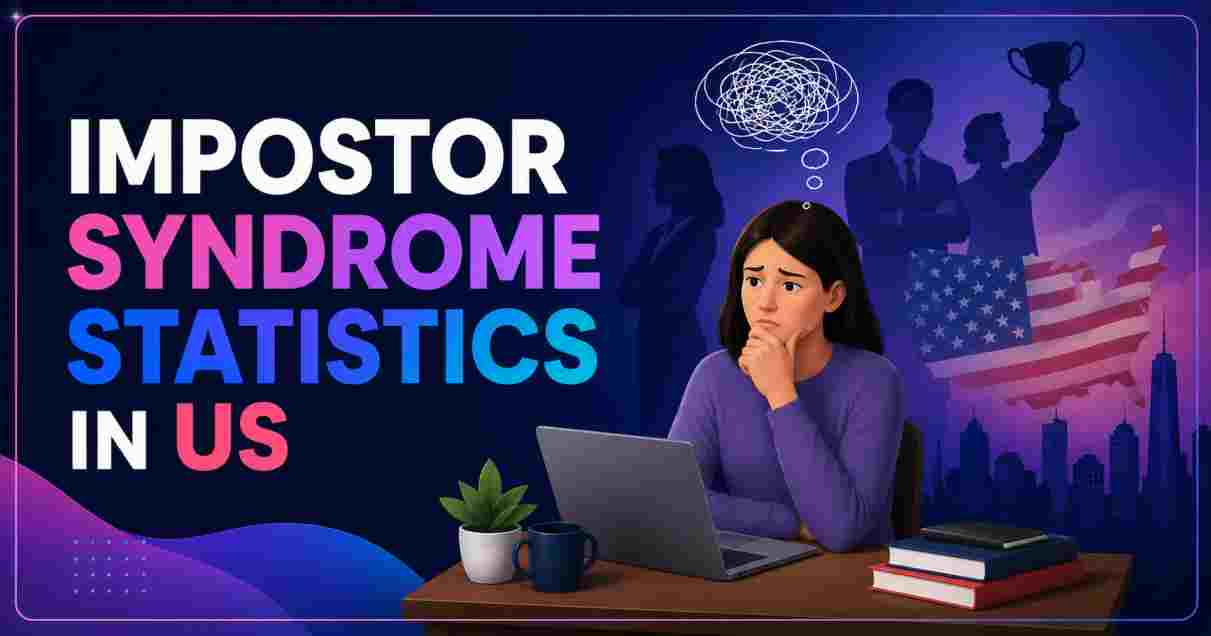
There is a particular kind of private distress that many of America’s highest-achieving professionals share — a persistent, nagging conviction that they do not truly deserve the position they hold, the respect they receive, or the success they have built. This is impostor syndrome, and it is far more widespread than most people imagine. First identified in 1978 by psychologists Suzanne Imes, Ph.D. and Pauline Rose Clance, Ph.D. — who initially observed it among high-achieving women — impostor syndrome has since been documented across virtually every professional sector, demographic group, and career stage. In 2026, the research base on this phenomenon has grown enormously, and the data consistently reveals something counterintuitive: the more objectively accomplished a person becomes, the more vulnerable they can be to feeling like a fraud.
The latest research in 2025 and 2026 puts the prevalence of impostor syndrome in stark perspective. Approximately 70% of people will experience at least one significant episode of impostor feelings during their lifetime, and in high-performance professional environments, the rates climb dramatically higher. A 2025 meta-analysis published in BMC Psychology, examining 30 studies with over 11,000 participants, found that 62% of health service professionals — people who have completed years of rigorous academic training and passed demanding board certification processes — experience impostor syndrome. If years of medical credentialing cannot prevent these feelings, the problem clearly runs deeper than any qualification can reach. Understanding who is most affected, what environments amplify these feelings, and what the real-world consequences are for both individuals and organizations is essential for anyone working in or leading a high-performance American workplace in 2026.
Key Impostor Syndrome Facts in the US 2026
IMPOSTOR SYNDROME — PREVALENCE SNAPSHOT (US / GLOBAL 2026)
===========================================================

  Experience it at some point in life  ████████████████████████████  70%
  Knowledge workers globally           ████████████████████████████  62%
  Health professionals (BMC 2025)      ████████████████████████████  62%
  Women (general workforce)            ████████████████████████      54%
  Men (general workforce)              ████████████████              38%
  Female executives (KPMG)             ████████████████████████████  75%
  Women in STEM (NSF study)            ████████████████████████████  72%
  Men in STEM (NSF study)              ████████████████████          48%
  Leaders aged 24–44                   ████████████████████          45%

  ► Range across all studies: 9% to 82% (depending on method/population)
| Key Fact | Data Point |
|---|---|
| Lifetime experience of at least one impostor syndrome episode | ~70% of people globally |
| Prevalence range across all peer-reviewed studies (JGIM systematic review) | 9% to 82% — reflects wide variation in populations studied and tools used |
| Health service professionals experiencing impostor syndrome (BMC Psychology meta-analysis, 2025, n=11,483) | 62% — highest measurement using CIPS tool: 64.5% |
| Knowledge workers globally experiencing impostor syndrome | 62% |
| Women who report experiencing impostor syndrome | 54% vs. 38% of men |
| Women who experience it very frequently or always | 21% vs. 12% of men |
| Female executives who have experienced it (KPMG study) | 75% of high-achieving female executives |
| Women in STEM who report impostor feelings (NSF longitudinal study, n=5,000) | 72% vs. 48% of male STEM undergrads |
| Leaders aged 24–44 reporting frequent impostor thoughts | 45% vs. just 23% of leaders aged 55–74 |
| Workers with impostor syndrome who report higher stress at home | 77% |
| Employees who feel they don’t deserve their salary | 43% |
| Employees who avoid applying for promotion due to fear of exposure | 38% |
| Workers with impostor syndrome who are less likely to ask for a raise | 18% less likely than peers without it |
| People with impostor syndrome who are 3x more likely to develop clinical anxiety | Research-confirmed risk multiplier |
Source: BMC Psychology 2025 meta-analysis (Salari et al., n=11,483); JGIM Systematic Review (Bravata et al., 2019, 62 studies, n=14,161); KPMG Female Executives Study; NSF STEM Longitudinal Study; SpeakWise Impostor Syndrome Statistics April 2026; WifiTalents Impostor Syndrome Data 2026
The range of 9% to 82% across peer-reviewed impostor syndrome studies — confirmed by the landmark 2019 Journal of General Internal Medicine systematic review of 62 studies and 14,161 participants — is not a sign of scientific confusion but a reflection of genuine variability in who is being studied and how the phenomenon is being measured. When researchers use the most sensitive screening tools and apply them to high-performance professional populations (medical students, academics, tech workers), they consistently find rates at the high end of that range. When they apply stricter diagnostic thresholds to general populations, rates come in lower. The practical implication is that virtually any American professional working in a demanding environment faces a meaningful statistical probability of experiencing significant impostor feelings at some point in their career.
The workplace consequences documented in the data deserve particular attention. When 43% of employees with impostor syndrome feel they do not deserve their current salary, 38% avoid applying for promotions, and workers are 18% less likely to ask for raises, the economic self-suppression is measurable and real. Impostor syndrome is not merely a personal struggle — it is a structural drag on individual earnings, career advancement, and organizational talent utilization. The finding that leaders aged 24 to 44 show impostor thoughts at nearly double the rate of leaders aged 55 to 74 (45% vs. 23%) suggests the phenomenon is most acute during exactly the career years when individuals are building their reputations, assuming greater responsibilities, and most frequently putting themselves in novel, high-stakes situations for the first time.
Impostor Syndrome by Gender in the US 2026
IMPOSTOR SYNDROME — GENDER COMPARISON (US / Research Data)
===========================================================

  Women (general)               ████████████████████████████  54%
  Men (general)                 ████████████████              38%
  Women — very frequently/always ████████████████████         21%
  Men — very frequently/always  ████████                      12%
  Female Fortune 500 (Catalyst) ████████████████████████████  65%
  Male Fortune 500 (Catalyst)   ████████████████████          45%
  Female executives (KPMG)      ████████████████████████████  75%

  ► Meta-analysis of 108 studies confirms women score higher than men
  ► Effect size d = 0.27 (small-moderate, statistically significant)
| Gender/Group | Impostor Syndrome Rate | Source |
|---|---|---|
| Women (general workforce) | 54% | Workplace Insight research |
| Men (general workforce) | 38% | Workplace Insight research |
| Women who experience it very frequently or always | 21% | vs. 12% of men |
| Women in Fortune 500 companies (Catalyst, 2022) | 65% | vs. 45% of men in same companies |
| Female executives (KPMG study) | 75% | High-achieving women specifically |
| Non-binary individuals | 57% | Higher than the average across binary genders |
| Bisexual individuals | 69% | Highest rates among sexual orientation groups studied |
| LGBTQ+ individuals generally | Consistently elevated rates | Intersectionality of minority status amplifies impostor feelings |
| Gender difference confirmation | Meta-analysis of 108 studies confirms women score higher; effect size d = 0.27 (small to moderate, statistically significant) | Current Research in Behavioral Sciences meta-analysis |
Source: Current Research in Behavioral Sciences meta-analysis (108 studies); Catalyst Fortune 500 Study 2022; KPMG Female Executives Study; Workplace Insight Impostor Syndrome Research; JGIM Systematic Review (Bravata et al., 2019)
The gender dimension of impostor syndrome is one of the most thoroughly studied aspects of the phenomenon, and the 2024 meta-analysis combining over 100 studies provides the most definitive statement yet: women consistently score higher than men on impostor syndrome measures, with a statistically significant effect size of 0.27. This is classified as small to moderate in psychological effect size terms, which means the difference is real and meaningful without being absolute — there are enormous numbers of men experiencing intense impostor feelings, and many women who do not. The Stanford JGIM systematic review found that half of the studies reporting gender effects found no difference between men and women, which is equally important context.
What the data reveals more clearly than a simple gender gap is the role of structural environment. When women operate in industries or workplaces where they are visibly underrepresented, face more scrutiny of their competence, or are routinely excluded from informal networks of influence, their impostor syndrome rates climb. 75% of female executives — women who have objectively succeeded to the highest levels of corporate America — have experienced significant impostor feelings, suggesting the syndrome persists despite and perhaps because of achievement. The LGBTQ+ data adds another layer: bisexual individuals (69%) and non-binary individuals (57%) show consistently elevated rates, reflecting how being a member of multiple minority or non-majority groups compounds the internal sense of not truly belonging in any given professional space.
Impostor Syndrome by Race, Profession & Setting in the US 2026
IMPOSTOR SYNDROME — BY GROUP & SETTING (US Research Data)
==========================================================

  Black women (McKinsey/LeanIn)     ████████████████████████████  81%
  White women (same study)          ████████████████████████      67%
  STEM women undergrads             ████████████████████████████  72%
  STEM men undergrads               ████████████████████          48%
  Healthcare workers (BMC 2025)     ████████████████████████████  62%
  First-gen college students        ████████████████████████      15% more likely than peers
  Black medical students            ████████████████████          25% report high IS
  White medical students            ████████████                  15% report high IS
  Leaders 24–44                     ████████████████████          45%
  Leaders 55–74                     ████████                      23%
| Group / Setting | Impostor Syndrome Rate / Finding |
|---|---|
| Black women in corporate settings (McKinsey Women in Workplace, n=10,000) | 81% — compared to 67% of white women in same study |
| African American medical students | 25% report high impostor syndrome vs. 15% of white medical students |
| Black women overall | 2x more likely than white women to experience impostor feelings in corporate settings |
| First-generation college students | 15% more likely to experience impostor syndrome than non-first-generation peers |
| Academic and medical environments | Consistently among the highest-prevalence professional settings |
| STEM undergrad women | 72% vs. 48% of STEM men (NSF longitudinal study, n=5,000) |
| Knowledge workers globally | 62% across sectors |
| Healthcare professionals (BMC 2025 meta-analysis) | 62% — rising to 64.5% using the Clance scale specifically |
| Early-career professionals (first years of employment) | Particularly elevated; high performance pressure and novelty of environment are key drivers |
| Leaders in high-pressure sectors | Impostor syndrome linked to 20% increased burnout rates among physicians and other high-performance leaders |
Source: McKinsey Women in the Workplace Report (n=10,000); NSF STEM Longitudinal Study (n=5,000); BMC Psychology 2025 (n=11,483); SpeakWise April 2026; WifiTalents 2026; JGIM Bravata et al. 2019
The racial and ethnic dimensions of impostor syndrome in America represent some of the most important — and most underreported — findings in this research area. The McKinsey Women in the Workplace data, drawn from a survey of 10,000 individuals, found that Black women experience impostor syndrome at an 81% rate compared to 67% for white women in the same professional settings. This gap is not explained by differences in qualification or competence — it reflects the additional psychological burden of operating in environments where Black women are frequently underrepresented in leadership and may be subject to racial stereotyping, microaggressions, and heightened scrutiny of their work. The 2019 JGIM systematic review explicitly found that impostor syndrome is a stronger predictor of mental health difficulties than minority status stress itself — meaning that the internal experience of feeling like a fraud is more damaging than the external experience of discrimination.
First-generation college students represent another highly vulnerable group. Entering academic environments designed for students whose parents navigated the same systems, these individuals often lack the cultural capital, informal knowledge, and social scripts that smooth the transition to higher education — making them 15% more likely to experience impostor syndrome than their non-first-generation peers. The STEM environment’s particularly high rates — 72% of women in STEM feeling like impostors — reflect a field that has historically been unwelcoming to women and where cultural stereotypes about who “belongs” in technical disciplines actively undermine the sense of legitimate membership that psychological safety requires.
Impostor Syndrome’s Impact on Mental Health & Careers in the US 2026
CONSEQUENCES OF IMPOSTOR SYNDROME — IMPACT SEVERITY (Research)
===============================================================

  Anxiety (3x higher risk)           ████████████████████████████  Severe
  Burnout (20% increase in risk)      ████████████████████████      High
  Depression comorbidity              ████████████████████████      High
  Salary suppression (ask for less)   ████████████████████          High
  Promotion avoidance                 ████████████████████          High
  Job dissatisfaction                 ████████████████████          High
  Home stress spillover               ████████████████████          High (77%)
  Academic performance (students)     ████████████████              Significant

  ► IS is comorbid with depression and anxiety across multiple major studies
| Impact Area | Key Finding |
|---|---|
| Anxiety risk | People with impostor syndrome are 3x more likely to develop clinical anxiety |
| Burnout | Impostor syndrome is linked to a 20% increase in burnout rates among physicians and other professionals |
| Depression comorbidity | Impostor syndrome shows moderate to strong correlation with depression (r=0.486 in 2025 MDPI cross-sectional study) |
| Home stress spillover | 77% of workers with impostor syndrome report higher stress levels in their home life |
| Salary and negotiation suppression | 43% feel they don’t deserve their salary; 18% less likely to ask for a raise |
| Career self-limiting behaviors | 38% avoid applying for promotions; fear of being “found out” overrides ambition |
| Job satisfaction | Impostor syndrome is associated with impaired job performance and lower job satisfaction |
| Academic consequences | Students with impostor syndrome show lower academic engagement and higher dropout risk |
| Treatment effectiveness — CBT | CBT reduces impostor scores by approximately 34% in 12-week programs |
| Mentoring effectiveness | Mentoring programs decrease impostor syndrome by 41% in mentees over 6 months (study of 500 women) |
Source: MDPI Behavioral Sciences 2025 (cross-sectional study); BMC Psychology 2025 (Salari et al.); JGIM Bravata et al. 2019; WifiTalents 2026; SpeakWise April 2026; GitnuxImposter Syndrome Statistics 2026
The mental health consequences of impostor syndrome in America are serious, well-documented, and clinically significant. The 2025 MDPI cross-sectional study of 504 undergraduate students found that 56% experienced impostor syndrome, with CIPS scores showing a moderate relationship with both depression (r=0.486) and anxiety (r=0.472) — both correlations statistically significant at p<0.001. These are not mild associations. They indicate that impostor syndrome and psychological distress are deeply entangled in a way that creates genuine clinical burden, and that addressing one without addressing the other will produce incomplete outcomes. The finding that impostor syndrome is a stronger predictor of mental health problems than minority status stress itself suggests that organizations focusing only on external representation metrics — while ignoring the internal psychological environment — are addressing only half the problem.
The career and economic consequences are equally concrete. An employee who avoids promotions, underprices their own salary, and fails to advocate for their own contributions is not just experiencing subjective distress — they are making financially consequential decisions driven by distorted self-perception. The good news embedded in the 2026 data is that effective interventions exist. CBT reduces impostor scores by approximately 34% in structured 12-week programs, mentoring programs cut impostor syndrome by 41% in mentees over 6 months, and organizational recognition programs also show measurable effectiveness. The interventions that work share a common element: they do not simply tell individuals to believe in themselves — they restructure the evidence base and social environment in which self-assessment occurs, replacing distorted internal narratives with verified external feedback from trusted sources.
Disclaimer: The data research report we present here is based on information found from various sources. We are not liable for any financial loss, errors, or damages of any kind that may result from the use of the information herein. We acknowledge that though we try to report accurately, we cannot verify the absolute facts of everything that has been represented.