Largest Airport in the World 2026
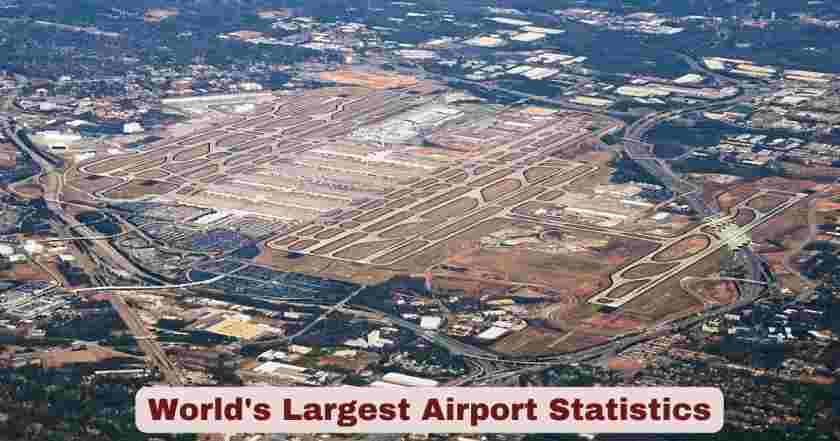
When it comes to sheer scale and ambition, no airport on earth comes close to King Fahd International Airport (DMM) in Dammam, Saudi Arabia. Holding the Guinness World Record as the world’s largest airport by total land area, this extraordinary aviation facility spans a staggering 776 square kilometers (300 square miles) — a footprint larger than the entire country of Bahrain and roughly equivalent to all five boroughs of New York City combined. Opened for commercial operations on 28 November 1999, the airport was built on what was originally a U.S. military airbase used during Operation Desert Storm in 1991, and its colossal size is a direct legacy of that military heritage. Despite this unprecedented physical scale, only about 36.75 km² (14.19 square miles) of the total land mass is currently developed for active aviation operations, leaving vast tracts of desert terrain earmarked for future growth in line with Saudi Arabia’s sweeping national development agenda.
What makes King Fahd International Airport especially compelling in 2026 is the speed of its transformation. For much of its early history, the airport was quietly overshadowed by Saudi Arabia’s busier airports in Jeddah and Riyadh. But under the Kingdom’s landmark Saudi Vision 2030 initiative, the airport has emerged as a major strategic priority. In 2024, the facility recorded 12.8 million passengers — a 15% year-on-year increase — along with over 99,000 flights, a 5% rise compared to the previous year. A SAR 1.6 billion ($426.5 million) master plan was officially launched in July 2025, with targets to push annual passenger capacity to 19.3 million by 2030 and air cargo throughput to over 600,000 tonnes per year — a tenfold increase on current volumes. From its record-breaking physical dimensions to its rapidly expanding aviation network, King Fahd International Airport is undergoing a genuine reinvention that makes it one of the most important airport stories in global aviation today.
Interesting Key Facts: World’s Largest Airport 2026
| Fact Category | Detail |
|---|---|
| Official Name | King Fahd International Airport |
| IATA Code | DMM |
| ICAO Code | OEDF |
| Location | Dammam, Eastern Province, Saudi Arabia |
| Total Land Area | 776 km² (300 square miles) — Guinness World Record |
| Larger Than | Bahrain (765 km²) and Singapore (733 km²) |
| Equivalent To | Nearly all five boroughs of New York City (302.6 sq miles) |
| Opened for Commercial Use | 28 November 1999 |
| Designed By | Yamasaki & Associates and Boeing (1977) |
| Operated By | Dammam Airports Company (DACO), since July 2017 |
| Passengers in 2024 | 12.8 million (+15% year-on-year) |
| Passengers in 2023 | 10.9 million (+16.2% year-on-year) |
| Flights in 2024 | Over 99,000 (+5% year-on-year) |
| Record Single-Day Traffic | 50,000+ passengers (set in 2024) |
| Record Single-Day Flights | 374 flights on June 13, 2024 |
| Number of Runways | 2 parallel runways, each 4,000 metres (13,123 ft) long |
| Runway Width | 60 metres (200 feet) each |
| Active Area Currently Used | ~36.75 km² (approx. 5% of total land area) |
| Main Passenger Terminal Area | 327,000 m² (3.52 million sq ft) |
| Boarding Bridges | 11 fixed boarding bridges |
| Gates | 15 gates (domestic and international) |
| Terminals | 3: Passenger Terminal, Aramco Terminal, Royal Terminal |
| Royal Terminal Size | 16,400 m² (177,000 sq ft) |
| Control Tower Height | 85.5 metres (281 feet) |
| Airport Mosque Capacity | 2,000 worshippers |
| Onsite Nursery Area | 215,579 m² (2.32 million sq ft) including 3 greenhouses |
| Main Access Road Length | 36 km (22 miles) |
| Distance from Dammam City | 31 km (19 miles) northwest |
| Number of Airlines (2023) | 48 carriers (45 international, 3 national) |
| International Routes | 85 routes (as of 2024) |
| Total Destinations | 65 (49 international + 16 domestic) |
| Busiest Route | Dammam–Dubai: 70 weekly flights (avg. 10/day) |
| Shortest International Flight from DMM | Dammam to Bahrain: 87 km (54 miles) |
| ICAO Classification | Code E (accommodates Boeing 747-400, A340-600) |
| Hub Airlines | Flynas, Flyadeal, Saudi Aramco Aviation |
| Saudi Vision 2030 Passenger Target | 19.3 million annually by 2030 |
| Long-Term Capacity Target | 32 million passengers per year |
| Cargo Target by 2030 | Over 600,000 tonnes/year (1,000% increase) |
| Aircraft Movement Target | 77 movements per hour |
| Total Master Plan Investment | SAR 1.6 billion ($426.5 million) — 77 projects |
| Passenger Growth 2022 to 2024 | +35% |
Sources: Guinness World Records, Wikipedia (King Fahd International Airport), Saudi General Authority for Statistics – Air Transport Statistics Publication 2024, QCAA, Aviation Business Middle East, Economy Middle East, Construction Week Online, Dammam Airports Company (DACO) official statements, Saudi Press Agency, Global Business Outlook
The scale of King Fahd International Airport is best understood not just in numbers but in comparisons. The fact that its 776 km² footprint exceeds the entire sovereign territory of Bahrain — a country with three of its own operating airports — is a remarkable testament to the ambitions underpinning its original design. Of that enormous land reserve, only approximately 5% is currently in active aviation use, with the remainder sitting as a blank canvas for the kinds of large-scale expansion that competing airports around the world simply cannot accommodate due to land constraints. The airport’s 327,000 m² passenger terminal — spanning six levels and featuring 11 boarding bridges and 15 gates — handles millions of passengers annually, supported by an 85.5-metre control tower offering full sightlines across all operational areas. The onsite mosque, capable of accommodating 2,000 worshippers, and the 215,579 m² nursery that supplies greenery for the entire campus underline that this airport was designed as a self-contained city, not merely a transit point.
The recent surge in passenger throughput — from 10.9 million in 2023 to 12.8 million in 2024, a growth rate of 15% — signals a clear acceleration phase. The record of 50,000 passengers in a single day, achieved in 2024, and a peak of 374 flights on June 13, 2024, are new operational highs that were practically unimaginable in the airport’s early years. Adding further momentum, the SAR 1.6 billion ($426.5 million) development package announced in July 2025 encompasses 77 infrastructure projects — including new electronic passenger processing gates, premium lounge upgrades (completed Phase 1 in November 2025 by Plaza Premium Group), and runway improvements — all pointing to an airport building serious operational muscle ahead of its 2030 targets.
World’s Largest Airport Statistics 2026: Land Area Rankings
| Rank | Airport | Country | Land Area (km²) | Land Area (sq miles) |
|---|---|---|---|---|
| 1 | King Fahd International Airport (DMM) | Saudi Arabia | 776 | 300 |
| 2 | Denver International Airport (DEN) | USA | 135.7 | 53 |
| 3 | Dallas/Fort Worth International Airport (DFW) | USA | 69.6 | 27 |
| 4 | Orlando International Airport (MCO) | USA | ~40.5 | ~15.6 |
| 5 | Dulles International Airport (IAD) | USA | 40.5 | 15.6 |
| 6 | King Khalid International Airport (RUH) | Saudi Arabia | 225 | 86.9 |
| 7 | Kuala Lumpur International Airport (KUL) | Malaysia | 100 | 38.6 |
| 8 | Beijing Capital International Airport (PEK) | China | ~50 | ~19.3 |
| 9 | Shanghai Pudong International Airport (PVG) | China | ~40 | ~15.4 |
| 10 | O’Hare International Airport (ORD) | USA | 29.7 | 11.5 |
Sources: World Atlas – The Largest Airports in the World by Size, Aerotime.aero – The World’s Largest Airports by Size in 2025, Skycop.com – Biggest Airports in the World 2025, WorldPopulationReview.com – Largest Airports in the World 2026
The land area comparison table above makes the dominance of King Fahd International Airport unmistakably clear. At 776 km² (300 square miles), it is nearly six times larger than the second-ranked Denver International Airport at 135.7 km² — and more than eleven times the size of Dallas/Fort Worth International Airport at 69.6 km². This is not a marginal statistical lead; it is a gulf so wide that the gap between DMM and every other airport on the list is greater than the size of most airports on the list themselves. The scale reflects a deliberate planning decision made in the 1970s and 1980s under King Fahd’s reign to future-proof the Eastern Province’s aviation infrastructure for generations. Even King Khalid International Airport in Riyadh — at a substantial 225 km² — comes in far behind DMM in the land area ranking, though Riyadh is currently far busier in terms of passenger traffic.
What is especially significant about DMM’s land position in 2026 is the strategic optionality it provides. While airports like London Heathrow, Dubai International, and Atlanta Hartsfield-Jackson are essentially maxed out in terms of available land — fighting court battles over new runway approvals or paying enormous sums to acquire adjacent property — King Fahd International Airport can expand virtually without constraint. The 77-project master plan launched in July 2025 is only the beginning. The long-term capacity blueprint envisions boosting total throughput to 32 million passengers annually with 77 aircraft movements per hour, and the land is already there, sitting under desert sun, ready to be developed on demand.
King Fahd International Airport Passenger Traffic Statistics 2026
| Year | Passengers (Millions) | Year-on-Year Growth (%) | Flights Handled |
|---|---|---|---|
| 2019 | ~8.5 | — | ~82,000 |
| 2020 | ~3.2 | ~-62% (COVID-19) | ~35,000 |
| 2021 | ~5.1 | ~+59% | ~55,000 |
| 2022 | ~9.4 | ~+84% | ~85,000 |
| 2023 | 10.9 | +16.2% | ~99,000+ |
| 2024 | 12.8 | +15% | 99,000+ |
| 2030 Target (Vision 2030) | 19.3 (capacity) | — | 77 movements/hour |
| Long-Term Capacity Target | 32 million | — | — |
Sources: QCAA – King Fahd Airport sees 15% growth in passenger traffic reaching 12m in 2024, Saudi General Authority for Statistics Air Transport Statistics Publication 2024, Aviation Business Middle East – Dammam Airport 2023 Traffic Report, Global Business Outlook, SaudiGulf Projects – Saudi Arabia Announces New Master Plan for Three International Airports
The passenger traffic trajectory at King Fahd International Airport tells a story of resilience, recovery, and now genuine acceleration. From a pre-pandemic baseline of approximately 8.5 million passengers in 2019, the airport’s volumes collapsed by roughly 62% in 2020 as Saudi Arabia suspended all domestic and international flights on 21 March 2020 in response to COVID-19. Recovery was swift once restrictions eased — domestic services resumed on 31 May 2020, and international flights came back on 18 May 2021. By 2022, passenger numbers had almost fully recovered to pre-pandemic levels at around 9.4 million, and the airport then broke into new territory, crossing 10.9 million in 2023 (+16.2%) and surging to a record 12.8 million in 2024 (+15%). The setting of a new single-day record of 50,000+ passengers in 2024, and the record traffic peak of 374 flights on June 13, 2024, are further confirmation that the post-pandemic travel recovery at DMM is now a structural upswing, not just a bounce.
Looking ahead, the trajectory points firmly upward. The SAR 1.6 billion ($426.5 million) master plan announced in July 2025 has set an official capacity target of 19.3 million passengers annually by 2030 — more than double the 9.5 million served in 2022. Furthermore, the longer-term expansion blueprint envisions a total annual throughput of 32 million passengers, supported by aircraft movement capacity of 77 per hour. A new national low-cost airline operating in partnership with Air Arabia was announced at KFIA in July 2025, set to serve 24 domestic and 57 international destinations with a fleet of 45 aircraft by 2030, targeting approximately 10 million passengers annually from the Dammam base alone. If this trajectory holds, King Fahd International Airport will look very different — and very much busier — by the end of this decade.
King Fahd International Airport Infrastructure Statistics 2026
| Infrastructure Metric | Current Specification |
|---|---|
| Total Land Area | 776 km² (300 sq miles) |
| Active Operational Area | ~36.75 km² (14.19 sq miles) |
| Terminal Building Area | 327,000 m² (3.52 million sq ft) |
| Number of Terminals | 3 (Passenger, Aramco, Royal) |
| Royal Terminal Area | 16,400 m² (177,000 sq ft) |
| Number of Runways | 2 parallel runways |
| Runway Length | 4,000 m (13,123 ft) each |
| Runway Width | 60 m (200 ft) each |
| Blast Pad Length | 120 m (390 ft) at each end |
| Aircraft Stands | 49 aircraft stands |
| Boarding Bridges | 11 fixed bridges |
| Gates | 15 gates |
| Helipads | 2 |
| Control Tower Height | 85.5 m (281 ft) |
| ICAO Airport Code Classification | Code E |
| Cargo Facilities | 9 cargo facilities |
| Mosque Capacity | 2,000 worshippers |
| Onsite Nursery | 215,579 m² including 3 greenhouses |
| Main Access Road | 36 km (22 miles) in length |
| Master Plan Investment (2025) | SAR 1.6 billion ($426.5 million) |
| Number of Development Projects | 77 infrastructure projects |
Sources: King Fahd International Airport official website (dmmairport.com), Wikipedia – King Fahd International Airport, Guinness World Records, Saudi General Authority for Statistics Air Transport Statistics Publication 2024, Aviation Business Middle East, Economy Middle East
The infrastructure profile of King Fahd International Airport reflects a facility that was engineered for the long term from day one. The 327,000 m² main passenger terminal — designed by the architecture firm Yamasaki & Associates (the same firm that designed New York’s original World Trade Center towers) in partnership with Boeing, with the master plan completed in 1977 and construction beginning in 1983 — spans six levels and houses 11 fixed boarding bridges, 15 gates, and all standard passenger processing facilities. The Royal Terminal, at 16,400 m², is a separate facility used exclusively by the Saudi royal family and visiting heads of state, and is itself larger than the entire terminal buildings of many regional airports worldwide. The 9 cargo facilities at the airport position it as a growing logistics anchor for Saudi Arabia’s Eastern Province, the heart of the Kingdom’s oil and petrochemical industry.
The 77-project infrastructure development package announced in July 2025 is already reshaping the physical environment of the airport. New electronic gates for passenger processing were inaugurated by the Eastern Province Governor in July 2025, and the Plaza Premium Lounge completed its Phase 1 redevelopment in November 2025, introducing upgraded premium hospitality infrastructure aligned with the airport’s increased international traffic profile. The airport’s two parallel 4,000-metre runways, rated at ICAO Code E, can accommodate wide-body aircraft including the Boeing 747-400 and Airbus A340-600, and the runway geometry technically allows for A380 operations (only the taxiways and gates fall below Code F standards). With 77 per hour aircraft movement capacity targeted under the master plan, and plans for additional runways built into the land reserve, the operational ceiling at DMM is far from being reached.
King Fahd International Airport Connectivity and Cargo Statistics 2026
| Connectivity/Cargo Metric | Data |
|---|---|
| Total Destinations Served | 65 (49 international + 16 domestic) |
| International Routes | 85 routes (as of 2024) |
| Airlines Operating | 48 carriers in 2023 (45 international, 3 national) |
| Busiest Route | Dammam–Dubai: 70 weekly flights (avg. 10/day) |
| Shortest International Flight | Dammam–Bahrain: 87 km (54 miles) |
| Cargo Facilities at DMM | 9 |
| Saudi Total Air Cargo (H1 2024) | 606,000 tonnes (+41% year-on-year) |
| Saudi Total Air Cargo 2024 | 1.2 million tonnes (+34% year-on-year) |
| KFIA Cargo Target by 2030 | 600,000 tonnes/year (1,000% increase vs. current) |
| New LCC Announced | Air Arabia at KFIA (operations expected 2026) |
| New LCC Target Routes | 24 domestic + 57 international |
| New LCC Target Fleet | 45 aircraft by 2030 |
| New LCC Passenger Target | ~10 million/year from Dammam |
| Hub Airlines at KFIA | Flynas, Flyadeal, Saudi Aramco Aviation |
| Saudi National Aviation Target by 2030 | 330 million passengers, 250+ destinations, 4.5m tonnes cargo |
Sources: QCAA – King Fahd Airport 15% Growth Report, Saudi General Authority for Statistics Air Transport Statistics Publication 2024, Wikipedia – King Fahd International Airport, Economy Middle East – SAR1.6bn Master Plan Launch, Enterprise AM – Airports Host 128mn Passengers in 2024, Aviation Business Middle East – KFIA Unveils SAR1.6bn Investment
The connectivity and cargo statistics for King Fahd International Airport in 2026 reveal an airport that is rapidly expanding its global reach from a regional base. With 65 total destinations — including 49 international routes and 16 domestic routes — and 85 total route connections as of 2024, KFIA is serving a far broader network than at any point in its history. The airport’s carrier base grew to 48 airlines in 2023 — up 17% year-on-year — including 45 international carriers, which reflects growing airline confidence in the airport’s growth story and the wider Eastern Province market. The busiest single route — Dammam to Dubai — runs at 70 weekly flights (an average of 10 flights per day), underlining the strong business and tourism corridor between Saudi Arabia’s Eastern Province and the UAE.
On the cargo side, the scale of ambition is arguably even more striking. Saudi Arabia’s airports collectively saw air cargo volumes surge by 41% in the first half of 2024 alone, reaching 606,000 tonnes, with full-year 2024 figures reaching 1.2 million tonnes (+34%). For KFIA specifically, the 2030 master plan targets a cargo throughput of over 600,000 tonnes per year — representing a tenfold (1,000%) increase over current volumes — a target that would transform the airport into a genuinely significant regional logistics hub rather than merely a passenger gateway. The announcement of a new Air Arabia-operated low-cost carrier to be based at KFIA, with operations expected to begin in 2026, serving 24 domestic and 57 international destinations with 45 aircraft by 2030 targeting around 10 million passengers annually, is a pivotal piece of news that could dramatically reshape the airport’s traffic profile well before the end of the decade.
World’s Largest Airport 2026: Key Size Comparison Statistics
| Comparison Benchmark | King Fahd International Airport (DMM) |
|---|---|
| Total Area vs. Bahrain | Larger: DMM = 776 km²; Bahrain = 765 km² |
| Total Area vs. Singapore | Larger: DMM = 776 km²; Singapore = 733 km² |
| Total Area vs. New York City (5 boroughs) | Comparable: NYC = 783.8 km² (302.6 sq mi) |
| vs. London Heathrow (LHR) | DMM is 63x larger (LHR = ~12.27 km²) |
| vs. Los Angeles International (LAX) | DMM is 55x larger (LAX = ~14 km²) |
| vs. Dubai International (DXB) | DMM is 29x larger (DXB = ~26.7 km²) |
| vs. Denver International (DEN) | DMM is ~5.7x larger (DEN = 135.7 km²) |
| % of DMM Land Currently in Active Use | ~5% (36.75 km²) |
| % of DMM Land Reserved for Future Expansion | ~95% |
| World Ranking by Land Area | #1 (Guinness World Record) |
| World Ranking by Passenger Traffic | Outside the Top 100 globally |
| Saudi Arabia Ranking by Passenger Traffic | 3rd (behind Jeddah and Riyadh) |
| Saudi Arabia Ranking by Land Area | 1st |
Sources: Guinness World Records – Largest Airport Area, Wikipedia – King Fahd International Airport, WorldPopulationReview.com – Largest Airports in the World 2026, Skycop.com – Biggest Airports in the World 2025, dmmairport.com – King Fahd International Airport Size, Aerotime.aero – World’s Largest Airports by Size in 2025
The comparison statistics for King Fahd International Airport are among the most striking in all of global aviation. Being 63 times larger than London Heathrow — one of the world’s great aviation powerhouses handling over 82 million passengers per year — or 55 times larger than Los Angeles International Airport are figures that challenge intuition. That a single airport could occupy a land area greater than the sovereign territory of Bahrain (which itself has three airports) or Singapore (one of the world’s great aviation hubs) is genuinely difficult to grasp without visual context. Yet the critical insight hidden within these comparisons is the 95% undeveloped land reserve: while KFIA is today ranked outside the global top 100 airports by passenger volume and stands only third-busiest in Saudi Arabia, it holds a long-term physical capacity that no other airport on earth can match.
This statistical tension — the world’s largest airport by land, yet a relatively modest passenger handler today — is precisely what makes the Saudi Vision 2030 transformation story so compelling. The airport’s ranking as 3rd in Saudi Arabia by passenger traffic (behind Jeddah at 49 million and Riyadh at 37.6 million in 2024) is not a sign of failure but a baseline from which an enormous upward journey is now underway. The 35% passenger traffic growth recorded between 2022 and 2024 is the clearest evidence yet that the gap between KFIA’s physical potential and its operational reality is beginning to close. With 12.8 million passengers in 2024, an ambitious $426.5 million investment plan, and a new low-cost airline partner beginning operations in 2026, the world’s largest airport is finally growing into its extraordinary size.
King Fahd International Airport Facilities & Amenities Statistics 2026
| Facility / Amenity | Detail |
|---|---|
| Total Terminals | 3 — Main Passenger Terminal, Aramco Terminal, Royal Terminal |
| Terminal Levels | 6 floors (Main Passenger Terminal) |
| Terminal Concourses | 2 — North and South, linked by a central lobby |
| Passenger Lounges | Al-Fursan Lounge (Saudia F/J class), Plaza Premium Lounge (Phase 1 rebuilt Nov 2025), Altanfithie Lounge, Primeclass Lounge, CIP Lounge |
| Plaza Premium Lounge Redevelopment | Phase 1 completed November 2025; Phase 2 ongoing |
| Lounge Features | Shower rooms, prayer rooms (men & women), baby care station, VIP private room, smoking zone, vanity area, buffet dining, Lounge-to-Go counter |
| Duty-Free Shopping | First airport in Saudi Arabia to offer duty-free stores |
| Retail Highlights | Virgin Megastore, Arabian Oud, perfumes, electronics, luxury goods, souvenirs |
| Food & Beverage Outlets | Costa Coffee, McDonald’s, KFC, local shawarma eateries, international cafés |
| Prayer Facilities | Dedicated prayer rooms near Gates 10 and 20; onsite mosque accommodates 2,000–3,000 worshippers with separate sections for men and women |
| Children’s Play Area | Located near Gates 116–118 |
| Free Wi-Fi | Available airport-wide, no time limits; premium high-speed in lounges |
| Business Centre | Fully equipped — workstations, printing, faxing, copying, Wi-Fi |
| Banking & Currency Exchange | NCB ATMs, National Commercial Bank branch, Sharhan Exchange (arrivals) |
| Car Rental Services | Hertz, Budget, Sixt, Avis — desks in arrivals area |
| Nearby Hotels | Park Inn by Radisson (free shuttle), Novotel Dammam Business Park |
| Ground Transport | Pre-paid taxis (24/7, fixed rates), public buses (Dammam/Al Khobar), Uber, limousine services |
| Parking | Long-term and short-term; covered and open-air options |
| Fast Track Services | Security, customs, and immigration fast track available |
| Baggage Services | Luggage handling, buggy transit services, lost and found |
| Planned Metro Connection | Dammam metro line to connect KFIA to city — under planning phase |
| Airport Elevation | 22 metres (72 feet) above sea level |
Sources: dmmairport.com – DMM Amenities, KFIA Official Website (kfia.sa), Travel and Tour World – Plaza Premium Lounge Dammam Reopens (February 2026), Travel and Tour World – King Fahd Airport Lounge Rebuild (February 2026), Airssist.com – King Fahd Airport Guide, DubaiKhaleej.com – King Fahd International Airport Tips & Insights
The facilities and amenities on offer at King Fahd International Airport have undergone significant upgrades in the run-up to 2026, reflecting the airport’s drive to match international hospitality benchmarks alongside its rapid traffic growth. The most significant recent development is the complete rebuild of the Plaza Premium Lounge, which originally opened in 2018 and has now been substantially transformed through a phased redevelopment — with Phase 1 completed in November 2025. The new lounge features modern shower rooms, gender-separated prayer spaces, a baby care station, a private VIP room, a well-ventilated smoking zone, and a full buffet dining service with a Lounge-to-Go counter for time-pressed travellers. Alongside the Al-Fursan Lounge (for Saudia first and business class passengers), the Altanfithie Lounge, the Primeclass Lounge, and the CIP Lounge, the airport now offers one of the most diverse premium lounge ecosystems among mid-sized Gulf airports. The fact that KFIA was the first airport in Saudi Arabia to introduce duty-free shopping — a distinction it still holds with pride — underlines its historically pioneering role in the Kingdom’s commercial aviation landscape.
Beyond the premium passenger experience, the everyday amenities at King Fahd International Airport are quietly comprehensive. The terminal’s six-level layout is split into two concourses — North and South — each with its own baggage claim, gates, and lounge access, connected by a central lobby. Digital flight information screens, real-time boarding gate updates, and free unlimited airport-wide Wi-Fi mean the passenger experience is smoothly functional. The children’s play area near Gates 116–118, the dedicated business centre, and the mix of international chains (Costa Coffee, McDonald’s, KFC) alongside local eateries serving shawarma give the terminal a human scale that suits its growing passenger base. A planned metro connection linking the airport to Dammam city — currently in the planning phase — would further close the gap between the airport’s world-record physical size and the accessibility that a 19.3 million-passenger-per-year facility by 2030 will require.
King Fahd International Airport Employment & Economic Impact Statistics 2026
| Economic / Employment Metric | Data |
|---|---|
| Airport Operator | Dammam Airports Company (DACO) — since July 2017 |
| Direct Jobs Created by New LCC (Air Arabia JV) | Over 2,400 direct jobs |
| New LCC Fleet | 45 aircraft by 2030 |
| New LCC Passenger Target | ~10 million passengers/year from Dammam |
| New LCC Routes | 24 domestic + 57 international |
| New LCC Operations Start | Expected 2026 |
| New LCC JV Partners | Air Arabia (UAE), KUN Investment Holding, Nesma Group |
| Saudi Aviation National Job Creation Target by 2030 | Thousands across ground handling, security, cargo, hospitality, retail |
| Master Plan Projects | 77 infrastructure projects creating construction & permanent roles |
| Master Plan Investment | SAR 1.6 billion ($426.5 million) |
| Estimated GDP Contribution (aviation sector, KFIA region) | Projected $50 billion per decade to Saudi GDP (long-term) |
| Saudi National Aviation Passenger Target by 2030 | 330 million passengers/year |
| Saudi National Air Cargo Target by 2030 | 4.5 million tonnes/year |
| Saudi Non-Oil GDP Contribution from Aviation | Central to Vision 2030 non-oil economic diversification |
| Eastern Province Urban Catchment | Dammam, Dhahran, Al Khobar, Qatif, Ras Tanura, Jubail — combined population ~4 million |
| KFIA’s Role in Eastern Province Economy | Principal employment framework; key logistics anchor for oil & petrochemical industry |
| Saudi Total Air Cargo Growth (2024) | +34% year-on-year to 1.2 million tonnes |
| New Electronic Passenger Gates | Inaugurated July 2025 by Eastern Province Governor |
Sources: Economy Middle East – Saudi Arabia Launches King Fahd Airport Master Plan July 2025, Arab News – Saudi Arabia Approves New Dammam-Based Budget Airline July 2025, Travel and Tour World – Saudi Arabia Approves New Dammam Budget Airline July 2025, GDN Online – International Business: Saudi Awards Licence to Air Arabia-Led Consortium, Saudi General Authority of Civil Aviation (GACA) official statements, Saudi Press Agency
The economic and employment impact of King Fahd International Airport is entering its most consequential phase in the airport’s 25-year history. The single largest immediate jobs milestone is the licensing in July 2025 of a new Air Arabia-led low-cost carrier to be based at KFIA — a joint venture between Air Arabia, KUN Investment Holding, and Nesma Group that is projected to create over 2,400 direct jobs once fully operational. With a fleet of 45 aircraft targeting 10 million passengers per year across 24 domestic and 57 international routes, the airline is expected to begin operations in 2026, marking a step-change in the airport’s commercial viability and employment footprint. This is on top of the job creation embedded across the 77 infrastructure projects funded by the SAR 1.6 billion ($426.5 million) master plan, spanning construction roles, permanent airport operations positions, retail, hospitality, cargo handling, and ground services.
At the macro level, King Fahd International Airport anchors the aviation economy of Saudi Arabia’s Eastern Province — a region whose urban catchment of approximately 4 million residents (across Dammam, Dhahran, Al Khobar, Qatif, Ras Tanura, and Jubail) is also the heart of the Kingdom’s oil and petrochemical industry. Industry analysts have projected a long-term GDP contribution from the airport ecosystem of approximately $50 billion per decade, driven by air travel, logistics, aviation fuel revenues, and the multiplier effects of the businesses and services that cluster around a major aviation hub. Saudi Arabia’s national aviation strategy — targeting 330 million passengers and 4.5 million tonnes of air cargo annually by 2030 — positions KFIA as a critical regional node in what is shaping up to be one of the world’s most ambitious aviation economic programmes. With 34% growth in total Saudi air cargo in 2024 and KFIA’s own cargo throughput targeted to increase tenfold by 2030, the economic gravity of the world’s largest airport is growing in step with its passenger numbers.
Disclaimer: The data research report we present here is based on information found from various sources. We are not liable for any financial loss, errors, or damages of any kind that may result from the use of the information herein. We acknowledge that though we try to report accurately, we cannot verify the absolute facts of everything that has been represented.