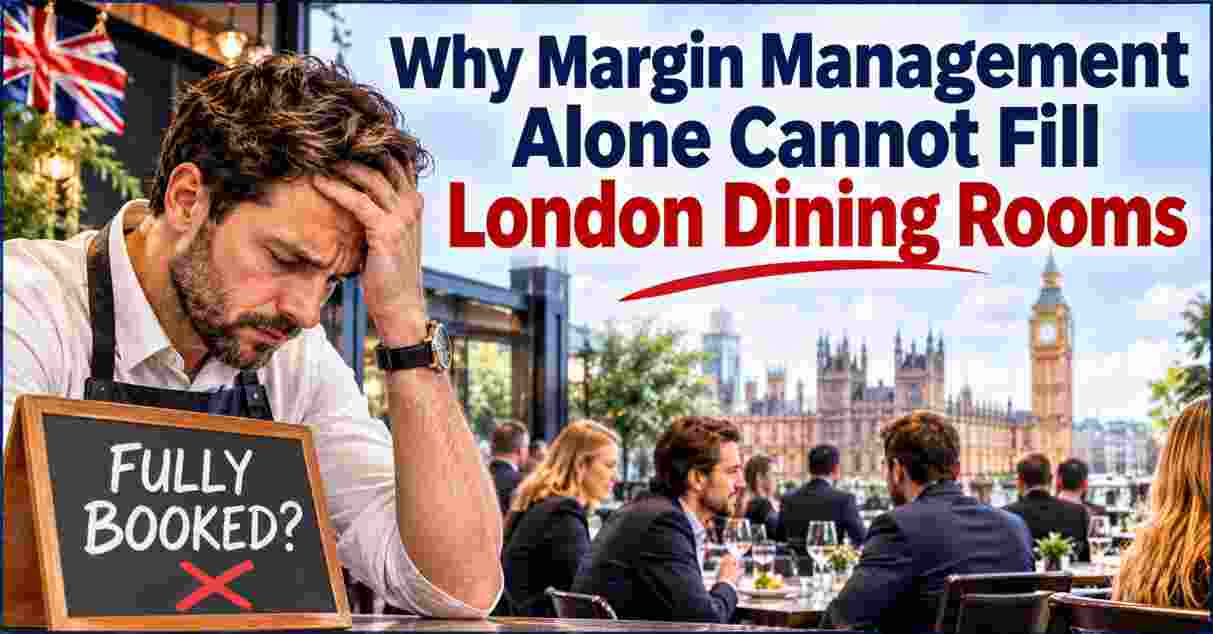
Operating a hospitality venue in the capital has always demanded resilience, but today’s economic climate presents unprecedented operational headwinds. Between rising business rates, escalating wage floors, volatile ingredient costs, and commercial energy tariffs, London restaurateurs are operating under razor-thin margins. In a high-density dining market where overheads continue to climb, traditional margin management alone is no longer enough to safeguard financial viability.
When revenue softens, the natural instinct for many hospitality directors is defensive: slashing staff hours, reducing portion sizes, and trimming supplier contracts. While sensible fiscal discipline is mandatory, cost reductions cannot solve empty dining rooms during off-peak services. Sustained profitability requires expanding covers and lifting average spend per head. In an intensely competitive metropolis, deliberate customer acquisition is not a luxury expense—it is an essential operational discipline.
Why Single-Channel Tactics Fall Short in London
Londoners discover and choose restaurants through an intricate web of digital touchpoints. A commuter might see a signature cocktail on an Instagram reel during their morning journey, check nearby lunch recommendations on Google Maps at noon, and later book a table after receiving an email newsletter promoting a weekend brunch.
Venues that rely exclusively on organic social media reach only their existing follower base. Conversely, establishments that secure strong search visibility but maintain dormant social profiles frequently lose prospective diners who demand visual proof of atmosphere, plating, and interior energy before committing. Failing to maintain an omni-channel presence hands valuable covers to competing concepts down the street. For independent operators seeking consistent booking volume across all services, collaborating with a dedicated restaurant marketing agency in London provides the specialized infrastructure required to capture fragmented demand.
Discovery: Capturing High-Intent Diners
Local Search and AI Discovery: Search engines remain the epicentre of high-intent reservations. When someone searches for private dining rooms or neighbourhood bistros, they intend to book immediately. Optimising Google Business Profiles, structuring technical schema markup, and managing local citations ensures top placement. Furthermore, modern discovery relies on Answer Engine Optimisation (AEO), structuring digital assets so conversational AI tools accurately recommend your venue.
Visual Social Storytelling: Short-form video and high-resolution imagery showcase what static menus cannot: the buzz of service, skilled plating, attentive hospitality, and interior design. This channel does not merely inform; it generates visceral appetite, curiosity, and essential social proof.
Hyper-Local Creator Collaborations: Rather than pursuing celebrity influencers with diluted global followings, forward-thinking venues partner with trusted local neighbourhood tastemakers. Creators whose audiences reside within a two-mile catchment area deliver immediate footfall rather than passive engagement.
Conversion: Turning Eyeballs into Seated Covers
Precision Paid Advertising: Targeted paid campaigns deliver predictable reservation velocity. Geofencing office districts for corporate lunches or targeting nearby postcodes with midweek tasting menu promotions allows venues to turn ad spend on and off precisely when table capacity dictates.
First-Party Email Marketing: Driving repeat visits from existing guests is significantly more cost-effective than acquiring brand-new diners. Regular email communication keeps your menu top of mind, announces seasonal menu shifts, and drives off-peak reservations without relying on third-party platform algorithms.
Value-Driven Promotions: Indiscriminate voucher discounting devalues culinary concepts. Conversely, strategic promotions—such as complimentary welcome drinks for early-evening bookings or bespoke pre-theatre menus—solve specific table inventory problems while strictly protecting gross profit margins.
Building an Integrated Acquisition System
Individual marketing activities deliver exponential returns when synchronized into a unified pipeline. High-quality creator content fuels targeted advertising campaigns; those ads direct diners to high-converting reservation pages; booking engines capture customer data; and automated lifecycle workflows convert one-off visitors into regular patrons.
When channels operate in silos, marketing spend is inefficient, fragmented, and difficult to measure. When orchestrated as an integrated acquisition system, every marketing pound works repeatedly to maintain full dining rooms, protect profit margins, and build long-term brand equity across the capital.