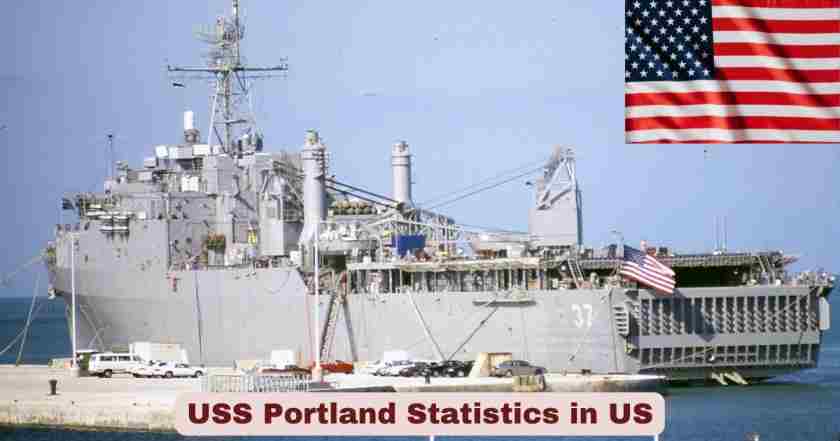
USS Portland in America 2026
The USS Portland (LPD-27) is a San Antonio-class amphibious transport dock ship of the United States Navy — a 684-foot, 25,000-ton warship that serves as the backbone of the modern American amphibious ready group, transporting Marines, their equipment, vehicles, and supplies from ship to shore through a combination of air cushion landing craft, conventional landing vessels, and helicopter and tiltrotor aviation. Commissioned on December 14, 2017, with its official public ceremony held on April 21, 2018 in the city of Portland, Oregon, the ship is the eleventh vessel of the San Antonio class and is named for Portland, Oregon — a naming honor that was notably protested by anti-war groups at the 2018 ceremony, who opposed a warship bearing the city’s name. Built by Huntington Ingalls Industries at the Ingalls Shipbuilding division in Pascagoula, Mississippi, and homeported at Naval Base San Diego, California, the USS Portland operates as part of the Boxer Amphibious Ready Group in 2026, alongside USS Boxer (LHD-4) and USS Comstock (LSD-45). What separates the USS Portland from virtually every other amphibious warship in the world — and from every other ship in its own class — is a technology distinction that has placed it at the cutting edge of directed-energy weapons development: the ship carried the Solid-State Laser Technology Maturation Laser Weapons System Demonstrator (LWSD) MK 2 MOD 0, a 150-kilowatt laser weapon system selected by the Office of Naval Research in 2018, which made Portland the first naval vessel in U.S. history to operationally fire a high-energy solid-state laser of that power class at sea.
As of March 21, 2026 — today — the USS Portland is at sea in the Pacific Ocean, having departed Naval Base San Diego on March 19, 2026, one day after the USS Boxer left port, heading westward with the Boxer Amphibious Ready Group and the 11th Marine Expeditionary Unit (MEU) toward the Middle East in support of Operation Epic Fury — the U.S.-Israeli military campaign against Iran that began on February 28, 2026. The accelerated departure — confirmed by multiple defense outlets including USNI News, The War Zone, Reuters, Fox News, NBC News, and Newsmax — came after sailors and Marines cut their leave short to speed up the ARG’s readiness timeline. The ship’s role within the Boxer ARG is precisely what the San Antonio class was designed for: carrying the bulk of the 11th MEU’s equipment, vehicles, and assault landing craft, operating the ARG’s secondary flight deck for MV-22B Ospreys and helicopters, and supporting command-and-control functions across the entire amphibious task force. With the Middle East theater in the fourth week of active U.S. combat operations, the USS Portland — carrying proven laser weapon experience, a certified and ready crew, and the full capability of the San Antonio class — is heading into one of the most demanding and consequential operational environments any U.S. amphibious ship has entered in decades.
USS Portland Key Facts in the US 2026
| Fact Category | Key Fact / Data Point |
|---|---|
| Hull Number and Designation | LPD-27 — Landing Platform Dock, Hull 27 of the San Antonio class |
| Ship Class | San Antonio-class amphibious transport dock — eleventh of the original Flight I ships |
| Namesake City | Portland, Oregon — the only major West Coast U.S. city to have an active Navy warship named for it |
| Ship’s Motto | “First Responders. Brave and Determined” |
| Ship’s Sponsor | Bonnie Amos — wife of General James F. Amos, 35th Commandant of the United States Marine Corps |
| Builder | Huntington Ingalls Industries (HII) — Ingalls Shipbuilding, Pascagoula, Mississippi |
| Contract Awarded | July 27, 2012 |
| Keel Laid | August 2, 2013 — authenticated by Bonnie Amos |
| Launched | February 13, 2016 |
| Delivered to Navy | September 18, 2017 |
| Officially Commissioned | December 14, 2017 |
| Public Commissioning Ceremony | April 21, 2018 — in the Port of Portland, Oregon — protested by anti-war groups |
| Years in Active Service (March 2026) | 8 years — commissioned December 2017 |
| Ship Identification | MMSI: 368926288; Pennant Number: LPD-27 |
| Current Homeport (2026) | Naval Base San Diego (NBSD), California |
| Current Status (March 21, 2026) | At sea — departed San Diego March 19, 2026 — heading to Middle East, Operation Epic Fury |
| ARG Assignment (2026) | Boxer Amphibious Ready Group — with USS Boxer (LHD-4) and USS Comstock (LSD-45) |
| Embarked MEU (2026) | 11th Marine Expeditionary Unit — elements embarked across the Boxer ARG |
| Laser Weapon Distinction | First U.S. Navy ship to operationally fire a 150-kW solid-state high-energy laser at sea |
| LWSD Selected for Portland | May 2018 — Office of Naval Research (ONR) selected Portland to host LWSD MK 2 MOD 0 |
| Artemis I Recovery Mission | December 11, 2022 — recovered NASA’s Orion spacecraft capsule from the Pacific after Moon-orbiting mission |
| Unit Cost of San Antonio Class (LPD-27 Era) | ~$1.6 billion average as-built cost per ship |
| Number of Ships in San Antonio Class (Flight I) | 13 Flight I ships built and building; plus 13 planned Flight II ships — 26 total planned |
Source: U.S. Navy Naval Vessel Register (nvr.navy.mil); Wikipedia USS Portland (LPD-27), updated March 2026; DVIDS USS Portland Unit Page (dvidshub.net); U.S. Navy Official News Release December 15, 2021 (cusnc.navy.mil); NASA Artemis I Blog December 11, 2022; USNI News March 20, 2026; surfpac.navy.mil LPD-27 page
The USS Portland’s motto — “First Responders. Brave and Determined” — captures something genuinely distinctive about the ship’s operational identity compared to other San Antonio-class vessels. San Antonio-class LPDs do not typically carry laser weapons, do not typically serve as NASA spacecraft recovery vessels, and do not typically attract anti-war protests at their commissioning ceremonies. The Portland has done all three. The Office of Naval Research’s 2018 decision to select the Portland — just months after its commissioning ceremony — as the host platform for the LWSD MK 2 MOD 0 was a deliberate choice: a relatively new ship with a fresh crew and modern systems was the right platform to develop the Navy’s most powerful ship-borne directed-energy weapon. That choice gave the Portland a technological identity that no other amphibious transport dock in the fleet holds. The laser weapon program, the Artemis I spacecraft recovery, and now the Operation Epic Fury deployment tell the story of a ship that consistently ends up at the intersection of the Navy’s most consequential technical and operational moments.
The April 2018 commissioning protest by Portland anti-war groups — including the Democratic Socialists of America and local peace organizations — represents one of the more unusual chapters in modern Navy ship history. The protesters objected not to any specific capability or mission of the ship but to the conceptual association of the city of Portland’s name with military power projection. The Navy proceeded with the ceremony, attended by thousands of Navy supporters and city residents, in a ceremony that Willamette Week described as simultaneously celebratory and contested. That dual civic identity — a warship named for one of America’s most politically progressive cities, now heading toward a combat theater as part of Operation Epic Fury — is the kind of historical irony that will eventually make it into the Portland’s official naval biography. What matters operationally in March 2026 is that the USS Portland is exactly where its crew, its embarked Marines, and its combatant commanders need it to be: at sea, ready, and heading into the fight.
USS Portland Technical Specifications Statistics in the US 2026
| Technical Parameter | Specification / Data |
|---|---|
| Ship Type | San Antonio-class Landing Platform Dock (LPD) — amphibious transport dock |
| Full-Load Displacement | 25,000 long tons (25,400 metric tons) — more than 45% larger than predecessor Austin class (17,000 tons) |
| Length (Overall) | 684 feet (208.5 meters) |
| Length (Waterline) | 660 feet 9 inches (201.4 meters) |
| Beam (Extreme) | 104 feet 8 inches (31.9 meters) |
| Beam (Waterline) | 96 feet 9 inches (29.5 meters) |
| Draft | 23 feet (7 meters) |
| Propulsion | Four Colt-Pielstick (Fairbanks Morse) diesel engines — two controllable-pitch propeller shafts |
| Installed Power | 40,000 horsepower (30,000 kW) |
| Maximum Speed | More than 22 knots (25 mph / 41 km/h) |
| Ship’s Crew (Complement) | 361 total — (28 officers + 333 enlisted) |
| Marine Troop Capacity | 699 troops standard (66 officers + 633 enlisted); surge to 800 total |
| Vehicle Storage | 25,000 square feet of vehicle stowage |
| Cargo Capacity | 36,000 cubic feet of cargo space |
| Well Deck | Floodable well deck capable of housing and launching 2 LCACs or 1 LCU |
| Flight Deck Capacity | Can simultaneously launch or recover 4 CH-46-size helicopters or 2 MV-22 tiltrotors |
| Hospital / Medical | Fully equipped medical facilities — expandable surgical capability |
| Radar (Mast) | Advanced Enclosed Mast/Sensors (AEM/S) System — octagonal composite structure encloses antennas — reduces radar cross-section |
| Survivability Design | Ship Self-Defense System (SSDS) for automated reaction to air threats; fiber-optic shipboard-wide area network (SWAN) |
| Modular Construction | Each LPD-17-class ship consists of 210 construction units built using modular techniques |
| Propeller Type | Controllable-pitch propellers — allows speed and maneuver control without reversing engine direction |
Source: U.S. Navy Fact Files, Navy.mil; HII Ingalls Shipbuilding Official LPD-17 page (hii.com); GlobalSecurity.org LPD-17 San Antonio Class; Wikipedia San Antonio-class Amphibious Transport Dock; Federation of American Scientists fas.org; seaforces.org San Antonio class profile
The 25,000-ton displacement of the San Antonio class — and by extension the USS Portland — represents a deliberate design choice that marked a significant shift from the amphibious ships it replaced. At more than 45% larger than the Austin-class LPDs (which displaced approximately 17,000 tons), the San Antonio class carries less raw troop capacity than its predecessors but twice as much space for vehicles, landing craft, and aviation assets — a trade-off that reflects the Marine Corps’ evolution away from mass assault landings toward more sophisticated Operational Maneuver From The Sea (OMFTS) and Ship to Objective Maneuver (STOM) concepts, which rely on smaller, better-equipped forces moving faster and striking more precisely. The four Colt-Pielstick diesel engines driving controllable-pitch propellers are a substantial upgrade over the steam plants of older amphibious ships — more fuel-efficient, easier to maintain, and requiring fewer engineering specialists to operate, all of which reduces crew size and operational cost compared to the Wasp-class LHDs the Portland operates alongside.
The Advanced Enclosed Mast/Sensors (AEM/S) system — the distinctive octagonal composite structure visible atop the ship’s superstructure — is not merely an architectural feature but a meaningful tactical advantage. By enclosing all the ship’s antennas within a composite radome structure, the AEM/S substantially reduces the radar cross-section of the Portland compared to ships with exposed antenna arrays, making the ship harder to detect and track on enemy radar systems at tactically relevant ranges. Combined with the Ship Self-Defense System (SSDS) that automatically manages the ship’s RIM-116 Rolling Airframe Missile launchers and other defensive weapons against incoming air threats, the Portland represents a generation of amphibious ship design that took survivability seriously in a way that earlier classes did not. The fiber-optic SWAN network connecting all onboard systems further distinguishes it from legacy ships — enabling the kind of integrated command-and-control functions that make the Portland a genuine command node within the Boxer ARG, not merely a transport vessel.
USS Portland Laser Weapon System Statistics in the US 2026
| Laser Weapon Metric | Data / Detail |
|---|---|
| System Designation | Solid State Laser – Technology Maturation Laser Weapons System Demonstrator (LWSD) MK 2 MOD 0 |
| Power Output | 150 kilowatts (kW) — high-energy solid-state laser |
| Developer | Northrup Grumman — full system and ship integration led by NSWC Dahlgren and Port Hueneme |
| Program Office | Office of Naval Research (ONR) |
| Predecessor System | AN/SEQ-3 LaWS — 30 kW laser tested aboard USS Ponce (AFSB(I)-15) for three years in the Middle East (2014–2017) |
| LWSD vs. LaWS Power | 5× more powerful than the LaWS system used aboard USS Ponce |
| Portland Selected to Host LWSD | May 2018 — ONR selected Portland as the first ship to carry the LWSD demonstrator |
| LWSD Installed Aboard Portland | End of 2018 — installed during ship’s first months of post-commissioning operations |
| First LWSD Test — Pacific Ocean | May 16, 2020 — successfully disabled a small unmanned aerial vehicle (UAV) while operating in the Pacific |
| Second LWSD Test — Gulf of Aden | December 14, 2021 — successfully destroyed a marine target (floating surface craft simulation) in the Gulf of Aden |
| December 2021 Test Significance | First operational test of the LWSD against a surface target — and the first high-energy laser tested in the Middle East operational environment |
| Demonstrated Engagement Success Rate | 100% in publicly confirmed tests (both 2020 UAV and 2021 surface target) |
| Threat Sets Addressed | UAVs, armed small boats, ISR drones, swarm threats — especially relevant in the Persian Gulf and Strait of Hormuz |
| Operational Relevance (2026) | As Portland deploys toward the Persian Gulf during Operation Epic Fury — Iranian IRGC uses drone and small-boat swarms — LWSD/directed energy capability directly applicable |
| Legacy of Portland’s Tests | Established empirical data for all subsequent Navy directed-energy ship integration programs |
| LWSD on Portland (2026) | LWSD was a test/demonstrator system — Portland now carries conventional armament for the 2026 deployment; directed-energy data has been incorporated into next-generation programs |
Source: U.S. Navy Official News Release December 15, 2021 (cusnc.navy.mil and navy.mil); DVIDS December 15, 2021 (dvidshub.net); The War Zone (twz.com) December 15, 2021; Army Recognition December 2021; Overtdefense.com December 16, 2021; Wikipedia USS Portland (LPD-27); Breaking Defense July 2020 (Freedberg)
The USS Portland’s laser weapon testing program occupies a genuinely historic place in the development of naval directed-energy weapons — and it is worth pausing on exactly how significant both tests were. The May 16, 2020 UAV intercept in the Pacific was the first system-level implementation of a high-energy class solid-state laser aboard a Pacific Fleet ship — a milestone that represented a decade of ONR investment moving from laboratory to shipboard operation for the first time at power levels meaningfully relevant to combat scenarios. But the December 14, 2021 Gulf of Aden test was arguably even more operationally significant: the Portland was at that time operating in the U.S. 5th Fleet area of responsibility — the same waters where Iranian IRGC fast boats, Houthi drones, and a range of other directed-energy-relevant threats actually operate. Firing the laser against a floating surface target in that environment was not a demonstration in a controlled test range far from real threats. It was a proof-of-concept under conditions directly analogous to the mission the system might actually need to perform.
The relevance of that directed-energy experience to the USS Portland’s 2026 deployment cannot be overstated. As the ship heads toward the Persian Gulf in support of Operation Epic Fury, the same threat environment that motivated the 2021 Gulf of Aden test is now an active wartime reality. Iran has deployed drone swarms and small-boat harassment tactics against U.S. naval vessels throughout the period leading up to and during the current conflict, and the Houthis — Iranian proxies — have demonstrated sophisticated drone and cruise missile capability against Navy ships in the Red Sea since 2023. The Portland’s crew has more direct experience with directed-energy weapon systems than virtually any other amphibious ship crew in the fleet, and even though the LWSD MK 2 MOD 0 was a demonstrator system that has been removed from the ship for the 2026 deployment, the institutional knowledge of how to operate, position, and tactically employ directed-energy systems in exactly this operational environment gives the Portland’s crew a frame of reference that is increasingly valuable as the Navy races to integrate production laser weapons across the fleet.
USS Portland 2026 Deployment Statistics — Operation Epic Fury
| Deployment Event | Date | Details |
|---|---|---|
| Portland Departs Naval Base San Diego | March 19, 2026 (Thursday) | Departed one day after USS Boxer — confirmed by ship spotters and USNI News |
| USS Boxer Departure | March 18, 2026 (Wednesday) | Boxer departed NBSD; Portland and Comstock followed Thursday March 19 |
| USS Comstock Departs | March 19, 2026 (Thursday) | LSD-45 departed NBSD same day as Portland |
| Deployment First Reported | March 19, 2026 | First reported by Newsmax citing four anonymous officials; confirmed by USNI News, NBC, Fox News, The War Zone, Reuters same day |
| Official Navy Statement | March 19–20, 2026 | U.S. Navy Third Fleet: ARG/MEU conducting “routine operations in the U.S. 3rd Fleet area of operations” — did not confirm Middle East destination |
| Associated Press Confirmation | March 20, 2026 | AP confirmed ships bound for the Middle East |
| Fox News Video Coverage | March 20–21, 2026 | Footage of operations onboard USS Boxer, USS Portland, and USS Comstock heading to the Middle East |
| Deployment Context | Operation Epic Fury — Week 4 | U.S.-Israeli campaign against Iran began February 28, 2026; ~1,300 Iranians killed including Supreme Leader Ali Khamenei |
| 11th MEU Composition | ~2,200–2,500 Marines | BLT 3/5 (ground); VMM-163 (Reinforced) (aviation); Maritime Raid Force (special operations) |
| Portland’s Role in Boxer ARG | March 2026 | Amphibious transport, secondary flight deck, command and control support; carries bulk of equipment, vehicles, and cargo |
| Training Exercises Pre-Departure | January–March 2026 | ARG/MEU certification off California: amphibious assault training, ATF defense drills, BLT 3/5 training aboard Comstock, Portland, and Boxer |
| Joining USS Tripoli ARG | En route March 2026 | Tripoli ARG + 31st MEU joining; total ~8,000 personnel and 6 amphibious ships |
| USS Gerald R. Ford Status | March 2026 | Sent to Greece for maintenance after onboard fire; absence increased urgency of Boxer ARG deployment |
| Potential Operations Discussed | March 2026 | Options include seizing Kharg Island, securing Strait of Hormuz, retrieving enriched uranium — all requiring amphibious capability |
Source: USNI News March 20, 2026; The War Zone (twz.com) March 20, 2026; Fox News March 20–21, 2026 (video footage of Portland underway); Newsmax March 19, 2026 (Carla Babb); Reuters March 21, 2026; Türkiye Today March 20, 2026; Defence Talks March 20, 2026; Times of San Diego March 20, 2026; DVIDS USS Portland/Boxer ARG unit pages
The USS Portland’s departure from San Diego on March 19, 2026 — 24 hours after the USS Boxer, following the same accelerated timeline — reflects the tight operational coupling that defines how an Amphibious Ready Group functions as a system. The Boxer leads because, as the LHD, it is the flagship and the primary aviation platform of the ARG. But the Portland is indispensable: it carries the bulk of the 11th MEU’s vehicles, equipment, and personnel beyond the Boxer’s own capacity, its secondary flight deck handles overflow MV-22B and helicopter operations, and its enhanced command-and-control systems provide backup C2 redundancy that the Boxer’s primary operations center depends on when managing complex multi-ship operations. The fact that Fox News specifically aired footage showing operations onboard USS Portland alongside Boxer and Comstock as the ships headed west confirms that media embeds and the Navy’s own imagery release treated the Portland as an operationally prominent component of the ARG — not a background vessel.
The strategic context for the Portland’s 2026 deployment is the most dangerous operational environment any San Antonio-class ship has entered since the class entered service with USS San Antonio in 2006. Active U.S. combat operations against Iran — including strikes that killed Supreme Leader Khamenei and approximately 1,300 Iranians in the opening days of Operation Epic Fury — have put every U.S. naval vessel in the region at genuine risk of retaliation. Iran’s stated retaliatory capabilities include ballistic missiles, cruise missiles, drone swarms, IRGC fast-boat harassment, sea mines, and submarine threats in the Persian Gulf and Gulf of Oman. The USS Portland’s RAM launchers, 30mm Bushmaster cannons, and SSDS automated defense system provide the ship with meaningful self-defense capability in that environment — and the crew’s prior experience operating in the 5th Fleet area of responsibility during the 2021 deployment, when the laser was tested in the Gulf of Aden, gives them contextual familiarity with the threat environment that newly deploying crews would lack.
USS Portland Artemis I Recovery and Historic Missions Statistics in the US 2026
| Mission / Event | Date | Key Details |
|---|---|---|
| Artemis I Orion Capsule Recovery | December 11, 2022 | Portland recovered NASA’s Orion spacecraft capsule from the Pacific Ocean off Baja California — capsule pulled into flooded well deck |
| Artemis I Mission Context | November 16 – December 11, 2022 | Artemis I was NASA’s first uncrewed test flight of Orion and the Space Launch System — orbited the Moon, returned to Earth |
| Recovery Method | Well-deck flooding | Orion capsule floated into Portland’s open, flooded stern well deck — U.S. Navy divers assisted with stabilization and towing |
| Wave Conditions During Recovery | — | Up to 10-foot swells — capsule secured despite challenging sea state |
| Capsule Dimensions | — | Orion: 16.5 feet tall, 16.5 feet diameter — fitted through the well deck with Navy/NASA coordination |
| Post-Recovery Transport | — | Capsule transported inside Portland to Naval Station San Diego for handover to NASA for analysis |
| Impact on Future Missions | — | Recovery data informed Underway Recovery Test 11 (Feb 2024) and future crewed Artemis mission procedures |
| LWSD Test — Pacific (First) | May 16, 2020 | Disabled UAV with 150-kW LWSD MK 2 MOD 0 while operating in Pacific Ocean |
| LWSD Test — Gulf of Aden (Second) | December 14, 2021 | Destroyed floating surface training target in the Gulf of Aden — first Middle East operational test |
| Los Angeles Fleet Week 2022 | May 27–30, 2022 | Portland opened to public alongside USS Essex at San Pedro, California |
| SRA Maintenance Period | December 2022 – November 2023 | Maintenance at Southwest Regional Maintenance Center; moved to San Diego yard Jan 2023; system upgrades performed |
| 2024–2025 Operations | 2024–2025 | Returned to sea post-SRA; training, logistics ops, and coordination with USS Essex in Southern California |
| October 2025 Amphibious Demo | October 18, 2025 | Participated in 250th Amphibious Capabilities Demonstration at Camp Pendleton with USS Boxer and Comstock |
| Commissioning Ceremony Protest | April 21, 2018 | Anti-war groups including Democratic Socialists of America protested naming at Port of Portland ceremony |
Source: NASA Artemis I Blog December 11, 2022 (blogs.nasa.gov); Wikipedia USS Portland (LPD-27); Grokipedia USS Portland (LPD-27) January 2026; navysite.de LPD-27 history; DVIDS USS Portland unit page; U.S. Navy Official News Releases 2020–2021; Willamette Week April 21, 2018; Army Recognition December 2021
The Artemis I Orion capsule recovery on December 11, 2022 stands as the most operationally unusual mission in the USS Portland’s short but eventful service history — and the technical execution of that recovery demonstrated capabilities inherent to the San Antonio class’s well deck design in a way that no military mission had previously showcased. The well deck, normally used to launch and recover LCAC hovercraft, LCUs, and amphibious assault vehicles, was flooded to serve as a natural harbor for the Orion capsule, which was gently guided by Navy divers into the open stern opening and secured inside the ship while still floating. The critical variable was the 10-foot swells present during the recovery — conditions that tested the dynamic stability of both the capsule and the recovery operation in ways that NASA’s models needed real-world data to validate. The Portland crew’s success in recovering the capsule under those conditions directly fed into Underway Recovery Test 11 in February 2024, which was the first full-scale rehearsal of the procedures that will be used when astronauts return from the Moon on future crewed Artemis missions.
The 2022–2023 SRA maintenance period — during which the Portland moved “dead-stick” (under tow, without its own propulsion) to a San Diego yard in January 2023 — reflects the standard maintenance lifecycle of a San Antonio-class ship and does not indicate the kind of extended readiness problems that plagued the USS Boxer’s overhaul during the same period. The Portland’s SRA, scoped to run from December 2022 through November 2023, focused on auxiliary machinery modernization, hotel services upgrades, and combat systems improvements — the routine mid-cycle work that keeps a relatively young ship at peak condition. By late 2023, the Portland was back at sea conducting deck landing qualifications and logistics events in the Southern California operating area, and by October 2025 it was participating in the 250th Amphibious Capabilities Demonstration at Camp Pendleton alongside the Boxer and Comstock — the same three ships now heading toward the Middle East together. That exercise at Pendleton was effectively the final public dress rehearsal before the ARG shipped out, and the Portland’s demonstrated performance there was part of what gave commanders confidence to authorize the accelerated March 2026 departure.
USS Portland and San Antonio Class Fleet Statistics in the US 2026
| Class / Fleet Metric | Data / Statistic |
|---|---|
| San Antonio Class (Flight I) Ships Built | 13 ships — LPD-17 through LPD-29 — all built by HII Ingalls Shipbuilding, Pascagoula, MS |
| San Antonio Class (Flight II) Planned | 13 additional ships — LPD-30 through LPD-42 — first Flight II ship is USS Harrisburg (LPD-30) |
| Total San Antonio Class Program | 26 ships total — the largest planned class of U.S. amphibious warships since WWII |
| Original Target Price per Ship | $890 million (original estimate) |
| Actual Average As-Built Cost (Flight I) | $1.6 billion per ship — over 80% over original estimate |
| Flight II Target Cost | $1.64 billion (first ship); $1.4 billion (subsequent ships) |
| LPD-30 (USS Harrisburg) Contract | $1.47 billion fixed-price incentive contract — awarded March 26, 2019 |
| Multi-Year Procurement Authorized | Congress authorized multi-year procurement of 3 additional ships (FY2025–FY2029) in August 2024 |
| San Antonio Class vs. Austin Class | LPD-17 class is 45% larger in displacement; 2× more vehicle space; 2× more landing craft spots |
| LPD-27 Position in Class | Eleventh of thirteen Flight I ships |
| Total U.S. Amphibious Ship Inventory (2026) | Approximately 31 ships |
| San Antonio Class Share of Amphibious Fleet | LPDs constitute approximately 40% of the 31-ship amphibious inventory |
| CNO Stated Requirement | 46 amphibious warships — Acting CNO Admiral Kilby, House Armed Services Committee, June 2025 |
| Amphibious Fleet Readiness Rate (Dec 2024) | 46% — below 50% mandate — Government Accountability Office report |
| Flight II Design Changes vs. Flight I | More than 200 design changes — including AN/SPY-6 Enterprise Air Surveillance Radar, conventional mast replacing composite AEM/S, modified well decks |
| LPD-17 Class Total Deployments (as of 2023) | 32 completed deployments since program inception in 1994 — per DoD SAR December 2023 |
Source: HII Official LPD-17 page (hii.com); Wikipedia San Antonio-class Amphibious Transport Dock (updated February 2026); seaforces.org San Antonio class; GlobalSecurity.org LPD-17; DoD Selected Acquisition Report (MSAR) LPD-17 December 2023; USNI News; GAO December 2024 Amphibious Force Readiness Report; Acting CNO Kilby Congressional Testimony June 2025
The San Antonio class’s trajectory from 13 planned ships to a 26-ship program is one of the more striking success stories in recent U.S. naval acquisition — particularly given that the original program was plagued by cost overruns, schedule delays, and defect controversies during the early ships’ construction at Avondale Shipyard in the mid-2000s. The first ship, USS San Antonio (LPD-17), took so long to build and experienced so many post-delivery deficiencies that Congress and the GAO scrutinized the program intensely. By the time USS Portland (LPD-27) was built at Ingalls Shipbuilding in the 2013–2017 timeframe, the class had normalized and the ships were delivering with substantially fewer defects and at more predictable schedules. The Navy’s decision in 2018 to commission a second flight of 13 ships (Flight II), starting with USS Harrisburg (LPD-30), confirmed institutional confidence in the design as the foundation of the amphibious transport fleet for the next several decades.
The 46% amphibious fleet readiness rate documented by the GAO in December 2024 — and the Acting CNO’s June 2025 statement that he needs 15 more amphibious ships than the fleet currently possesses — provides the strategic backdrop for why the USS Portland’s presence in the March 2026 Boxer ARG deployment is so operationally significant. The U.S. simply does not have enough ready amphibious ships to meet all three simultaneous ARG/MEU deployments that combatant commanders require, and every ship that is mission-capable and deployable represents a meaningful fraction of the available force. The USS Portland’s clean post-SRA record — no extended mechanical casualties, a successful return to sea operations in 2023–2024, and a full certification cycle completed by early 2026 — makes it one of the more reliably available ships in the West Coast amphibious inventory. That reliability, in an environment where reliability is scarce, is why it is now at sea heading toward the most consequential U.S. naval deployment in the Middle East since Operation Iraqi Freedom in 2003.
Disclaimer: The data research report we present here is based on information found from various sources. We are not liable for any financial loss, errors, or damages of any kind that may result from the use of the information herein. We acknowledge that though we try to report accurately, we cannot verify the absolute facts of everything that has been represented.