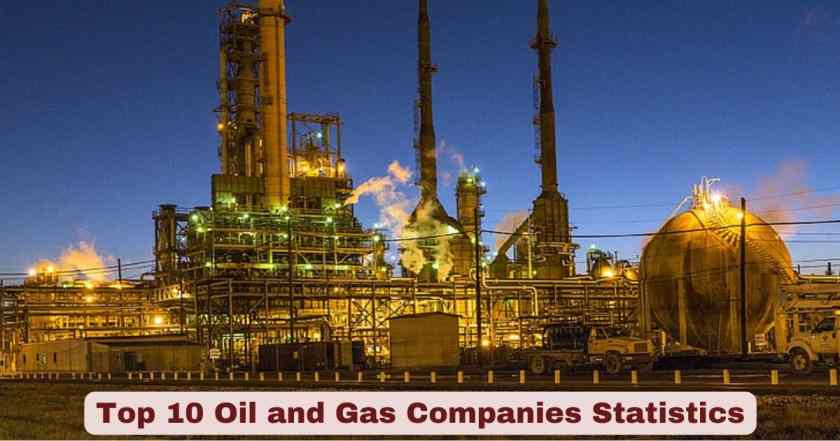
Oil and Gas Companies in the World
Few industries in human history have concentrated this much financial power, geopolitical influence, and operational scale under a single banner. The top 10 oil and gas companies in the world in 2026 collectively control assets worth tens of trillions of dollars, employ millions of workers across every continent, and produce enough energy every single day to power modern civilization. Whether you measure them by market capitalization, annual revenue, daily production output, or proven hydrocarbon reserves, these companies sit at the apex of the global economy — and their performance determines fuel prices, government budgets, trade balances, and investment decisions from Beijing to Brussels to Houston. In a year when Brent crude prices have surged past $90 per barrel on the back of Middle East supply disruptions and rising Asian demand, understanding who these companies are and exactly what their numbers look like has never been more relevant.
What makes 2026 a particularly important year to examine this data is the combination of forces reshaping the industry simultaneously. Global crude oil demand is on course to hit approximately 104 million barrels per day — a record — while supply from OPEC+ nations remains constrained by quota agreements and ongoing geopolitical instability around the Strait of Hormuz. At the same time, the world’s biggest national oil companies — from Saudi Aramco to PetroChina to Rosneft — are setting revenue records, and the Western supermajors are deploying capital at scale into new production basins and LNG infrastructure. The financial results covered in this article are drawn entirely from verified, officially published 2024 full-year results — the most recent complete annual data available as of March 2026 — supplemented by confirmed Q1 2026 market figures.
Interesting Facts about Top 10 Oil and Gas Companies 2026
The numbers behind the world’s biggest oil and gas companies are genuinely staggering. Before going into the full company-by-company breakdown, these headline facts frame the scale of what we’re dealing with.
| Fact | Verified Detail |
|---|---|
| World’s Most Valuable Oil Company 2026 | Saudi Aramco — market cap of approximately $2.1 trillion |
| Largest Oil & Gas Company by Revenue 2024 | Sinopec (China) — revenue of RMB 3.07 trillion (~$422.7 billion USD) |
| Saudi Aramco 2024 Net Income | $106.2 billion — highest net profit of any oil company on earth |
| Saudi Aramco Production Cost | Under $3 per barrel — the lowest production cost of any major oil company globally |
| ExxonMobil 2024 Production Record | 4.3 million BOE/d — highest output in over 10 years |
| ExxonMobil 2024 Revenue | $349.6 billion for full-year 2024 |
| PetroChina 2024 Net Income | CNY 164.68 billion (~$22.69 billion USD) — third consecutive record year |
| PetroChina 2024 Revenue (IFRS) | RMB 2.9 trillion (~$398 billion USD) |
| Sinopec 2024 Net Profit | CNY 48.94 billion (~$6.74 billion USD) — down 16% on weaker refining margins |
| Rosneft 2024 Revenue | RUB 10.1 trillion — record high, up 10.7% year-on-year |
| Rosneft 2024 Hydrocarbon Production | 255.9 million tons of oil equivalent (liquid hydrocarbons: 184 million tons / 3.737 million b/d) |
| ConocoPhillips 2024 Full-Year Production | 1,987 MBOED — up 161 MBOED vs. 2023 |
| ConocoPhillips Q4 2024 Production | 2,183 MBOED — accelerating through year-end |
| Equinor 2024 Net Income | $8.83 billion with adjusted net income of $9.18 billion |
| Equinor 2024 Adjusted Operating Income | $29.8 billion — delivering 21% return on average capital employed |
| Global Oil & Gas Industry Value 2026 | Estimated to generate more than $7 trillion in total annual economic value |
| Global Crude Oil Demand 2026 | Forecast at approximately 104 million barrels per day |
| Top 5 Companies Share of Global Revenue | Expected to control over 45% of global oil and gas industry revenue |
| TotalEnergies 2024 Reserves Replacement | 157% reserve replacement ratio — meaning it replaced every barrel produced plus 57% more |
| Shell 2024 Adjusted Earnings | $23.72 billion for full-year 2024 |
Source: Saudi Aramco Full-Year 2024 Results (March 4, 2025); ExxonMobil Full-Year 2024 Results (January 31, 2025); PetroChina Full-Year 2024 Results — PRNewswire (March 30, 2025)
The sheer concentration of financial power in this list is extraordinary. Saudi Aramco alone — a single company — generated more net profit in 2024 than the combined GDP of several mid-sized national economies. Its $106.2 billion in net income came in a year it described as “challenging,” which tells you everything about the cushion provided by production costs below $3 per barrel. Meanwhile, Rosneft — operating under heavy Western sanctions following the Ukraine invasion — still managed to grow revenue by 10.7% to a record RUB 10.1 trillion in 2024, demonstrating how Asian markets, particularly China and India, have absorbed Russian crude at discounted prices in volumes large enough to set an all-time revenue record. These are not companies nudging numbers around the margins — they are generating revenues that dwarf the budgets of entire nations.
The production data is equally striking. ExxonMobil hit a 10-year production high of 4.3 million BOE/d in 2024, powered by its transformed Permian Basin portfolio following the $63 billion Pioneer Natural Resources acquisition. ConocoPhillips delivered full-year 2024 production of 1,987 MBOED — up 161 MBOED year-on-year — and exited Q4 at 2,183 MBOED, a trajectory that signals significantly higher 2025 and 2026 output levels. PetroChina, despite a modest 2.5% decline in its average realized oil price to $74.70 per barrel, still grew its oil and gas equivalent output by 2.2% to 243.7 million metric tons for the year — enough to deliver its third consecutive record-high operating performance. The competitive landscape in 2026 is one of scale, efficiency, and capital discipline — and the companies in this list are executing on all three.
Top 10 Oil and Gas Companies 2026 | Market Capitalization Rankings
Market capitalization reflects how investors and markets value each company — its current size, future earnings potential, and strategic positioning all baked into a single number.
| Rank | Company | Country | Market Cap (2025–2026 est.) | Company Type |
|---|---|---|---|---|
| 1 | Saudi Aramco | 🇸🇦 Saudi Arabia | ~$2.1 Trillion | State-Owned NOC |
| 2 | ExxonMobil | 🇺🇸 USA | ~$473–$485 Billion | Publicly Traded IOC |
| 3 | Chevron | 🇺🇸 USA | ~$250–$279 Billion | Publicly Traded IOC |
| 4 | PetroChina | 🇨🇳 China | ~$217 Billion | State-Backed NOC |
| 5 | Shell | 🇬🇧 UK/Netherlands | ~$211 Billion | Publicly Traded IOC |
| 6 | TotalEnergies | 🇫🇷 France | ~$136–$156 Billion | Publicly Traded IOC |
| 7 | ConocoPhillips | 🇺🇸 USA | ~$113–$114 Billion | Publicly Traded IOC |
| 8 | CNOOC | 🇨🇳 China | ~$112 Billion | State-Backed NOC |
| 9 | BP | 🇬🇧 UK | ~$98 Billion | Publicly Traded IOC |
| 10 | Equinor | 🇳🇴 Norway | ~$88 Billion | State-Backed NOC |
Source: CompaniesMarketCap.com (2025–2026); Statista — Financial Times data (December 2024); The Motley Fool — Largest Energy Companies by Market Cap (March 5, 2026); Top10Sense.com — Top 10 Oil and Gas Companies 2026 Rankings; Voronoi / Visual Capitalist (June 2025)
Saudi Aramco’s market cap of approximately $2.1 trillion means it is worth more than ExxonMobil, Chevron, Shell, TotalEnergies, BP, ConocoPhillips, CNOOC, and Equinor combined. That is not a slight lead — it is an entirely different category of corporate scale, built on the foundation of the world’s second-largest proven oil reserves (over 270 billion barrels), production costs below $3 per barrel, and the political backing of a sovereign state whose entire fiscal framework is built around the company’s performance. No private company anywhere can replicate these structural advantages, which is why the market cap gap between Aramco and every other oil company on earth has remained persistent even through periods of lower oil prices.
Below Aramco, the rankings reveal a clear split between Western IOCs and Chinese state-backed giants. ExxonMobil’s ~$473–$485 billion market cap makes it the runaway leader among publicly traded oil companies — a position reinforced by its 2024 production records, its transformed Permian Basin portfolio, and a capital returns program that distributed $36 billion to shareholders in 2024 alone. PetroChina at fourth place with approximately $217 billion reflects the massive scale of China’s domestic energy infrastructure, while BP’s relatively modest position at ~$98 billion — squeezed between CNOOC and Equinor — reflects investor concern about its erratic strategic direction, a $381 million net profit in 2024 that represents a near-wipeout of earnings, and the ongoing process of reversing its renewable energy pivot to refocus on oil and gas. Equinor at tenth, with ~$88 billion, is the smallest by market cap in this group but arguably one of the most operationally efficient, delivering a 21% return on average capital employed in 2024.
Top 10 Oil and Gas Companies 2025 Annual Revenue Statistics
Revenue — the total value of all products sold — is the most direct measure of a company’s commercial scale. The figures below are the latest verified full-year 2025 results, the most current complete annual data available as of March 2026, sourced directly from official company earnings releases filed between January and March 2026.
| Rank | Company | Country | 2025 Full-Year Revenue (USD) | 2025 Net Income / Earnings (USD) |
|---|---|---|---|---|
| 1 | Saudi Aramco | 🇸🇦 Saudi Arabia | $445.7 Billion | $93.4 Billion (net) / $104.7 Billion (adj.) |
| 2 | Sinopec (China Petroleum & Chemical Corp.) | 🇨🇳 China | ~$410–$420 Billion (est.; FY2025 results pending) | FY2025 results pending |
| 3 | PetroChina | 🇨🇳 China | ~$380–$400 Billion (est.; FY2025 results pending) | FY2025 results pending |
| 4 | ExxonMobil | 🇺🇸 USA | ~$324.9 Billion (TTM / FY2025) | $28.8 Billion |
| 5 | Shell | 🇬🇧 UK | $273.7 Billion | $18.1 Billion (net) / $18.5 Billion (adj.) |
| 6 | TotalEnergies | 🇫🇷 France | ~$200–$210 Billion (est.) | $13.1 Billion (IFRS) / $15.6 Billion (adj.) |
| 7 | Chevron | 🇺🇸 USA | ~$176–$183 Billion (est. from quarterly data) | $12.3 Billion |
| 8 | BP | 🇬🇧 UK | $192.5 Billion | $7.5 Billion (underlying RC profit) |
| 9 | Rosneft | 🇷🇺 Russia | Est. RUB record / ~$100–$115 Billion USD | N/A (sanctions-constrained reporting) |
| 10 | ConocoPhillips | 🇺🇸 USA | ~$52–$56 Billion (est.) | ~$8–$9 Billion (est.) |
Source: Saudi Aramco FY2025 Full-Year Results (March 10, 2026) — BayelSaWatch / Aramco IR; ExxonMobil FY2025 Results (January 30, 2026) — ExxonMobil.com / SEC Filing; Shell FY2025 Results (February 5, 2026) — Shell.com / IndexBox / StockTitan SEC 20-F
The 2025 full-year revenue table tells a dramatically different story from 2024, and it starts at the very top. Saudi Aramco reclaimed the number one spot by revenue — posting $445.7 billion in total revenue and other income for FY2025, despite the fact that full-year average crude oil prices fell to approximately $69.2 per barrel, down from $80.2 in 2024. Yet net income only declined 12% to $93.4 billion, once again underscoring the incomparable structural advantage of sub-$3 per barrel production costs. CEO Amin Nasser’s statement that Aramco delivered “robust growth and strong cash flows” despite price volatility is backed by free cash flow of $85.4 billion for 2025 — more than triple what ExxonMobil generated in free cash flow for the same period. The adjusted net income of $104.7 billion narrowly beat analyst consensus estimates, giving investors confidence that even in a declining price environment, the underlying earnings power of Aramco’s asset base is remarkably durable.
The contrast between Shell’s revenue decline to $273.7 billion (down from $289.1 billion in 2024) and its simultaneous rise in net income to $18.1 billion (up from $16.5 billion in 2024) captures a key theme across the industry in 2025: lower revenues driven by the ~15% drop in average oil prices through the year, but better-than-expected earnings thanks to operational efficiency gains and portfolio optimization. BP’s dramatic turnaround from a near-wipeout net profit of $381 million in 2024 to an underlying replacement cost profit of $7.5 billion in 2025 is the most striking individual corporate story in the table — driven by record upstream reliability, major project startups, and $1.5 billion in structural cost reductions achieved through its ongoing turnaround strategy. Chevron’s net income fell 30% to $12.3 billion as average Brent prices for the year settled at approximately $69 per barrel — but its record worldwide production growth of 12% and the successful integration of Hess Corporation positioned it for stronger revenue performance as prices recover into 2026.
Top 10 Oil and Gas Companies 2026 | Daily Production Rankings
Production volume — barrels of oil equivalent produced per day — is the core operational metric that determines long-term competitive position in the oil and gas industry.
| Rank | Company | Country | Daily Production (BOE/d) — 2024 Full-Year | Key Producing Region |
|---|---|---|---|---|
| 1 | Saudi Aramco | 🇸🇦 Saudi Arabia | ~9.2 Million b/d (crude only; capacity: 12 Million b/d) | Arabian Peninsula |
| 2 | Rosneft | 🇷🇺 Russia | ~3.74 Million b/d (184M tons liquids in FY2024) | Western Siberia, Arctic, Vankor |
| 3 | ExxonMobil | 🇺🇸 USA | 4.3 Million BOE/d (Q4 2024: 4.6 Million BOE/d) | Permian, Guyana, LNG, GoA |
| 4 | PetroChina | 🇨🇳 China | ~4.9 Million BOE/d (243.7M metric tons for FY2024) | Daqing, Changqing, Tarim, Overseas |
| 5 | Chevron | 🇺🇸 USA | ~3.2 Million BOE/d | Permian (~850K b/d), Gulf of America, Deepwater |
| 6 | Shell | 🇬🇧 UK | ~2.8–3.0 Million BOE/d | Integrated Gas, North Sea, Americas, LNG |
| 7 | ConocoPhillips | 🇺🇸 USA | 1,987 MBOED (FY2024); Q4 2024: 2,183 MBOED | Permian (833K), Eagle Ford (296K), Alaska, Norway |
| 8 | TotalEnergies | 🇫🇷 France | ~2.4 Million BOE/d | Africa, Middle East, Americas, LNG |
| 9 | BP | 🇬🇧 UK | 2,358 MBOED (~2.36 Million BOE/d) | North Sea, Caspian, GoM, UAE (ADNOC stake) |
| 10 | Equinor | 🇳🇴 Norway | 2,067 MBOED (~2.07 Million BOE/d) | NCS (Johan Sverdrup), North Sea, International |
Source: Saudi Aramco FY2024 Results; Rosneft FY2024 IFRS Results — Rosneft.com (hydrocarbon production: 255.9 Mtoe); ExxonMobil FY2024 Results; PetroChina FY2024 Results — PRNewswire; Chevron FY2024 Results; ConocoPhillips FY2024 Results — BusinessWire (February 6, 2025); BP FY2024 Results; TotalEnergies FY2024 Results; Equinor 2024 Annual Report (March 20, 2025)
The production rankings reveal the extraordinary operational gap between Saudi Aramco and every other company. Even with OPEC+ production cut compliance limiting actual output to approximately 9.2 million b/d of crude, Aramco’s capacity of 12 million b/d means it is voluntarily leaving roughly 2.8 million b/d off the table — a volume that alone would rank as the sixth-largest producing company in this list if deployed. This strategic capacity management is a deliberate tool of global oil market stabilization, and it gives Aramco a production elasticity that no other company can match. When Brent crude surged above $90 per barrel in early 2026 on Middle East supply fears, Aramco’s ability to theoretically add 2.8 million b/d of spare capacity to global markets in relatively short order is precisely what prevents prices from spiraling further.
ExxonMobil’s climb to 4.3 million BOE/d in 2024 — with Q4 already running at 4.6 million BOE/d — puts it on a clear trajectory toward its stated 5.4 million BOE/d target by 2030. The company’s dual record from Guyana deepwater fields and Permian Basin shale, occurring simultaneously, demonstrates the benefit of its diversified portfolio structure. ConocoPhillips’ 2024 production of 1,987 MBOED — driven by Permian Basin output of 833 MBOED, Eagle Ford at 296 MBOED, and Bakken at 151 MBOED from its Lower 48 operations alone — shows how the Marathon Oil acquisition (closed late 2024) is already expanding its production footprint materially. The Q4 2024 exit rate of 2,183 MBOED projects to a full-year 2025 run rate meaningfully above the 2024 annual average, positioning ConocoPhillips to challenge Shell for a higher production ranking heading into 2026.
Saudi Aramco 2026 | Full Statistics of the World’s #1 Oil and Gas Company
No examination of the top oil and gas companies in 2026 is complete without a dedicated deep-dive into Saudi Aramco’s numbers. The figures are in a class of their own.
| Metric | Saudi Aramco — Verified Data |
|---|---|
| 2024 Full-Year Revenue | $436.6 Billion |
| 2024 Full-Year Net Income | $106.2 Billion (down 12.4% from $121.3B in 2023) |
| 2024 EBIT | $206 Billion |
| 2024 Average Realized Crude Price | $80.2 per barrel (vs. $83.6/bbl in 2023) |
| Q4 2024 Base Dividend Declared | $21.1 Billion (+4.2% annual increase) |
| Maximum Sustainable Capacity (MSC) | 12 Million barrels per day |
| Proven Crude Oil Reserves | Over 270 Billion barrels |
| Production Cost per Barrel | Under $3 per barrel — globally lowest |
| 2024 Organic Capital Expenditure | $50.4 Billion |
| Capital Guidance 2025 | $52–$58 Billion |
| Active Project Pipeline (2024–2026) | 110 Projects — 67 in oil/gas/petrochemicals, 20 in pipelines, 23 in infrastructure |
| Share of Global Proven Oil Reserves | Approximately 17% |
| Additional Cash Flow per 1M b/d of Extra Capacity | ~$12 Billion per year in additional operating cash flow |
| Market Cap (2026) | Approximately $2.1 Trillion |
| Shareholders | Saudi government holds approximately 98.5% |
Source: Saudi Aramco Full-Year 2024 Results Press Release (March 4, 2025); Arab News (March 4, 2025); CNBC (March 4, 2025); Blackridge Research (2026); Top10Sense.com (2026)
Aramco’s $106.2 billion net income in 2024 — a year of OPEC+ production cuts and modestly lower oil prices — is the single most important data point in the entire global oil industry. For context: this one company, producing less than its maximum capacity by design, still generated more profit than ExxonMobil ($33.7B), Shell ($23.7B), Chevron ($17.7B), TotalEnergies ($15.8B), and ConocoPhillips (~$9.2B) combined. The structural reason is its sub-$3 per barrel production cost, which means that at virtually any oil price above approximately $10–$15 per barrel, Aramco generates massive free cash flow per barrel. This cost structure, rooted in the conventional geology of the giant onshore fields of the Arabian Peninsula — fields with naturally high pressure, thick reservoir formations, and centuries of remaining productive life — is irreplicable. No shale producer, deepwater operator, or oil sands miner can come close to these economics.
The $12 billion in additional annual operating cash flow for every 1 million b/d of extra capacity is the number that defines Aramco’s strategic leverage in 2026. With Brent crude above $90 per barrel in early 2026 — roughly $10 per barrel above Aramco’s 2024 average realized price — the company’s cash generation has accelerated sharply. A $10 per barrel improvement in realized price at 9.2 million b/d of production is worth approximately $33.6 billion more per year in gross revenue, and given the sub-$3 cost structure, the vast majority of that flows to the bottom line. This is why the Q4 2024 base dividend of $21.1 billion — a 4.2% increase — was sustainable even in a year of lower profits: the absolute level of cash generation even at subdued prices is simply beyond what any competitor can match.
ExxonMobil vs Chevron vs ConocoPhillips 2026 | U.S. Oil Giants Compared
The three biggest U.S. oil and gas companies together represent an extraordinary concentration of Western energy production capability.
| Metric | ExxonMobil | Chevron | ConocoPhillips |
|---|---|---|---|
| 2024 Full-Year Revenue | $349.6 Billion | $193.41 Billion | ~$55–$58 Billion |
| 2024 Net Income | ~$33.7 Billion | $17.66 Billion | ~$9.2 Billion |
| 2024 Cash from Operations (CFO) | $55.0 Billion | Strong | $20.3 Billion |
| 2024 Free Cash Flow | $34.4 Billion | $15.04 Billion | — |
| 2024 Shareholder Returns | $36.0 Billion (dividends + buybacks) | Record level | $11.0 Billion |
| 2024 Production (BOE/d) | 4.3 Million (record high) | ~3.2 Million | 1,987 MBOED |
| Q4 2024 Production (BOE/d) | 4.6 Million | — | 2,183 MBOED |
| 2024 Full-Year Capital Expenditure | — | — | $12.1 Billion |
| Permian Basin Production | Record (combined Permian + Guyana drove record) | ~850,000 b/d | 833 MBOED (Permian) |
| 2024 Cash Return on Capital Employed | — | — | 15% |
| 2030 Production Target | 5.4 Million BOE/d | 6–8% growth target | — |
| Market Cap (March 2026) | ~$473–$485 Billion | ~$250–$279 Billion | ~$113–$114 Billion |
| Key 2024 Strategic Move | Pioneer Natural Resources acquisition ($63B, closed May 2024) | Delaware Basin expansion | Marathon Oil acquisition (closed Q4 2024) |
Source: ExxonMobil FY2024 Results (January 31, 2025); Chevron FY2024 Results; ConocoPhillips FY2024 Results — BusinessWire / ConocoPhillips.com (February 6, 2025); SEC filings; CompaniesMarketCap.com (2025–2026)
ExxonMobil’s dominance among U.S. IOCs is not even close to a contest in 2024. Its $349.6 billion in revenue is nearly twice Chevron’s and roughly six times ConocoPhillips’ — a gap that reflects the difference in business model scale, with ExxonMobil being a fully integrated global giant across upstream, downstream, chemicals, and LNG. The $36 billion in shareholder returns in 2024 — comprising $16.7 billion in dividends and $19.3 billion in buybacks — represents one of the largest single-year capital return programs in American corporate history, delivered while simultaneously funding a massive capital investment program. The CEO’s statement that Q2 2024 production was the highest since the original Exxon-Mobil merger in 1999 underlines just how transformational the Pioneer acquisition has been in a very short time.
ConocoPhillips’ 2024 delivery of 1,987 MBOED — up 161 MBOED from 2023 — and its strong Q4 2024 exit rate of 2,183 MBOED following the Marathon Oil acquisition demonstrates the company’s rapid operational integration capability. Its 244% preliminary reserve replacement ratio for 2024 — meaning it added roughly 2.44 barrels of proven reserves for every barrel it produced — is one of the best in the industry and sets up multi-year production growth at relatively low finding costs. The $11 billion returned to shareholders in 2024 through dividends, variable return of cash (VROC), and buybacks, combined with its 14% return on capital employed, reinforces why ConocoPhillips is consistently ranked among the most shareholder-friendly oil companies in the world despite its smaller scale relative to ExxonMobil and Chevron.
Sinopec & PetroChina 2026 | China’s Oil and Gas Giants Statistics
China’s two biggest oil and gas companies — Sinopec and PetroChina — are among the largest energy companies in the world by both revenue and production, underpinned by the enormous domestic demand of the world’s second-biggest economy.
| Metric | Sinopec (China Petroleum & Chemical Corp.) | PetroChina (CNPC Listed Arm) |
|---|---|---|
| 2024 Revenue (IFRS) | RMB 3.07 trillion (~$422.7 billion USD) | RMB 2.9 trillion (~$398 billion USD) |
| 2024 Net Income (IFRS) | RMB 48.94 billion (~$6.74 billion USD) | CNY 164.68 billion (~$22.69 billion USD) |
| Net Income Change vs. 2023 | Down 16% (from RMB 58.3 billion) | Up 2% (vs. 2023) |
| 2024 Operating Cash Flow | RMB 149.36 billion | Strong (record operating performance) |
| Refining Volume (2023 baseline) | 257.52 million tonnes processed | — |
| Crude Oil Production (2024) | 251.63 million barrels (FY2023 figure; 2024 up +0.3%) | 777 million barrels domestic crude |
| Natural Gas Production (2024) | Up 4.7% year-on-year | Strong growth trajectory |
| Total Oil & Gas Output (2024) | — | 243.7 million metric tons of oil equivalent (up 2.2%) |
| Avg. Realized Crude Oil Price (2024) | — | $74.70 per barrel (down 2.5% vs. 2023) |
| Dividend Payout Rate (2024) | 75% profit distribution rate | — |
| Refining Operating Profit Change (2024) | Down 67% to RMB 6.71 billion | — |
| Market Cap (2026 approx.) | Lower (partially listed; parent CNPC is state-owned) | ~$217 Billion |
| Primary Stock Listings | HKEX (386), SSE (600028) | HKEX (857), SSE (601857) |
| LNG Business (2024) | Record LNG profits reported | Expanding LNG infrastructure |
Source: Sinopec FY2024 Annual Results — PRNewswire (April 1, 2025); Morningstar / Globe and Mail (March 23, 2025); Rigzone — Sinopec results (March 24, 2025); PetroChina FY2024 Results — PRNewswire (March 30, 2025); Rigzone — PetroChina (April 2, 2025); PetroChina 2024 Annual Report (Petrochina.com.cn)
The contrast between Sinopec and PetroChina in 2024 tells a story about the structural difference between refining-led and production-led business models at a time of refining margin pressure. Sinopec’s refining operating profit collapsed 67% as China’s electric vehicle boom accelerated a structural decline in domestic demand for gasoline and diesel, exactly as the government was pushing refiners to produce more petrochemicals and less road fuel. Despite this, its LNG business delivered record profits — a silver lining that reflects how natural gas demand in China remains robust even as liquid fuels face headwinds. The 75% dividend payout rate confirms the company’s commitment to returning value to shareholders despite the earnings pressure.
PetroChina demonstrated greater resilience, with net income rising 2% to CNY 164.68 billion (~$22.69 billion) — its third consecutive year of record-high operating performance. The growth came despite a 2.5% decline in realized crude oil prices to $74.70 per barrel, driven by higher production volumes and better cost management. Domestic crude output of 777 million barrels combined with total oil and gas equivalent output of 243.7 million metric tons — up 2.2% year-on-year — reflects an upstream business that is genuinely growing its production base through active drilling campaigns across the Daqing, Changqing, Tarim, and Sichuan basins. PetroChina’s debt-to-asset ratio of 39.5% — a 14-year low by the end of Q3 2024 — indicates a strengthening balance sheet that provides the financial headroom for continued capital investment into 2026 and beyond.
Equinor & Rosneft 2026 | State-Backed NOC Statistics
Equinor (Norway) and Rosneft (Russia) represent two very different models of state-backed oil company — one operating transparently within Western capital markets, the other navigating heavy sanctions while serving Asian energy demand.
| Metric | Equinor (Norway) | Rosneft (Russia) |
|---|---|---|
| 2024 Full-Year Net Income | $8.83 Billion | N/A (sanctions constrain USD reporting) |
| 2024 Adjusted Net Income | $9.18 Billion | — |
| 2024 Adjusted Operating Income | $29.8 Billion | — |
| 2024 Net Operating Income | $30.9 Billion | — |
| 2024 Revenue (RUB terms) | — | RUB 10.1 Trillion (record high; +10.7% YoY) |
| 2024 Return on Avg. Capital Employed | 21% | — |
| 2024 Equity Production | 2,067 MBOED (liquids + gas; stable vs. 2023) | ~3.74 Million b/d (liquid hydrocarbons: 184 million tons) |
| 2024 Renewable Power Output | 2,935 GWh (+51% year-on-year) | N/A |
| 2024 Hydrocarbon Output (Rosneft total) | — | 255.9 Million tons of oil equivalent |
| Gas Production (Rosneft 2024) | — | 87.5 billion cubic meters |
| Production Growth Outlook (Equinor) | +10% production growth 2024–2027 | — |
| FCF Target (Equinor 2025–2027) | $23 Billion (3-year total) | — |
| Market Cap (2026) | ~$88 Billion | Not publicly traded in Western markets |
| Key Field (Equinor) | Johan Sverdrup (NCS) — recovery rate target raised to 75% | Vankor, Yuganskneftegaz, Samotlor |
Source: Equinor Q4 & FY2024 Results (February 5, 2025); Equinor 2024 Annual Report — GlobeNewswire (March 20, 2025); Rosneft FY2024 IFRS Results — Rosneft.com; APN News — Rosneft 2024 revenue record (March 27, 2025); Zawya / Rigzone (April 8, 2025)
Equinor’s 2024 performance is a case study in capital discipline rewarded. A 21% return on average capital employed from a portfolio anchored primarily in the Norwegian Continental Shelf (NCS) — one of the world’s most technically mature and cost-efficient production environments — combined with a 51% increase in renewable power output to 2,935 GWh demonstrates a company that is genuinely executing across both conventional and new energy simultaneously. The decision to raise the Johan Sverdrup field’s recovery rate ambition from 65% to 75% — including a Phase 3 development plan — is a major long-term commitment that extends the productive life of one of Europe’s most important oil fields into the coming decades. Equinor’s $23 billion free cash flow target for 2025–2027 and its above 15% ROCE target through 2030 give investors a clear, well-funded return framework.
Rosneft’s story in 2024 is defined by its ability to grow revenue in ruble terms — RUB 10.1 trillion, up 10.7% — while operating under the tightest sanctions regime in Russian corporate history. Its 255.9 million tons of oil equivalent in total hydrocarbon production — of which 184 million tons were liquid hydrocarbons at approximately 3.737 million barrels per day — makes it one of the largest oil producers on earth by volume, ahead of every Western IOC. The CEO Igor Sechin acknowledged in the annual results that 2024 was marked by “oil production restrictions under the OPEC+ agreement, higher taxation, intensified sanctions pressure, and an unprecedented rise in interest rates” — a list of headwinds that would cripple most companies. Yet Rosneft set a revenue record. The redirection of crude flows toward China, India, Turkey, and other non-sanctioning markets has allowed Russian oil to find buyers, even if at a significant price discount to Brent — and the sheer volume of production ensures revenue growth persists even as realized prices are compressed.
Disclaimer: The data research report we present here is based on information found from various sources. We are not liable for any financial loss, errors, or damages of any kind that may result from the use of the information herein. We acknowledge that though we try to report accurately, we cannot verify the absolute facts of everything that has been represented.