
SpaceX Starship in the US 2026
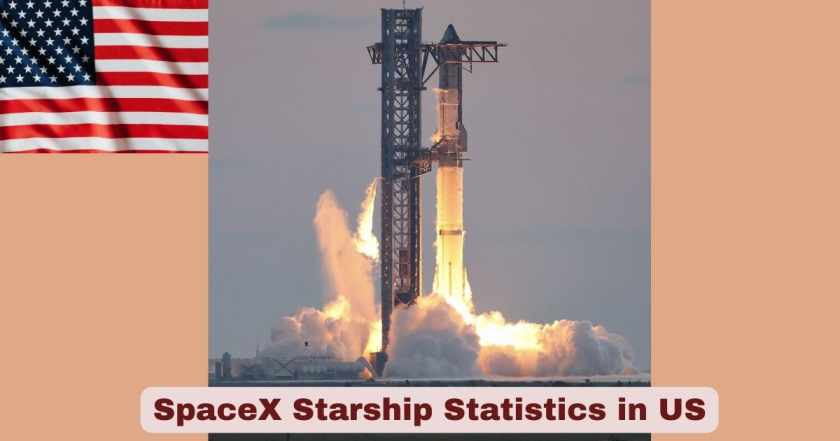
The year 2026 marks a transformative period for SpaceX Starship operations across the United States. As the world’s most powerful launch vehicle, the US has become the epicenter of revolutionary spaceflight technology. With launch facilities spanning from Texas to Florida, Starship represents America’s commitment to pioneering fully reusable rocket technology that fundamentally alters the economics of space access. The system consists of the Super Heavy booster and Starship upper stage, both powered by next-generation Raptor engines burning liquid methane and liquid oxygen propellants. As of early 2026, SpaceX has conducted 11 flight tests with 6 successful missions demonstrating increasingly sophisticated capabilities including revolutionary booster catches using tower arms, achievement of orbital velocities, successful atmospheric reentries with heat shield validation, and controlled splashdowns in targeted ocean locations.
The strategic expansion of Starship infrastructure throughout the United States reflects SpaceX’s ambitious vision for achieving high-cadence launch operations. From the Starbase facility in Boca Chica, Texas, where intensive development and testing occurs, to the historic Launch Complex 39A at Kennedy Space Center, Florida, the US landscape is undergoing massive transformation to accommodate what will become the backbone of American space exploration. The Block 3 generation of Starship vehicles, scheduled to debut in early 2026 with Flight 12, brings unprecedented payload capacity exceeding 100 tons to low Earth orbit in fully reusable configuration. This dramatic capability increase positions the United States firmly at the forefront of global commercial spaceflight operations, supporting diverse mission profiles ranging from mega-constellation satellite deployment to lunar exploration under NASA’s Artemis program. The Federal Aviation Administration has approved up to 120 annual launches across multiple US launch sites, signaling strong government commitment to supporting this revolutionary technology.
Interesting Facts About SpaceX Starship in the US 2026
| Fact Category | Statistic | Details |
|---|---|---|
| Total Flight Tests Completed | 11 flights | As of October 13, 2025, with 6 successes and 5 failures |
| Most Powerful Rocket Ever Built | 9,000+ tons of thrust | Combined thrust from 33 Raptor engines on Super Heavy booster |
| Height of Starship System | 121.3 meters (398 feet) | 2.7 times more powerful than Saturn V |
| Raptor 3 Engine Thrust | 280 ton-force | 51% more powerful than Raptor 1, 22% more than Raptor 2 |
| Raptor 3 Engine Weight | 1,525 kilograms | Lighter while generating significantly more thrust |
| First Booster Catch Achievement | October 13, 2024 | Revolutionary “chopsticks” tower catch system on Flight 5 |
| Block 3 Payload Capacity | 100+ tons to LEO | 200 tons as tanker variant |
| US Launch Sites | 4 active sites | Starbase Texas (2 pads), LC-39A, SLC-37 Florida (2 pads) |
| Annual Launch Approvals | 120 launches per year | 44 from Kennedy, 76 from Cape Canaveral |
| Heat Shield Tiles | 18,000 hexagonal tiles | Each withstands 1,400°C during reentry |
| Block 3 Flight 12 Target | March 2026 | First upgraded Block 3 with Raptor 3 engines |
| NASA Artemis Contract | $2.89 billion | Human Landing System for lunar missions 2027+ |
| Raptor 3 Production | 68+ engines | From McGregor facility as of November 2025 |
| Mars Mission Planning | 2026 transfer window | 5 ships, 10 tons payload each for data gathering |
Data sources: SpaceX official announcements, NASASpaceFlight.com, Federal Aviation Administration Environmental Impact Statements
These comprehensive statistics demonstrate the extraordinary and rapid advancement of SpaceX Starship technology throughout the United States in 2026. The progression from 11 completed flight tests to the highly anticipated upcoming Block 3 debut represents unprecedented velocity in aerospace development and engineering iteration. The staggering 9,000+ tons of thrust generated by the 33 Raptor engines aboard the Super Heavy booster firmly establishes Starship as the most powerful operational launch vehicle in human history, dramatically surpassing even the legendary Saturn V rocket that carried astronauts to the Moon during the historic Apollo program era. The remarkable achievement of the first successful booster catch on October 13, 2024, using the innovative tower arm system affectionately nicknamed “chopsticks” by the space community, marked a true watershed moment in reusable rocket technology development. This revolutionary recovery method completely eliminates the need for heavy landing legs that add significant mass, thereby enabling immediate vehicle refurbishment and rapid turnaround for subsequent flights.
The introduction of Raptor 3 engines represents nothing less than a quantum leap forward in rocket propulsion technology, with all development and manufacturing conducted entirely on US soil. With an impressive 280 ton-force of thrust at sea level and weighing just 1,525 kilograms per engine, these advanced powerplants deliver a thrust-to-weight ratio that approaches the theoretical limits of chemical propulsion physics. The successful production of over 68 Raptor 3 engines by November 2025 clearly demonstrates SpaceX’s unwavering commitment to rapid manufacturing scale-up at their specialized McGregor, Texas test and production facility. The Block 3 variant’s remarkable capability to deliver 100+ tons to low Earth orbit in a fully reusable configuration fundamentally transforms the economics of space access, with projections suggesting potential cost reductions to under $100 per kilogram—representing an astounding 20-30 times reduction compared to current industry standards. The strategic expansion to 4 active US launch sites combined with regulatory approval for 120 annual launches firmly positions America as the undisputed global leader in commercial spaceflight operations.
SpaceX Starship Flight Testing Progress in the US 2026
| Flight Test | Date | Launch Site | Booster | Ship | Outcome | Key Achievements |
|---|---|---|---|---|---|---|
| Flight 1 | April 20, 2023 | Starbase, Texas | Booster 7 | Ship 24 | Failure | First integrated flight test, FTS activated at 4 minutes |
| Flight 2 | November 18, 2023 | Starbase, Texas | Booster 9 | Ship 25 | Failure | Hot staging demonstrated, reached space (148 km altitude) |
| Flight 3 | March 14, 2024 | Starbase, Texas | Booster 10 | Ship 28 | Partial Success | Reached orbital velocity, payload door tested |
| Flight 4 | June 6, 2024 | Starbase, Texas | Booster 11 | Ship 29 | Success | First successful reentry and splashdown of both stages |
| Flight 5 | October 13, 2024 | Starbase, Texas | Booster 12 | Ship 30 | Success | First booster tower catch, controlled Ship splashdown |
| Flight 6 | November 19, 2024 | Starbase, Texas | Booster 13 | Ship 31 | Success | Booster splashdown (catch aborted), improved heat shield |
| Flight 7 | January 16, 2025 | Starbase, Texas | Booster 14 | Ship 33 | Partial Success | First Block 2 flight, ship lost during coast phase |
| Flight 8 | March 20, 2025 | Starbase, Texas | Booster 15 | Ship 34 | Success | Successful Block 2 mission, both stages recovered |
| Flight 9 | May 27, 2025 | Starbase, Texas | Booster 14-2 | Ship 35 | Partial Success | First booster reflight, Ship lost during reentry |
| Flight 10 | August 26, 2025 | Starbase, Texas | Booster 16 | Ship 37 | Success | First Starlink deployment, successful reentry |
| Flight 11 | October 13, 2025 | Starbase, Texas | Booster 15 | Ship 38 | Success | Final Block 2 flight, both stages splashed down |
| Flight 12 | March 2026 (NET) | Starbase, Texas | Booster 19 | Ship 39 | Planned | First Block 3 flight, debut of Raptor 3 engines |
Data sources: Wikipedia – List of Starship Launches, NASASpaceFlight.com, SpaceX official flight reports, Next Spaceflight tracking database
The flight testing progression of SpaceX Starship in the United States through 2026 demonstrates remarkable engineering iteration and rapid learning velocity. Beginning with the first integrated flight test on April 20, 2023, each mission has systematically pushed the boundaries of reusable launch vehicle technology. The historic Flight 5 on October 13, 2024, achieved the world’s first-ever tower catch of a returning booster, with the massive Super Heavy being precision-guided into the mechanical arms at Starbase, Texas, in a display of extraordinary guidance, navigation, and control capability. This groundbreaking achievement completely eliminated the need for traditional landing legs that add significant structural mass, demonstrating SpaceX’s bold vision for achieving rapid reusability through innovative recovery methods. The success rate has steadily improved from the early development flights to the Block 2 era, which saw 4 successful missions out of 5 attempts during the intensive 2025 flight test campaign.
The upcoming Flight 12 represents a watershed moment for Starship operations in the US, marking the debut of the Block 3 generation with Booster 19 and Ship 39. Targeted for March 2026, this mission will be the first to utilize the revolutionary Raptor 3 engines across all 39 engine positions (33 on the booster, 6 on the ship). The flight will launch from the newly commissioned Pad 2 at Starbase, which features enhanced infrastructure including dual quick disconnect systems for simultaneous propellant loading, improved flame diverters, and upgraded catch mechanisms. The transition from Block 1 vehicles (Flights 1-6) through Block 2 (Flights 7-11) to Block 3 has progressively increased payload capacity, with the latest generation expected to deliver over 100 tons to low Earth orbit. The 11 completed flight tests as of October 2025 have generated invaluable data on heat shield performance, reentry dynamics, engine reliability, and structural loads.
SpaceX Starship Raptor Engine Evolution in the US 2026
| Engine Version | Thrust (Sea Level) | Thrust (Vacuum) | Engine Mass | Specific Impulse | Key Improvements |
|---|---|---|---|---|---|
| Raptor 1 | 185 ton-force | 200 ton-force | 2,080 kg | 330 seconds (SL) | First full-flow staged combustion methalox engine |
| Raptor 2 | 230 ton-force | 258 ton-force | 1,630 kg | 327 sec (SL) / 350s (Vac) | Reduced complexity, improved reliability, lighter design |
| Raptor 3 | 280 ton-force | 306 ton-force | 1,525 kg | 350 sec (SL) / 380s (Vac) | No heat shield required, internalized systems |
Data sources: SpaceX official specifications, Wikipedia – SpaceX Raptor, Elon Musk X/Twitter announcements, NASASpaceFlight.com engine tracking
The evolution of the Raptor engine family represents one of the most significant achievements in rocket propulsion developed on US soil in decades. The progression from Raptor 1 to Raptor 3 demonstrates SpaceX’s relentless pursuit of performance, manufacturability, and cost reduction at their Texas facilities. The Raptor 3 engine delivers an impressive 280 ton-force of thrust at sea level—a remarkable 51% increase over the original Raptor 1 and 22% more than Raptor 2. Simultaneously, the engine mass has been reduced to 1,525 kilograms, making it 555 kilograms lighter than Raptor 1 while generating substantially more power. This dramatic improvement in thrust-to-weight ratio positions Raptor 3 as the most powerful methalox engine ever produced, with chamber pressures exceeding 300 bar—among the highest ever demonstrated in operational rocket engines.
The revolutionary aspect of Raptor 3 lies in its simplified architecture and advanced cooling systems. Unlike previous versions that required external heat shields and complex fire suppression systems, Raptor 3 integrates secondary flow paths and employs regenerative cooling for all exposed components. This engineering breakthrough eliminates the need for engine heat shields entirely, saving over 10 tons of fire suppression equipment from the vehicle. With specific impulse of 350 seconds at sea level and projected 380 seconds for vacuum variants with extended nozzles, Raptor 3 operates near the theoretical limits of chemical propulsion. The production of over 68 Raptor 3 engines by November 2025, with serial numbers tracked up to SN68, demonstrates SpaceX’s rapid manufacturing scale-up at the McGregor, Texas facility in preparation for Block 3 vehicles and the projected high-cadence launch operations throughout 2026.
SpaceX Starship US Launch Infrastructure Development in 2026
| Launch Facility | Location | Status | Pads | Annual Launch Capacity | Operational Timeline |
|---|---|---|---|---|---|
| Starbase Pad 1 (OLP A) | Boca Chica, Texas | Operational | 1 | 25+ launches | Active since April 2023 |
| Starbase Pad 2 (OLP B) | Boca Chica, Texas | Commissioning | 1 | 25+ launches | March 2026 (Flight 12) |
| Launch Complex 39A | Kennedy Space Center, FL | Under Construction | 1 | 44 launches | Mid-late 2026 |
| Space Launch Complex 37 | Cape Canaveral SFS, FL | Under Construction | 2 | 76 launches | 2027-2028 |
| Total US Capacity | Multiple States | Active Development | 5 pads | 170+ launches | Progressive expansion 2026-2028 |
Data sources: Federal Aviation Administration Environmental Impact Statements, NASASpaceFlight.com infrastructure tracking, NASA Kennedy Space Center development plans
The expansion of SpaceX Starship launch infrastructure across the United States in 2026 represents the largest investment in space launch capability since the Apollo program. At Starbase in Boca Chica, Texas, SpaceX operates two launch pads with Pad 1 having supported all 11 flight tests to date. The facility includes the iconic launch tower with its mechanical “chopstick” arms capable of catching returning boosters, a capability first demonstrated on October 13, 2024. Pad 2, currently in final commissioning stages, features significant improvements including a flame trench, dual quick disconnect systems for faster propellant loading, and enhanced structural reinforcement to handle the increased power of Block 3 vehicles with Raptor 3 engines. This pad is scheduled for its inaugural launch in March 2026 with Flight 12, marking a major milestone in US spaceflight capability.
The Florida expansion represents a strategic shift to leverage the East Coast’s favorable orbital mechanics and existing aerospace infrastructure. Launch Complex 39A at Kennedy Space Center, the historic site of Apollo 11 and numerous Space Shuttle missions, is being transformed to accommodate Starship operations with FAA approval granted in January 2026 for up to 44 annual launches. Meanwhile, Space Launch Complex 37 at Cape Canaveral Space Force Station received environmental approval for development of two launch towers supporting up to 76 annual launches. The $1.8 billion infrastructure investment includes the massive Gigabay manufacturing facility at Roberts Road, designed to produce Block 3 and Block 4 Starship vehicles directly in Florida. Construction on the Gigabay, which will stand over 80 meters tall to accommodate stretched boosters, is progressing with completion expected by August 2026.
SpaceX Starship Block Generations Progress in the US 2026
| Block Version | Height | Propellant Capacity | Payload to LEO | Engine Type | Status | Key Features |
|---|---|---|---|---|---|---|
| Block 1 | 121 meters | 3,400 tons Booster / 1,200 tons Ship | ~15 tons | Raptor 2 | Retired Nov 2024 | Initial flight test vehicles (Flights 1-6) |
| Block 2 | 124.1 meters | 3,650 tons Booster / 1,500 tons Ship | ~35 tons | Raptor 2 | Final flights 2025 | 25% more propellant, redesigned flaps |
| Block 3 | 124.4 meters | 3,800+ tons Booster / 1,600+ tons Ship | 100-180 tons reusable / 300 tons expendable | Raptor 3 | Debuts March 2026 | Raptor 3 engines, docking system |
| Block 4 | ~150 meters | 5,000+ tons (estimated) | 200+ tons | Raptor 3/4 | Development 2027+ | Stretched design, 80m booster, 42 engines |
Data sources: SpaceX presentations, Elon Musk development updates, NASASpaceFlight.com technical analysis, Wikipedia – SpaceX Starship specifications
Block 1 vehicles flew from April 2023 through November 2024, conducting 6 flight tests that validated fundamental technologies including hot staging, atmospheric reentry, and the revolutionary tower catch system. Standing 121 meters tall with 15-ton payload capacity to low Earth orbit, these vehicles proved the viability of the Starship concept while identifying critical areas for improvement in heat shield performance and propellant management. Block 2 introduced substantial upgrades with a 3.1-meter height increase and 25% more propellant capacity, with the booster increasing from 3,400 tons to 3,650 tons and the Ship growing from 1,200 tons to 1,500 tons of propellant. Despite challenges with the downcomer design affecting Flights 7 and 9, successful missions including Flight 10 demonstrated improved reliability and the first-ever deployment of Starlink satellites, achieving an estimated 35-ton payload capacity.
The Block 3 generation, debuting in March 2026 with Flight 12, represents a quantum leap in capability. Standing 124.4 meters tall with enhanced propellant capacity exceeding 3,800 tons in the booster and 1,600 tons in the Ship, Block 3 vehicles will utilize the revolutionary Raptor 3 engine across all 39 engine positions. The payload capacity jumps to 100-180 tons in fully reusable configuration, with 300 tons possible in expendable mode—exceeding Saturn V’s capabilities. Block 3 introduces critical technologies including a probe-and-drogue docking system for orbital refueling demonstrations, reduced grid fins (3 instead of 4) with integrated catch pins, and an integrated hot staging ring. Looking ahead, Block 4 vehicles planned for 2027 will feature stretched boosters approaching 150 meters total height, potentially accommodating up to 42 engines and delivering over 200 tons to orbit routinely for sustained lunar operations and Mars missions.
SpaceX Starship Mission Applications in the US 2026
| Mission Type | Capability | Timeframe | Key Details |
|---|---|---|---|
| Starlink Deployment | 150+ satellites per launch | Active 2026 | First deployment on Flight 10 (August 2025) |
| NASA Artemis Program | 100+ tons to lunar surface | 2027-2028 | $2.89 billion Human Landing System contract |
| Commercial Satellite Launch | Large payloads to GEO/MEO | 2026-2027 | Space station modules, large satellites, telescopes |
| Orbital Refueling Demo | Propellant transfer in orbit | 2026 | Critical for lunar and Mars missions |
| Mars Cargo Missions | 5 ships, 10 tons each | 2026 window | Uncrewed demonstration flights to validate technology |
| DoD National Security | Classified payloads | 2026+ | NSSL Phase 2 contract participation |
Data sources: NASA Artemis program documentation, SpaceX mission manifests, Department of Defense contract announcements, Elon Musk Mars mission presentations
The diverse mission portfolio planned for SpaceX Starship throughout 2026 and beyond demonstrates the vehicle’s transformative potential for American space operations. The successful deployment of Starlink satellites during Flight 10 in August 2025 marked the first operational payload delivery, with the Pez dispenser mechanism successfully releasing multiple satellites. Regular Starlink deployment missions are planned for 2026, with each Starship capable of carrying over 150 next-generation satellites—more than 10 times the capacity of a Falcon 9. This capability will accelerate SpaceX’s constellation expansion to provide resilient internet coverage globally, with particular benefit to underserved rural and remote regions of the United States. NASA’s Artemis program represents one of the most significant applications, with SpaceX’s $2.89 billion contract to develop the Starship Human Landing System (HLS) that will transport astronauts from lunar orbit to the Moon’s surface, delivering over 100 tons of cargo along with crew members.
The 2026 Mars transfer window, occurring every 26 months when Earth and Mars are optimally aligned, presents an opportunity for SpaceX to demonstrate uncrewed Mars missions. Plans call for launching at least 5 Starship vehicles carrying approximately 10 tons of payload each to validate landing technology in Mars’ thin atmosphere, test in-situ resource utilization concepts for producing propellant from Martian atmosphere, and gather critical data about Mars entry dynamics and surface conditions. The HLS features two airlocks with 13 cubic meters each—double the volume of the Apollo Lunar Module—and will support extended surface missions of up to 30 days. The first crewed landing mission, Artemis III, is currently scheduled for 2027 pending successful orbital refueling demonstrations planned for 2026. The Department of Defense has expressed strong interest in Starship for national security missions, including deployment of large classified payloads and potential rapid global cargo delivery capabilities that could deliver 100+ tons anywhere on Earth within 90 minutes.
SpaceX Starship Economic Impact in the US 2026
| Economic Category | Value / Impact | Details |
|---|---|---|
| Infrastructure Investment | $1.8+ billion | Kennedy Space Center Gigabay and launch infrastructure |
| Launch Cost Target | Under $100/kg to orbit | Reduction from current $2,000–3,000/kg industry standard |
| Job Creation (Florida) | 1,000+ positions | Manufacturing, operations, support roles at Roberts Road |
| Job Creation (Texas) | 2,000+ positions | Starbase operations, production, testing, support |
| Linde Facility Investment | $100 million | Cryogenic propellant production near Starbase, operational 2026 |
| NASA Artemis Contract | $2.89 billion | Human Landing System development through 2027 |
| Annual Launch Revenue | $2–5 billion projected | Based on 50–100 commercial and government launches |
Data sources: Kennedy Space Center development plans, Florida economic impact studies, SpaceX construction investments, NASA budget documents
The economic impact of SpaceX Starship development throughout the United States in 2026 extends far beyond the space industry itself. The $1.8 billion infrastructure investment at Kennedy Space Center for the Gigabay manufacturing facility and associated launch pad development represents one of the largest private aerospace projects in Florida history, directly creating over 1,000 high-skilled jobs in manufacturing, engineering, operations, and support roles. In Texas, the Starbase facility near Brownsville has created over 2,000 direct jobs with average salaries significantly above regional norms, transforming the local economy of Cameron County. The $100 million Linde facility construction in Brownsville adds substantial industrial capacity for cryogenic propellant production, creating permanent operations jobs and producing up to 700 tons of liquid oxygen daily when fully operational in 2026. Local hotels, restaurants, and tourism businesses benefit significantly from launch events, with each flight test drawing thousands of spectators who contribute an estimated $5-10 million to the regional economy.
The transformative potential lies in launch cost reduction to under $100 per kilogram to low Earth orbit—down from the current industry average of $2,000-3,000 per kilogram. This 20-30 times cost reduction enables entirely new categories of space missions previously considered economically infeasible, including large space telescopes, orbital manufacturing facilities, space-based solar power satellites, and ambitious planetary science missions. The satellite industry particularly stands to benefit, with companies able to design larger, more capable spacecraft knowing Starship’s 100+ ton payload capacity removes traditional size constraints imposed by fairing dimensions and mass limits. NASA’s $2.89 billion Artemis contract provides stable revenue while advancing American leadership in lunar exploration. Projections suggest SpaceX could generate $2-5 billion in annual revenue from Starship operations by 2027-2028, assuming 50-100 launches per year carrying a mix of commercial satellites, government payloads, and NASA missions.
SpaceX Starship Environmental and Regulatory Status in the US 2026
| Regulatory Aspect | Status | Details |
|---|---|---|
| Starbase Texas Operations | Active License | FAA approval for ongoing flight testing and launches |
| Kennedy Space Center LC-39A | Final Approval February 2026 | Up to 44 launches per year, environmental mitigation required |
| Cape Canaveral SLC-37 | Environmental Approval 2025 | Up to 76 launches per year across two pads |
| Total Approved Annual Launches | 120+ flights per year | Combined capacity across all US sites |
| Linde Facility Construction | $100 million investment | LOX/LN2 production facility near Starbase, operational 2026 |
Data sources: Federal Aviation Administration Environmental Impact Statements, Department of Air Force environmental reviews, NASA Kennedy Space Center documentation
The regulatory environment governing SpaceX Starship operations across the United States in 2026 reflects careful balance between enabling revolutionary space technology and protecting environmental resources. The Federal Aviation Administration completed a comprehensive Environmental Impact Statement for Launch Complex 39A at Kennedy Space Center, releasing the final Record of Decision on January 31, 2026. FAA executive director Katie Cranor approved SpaceX’s plans for up to 44 Starship launches annually from this historic site, concluding that all practicable means to avoid or minimize environmental harm have been adopted. The approval came after nearly two years of environmental review addressing concerns about airline operations, sonic booms from returning boosters, beach access impacts, and effects on the Canaveral National Seashore. At Cape Canaveral Space Force Station, the Department of the Air Force completed environmental review for Space Launch Complex 37 development, approving construction of two launch towers supporting up to 76 annual Starship launches.
Infrastructure investments include the $100 million Linde facility for on-site cryogenic propellant production near Starbase, which will reduce truck traffic by eliminating the need to transport liquid oxygen over 500 miles from distant production facilities. The new facility, expected to produce up to 700 tons of liquid oxygen daily when fully operational in 2026, can support a Starship launch every six days at full capacity. The use of liquid methane and liquid oxygen propellants, which combust to produce primarily water vapor and carbon dioxide, presents significantly lower air quality impacts compared to traditional kerosene-based rockets. Environmental reviews included detailed assessments of impacts to threatened and endangered species including sea turtles and shorebirds, with required monitoring programs and seasonal restrictions during nesting periods. These comprehensive environmental reviews and mitigation measures demonstrate that the United States can pursue ambitious space exploration goals while maintaining responsible stewardship of natural resources.
SpaceX Starship Technical Achievements in the US 2026
| Technical Milestone | Achievement Date | Significance |
|---|---|---|
| First Integrated Flight Test | April 20, 2023 | Validated full-stack integration |
| First Space-Reaching Flight | November 18, 2023 | Ship 25 became heaviest object to reach space at 148 km |
| First Orbital Velocity Achievement | March 14, 2024 | Demonstrated ability to reach orbital speeds |
| First Successful Reentry | June 6, 2024 | Ship 29 survived atmospheric reentry and splashdown |
| First Booster Tower Catch | October 13, 2024 | Revolutionary recovery system using mechanical arms |
| First Booster Reflight | May 27, 2025 | Booster 14 flew twice, validating reusability potential |
| First Payload Deployment | August 26, 2025 | Starlink satellites released from Pez dispenser |
| Block 3 Integration | March 2026 (planned) | First flight with Raptor 3 engines, docking system |
Data sources: SpaceX flight test reports, NASASpaceFlight.com technical analysis, Wikipedia – List of Starship Launches
The technical achievements of SpaceX Starship throughout the United States represent some of the most significant advances in rocket technology since the Apollo era. The first booster tower catch on October 13, 2024, stands as perhaps the most visually stunning and technically audacious milestone in recent spaceflight history. The Super Heavy Booster 12, after separating from Ship 30 at an altitude of approximately 70 kilometers, executed a boostback burn, descended through the atmosphere at speeds exceeding 1,000 meters per second, and performed a precision landing burn that brought it to a gentle hover. The massive booster, standing 71 meters tall and weighing approximately 200 tons empty, was then grasped by the mechanical arms of the launch tower with millimeter precision. This revolutionary recovery method eliminates the need for landing legs, saving approximately 10-15 tons of structural mass and enabling the booster to be immediately prepared for the next flight.
The evolution of reentry technology demonstrates rapid engineering iteration throughout US facilities. Flight 4 on June 6, 2024, marked the first successful atmospheric reentry, with Ship 29 surviving the intense plasma heating of hypersonic flight through Earth’s atmosphere. The heat shield, comprising 18,000 hexagonal silica tiles, each withstanding temperatures up to 1,400°C, protected the vehicle’s stainless steel structure. Subsequent flights refined the tile placement, added ablative backing layers, and implemented gap fillers to prevent hot gas from penetrating between tiles. The successful reflight of Booster 14 carrying 29 reused Raptor 2 engines on Flight 9 in May 2025 validated the core reusability assumption underlying Starship’s economics. The Pez dispenser payload deployment mechanism, successfully demonstrated on Flight 10, opens like a door and uses rails to push satellites out of the payload bay. The upcoming Block 3 vehicles integrate critical technologies positioning Starship to transition from development to operational status throughout 2026.
Disclaimer: The data research report we present here is based on information found from various sources. We are not liable for any financial loss, errors, or damages of any kind that may result from the use of the information herein. We acknowledge that though we try to report accurately, we cannot verify the absolute facts of everything that has been represented.