
Nintendo Switch 2 in 2026
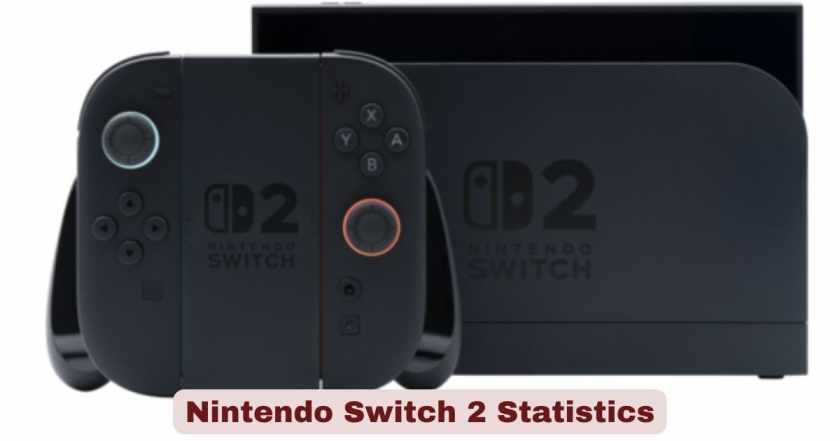
The Nintendo Switch 2 is Nintendo’s next-generation hybrid gaming console, officially released worldwide on June 5, 2025, succeeding the massively popular original Nintendo Switch that debuted back in March 2017. Much like its predecessor, the Nintendo Switch 2 operates as a true hybrid device — playable as a full home console when docked to a television and as a handheld portable when taken on the go. However, the hardware leap this time is significant: the console packs a custom Nvidia T239 processor, an 8-core ARM Cortex-A78C CPU, a 7.9-inch 1080p LCD screen capable of 120Hz refresh rates, and 256GB of internal storage — a staggering eight times more than the original Switch. It also supports 4K resolution at 60Hz when docked, bringing Nintendo’s hybrid gaming concept squarely into the modern era of high-definition gaming.
Heading into 2026, the Nintendo Switch 2 has firmly established itself as one of the fastest-selling gaming consoles in recorded history. Within just its first four days on sale, Nintendo confirmed the hardware had moved over 3.5 million units worldwide, and by the close of December 2025, that number had surged past 17.37 million units sold globally. The financial ripple effect for Nintendo has been seismic — net sales for the nine months ending December 2025 nearly doubled year-on-year, hitting 1.9 trillion Japanese yen (approximately $12.2 billion USD). The Nintendo Switch 2 in 2026 is not just a new console — it represents Nintendo’s most commercially aggressive hardware generation yet, backed by blockbuster software titles, expanding third-party support, and a growing global installed base that shows no signs of slowing down.
Interesting Nintendo Switch 2 Facts in 2026
| Fact | Detail |
|---|---|
| Global Launch Date | June 5, 2025 |
| First 4-Day Sales Record | Over 3.5 million units sold worldwide |
| Fastest-Selling Nintendo Console | Confirmed fastest in Nintendo’s entire history |
| Fastest-Selling Console in US History | Ranked 2nd fastest-selling hardware in US tracked history (1995–present), behind only Game Boy Advance |
| Japan Launch Sales (4 Days) | 947,931 units sold — nearly 3× the original Switch’s Japan launch |
| Switch 2 Screen Size | 7.9-inch LCD — larger than the original Switch’s 6.2-inch display |
| Internal Storage | 256GB — 8× more than the original Nintendo Switch |
| Wi-Fi Support | Upgraded to Wi-Fi 6 |
| Resolution Support | 1080p / 120Hz (handheld) and 4K / 60Hz (docked) |
| Joy-Con 2 New Feature | Magnetic attachment + mouse-like functionality when laid flat on a surface |
| GameChat Feature | Built-in voice/video chat via “C” button on right Joy-Con 2; free until March 31, 2026 |
| Backward Compatibility | Supports most original Nintendo Switch game library |
| US Launch Price | $449.99 (standard) / $499.99 (Mario Kart World bundle) |
| Japan Launch Price | ¥69,980 (including taxes) |
| UK Launch Price | £395.99 |
| Nintendo’s Revenue Growth (FY2026 Q1–Q3) | Up 99.3% year-on-year to 1.9 trillion yen (~$12.2B USD) |
| Nintendo Net Profit (FY2026 Q1–Q3) | Up 51.3% to 358.8 billion yen (~$2.3B USD) |
| Nintendo Lawsuit (March 2026) | On March 6, 2026, Nintendo sued the US government over tariffs imposed on Switch 2 hardware |
| GameCube Games | Nintendo GameCube titles added to Nintendo Classics library on Switch 2 |
| CPU Architecture | 8× ARM Cortex-A78C cores (vs. 4× ARM Cortex-A57 in Switch 1) |
Source: Nintendo Official Financial Reports, Wikipedia, Nintendo Life, Variety, Shacknews
The Nintendo Switch 2 facts above tell a story that goes far beyond raw specs. The console didn’t just launch well — it shattered records that had stood for decades. The fact that the Switch 2 became the 2nd fastest-selling gaming hardware in US tracked history going back to 1995 speaks to the pent-up demand Nintendo had been building for years. Meanwhile, the hardware itself represents a genuine generational upgrade: 8 cores replacing 4, Wi-Fi 6 instead of Wi-Fi 5, and a display that finally hits 1080p at 120Hz in handheld mode — features that Nintendo fans had been requesting since the OLED model launched back in 2021.
What makes these facts even more compelling is the business context surrounding them. Nintendo filed a lawsuit against the US government over tariffs in March 2026, highlighting the real-world economic pressures affecting the gaming hardware market. Despite those headwinds — which caused pre-order delays and accessory price increases — demand for the Nintendo Switch 2 never meaningfully collapsed. The company’s net profit climbing over 51% year-on-year while revenue nearly doubled is a remarkable financial achievement that underscores how critical this hardware cycle is to Nintendo’s long-term health. The addition of GameCube classics to the Switch 2’s Nintendo Classics library was also a landmark moment, satisfying a longtime fan request and adding significant value to the Nintendo Switch Online subscription ecosystem.
Nintendo Switch 2 Global Sales Statistics in the US 2026
| Sales Milestone | Units / Data |
|---|---|
| First 4 Days (Global) | 3.5 million units |
| End of Q1 FY2026 (June 30, 2025) | 5.8 million units |
| End of July 2025 | Over 6 million units |
| End of Q2 FY2026 (September 30, 2025) | 10.36 million units |
| Q2 Regional Breakdown — Americas | 3.68 million units |
| Q2 Regional Breakdown — Japan | 2.35 million units |
| Q2 Regional Breakdown — Europe | 2.40 million units |
| Q2 Regional Breakdown — Other | 1.93 million units |
| End of Q3 FY2026 (December 31, 2025) | 17.37 million units |
| Q3 Alone (Oct–Dec 2025) | 7.1 million units |
| Nintendo’s FY2026 Sales Forecast | 19 million units (revised up from 15 million) |
| US Total Through December 2025 | ~4.4 million units |
| US Total Through February 2026 | ~4.85 million units |
| Original Switch Decline (Apr–Dec 2025) | 3.25 million units — down 66% year-on-year |
Source: Nintendo Official Financial Reports (Q2 & Q3 FY2026), VGChartz, Nintendo Life, Variety
The Nintendo Switch 2 global sales statistics paint a picture of a console that launched with tremendous momentum and has maintained it quarter after quarter. The Q2 FY2026 figure of 10.36 million units was strong enough to push Nintendo to revise its full-year sales forecast upward from 15 million to 19 million units — a revision of over 26% that shocked analysts who had expected a more cautious holiday. The regional breakdown is equally revealing: while the Americas contributed 3.68 million units in the first four months, Japan punched above its weight with 2.35 million units in a market that is geographically far smaller, reflecting the deep cultural resonance Nintendo maintains at home.
The Q3 holiday quarter was especially telling — 7.1 million units sold between October and December 2025 made it the single biggest quarter the console had seen since launch. In the US market specifically, the Switch 2 ended December 2025 as both the best-selling console of the month and the best-selling console of the entire year. The comparison with the original Switch’s trajectory is striking too: through nine months of availability, the Switch 2 has sold 4.85 million US units, sitting 1.42 million units ahead of where the Switch 1 was at the same point in its lifecycle (3.43 million). The simultaneous decline of the original Switch — down 66% year-on-year — signals that the market transition from the old platform to the new one is happening swiftly and decisively.
Nintendo Switch 2 US Market Performance vs Competitors in 2026
| Console | US Installed Base Comparison After 9 Months (Feb 2026) | Switch 2 Lead/Trail |
|---|---|---|
| Nintendo Switch 2 | Baseline reference | — |
| PlayStation 5 | Switch 2 ahead by +29% | Switch 2 leads |
| PlayStation 4 (launch-aligned) | Switch 2 ahead by +30% | Switch 2 leads |
| Nintendo Wii (launch-aligned) | Switch 2 ahead by +34% | Switch 2 leads |
| Nintendo Switch 1 (launch-aligned) | Switch 2 ahead by +45% | Switch 2 leads |
| PlayStation 2 (launch-aligned) | Switch 2 ahead by +56% | Switch 2 leads |
| Xbox One (launch-aligned) | Switch 2 ahead by +61% | Switch 2 leads |
| Xbox Series X|S (launch-aligned) | Switch 2 ahead by +73% | Switch 2 leads |
| Nintendo 3DS (launch-aligned) | Switch 2 ahead by +96% | Switch 2 leads |
| Xbox 360 (launch-aligned) | Switch 2 ahead by +120% | Switch 2 leads |
| Nintendo GameCube (launch-aligned) | Switch 2 ahead by +139% | Switch 2 leads |
| Nintendo Wii U (launch-aligned) | Switch 2 ahead by +302% | Switch 2 leads |
| Game Boy Advance (launch-aligned) | Only console ahead of Switch 2 | Switch 2 trails |
Source: Circana (via Mat Piscatella / Nintendo Life), VGChartz Americas Estimates February 2026
The Nintendo Switch 2’s US market performance against its competitors in 2026 is genuinely staggering when laid out side by side. The fact that the Switch 2 is outpacing the PS4’s sales trajectory by 30% and the PS5 by 29% after nine months on the market tells you everything about how hungry consumers were for this hardware. The PS4 and PS5 are widely considered two of Sony’s most commercially successful consoles ever — so outrunning both of their launch-aligned paces simultaneously is an extraordinary achievement. Circana analyst Mat Piscatella confirmed that the Switch 2 remains the 2nd fastest-selling hardware in US tracked history going back to 1995, trailing only the Game Boy Advance — a statistic that contextualizes this launch within the full 30-year history of the modern gaming market.
What’s especially remarkable is the dominance over Nintendo’s own prior hardware. The Switch 2 sits 45% ahead of where the original Switch was at the same point — meaning the sequel is growing the audience faster than the original ever did, despite the original Switch going on to become Nintendo’s best-selling console of all time with over 150 million lifetime units. The distance over the Wii U (+302%) is almost comically large, underscoring just how thoroughly the Switch 2 has corrected the trajectory from Nintendo’s worst-performing hardware era. In the broader US gaming market, PS5 actually outsold Switch 2 in February 2026 according to VGChartz estimates, which is worth noting — but even with that monthly fluctuation, the Switch 2’s 9-month installed base lead over the PS5 stands at 29%, a durable advantage that won’t evaporate quickly.
Nintendo Switch 2 Best-Selling Games Statistics in the US 2026
| Game Title | Units Sold (as of Dec 31, 2025) | Platform | Notes |
|---|---|---|---|
| Mario Kart World | 14.03 million | Switch 2 Exclusive | Includes bundle copies; 80%+ attach rate |
| Donkey Kong Bananza | 4.25 million | Switch 2 Exclusive | ~24.5% attach rate |
| Pokémon Legends: Z-A (Switch 2 version) | 3.89 million | Switch 2 + Switch 1 | Switch 1 version: 8.41M; combined 12.3 million |
| Kirby Air Riders | 1.76 million | Switch 2 | Confirmed 1M+ seller |
| Metroid Prime 4: Beyond | Launch window title | Switch 2 + Switch 1 | Q4 2025 release |
| Hyrule Warriors: Age of Imprisonment | Q4 2025 release | Switch 2 + Switch 1 | Part of 2025 holiday lineup |
| Total Switch 2 Software Sales (Apr–Dec 2025) | 37.93 million units | — | All Switch 2 titles combined |
| Mario Kart 8 Deluxe (original Switch) | Still selling — 2.39M added this FY | Switch 1 | Lifetime: 69.56M+ |
Source: Nintendo Q3 FY2026 Financial Report (February 3, 2026), Game Informer, Shacknews, Wikipedia
Mario Kart World is in a category entirely of its own when it comes to Nintendo Switch 2 game sales in 2026. With 14.03 million copies sold against a hardware base of 17.37 million units, the attach rate exceeds 80% — meaning more than four out of every five Switch 2 owners purchased or received a copy of Mario Kart World. A significant portion of this was driven by the $499.99 Mario Kart World bundle, which Nintendo made available at launch as the default way many consumers opted to buy the hardware. Still, even accounting for bundle sales, the sheer volume is extraordinary — the title nearly has the lifetime sales of Mario Kart Wii (9.57M launch-aligned) beaten, and it did so in just seven months. For context, Mario Kart 8 Deluxe, the previous best-selling Switch game, accumulated over 69.56 million lifetime units — so Mario Kart World still has a massive runway ahead of it.
Donkey Kong Bananza at 4.25 million units is a success story that deserves its own spotlight. The DK franchise hadn’t received a brand-new mainline platformer in over a decade prior to Bananza, yet it moved more than a quarter of the Switch 2 install base within its first two quarters. The Pokémon Legends: Z-A cross-gen performance is equally fascinating: the Switch 2 version alone sold 3.89 million units, but when combined with the Switch 1 version’s 8.41 million, the franchise total sits at 12.3 million units for a single title — confirming that Pokémon’s mass-market appeal transcends generational hardware boundaries. Total Switch 2 software sales across April–December 2025 reached 37.93 million units, a number that reflects both the strength of Nintendo’s first-party lineup and the early enthusiasm of a newly expanding hardware audience.
Nintendo Switch 2 Financial Performance Statistics in the US 2026
| Financial Metric | Value (FY2026 Q1–Q3, Apr–Dec 2025) | YoY Change |
|---|---|---|
| Nintendo Net Sales | ¥1.9 trillion (~$12.2 billion USD) | +99.3% |
| Nintendo Net Profit | ¥358.8 billion (~$2.3 billion USD) | +51.3% |
| Nintendo Operating Profit Forecast (FY2026) | ¥370 billion (~$2.45 billion USD) | Raised +16% from prior forecast |
| Full-Year Revenue Forecast (FY2026) | ¥2.25 trillion | Raised from ¥1.9 trillion forecast (+18.4%) |
| Digital Sales (H1 FY2026) | ¥155.5 billion (~$1.01 billion USD) | Down 2.8% YoY |
| Digital Sales Share | 54.5% of software sales | Down 1.8 points YoY |
| Mobile & IP Revenue (H1 FY2026) | ¥16.6 billion (~$108 million USD) | Up 0.61% |
| Total Assets | ¥3,863,346 million | Up ¥464.8 billion from prior FY |
| Cash & Deposits | ¥1,874,054 million (~$12.2 billion USD) | — |
| Capital Adequacy Ratio | 77.0% | Strong balance sheet |
| Annual Dividend Forecast (FY2026) | ¥181.00 per share | Up from ¥120.00 prior year |
Source: Nintendo Q3 FY2026 Earnings Report (February 3, 2026), CNBC, Game World Observer, Technetbooks
The Nintendo Switch 2 financial statistics for 2026 reveal a company that has executed one of the most successful hardware launch cycles in recent corporate history. Nintendo’s net sales nearly doubling year-on-year to ¥1.9 trillion for just the first nine months of the fiscal year is a headline achievement — and it was enough for the company to revise its full-year revenue forecast upward by 18.4% to ¥2.25 trillion. The operating profit forecast was also lifted 16% to ¥370 billion, reflecting the healthy margin structure that comes with a hit hardware product paired with high-attach-rate software. The dividend increase from ¥120 to ¥181 per share signals that Nintendo’s board is confident in the company’s near-term trajectory and wants to return value to shareholders on the back of this outperformance.
One nuance worth highlighting is the slight dip in digital sales share — falling 1.8 percentage points to 54.5%. In the context of a hardware launch year, this makes intuitive sense: new hardware purchasers often gravitate toward physical game cards as gifts and collector’s items, especially during the holiday season. However, the overall volume of digital revenue remains substantial at over ¥155.5 billion (~$1 billion USD) for just the first half of the year. Nintendo’s cash and deposits of ¥1.87 trillion gives the company extraordinary financial flexibility for R&D investment, potential acquisitions, and shielding itself from external shocks — including the ongoing tariff situation that led Nintendo to file a lawsuit against the US government on March 6, 2026, a move that reflects just how economically significant the US market is to the company’s global Nintendo Switch 2 business.
Nintendo Switch 2 Hardware Specifications Statistics in the US 2026
| Specification | Nintendo Switch 2 | Original Nintendo Switch |
|---|---|---|
| Release Date | June 5, 2025 | March 3, 2017 |
| US Launch Price | $449.99 | $299.99 |
| Processor | Custom Nvidia T239 (Ampere architecture) | Nvidia Tegra X1 |
| CPU | 8× ARM Cortex-A78C @ 998MHz (docked) / 1101MHz (handheld) | 4× ARM Cortex-A57 |
| GPU Clock (Docked) | 1007MHz | ~768MHz |
| GPU Clock (Handheld) | 561MHz | ~307.2MHz |
| RAM (Available to Developers) | 9GB | ~3.2GB |
| RAM (System Reserved) | 3GB | ~1GB |
| Internal Storage | 256GB | 32GB |
| Display Size | 7.9-inch LCD | 6.2-inch LCD (base) / 7.0-inch OLED |
| Handheld Resolution | 1080p Full HD @ 120Hz with HDR | 720p @ 60Hz |
| Docked Resolution | 4K @ 60Hz or 2K @ 120Hz | 1080p @ 60Hz |
| Wi-Fi | Wi-Fi 6 | Wi-Fi 5 (802.11ac) |
| Console Dimensions (with Joy-Con 2) | ~4.5″ tall × 10.7″ wide × 0.55″ thick | ~4.0″ tall × 9.4″ wide × 0.55″ thick |
| Joy-Con Attachment | Magnetic | Rail (sliding) |
| AI Upscaling | DLSS 3.1 supported | Not supported |
| Ray Tracing | Supported | Not supported |
Source: Nintendo Official Tech Specs, GamesRadar, Digital Foundry / ResetEra, 9meters.com
The Nintendo Switch 2 hardware specifications represent the single largest generational leap Nintendo has made between consecutive hybrid or handheld platforms. Going from 4 CPU cores to 8, from ~3.2GB of developer-accessible RAM to 9GB, and from 32GB storage to 256GB isn’t just an incremental upgrade — it fundamentally changes what game developers can achieve on the platform. The jump to DLSS 3.1 AI upscaling, powered by Nvidia’s Ampere architecture, means developers can render games at lower resolutions and upscale them intelligently, which is particularly impactful in the 4K docked mode where pushing native 4K would be otherwise impossible at this power envelope. The fact that the GPU clock in handheld mode is running at nearly double the frequency of the original Switch’s docked GPU is a striking data point — the Switch 2’s handheld performance is effectively superior to what the original could achieve even when plugged into a TV.
The transition from rail-based Joy-Con to magnetic Joy-Con 2 is more than a convenience upgrade — it fundamentally changes the build quality experience and enables new use cases like the mouse-mode functionality. The enlarged 7.9-inch screen offers a noticeably bigger canvas for handheld play, and the jump to 120Hz at 1080p in handheld mode brings the Switch 2 in line with competitive premium smartphones and portable gaming PCs. The Wi-Fi 6 upgrade matters for online gaming latency and download speeds, which is increasingly important as digital game file sizes grow and online multiplayer becomes a core use case for the platform. The $449.99 US launch price — a full $150 more than the original Switch’s debut price in 2017 — reflects both the genuine hardware leap and the broader inflationary environment the consumer electronics market has been navigating since the pandemic era.
Nintendo Switch 2 Japan Hardware Sales Statistics 2026
| Month / Period | Switch 2 Japan Sales | vs. Switch 1 (Launch-Aligned) |
|---|---|---|
| First 4 Days (June 2025) | 947,931 units | ~3× the Switch 1’s Japan launch (329,152 units) |
| Q2 FY2026 (Jul–Sep 2025) | 2.35 million lifetime (Japan) | — |
| January 2026 | Estimated ~316,000+ units | — |
| February 2026 | 283,640 units | Switch 1 Feb 2018: 179,380 (+104,000+ units) |
| February 2026 YTD (Japan) | ~600,000 units | — |
| Switch 2 Japan Lifetime (as of Feb 2026 est.) | ~4.70 million units | — |
| Switch 1 Japan Lifetime (as of Feb 2026 est.) | 36.66 million units | — |
| PS5 February 2026 (Japan) | 48,202 units | Lifetime: 7.42 million |
| Xbox Series X|S February 2026 (Japan) | 3,861 units | Lifetime: 0.70 million |
Source: VGChartz Japan Hardware Estimates, Famitsu Launch Data
Japan has been one of the Nintendo Switch 2’s most dominant markets from day one. The 947,931 units sold in Japan within the first four days — nearly three times the original Switch’s Japan launch figure of 329,152 units — set the tone for what was to come. As of February 2026, the Switch 2 continues to be the best-selling console in Japan by an enormous margin, moving 283,640 units in February alone, which is nearly six times what the PS5 managed in the same month (48,202 units) and over 73 times more than the Xbox Series X|S (3,861 units). Japan’s gaming market has always been Nintendo’s home turf, but even by historical standards, the Switch 2’s dominance in Japan is exceptional. The console’s February 2026 Japan sales were also over 104,000 units ahead of where the Switch 1 was at the same launch-aligned month in February 2018 — a pattern of consistent outperformance that shows no sign of reversing.
The Switch 2’s estimated Japan lifetime total of approximately 4.70 million units as of February 2026 puts it comfortably on track to become one of Nintendo’s fastest-accumulating hardware platforms in the Japanese market. The contrast with the Xbox Series X|S — which has managed a lifetime Japan total of just 0.70 million units — is a reminder of how uniquely polarized the Japanese gaming market remains. The PS5 sits at 7.42 million lifetime units in Japan, which is respectable but still less than double the Switch 2’s tally at less than a year into its commercial life. Given that major upcoming titles like Pokémon Pokopia and Mario Tennis Fever are scheduled to release in early 2026 according to Nintendo’s official announcements, Japan sales momentum for the Nintendo Switch 2 is likely to remain strong through the second half of the fiscal year.
Nintendo Switch 2 vs Switch 1 US Cumulative Sales Comparison 2026
| Month (Launch-Aligned) | Nintendo Switch 2 US Sales | Nintendo Switch 1 US Sales | Switch 2 Lead |
|---|---|---|---|
| Month 1 (Jun 2025 / Mar 2017) | — | — | — |
| Month 7 (Dec 2025 / Sep 2017) | ~4.4 million | — | +35% vs PS4 pace |
| Month 8 — January 2026 / Oct 2017 | 4.62 million | 2.61 million | +2.01 million |
| Month 9 — February 2026 / Nov 2017 | 4.85 million | 3.43 million | +1.42 million |
| Switch 1 US Lifetime Total | — | 48.78–48.82 million | — |
| Switch 2 Gap to Switch 1 Lifetime (Feb 2026) | — | — | 43.97 million behind |
| Switch 2 Sales Pace vs PS4 (after 7 months) | 35% faster than PS4’s pace | — | — |
Source: VGChartz US Sales Comparison Series (January 2026, February 2026)
The Nintendo Switch 2 vs Switch 1 US sales comparison is one of the most compelling data stories in gaming right now. After nine months on the US market, the Switch 2 has sold 4.85 million units compared to 3.43 million for the Switch 1 at the same point in its lifecycle — a lead of 1.42 million units or approximately 41%. What makes this especially significant is the timing: the Switch 2 launched in June (summer), meaning its first holiday season fell in months 6 and 7 of its lifecycle, while the Switch 1 launched in March and had the advantage of its first holiday in months 9 and 10. Despite this structural disadvantage in holiday timing, the Switch 2 still leads — pointing to underlying demand strength that goes beyond pure seasonal effects.
The comparison with the PlayStation 4’s sales pace is the kind of benchmark that puts Nintendo’s achievement in sharp relief. The PS4 is widely regarded as one of the most successful console launches of the modern era — selling approximately 1 million units per month in the US during its early life. For the Switch 2 to be running 35% faster than the PS4’s pace after seven months is remarkable, particularly given that the Switch 2 launched at $449.99, a price point $50 higher than the PS4’s $399 launch price after adjusting for inflation context. The Switch 1’s US lifetime total of approximately 48.8 million units sets a high bar — and while the Switch 2 is still 43.97 million units behind that lifetime total, the early trajectory suggests this is the right console to be on for the long haul.
Disclaimer: The data research report we present here is based on information found from various sources. We are not liable for any financial loss, errors, or damages of any kind that may result from the use of the information herein. We acknowledge that though we try to report accurately, we cannot verify the absolute facts of everything that has been represented.