Where is Kharg Island?
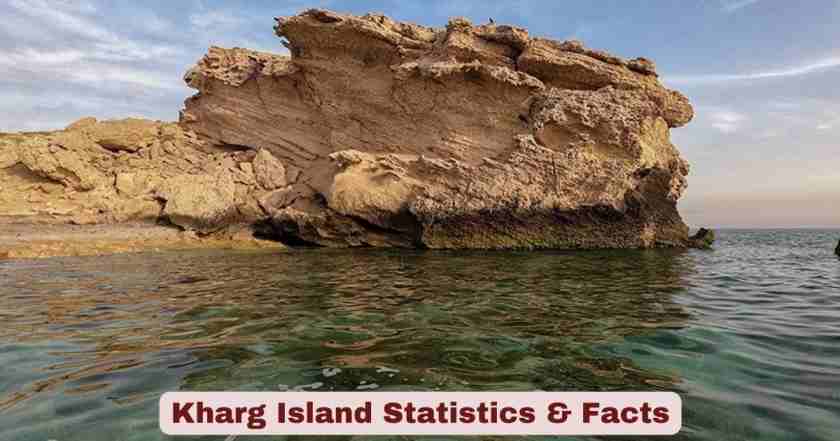
Kharg Island — locally known as the “Forbidden Island” — is a small continental island belonging to Iran, located in the northern Persian Gulf, approximately 25 kilometres (16 miles) off Iran’s southwestern coastline, within the jurisdiction of Bushehr province. Its precise coordinates sit at latitude 29.25° N and longitude 50.33° E, placing it roughly 483 kilometres (300 miles) northwest of the Strait of Hormuz — one of the world’s most critical maritime chokepoints for global oil shipping. The island stretches about 5 miles in length and roughly half that at its widest point, covering a total land area of approximately 20 square kilometres (7.7 square miles) — making it roughly one-third the size of Manhattan island in New York City. Despite its modest dimensions, Kharg Island is one of the most strategically and economically consequential pieces of land on earth, guarded around the clock by Iran’s elite Islamic Revolutionary Guard Corps (IRGC) and accessible only to personnel with official security clearance.
What makes Kharg Island so outsized in global significance is the extraordinary concentration of oil export infrastructure packed into its compact terrain. Since the 1960s, when the island was developed into a major crude-export terminal under the Shah in partnership with US company Amoco, it has functioned as the primary artery through which Iran delivers its oil to international buyers. The island is connected via subsea pipelines to multiple major oilfields on the Iranian mainland and offshore platforms in the Gulf — including the massive fields at Ahvaz, Marun, and Gachsaran. Its deep-water coastal access, rare along Iran’s otherwise shallow western shoreline, is what originally made Kharg the ideal and practically only location capable of accommodating the supertankers used in modern crude oil shipping. As of March 2026, with the ongoing US-Israel-Iran conflict, Kharg Island sits at the absolute centre of global energy, military, and geopolitical attention.
Interesting Facts About Kharg Island 2026
| Fact | Detail |
|---|---|
| Official Name | Kharg Island (also spelt Khark Island; Persian: جزیره خارک) |
| Nickname | The “Forbidden Island” |
| Location | Northern Persian Gulf, Bushehr Province, Iran |
| Distance from Iranian Coast | ~25 km (16 miles) |
| Distance from Strait of Hormuz | ~483 km (300 miles) northwest |
| Total Land Area | ~20 km² (7.7 sq mi) |
| Length of Island | ~5 miles (8 km) |
| Terrain | Hilly interior, cliffs at north and south ends; highest point ~270 feet above sea level |
| Average Elevation | ~10 metres above sea level |
| Freshwater Source | Natural freshwater springs (rare for Persian Gulf islands) |
| Climate | Hot semi-arid (Köppen: BSh); average annual temperature ~75°F (24°C); ~10.9 inches annual rainfall |
| Island Population (est.) | ~20,000 residents (mostly oil industry workers and families) |
| City Population (2016 census) | 8,193 people in 2,374 households (city of Kharg) |
| Governing Body | Kharg District, Bushehr County, Bushehr Province, Iran |
| Security Authority | Islamic Revolutionary Guard Corps (IRGC) |
| Archaeological Heritage | Human settlements dating back 4,000+ years; Achaemenid cuneiform inscription (550–330 BCE); ruins of a 7th-century Christian monastery |
| Colonial History | Dutch East India Company established a trading fort in 1753; expelled in 1766 |
| Oil Terminal Development | Modern terminal construction began in 1956–1958 |
| Primary Export Destination (2025–2026) | China |
| Native Language | Khargi (a Southwestern Iranian language); Farsi also widely spoken |
Source: Wikipedia, Encyclopaedia Iranica, Britannica, Sunday Guardian Live
Kharg Island carries a uniquely layered identity — ancient crossroads, colonial outpost, oil empire, and now a geopolitical flashpoint all rolled into one. What is remarkable is that this island, covering barely 7.7 square miles, holds more strategic weight in global energy markets than most entire nations. Its natural freshwater springs, highly unusual for islands in the arid Persian Gulf, enabled centuries of continuous human habitation long before anyone knew what lay beneath the ocean floor. The island’s archaeological record — from Achaemenid Persian carvings to a 7th-century Christian monastery complex measuring 96 by 85 metres — reveals a depth of civilisational presence that predates its modern industrial role by millennia. The Dutch East India Company, recognising its maritime value, paid just 2,000 rupees to establish a fort there in 1753, before eventually being expelled by local forces in 1766.
The fact that approximately 20,000 people live on Kharg today, the vast majority of them tied directly to the oil industry and its support services, underlines how completely the island’s economy and social fabric have been reshaped by energy infrastructure. Modern residents live in organised residential zones with schools and basic services, all built to sustain the workforce managing what is arguably the most important single export terminal on earth. The island is so tightly controlled that Iranians themselves commonly refer to it as the “Forbidden Island,” with access restricted to those holding official clearances — a level of security that reflects both its economic indispensability and its vulnerability.
Kharg Island Oil Export Statistics 2026
| Metric | Data |
|---|---|
| Share of Iran’s Crude Oil Exports | ~90% |
| Annual Barrels Handled | ~950 million barrels per year |
| Maximum Loading Capacity | Up to 7 million barrels per day (bpd) |
| Normal Daily Export Rate (2024–2025) | ~1.3 million to 1.6 million bpd |
| Pre-conflict Export Surge (Feb 2026) | Peaked at nearly 4 million bpd (Feb 15–20, 2026) |
| Number of Main Loading Jetties | 7 main loading jetties |
| Ship-to-Ship Transfer Capacity | Available for additional offshore shipments |
| Tankers Accommodated Simultaneously | Up to 8 tankers at one berth |
| Storage Capacity (Total) | ~30 million barrels |
| Active Storage (March 2026, per Kpler) | ~18 million barrels (~10–12 days of exports) |
| Additional Storage Added (May 2025) | +2 million barrels (rehabilitation of tanks 25 & 26) |
| Oil Tanks Full (Mid-Jan 2026) | 27 tanks |
| Oil Tanks Full (March 7, 2026) | Only 9 tanks (Iran pre-emptively drew down stocks) |
| Pipeline Connections | Connected to Ahvaz, Marun, Gachsaran fields and offshore platforms |
| Primary Buyer | China |
Source: Al Jazeera, S&P Global Commodity Insights, Kpler, JP Morgan, TRT World, ABC News
The oil export figures for Kharg Island in 2026 are staggering in their concentration. The fact that a single 20 km² island is responsible for routing approximately 90 percent of all Iranian crude oil exports — equivalent to roughly 950 million barrels annually — makes it arguably the most operationally critical single-facility energy terminal in the world. No other major oil-producing country — not Saudi Arabia, Russia, Kuwait, or the UAE — concentrates almost its entire export capacity in one location. When Iran pre-emptively drew down its stored oil stocks in early February 2026 from 27 full tanks to just 9 full tanks ahead of anticipated conflict, it was a signal of just how aware Tehran is of Kharg’s extreme vulnerability and irreplaceability.
The export surge recorded by Kpler in the weeks before the February 28, 2026 conflict, when loading rates climbed to nearly 4 million bpd — nearly triple the normal pace of 1.3 to 1.6 million bpd — shows that Iran deliberately front-loaded its oil revenues in anticipation of disruption. The May 2025 storage expansion, adding 2 million barrels of capacity through the rehabilitation of tanks 25 and 26, was part of a broader strategic infrastructure push. With 18 million barrels still held on the island as of early March 2026 and roughly 7 main loading jetties capable of accommodating supertankers, the scale of the infrastructure concentrated on this one island is genuinely extraordinary.
Kharg Island Iran Oil Production Statistics 2026
| Metric | Data |
|---|---|
| Iran’s Crude Oil Output (2025–2026) | ~3.3 million barrels per day (bpd) |
| Condensate and Other Liquids | ~1.3 million bpd |
| Total Liquids Output | ~4.6 million bpd |
| Iran’s Share of Global Oil Supply | ~4.5% |
| Iran’s Rank in OPEC | 3rd largest producer |
| Iran’s Domestic Refining Capacity | ~2.6 million bpd |
| Key Domestic Refineries | Abadan (500,000+ bpd), Bandar Abbas, Isfahan, Tehran |
| Exports Routed Through Kharg | ~1.3–1.6 million bpd (normal); peaks above 2 million bpd |
| Alternative Export Terminal | Jask terminal (Gulf of Oman, opened 2021) — limited capacity |
| Jask Terminal Significance | Outside the Strait of Hormuz chokepoint; not yet able to replace Kharg |
Source: JP Morgan Research, Geopolitics Unplugged, TRT World, Economy of Iran (Wikipedia)
Iran’s oil production numbers going into 2026 confirm just how central Kharg Island is to the national economy. With a total liquids output of approximately 4.6 million barrels per day, Iran ranked as OPEC’s third largest producer, contributing roughly 4.5% of global oil supply — a significant enough share that any disruption at Kharg reverberates through global energy pricing. The country’s domestic refining capacity of around 2.6 million bpd across major facilities including Abadan, Iran’s flagship refinery at over 500,000 bpd, largely serves the internal market, making export revenue through Kharg the economic lifeline of the state. The Jask terminal, opened in 2021 as a strategic alternative outside the Strait of Hormuz in the Gulf of Oman, was envisioned as a diversification move — but as of 2026, it remains nowhere near capable of absorbing the volume that Kharg handles.
The contrast between Iran’s total liquids output of ~4.6 million bpd and its export rate of 1.3 to 1.6 million bpd reveals how much of production is consumed domestically, how much is constrained by ongoing international sanctions, and how much the shadow fleet trade with China has shaped export logistics. The pre-conflict surge to nearly 4 million bpd of Kharg loading activity in February 2026, as confirmed by Kpler data cited by JP Morgan, showed that under maximum effort the terminal is capable of loading at extraordinary rates — but that such rates are economically unsustainable and were specifically a crisis-response measure. Iran’s inability to replace Kharg with any other facility, domestic or international, is what makes the island simultaneously its greatest economic asset and its most dangerous vulnerability.
Kharg Island Economic & Revenue Statistics 2026
| Metric | Data |
|---|---|
| Kharg’s Share of Iranian Government Revenue | Oil exports account for 25–40% of government budget |
| Annual Crude & Condensate Export Earnings (pre-conflict est.) | $35 billion to $60 billion (at $70–$90/barrel avg, 2025) |
| Potential Revenue Shortfall (if Kharg fully disrupted) | Exceeds $50 billion annually |
| Oil Price Impact (if Kharg struck) | Analysts predict rise to $150/barrel |
| Oil Price Impact (Kharg blockade/seizure) | +$10 to $12 per barrel immediate premium |
| Global Crude Price (March 2026) | Already above $100/barrel (rose past $120/barrel during tanker attacks) |
| US Consumer Gas Price (March 2026) | $3.59/gallon (up from $2.94/gallon one month prior) |
| Iran’s GDP Growth Projection (2025) | ~0.3% (near zero; IMF revised downward) |
| IRGC Budget Allocation from Oil Revenues (2025) | 51% of total oil and gas export revenues (~12 billion euros) |
| Iran’s Annual Proxy Funding (est.) | ~$1.6 billion/year average |
| Iran 2009 Oil Exports via Kharg (historical ref.) | 950 million barrels swapped/exported |
Source: Geopolitics Unplugged, The Conversation, ABC News, Economy of Iran (Wikipedia), IMF
The revenue statistics tied to Kharg Island in 2026 illustrate why Tehran has historically protected the facility at virtually any cost. With pre-conflict annual export earnings estimated at $35 to $60 billion depending on global crude pricing — and oil revenues historically constituting 25 to 40 percent of Iran’s government budget — Kharg is not merely an energy terminal. It is the financial circulatory system of the Iranian state. A full disruption would create a revenue shortfall potentially exceeding $50 billion per year, a blow that would be catastrophic for a government already operating under severe international sanctions. The 51% allocation of oil and gas export revenues to the IRGC in Iran’s 2025 budget, worth an estimated 12 billion euros, makes clear that the island’s oil flows fund not just public services but military operations and regional proxy networks.
The knock-on effects for global markets are equally severe. With global crude already above $100/barrel in March 2026 — driven partly by Strait of Hormuz disruptions — analysts at institutions including JP Morgan and multiple independent energy research firms have warned that a confirmed strike or seizure of Kharg could push oil prices toward $150/barrel. For US consumers, the march to $3.59/gallon at the pump from just $2.94/gallon a month earlier — even before any confirmed Kharg disruption — shows how sensitively energy markets respond to geopolitical events in this region. Iran’s near-zero GDP growth projection of 0.3% for 2025, revised sharply downward by the IMF, reflects sanctions pressure and conflict damage that was already biting hard before any further disruption to Kharg’s operations.
Kharg Island Strategic & Military Statistics 2026
| Metric | Data |
|---|---|
| Share of Iran’s Crude Exports Handled | ~90% (JP Morgan note, March 2026) |
| Strait of Hormuz Daily Oil Flow (2024 avg.) | ~20 million barrels per day (US EIA) |
| Kharg’s Share of Strait of Hormuz Traffic | ~10% on a typical day |
| Date of First US Bombing of Kharg Military Sites | March 13, 2026 |
| Number of Oil Tanks Full (Jan 2026 vs March 7, 2026) | Dropped from 27 to 9 (Iran pre-emptively drew down) |
| Oil Price If Kharg Is Struck (analyst projection) | Up to $150/barrel |
| Comparable Event: Russia-Ukraine War Peak (2022) | Brent crude exceeded $100/barrel for 4 months |
| Iran’s Export Output Halving Risk | JP Morgan: exports would “halve” if Kharg port seized |
| Security Force | IRGC (Islamic Revolutionary Guard Corps) |
| Alternative Terminal Considered | Jask Terminal (Gulf of Oman) — insufficient capacity |
| Status as of March 13, 2026 | US bombed military installations on the island; oil infrastructure deliberately spared (per Trump statement) |
Source: JP Morgan, US EIA, Al Jazeera, TRT World, The Conversation, Wikipedia
The military and strategic statistics surrounding Kharg Island in 2026 frame this small coral outcrop as one of the most consequential chokepoints in the modern world. The US Energy Information Administration (EIA) data showing that approximately 20 million barrels of oil per day passed through the Strait of Hormuz in 2024 puts Kharg’s normal daily export contribution of 1.3 to 1.6 million bpd in stark perspective — on any given day, Kharg is responsible for up to 10% of total Strait of Hormuz petroleum traffic. The March 13, 2026 US bombing of military installations on the island — the first direct strike in the facility’s modern history — marked an extraordinary escalation, though President Trump explicitly stated the oil infrastructure was spared, warning Iran against interfering with free passage through the Strait of Hormuz.
JP Morgan’s research note from early March 2026, warning that a direct strike “would immediately halt the bulk of Iran’s crude exports” and that seizing the port would cause Iranian output to “halve,” captures the binary nature of Kharg’s vulnerability. There is no gradual degradation scenario — the infrastructure is so centralised that any serious disruption would be near-total. The pre-conflict drawdown from 27 full storage tanks in mid-January 2026 to just 9 full tanks by March 7, 2026, as tracked by satellite imagery analysts, shows Iran itself clearly anticipated and prepared for attack — evacuating oil stocks to reduce the economic value of a strike. With oil prices already near or above $100/barrel in March 2026 and analysts projecting a potential spike toward $150/barrel if the oil infrastructure itself were targeted, the global economic stakes of decisions made about Kharg Island are virtually without parallel in the current geopolitical environment.
Kharg Island Infrastructure & Terminal Statistics 2026
| Metric | Data |
|---|---|
| Major Terminal Complexes | Kharg Terminal, Sea Island Terminal, Darius Terminal, KHEMCO Gas Terminal |
| Number of Loading Jetties | 7 main jetties |
| Tanker Berths (simultaneous) | Up to 8 tankers |
| Total Oil Storage Capacity | ~30 million barrels |
| 2025 Storage Expansion | +2 million barrels (tanks 25 & 26 rehabilitated; reported May 2025, S&P Global) |
| Maximum Historical Loading Rate | 7 million bpd |
| Normal Operating Export Rate | 1.3–1.6 million bpd |
| Pipeline Feed Sources | Ahvaz, Marun, Gachsaran oilfields + offshore Gulf platforms |
| Terminal Operator | National Iranian Oil Company (NIOC) |
| First Modern Oil Reservoir Construction | 1956 (connected to Gachsaran oil field) |
| Partnership for Initial Development | Amoco (US company) — expropriated after 1979 Iranian Revolution |
| Peak Status Achieved | World’s largest offshore crude oil terminal (by early 1970s) |
| Gas Terminal | KHEMCO Terminal (Kharg Chemical Complex) |
| Ship-to-Ship Transfers | Offshore transfers available to handle overflow |
Source: Wikipedia, Al Jazeera, S&P Global Commodity Insights, SANA, Geopolitics Unplugged
The infrastructure statistics for Kharg Island in 2026 tell the story of decades of continuous investment and expansion into one of the most sophisticated export terminal systems ever built. By the early 1970s, Kharg had already achieved the status of the world’s largest offshore crude oil terminal, a distinction that came from its unique combination of deep-water access, pipeline connectivity to the giant southwestern Iranian oilfields, and massive storage infrastructure. The four terminal complexes — Kharg Terminal, Sea Island Terminal, Darius Terminal, and the KHEMCO gas terminal — represent different phases of development, each adding capacity and redundancy to the overall system. The National Iranian Oil Company (NIOC), which took over operation from Amoco following the 1979 Iranian Revolution, has continued expanding and maintaining the facility through sanctions periods, conflicts, and international pressure.
The May 2025 rehabilitation of storage tanks 25 and 26, each holding 1 million barrels, was reported by S&P Global Commodity Insights as part of a broader infrastructure push that brought total storage capacity to approximately 30 million barrels. The system’s 7 main loading jetties and capacity to service up to 8 tankers simultaneously, supplemented by offshore ship-to-ship transfers, gives the terminal significant operational flexibility. The fact that the terminal was rebuilt and expanded even after the Iran-Iraq War (1980–1988), during which Iraqi airstrikes put the facilities out of commission for extended periods including through 1986, demonstrates Tehran’s absolute strategic commitment to maintaining Kharg as the centrepiece of its oil economy — a commitment that continues to define Iranian infrastructure policy to this day.
Why Kharg Island Has Not Been Fully Destroyed 2026 — Expert Analysis Statistics
| Analyst / Institution | Assessment |
|---|---|
| JP Morgan (March 2026) | A direct strike “would immediately halt the bulk of Iran’s crude exports, likely triggering severe retaliation in the Strait of Hormuz or against regional energy infrastructure” |
| Petras Katinas, RUSI (London) | Seizing Kharg “would cut off Iran’s oil lifeline”; even with Hormuz blocked, seizure gives the US leverage in negotiations |
| Marc Gustafson, Eurasia Group (former White House Situation Room head) | Trump may be tempted to seize Kharg for a “big PR win,” natural barrier from mainland Iran, and maximum leverage — but any such operation is “fraught with risk” |
| Jan van Eck, CEO VanEck Funds | “It’s where 90% of Iran’s oil gets exported out of — that is a choke point… Trump is going to want that leverage point going forward” (CNBC, March 2, 2026) |
| Richard Goldberg, FDD | Hesitation is partly due to “jittery markets and the potential for regime change still in play”; may change as US secures Strait of Hormuz |
| Andreas Krieg, King’s College London | “Kharg is one of the few places where a strike could have immediate strategic and economic consequences” |
| Sonia Martinez-Giron, ITSS Verona | “It harbours 90 percent of Iranian oil exports and is the artery connecting the Iranian economy to the global economy” |
| Scott Lucas, University of Dublin | A takeover of Kharg would be “the equivalent of trying to seize every tanker of the Russian shadow fleet” |
| Alex Plitsas, Atlantic Council | Any ground operation on Iranian territory would require hundreds of thousands of troops; likely limited to special operations forces |
| Francis Galgano, Villanova University | Deep water around Kharg is key — it “enables the approach of oil supertankers” unlike the shallow Gulf coast |
| The Conversation analysts | Destroying Kharg “would shatter already fragile confidence in financial markets” and expose Trump’s war as “a catastrophic error” ahead of November midterms |
| Trump Statement (March 13, 2026) | “Totally obliterated every MILITARY target in Iran’s crown jewel, Kharg Island… I have chosen NOT to wipe out the Oil Infrastructure on the Island” |
| Axios Report (March 7, 2026) | Trump administration officials confirmed seizing Kharg was “on the table” — cited four unnamed sources |
| USS Tripoli Deployment | ~2,500 Marines and the amphibious assault ship USS Tripoli ordered to region by Pentagon (March 13, 2026) |
Source: CNBC, France 24, The Conversation, Foreign Policy, Eurasia Group, RUSI, VanEck, Foundation for Defense of Democracies, Atlantic Council, Villanova University, Axios
The expert consensus in March 2026 is striking in its uniformity: virtually every analyst agrees that Kharg Island is the single most powerful economic lever available to the US in the Iran conflict — and equally, that striking or seizing it carries risks so severe that even a hawkish administration has paused at the threshold. The reasons are layered. A full destruction of Kharg’s oil infrastructure would cripple Iran’s economy for potentially decades, but it would simultaneously send global oil prices toward $150/barrel, directly hurting American consumers ahead of November 2026 midterm elections at a time when inflation and cost of living are their primary concerns. Trump’s decision on March 13, 2026 to bomb only the military installations on the island — sparing the oil infrastructure — reflects this precise calculation: gain maximum deterrence leverage while preserving the economic value of the facility for potential post-war negotiations.
The geopolitical logic articulated by Petras Katinas of RUSI — that seizing Kharg would give the US “leverage during negotiations, no matter which regime is in power after the military operation ends” — explains the island’s unique status as a bargaining chip. Unlike bombed bridges or destroyed airfields, Kharg Island in US hands would represent a permanent, daily economic pressure point on any future Iranian government. The Axios report of March 7, 2026, confirming that Trump administration officials were actively discussing a seizure operation, and the subsequent deployment of the USS Tripoli with 2,500 Marines, shows that a ground operation — while not yet executed — remains a live option. As Jan van Eck of VanEck Funds noted publicly on CNBC, Trump’s Venezuela playbook — cutting off oil exports and hard currency to force political compliance — is clearly the strategic template being considered for Iran.
Kharg Island Iran-Iraq War & Historical Conflict Statistics 2026
| Metric | Data |
|---|---|
| Iran-Iraq War Duration | 1980–1988 (8 years) |
| First Iraqi Airstrike on Kharg | 1980 (early in the war) |
| Peak Iraqi Bombing Campaign | 1985–1986 (intensified “Tanker War” phase) |
| Terminal Put Out of Commission | Autumn 1986 |
| Total War Damage | Heavy bombing destroyed most terminal facilities; Darius Oilfield also destroyed |
| Post-War Rebuilding Priority | Iran made rebuilding Kharg a top national priority after 1988 ceasefire |
| Portuguese Colonial Control | First European colonisers; seized Kharg along with other Gulf islands (exact year varies by source) |
| Dutch East India Company Fort | Established 1753; expelled 1766 |
| British Control | Briefly occupied Kharg in 1838–1842 during tensions with Iran |
| 1979 Iranian Revolution Impact | Amoco’s (US) properties expropriated; NIOC took full control |
| US President Jimmy Carter (1979) | Imposed sanctions on Iran during hostage crisis but refrained from striking Kharg |
| US President Reagan (1980s) | Prioritised protecting shipping and targeting Iranian vessels/missile batteries; left Kharg untouched |
| Trump’s Kharg Island Interest (historical) | Trump has mused about seizing Kharg “at least as far back as 1988” (cited by Fox News Radio host Brian Kilmeade, March 2026) |
| Achaemenid Inscription Discovery | November 14, 2007 (Old Persian cuneiform on coral rock, c. 550–510 BCE) |
| Inscription Vandalism | May 31, 2008 — ~70% deliberately destroyed with a sharp object |
| Khark Monastery | Dimensions: 96 m × 85 m; includes chapel, 19 monks’ cells, library, courtyard — “the most important complex of antiquities on Kharg” |
| Jean de Thévenot’s Observation (17th century) | Noted presence of qanats (ancient irrigation systems) on the island |
| Charax Spasinou Misconception | Kharg name is sometimes wrongly linked to the ancient city of Charax Spasinou (Alexander the Great, near modern Basra) — archaeological records confirm they are unrelated |
Source: Wikipedia, Al Jazeera, France 24, CNBC, Foreign Policy, Encyclopaedia Iranica
The historical conflict statistics around Kharg Island reveal a long and violent record of the island being coveted, attacked, and rebuilt — a cycle that has repeated across centuries and empires. The Iran-Iraq War (1980–1988) was the most devastating episode in the island’s modern history. Iraqi airstrikes, intensifying dramatically through the 1985–1986 Tanker War phase, systematically targeted Kharg’s oil infrastructure, eventually putting the terminal out of commission in autumn 1986 — temporarily halting the very lifeblood of Iran’s war economy. The fact that Iran’s first post-war priority was to rebuild Kharg, which it did successfully before eventually expanding capacity well beyond pre-war levels, tells you everything about how central the island is to national survival. The Darius Oilfield, which sat directly beneath the island, was effectively destroyed during those years and has never been fully restored.
The deeper historical record stretches across millennia of strategic value. The Portuguese, Dutch, and British each recognised Kharg’s maritime importance centuries before the modern oil era — the Dutch East India Company establishing a fort there in 1753 for just 2,000 rupees, expelled after only 13 years. The 17th-century French traveller Jean de Thévenot’s description of ancient qanat irrigation systems on the island connects its water management history directly to the Achaemenid Persian colonisation of 550–330 BCE — a link linguistically supported by the ancient Khargi language still spoken by islanders today. The cuneiform inscription discovered in 2007, then 70% deliberately vandalized in 2008, represents an irreplaceable archaeological casualty. The revelation that Donald Trump has privately mused about seizing Kharg Island since at least 1988 — nearly four decades before the 2026 conflict — adds a remarkable personal dimension to the current crisis, suggesting the island has occupied a persistent place in American strategic imaginations across multiple generations of policymakers.
Disclaimer: The data research report we present here is based on information found from various sources. We are not liable for any financial loss, errors, or damages of any kind that may result from the use of the information herein. We acknowledge that though we try to report accurately, we cannot verify the absolute facts of everything that has been represented.