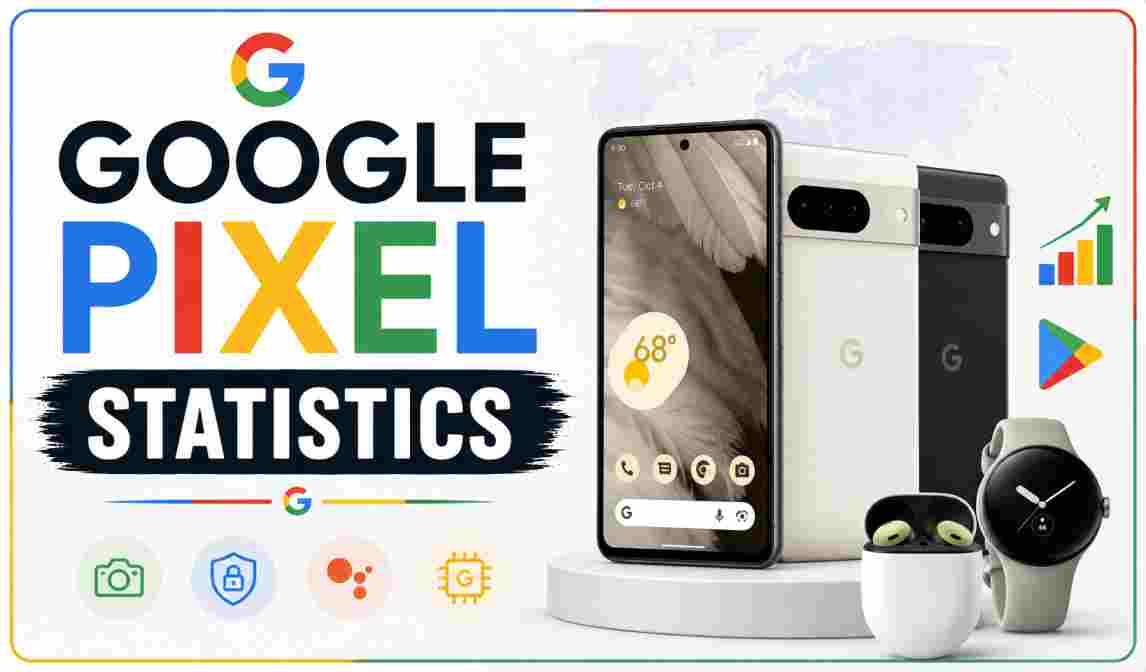
Google’s Made by Google 2026 Event
Google held its annual Made by Google hardware event on Wednesday, August 12, 2026, in New York, unveiling the Pixel 11 lineup, the Pixel Watch 5, and the company’s first-ever Bluetooth tracker, the Pixel Tag — a direct competitor to Apple’s AirTag. The event centered heavily on the new Tensor G6 chip, built on TSMC’s 2-nanometer process for the first time, alongside a wave of Gemini-powered AI features rolling out across Google’s device ecosystem, including an expansion of Live Transcribe to support American Sign Language and a new voice-input feature called Rambler designed to understand run-on, unstructured speech.
Pricing across the board moved upward compared to last year’s Pixel 10 series, with Google citing global memory chip shortages driven by AI data center demand as a factor shared industry-wide. The base Pixel 11 now starts at $899 — a $100 increase over its predecessor — though it also ships with double the base storage. This report compiles the most current, verified statistics on every device announced at Made by Google 2026, their pricing, specifications, and the AI features Google is positioning as the centerpiece of this year’s lineup.
Interesting Facts About Made by Google 2026
| Fact | Detail |
|---|---|
| Event Date | August 12, 2026, New York |
| New Chip | Tensor G6, built on TSMC’s 2nm process |
| Devices Unveiled | Pixel 11, 11 Pro, 11 Pro XL, 11 Pro Fold, Pixel Watch 5, Pixel Tag, Pixel Buds Pro 2 (new color) |
| Pixel 11 Starting Price | $899 (+$100 vs. Pixel 10) |
| Pixel 11 Pro Fold Starting Price | $1,899 |
| Pixel Tag Price | $29 single / $99 four-pack |
| Pixel Watch 5 Starting Price | $399 (41mm) |
| Base Storage, All Pixel 11 Models | 256GB (doubled from prior baseline) |
| Security Chip | Titan M3, with post-quantum cryptography |
| OS/Security Update Commitment | 7 years |
Source: Google (blog.google); TechCrunch; 9to5Google; Android Police, August 12, 2026
The jump in base storage to 256GB across every Pixel 11 model is arguably a more consumer-relevant change than the price increase itself — Google effectively doubled the entry-level storage tier at the same time it raised prices by roughly $100, softening the sticker-price impact on a per-gigabyte basis even though the headline number looks less favorable at first glance. That pattern held across the entire lineup: every device announced, from the $899 Pixel 11 to the $1,899 Pixel 11 Pro Fold, launched with meaningfully upgraded internals rather than a simple price hike on unchanged hardware.
The Tensor G6’s move to TSMC’s 2-nanometer manufacturing process marks a genuine architectural shift rather than an incremental refresh — Google is promising 20% better power efficiency, 25% faster browsing, and 15% faster app loading compared to the previous Tensor G5, alongside a 50% more powerful Tensor Processing Unit specifically for on-device AI tasks like Gemini Nano. Given how central Gemini-powered features were to this year’s presentation, that TPU improvement functions as the hardware foundation underpinning nearly every AI capability Google demonstrated on stage.
Pixel 11 Series Pricing and Specification Statistics 2026
| Model | Starting Price | Display | RAM/Storage | Battery |
|---|---|---|---|---|
| Pixel 11 | $899 | 6.3″ Actua, 60-120Hz, 3,000 nits | 12GB / 256GB | ~4,985 mAh |
| Pixel 11 Pro | $1,099 | 6.3″ Super Actua, 1-120Hz, 3,600 nits | 12-16GB / 256GB-1TB | ~4,850 mAh |
| Pixel 11 Pro XL | $1,299 | 6.8″ Super Actua, 1-120Hz, 3,600 nits | 12-16GB / 256GB-1TB | 5,115 mAh |
| Pixel 11 Pro Fold | $1,899 | Foldable, thinner design | 16GB / up to 1TB | Not disclosed at launch |
Source: Gizmochina; Notebookcheck; Android Headlines, August 12, 2026
The $200 premium separating the Pixel 11 Pro ($1,099) from the Pixel 11 Pro XL ($1,299) buys a larger 6.8-inch display and a bigger 5,115mAh battery, but both Pro models share otherwise identical core specifications — the same Tensor G6 chip, the same Titan M3 security coprocessor, and the same camera hardware. That parity means the purchasing decision between the two Pro models comes down almost entirely to physical size preference rather than any underlying performance difference, a departure from past Pixel generations where the larger XL model sometimes carried additional camera or battery advantages beyond simple scale.
The base Pixel 11’s jump to a $899 starting price places it firmly in premium territory for what Google still markets as its mainstream flagship, a 12.6% increase over the Pixel 10’s launch price. Google’s own messaging around the increase leaned on industry-wide component costs rather than framing it as value-added premium positioning, an unusually direct acknowledgment that pricing pressure — not purely feature additions — is driving this year’s cost structure across the smartphone industry broadly.
Pixel 11 Pro and Pro XL Camera and Display Statistics 2026
| Metric | Data |
|---|---|
| Camera Bar Thickness Reduction | 40% thinner than Pixel 10 generation |
| Main Sensor | 50MP, with 48MP ultrawide (123° FOV, macro support) |
| Telephoto | 48MP, 5x optical |
| Zoom (Pro XL, with Tensor G6) | Up to 120x Pro Zoom / 30x SuperRes Zoom |
| Peak Display Brightness | 3,600 nits (Google’s brightest Pixel display ever) |
| Scratch Resistance | 2x more resistant than Pixel 10 Pro coating |
| New Feature: HiLight | Ambient LED ring around camera flash for visual alerts |
| Hinge Durability (Pro Fold) | Tested for 80+ million open/close cycles |
Source: 9to5Google; Basic Tutorials; iClarified, August 12-13, 2026
The redesigned camera bar — 40% thinner and described by Google as “practically” disappearing when an official case is attached — represents the most visible physical design change across the Pro lineup, addressing a recurring criticism of prior Pixel generations’ pronounced camera bump. Paired with a 48-megapixel main sensor offering 56% more light sensitivity than its predecessor, Google is positioning the redesign as both an aesthetic and functional upgrade rather than a purely cosmetic change.
HiLight, exclusive to the Pro models, represents a genuinely new interaction concept for Pixel devices: an array of ambient LED lights built around the camera flash that provides color-coded visual cues — glowing to indicate calls from favorite contacts, incoming messages, or active Gemini interactions — specifically designed to notify users when their phone is resting face-down. This kind of ambient, glanceable notification system reflects a broader industry trend toward reducing how often users need to physically pick up and unlock their phones just to check basic status information.
Pixel Watch 5 and Pixel Tag Statistics 2026
| Metric | Data |
|---|---|
| Pixel Watch 5 Chip | Snapdragon W5 Gen 2 Accelerated |
| Performance Improvement | 20% faster, 50% more RAM vs. Watch 4 |
| Case Sizes | 41mm ($399) / 45mm ($429) |
| Special Edition | Stephen Curry Edition — $579 |
| Battery Life | Up to 30-40 hours |
| New Health Features | Blood pressure trends, insulin resistance trends, Breathing Emergency Detection |
| Pixel Tag Price | $29 single / $99 four-pack |
| Pixel Tag Availability | November 11, 2026 |
| Pixel Tag Battery | ~1 year, user-replaceable |
| Pixel Tag Network | Android Find Hub, Bluetooth Channel Sounding, UWB |
Source: Android Police; iClarified; Smartwatch Insight, August 12, 2026
The Pixel Watch 5’s health feature additions — monthly blood pressure trend summaries and insulin resistance trend tracking — reflect Google’s continued push into passive, longitudinal health monitoring rather than single-point-in-time readings, a strategy consistent with how Apple and Samsung have similarly expanded their own wearable health capabilities in recent product cycles. The new Breathing Emergency Detection feature notably launches first in Europe, suggesting regulatory clearance timelines rather than technical readiness are driving the phased geographic rollout.
Pixel Tag’s entry into the Bluetooth tracker market comes years after Apple’s original AirTag and roughly matches the timing of Apple’s own second-generation AirTag, positioning Google as a clear follower rather than a first mover in this specific category. At $29 for a single tag or $99 for a four-pack, Google’s pricing sits close to parity with Apple’s tracker lineup, while its integration with the existing Android Find Hub network — leveraging the location data of every Android phone running the service — gives it a comparably large device network to piggyback on, mirroring the same crowdsourced-location strategy that made Apple’s Find My network effective for AirTag tracking.
Gemini AI Features and On-Device Intelligence Statistics 2026
| Feature | Description |
|---|---|
| Proactive Assistance (formerly Magic Cue) | Contextual suggestions across more scenarios, richer interface |
| At a Glance (New) | Location-aware loyalty card and Maps listing surfacing |
| Live Translate Expansion | Now supports podcasts and YouTube videos, not just phone calls |
| Rambler | New voice-input feature for unstructured, run-on speech |
| Live Transcribe Expansion | Now supports American Sign Language via Pixel Camera |
| Magic Capture | Analyzes ~400 frames per moment for optimally-timed photos |
| Gboard Rambler Integration | Voice-to-text designed around natural speech patterns |
Source: blog.google (Made by Google 2026); 9to5Google, August 12, 2026
The expansion of Live Transcribe to support American Sign Language, translating sign language captured through the Pixel Camera directly into text, stands out as one of the event’s more substantive accessibility announcements, extending a feature originally built for spoken-language transcription into an entirely different communication modality. This kind of accessibility-focused AI development has become a recurring theme in Google’s hardware events, reflecting both genuine utility for users who rely on sign language and a broader strategic emphasis on differentiating Gemini-powered features from competing AI assistants on functional grounds rather than novelty alone.
Magic Capture’s approach of analyzing nearly 400 individual frames to select the best-timed shot illustrates how much of this year’s AI messaging centered on computational photography rather than purely generative features — using the Tensor G6’s expanded on-device AI processing power to make decisions about image capture in real time rather than relying on cloud processing after the fact. For broader context on how Google’s search and AI ecosystem interacts with content and citation patterns across the web, independent of hardware, the AI Citation Statistics report documents how Gemini and competing AI platforms source and cite information when answering user queries.
Google Search and Ecosystem Context Statistics 2026
| Metric | Data |
|---|---|
| Google Global Search Market Share | ~91-92% |
| Daily Google Searches Worldwide | 13.7+ billion |
| Annual Search Volume | 5+ trillion |
| Google Chrome US Browser Market Share | ~51% |
| Google Mobile Search Share (US) | 95%+ |
| Android Global Smartphone OS Share | ~70-73% |
Source: theglobalstatistics.com Google Statistics 2025; theglobalstatistics.com SEO & Google Statistics 2026
Every new Pixel device announced at this year’s event ultimately connects back to Google’s dominant position in search and mobile services — a foundation the Google Statistics report covers in detail, including Google’s roughly 91-92% global search market share and its command of over 95% of US mobile search traffic. That underlying platform dominance is precisely what gives features like Gemini-powered At a Glance and Live Translate their practical reach, since they’re built on top of search and mapping infrastructure already embedded in thousands of third-party apps and services Pixel owners already use daily.
The broader search and SEO landscape Google operates within has itself been reshaped substantially by the same generative AI wave powering this year’s Pixel announcements, a dynamic covered further in the SEO Statistics report. As Google increasingly positions its own hardware as a showcase for Gemini’s capabilities, the company’s dual role — as both the dominant search gatekeeper and now a more assertive hardware and AI-assistant maker — continues to raise the stakes for how deeply integrated Google’s various products become in daily consumer technology use.
Pixel Buds Pro 2 and Accessory Statistics 2026
| Metric | Data |
|---|---|
| Pixel Buds Pro 2 Price | $229 |
| New Colorway | Olive |
| Software Update Timing | September 2026 |
| New Feature: Dynamic ANC | Automatically adjusts for seal changes |
| Gemini Audio Control | Voice-command settings adjustment |
| Pixel Sleep Sync | Integration with Pixel Watch — pauses music, silences notifications on sleep detection |
| Live Translate (Buds) | Tap-to-activate real-time translation |
| New Accessories | Pixelsnap cases, Pixelsnap Ring Stands |
Source: Android Police, August 12, 2026
The Pixel Buds Pro 2’s new olive colorway ships immediately alongside the phone lineup, while its more substantive software improvements — dynamic active noise cancellation and expanded Gemini audio control — arrive as a separate update in September 2026, a staggered rollout pattern that has become increasingly common for Google’s hardware-software feature pairings. Pixel Sleep Sync, which coordinates the earbuds with a paired Pixel Watch to automatically pause music and silence notifications upon detecting sleep onset, exemplifies the cross-device coordination Google emphasized throughout the event, treating the phone, watch, and earbuds as components of a single coordinated system rather than three independently functioning products.
The introduction of Pixelsnap cases and Ring Stands, magnetic accessories color-matched to the new device lineup, signals Google’s continued move toward a MagSafe-style magnetic ecosystem for the Pixel line, following a broader industry shift toward standardized magnetic mounting systems across smartphone accessories. Combined with the coordinated color palette spanning phones, watch bands, and earbuds — Canyon, Fog, Olive, and Obsidian appearing consistently across the entire 2026 lineup — Google’s accessory strategy this year leaned more heavily into cohesive, matched-set branding than in prior Pixel launches.
Disclaimer: The data research report we present here is based on information found from various sources. We are not liable for any financial loss, errors, or damages of any kind that may result from the use of the information herein. We acknowledge that though we try to report accurately, we cannot verify the absolute facts of everything that has been represented.