What Are FPV Drones?
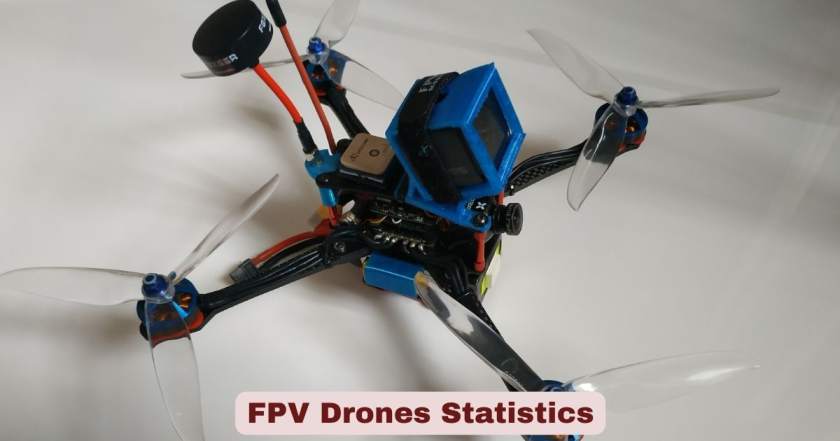
FPV drones — First-Person View unmanned aerial vehicles — are small, typically quadcopter-framed aircraft that transmit a live video feed from a nose-mounted camera to a pilot wearing immersive VR goggles or watching a ground monitor, giving the sensation of flying inside the drone itself. They began as a hobbyist racing sport in the early 2010s, popularised through YouTube and organised leagues where modified consumer electronics flew at extreme speeds through obstacle courses for sport. By 2023, they had become the dominant tactical weapon system on the most drone-intensive battlefield in history — Ukraine — and by March 2026, they are simultaneously a global combat weapon deployed in three active conflict zones, a growing commercial industry valued at hundreds of millions of dollars, and the technology that has most fundamentally transformed the economics of warfare since the introduction of precision-guided munitions in the 1990s. The key to the FPV drone’s military significance is a combination of cost and flexibility that no existing weapons platform can match: a basic military FPV drone can be assembled for $300–$500, carries an anti-tank shaped charge or fragmentation grenade, flies at speeds of 120–200 km/h, and is guided in real time by a human operator who sees exactly what the drone sees — right up to the moment of impact. When AI terminal guidance is added, the drone can continue to home on a designated target even after Russian electronic warfare jamming has cut the human’s radio link, pushing effective hit rates from approximately 30% in 2022 to 70% in 2024 to potentially near-90% for the latest AI-guided fiber-optic variants in 2026.
As of March 14, 2026, the FPV drone landscape has bifurcated into two distinct but equally revolutionary branches. The first is the radio-controlled FPV — cheaper, faster, and increasingly equipped with multi-band frequency-hopping transmitters that make them resistant to all but the most powerful jamming systems. The second is the fiber-optic FPV — tethered to the operator via an ultra-thin G.657A2 fiber cable of up to 20+ kilometres, rendering it physically immune to all radio-frequency jamming by virtue of having no radio signal to jam at all. Ukraine’s National Security and Defence Council announced in January 2026 that the country’s defence industry now has the capacity to produce more than 8 million FPV drones per year — an unprecedented figure for any country at war — with more than 160 companies contributing to that output. FPV drones cause approximately 60% of Russian army losses at the front — a statistic that makes them the most cost-effective anti-armour and anti-personnel weapon in the history of ground combat. The global FPV drone market, valued at $165–$287 million in 2024–2025 for civilian applications alone, is growing at a CAGR of 19–31% and is projected to reach $562 million to $1.12 billion by 2030–2032. And that civilian market is dwarfed by the military demand signal emanating from every major armed forces on earth that has now watched Ukraine’s FPV doctrine in action and concluded that their own forces need the same capability, urgently.
Interesting Facts About FPV Drones 2026
| Fact | Detail |
|---|---|
| FPV Stands For | First-Person View — pilot wears VR goggles receiving live video from the drone’s nose camera |
| Origin | Hobby racing drones, early 2010s — popularised by YouTube racing channels and international leagues |
| First Military Combat Use (Ukraine) | 2023 — initial isolated deployments; mass use from mid-2023 onwards |
| FPV Drone Configuration (military) | Typically quadcopter (4 rotors); some hexacopter; fixed-wing FPV strike drones emerging |
| Typical Military Payload | Anti-tank shaped charge (RPG-7 PG warhead), fragmentation grenade, VOG-17 mortar round, or custom charges |
| Typical Military Payload Weight | 0.5–3 kg warhead for standard FPV; up to 8–10 kg for bomber FPV variants |
| Basic FPV Drone Cost (Ukraine) | $300–$500 per unit — Jamestown Foundation, confirmed multiple sources |
| Long-Range Strike FPV Cost | Up to $250,000 for advanced reconnaissance variants — Jamestown Foundation |
| US Replicator Drone Comparison | US Replicator FPV drones cost up to 10× more than equivalent Ukrainian FPVs — Jamestown |
| Ukrainian FPV Annual Production (2024 actual) | ~2.2 million total UAVs; 1.5 million+ FPV combat drones |
| Ukrainian FPV Annual Production Capacity (2026) | 8 million+ FPV drones per year — NSDC Ukraine, January 23, 2026 |
| Number of Ukrainian FPV Manufacturers (2025) | Over 160 companies — NSDC; up from 7 manufacturers pre-full-scale invasion |
| Drone Manufacturers in Ukraine (all types, 2025) | ~500 drone manufacturers — Minister of Digital Transformation |
| Monthly FPV Production (Jan 2024) | 20,000 per month |
| Monthly FPV Production (Dec 2024) | 200,000 per month — 10× increase in one year |
| Ukraine FPV Purchase Plan (2025) | 4.5 million FPV drones — tripling 2024’s 1.5 million acquisition |
| Zelensky Production Claim (Feb 2025) | Ukraine capable of producing 4 million drones annually |
| Bloomberg Assessment (Nov 2025) | Ukraine produces 4 million drones/year — more than any NATO country, likely more than the entire Alliance combined |
| FPV Drones % of Russia’s Frontline Losses | ~60% — NSDC Ukraine (January 2026) |
| Short-Range Tactical Drones % of Russian Equipment Losses | 60–70% — Georgetown Security Studies Review (July 2025) |
| FPV Drone Damage to Russia in 2024 | ~$10 billion in Russian military equipment destroyed by FPV drones — Gitnux Market Report (Feb 2026) |
| FPV Success Rate (2022) | ~30% — Wired report |
| FPV Success Rate (2024) | ~70% — Wired report |
| AI Terminal Guidance Success Rate | From ~15% to 60% improvement in mission success — Research and Markets (Feb 27, 2026) |
| Global Drone Market (2024) | $54.83 billion — IDTechEx / NextMSC (Jan 2026) |
| Global Drone Market (2025 est.) | $65.14 billion |
| Global Drone Market (2030 proj.) | $117.62 billion (CAGR 12.54%) |
| Global FPV Drone Market (2024) | $165.85 million (Maximize Market Research) or $287 million (Virtue Market Research) |
| Global FPV Drone Market CAGR | 19.06% (Maximize MR) to 31.38% (Virtue MR) |
Source: NSDC Ukraine (January 23, 2026), LIGA.net (January 23, 2026), Army Recognition (2025), Georgetown Security Studies Review (July 2025), War Quants (March 2025), Kyiv Post (February 2025), Bloomberg/Ukrainska Pravda (November 12, 2025), Jamestown Foundation (July 2025), Gitnux Market Report (February 13, 2026), Maximize Market Research (January 2026), Virtue Market Research (2026), IDTechEx/NextMSC (January 2026), Research and Markets (February 27, 2026)
The production statistics for Ukrainian FPV drones represent one of the most rapid industrial mobilisations in modern history — a 27× increase in monthly production from January 2024 to December 2025, achieved without a pre-existing defence industrial base and almost entirely by private companies, startups, and volunteer engineers responding to battlefield necessity. The jump from 7 manufacturers before the full-scale invasion to ~500 drone manufacturers in 2025 — with over 160 specifically producing FPVs — captures the essence of what happens when a society under existential threat and with a deep pool of software and electronics engineering talent is given a clear commercial signal: the Ukrainian government will buy every combat-proven FPV it can get. The Brave1 programme, which has issued over 470 grants and 1.3 billion Ukrainian hryvnia in state funding, is the institutional mechanism that channelled that energy into a structured, competitive, rapidly iterating industrial ecosystem.
The Bloomberg assessment that Ukraine now produces more drones than the entire NATO Alliance combined is the single most dramatic geopolitical statistic in the FPV story — because it reveals how comprehensively the traditional Western assumption that military technology leadership equals Western technology leadership has been upended. The RAND analyst’s observation that Ukraine is producing “more than all NATO countries combined right now” across drone types is not merely a production quantity statement but a doctrinal revolution statement: Ukraine has proved that in modern ground combat, you need millions of $300–$500 drones, not thousands of $500,000 precision munitions — and the Western defence-industrial complex has spent decades building the latter, not the former.
FPV Drone Technical Specifications Statistics 2026
| Specification | Standard Radio FPV | Fiber-Optic FPV | Bomber / Long-Range FPV |
|---|---|---|---|
| Configuration | Quadcopter (4 rotors) | Quadcopter with spool mount | Fixed-wing or large quadcopter |
| Frame Size | 3–7 inch (propeller diameter) — most military ~5 inch | 5–10 inch | Larger — wingspan 60–150 cm |
| Typical Speed | 100–200 km/h | Comparable — up to 200 km/h (not limited by cable) | 120–180 km/h |
| Control Type | Radio frequency (RF) — digital or analog | Fiber-optic cable — physical tether | RF or fiber |
| Control Range (RF) | 3–10 km standard; up to 20 km with multiband antenna | 5–20 km cable length; up to 50 km prototypes | 700–1,000+ km (long-range strike) |
| Fiber-Optic Cable Thickness | N/A | Ultra-thin — G.657A2 specification single-mode fiber | N/A |
| Fiber Spool Weight (20 km) | N/A | ~1.4 kg — reduces usable payload to ~2.3 kg on medium frame | N/A |
| Fiber Spool Cost (imported) | N/A | ~$1,000 per spool (Chinese import); reduced by ⅔ with local production | N/A |
| Payload Capacity (military) | 0.5–3 kg | 0.5–3 kg (standard); up to 8 kg (BattleBorn) | 2.5–15 kg |
| Typical Warhead | RPG warhead / VOG-17 grenade | Same | Larger HE charge |
| Battery Life / Endurance | 10–30 minutes | 10–30 minutes (cable provides no power — carries own battery) | 30–90 minutes |
| FPV Camera | Analog or digital; FOV 110–170° | HD digital — fiber provides high bandwidth; perfect feed to detonation | HD camera; some thermal |
| Pilot Interface | VR goggles (DJI, Walksnail, HDZero) or ground monitor | Same | Ground station monitor |
| AI / Autonomy | Optional terminal guidance (machine vision AI) | Optional; some models auto-lock target on cable break | AI target recognition |
| Jamming Resistance (RF) | Vulnerable — but multiband / frequency hopping significantly improves survivability | Immune — no radio signal to jam | Vulnerable (RF) / Immune (fiber) |
| Electronic Signature | Detectable by RF direction-finding systems | Undetectable — emits no radio signals | Detectable if RF-controlled |
| Shrike FPV (Army Recognition ref.) | Carbon-fibre quad; 2.5 kg warhead; 120+ km/h; under $500 | N/A | N/A |
| Hromylo FPV (Ukraine) | Mass-produced; anti-jamming antenna visible on tail; shaped charge zip-tied to bottom | N/A | N/A |
| Vector Hammer FPV (USA) | 10-inch LR FPV; fiber optic integration; flies radio silent in jammed environments; explosive payload | Hybrid RF + fiber | N/A |
| FPV Density (2024 avg Ukraine front) | 7 FPVs per mile of frontage per day | Combined with radio FPV | — |
| FPV Density (2025 Ukraine front) | 20+ FPVs per mile per day (Georgetown) | Combined | — |
| Potential FPV Density (Dec 2025 target) | 29.4 per mile per day — War Quants modelling | Combined | — |
Source: War Quants (March 2025), Georgetown Security Studies Review (July 2025), Army Recognition (2025), Wikipedia (Fiber optic drone — November 2025), Defense News (November 2025), ts2.tech (August 2025), Interesting Engineering (April 2025), TechUkraine (April 2025), Maximize Market Research (January 2026), Drone Industry Insights (September 2025), DroneLife (July 2025)
The technical specification statistics reveal the fundamental engineering duality at the heart of 2026 FPV drone development. Radio-controlled FPVs are faster to deploy, cheaper to produce (no spool or fiber transceivers), and more manoeuvrable at the limits of their tether-free envelope — but every radio-controlled FPV is playing a constant electronic warfare chess game against Russian jamming systems that are themselves continuously updated. The emergence of multiband, multi-receiver, multi-polarisation antenna setups — where three different receivers on three different frequencies with antennas in both linear and circular polarisations operate simultaneously — means modern radio FPVs are far more resilient than their predecessors. As the Ukrainian “Typhoon” drone unit analyst explained to Defence News: “if one receiver or frequency is jammed, the drone can maintain control through the alternate receivers.”
The fiber-optic FPV’s advantages are absolute and unconditional in the electronic warfare dimension: because the control link is a physical glass fibre, there is simply no electromagnetic signal for a jammer to attack. It cannot be spoofed, it cannot be detected by radio direction-finding, and it continues operating perfectly regardless of how many kilowatts of jamming power are directed at the drone. The trade-off is the spool: a 20 km spool weighing 1.4 kg on a medium-size frame that typically carries 3.7 kg total leaves only 2.3 kg for payload and battery — a real operational constraint. The Serebryansky Forest photo taken by Ukraine’s defence ministry in June 2025, showing the forest floor “completely covered in optical fibre” glinting in sunlight left behind by countless drone flights, captures the physical reality of fighting with fiber-optic tethers at operational scale — and explains why Ukrainian manufacturers are urgently working to reduce fiber spool weight through higher-strength specialty glass while simultaneously localising spool production to eliminate dependence on Chinese suppliers.
Ukraine FPV Drone Production & Industry Statistics 2026
| Metric | Data |
|---|---|
| FPV Production Capacity (Jan 2026) | 8 million+ FPV drones per year — NSDC Ukraine (January 23, 2026) |
| Number of FPV Manufacturers | 160+ companies — NSDC (January 2026) |
| Total Drone Manufacturers (Ukraine) | ~500 — Minister of Digital Transformation (2025) |
| Pre-War Manufacturers | 7 domestic manufacturers (before February 24, 2022) |
| Monthly Production (Jan 2024) | 20,000 FPVs/month |
| Monthly Production (Dec 2024) | 200,000 FPVs/month |
| Monthly Production (2025 capacity) | 375,000–500,000/month — to meet 4.5 million annual target |
| Monthly Production Growth | 27× increase from January 2024 to December 2025 — War Quants |
| Brave1 Grants Issued (to Feb 2025) | 470+ grants totalling ₴1.3 billion ($35.7M) |
| Brave1 Programme Companies | 1,500 defence tech companies working on 3,500 products |
| Brave1 Total Grants Issued | $8+ million USD total — Georgetown SSR |
| Ukraine Defence Budget Drone Allocation (2025) | $1.5 billion earmarked for 10 million drones — Gitnux (Feb 2026) |
| Serhiy Prytula Foundation Drones | 1 million FPV drones funded by private donations (2023–2024) — Gitnux |
| EU Drone Industry Allocation | €500 million for Ukraine’s drone industry expansion (2024) |
| UK MoD Contract | 12,000 Ukrainian swarm drones contracted for 2025 |
| Germany Order | 15,000 anti-tank drones ordered from Ukrainian suppliers (2024) |
| Latvia NATO Exercise | 10,000 Ukrainian FPVs invested for NATO exercises (2024) |
| India Negotiation | $300 million deal for Ukrainian drone production line — Gitnux |
| Australia Acquisition | 2,000 naval drones from Ukraine for AUKUS (2024) |
| Canada Licence | Licensed Ukrainian FPV designs for domestic production (2024) |
| South Korea | 4,000 Ukrainian recon drones imported for border security |
| Skyeton Slovakia Line | Opened production line in Slovakia; negotiations with Denmark and UK |
| TSIR Finland | Operating in Finland; launching UAV production line for NATO supply |
| FlyWell Consortium | Multiple Ukrainian drone manufacturers; raising ~$50 million for European production/R&D |
| Ukraine FPVs Contribution to GDP | Domestic drone industry generated tens of billions of hryvnias in revenue in 2025 |
| CAPEX (2024) | Drone industry made “immense capital expenditures” to achieve 10× capacity increase — War Quants |
| Operation Spiderweb (June 1, 2025) | FPV drones destroyed or damaged at least 20 Russian strategic aircraft at Russian airbases deep inside Russia |
Source: NSDC Ukraine (January 23, 2026), LIGA.net (January 23, 2026), Georgetown Security Studies Review (July 2025), War Quants (March 2025), Kyiv Post (February 2025), Jamestown Foundation (July 2025), Army Recognition (2025), Gitnux Market Report (February 13, 2026), Ukraine Arms Monitor Substack (November 2025), Bloomberg/Ukrainska Pravda (November 2025), DroneLife (November 2025)
The Ukrainian FPV production and industry statistics constitute one of the most remarkable industrial mobilisation stories of the 21st century. The scale of the transformation — from 7 manufacturers before the war to 160+ FPV specialists and ~500 total drone manufacturers, and from 20,000 per month to 200,000 per month in a single year — was achieved without the kind of state-directed industrial command structure that historically underpinned wartime production surges like the US Liberty Ship programme or the Soviet T-34 production miracle. Instead, Ukraine built its drone industry through market signals, decentralised innovation, and competitive procurement: the government announced it would buy combat-proven FPVs, posted specifications publicly, awarded rapid contracts to companies that met battlefield tests, and collected feedback from frontline units within days rather than years. The Brave1 ecosystem — now comprising 1,500 defence tech companies working on 3,500 products — is the institutional embodiment of this approach: not a central planning bureau but a venture-capital-meets-military-procurement fusion that has proved faster than any traditional defence procurement model.
Operation Spiderweb on June 1, 2025 — where Ukrainian Security Service FPV drones destroyed or damaged at least 20 Russian strategic bombers at airbases deep inside Russia — represents the most operationally ambitious use of FPV technology in the war and perhaps in any conflict in history. Tu-22M3 strategic bombers and Su-34 strike aircraft at Engels, Olenya, and Dyagilevo airfields were struck by FPV drones that had been carefully pre-positioned, possibly carried inside Russia by ground operatives. The drones were reportedly equipped with AI elements trained to identify vulnerable points on bombers and execute “pickering algorithms” that automatically directed strikes at aircraft weak spots — engine nacelles, fuel points, and electronics bays. The result was not merely tactical damage to aircraft but strategic disruption to Russia’s long-range strike campaign: bombers that had been launching cruise missiles at Ukrainian cities were grounded, damaged, or destroyed by weapons that cost a fraction of the missiles they had been carrying.
Fiber-Optic FPV Drone Statistics 2026
| Metric | Data |
|---|---|
| Technology First Development | Early 2000s — DARPA’s “Close Combat Lethal Recon” concept; never fielded |
| First Battlefield Fielding | Russia — Spring 2024 (Ukraine–Russia War) |
| First Ukrainian Battlefield Use | Summer 2024 — following Kursk incursion encounter with Russian fiber drones |
| First Public Demo (Ukraine) | December 2024 — Defence Innovations Department; 12+ domestic models shown to senior officers |
| Brave1 20km Range Test | March 2025 — 15+ manufacturers; all drones completed 20 km course successfully |
| Manufacturers (Ukraine, mid-2025) | 25+ teams developing; ~10 moving toward mass production |
| Manufacturers (Ukraine, early 2025, Brave1) | ~15 companies under Brave1 programme; catalogue of 20 available models published |
| Fiber Cable Standard | G.657A2 — single-mode fiber; ultra-low bending loss |
| Fiber Spool Lengths Available | 5 km, 10 km, 15 km, 20 km — Chinese-supplied coils currently; local spooling growing |
| Fiber Spool Cost (Chinese import) | ~$1,000 (20 km spool) |
| Fiber Spool Cost (Ukrainian local production) | Reduced by up to ⅔ — Stalker project “Adonis” (Defender Media, Dec 2025) |
| Maximum Demonstrated Range | 20+ km (Brave1 test, March 2025); prototypes up to 50 km (Wikipedia) |
| Russian Maximum Demonstrated Range | 19+ km — Russian fiber drone struck Kramatorsk area, October 2025 |
| Payload Capacity (standard) | 0.5–1.5 kg typical; up to 3 kg (models shown at Dec 2024 demo); up to 8 kg (BattleBorn) |
| Video Quality | Full HD — fiber provides high-bandwidth link; “perfect view up to detonation” |
| Jamming Immunity | Absolute — no radio signals emitted or received; no RF attack vector |
| RF Detection Immunity | Cannot be detected by radio direction-finding — emits zero electromagnetic signals |
| Operates In Buildings / Underground | Yes — no line-of-sight or GPS requirement; confirmed operational use in cellars and bunkers |
| Russia’s Early Lead | Russia’s Ushkuinik volunteer group developed Knyaz Vandal — early Russian fiber drone; ~10 km spool |
| Key Ukrainian Manufacturers | Vyriy Drone, BattleBorn, Dronarium, WARMAKS, Smart Electronics Group, 3DTech, Brave1 |
| Key Russian Manufacturers | Ushkuinik (Knyaz Vandal), Aleksey Chadaev (Rubicon, Sudny Den) |
| Chinese FPV Adoption | Chinese People’s Armed Police (PAP) confirmed training fiber-optic FPV drones — CCTV, 2025 |
| China PAP Quote | Li Minxue, PAP troop on CCTV: “proactively promoting research of fiber optic FPV drones, which have become mainstream combat equipment in the Russia-Ukraine conflict” |
| Global Tethered Drone Market (2024) | ~$300 million — ts2.tech |
| Global Tethered Drone Market (2026+ projected) | $4 billion+ — ts2.tech |
| 2026 Fiber Supply Crisis | G.657A2 fiber global supply shortage in 2026 — all preform lines at 100% capacity; prices rising; structural undersupply estimated at 100 million core-kilometres annually — GL Fiber |
Source: Wikipedia (Fiber optic drone — November 2025), ts2.tech (August 2025), Interesting Engineering (April 2025), TechUkraine (April 2025), Defender Media (December 2025), Defense News (November 2025), DroneLife (July 2025), GL Fiber (2026), Ukraine Arms Monitor Substack (November 2025)
The fiber-optic FPV statistics capture a technology that went from obscure DARPA concept to mainstream front-line weapon in approximately 12 months — a speed of tactical adoption that has no peacetime parallel. Russia’s fielding of fiber-optic drones in spring 2024 during the Kursk incursion was the watershed moment: when Ukrainian electronic warfare units reported that “they could jam all Russian drones except the fiber-optic ones”, the urgency signal to Ukraine’s drone industry was unambiguous. Within six months, Ukraine had its own fiber-drone programme; within twelve, it was running national 20 km range tests with fifteen manufacturers simultaneously. The December 2024 demonstration showing Ukrainian defence ministers a dozen domestic fiber-optic models capable of carrying 3 kg payloads — just six months after the technology had first been encountered in enemy hands — is perhaps the strongest single illustration of Ukraine’s wartime innovation velocity.
The 2026 G.657A2 fiber supply crisis — where global preform production lines are running at 100% capacity, structural undersupply is estimated at 100 million core-kilometres annually, and prices are rising sharply according to GL Fiber — reveals the physical infrastructure bottleneck that lies beneath the FPV drone revolution. Every 20 km fiber-drone spool consumes 20 km of specialty single-mode fiber. Ukraine is producing these drones in their tens of thousands per month. Russia is doing the same. China’s military and civilian operators are now also consuming fiber for drone applications. The result is a global market in which a commodity component of internet infrastructure — the same G.657A2 fiber used in fibre-to-the-home broadband installations — has become a strategic military resource whose supply chain is genuinely constrained by glass manufacturing physics, creating a procurement competition between drone manufacturers, internet service providers, and data centre operators that no one anticipated three years ago.
FPV Drone Global Market & Industry Statistics 2026
| Metric | Data |
|---|---|
| Global Drone Market Value (2024) | $54.83 billion — IDTechEx / NextMSC (Jan 2026) |
| Global Drone Market Value (2025 est.) | $65.14 billion |
| Global Drone Market (2030 proj.) | $117.62 billion (CAGR 12.54%) |
| Global Drone Market (2036 proj.) | $147.8 billion — IDTechEx |
| Global Drone Unit Volume (2024) | 8.58 million units |
| Global Drone Unit Volume (2025 proj.) | 10.66 million units (CAGR 17.72%) |
| Global Drone Unit Volume (2030 proj.) | 24.10 million units |
| Military Drone Market (2025) | $47.38 billion — Grand View Research |
| Military Drone Market (2033 proj.) | $98.24 billion (CAGR 8.9%) |
| Military Drone North America Share (2025) | Over 40% |
| US Military Drone Share within North America | Over 85% of North American military drone market |
| FPV Drone Market Specifically (2024) | $165.85 million (Maximize MR) – $287 million (Virtue MR) |
| FPV Drone Market CAGR | 16.7% (Lucintel) — 19.06% (Maximize MR) — 31.38% (Virtue MR) |
| FPV Drone Market (2030 proj.) | $1.12 billion (Virtue MR at 31.38% CAGR) |
| FPV Drone Market (2032 proj.) | $562.44 million (Maximize MR at 19.06% CAGR) |
| AI-Enhanced Kinetic C-UAS (FPV interceptors) Market (2025) | $600 million — Research and Markets (Feb 27, 2026) |
| AI-Enhanced C-UAS Market (2030 proj.) | $1.4 billion – $4.1 billion |
| Largest FPV Drone Commercial Players | DJI (China), Fat Shark (USA), BetaFPV (China), iFlight (China), EMAX (China), GEPRC (China), Team BlackSheep (Germany), Walksnail |
| FCC Foreign Drone Ban (Jan 2026) | US banned all foreign-made drones citing national security (2026 FIFA World Cup, 2028 Olympics) — direct boost for US-made FPVs |
| US Annual Military Drone Production | ~100,000 per year — Bloomberg (vs Ukraine’s 4 million) |
| RAND Analyst Michael Bohnert Quote | “It’s not just the quantity of drones, it’s the variety. Probably more than all NATO countries combined right now.” |
| Ukraine Export Strategy | Co-production preferred over direct export: Skyeton (Slovakia), TSIR (Finland), FlyWell consortium ($50M raise), assembly plants in Denmark |
| FPV Drone Primary Growth Drivers | AI integration, 5G connectivity, VR goggles improvement, fiber-optic control, military demand, drone racing |
| FPV Drone Primary Challenge | Battery life (10–30 min); RF vulnerability; NDAA compliance requirements; Chinese component supply chain |
| Precision Mass Doctrine | NATO states adopting “precision mass” strategy — millions of expendable drones replacing limited quantities of exquisite platforms (Army Recognition, 2025) |
| Drone Racing Market | FAI World Drone Racing Championship, Drone Racing League (DRL) — growing commercial segment fuelling hobbyist FPV innovation that feeds directly into military FPV development |
Source: NextMSC (January 21, 2026), IDTechEx (December 2025), Grand View Research (2026), Maximize Market Research (January 2026), Virtue Market Research (2026), Lucintel (2026), Research and Markets (February 27, 2026), Bloomberg/Ukrainska Pravda (November 2025), RAND / Army Recognition (2025), Gitnux Market Report (February 13, 2026), Jamestown Foundation (July 2025)
The global FPV drone market statistics reveal a market that is being simultaneously driven by two completely different demand sources that happen to use the same hardware: the hobbyist and commercial sector — drone racing, aerial photography, agricultural inspection, search and rescue — and the military sector, where Ukraine’s battlefield experience has triggered a procurement revolution that is only just beginning to flow into NATO defence budgets. The commercial FPV market at $165–$287 million growing at 19–31% CAGR was already expanding before the Ukraine war on the back of drone racing popularity, cinema applications, and the development of increasingly accessible FPV technology. The military demand signal now layered on top of that — with NATO states explicitly adopting a “precision mass” doctrine calling for millions of expendable drones — is going to dwarf the commercial market within the next five years.
The FCC’s January 2026 ban on all foreign-made drones — citing national security concerns about surveillance at the 2026 FIFA World Cup and 2028 Los Angeles Olympics — is the most consequential single regulatory event in the FPV drone market’s history, creating an overnight demand surge for NDAA-compliant, US-manufactured FPV platforms that the domestic industry is not yet equipped to meet at scale. The paradox is sharp: the US military produces approximately 100,000 military drones per year — one-fortieth of Ukraine’s equivalent capacity — while simultaneously adopting a doctrine that acknowledges it needs millions. The Replicator programme, the JIATF-401 procurement accelerations, and the FCC ban are all partial responses to the same underlying reality: that the United States, which invented military drone technology and used it for two decades in the Middle East, is now behind a country of 40 million people in the most strategically important category of military hardware on the modern battlefield.
Disclaimer: The data research report we present here is based on information found from various sources. We are not liable for any financial loss, errors, or damages of any kind that may result from the use of the information herein. We acknowledge that though we try to report accurately, we cannot verify the absolute facts of everything that has been represented.