Introduction: Drug Repurposing and Fenbendazole
The concept of drug repurposing — discovering new therapeutic applications for existing compounds — has become one of the most actively discussed topics across the health and wellness landscape. Among the most compelling examples in recent years is fenbendazole, a benzimidazole anthelmintic originally developed for veterinary parasitic infections that has increasingly attracted the attention of researchers studying its potential effects on human cancer cell lines.
While fenbendazole is not a traditional or homeopathic remedy, its emergence as a subject of scientific investigation resonates with a principle deeply valued across integrative and alternative health communities: that effective therapeutic options can arise from the most unexpected sources, and that open-minded inquiry is essential to advancing human wellbeing.
How Fenbendazole Works at the Cellular Level
Fenbendazole belongs to the benzimidazole class of compounds, which share a common mechanism of action: disrupting microtubule polymerization. Microtubules are structural proteins essential for cell division. When fenbendazole binds to tubulin proteins, it prevents the formation of the mitotic spindle, effectively halting cell division. In parasitic organisms, this mechanism leads to rapid cell death.
Researchers investigating fenbendazole’s potential in oncology have documented several distinct mechanisms of action in preclinical settings:
- Microtubule disruption — destabilizing the cellular structures cancer cells need to proliferate
- Apoptosis induction — triggering programmed cell death through multiple signaling pathways
- Glycolysis inhibition — interfering with the metabolic processes tumors rely on for energy, particularly through HK2 downregulation
- Synergistic potential — enhanced effects when combined with radiation therapy or conventional chemotherapy agents like docetaxel
Recent Scientific Developments
The pace of fenbendazole research has accelerated significantly in 2024 and 2025. A study published in Frontiers in Pharmacology in 2025 provided detailed evidence that fenbendazole induces pyroptosis — an inflammatory form of programmed cell death — in breast cancer cells. The researchers demonstrated that fenbendazole suppresses tumor growth by targeting HK2, a key enzyme in the glycolytic pathway that many aggressive cancers depend on for rapid energy production.
In May 2025, Case Reports in Oncology published a case series documenting three patients with advanced malignancies — breast cancer, prostate cancer, and melanoma — who had incorporated fenbendazole into their treatment approach. The authors described a favorable safety profile across all three cases and concluded that larger clinical studies are warranted to determine the compound’s efficacy in humans.
A comprehensive academic review from Euclid University further strengthened the case for formal clinical investigation. The review emphasized fenbendazole’s remarkably low cost relative to similar benzimidazole compounds used in oncology (mebendazole, for instance, can cost between $5,000 and $10,000 for treatment courses), and called for Phase I and Phase II clinical trials to establish safe dosing protocols and assess therapeutic outcomes in controlled settings.
Why Product Quality Determines Everything
For anyone considering fenbendazole for research or personal wellness exploration, the quality of the product is the single most critical factor. Not all fenbendazole products on the market are manufactured to the same standards, and variations in purity can be significant.
The most important quality markers to evaluate include:
- Independent third-party testing using HPLC (High-Performance Liquid Chromatography) and GC-MS (Gas Chromatography-Mass Spectrometry) for purity and identity verification
- Batch-level traceability with unique batch numbers printed on every label
- Certificate of Analysis (CoA) available from accredited laboratories upon request
- Clean formulation with no fillers, binders, flow agents, or artificial additives
- Manufacturing standards including GMP certification, FDA facility registration, and independent quality audits
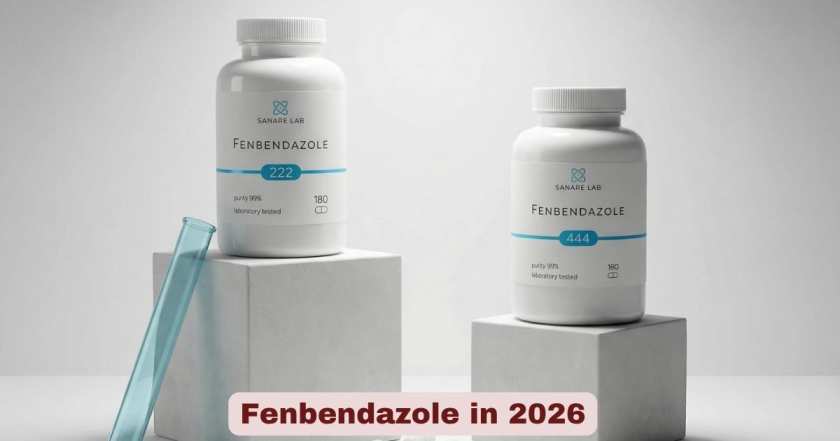
One manufacturer that meets all of these criteria is Sanare Lab, a U.S.-based company that produces high-purity fenbendazole 222 mg capsules verified at 99.9% purity by accredited American laboratories. Their product uses a smaller Size 0 vegetable cellulose capsule for flexible dosing, and each bottle ships with a unique batch number and full lab documentation available on request.
For those who require a higher concentration per serving, Sanare Lab also offers a fenbendazole 444 mg capsule with identical purity standards in a larger Size 00 format, providing a lower cost per milligram. Both products are manufactured in a GMP-certified, FDA-registered, BBB-accredited facility in the United States.
Market Growth Reflects Rising Global Interest
The global fenbendazole market provides another lens through which to understand the compound’s trajectory. Market analysts estimated the global fenbendazole market at approximately $947 million in 2025, with projections indicating growth to $1.66 billion by 2032 at a compound annual growth rate exceeding 8%. This expansion reflects growing demand not only from the traditional veterinary sector but increasingly from individual consumers and researchers exploring the compound for human wellness applications.
A Note on Responsible Use and Further Research
It is important to emphasize that fenbendazole has not been approved for the treatment of any human disease. Companies like Sanare Lab supply fenbendazole as laboratory reference material for analytical and educational purposes. Anyone considering fenbendazole should do so only under the guidance of a qualified healthcare professional, with full awareness of the current state of the evidence.
The preclinical data is encouraging and continues to expand, but rigorous human clinical trials remain essential to establishing definitive conclusions about efficacy, optimal dosing, and long-term safety in human subjects.
Conclusion
Fenbendazole represents one of the most compelling examples of drug repurposing in the current health research landscape. Its low cost, established safety profile in animal models, and multi-target preclinical mechanisms have generated significant scientific and public interest. Whether you approach health from a conventional medical, integrative, or holistic perspective, staying informed about emerging research and demanding verifiable quality from supplement manufacturers are principles that serve everyone equally well.
This article is for informational and educational purposes only and does not constitute medical advice. Consult a qualified healthcare professional before using any new supplement or compound.
Disclaimer: We are not liable for any financial loss, errors, or damages of any kind that may result from the use of the information herein. We acknowledge that though we try to report accurately, we cannot verify the absolute facts of everything that has been represented.