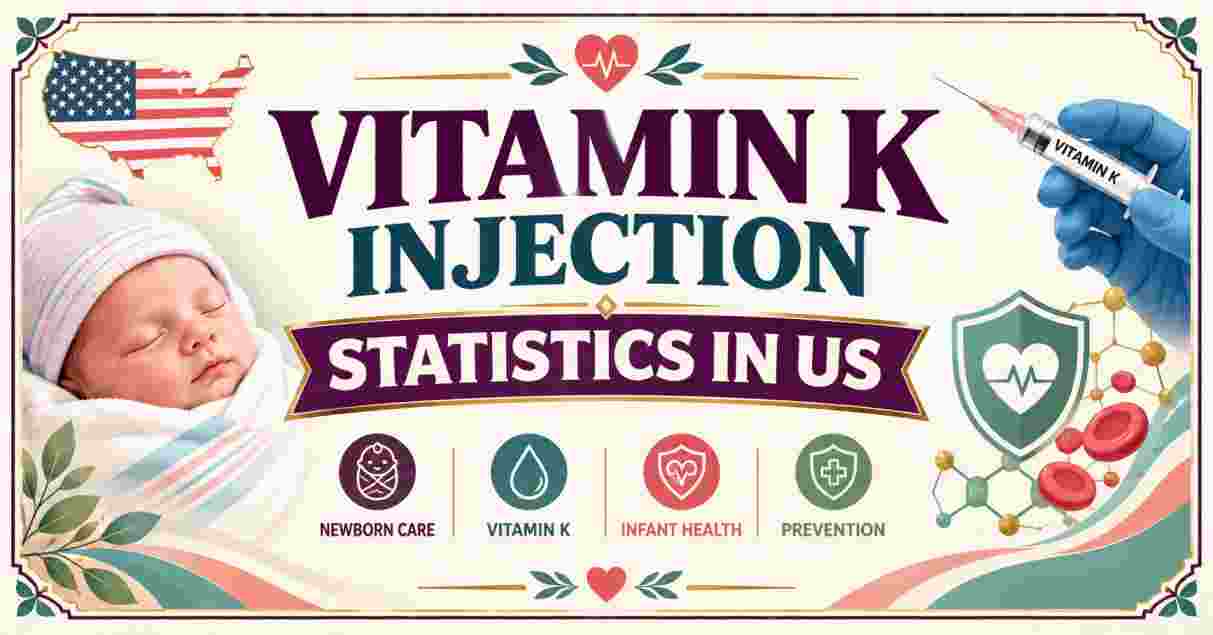
The rate of U.S. newborns not receiving a vitamin K injection at birth climbed to 8.1% by the end of June 2026, up from 5.2% just six months earlier, according to a Truveta analysis of over 140 million health records. Without the shot, infants face an 81-times higher risk of life-threatening bleeding in the brain or gut during their first six months of life.
Vitamin K Injection in America – Introduction
Vitamin K injection rates at U.S. birth hospitals have become one of the more closely watched public health metrics of 2026, as parental refusal of the shot accelerates at a pace doctors call unprecedented. The injection, given routinely to newborns since the 1960s, prevents a rare but often catastrophic bleeding disorder called vitamin K deficiency bleeding (VKDB). Refusal rates have climbed steadily since 2017, but the increase recorded in the first half of 2026 outpaces every prior year on record, prompting renewed CDC scrutiny and a wave of hospital-level reporting from health systems across the country.
This report breaks down the vitamin K injection statistics in US 2026 picture in full: national refusal trends, the gap between hospital, home-birth, and birthing-center refusal rates, the clinical risks tied to skipping prophylaxis, parental reasoning behind refusal, demographic patterns, and the public health response now underway. Vitamin K deficiency bleeding remains rare specifically because the injection works, but the data show that protection is eroding for a growing share of newborns each year. Understanding these trends matters for parents, clinicians, and hospital systems navigating a rapidly shifting landscape of newborn preventive care.
Interesting Facts About Vitamin K Injection in 2026
| Statistic | 2026 Data |
|---|---|
| National Refusal Rate (End of June 2026) | 8.1% |
| National Refusal Rate (Start of 2026) | 5.2% |
| Refusal Rate 2017 (Baseline) | 2.92% |
| Refusal Rate 2024 | 5.18% |
| 2017-2024 Relative Increase | 77% |
| 2026 vs. 2019-2024 Average | 2.5 times higher |
| 2026 vs. 2025 Rate | 1.4 times higher |
| Risk Multiplier Without Injection | 81 times more likely to bleed |
| VKDB Mortality Rate | 1 in 5 affected infants dies |
| Bleeding Risk Without Shot | 1 in 59 births |
| Birthing Center Refusal Rate | Up to 31.0% |
| Home Birth Refusal Rate | Up to 14.5% |
| Hospital Refusal Rate (Historical) | 0% to 3.2% |
| Babies Affected, 2017-2024 (Cumulative) | ~200,000 |
| Health Records Analyzed (Truveta Study) | 140+ million |
Data Source: Truveta 2026 Analysis, JAMA Study (December 2024), Centers for Disease Control and Prevention
The numbers above capture a preventive health measure losing ground with startling speed. The vitamin K injection refusal rate more than doubled between 2017 and 2024, then accelerated again in the first six months of 2026, rising from 5.2% to 8.1% in a single half-year period. That pace, 2.5 times the 2019-2024 average and 1.4 times last year’s rate, has caught pediatricians and neonatologists off guard, since no policy, guideline, or new safety data changed during this window. The CDC continues to recommend the shot without qualification, citing an 81-times higher risk of life-threatening bleeding among infants who don’t receive it during their first six months of life.
What makes this trend especially concerning to clinicians is the mismatch between how rare vitamin K deficiency bleeding is with prophylaxis and how devastating it becomes without it. With the shot, late-onset VKDB affects fewer than 1 in 100,000 infants. Without it, that risk multiplies into the thousands, and one in five babies who develop serious VKDB-related bleeding dies from the condition. The remainder often survive with permanent brain injury from intracranial hemorrhage, a outcome doctors describe as entirely preventable with a single injection administered shortly after birth.
Vitamin K Injection Refusal Trends 2026 | National Rate Over Time
US Vitamin K Injection Refusal Rate (2017-2026)
2017     |███ 2.92%
2020     |████ 4.0%
2024     |██████ 5.18%
Jan 2026 |██████ 5.2%
Jun 2026 |█████████ 8.1%
| Year/Period | Refusal Rate | Change |
|---|---|---|
| 2017 | 2.92% | Baseline |
| 2018 | ~3.2% | +0.28 pts |
| 2019 | ~3.5% | +0.30 pts |
| 2020 | ~4.0% | +0.50 pts |
| 2022 | ~4.6% | +0.60 pts |
| 2024 | 5.18% | +0.58 pts |
| January 2026 | 5.2% | +0.02 pts |
| June 2026 | 8.1% | +2.9 pts (6 months) |
Data Source: JAMA Study (December 2024), Truveta Health Records Analysis (2026)
The vitamin K injection refusal trend shows nearly a decade of steady, incremental increases suddenly giving way to a sharp acceleration in 2026. Between 2017 and 2024, the national refusal rate climbed from 2.92% to 5.18%, a 77% relative increase documented in a JAMA study analyzing electronic medical records from more than 5 million infants born across 403 hospitals in all 50 states. That seven-year climb was gradual, averaging roughly 0.3 percentage points of increase per year, with the sharpest acceleration occurring between 2019 and 2020 as pandemic-era medical skepticism took hold.
What happened in 2026 broke that pattern entirely. The rate held roughly steady at 5.2% through the start of the year, then surged to 8.1% by the end of June, according to a Truveta analysis of over 140 million health records. That six-month jump of nearly 3 percentage points exceeds the total increase recorded across the previous seven years combined. Researchers and pediatricians attribute the acceleration to intensifying vaccine and medical-intervention skepticism, amplified by public statements questioning the safety of routine newborn interventions, though the study’s authors note that neither hospital policy nor professional society guidance changed during this period.
Vitamin K Injection Refusal by Birth Setting 2026
Vitamin K Refusal Rate by Birth Setting (2026)
Hospital        |███ 0-3.2%*
Home Birth      |███████████████ 14.5%
Birthing Center |████████████████████████████████ 31.0%
*historical range; national hospital average has since risen toward 8.1%
| Birth Setting | Refusal Rate |
|---|---|
| Hospital (Historical) | 0% to 3.2% |
| Hospital (2026 National) | 8.1% |
| Home Birth | Up to 14.5% |
| Birthing Center | Up to 31.0% |
| Delivery by CNM vs. MD | 6x higher odds with CNM |
Data Source: Hospital Pediatrics (2020 Review), Nutrients (2019 Study), Truveta 2026 Analysis
Refusal of the vitamin K injection varies dramatically depending on where a baby is born, a pattern that has held consistent even as the overall national rate has climbed. Traditional hospital births, which account for the vast majority of U.S. deliveries, historically showed refusal rates as low as 0% to 3.2%, though the 2026 national hospital average has since risen toward 8.1%. Home births show substantially higher refusal, reaching up to 14.5%, nearly five times the historical hospital baseline, while birthing centers post the highest rates of any setting at up to 31.0%, roughly ten times the traditional hospital range.
A 2019 study published in Nutrients found that infants delivered by certified nurse midwives carried six times greater odds of vitamin K refusal compared to those delivered by physicians, a gap researchers attribute more to the philosophical orientation of families choosing midwife-led and out-of-hospital care than to differences in counseling quality. These setting-based disparities matter because home births and birthing center deliveries have grown as a share of total U.S. births in recent years, meaning the population most likely to decline the injection is also a growing slice of all newborns, compounding the national refusal trend documented across the broader Rural & Urban Migration Statistics report’s discussion of shifting family settlement and birth patterns outside traditional urban hospital systems.
Vitamin K Deficiency Bleeding (VKDB) Risk Statistics 2026
VKDB Incidence With vs Without Prophylaxis (2026)
Without Shot (Early/Classical) |██████████████ 1 in 60-250
Without Shot (Late VKDB)       |███ 1 in 14,000-25,000
With Shot (Late VKDB)          |▏ <1 in 100,000
| VKDB Type | Incidence Without Shot | Incidence With Shot |
|---|---|---|
| Early VKDB | 250 to 1,700 per 100,000 | Near zero |
| Classical VKDB | 1 in 60 to 1 in 250 | Rare |
| Late VKDB | 1 in 14,000 to 1 in 25,000 | Less than 1 in 100,000 |
| Intracranial Hemorrhage Rate (Late VKDB) | 30% to 60% of cases | Extremely rare |
| VKDB Mortality Rate | 1 in 5 (20%) | N/A |
Data Source: Centers for Disease Control and Prevention, Medscape Clinical Reference, StatPearls
The clinical case for the vitamin K injection rests on the stark gap between VKDB incidence with and without prophylaxis. Early VKDB, occurring within 24 hours of birth, affects between 250 and 1,700 per 100,000 unprotected infants, while classical VKDB, presenting within the first week, strikes as many as 1 in 60 newborns without the shot. Late VKDB, the most clinically devastating form because it appears in infants who looked perfectly healthy, occurs in roughly 1 in 14,000 to 1 in 25,000 unprotected infants according to CDC 2024 estimates. With the injection, that risk collapses to less than 1 in 100,000, among the largest risk reductions of any single preventive intervention in newborn medicine.
The severity of untreated cases is what elevates VKDB from a rare curiosity to a genuine public health concern. Between 30% and 60% of late VKDB cases present with intracranial hemorrhage, meaning bleeding directly into the brain, and the CDC states plainly that one in five babies who develop VKDB dies from the condition. Survivors frequently carry permanent neurological damage. Physicians describe the injection’s near-elimination of these outcomes as one of modern pediatrics’ clearest prevention success stories, which is precisely why the rising refusal trend has generated such alarm among neonatologists tracking cases at children’s hospitals nationwide.
Vitamin K Injection Refusal Reasons and Parental Attitudes 2026
Top Reasons Parents Cite for Refusing Vitamin K
Synthetic/toxic concern     |██████████████ 37%
Excessive dose concern      |███████████ 28%
Side effect concern         |██████████ 24%
Preference for "natural"    |██████████ 24%
Views shot as unnecessary   |█████████ 21%
Pain concern                |█████ 13%
Personal/religious reason   |█████ 11%
Cancer concern               |███ 7%
| Reported Reason for Refusal | Percentage of Refusing Parents |
|---|---|
| Synthetic/Toxic Material Concern | 37% |
| Concern About Excessive Dose | 28% |
| Concern About Side Effects | 24% |
| Preference for Natural Sources | 24% |
| Views Shot as Unnecessary | 21% |
| Concern About Injection Pain | 13% |
| Personal Reason | 11% |
| Religious Reason | 11% |
| Concern About Cancer Risk | 7% |
Data Source: Hamrick et al., Cross-Sectional Survey of Parents Refusing Vitamin K
Survey data on parental reasoning behind vitamin K injection refusal shows a cluster of overlapping, often misinformed concerns rather than a single dominant objection. The most commonly cited reason, at 37%, is a belief that the injection contains synthetic or toxic materials, closely followed by concern over an “excessive dose” at 28% and general worry about side effects at 24%. A near-identical share, also 24%, expressed a general preference for “natural” approaches to newborn care, while 21% simply viewed the shot as medically unnecessary.
Smaller but still notable shares of refusing parents cited injection pain (13%), personal or religious convictions (11% each), and a specific fear of vitamin K causing cancer (7%), a claim with no supporting scientific evidence but one that has circulated in wellness and parenting communities for years. Pediatricians who study refusal patterns note that these reasons rarely stand alone: parents who refuse the vitamin K shot are also considerably more likely to decline other routine newborn interventions, including standard immunizations, suggesting refusal reflects a broader orientation toward medical skepticism rather than concerns specific to vitamin K itself.
Vitamin K Injection Refusal by Hospital System 2026
Vitamin K Refusal Rate by Select Health System
Idaho St. Luke's (2020)                    |███ 3.8%
Idaho St. Luke's (2025)                    |██████ 9.8%
Idaho St. Luke's (Highest Single Hospital) |█████████████ 20.0%
| Health System | 2020/2021 Rate | 2024/2025 Rate |
|---|---|---|
| Idaho St. Luke’s Health System | 3.8% | 9.8% |
| Highest Single St. Luke’s Hospital | N/A | 20.0% |
| Mercy Health System (MO/KS/OK/AR) | 536 refusals (2021) | 1,552 refusals (2025) |
Data Source: ProPublica Hospital Reporting (2026), Individual Health System Disclosures
Hospital-level data reveals refusal rates rising even faster at some individual health systems than the national average suggests. Idaho’s largest hospital system, St. Luke’s, saw its vitamin K refusal rate climb every year since the pandemic began, from 3.8% in 2020 to 9.8% in 2025, with at least one individual hospital in the system reaching 20% of newborns declining the shot. That means one in five babies born at that specific facility left without protection against a preventable, potentially fatal bleeding disorder.
Mercy, a Missouri-based health system operating birthing hospitals across Missouri, Kansas, Oklahoma, and Arkansas, documented a nearly threefold increase in absolute refusal numbers, from 536 babies in 2021 to 1,552 babies across all its hospitals in 2025. Physicians within these systems describe firsthand cases of infants hospitalized with brain bleeding tied to vitamin K refusal, and several now require parents who decline the shot to sign a form acknowledging they understand the associated risks, a practice increasingly common as hospitals attempt to slow the trend without outright mandating the intervention.
Vitamin K Injection Public Health Response 2026
Public Health Response Timeline (2026)
Jul 2026 |███ Senators request CDC tracking
Sep 2026 |█████ HHS confirms evaluating surveillance data
2026 H1  |████████ Refusal rate reaches 8.1%
| Response/Action | Status (2026) |
|---|---|
| CDC Recommendation for Vitamin K Shot | Unchanged, still recommended |
| Senate Letter Requesting Refusal Tracking | Sent July 2026 |
| CDC/HHS Response to Tracking Request | No formal response as of Sept 2026 |
| HHS Statement on Evaluation | Confirms reviewing surveillance data |
| Hospital-Level Consent Forms for Refusal | Increasingly required |
| Pediatrician-Reported Case Awareness | Rising nationwide |
Data Source: Reuters Reporting (September 2026), U.S. Senate Correspondence
The public health response to rising vitamin K injection refusal has so far been limited relative to the scale of the trend. In July 2026, U.S. Representative Kim Schrier and Senator Angela Alsobrooks sent a formal letter to the CDC calling on the agency to begin systematically tracking vitamin K refusals alongside associated bleeding events and deaths, and to make that data publicly available. As of early September 2026, the CDC and HHS had not formally responded to that request, though an HHS spokesperson confirmed the agency is evaluating available data and surveillance related to vitamin K refusal, while continuing to provide standard educational materials to parents and providers.
In the absence of coordinated federal tracking, much of the visibility into this trend has come from individual health systems and researchers analyzing electronic medical record databases like Truveta and Epic Cosmos rather than from centralized CDC surveillance. Pediatricians and neonatologists, including specialists at Children’s Hospital of Philadelphia and Vanderbilt’s Monroe Carell Jr. Children’s Hospital, report an increasing number of firsthand cases of preventable VKDB-related brain injury, prompting growing calls within the medical community for standardized national reporting, a step advocates argue is overdue given that refusal rates have now more than doubled the average pace of increase recorded over the previous seven years.
Vitamin K Injection Statistics by Demographic Group 2026
Vitamin K Refusal Trend by Demographic (2017-2024)
Non-Hispanic White Infants |████████████████ Highest increase
All Other Groups           |████████ Lower relative increase
| Demographic Factor | Finding |
|---|---|
| Highest Refusal Increase By Race | Non-Hispanic White infants |
| Delivery Provider: CNM | 6x higher refusal odds vs. physician |
| Correlation With Other Vaccine Refusal | Strong positive correlation |
| Birth Setting Correlation | Home/birthing center >> hospital |
| Total US Annual Births (Approximate) | ~3.6 million |
| Estimated Annual Babies Without Shot (2024 Rate) | ~186,000 |
Data Source: JAMA Study (December 2024), Nutrients (2019)
Demographic analysis of vitamin K injection refusal reveals the trend is not evenly distributed across the population. The JAMA study covering 2017 through 2024 found the increasing refusal trend was highest among non-Hispanic white infants, though the researchers did not publish precise percentage breakdowns by race in their released data. Parents who refuse the vitamin K shot show a strong tendency to also decline other newborn interventions, particularly routine immunizations, reinforcing that this behavior clusters within a broader pattern of medical skepticism rather than representing an isolated decision about a single injection.
Applying the 2024 national refusal rate of 5.18% to the roughly 3.6 million annual U.S. births suggests approximately 186,000 babies went without the shot that year alone, a figure that has almost certainly grown further given the 2026 surge to 8.1%. For context on how newborn preventive care trends intersect with the country’s broader population base, the scale of at-risk infants each year now rivals the total number of live births in several mid-sized U.S. states, underscoring why public health officials consider this a national-scale concern rather than an isolated clinical anomaly, a framing echoed in broader national health tracking efforts like the Percentage of Hispanic Population in US report’s approach to demographic-specific public health monitoring.
Vitamin K Injection Statistics 2026 – Frequently Asked Questions
What percentage of US newborns don’t get the vitamin K shot in 2026? As of the end of June 2026, 8.1% of U.S. newborns did not receive the vitamin K injection, up sharply from 5.2% at the start of the year.
How much more likely is bleeding without the vitamin K shot? Infants who don’t receive the vitamin K injection are 81 times more likely to develop life-threatening bleeding in the brain or gut during their first six months of life, according to the CDC.
What is the death rate for vitamin K deficiency bleeding? One out of every five infants (20%) who develop vitamin K deficiency bleeding dies from the condition.
Why are more parents refusing the vitamin K shot? The most common reasons cited are concern the injection contains synthetic or toxic materials (37%), worry about an excessive dose (28%), and a general preference for natural approaches to newborn care (24%).
Do refusal rates differ between hospitals and home births? Yes. Hospital refusal rates have historically ranged from 0% to 3.2% (now trending toward the 8.1% national average), while home births see refusal rates up to 14.5% and birthing centers up to 31.0%.
Is the CDC tracking vitamin K refusal rates officially? Not yet as of September 2026. Lawmakers requested formal CDC tracking in July 2026, and HHS has confirmed it is evaluating available data, but no dedicated national surveillance system has been announced.
How common was vitamin K refusal in 2017 versus now? Refusal rose from 2.92% in 2017 to 5.18% in 2024, a 77% increase, before surging further to 8.1% by mid-2026.
Does refusing vitamin K correlate with refusing other newborn care? Yes. Parents who decline the vitamin K injection are significantly more likely to also refuse routine newborn immunizations, according to CDC-affiliated research.
How many babies went without the vitamin K shot between 2017 and 2024? Approximately 200,000 babies born in the United States during that seven-year period did not receive vitamin K prophylaxis at birth.
What is late vitamin K deficiency bleeding? Late VKDB occurs in infants 1 week to 6 months old who appear otherwise healthy, and it most commonly presents as bleeding in the brain, with 30% to 60% of late VKDB cases involving intracranial hemorrhage.
Disclaimer: This research report is compiled from publicly available CDC, JAMA, Truveta, and journalistic sources. While reasonable efforts have been made to ensure accuracy, no representation or warranty is given as to the completeness or reliability of the information presented. This report is for informational purposes only and does not constitute medical advice; parents with questions about newborn vitamin K prophylaxis should consult a licensed healthcare provider.