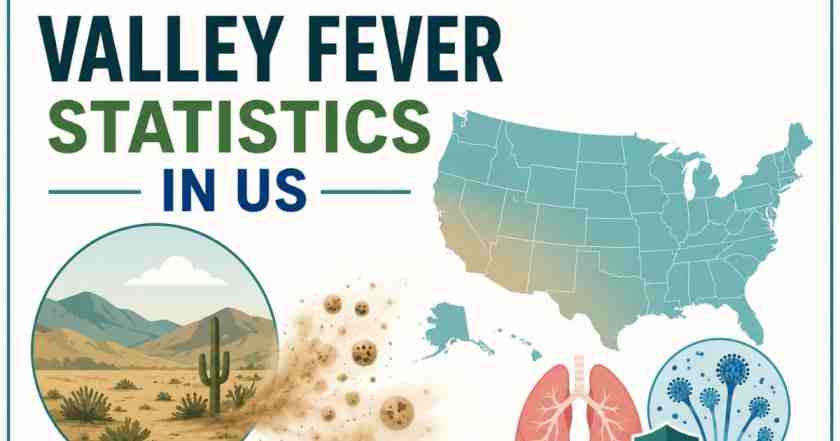
Valley Fever in the US in 2026: An Underestimated Public Health Crisis
Valley fever — the common name for coccidioidomycosis, a fungal infection caused by inhaling spores of Coccidioides immitis or Coccidioides posadasii from disturbed desert soils — is one of the most severely underdiagnosed, underreported, and misunderstood infectious diseases in the United States. In 2026, it is also one of the fastest-rising. The CDC’s most current statistics report 21,037 cases of valley fever confirmed and reported to the agency in 2023 — roughly 20,000 reported annually — but those numbers barely scratch the surface of the actual disease burden. A landmark study published in JAMA Network Open in 2025 (Williams et al., doi:10.1001/jamanetworkopen.2025.13572) estimated that the true annual symptomatic burden of valley fever in the United States is 206,000 to 360,000 cases per year, making reported cases just 1 in 10 to 1 in 18 of actual infections. Nationally, the same study estimated 18,000 to 28,000 hospitalizations and 700 to 1,100 deaths annually — figures that dwarf the ~200 average annual deaths previously cited by the CDC from death certificate data alone. And even these numbers are being rapidly left behind by the disease’s accelerating trajectory in 2025 and 2026: California alone reported a record 12,500 cases in 2024, then recorded 3,123 cases in just the first quarter of 2025 — more than triple the 1,011 cases from Q1 2024 — prompting the California Department of Public Health to issue repeated public health alerts warning of continued high risk.
What is driving this surge, why does valley fever remain so dramatically underdiagnosed, and who is most at risk? The answers lie in a convergence of factors that have quietly been building for decades: climate change creating the precise wet-winter, dry-summer atmospheric conditions that allow Coccidioides to thrive and aerosolize; a rapidly expanding endemic geographic range that is pushing the fungus northward and eastward into areas where neither physicians nor patients think to test for it; a symptom profile that mimics flu, COVID-19, and community-acquired pneumonia so closely that most patients receive multiple rounds of antibiotics before anyone considers a fungal diagnosis; and a diagnostic awareness gap so profound that Black persons — one of the highest-risk groups for severe disease — have the lowest valley fever awareness of any demographic group in California (37.1% general awareness; just 1.3% aware they are at elevated personal risk). In 2026, with California’s case counts on track to again rival or exceed the record-breaking 2024 year, understanding the full statistical picture of valley fever has never been more important for patients, clinicians, and public health planners.
Key Facts: Valley Fever in the US 2026
Before the data sections, the table below captures the most critical and revealing facts about valley fever in 2026 — the numbers that define the disease’s scale, severity, and trajectory.
| Fact | Detail |
|---|---|
| What is Valley Fever? | A fungal lung infection caused by inhaling spores of Coccidioides immitis (California) or Coccidioides posadasii (Arizona and beyond) from disturbed soil |
| Causative Organism | Two species: C. immitis (typically California) and C. posadasii (typically outside California) |
| First Identified | First described by Alejandro Posadas in 1891 in Argentina; first characterized in the US in the San Joaquin Valley of California |
| Official Name | Coccidioidomycosis (also: “cocci,” “desert rheumatism,” “San Joaquin Valley Fever”) |
| Annual Reported Cases (US, 2023) | 21,037 cases reported to CDC — roughly 20,000 per year average |
| Estimated True Annual Burden | 206,000–360,000 symptomatic cases per year — 10 to 18 times more than reported (CDC model; JAMA Network Open 2025) |
| Estimated Annual Hospitalizations | 18,000 to 28,000 hospitalizations per year (JAMA Network Open, Williams et al. 2025) |
| Estimated Annual Deaths | 700 to 1,100 deaths per year (JAMA Network Open 2025) — previously cited as ~200/year from death certificates alone |
| California Record: 2024 | ~12,500 cases reported — highest year on record for California (CDPH) |
| California Q1 2025 | 3,123 cases — more than triple the Q1 2024 figure of 1,011; highest Q1 on record (Contagion Live, April 2026) |
| California H1 2025 | Over 5,500 provisional cases in the first 6 months of 2025 (CDPH, August 2025) |
| Underreporting Factor | Only 26 US states have mandatory reporting requirements for valley fever — national surveillance is incomplete |
| % of Cases in Arizona & California | ~97% of all US reported cases occur in Arizona and California (2019 data, PMC) |
| Arizona: % of US Cases | Two-thirds of all US valley fever cases are in Arizona; half of those in Maricopa County |
| % Asymptomatic | Approximately 60% of infected people have no symptoms or very mild symptoms |
| % Developing Complications | Approximately 5–10% of patients fail to recover from primary pulmonary infection and develop complications or chronic disease (CDC Clinical Overview) |
| Community-Acquired Pneumonia Cause | Valley fever causes 15–30% of all community-acquired pneumonias in Phoenix and Tucson (Fungus Education Hub) |
| Valley Fever in Children (CA) | Incidence in California children increased from 1.8/100,000 in 2001 to 10.9/100,000 in 2024 (CIDRAP, April 2026) |
| Disseminated Disease Rate | Infection spreads beyond the lungs in approximately 1–2% of cases; most dangerous form |
| Men vs. Women: Dissemination | Men have a higher rate of dissemination than women (Valley Fever Center for Excellence) |
| % Increase in Reported Cases 1998–2015 | Valley fever cases rose 400% from 1998 to 2015 (CDC / American Lung Association) |
| Economic Burden — Arizona (2019) | $736 million total lifetime costs for 10,359 Arizona cases in 2019 (University of Arizona Health Sciences, 2021) |
| Economic Burden — California (2017) | ~$700 million total lifetime costs for 7,466 cases diagnosed in California in 2017 |
| Lifetime Cost per Person: CA | ~$94,000 per person ($58,000 direct + $36,000 indirect costs) in California |
| No Vaccine Available | As of May 2026, no approved vaccine exists for coccidioidomycosis; research ongoing |
| Not Contagious | Valley fever cannot spread from person to person or from animal to person |
Sources: CDC Valley Fever Reported Cases Statistics (updated April 24, 2024); CDC Clinical Overview of Valley Fever (updated January 31, 2025); JAMA Network Open Williams et al. 2025 (doi:10.1001/jamanetworkopen.2025.13572); CDPH Valley Fever Cases Press Release (August 2025); Contagion Live (April 6, 2026); Valley Fever Center for Excellence Arizona (VFCE); University of Arizona Health Sciences (February 2021); Open Forum Infectious Diseases (Oxford Academic, 2021); American Lung Association; CIDRAP (April 2026); PMC microbial risk assessor guide 2024 (PMC10923130)
The most critical number in the valley fever statistics landscape in 2026 is not the 21,037 reported cases — it is the gap between that figure and the estimated true burden of 206,000 to 360,000 annual symptomatic cases. That gap — representing between 90% and 94% of all real infections going undetected, undiagnosed, or unreported — is not a statistical abstraction. It represents hundreds of thousands of sick Americans receiving unnecessary antibiotics for presumed bacterial pneumonia, losing weeks of productivity, developing long-term lung complications that go unattributed to their real cause, and in some cases progressing to severe or disseminated disease because the diagnosis was never made. The JAMA Network Open 2025 burden study — the most comprehensive effort ever made to estimate the true national impact of coccidioidomycosis — found that states with unknown endemicity (states not traditionally considered valley fever territory) carried an estimated 103,000 cases, nearly as many as the 125,000 estimated in high-endemic Arizona and California combined. That finding alone should transform clinical practice: valley fever is no longer a disease that can be dismissed in patients who don’t live in the desert Southwest.
The 400% increase in reported cases from 1998 to 2015 — before the current surge — and California’s record-shattering 2024 and near-record 2025 numbers reflect a disease that is not merely being better detected but is genuinely increasing in prevalence due to environmental and climatic shifts. Understanding those shifts — and the biology of Coccidioides that makes them so consequential — is essential context for every data point in the statistics that follow.
Valley Fever US Case Statistics 2026: Annual Reported Cases & True Burden
VALLEY FEVER REPORTED CASES vs. ESTIMATED TRUE BURDEN (US)
============================================================
REPORTED ANNUALLY: ~20,000 cases
ESTIMATED TRUE BURDEN:           206,000 ─────────── 360,000 cases/year
(10x to 18x undercount — CDC model; JAMA Network Open 2025)

CALIFORNIA REPORTED CASES (Annual):
2017–2023 avg  ████████████████  7,000–9,000 cases/year
2023            █████████████████  9,054 provisional cases
2024            ████████████████████████  ~12,500 RECORD (CDPH)
2025 (H1 only)  ████████████████████████  5,500+ cases (on track for record)
2025 Q1 alone   ████████████████  3,123 — HIGHEST Q1 EVER

NATIONAL ANNUAL CASE TRENDS:
2019: ████████████████████  20,003
2021: ████████████████████  ~19,000
2022: ████████████████████  ~20,000
2023: █████████████████████  21,037
============================================================
ESTIMATED NATIONAL ANNUAL BURDEN (JAMA Network Open 2025):
Symptomatic Cases:     206,000 ─ 360,000
Hospitalizations:       18,000 ─ 28,000
Deaths:                    700 ─ 1,100
============================================================
| Case Statistic | Figure | Source / Period |
|---|---|---|
| Annual reported cases (US national avg) | ~20,000 per year | CDC Valley Fever Statistics (updated April 24, 2024) |
| Reported cases in 2023 (most recent full year) | 21,037 | CDC / NNDSS (as of April 2024 update) |
| Reported cases in 2019 | 20,003 — 97% in Arizona and California | PMC risk assessor guide (PMC10923130) |
| True estimated symptomatic burden (annual) | 206,000–360,000 symptomatic cases | CDC burden model; JAMA Network Open 2025 (Williams et al.) |
| Undercount factor | 10 to 18 times more cases than reported | CDC / JAMA Network Open 2025 |
| Estimated annual hospitalizations | 18,000–28,000 | JAMA Network Open 2025 (Williams et al.) |
| Estimated annual deaths | 700–1,100 | JAMA Network Open 2025 — vs. ~200/yr from death certificates only |
| Average coccidioidomycosis-associated deaths 1999–2023 | ~200/year (death certificate data) | CDC Valley Fever Statistics |
| States with mandatory reporting | 26 US states | CDC Emerging Infectious Diseases (Texas study, May 2024) |
| California cases 2024 | ~12,500 — highest year on record | CDPH Press Release (August 2025) |
| California cases 2023 | 9,054 provisional | PMC hydroclimate study (PMC11383451) |
| California annual avg 2017–2023 | 7,000–9,000 cases/year | CDPH (CDPH August 2025 press release) |
| California Q1 2025 cases | 3,123 — vs. 1,011 in Q1 2024 — +209% — highest Q1 ever | Contagion Live (April 6, 2026) |
| California H1 2025 cases | 5,500+ provisional (on track to rival 2024 record) | CDPH Press Release (August 14, 2025) |
| Arizona share of US cases | ~Two-thirds of all US cases | University of Arizona Health Sciences (Feb 2021) |
| Maricopa County (Phoenix metro) share | ~50% of all Arizona cases | University of Arizona Health Sciences (Feb 2021) |
| Arizona + California combined share | ~97% of all US reported cases | PMC risk assessor guide (2024) |
| New Mexico cases (avg 2006–2023) | 86 cases/year (4.1/100,000 population) | PMC New Mexico epidemiology study (PMC12196052) |
| Cases 400% increase: 1998–2015 | +400% increase in reported cases | CDC data / American Lung Association |
| High-endemic county rate: Medicare study | >100 cases/100,000 person-years in 339 US counties | Cited in Fungus Education Hub 2025 |
| Children CA incidence 2001 vs 2024 | 1.8/100,000 → 10.9/100,000 — 506% increase | CIDRAP / UCLA study (April 2026) |
Sources: CDC Valley Fever Reported Cases Statistics page (updated April 24, 2024); JAMA Network Open 2025 Williams et al. (doi:10.1001/jamanetworkopen.2025.13572); CDPH Press Release August 14, 2025; Contagion Live April 6, 2026; PMC hydroclimatic study PMC11383451; PMC New Mexico study PMC12196052; PMC risk assessor guide PMC10923130; University of Arizona Health Sciences February 2021; Fungus Education Hub August 2025
The trajectory of valley fever case counts in 2025 and 2026 represents a genuine public health emergency in California and Arizona, and the data demands attention beyond the traditional endemic zone. California’s 2024 record of 12,500 cases — a dramatic jump from the 7,000–9,000 annual range that had been the norm from 2017 through 2023 — was followed not by a return to baseline but by Q1 2025 producing more than three times the cases of Q1 2024. As CDPH Director Dr. Erica Pan stated in August 2025: “California had a record year for Valley fever in 2024 and, so far, case counts are high in 2025. Valley fever is a serious illness that’s here to stay in California.” That the peak is linked to the wet-winter-drought-wildfire climate cycle is well-established by research, but what is increasingly clear is that each successive peak is higher than the last — not merely tracking climate variability but reflecting a fundamentally expanding endemic zone and a growing susceptible population in areas where the disease was once rare.
The JAMA Network Open 2025 burden study deserves special attention because it fundamentally reframes the entire magnitude of the valley fever problem. When the CDC model accounts for misdiagnosis, failure to seek care, and incomplete testing — the three main drivers of underreporting — the result is a disease that may be causing more total hospitalizations annually than many far better-known conditions. 18,000 to 28,000 hospitalizations per year from a single fungal pathogen, in a country where the disease is widely considered obscure, is an extraordinary figure. The finding that states with unknown endemicity carry an estimated 103,000 cases — essentially equal to the combined burden in the traditionally recognized endemic states — is perhaps the single most important implication for clinical practice: every physician in the United States should be considering valley fever in patients with unexplained community-acquired pneumonia who have traveled to or through any arid or semi-arid region.
Valley Fever Symptoms & Clinical Presentation Statistics 2026
VALLEY FEVER CLINICAL SPECTRUM
================================
~60%  ──────────────────  Asymptomatic or very mild (no clinical presentation)
~40%  ────────────────────  Develop symptomatic illness (acute pulmonary)
~5–10% of ALL infected  ──  Fail to recover; chronic pulmonary / complications
~1–2% of ALL infected   ──  Dissemination beyond lungs (extrapulmonary)
~0.1–0.5%               ──  Meningitis (fatal if untreated; lifelong treatment req'd)

TYPICAL SYMPTOM ONSET: 1–3 weeks after spore inhalation
TYPICAL SYMPTOM DURATION: Weeks to months

SYMPTOMS MOST COMMONLY REPORTED:
Fatigue/Tiredness       ████████████████████████████████  Most common
Cough                   ████████████████████████████████  Most common
Fever                   ████████████████████████████
Shortness of Breath     ████████████████████████
Headache                █████████████████████
Night Sweats            ████████████████████
Myalgia (muscle aches)  ████████████████
Rash                    ████████████  (erythema nodosum — diagnostic clue)
Chest Pain              ████████████
================================
VALLEY FEVER IN PHOENIX/TUCSON:
15–30% of all community-acquired pneumonias (CAP) are due to Coccidioides
| Clinical Metric | Figure / Finding | Source |
|---|---|---|
| % of infected with NO symptoms / very mild | ~60% | CDC Clinical Overview (Jan 2025); CIDRAP (Apr 2026) |
| % developing symptomatic illness (acute pulmonary) | ~40% | CDC / Mayo Clinic |
| % of patients failing to recover (developing complications) | ~5–10% | CDC Clinical Overview (Jan 31, 2025) |
| % developing disseminated coccidioidomycosis | ~1–2% of all infections | Multiple sources; dissemination = spread beyond lungs |
| Incubation period (spore to symptoms) | 1–3 weeks after spore inhalation | CDC / Mayo Clinic |
| Primary symptoms (acute pulmonary) | Fatigue, cough, dyspnea, fever, headache, night sweats, myalgia, rash | CDC Clinical Overview |
| Erythema nodosum (skin rash) | Red/purple nodules on skin — strong diagnostic clue when combined with respiratory symptoms in endemic area | Fungus Education Hub 2025; Mayo Clinic |
| Eosinophilia | Finding eosinophilia on routine differential in person with CAP → push toward valley fever diagnosis | Fungus Education Hub 2025 |
| Valley fever as % of CAP in Phoenix/Tucson | 15–30% of community-acquired pneumonias in Phoenix and Tucson | CDC Statistics page; Fungus Education Hub 2025 |
| Misdiagnosis issue | Patients frequently misdiagnosed; may receive multiple rounds of antibiotics unnecessarily | CDC / JAMA Network Open 2025 |
| Chronic pulmonary disease | In ~5% of all infected patients — can take several years to get better | CDC Treatment page |
| Disseminated coccidioidomycosis: sites | Most common sites: skin, bones, joints, and brain meninges (meningitis most lethal) | Valley Fever Center for Excellence (VFCE) |
| Coccidioidal meningitis | Fatal if untreated — requires lifelong antifungal treatment | CDC Treatment page |
| UCLA pediatric disseminated cases 2023–2025 | 10 of 23 disseminated pediatric cases (43%) occurred between 2023 and 2025 — reflecting recent surge | CIDRAP (April 2026) |
| Pediatric median antifungal treatment duration | 150 days (range: <3 months to >2 years) among treated non-disseminated pediatric patients | CIDRAP / UCLA study (April 2026) |
| HIV and valley fever | In endemic areas, valley fever is one of the most frequent opportunistic infections among HIV-infected patients | VFCE |
| Diabetes risk | Persons with diabetes have higher risk of severe disease | CDC MMWR / CDPH |
| Pregnant women: risk timing | Most serious infections in pregnancy occur during third trimester or immediately after delivery | Mayo Clinic; Arizona DHS |
| CAP not improving after antibiotics | Key diagnostic trigger — if bacterial CAP does not respond to antibiotics, test for valley fever | Fungus Education Hub 2025 |
| Symptom overlap with COVID-19 | Valley fever symptoms “look like COVID-19 or flu” — contributes to continued misdiagnosis | CDPH August 2025 press release |
Sources: CDC Clinical Overview of Valley Fever (updated January 31, 2025); CDC Treatment of Valley Fever page; Mayo Clinic Valley Fever (updated December 2025); CDPH Press Release August 2025; Valley Fever Center for Excellence Arizona; Fungus Education Hub (August 2025); CIDRAP April 2026; Arizona DHS pregnancy brochure
The clinical picture of valley fever in 2026 is defined by one overriding problem: it looks like everything else. A patient presents with fever, fatigue, cough, and shortness of breath — the same constellation that triggers evaluation for influenza, COVID-19, RSV, bacterial pneumonia, and a dozen other common respiratory illnesses. Nothing about the initial presentation shouts “fungal infection.” Unless the clinician specifically asks about recent travel to the desert Southwest or specifically orders serologic testing for Coccidioides, the diagnosis will almost certainly be missed. The finding that valley fever causes 15–30% of all community-acquired pneumonias in the Phoenix and Tucson metropolitan areas — the most densely affected urban centres in the country — should make testing for it as automatic as testing for Legionella or ordering a chest X-ray. That it frequently is not underlines the educational challenge that public health authorities and infectious disease specialists have been working to address, with the CDC issuing an updated clinical algorithm for valley fever testing in January 2025.
The rash called erythema nodosum — red to purple raised nodules typically appearing on the shins — is one of the most clinically underused diagnostic clues in valley fever. When a patient in or recently returned from an endemic area presents with respiratory symptoms and this particular rash, the combination is considered nearly pathognomonic for acute coccidioidomycosis. Similarly, finding eosinophilia (elevated eosinophils) on a routine blood differential in a person with community-acquired pneumonia should immediately raise valley fever as a possibility. The CDC’s January 2025 clinical algorithm — a new guideline specifically designed to help primary care and urgent care providers navigate testing and treatment decisions — represents the agency’s acknowledgment that clinical recognition remains the single biggest barrier to timely diagnosis, and that systematic guidance was urgently needed.
Valley Fever High-Risk Groups & Demographics Statistics 2026
AT-RISK GROUPS FOR SEVERE / DISSEMINATED VALLEY FEVER
========================================================
African Americans        ████████████████████████████████  SEVERAL TIMES higher dissemination risk
Filipino Americans       ████████████████████████████████  SEVERAL TIMES higher dissemination risk
Men (vs. women)          ████████████████████  Higher dissemination rate than women
Adults aged ≥60–65       █████████████████████  Higher risk of severe disease
Immunocompromised        █████████████████████████████  High risk (HIV, transplants, biologics)
Pregnant (3rd trimester) ████████████████████  Higher risk severe infection
Diabetes / smokers       █████████████████  Elevated risk of severe disease
========================================================
AWARENESS STATISTICS (California BRFSS survey):
Black persons: General awareness     37.1% — LOWEST of any group
Filipino persons: Awareness lower than White non-Hispanic
At-risk groups who know they're at risk: ONLY 3.5%
White non-Hispanic: awareness        57.7%
High-incidence region awareness      66.3%
========================================================
RISK FACTORS — PEOPLE WITH ≥1 RISK FACTOR IN CA:
44.7% of survey respondents had ≥1 risk factor for severe disease
But only 50.8% of those at-risk had general awareness of valley fever
========================================================
| High-Risk Group Metric | Figure / Finding | Source |
|---|---|---|
| African Americans: dissemination risk | Several times higher rate of dissemination vs. general US population | VFCE; PMC Coccidioidomycosis in African Americans |
| Filipino Americans: dissemination risk | Several times higher rate of dissemination vs. general US population | VFCE; Mayo Clinic; CDC MMWR |
| Native Americans, Hispanics, Asians | Also at higher dissemination risk, “but not well defined” (VFCE) | VFCE Arizona |
| Men vs. women (dissemination) | Men have higher dissemination rate than women — no racial/gender difference in initial susceptibility | VFCE; PMC African Americans study |
| Adults aged ≥60–65 | Among highest-risk groups for severe disease | CDC MMWR; Outbreak Observatory |
| HIV-infected patients | Valley fever is one of most frequent opportunistic infections in endemic areas | VFCE |
| Organ transplant recipients | Significantly elevated risk for severe/disseminated disease | Mayo Clinic; CDC |
| Patients on immunosuppressant medications | Elevated infection risk; higher dissemination risk | PMC Valley Fever treatment review |
| Pregnant women (third trimester) | Most serious infections occur in third trimester or immediately after delivery | Mayo Clinic; Arizona DHS |
| Diabetes patients | Elevated risk for severe disease | CDC MMWR / California BRFSS survey |
| Smokers | Elevated risk for severe disease | CDC MMWR / California BRFSS survey |
| Outdoor workers in endemic areas | Construction workers, agricultural workers, road/farm workers, ranchers — highest occupational risk | Mayo Clinic; CDC |
| Military personnel | Elevated risk from training in endemic areas and dust exposure | Mayo Clinic |
| Archaeologists | Elevated risk from excavation exposing buried soil with Coccidioides | Mayo Clinic |
| Wildland firefighters | Documented outbreaks; 2021 outbreak among wildland firefighters in California | CDPH publications list |
| Prisoners in California | Documented outbreaks; multiple lawsuits filed over negligence in endemic facility exposure | Outbreak Observatory |
| New Mexico: American Indian/Alaska Native | 1.9 times higher incidence than White people in New Mexico | PMC New Mexico study PMC12196052 |
| General awareness — Black persons (CA) | 37.1% — lowest general valley fever awareness of any group | CDC MMWR / PMC7583507 |
| General awareness — White NH persons (CA) | 57.7% — highest general awareness | CDC MMWR / PMC7583507 |
| High-incidence region awareness (CA) | 66.3% — highest by region | CDC MMWR / PMC7583507 |
| At-risk people aware they are at risk | Only 3.5% of those with ≥1 risk factor knew they were at elevated risk | CDC MMWR / PMC7583507 |
| CA respondents with ≥1 risk factor | 44.7% of 2,841 survey respondents had ≥1 severe disease risk factor | CDC MMWR / PMC7583507 |
| At-risk with general awareness | Only 50.8% of those with ≥1 risk factor had general valley fever awareness | CDC MMWR / PMC7583507 |
Sources: Valley Fever Center for Excellence (VFCE) Arizona — FAQs and Risk Factors pages; PMC Coccidioidomycosis in African Americans (PMC3012635); CDC MMWR Vol.69 No.42 “Valley Fever Awareness California 2016–2017” (PMC7583507); Mayo Clinic Valley Fever Symptoms & Causes (Sep 2025); Arizona DHS Valley Fever and Pregnancy Brochure; PMC New Mexico epidemiology study 2025 (PMC12196052); Outbreak Observatory (June 2019); Congressman Schweikert Valley Fever page
The racial and ethnic disparities in valley fever dissemination risk represent one of the most striking and underaddressed health equity dimensions of any infectious disease in the United States. African Americans and Filipino Americans face several times higher risk of dissemination — the progression from a lung infection to systemic spread affecting skin, bones, joints, and the brain — than the general US population. The biological mechanism for this disparity is not fully understood. Both genetic factors and socioeconomic factors (including delayed access to testing and care) likely play roles. What is definitively understood is that these are precisely the groups with the lowest awareness of the disease and the lowest self-awareness of their elevated personal risk: Black persons in California had the lowest general valley fever awareness (37.1%) and only 1.3% were aware they were personally at higher risk for severe disease. This awareness-risk inversion — the most vulnerable people knowing the least — is a genuine public health failure that cannot be corrected without targeted, culturally appropriate outreach campaigns of the kind the CDPH launched in 2019–2020 but has struggled to sustain.
The occupational risk picture in 2026 is also evolving, particularly as construction booms in endemic areas like Phoenix, Tucson, the Central Valley, and the Inland Empire continue to disturb vast tracts of soil that carry Coccidioides. The documented 2021 outbreak among wildland firefighters in California — a population with extreme dust exposure during active fire suppression — and the documented outbreaks in California prison inmates (who subsequently filed lawsuits alleging negligence) illustrate that valley fever can function as an occupational disease that employers and institutions have identifiable duties to prevent. With construction activity in the endemic zone accelerating in connection with data center buildouts, semiconductor fabs, housing projects, and renewable energy installations, occupational exposure risk has never been higher for the workers involved.
Valley Fever Symptoms, Treatment & Outcomes Statistics 2026
VALLEY FEVER TREATMENT OVERVIEW
=================================
Most patients (mild/moderate): No antifungal treatment needed — self-limiting
Serious infections:             Oral antifungal — typically 3–6 months minimum
Severe / disseminated:          Antifungal treatment >6 months; often >1 year
Meningitis:                     LIFELONG antifungal treatment required
=================================
TREATMENT HIERARCHY:
1st line: Fluconazole (Diflucan) — oral, most forms of disease
         OR Itraconazole (Sporanox) — preferred for joint/bone/musculoskeletal
2nd line: Amphotericin B — severe/life-threatening; IV formulation
3rd line: Voriconazole (Vfend), Posaconazole (Noxafil),
          Isavuconazonium (Cresemba) — refractory or severe cases
Surgery:  Required in ~25% of fibrocavitary chronic pneumonia cases
=================================
ITRACONAZOLE KEY FACT:
57% remission rate in non-meningeal coccidioidomycosis (Mycosis Study Group)
Skeletal infections: 2x more responsive to itraconazole than fluconazole
=================================
POSACONAZOLE:
>200-fold more potent than fluconazole in vitro
>50-fold more potent than itraconazole in vitro
=================================
| Treatment / Outcome Metric | Figure / Finding | Source |
|---|---|---|
| Most people with valley fever | Do not need antifungal treatment — disease is self-limiting | CDC Treatment page; Mayo Clinic |
| When treatment IS prescribed | More serious infections / risk factors for severe disease — 3–6 months oral antifungal | CDC Treatment page (updated April 24, 2024) |
| Severe / disseminated cases | Usually require hospitalization and >6 months antifungal treatment | CDC Treatment page |
| Meningitis | Requires lifelong antifungal treatment — fatal if untreated | CDC Treatment page; Mayo Clinic |
| First-line antifungal: Fluconazole (Diflucan) | Oral; most commonly used — treats all but most serious forms of disease | Mayo Clinic (Dec 2025); CDC Clinical Overview |
| First-line alternative: Itraconazole (Sporanox) | Preferred for joint/muscle/bone/skeletal disease | CDC / UF Health / Mount Sinai |
| Itraconazole remission rate | 57% of 47 patients with non-meningeal coccidioidomycosis achieved remission (Mycosis Study Group) | UC Davis Valley Fever Center |
| Itraconazole vs. fluconazole for skeletal disease | Patients with skeletal infections responded twice as frequently to itraconazole as to fluconazole | UC Davis Valley Fever Center |
| Amphotericin B | Given for severe/life-threatening cases — IV; used in immunocompromised patients | CDC Clinical Overview; UF Health |
| Advanced azoles for serious/refractory cases | Voriconazole (Vfend), Posaconazole (Noxafil), Isavuconazonium (Cresemba) | Mayo Clinic (Dec 2025) |
| Posaconazole in vitro potency | >200-fold more potent than fluconazole; >50-fold more potent than itraconazole against C. immitis | UC Davis Valley Fever Center |
| Surgery | Required in ~25% of patients with fibrocavitary complications (chronic pneumonia) | Open Forum Infectious Diseases (Oxford, 2021) |
| HIV patients: treatment | All receive antifungal therapy — either fluconazole or itraconazole | PMC Valley Fever treatment review |
| Fluconazole: common side effects | Upset stomach, vomiting, loose stools, hair loss, dry skin, dry mouth, chapped lips | Mayo Clinic (Dec 2025) |
| Itraconazole: common side effects | Upset stomach, vomiting, loose stools | Mayo Clinic (Dec 2025) |
| Corticosteroids | Used as adjunctive therapy for acute respiratory distress syndrome (ARDS) arising from coccidioidomycosis | PMC Valley Fever treatment review |
| Recurrence | Small % of people develop long-term lung infections taking several years to improve | CDC Treatment page |
| Outcome: acute disease | Good — likely to fully recover | UF Health; Mount Sinai |
| Outcome: chronic/severe with treatment | Usually good — though relapses may occur | UF Health; Mount Sinai |
| Outcome: disseminated disease | High death rate — particularly without early diagnosis and treatment | UF Health; Mount Sinai |
| Immunocompromised patients | May experience reactivation of previously resolved disease — particularly in AIDS patients | VFCE |
| Pediatric treatment (non-disseminated) | Median antifungal duration 150 days; 3 of 199 non-disseminated pediatric cases had recurrence after stopping | CIDRAP / UCLA study (Apr 2026) |
| Watch & wait | Even without treatment, clinicians monitor for complications or relapse for at least 1 year | Mayo Clinic (Dec 2025) |
| Post-recovery immunity | For most people, having valley fever once means they cannot get it again | Mayo Clinic (Dec 2025) |
| No approved vaccine | No vaccine exists as of May 2026; vaccine research ongoing | CDC; Multiple sources |
| PCR sensitivity | PCR testing for Coccidioides shows low sensitivity (20–41%) but 100% specificity in recent lung nodule study | ResearchGate / 2025 study |
Sources: CDC Treatment of Valley Fever page (updated April 24, 2024); Mayo Clinic Valley Fever Diagnosis & Treatment (updated December 2025); UC Davis Valley Fever Center — Antifungal Therapy page; UF Health Valley Fever; Mount Sinai Valley Fever; Open Forum Infectious Diseases (Oxford, 2021 — PMC7863867); PMC Valley Fever Pathogenesis and Treatment (PMC10774831); CIDRAP / UCLA study (April 2026)
The treatment landscape for valley fever in 2026 is one where the available medications are effective when used correctly, but reaching that point requires a diagnosis that is frequently delayed by weeks or months. The core challenge is a disease whose most common form resolves on its own — making it easy for clinicians to rationalize retrospectively that the patient simply had “a viral illness” — but whose severe forms are genuinely life-threatening and whose transition from mild to severe can happen without warning, particularly in the high-risk groups described above. Fluconazole remains the workhorse antifungal for valley fever, is widely available, relatively affordable, and can be taken orally — factors that make it practical for the months-long treatment courses that serious infections require. The preference for itraconazole in skeletal disease — supported by the Mycosis Study Group data showing twice the skeletal response rate compared to fluconazole — reflects genuine mechanistic differences between these agents in tissue penetration and activity against musculoskeletal Coccidioides infection.
The lifelong treatment requirement for coccidioidal meningitis is one of the most significant treatment burdens in all of infectious disease — a patient who develops valley fever meningitis will require daily fluconazole indefinitely, with no endpoint, because discontinuation is associated with devastating relapse and death. The 25% surgery rate for fibrocavitary chronic pneumonia is also a striking figure, reflecting the reality that a subset of patients with chronic pulmonary valley fever develop cavitary lung lesions that do not respond to antifungals alone and require surgical resection — a major procedure with its own risks and recovery demands. These are the human costs behind the $736 million annual economic burden estimated for Arizona alone and the $700 million estimated for California in a single year.
Valley Fever Geographic Spread, Climate & Expanding Risk 2026
CURRENT ENDEMIC RANGE OF COCCIDIOIDES (2026)
==============================================
HIGH ENDEMIC: Southern Arizona (including Phoenix/Tucson metro)
             San Joaquin Valley of California (central CA)
ENDEMIC:     Parts of California (Central Coast, Inland Empire)
             Southern New Mexico
             West Texas (96-county area estimated)
             Parts of Nevada, Utah
EMERGING:    Washington State (documented cases)
             Parts of Oregon
             Northern California (expanding)
==============================================
CLIMATE-CASE CORRELATION:
Wet winter → Increased fungal growth in soil
Subsequent drought → Drying and aerosolization of spores
Wildfire / dust storm → Massive soil disturbance → outbreak potential
==============================================
CASE 400% INCREASE 1998–2015: Climate + Land Use Change (CDC)
WILDFIRE LINK: Published research: wildfires + coccidioidomycosis
incidence in California 2000–2018 (CDPH published 2023)
==============================================
| Geography / Climate Metric | Figure / Finding | Source |
|---|---|---|
| Primary endemic US states | Arizona and California — ~97% of reported US cases | PMC / CDC |
| Highest endemic subregions | Southern Arizona (Phoenix, Tucson); San Joaquin Valley, CA | CDC / CDPH |
| Other endemic/affected states | New Mexico, West Texas (~96 counties), Nevada, Utah, Washington State, parts of Oregon | CDC; Texas study CDC EID 2024; VFCE |
| Washington State | Documented valley fever cases — geographic expansion confirmed | Fungus Education Hub; CDC Clinical Overview |
| Endemic range expansion driver | Rising temperatures and changing precipitation patterns causing northward expansion of Coccidioides habitat | PMC risk assessor guide; PMC microbial review 2024 |
| Case increase 1998–2015 | +400% — attributed to climate + land use change | CDC / American Lung Association |
| Wet-winter effect on cases | Cases sharply increase ~2-fold following wet winters, 1–2 years after drought | PMC hydroclimate study PMC11383451 |
| 2022–2023 California winter precipitation | 115% of long-term average — drove 2023–2024 case surge forecasted | PMC hydroclimate study PMC11383451 |
| Drought → spike mechanism | Extended drought desiccates soil Coccidioides → aerosolizes as spores in wind and dust storms | CDPH August 2025; PMC |
| Wildfire-valley fever link | Published association between wildfires and coccidioidomycosis incidence in CA 2000–2018 | CDPH publications list (published 2023) |
| Construction / excavation risk | Soil disturbance from construction, excavation, archaeology, road work — direct exposure risk | CDC / Mayo Clinic |
| 2021 wildland firefighter outbreak | Documented Coccidioides outbreak among wildland firefighters — California 2021 | CDPH publications |
| Climate change projection | “Perceived endemic range of coccidioidomycosis is likely expanding northward” | PMC risk assessor guide PMC10923130 |
| JAMA 2025: unknown endemic states burden | States with unknown endemicity estimated to carry 103,000 cases/year — nearly equal to high-endemic AZ + CA | JAMA Network Open 2025; Contagion Live April 2026 |
| Texas: no mandatory reporting | Valley fever is NOT reportable in Texas; exact incidence unknown; West Texas definitively endemic | CDC Emerging Infectious Diseases (May 2024) |
| Economic projection under climate change | Climate-driven range expansion projected to significantly increase economic burden from valley fever | PMC economic valuation study (PMC8311625) |
| Non-endemic area cases | Many cases present in clinics outside of where disease was acquired — highlights need for travel history | UWH Review October 2025 |
Sources: CDC Valley Fever Areas page (updated April 24, 2024); CDC Emerging Infectious Diseases Texas study (May 2024); PMC risk assessor guide PMC10923130; PMC hydroclimate study PMC11383451; CDPH Valley Fever Data and Publications; CDPH August 2025 press release; JAMA Network Open 2025 / Contagion Live April 6, 2026; PMC economic valuation study PMC8311625; UWH Review October 2025; Fungus Education Hub August 2025; American Lung Association
The geographic expansion of Coccidioides and the climate-driven intensification of endemic-area disease burden are the defining long-term trends in valley fever epidemiology in 2026 — and both trends are accelerating. The well-documented mechanism by which wet winters following droughts dramatically increase case counts 1–2 years later — because wet conditions promote fungal growth in soil, while the subsequent drying aerosolizes those spores into the wind — creates predictable risk windows that researchers have now modelled with sufficient accuracy to generate public health alerts before case surges occur. The CDPH successfully issued such an alert in August 2023 ahead of the 2023 case surge, and a similar approach informed the August 2025 alert for continued high risk. This represents genuine progress in the public health response: moving from reactive post-surge documentation to prospective risk communication.
What is harder to model — and harder to respond to — is the slower, structural northward expansion of the fungus’s geographic range as climate warming makes previously unsuitable soils hospitable to Coccidioides. The documentation of cases in Washington State and the increasing frequency of valley fever diagnoses in areas far from the traditional desert Southwest endemic zone point to a future in which clinicians in Oregon, Idaho, Nevada, and potentially beyond will need to include coccidioidomycosis in their differential diagnoses for community-acquired pneumonia with the same routine suspicion that Arizona and California practitioners apply today. The JAMA Network Open 2025 finding that states with unknown endemicity already carry an estimated 103,000 symptomatic cases per year suggests that the future has, in many ways, already arrived — the surveillance infrastructure simply has not kept pace with the biology.
Valley Fever History, Key Milestones & Timeline 1891–2026
VALLEY FEVER TIMELINE: DISCOVERY TO 2026
==========================================
1891   ▌  First described by Alejandro Posadas (Argentina)
1900s  ▌  Recognised as endemic to San Joaquin Valley, CA
1929   ███  First confirmed link to soil/dust as source
1940s  ████  C. immitis cultured; endemic range established
1996   ████  Valley Fever Center for Excellence founded (UArizona)
1998   █████  CDC begins systematic national reporting
2009   ████████████████████████████  Steepest case increase period (2009–2011)
2015   █████████████████████████  +400% increase from 1998 baseline
2016   ████  IDSA Clinical Practice Guidelines published
2023   ████████████████████████████████████████████  21,037 cases — US record
2024   ████████████████████████████████████████████████  CA RECORD: 12,500 cases
2025   █████████████████████████████████████  H1: 5,500+ CA cases; JAMA burden study
2026   ██  CDC/JAMA confirm 18,000–28,000 hospitalizations/700–1,100 deaths
==========================================
| Year / Period | Key Milestone | Detail |
|---|---|---|
| 1891 | First clinical description | Alejandro Posadas (Argentina) first described the fungal organism causing coccidioidomycosis |
| Early 1900s | San Joaquin Valley recognition | Disease recognized as endemic to California’s San Joaquin Valley; “Valley fever” name originates |
| 1929 | Soil/dust link confirmed | First clear documentation linking disease to inhalation of airborne spores from disturbed soil |
| 1940s–1950s | Two Coccidioides species characterized | C. immitis (CA) and C. posadasii (AZ and beyond) distinguished; endemic range mapped |
| 1996 | Valley Fever Center for Excellence founded | University of Arizona Health Sciences — Dr. John Galgiani, MD; still leading research and advocacy |
| 1998 | CDC begins systematic national reporting | Valley fever made a nationally notifiable disease; CDC tracking begins |
| 2009–2011 | Steepest case increase period on record | Sharpest single multi-year spike in CDC reporting history; followed by decline 2012–2014 |
| 2015 | 400% increase benchmark | Valley fever cases had risen 400% from 1998 baseline by 2015 (CDC / ALA) |
| 2016 | IDSA Clinical Practice Guidelines published | Infectious Diseases Society of America guidelines for treatment of coccidioidomycosis — still the governing standard |
| 2019–2020 | California statewide awareness campaign | CDPH launched evidence-based multimedia Valley Fever Awareness Campaign |
| 2019 | 20,003 national cases | 97% in Arizona and California; Arizona economic burden study follows |
| 2021 | Arizona burden study published | University of Arizona: $736 million total lifetime costs for 10,359 AZ cases in 2019 |
| 2021 | Wildland firefighter outbreak | Documented Coccidioides outbreak among California wildland firefighters |
| 2023 | 21,037 US reported cases | Highest reported annual total; California reports 9,054 provisional cases |
| January 2025 | CDC new clinical algorithm | CDC publishes updated clinical testing algorithm for valley fever diagnosis in CAP patients |
| 2024 | California record: ~12,500 cases | Highest-ever annual case count for California — driven by wet 2023–24 winter after drought |
| 2025 (April) | JAMA Network Open burden study | Williams et al. — first comprehensive national burden estimate: 206,000–360,000 cases; 18,000–28,000 hospitalizations; 700–1,100 deaths |
| 2025 Q1 | California Q1 record: 3,123 cases | More than triple Q1 2024 (1,011 cases); highest Q1 total ever recorded (as of April 2026) |
| 2025 (April) | UCLA pediatric disseminated case surge | CIDRAP: 43% of all pediatric disseminated cases treated at UCLA from 2000–2025 occurred in 2023–2025 |
| 2025 (August) | CDPH issues repeat high-risk alert | Over 5,500 provisional H1 2025 cases; director warns “Valley fever is a serious illness that’s here to stay” |
| 2026 (May) | Ongoing surveillance and case counts | CDPH 2026 provisional dashboard active; no vaccine approved; expanded geographic range confirmed |
Sources: CDC Valley Fever Statistics; CDC Clinical Overview (Jan 2025); University of Arizona Valley Fever Center for Excellence; JAMA Network Open 2025 Williams et al.; CDPH Data and Publications; CDPH August 2025 press release; Contagion Live April 6, 2026; CIDRAP April 2026; American Lung Association; Open Forum Infectious Diseases Oxford 2021; PMC hydroclimate study
The historical arc of valley fever in the United States — from an obscure regional curiosity first described in 1891 to a disease that in 2025 generated the first credible national burden estimate of 206,000–360,000 annual symptomatic cases and 700–1,100 deaths — is one of the most significant untold stories in American public health. For most of the 20th century, the disease was regarded as a Southwestern peculiarity, of concern to desert-dwellers and their doctors but of little national relevance. The CDC didn’t even begin systematic national tracking until 1998 — 107 years after the organism was first described. The 400% increase in reported cases from 1998 to 2015, followed by the current surge driven by the wet-dry climate cycle and expanding endemic range, has forced a reclassification of valley fever from a regional curiosity to a national public health priority.
The 2025 JAMA Network Open burden study — the most important single piece of valley fever research published in years — did not reveal a new disease. It revealed the true scale of one that has been hiding in plain sight for decades, misdiagnosed as bacterial pneumonia, influenza, COVID-19, or “a virus that’s been going around.” Every data point in this article — the 21,037 reported cases that mask 206,000–360,000 actual cases, the 700–1,100 deaths that death certificates record as ~200, the 103,000 cases in states not considered endemic, the Q1 2025 California count that tripled the prior year’s record — adds up to the same conclusion: valley fever in 2026 is a disease that the United States is significantly underestimating, underdetecting, and underresourcing, and the trajectory of both case counts and geographic spread makes it a problem that will only grow in the coming years without a step-change in clinical awareness, surveillance infrastructure, and ultimately, a vaccine that does not yet exist.
Disclaimer: The data research report we present here is based on information found from various sources. We are not liable for any financial loss, errors, or damages of any kind that may result from the use of the information herein. We acknowledge that though we try to report accurately, we cannot verify the absolute facts of everything that has been represented.