Where Is the USS Abraham Lincoln Deployed in 2026?
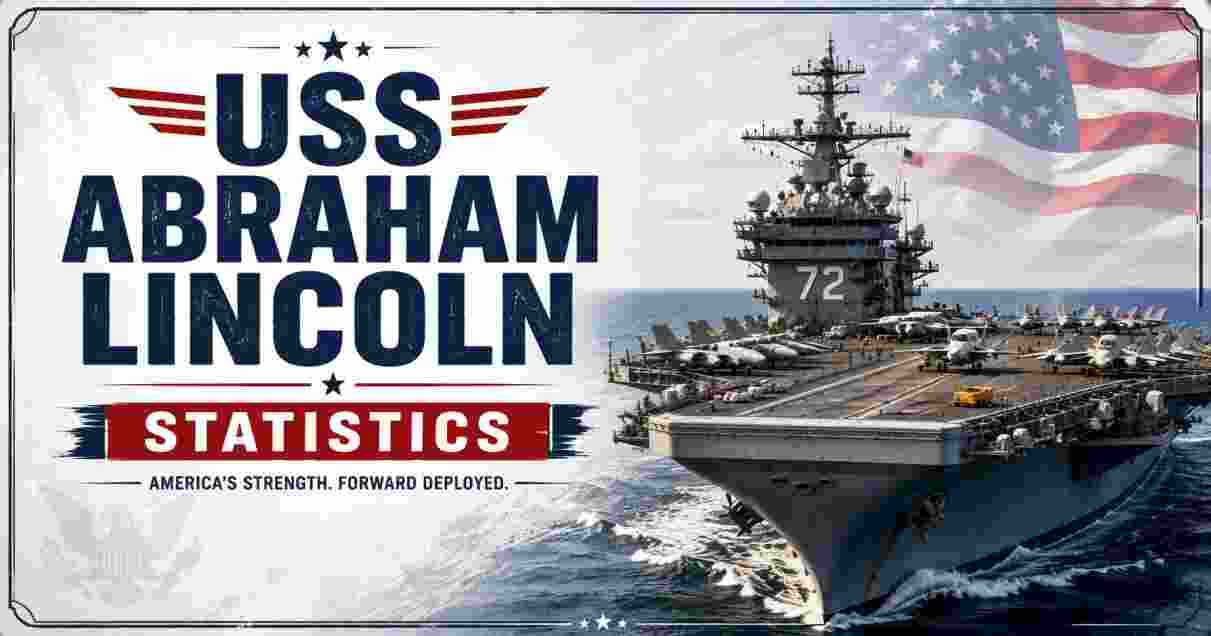
The USS Abraham Lincoln (CVN-72) is a Nimitz-class nuclear-powered aircraft carrier, currently operating in the Arabian Sea, Persian Gulf, and Strait of Hormuz as the centerpiece of a US military response to the ongoing war with Iran. Homeported at Naval Air Station North Island in San Diego as part of the US Pacific Fleet, the carrier left its home port in November 2025 on what was originally planned as a standard rotational deployment. That plan changed dramatically after the 2026 Iran war broke out in late February, when the ship was redirected into the US Central Command area of responsibility to support American combat operations against Iranian military targets and to help keep the Strait of Hormuz open to international shipping.
As of mid-August 2026, the Lincoln has been continuously at sea for more than 260 days, a record-setting stretch that has made the carrier and its roughly 5,680-person crew the subject of intense scrutiny from lawmakers, military families, and the Pentagon itself. The ship’s location and mission have put it at the center of one of the most consequential naval deployments in recent US history, and its statistics, from combat sorties flown to days spent without a single port call, are now being tracked almost daily by journalists covering the conflict. Understanding where the Abraham Lincoln is deployed and why requires looking closely at both the ship’s technical capabilities and the extraordinary operational demands placed on it since the war began.
USS Abraham Lincoln Interesting Facts 2026
| Category | Fact |
|---|---|
| Ship Class | Nimitz-class, 5th of 10 carriers in the class |
| Commissioned | November 11, 1989 |
| Home Port | Naval Air Station North Island, San Diego |
| Total Crew (Ship + Air Wing) | ~5,680 personnel |
| Length | 1,092 feet (332.8 meters) |
| Displacement | 104,300 long tons, fully loaded |
| Current Deployment Length (as of Aug 2026) | Over 260 days, a record-setting stretch |
| Days Without a Port Call | More than 200 days |
| Aircraft Flights Conducted (2026 deployment) | More than 10,000 |
| Ordnance Expended (2026 deployment) | 1.5 million pounds |
| Original Construction Cost | $2.24 billion (approximately $6.8 billion in 2024 dollars) |
Source: US Navy, US Central Command, CNN, NPR reporting on 2026 fleet deployments
A 260-plus day continuous deployment is exceptionally long even by wartime standards, and the fact that the carrier has gone more than 200 days without docking at a single port is the kind of figure that naval analysts rarely see outside of the most intense multi-front conflicts. The 10,000-plus aircraft flights and 1.5 million pounds of ordnance expended since the Iran war began in February also illustrate just how central this single ship has been to the American air campaign in the region.
At the same time, these numbers carry a human cost that has become impossible to separate from the raw statistics. Reports of moldy showers, broken toilets, and supply shortages aboard the Lincoln, combined with multiple documented incidents of crew members going overboard, have turned what would normally be a purely operational story into one about the physical and mental toll of extended sea duty. The Pentagon’s decision to finally rotate in a replacement carrier, the USS George Washington, after months of mounting pressure from Congress reflects just how unusual and unsustainable this deployment length has become, even for a Navy accustomed to long overseas rotations.
USS Abraham Lincoln Ship Specifications 2026
| Specification | Detail |
|---|---|
| Class | Nimitz-class nuclear-powered aircraft carrier |
| Length Overall | 1,092 feet |
| Beam | 252 feet |
| Displacement (full load) | 104,300 long tons |
| Propulsion | 2 Westinghouse A4W nuclear reactors, 260,000 shaft horsepower |
| Top Speed | Over 30 knots |
| Crew (Ship’s Company) | 3,200 |
| Crew (Air Wing) | 2,480 |
| Aircraft Capacity | Up to 90 fixed-wing aircraft and helicopters |
Source: US Navy fact files, Naval Technology, Wikipedia ship specifications database
USS Abraham Lincoln by the Numbers
Length (ft)         |███████████████████████ 1,092
Displacement (kt)   |████████████████████ 104.3
Crew Total          |███████████████████████ 5,680
Aircraft Capacity   |███████████████ 90
The USS Abraham Lincoln belongs to the Nimitz class, a family of ten nuclear-powered supercarriers that have formed the backbone of American naval power projection since the 1970s, and the Lincoln itself has been in continuous active service since its commissioning in November 1989. At 1,092 feet long and displacing more than 104,000 tons fully loaded, the ship is powered by two Westinghouse A4W nuclear reactors that give it an operational range limited only by food, ammunition, and crew endurance rather than fuel, since the reactors themselves can run for 20 to 25 years between refuelings. This nuclear endurance is precisely why the ship has been able to remain at sea for so long during the current Iran war, as the vessel itself faces no fuel-based limit on how long it can keep steaming.
The carrier’s 5,680-person complement, split between roughly 3,200 ship’s company and 2,480 air wing personnel, effectively makes the Lincoln a small floating city, complete with its own hospital, galleys, and training facilities, capable of launching and recovering up to 90 fixed-wing aircraft and helicopters from its flight deck. This scale of firepower and self-sufficiency is exactly what has made the ship such a valuable asset for the Pentagon during the ongoing conflict, but it is also precisely what makes the human toll of an extended deployment so significant. A crew this large, confined to a single vessel for 260-plus days without a port call, faces logistical and psychological strains that smaller, shorter-range vessels simply never encounter in the same way.
USS Abraham Lincoln Deployment Statistics 2026
| Deployment Metric | Figure |
|---|---|
| Departure from San Diego | November 2025 |
| Days at Sea (as of mid-August 2026) | More than 260 days |
| Days Without a Port Call | More than 200 days |
| Redirection to Middle East | Following the outbreak of the 2026 Iran war, February 28, 2026 |
| Comparable Record Deployment | USS Gerald R. Ford, 11 months, longest since the Vietnam War |
| Flagship Role | Carrier Strike Group 3, hosting Carrier Air Wing Nine |
Source: US Navy statements, CNN, NPR, Times of San Diego reporting (August 2026)
Longest US Carrier Deployments, 2026 (Days)
USS Gerald R. Ford      |████████████████████████████████ 330+
USS Abraham Lincoln     |██████████████████████████ 260+
Typical Rotational Tour |█████████ 180
The USS Abraham Lincoln’s current deployment has become one of the longest continuous carrier deployments in recent US Navy history, and the 260-plus days at sea figure recorded as of mid-August 2026 places it in rare company alongside the USS Gerald R. Ford, which returned home in mid-May 2026 after an 11-month deployment, the longest since the Vietnam War. What makes the Lincoln’s numbers particularly striking is the 200-plus days without a single port call, a detail confirmed by multiple US officials and widely reported by outlets including CNN and NPR, since even during lengthy deployments, carriers typically make periodic port visits for resupply, maintenance, and crew rest.
The ship’s redirection into the Middle East came directly in response to the outbreak of the 2026 Iran war on February 28, when the United States and Israel launched coordinated strikes against Iranian military targets. Since then, the Lincoln has served as the flagship of Carrier Strike Group 3, hosting Carrier Air Wing Nine, and has remained in the region continuously as US Central Command has maintained sustained air operations and, later, a naval blockade of Iranian ports. For anyone researching the broader strategic chokepoints tied to this conflict, our detailed breakdown of Strait of Hormuz Importance statistics provides essential context on why keeping this particular waterway open has become such a central US military priority.
USS Abraham Lincoln Combat Operations Statistics 2026
| Combat Metric | Figure |
|---|---|
| Aircraft Flights Conducted | More than 10,000 |
| Ordnance Expended | 1.5 million pounds |
| Notable Incident (February 2026) | Shot down an Iranian Shahed-139 drone via F-35C |
| Operation Name (from Feb 28, 2026) | Operation Epic Fury |
| Distance from Iranian Coast at Drone Incident | Approximately 500 miles |
Source: US Central Command, Fox News, Axios reporting on Abraham Lincoln combat operations 2026
Abraham Lincoln Combat Activity, 2026 Deployment
Aircraft Flights     |████████████████████████████ 10,000+
Ordnance (lbs, 000s) |███████████████ 1,500
Since the 2026 Iran war began, the Abraham Lincoln Carrier Strike Group has conducted more than 10,000 aircraft flights and expended roughly 1.5 million pounds of ordnance, according to a command statement released by the strike group in August 2026. These figures place the Lincoln at the operational heart of Operation Epic Fury, the codename given to the US and Israeli air campaign that began with strikes on Iranian military targets in late February. One of the earliest notable incidents involving the carrier came in early February 2026, before the wider war formally began, when a US Navy F-35C fighter jet launched from the Lincoln shot down an Iranian Shahed-139 drone that had approached the carrier roughly 500 miles from Iran’s southern coast.
The sheer volume of flight operations and munitions expenditure recorded over this deployment reflects the sustained tempo the Lincoln’s air wing has maintained for nearly six months without the kind of extended maintenance and crew-rest windows that a port call would normally provide. This operational tempo has direct implications not just for the ship’s equipment, which faces accelerated wear from near-continuous flight operations, but also for the surrounding maritime security picture across the wider Gulf region. Readers interested in how this air campaign has affected shipping and energy security further south may also want to review our data on Bab el-Mandeb Strait Statistics, given how closely the two chokepoints have become linked during this conflict.
USS Abraham Lincoln Crew Morale and Conditions Statistics 2026
| Crew Welfare Metric | Detail |
|---|---|
| Reported Overboard Incidents | Multiple, including one confirmed in early August 2026 |
| Rescue Time (August incident) | Rescued within an hour, evaluated as a mental health episode |
| Congressional Letters Sent | By Rep. Mike Levin and Rep. Seth Moulton to Defense Secretary Hegseth |
| Reported Living Condition Issues | Moldy showers, broken toilets, lack of hot water, supply shortages |
| Pentagon Response | Secretary Hegseth called reports “completely misrepresented” |
Source: NBC News, CNN Politics, CNBC reporting on USS Abraham Lincoln crew conditions, August 2026
Timeline of Crew Welfare Concerns, 2026
Feb  |██ War begins, Lincoln redirected to Middle East
May  |████ Deployment surpasses typical rotational length
Aug  |████████ Overboard incidents, Congressional letters, carrier swap announced
Reports of deteriorating conditions aboard the USS Abraham Lincoln escalated sharply in August 2026, when Stars and Stripes and the Navy Times published accounts describing multiple attempts by crew members to go overboard, along with sailor and family interviews detailing worsening mental health across the ship. One confirmed incident saw a sailor go overboard earlier in the month wearing a life vest; the individual was rescued within an hour and later medically evaluated, with Navy officials describing it as a mental health episode rather than an accident. Democratic lawmakers, including Representative Mike Levin of California and combat veteran Representative Seth Moulton, sent formal letters to Defense Secretary Pete Hegseth and acting Navy Secretary Hung Cao, citing reports of moldy showers, broken toilets, lack of hot water, and lack of access to fresh produce aboard the carrier.
Secretary Hegseth publicly pushed back against the coverage, telling reporters during a trip to Central America that the conditions had been “completely misrepresented,” though he did not elaborate on specific inaccuracies in the reporting. US Central Command separately denied reports alleging a brawl aboard the carrier, stating that no service members had died, after Iranian state media claimed otherwise. Despite the Pentagon’s pushback, the mounting pressure from lawmakers and military families appears to have contributed directly to the decision to finally relieve the Lincoln, with officials confirming that the prolonged deployment’s significance stems partly from the possibility that substantial US naval forces will remain committed to the region for the foreseeable future.
USS Abraham Lincoln Carrier Replacement Statistics 2026
| Replacement Metric | Detail |
|---|---|
| Replacement Carrier | USS George Washington (CVN-73) |
| Departure Point | Da Nang, Vietnam, port visit completed August 5, 2026 |
| Escort Vessels | Accompanying cruiser and destroyer |
| Route Confirmed | Crossing the Singapore Strait en route to the Middle East |
| Official Status | Swap confirmed as “previously planned” by US officials |
Source: US Navy statement, CNN, NPR reporting on carrier rotation, August 2026
The replacement of the USS Abraham Lincoln by the USS George Washington marks the formal end of what has become one of the most scrutinized carrier deployments of the decade. The George Washington, a Pacific-based carrier, wrapped up a port visit in Da Nang, Vietnam on August 5, 2026, before beginning its transit toward the Middle East alongside an escorting cruiser and destroyer, with the strike group subsequently confirmed crossing the Singapore Strait. A US official described the swap as having been “previously planned,” though the timing has coincided closely with the intensifying reports of morale and welfare problems aboard the Lincoln, leading many observers to view the rotation as at least partly a response to the mounting internal and Congressional pressure.
It remained unclear as of mid-August exactly when the George Washington would arrive on station to formally take over Lincoln’s duties, but the handover reflects a broader pattern seen throughout the 2026 Iran war, in which the Navy has continued to rotate carrier strike groups in and out of the region rather than permanently surging additional assets. Defense Secretary Hegseth has stated that the Navy intends to maintain this rotational approach “as we have, and we’ll continue to,” a comment that signals the current posture in the Gulf region is expected to persist rather than wind down in the near term, regardless of which individual carrier is on station at any given time.
US Naval Blockade of Iran Statistics 2026
| Blockade Metric | Figure |
|---|---|
| Blockade Start Date | April 13, 2026 |
| Vessels Intercepted (CENTCOM) | 85 vessels |
| Vessels Seized | 3 ships |
| Vessels That Bypassed Blockade (Lloyd’s List) | 26 vessels |
| Estimated Daily Cost to Iran | $500 million per day |
| Blockade Duration Stated by Pentagon | Could continue “indefinitely,” per Secretary Hegseth |
Source: US Central Command, Lloyd’s List, US Treasury statements, reported via CNBC (August 2026)
Naval Blockade of Iran: Vessel Activity Since April 2026
Vessels Intercepted  |████████████████████████████████ 85
Vessels Seized       |█ 3
Vessels That Bypassed|██████████ 26
The naval blockade of Iranian ports, which the USS Abraham Lincoln and accompanying US forces have helped enforce since April 13, 2026, has become one of the defining features of the broader conflict, with US Central Command reporting that 85 vessels have been intercepted and 3 ships formally seized as of mid-August. According to Lloyd’s List, roughly 26 vessels have managed to bypass the blockade despite the American naval presence, illustrating the practical limits of even a heavily resourced maritime enforcement operation across such a large and strategically complex body of water. US Treasury Secretary Scott Bessent has stated that the blockade is costing Iran approximately $500 million per day, part of a broader economic pressure campaign that Bessent described as involving “a combination of economic isolation” paired with the continued naval presence at Hormuz.
Secretary Hegseth has been explicit that the blockade is designed to continue for as long as necessary, telling reporters that the US military can sustain the operation “indefinitely,” with carrier strike groups like the Lincoln’s rotating in and out to maintain a continuous presence. This open-ended commitment underscores why the debate over the Lincoln’s crew conditions has taken on such significance within the Pentagon and Congress, since any extended blockade posture will likely require future carrier deployments of comparable length, making the lessons learned from the Lincoln’s welfare crisis directly relevant to planning for whichever carrier eventually relieves the George Washington. For readers tracking the broader energy and shipping consequences of this blockade, our statistics on Kharg Island Statistics offer additional detail on how Iran’s own oil export infrastructure has been affected by the surrounding military escalation. Together, the blockade numbers, the combat statistics, and the deployment figures paint a picture of a conflict that shows no clear signs of a near-term resolution, meaning the USS Abraham Lincoln’s record-setting time at sea may not remain a record for very long once the current rotation of carriers, and the crews serving aboard them, are fully accounted for.
Disclaimer: The data research report we present here is based on information found from various sources. We are not liable for any financial loss, errors, or damages of any kind that may result from the use of the information herein. We acknowledge that though we try to report accurately, we cannot verify the absolute facts of everything that has been represented.