TSA Agent in America 2026
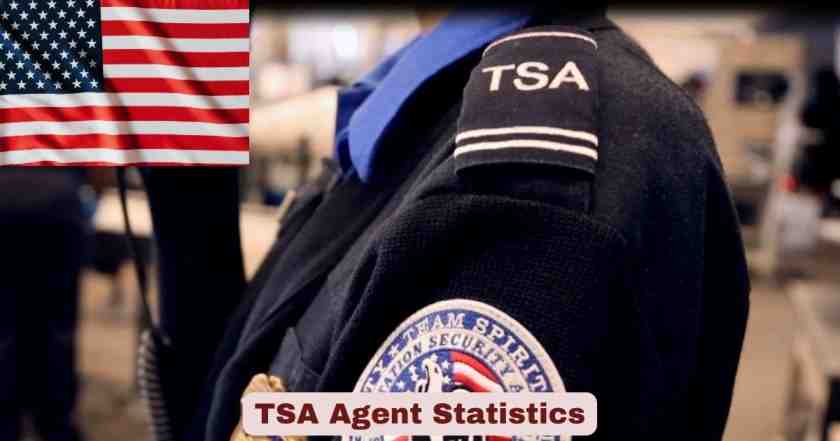
A TSA agent — formally known as a Transportation Security Officer (TSO) — is a frontline federal employee of the Transportation Security Administration (TSA), the Department of Homeland Security component responsible for safeguarding the United States’ civil aviation system and other transportation networks. Every time a traveler at an American airport removes their shoes, places their bag on an X-ray conveyor belt, walks through a body scanner, or submits to a pat-down, it is a TSA agent at the center of that interaction — a trained, certified federal worker whose job is to identify threats before they reach aircraft, using a continuously modernizing array of detection technology including Computed Tomography (CT) X-ray scanners, Advanced Imaging Technology (AIT) body scanners, Credential Authentication Technology (CAT) units, and the irreplaceable human judgment that no machine has yet been designed to replace. The TSA employs approximately 50,000 Transportation Security Officers as its largest occupational group — out of a total agency workforce of roughly 60,000 — making TSOs the most visible and the most numerous cohort of federal workers that the average American interacts with directly. They operate at nearly 440 federalized airports across all 50 states, from the world’s busiest complex at Hartsfield-Jackson Atlanta International Airport to tiny regional airports where a single screening lane may be the only checkpoint between a community and the national air transportation system. As of March 21, 2026, TSA agents have just completed the most consequential year of operational achievement in the agency’s history — screening an all-time record of 904 million passengers in 2024 — while simultaneously navigating the most turbulent institutional period the agency has faced since its founding weeks after the September 11, 2001 attacks.
The TSA agent’s institutional story in 2026 is one of earned professionalism under persistent pressure. For most of the agency’s first 22 years, TSOs were paid below equivalent federal employees on the General Schedule — a compensation disparity that drove chronically high turnover, damaged morale, and compromised the agency’s ability to retain experienced officers who understood that their value was not fully reflected in their paychecks. The July 2, 2023 Pay Equity Plan changed that, delivering an average 26% pay increase to frontline TSOs and aligning their compensation with the federal General Schedule for the first time in the agency’s history. The downstream effects were immediate and measurable: workforce attrition dropped 7.3%, job applications surged past 328,000 in 2024, and the agency hired over 8,760 new TSOs and Security Support Assistants that year. Then, in early 2025, the institutional ground shifted again: the Trump administration’s DOGE-driven workforce reduction campaign terminated 243 TSA probationary employees in February 2025; DHS cancelled the TSOs’ collective bargaining agreement on March 7, 2025, ending a 7-year deal signed just ten months earlier; a shoe removal exemption was added to standard lanes on July 8, 2025; and a third FY2026 funding gap beginning February 14, 2026 left TSO screeners temporarily without paychecks while federal air marshals were kept on salary through reconciliation funds. The TSA agent in March 2026 is better compensated than at any previous point in the job’s history — and simultaneously operating in a more institutionally uncertain environment than at any point since 2002. Both things are true at the same time, and both shape what it means to be a TSA agent in America today.
TSA Agent Key Facts in the US 2026
| Fact Category | Key Fact / Data Point |
|---|---|
| Official Title | Transportation Security Officer (TSO) — formal federal designation |
| Common Names | TSA agent, TSA officer, screener, checkpoint officer |
| Parent Agency | Transportation Security Administration (TSA) — component of Department of Homeland Security (DHS) |
| Agency Founded | November 19, 2001 — Aviation and Transportation Security Act, signed by President George W. Bush |
| TSA Total Employees (2026) | Approximately 60,000 total — per TSA leadership page |
| TSOs (Transportation Security Officers) | Approximately 50,000 — the dominant occupational group |
| Airports with TSA Screening | Nearly 440 federalized airports nationwide |
| Daily Passengers Screened (Average) | Approximately 2.5 million per day |
| Annual Passengers Screened (2024 — Record) | 904 million — all-time record in agency history |
| Annual Passengers Screened (2023) | 858 million |
| Record Single-Day Screening (2024) | 3.1 million passengers — Sunday after Thanksgiving 2024 |
| Record Single-Day Screening (Summer 2024) | 3 million passengers — Sunday July 7, 2024 |
| New TSOs Hired (2024) | Over 8,760 new TSOs and Security Support Assistants |
| TSA Job Applications (Through July 2024) | 328,590 applications — record volume post-Pay Equity Plan |
| Firearms Intercepted (2024) | 6,678 firearms — approximately 18.3 per day |
| Loaded Firearms Percentage (2024) | ~94% of intercepted firearms were loaded |
| Airports with Firearm Detections (2024) | 277 airport checkpoints had at least one firearm detected |
| Pay Equity Plan Implemented | July 2, 2023 — TSO salaries aligned with federal General Schedule |
| Average Pay Increase (2023 Reform) | 26% average — some officers received up to 40% |
| Collective Bargaining Status (March 2026) | Eliminated — DHS Secretary Noem cancelled CBA March 7, 2025 |
| DOGE TSA Terminations (Feb 2025) | 243 probationary employees terminated |
| Shoe Removal Policy Change | Mandatory shoe removal eliminated July 8, 2025 from standard lanes |
| Customer Satisfaction Rate (2024) | 93% of surveyed passengers reported satisfaction with TSO screening experience |
Source: TSA.gov official press releases; TSA Year-End Firearms Report January 15, 2025 (tsa.gov); TSA At a Glance (tsa.gov); TSA Q1 2024 Press Release (April 11, 2024); TSA Q3 2024 Press Release (October 8, 2024); TSA Q2 2024 Press Release (July 9, 2024); USAFacts.org (June 2025); ZipRecruiter TSA Salary March 22, 2026; Glassdoor TSA (Transportation Security Administration) March 2026; DHS Press Release March 7, 2025; Bloomberg Government February 2025
The 904 million passengers screened in 2024 — the most recent full calendar year with complete verified data — translated into a daily average of 2.5 million checkpoint interactions per day, each one requiring a TSO to simultaneously observe X-ray imagery, monitor alarm systems, read behavioral cues, manage the flow of people through screening lanes under time pressure, and respond to any alert with immediate precision. The 3.1 million passenger record on the Sunday after Thanksgiving 2024 — a number exceeding the entire population of Chicago — moved through U.S. airport checkpoints in a single day at a 93% customer satisfaction rate. That figure reflects a workforce whose skills have deepened even as their institutional environment has become more turbulent. The attrition drop following the 2023 pay reform means the officer corps has more experienced veterans in proportion to entry-level hires than at any time in the agency’s history — and experienced TSOs catch threats that inexperienced ones miss. Every security milestone the agency achieves happens because 50,000 individual TSOs show up to their checkpoints, put on their uniforms, and apply professional judgment to tens of thousands of individual screening decisions every single day.
The firearm interception record tells a particularly revealing story about what TSA agents actually do. 6,678 firearms detected in 2024 — an average of 18.3 per day, 7.6 per hour across the national checkpoint network — means that TSO vigilance at X-ray machines is preventing nearly two dozen loaded, potentially lethal weapons from entering secure airport areas every single day, 365 days a year. The 94% loaded rate is the detail that makes each detection consequential: these are not unloaded, forgotten hunting rifles. They are predominantly handguns loaded with live ammunition that their owners — who may or may not have malicious intent — carried to a security checkpoint in a carry-on bag. The civil penalty of up to $14,950 per incident and the mandatory five-year loss of TSA PreCheck for a first offense are the policy deterrents, but the human deterrent is the TSO scanning the X-ray image who recognizes the telltale silhouette of a firearm in milliseconds and acts. That recognition skill is what TSA training programs work to build, what experienced officers develop over years, and what the agency’s retention improvements since 2023 are helping to sustain.
TSA Agent Salary Statistics in the US 2026
| Salary Metric | Data / Amount |
|---|---|
| Average Annual TSA Salary (ZipRecruiter, March 21, 2026) | $54,196 — national average as of exact date of today |
| Average Hourly TSA Rate (ZipRecruiter, March 2026) | $26.06 per hour — equivalent to $1,042/week or $4,516/month |
| 25th Percentile TSA Annual Salary | $31,500 — per ZipRecruiter March 2026 |
| 75th Percentile TSA Annual Salary | $69,500 — per ZipRecruiter March 2026 |
| 90th Percentile TSA Annual Salary | $89,000 — top earners nationally |
| Maximum Reported TSA Salary (ZipRecruiter) | $107,500 — senior supervisory/specialist roles |
| Average TSA Salary (PayScale 2026) | $40,769 — range $33,649 to $48,022 |
| Average TSA Hourly (PayScale 2026) | $20.77/hour — range $18.58 to $24.57 |
| TSO Average Hourly (PayScale) | $21.28/hour |
| Average Glassdoor TSA Salary (March 2026 — 4,288 salaries) | Range $43,368 (Security Guard) to $136,186 (Invited Lecturer) |
| Glassdoor TSA Security Officer Range | $40,499 to $66,525 — based on 258 salaries submitted March 2026 |
| Starting Base Salary (Band D, Step 1) | $34,454 base — GS-5 equivalent — per official 2026 TSA pay scale |
| Band D Range (Official Base) | $34,454 (Step 1) to $44,789 (Step 10) |
| Band E Range (Official Base) | $39,576 (Step 1) to $51,446 (Step 10) |
| Band F Range (Official Base) | $52,205 (Step 1) to $67,875 (Step 10) |
| Highest Pay Bands (K–L) Before Locality | $162,672+ |
| NYC Locality Adjustment | +33.98% — Band D Step 1 in NYC = approximately $46,200 |
| San Francisco Locality Adjustment | +46.34% — highest locality pay in US |
| Rest of US Locality Adjustment | +16.82% — minimum locality add-on |
| Highest Earning State | New York — highest average TSA salary by state |
| Lowest Earning State | North Carolina — lowest average TSA salary by state |
| Texas TSA Average Salary (March 22, 2026) | $47,662 — $22.91/hour — Texas ranks 50th of 50 states |
| Federal Pay Raise (2026) | 1.0% federal raise applied to all TSA bands in 2026 |
Source: ZipRecruiter TSA Salary as of March 21, 2026 (ziprecruiter.com/Salaries/Tsa-Salary — real-time data); ZipRecruiter TSA Texas Salary March 22, 2026; PayScale TSA Salary 2026 (payscale.com); Glassdoor TSA (Transportation Security Administration) Salaries March 2026 (4,288 salary reports); Glassdoor TSA Hourly Pay (258 salaries, March 2026); TSA Career Pay Scale Guide 2026 (tsacareer.com, December 22, 2025); SalaryClear TSO Salary 2026 Guide (February 9, 2026, salaryclear.com)
The ZipRecruiter real-time data as of March 21, 2026 — showing a national average TSA salary of $54,196 — reflects the full ecosystem of TSA-related employment, including not just frontline TSOs but supervisory positions, specialists, administrative staff, and higher-band roles at major airports. The PayScale figure of $40,769 is a closer approximation of what a median frontline TSO without supervisory responsibility actually earns on an annualized basis. The gap between these numbers illustrates the compensation architecture of TSA employment: the official starting salary of $34,454 base (Band D, Step 1) is not the whole story, because locality adjustments are added on top — and in high cost-of-living cities like New York (+ 33.98%), Washington DC, Los Angeles, and San Francisco (+46.34%), the real take-home base can be $13,000–$19,000 higher than the nationally published base figure before a single dollar of overtime, differential pay, or benefit value is counted. At LAX or JFK, a Band F TSO at the higher steps of the band — the officer who has been doing this job for five or more years — can reasonably clear $90,000+ including shift differentials, night pay, and Sunday premium without ever accepting a supervisory promotion.
The financial advisors’ recommendation to add 30–40% to the base salary to capture the true value of TSA federal benefits is not marketing language — it is a mathematically defensible assessment. The Federal Employees Retirement System (FERS) pension — to which TSOs contribute 4.4% of their paycheck and receive a guaranteed monthly annuity for life upon retirement — is a benefit that essentially no private-sector employer at comparable salary levels offers. The formula of approximately 1% of the “high-3” average salary multiplied by years of service means that an officer who retires after 25 years at an average salary of $75,000 receives $18,750 annually ($1,562.50 per month) for life, adjusted for inflation, in addition to Social Security and their Thrift Savings Plan (TSP) balance. For a worker entering federal service at age 25 who serves through age 55, this is a retirement security package that the private sector simply cannot replicate at the same compensation level. This is why the 2023 Pay Equity Plan’s transformation of TSA compensation from a stepping-stone job into a genuine long-term career path is producing the retention improvements the EIA is measuring — because the officers who stay for five, ten, and twenty years are capturing lifetime compensation packages worth significantly more than the salary figures in any individual year suggest.
TSA Agent Screening Performance Statistics in the US 2026
| Screening Performance Metric | Data / Statistic |
|---|---|
| Total Passengers Screened (2024 — Full Year) | 904 million — all-time record; up +5.4% vs. 858 million in 2023 |
| Total Passengers Screened (2023) | 858 million |
| Total Passengers Screened (2022) | 773 million |
| Growth Rate 2022–2024 | +17% — sustained post-pandemic traffic recovery |
| Daily Average Passengers (2024) | Approximately 2.47 million per day |
| Record Single Day (Post-Thanksgiving Sunday 2024) | 3.1 million passengers — November 2024 |
| Record Single Day (Summer 2024) | 3.0 million passengers — Sunday July 7, 2024 |
| Spring Break 2024 Volume (March 7–25) | 48 million passengers — up 7% over Spring Break 2023 |
| Q1 2024 Passengers | 206 million — up 7.8% vs. Q1 2023 (191 million) |
| Q2 2024 Passengers | 236 million — up vs. Q2 2023 (221 million) |
| Q3 2024 Passengers | 678 million cumulative through 9 months (= Q1+Q2+Q3) |
| Checked Bags Screened (2024) | 494 million — every bag goes through explosive detection technology |
| Carry-On Items Screened (2024) | Over 2 billion |
| Customer Satisfaction Rate (2024) | 93% — 12,556 of 13,446 surveyed passengers satisfied |
| Firearms Detected Per Day (Full Year 2024) | 18.3 per day average (peaked at 19/day in summer 2024) |
| Firearm Detection Rate Per Million Passengers (Q3 2024) | 7.5 per million — down from 8.1 per million Q3 2023 |
| Firearm Detection Rate (Full Year 2024) | 7.4 per million passengers — vs. 7.8 per million in 2023 |
| Airports Where Firearms Were Detected (2024) | 277 airport checkpoints nationwide |
| Explosives Detection Canine Teams | More than 1,100 teams active; 100+ new teams deployed 2024 |
| TSA PreCheck Members (Record, August 2024) | 20 million members — record high, available at 200+ airports |
| TSA PreCheck Participating Airlines | 104 airlines |
Source: TSA.gov Year-End Firearms Report (January 15, 2025, tsa.gov); TSA.gov Q3 2024 Firearms Press Release (October 8, 2024); TSA.gov Q2 2024 Firearms Press Release (July 9, 2024); TSA.gov Q1 2024 Firearms Press Release (April 11, 2024); TSA.gov At a Glance fact sheet (tsa.gov); TSA FY2026 Congressional Budget Justification (DHS.gov, June 2025)
The compound productivity story in TSA agent screening performance from 2022 to 2024 is one of the most impressive in the federal government. Over those three years, TSO officers managed a 17% increase in passenger volume — from 773 million to 904 million passengers — while simultaneously achieving a declining firearms detection rate per million passengers (from 8.6 per million in 2022 to 7.4 per million in 2024, a 14% improvement in firearm-free passenger rate) and maintaining a 93% customer satisfaction score. This triple improvement — more passengers, fewer security incidents per capita, higher satisfaction — does not happen automatically. It reflects the combination of technology upgrades (CT scanners processing bags faster with fewer false alarms), experienced workforce retention (the pay equity reform keeping senior officers who recognize threats that newer officers miss), PreCheck growth (20 million enrolled members moving through expedited lanes and freeing up standard-lane capacity), and the operational management improvements that TSA leadership implemented across the 440-airport network. Each 1% improvement in customer satisfaction at 2.5 million daily interactions represents 25,000 fewer frustrated travelers per day — a cumulative service quality improvement that, spread across 904 million annual interactions, is not trivial.
The explosive detection canine program — with over 1,100 teams active across the national checkpoint network — represents an aspect of TSA agent operations that rarely makes headlines but provides one of the highest-value threat detection capabilities in aviation security. Unlike X-ray technology, which detects threats by imaging their physical structure, explosive detection canines identify threats by detecting the chemical signature of explosive compounds — a capability that is fundamentally complementary to imaging-based systems and that catches threat configurations that imaging can miss. The 100+ new canine teams deployed in 2024 represent a meaningful expansion of this capability at exactly the moment when the agency was managing record passenger volumes, because canine-based screening at checkpoint lanes and gate areas does not require passengers to stop, unpack, or slow down — it adds a detection layer without adding throughput friction. For TSA officers managing a checkpoint queue of hundreds of passengers, the deployment of a canine team nearby is both a genuine security enhancement and a practical throughput management tool.
TSA Agent Workforce and Policy Statistics in the US 2026
| Workforce / Policy Metric | Data / Status |
|---|---|
| TSA Total Employees (September 2024) | 64,433 — per Office of Management and Budget / US Treasury data |
| TSA Total Employees (March 2026 — post-DOGE) | Approximately 60,000 — per TSA leadership page |
| TSOs (Transportation Security Officers) | Approximately 50,000 — largest occupational group |
| TSA Share of Federal Civilian Workforce | 2.8% of total 2.31 million federal civilian employees — per USAFacts September 2024 |
| TSA Share of DHS Workforce | Approximately 25% — one quarter of all DHS employees |
| New TSOs Hired (2024) | Over 8,760 — record hiring driven by Pay Equity Plan compensation improvements |
| Applications Received (Through July 2024) | 328,590 — highest volume in agency history |
| Workforce Attrition Reduction (2022–2024) | 6.7% overall; 7.3% screening workforce — direct result of 2023 Pay Equity Plan |
| DOGE TSA Terminations (February 2025) | 243 probationary employees — performance and conduct issues cited by TSA spokesperson |
| Collective Bargaining Agreement — Status | Cancelled — DHS Secretary Noem issued memo March 7, 2025 — ended 7-year CBA signed May 2024 |
| Union (AFGE) Response | Called cancellation “retaliatory action” — vowed legal challenge |
| TSA Pay Equity Plan — Implemented | July 2, 2023 — aligned TSO pay with General Schedule for first time |
| TSOs on Union Business (Pre-CBA End) | Approximately 200 TSOs drawing pay while performing full-time union duties — not screening |
| TSO Poor Performer Survey Result | Over 60% of TSOs surveyed said poor performers allowed to remain employed |
| February 2026 Funding Gap — TSO Pay | TSO screeners went unpaid during funding gap beginning February 14, 2026 |
| Senate Bills to Fund TSA During Shutdown | 6 separate bills blocked by Senate Republicans during February 2026 funding gap |
| TSA Academy Locations | Glynco, Georgia (primary) + TSA Academy West, Las Vegas, Nevada (opened 2023) |
| Officer Training Duration | 3 weeks — expanded from 2 weeks in 2023 |
| Airports with Fewer Than 200 TSOs | 374 of 432 federalized airports — vast majority have small, compact teams |
| FY2026 TSA Budget Request | $11.6 billion total — 59,232 authorized positions — per TSA FY2026 CBJ |
Source: TSA FY2026 Congressional Budget Justification (DHS.gov, June 2025); USAFacts.org (June 2025); TSA.gov one-year Pay Equity Plan anniversary report (July 2024); Bloomberg Government (February 2025); DHS Press Release March 7, 2025; Senate Appropriations Committee Minority Press Release (February 2026); TSA.gov leadership page (March 2026)
The workforce transition from 64,433 employees in September 2024 to approximately 60,000 in March 2026 — a reduction of roughly 4,400 employees — captures the net effect of the DOGE campaign, the natural attrition of workers who departed rather than operate under the cancelled collective bargaining agreement, and the ongoing normal turnover that the agency manages continuously. The $11.6 billion FY2026 budget with 59,232 authorized positions — down from the 64,433 employees actually on board in September 2024 — suggests the Trump administration has calibrated its long-term TSA staffing plan to operate the agency with fewer employees at higher individual compensation than the prior administration’s model, relying on technology investments (particularly the $215 million for CT scanner expansion in FY2026) to compensate for reduced headcount. Whether this trade-off — fewer officers operating more sophisticated equipment — produces equivalent or improved security outcomes compared to the prior staffing model is the operational and policy question that DHS will be answering through the performance data of 2026 and 2027.
The cancellation of the collective bargaining agreement on March 7, 2025 removed the formal contractual framework governing everything from scheduling rights to grievance procedures to discipline standards for TSO officers — and it did so at a moment when the workforce was already processing the shock of the DOGE terminations and the February 2026 pay disruption. The institutional combination of better pay (the 2023 reform’s legacy), less job security (no CBA, no union protection), and episodic pay disruption (the February 2026 funding gap) creates a psychological and practical employment environment that labor economists describe as “high compensation, low security” — an unusual profile that can simultaneously attract talented applicants (drawn by the salary) and lose experienced employees (who value stability more than marginal pay increases). The TSA’s ability to maintain its 93% customer satisfaction rate through all of this institutional turbulence is a testament to the professionalism of its frontline workforce — and a data point that every future discussion of TSA agent compensation, retention, and policy should take seriously as evidence that the people in those checkpoints are doing their jobs exceptionally well, regardless of what is happening in the policy environment above them.
TSA Agent Technology and Training Statistics in the US 2026
| Technology / Training Metric | Data / Status |
|---|---|
| CT (Computed Tomography) X-Ray Scanners | Actively deployed at major US airports; FY2026 budget allocates $215 million for CT expansion |
| How CT Differs from 2D X-Ray | CT creates 3D images — officers rotate bags digitally; fewer bag-opens; more threats detected |
| AIT (Advanced Imaging Technology) — Body Scanners | Millimeter wave imaging deployed at all major TSA checkpoints — detects non-metallic threats |
| CAT (Credential Authentication Technology) Units | Validates passenger ID and boarding pass in real time; detects fakes; deployed at major checkpoints |
| CAT-2 Units | Enhanced version with biometric capability — newer deployments as of 2024–2026 |
| ROVER (Remotely Operated Video Enhanced Receiver) | Datalink device — TSOs share real-time AIT/CT imagery with supervisors and law enforcement |
| Biometrics Investment (FY2026) | $20 million R&D allocation for biometric identity verification expansion |
| Shoe Removal Policy (Standard Lane) | Eliminated July 8, 2025 — mandatory shoe removal ended; shoes can remain on in standard lanes |
| REAL ID Enforcement (Since May 7, 2025) | Began May 7, 2025 — compliant ID or passport required; non-compliant IDs trigger enhanced screening |
| TSA PreCheck — Dedicated Fast Lane | Enrolled members (20M+) keep shoes, laptops, liquids in bags; use dedicated faster lanes |
| CLEAR Integration with PreCheck | CLEAR+ bundles TSA PreCheck with biometric verification at 60+ airports |
| AskTSA Live Chat | Available via X (Twitter), Facebook Messenger, SMS 275-872 — 8am–6pm ET weekdays |
| myTSA App | Free app — “What Can I Bring?” feature for real-time item guidance |
| Explosives Detection Canine Teams | 1,100+ active teams — nose is still the best explosives detector |
| TSA Academy Training Duration | 3 weeks (expanded from 2 weeks in 2023) — at Glynco, GA or Las Vegas, NV |
| TSA PreCheck Eligible Airports (2026) | 200+ airports — up from 196 in 2022 |
| TSA PreCheck Participating Airlines | 104 airlines |
| USAJOBS Application Timeline | TSO application to conditional offer can take 4–8 weeks including background investigation |
| Job Security Clearance Level | Public Trust — Moderate Risk background investigation |
Source: TSA FY2026 Congressional Budget Justification (DHS.gov, June 2025); TSA.gov Technology Pages; TSA At a Glance fact sheet (tsa.gov); TSA REAL ID Enforcement Statement 2025; CLEAR official website; TSA.gov Press Releases 2025; Travel Tourister March 2026 (shoe policy)
The $215 million FY2026 investment in Computed Tomography scanner expansion represents the most significant technology shift at TSA checkpoints since body scanners were introduced in the wake of the 2009 underwear bomb incident. Traditional 2D X-ray machines produce a single flat image of bag contents — if something suspicious is obscured by overlapping items, or if the image only reveals one viewing angle, the officer must either open the bag or make a judgment call. CT technology creates a full 3D rendering of the bag’s contents that the officer can rotate digitally through 360 degrees without physically touching the bag. The result is a measurable reduction in both false alarm rates (fewer unnecessary bag searches, faster throughput) and false negative rates (fewer threats that would have been missed in a 2D image that are caught in 3D). For a checkpoint processing 1,000 bags per hour at a major international airport, the difference between a 2D and CT workflow can mean hundreds of fewer bag-open interruptions per shift — a throughput improvement that is simultaneously a security improvement and a passenger experience improvement. The FY2026 budget’s commitment to expanding CT deployment is the administration’s explicit acknowledgment that technology can partially compensate for any workforce reduction by making each officer materially more productive.
The July 8, 2025 elimination of mandatory shoe removal from standard screening lanes — the most visible single policy change at TSA checkpoints in years — brought an end to a procedure that had been in place since December 2001 following the Richard Reid shoe bomb attempt. The policy change was made possible precisely because CT imaging is now advanced enough that shoes worn on feet generate sufficient imaging data for threat detection without physical removal — a standard of detection confidence that TSA’s science advisors concluded meets the required security threshold. For the TSO managing a checkpoint queue, the elimination of shoe removal is an operational improvement: it removes one step from the passenger preparation sequence, reduces the volume of bins required, eliminates the hygiene concerns associated with barefoot contact with airport floors, and reduces the time each passenger takes to reassemble their belongings after screening. None of these improvements reduce security — they are the product of better technology enabling equivalent security with less operational friction. They also illustrate the broader principle that has guided the TSA’s technology investment strategy: as detection technology improves, the visible inconveniences that earlier, less capable technology required can be progressively eliminated without compromising the underlying safety mission.
TSA Agent Career and Benefits Statistics in the US 2026
| Career / Benefits Metric | Data / Details |
|---|---|
| Pay System | Transportation Security Compensation Plan (GS-equivalent) — implemented July 2, 2023 |
| Pay Bands (TSO Range) | Band D (entry) through Band L (executive) |
| TSO Starting Band | Band D — GS-5 equivalent; $34,454 base (Step 1) |
| Step Increases | Every 1 year (Steps 1–3), 2 years (Steps 4–6), 3 years (Steps 7–10) |
| Promotion Path | D → E → F (frontline TSO ceiling); F → G+ (supervisory/leadership roles) |
| Shift Differentials | Night differential; Sunday premium; overtime eligible |
| High-End Earning Scenario (TSO) | Band F, senior steps, major airport (LAX/JFK) + differentials = $90,000+ annually |
| Health Insurance | FEHB (Federal Employees Health Benefits) — one of the most comprehensive federal programs |
| Retirement System | FERS (Federal Employees Retirement System) — pension + Social Security + TSP |
| TSP (Thrift Savings Plan) | Government matching; similar to 401(k) — up to 5% agency match |
| FERS Pension Formula | ~1% of “high-3” average × years of service — guaranteed monthly payment for life |
| Pension Example | 25-year career, $75,000 avg salary = $18,750/year ($1,562.50/month) for life + inflation adjustment |
| True Compensation (Salary + Benefits) | Financial advisors recommend adding 30–40% to base salary for true total comp value |
| FEGLI Life Insurance | Federal Employees Group Life Insurance — subsidized premiums |
| Annual Leave | 4 hours/pay period (< 3 years); 6 hours (3–15 years); 8 hours (15+ years) |
| Sick Leave | 4 hours per biweekly pay period — unlimited accumulation |
| Federal Holidays | 11 paid federal holidays per year |
| Uniform Allowance | Annual clothing allowance for official TSO uniform maintenance |
| Required TSO Qualifications | US citizenship; high school diploma or 1 year of security experience; pass CBT/TAB tests |
| Mandatory Drug Test | Pre-employment and random; zero tolerance policy |
| Background Investigation Level | Public Trust — Moderate Risk |
Source: TSA Career Pay Scale 2026 Guide (tsacareer.com, December 22, 2025); SalaryClear TSO Salary 2026 (February 9, 2026); TSA FY2026 Congressional Budget Justification (DHS.gov); OPM FERS retirement formula (opm.gov); TSA.gov Careers page; USAJOBS TSO job postings (March 2026)
The career trajectory from Band D through Band F — and the potential to clear $90,000+ at a major airport with shift differentials, without ever accepting a supervisory role — represents the most important recruiting argument the post-2023 Pay Equity TSA can make to potential applicants. The old TSA was a job many workers took as a stepping stone while looking for something better. The new TSA — with GS-equivalent pay, full federal benefits, predictable step increases, and a pension program that private employers at similar salary levels cannot match — is becoming a career destination rather than a waypoint. The 328,590 applications received through July 2024 — the highest volume in agency history — is the quantitative proof that the labor market has received and responded to this message. Young applicants are calculating what a 25-year federal career with a guaranteed pension at age 50–55 is worth in present-value terms, and the answer is substantial. The FERS pension’s inflation-adjusted monthly payments for life, on top of Social Security and TSP savings, create a three-legged retirement income that financial planners routinely identify as one of the most robust available to workers without graduate degrees in the American labor market.
The mandatory qualifications for TSO positions — U.S. citizenship, a high school diploma or one year of security work experience, and successful passage of the CBT (Computer Based Test) and TAB (Transportation Security Administration Basic) evaluations — represent a deliberately accessible entry bar that is designed to draw from the broadest possible pool of American workers. The Public Trust background investigation that follows a conditional offer is more thorough than most private-sector employers conduct but less intensive than the clearance processes required for classified federal positions, making TSO positions accessible to applicants who might not qualify for higher-clearance federal roles. For many American workers — particularly veterans transitioning from military service, workers in security and law enforcement-adjacent fields, and community college graduates seeking federal employment — the TSO job is the right entry point to a federal career at exactly the right qualification level. The three-week TSA Academy training — expanded from two weeks in 2023 specifically to add instruction on emerging threats, new technology, and de-escalation techniques — is the investment the federal government makes in ensuring that every officer who reaches a checkpoint is genuinely prepared for what they will encounter. In 2026, that preparation is being tested daily at 2.5 million encounters per day — and the performance data confirms it is working.
TSA Agent Crisis — March 2026 Shutdown and Airport Delays Statistics
| Crisis Metric | Data / Detail |
|---|---|
| Current Funding Gap Status (March 21, 2026) | 35 days and counting — DHS-only partial shutdown; began February 14, 2026 (Valentine’s Day) |
| Total Unpaid Days in Past 170 Days | TSO screeners have gone without full pay for nearly half of the past 170 days — 43 days (fall 2025 longest-ever shutdown) + 4 days (brief Jan 2026 lapse) + 35 days (current) |
| TSO Resignations Since Shutdown Began | At least 376 TSOs have quit since February 14, 2026 — per Department of Homeland Security data |
| Replacement Training Timeline | Each new TSO requires 4–6 months to train and certify — resignations create gaps that cannot be filled quickly |
| National TSO Absentee Rate (Sustained) | Above 9% for at least 6 consecutive days as of March 20, 2026 |
| Highest Single-Day Airport Callout Rate | 55% at Houston William P. Hobby Airport (HOU) — March 14, 2026 — per DHS official statement |
| Atlanta Hartsfield-Jackson Callout Rate (March 14) | More than one-third of screeners absent — resulting in up to 2-hour security wait times |
| Houston Hobby Callout Rate (March 21, 2026) | More than 50% of TSA workers called out on Friday March 21 — per CNN |
| Atlanta Callout Rate (Thursday March 19) | 31.8% — per CNN live blog |
| Houston Bush Intercontinental Callout (Thursday) | 33.1% |
| JFK Airport Callout Rate (Thursday) | 28.7% |
| Atlanta Security Wait Time (March 21) | ~75 minutes — line extended past atrium; TSA agents being flown in from other airports |
| Houston Bush Airport Wait Time (March 20) | 150 minutes (2.5 hours) — among the worst in the country |
| Newark Liberty Wait Time (March 20) | Approximately 39 minutes |
| JFK Warning | JFK issued traveler advisory for “longer-than-average wait times due to staffing impact” |
| Busiest Day of 2026 So Far | March 13, 2026 (Friday) — 2,854,704 passengers screened — record 2026 daily high during shutdown |
| Second Busiest Day of 2026 | March 20, 2026 (Friday) — 2,817,785 passengers screened — second highest during crisis |
| Airport Food Drives for TSA Workers | Multiple airports soliciting food donations for unpaid TSO officers — confirmed by officers including AFGE vice president Cochems |
| Elon Musk Offer | Musk posted on X offering to personally pay TSO salaries during shutdown — legal pathway unclear; no action taken as of March 21 |
| Trump ICE Proposal | President Trump suggested deploying ICE agents to airports for screening roles and immigration enforcement — ICE not trained for TSA checkpoint screening |
| Congressional Schedule | Both chambers of Congress out of Washington first two weeks of April — resolution timeline unclear |
| House Hearing Scheduled | House Committee on Homeland Security scheduled hearing for Wednesday, March 25, 2026 on shutdown’s impact on TSA, FEMA |
| Political Deadlock | Democrats: won’t fund DHS until new restrictions on federal immigration operations; Republicans: blame Democratic senators (specifically named Sen. Jon Ossoff of Georgia) |
| GOP Airport Ad Campaign | Senate Republicans ran intercom ads at Atlanta airport: “This delay is courtesy of Senator Jon Ossoff” — blaring to passengers in security lines |
| Officer Quote (George Borek, TSA supervisor, Atlanta) | “Every day is a challenge because we don’t know how many officers are going to come in, and how many checkpoints or how many lanes we are going to be able to man” |
| Officer Quote (Cochems, AFGE vice president) | “Every day I come to the airport and I look at the food drive, see what things I can get for my family” |
| Officer Quote (Lakeya White, resigned 2 weeks ago) | Described leaving the highest salary she’d ever earned because the pay disruption made the position untenable |
Source: CNN TSA Shutdown Live Blog March 20–21, 2026 (cnn.com); AP / U.S. News & World Report March 20, 2026; Fortune March 21, 2026; Local10.com / AP March 20, 2026; DHS Official Statement “Spring Break Under Siege” March 17, 2026 (dhs.gov); Spectrum News March 20, 2026; The Intelligencer March 19, 2026; CBS 42 March 20, 2026
The March 2026 TSA funding crisis is not simply a labor dispute about money. It is the collision of three separate institutional forces — a partial government shutdown affecting only the Department of Homeland Security, a workforce operating without the collective bargaining protections that were cancelled in March 2025, and a chronic structural pay vulnerability that the 2023 reform improved but could not immunize against complete paycheck suspension — landing simultaneously on 50,000 essential federal workers who are legally required to show up to work regardless of whether they receive compensation. The 376 resignations since February 14 represent only the officers who reached their personal breaking point. The AFGE’s Cochems was explicit about what the numbers do not show: “I think more people are staying with the TSA that don’t want to be here” — an observation that captures the hidden dimension of the crisis. Officers who stay are staying because they have no better option in the current job market, not because they trust the institutional environment. That retained-but-disengaged workforce is a security risk in ways that resignation statistics cannot fully quantify: a screener operating under financial stress, sleep deprivation, and institutional betrayal is not the same screener who earned a 93% customer satisfaction rate in 2024 when they were being paid on time, working under a collective bargaining agreement, and operating within a functioning institutional framework.
The airport wait time data from March 19–21, 2026 — published in real time by CNN’s live blog with TSA confirmation — puts the operational consequences of the absenteeism in direct, measurable terms. A 150-minute wait time at Houston Bush Intercontinental is not an inconvenience. For a traveler connecting through Houston on a standard 90-minute domestic layover, it is a missed flight. For a traveler with mobility limitations, like Ambria Britt — a multiple sclerosis patient reported by CNN who was forced to pay a stranger to push her wheelchair through the jammed security queue — it is a physical ordeal layered on top of travel stress. The political theater running simultaneously — Republican senators purchasing intercom advertisements in Atlanta airport blaming Democratic Senator Jon Ossoff for the delays while travelers stood in those same lines — and Elon Musk offering on X to personally pay TSO salaries while no legal mechanism for that payment was identified — gives the March 2026 TSA crisis the quality of a political spectacle that the screeners at the center of it are experiencing not as theater but as the lived reality of eviction notices, vehicle repossessions, and empty refrigerators while performing essential national security work at one of the world’s busiest aviation networks.
Disclaimer: The data research report we present here is based on information found from various sources. We are not liable for any financial loss, errors, or damages of any kind that may result from the use of the information herein. We acknowledge that though we try to report accurately, we cannot verify the absolute facts of everything that has been represented.