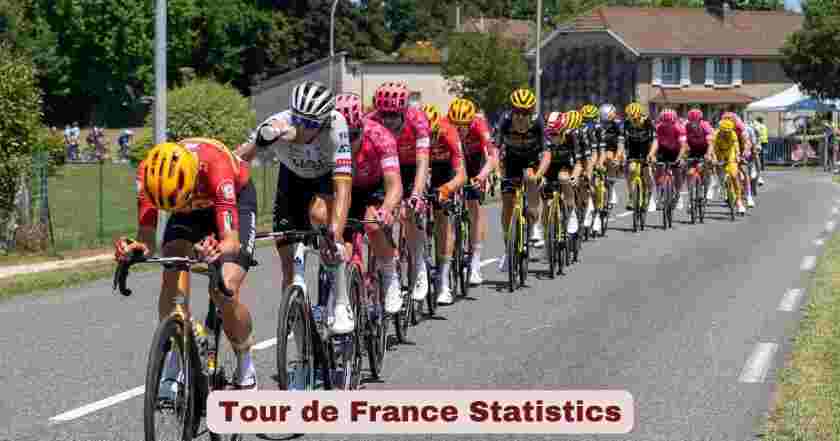
Tour de France in 2026
The Tour de France 2026 is the 113th edition of the world’s most prestigious and most watched annual sporting event — a three-week race across mountains, plains, and cobblestones that has defined professional cycling since its first edition in 1903. The 2026 race runs from July 4 to July 26, 2026, starting with a Grand Départ in Barcelona, Spain — only the third time the race has launched from Spanish soil (after San Sebastián in 1992 and Bilbao in 2023) and the fourth time Barcelona specifically has featured in the race, having hosted stages in 1957, 1965, and 2009. The route covers 3,333 kilometers across 21 stages with a staggering total elevation gain of 54,450 meters — roughly the equivalent of climbing from sea level to the summit of Mount Everest six times over. Race director Christian Prudhomme announced the full route on October 23, 2025 before an audience of almost 3,500 people at the Palais des Congrès de Paris, describing it as having a “crescendo” toward the finish. The race is organised by Amaury Sport Organisation (ASO) and will feature 23 teams and 184 riders — all 18 UCI WorldTeams plus five UCI ProTeams selected through ranking and wildcard processes. The defending champion is Slovenian superstar Tadej Pogačar, winner of the 2024 and 2025 editions (and also 2020 and 2021), who enters the 2026 race chasing a fifth yellow jersey that would place him alongside Eddy Merckx, Bernard Hinault, Jacques Anquetil, and Miguel Induráin as joint-record holders.
The 2026 edition comes loaded with historical firsts that give it a particular place in Tour lore even before a single pedal stroke has been turned. It is the first time since 1971 that the race has opened with a team time trial — a 19.7-kilometer test in Barcelona that will use an unprecedented individual timing format first trialled at Paris-Nice in 2023, where each rider’s individual time is recorded rather than the time of the fourth or fifth finisher. The 2026 route features two back-to-back summit finishes at Alpe d’Huez on stages 19 and 20 — the first time the iconic climb has appeared in consecutive stages since 1979, and the first time ever that the Tour has finished on Alpe d’Huez via the Col de Sarenne approach on the back side. The final stage retains the Montmartre circuit introduced in 2025 — a Paris finale that drew almost nine million French television viewers and was widely praised as one of the most dramatic stage finishes in decades — but with a revised configuration giving the fastest sprinters a shot at the Champs-Élysées finish. The Tour de France was first established by the newspaper L’Auto in 1903 in an attempt to increase its circulation. It has survived two World Wars, multiple doping scandals, and nearly every disruption imaginable over 12 decades. In 2026, it arrives at Alpe d’Huez twice, and the whole world will be watching.
Interesting Facts: Tour de France 2026 | Key Stats at a Glance
| Fact | Detail |
|---|---|
| Edition number | 113th edition |
| Race dates | July 4–26, 2026 (23 days, 21 stages + 2 rest days) |
| Grand Départ city | Barcelona, Spain — first time in Barcelona |
| Grand Départ country | Spain — 3rd time the TdF has started in Spain (1992: San Sebastián; 2023: Bilbao) |
| Stage 1 format | 19.7 km Team Time Trial — first time TdF opened with a TTT since 1971 |
| TTT individual timing format | Each rider’s individual time recorded — first used at Paris-Nice 2023 |
| Finish city | Paris (Champs-Élysées) — July 26, 2026 |
| Total distance | 3,333 kilometers |
| Total elevation gain | 54,450 meters |
| Number of stages | 21 stages |
| Rest days | 2 rest days — July 13 and July 20 |
| Mountain stages | 8 mountain stages |
| Summit finishes | 5 summit finishes |
| Individual time trial | Stage 16: 26 km — Évian-les-Bains to Thonon-les-Bains |
| Total time trial distance | Only 26 km of individual time trial |
| Flat stages | 7 flat stages |
| Hilly stages | 4 hilly stages |
| Alpe d’Huez appearances | 2 summit finishes — Stages 19 AND 20 — first back-to-back since 1979 |
| Highest point of the race | Col du Galibier at 2,642 meters |
| Montmartre in Paris finale | Stage 21: 3 ascents of Rue Lepic + 15 km to Champs-Élysées |
| Montmartre 2025 TV audience | Nearly 9 million French TV viewers for the 2025 Montmartre finale |
| Number of participating teams | 23 teams |
| Number of riders | 184 riders (23 teams × 8 riders each) |
| Defending champion | Tadej Pogačar (Slovenia) — 4-time winner (2020, 2021, 2024, 2025) |
| Pogačar 2026 goal | 5th title — would equal all-time record held by Merckx, Hinault, Anquetil, Induráin |
| Route described by Prudhomme as | Having a “crescendo” toward the finish |
| Route announcement | October 23, 2025 — Palais des Congrès de Paris; audience of ~3,500 |
| Organiser | Amaury Sport Organisation (ASO) |
| US broadcaster | NBC / Peacock / USA Network (through 2029 per 6-year deal) |
Source: Wikipedia 2026 Tour de France (updated April 2026); CyclingNews 2026 Tour de France route page; domestiquecycling.com stage-by-stage guide; bicyclexpert.com 2026 Tour de France preview; FloBikes 2026 route announcement (October 24, 2025); Velo.outsideonline.com (October 23, 2025); beinsports.com route unveiled article; BikeRaceInfo 2026 route page; Olympics.com 2026 route article
The 3,333 kilometers of the 2026 route — a suspiciously round number — is one of those details that reflects the craft of route design at ASO. The total distance is comparable to recent editions, though notably the 2025 Tour was recognized as the fastest Tour de France in history, driven partly by a high pace from strong teams and partly by Pogačar’s aggressive racing style. The 54,450 meters of total vertical gain places 2026 firmly among the harder editions of the modern era — comparable to the 2023 edition, which also featured 30 major climbs. For context, the annual variation in Tour de France climbing has run between roughly 45,000 and 60,000 meters in recent years, and 54,450 sits firmly in the harder half of that range.
The TTT individual timing format is the most technically novel element of the 2026 race structure, and it has already generated controversy. Visma–Lease a Bike general manager Richard Plugge, whose team includes defending challenger Jonas Vingegaard, was vocal in his skepticism: the traditional team time trial format, where the time is taken from the fourth or fifth finisher, creates a structural incentive for teams to ride together and support weaker riders through the stage. The individual timing format removes that incentive, effectively turning the stage into an extended leadout for GC contenders — with the strongest riders trying to launch their fastest teammates into the final climbs. Whether this innovation creates more exciting racing or simply advantages the most powerful individual climbers (read: Pogačar) is a question the race itself will answer in Barcelona on July 4.
Tour de France 2026 Route | Stage-by-Stage Key Details
| Stage | Distance / Type | Key Detail |
|---|---|---|
| Stage 1 | 19.7 km — Team Time Trial | Barcelona → Barcelona; starts at Fòrum beach/seafront; finishes at Estadi Olímpic Lluís Companys (Montjuïc); first TdF TTT since 1971 |
| Stage 2 | ~178 km — Hilly | Tarragona → Barcelona; ~2,400m climbing; 3 ascents of Montjuïc (including Montjuïc Castle at 1.6km/13% average) |
| Stage 3 | Mountain stage | Granollers → Les Angles; crosses French border via Col de Toses; ~4,000m climbing; summit finish at Les Angles ski resort |
| Stage 4 | 182 km — Hilly | Carcassonne → Foix; Col de Coudons; Col de Montségur |
| Stage 5 | Flat stage | Lannemezan → Pau; typically a sprinters’ stage to Pau |
| Stage 6 | 186 km — Mountain | Pau → Gavarnie-Gèdre; Col d’Aspin and Col du Tourmalet feature; summit finish at Cirque de Gavarnie |
| Stage 7 | Flat stage | Sprint stage to Bordeaux — Bordeaux’s Place des Quinconces historically a sprinters’ paradise |
| Stage 8 | Flat/sprint stage | → Bergerac; past Lascaux Caves; another likely bunch sprint |
| Stage 9 | 185 km — Hilly | Malemort → Ussel; Suc au May climb 80 km before the finish; expected breakaway stage |
| Stage 10 | 167 km — Mountain | Aurillac → Le Lioran; Puy Mary-Pas de Peyrol and Col de Pertus; summit finish at Le Lioran |
| Stage 11 | 161 km — Flat | Vichy → Nevers; flat sprint stage |
| Stage 12 | Flat stage | → Chalon-sur-Saône; sprint stage in Burgundy |
| Rest Day 1 | July 13 | First rest day |
| Stage 13 | Mountain stage | Jura/Vosges mountain stage |
| Stage 14 | 155 km — Mountain | Mulhouse → Le Markstein; Grand Ballon, Ballon d’Alsace, Col du Haag; Alpine/Vosges terrain |
| Stage 15 | Mountain | Champagnole → Plateau de Solaison; first time Solaison features as a TdF summit finish; includes Mont Salève |
| Stage 16 | 26 km — Individual Time Trial | Évian-les-Bains → Thonon-les-Bains (along Lake Geneva); rolling with 9 km opening climb; key GC stage |
| Rest Day 2 | July 20 | Second rest day |
| Stage 17 | Transition/hilly | → Voiron; Col des Prés and Col de Couz feature; notionally last chance for sprinters |
| Stage 18 | Mountain | → Orcières-Merlette; GC summit finish — “Yellow Jersey should be fine” at this stage |
| Stage 19 | Mountain | → Alpe d’Huez (via famous 21 hairpin bends); Alpe d’Huez’s first appearance since 2022 |
| Stage 20 | 171 km — Queen Stage | → Alpe d’Huez (via Col de Sarenne); 5,600m elevation gain; includes Col de la Croix de Fer, Col du Télégraphe, Col du Galibier (2,642m) then Alpe d’Huez from the back via Sarenne; first back-to-back Alpe d’Huez since 1979 |
| Stage 21 | Paris finale | Montmartre → Champs-Élysées; 3 ascents of Rue Lepic + 15 km from Sacré-Cœur to Champs-Élysées sprint finish |
Source: Wikipedia 2026 Tour de France; domestiquecycling.com stage-by-stage guide; cyclingstage.com 2026 route; bicyclexpert.com 2026 preview; BikeRaceInfo 2026 route; freewheeling france route guide; discoverfrance.com 2026 stage schedule
Stage 20 is the most scrutinized single stage in the 2026 race — and for good reason. The combination of Col de la Croix de Fer (2,067m), Col du Télégraphe (1,566m), Col du Galibier (2,642m — the highest point of the race), and then Alpe d’Huez reached via the Col de Sarenne approach packs 5,600 meters of elevation gain into just 171 kilometers of racing. That is a density of climbing essentially unprecedented in Tour history for a single stage: over 32 meters of vertical gain per kilometer of road. The Sarenne approach to Alpe d’Huez — rather than the classic 21 hairpin bends used on Stage 19 — is narrower, more technical, and less known to most riders’ preparation routes. Prudhomme described the stage as “vertigo-inducing.” For the yellow jersey leader entering Stage 20, everything their rivals couldn’t take in Stages 1 through 19 will be extracted on that road.
The decision to retain Montmartre for Stage 21 reflects both the commercial and sporting success of its 2025 debut. Prudhomme was specific about why: the 2025 finale was watched by nearly nine million French television viewers, and the drama of three ascents of the steep cobbled Rue Lepic followed by a Champs-Élysées sprint created exactly the kind of unpredictable finish that the traditional Paris finale — where GC contenders generally declare an informal truce and let sprinters battle for the stage win — had lost. The 2026 version tweaks the configuration to give stronger sprinters a theoretical chance: the final Montmartre ascent comes 15 kilometers before the Champs-Élysées finish rather than directly into the final sprint, meaning a climber who forces a gap on Rue Lepic must hold it across 15 flat kilometers against peloton pursuit.
Tour de France All-Time Records & Historical Statistics
| All-Time Record / Historical Stat | Detail |
|---|---|
| First edition | 1903 — established by newspaper L’Auto to boost circulation |
| Total editions (through 2025) | 112 editions (113th in 2026; race not held 1915–1918 and 1940–1946) |
| Most Tour de France wins (official record) | 5 wins each — Jacques Anquetil (1957, 1961–64), Eddy Merckx (1969–72, 1974), Bernard Hinault (1978–79, 1981–82, 1985), Miguel Induráin (1991–95) |
| Only consecutive 5-win rider | Miguel Induráin — 5 consecutive wins 1991–1995 |
| Most recent 4-time winner | Tadej Pogačar — 2020, 2021, 2024, 2025 |
| Pogačar 2026 target | A 5th title would equal Merckx, Hinault, Anquetil, Induráin |
| Most stage wins all-time | Mark Cavendish — 35 stage wins (broke Eddy Merckx’s 49-year-old record of 34 on Stage 5 of the 2024 Tour) |
| Most mass-finish stage wins | Mark Cavendish — 35 |
| Merckx stage wins | Eddy Merckx — 34 stage wins (held record for 49 years) |
| Most stage wins in a single Tour | 8 stage wins — Freddy Maertens (1976), Eddy Merckx (1970, 1974), Charles Pélissier (1930) |
| Most green jerseys (points) | Peter Sagan — 7 green jerseys |
| Most polka dot jerseys (mountains) | Richard Virenque — 7 polka dot jerseys (4 consecutive 1994–97, plus 1999, 2003, 2004) |
| Most TdF finishes | Sylvain Chavanel — 369 stages completed across 16 Tour finishes |
| Most km ridden | Joop Zoetemelk — 62,885 km in Tour history |
| Youngest winner ever | Henri Cornet — age 19 — won 1904 (only after top 4 were disqualified) |
| Oldest winner | Firmin Lambot — age 36 years, 4 months — 1922 |
| Youngest post-WWII winner | Tadej Pogačar — just before his 22nd birthday (2020) |
| Oldest post-WWII winner | Cadel Evans — age 34 — 2011 |
| First French win since | Bernard Hinault, 1985 — France has not had a TdF winner in over 40 years |
| French cyclists total wins | 36 wins by 21 French riders — most of any nationality |
| Belgian wins | 18 wins — second most |
| Spanish wins | 12 wins — third most |
| Smallest ever winning margin | Varies — multiple finishes decided by under 1 minute; 1989 LeMond over Fignon by 8 seconds (one of the smallest) |
| Fastest TdF stage ever | Stage 4, 1999 — Mario Cipollini, Laval to Blois — average 50.4 km/h (with tailwind) |
| Fastest individual TT | Stage 1, 2015 — Rohan Dennis, Utrecht — average 55.446 km/h |
| 2025 Tour de France | The fastest Tour de France in history |
| Prize money (2025) | Total €2.5 million (~$2.9 million); winner received €500,000 (~$587,000) |
| Stage win prize (2025) | €11,000 (~$13,000) per stage win |
| Riders stripped of titles | 5 riders: Maurice Garin (1904), Bjarne Riis (1996), Alberto Contador (2010), Lance Armstrong (1999–2005), Floyd Landis (2006) |
Source: Wikipedia Tour de France records and statistics (updated December 2025); Wikipedia List of Tour de France GC winners (updated March 2026); Britannica Tour de France winners page; cyclingstage.com TdF winners; procyclingstats.com TdF statistics; Wikipedia Tour de France (main article, updated 2026)
Cavendish’s 35th stage win on Stage 5 of the 2024 Tour is one of the great individual records in all of sport, and the circumstances of its achievement add to its historical weight. Eddy Merckx had held the all-time stage wins record at 34 for 49 years — essentially an entire generation of professional cycling, across eras of dramatic equipment and tactical change. Cavendish had matched Merckx at 34 in the 2021 Tour before a crash ended his race. He returned in 2024 specifically to break the record, did so in his characteristic explosive style, and broke into tears at the finish line. That Cavendish did it three years after the initial record-tie, and that Merckx himself gave a dignified public response to the record being broken, gave the moment a generational quality that pure statistics rarely produce.
France’s drought — 40+ years without a Tour de France winner since Hinault’s 1985 triumph — is the most discussed anomaly in Tour de France history. The country that invented the race, hosts it annually, provides its financial and organizational infrastructure, and generates approximately half its television audience has not produced a winner in over four decades. The generations of French riders who have come closest — including Rémi Bardet, Thibaut Pinot, and others — have all fallen just short, often to injury or tactical miscalculation in the final week. In 2026, with Pogačar expected to dominate again, France’s wait for a native champion extends into its fifth decade.
Tour de France 2026 Contenders & Teams
| Contender / Team Metric | Detail |
|---|---|
| Defending champion | Tadej Pogačar (UAE Team Emirates XRG) — 4 titles: 2020, 2021, 2024, 2025 |
| Pogačar 2025 winning margin | Beat Jonas Vingegaard by 4 minutes 24 seconds in the 2025 Tour |
| Pogačar 2024 winning margin | Beat Vingegaard by more than 6 minutes — also won 6 stages including 5 of last 8 |
| Pogačar 2024 GC + Giro double | First rider to win Giro and TdF in same year since Marco Pantani in 1998 |
| Rouleur assessment of 2026 route for Pogačar | “The Slovenian superstar can do everything” |
| Jonas Vingegaard (Visma–Lease a Bike) | 2022, 2023 champion; 2nd in 2024, 2025; 2026 primary challenger |
| Remco Evenepoel | Belgian; Olympic bronze medalist 2024 TT; powerful time trialist and climber |
| 2026 route and Evenepoel | Stage 16 ITT (26 km) gives Evenepoel advantage, but rolling terrain limits gaps |
| Reaction from Vingegaard’s team (TTT format) | Visma GM Richard Plugge criticized individual timing format: “Takes all that [collective riding] away” |
| Number of teams in 2026 | 23 teams |
| UCI WorldTeams (automatic invite) | 18 UCI WorldTeams — automatically invited |
| UCI ProTeams (invited) | 5 UCI ProTeams: Tudor Pro Cycling Team, Pinarello–Q36.5 Pro Cycling Team, Cofidis, Team TotalEnergies, Caja Rural–Seguros RGA |
| Teams announced date | January 30, 2026 |
| NSN Cycling Team (formerly Israel–Premier Tech) | Rebranded under Swiss license for 2026 season amid Barcelona political controversy |
| Tour de France Femmes 2026 | Starts August 1, 2026 in Lausanne, Switzerland — second consecutive year starting outside France |
| TdF Femmes defending champion | Pauline Ferrand-Prévot |
| TdF Femmes 2026 key feature | First ascent of Mont Ventoux from the Bédoin side in Femmes history |
| US coverage | NBC / Peacock / USA Network — 6-year deal through 2029 (announced February 2023) |
| Tour de France founder | L’Auto newspaper — 1903 — to boost circulation |
| Organiser | Amaury Sport Organisation (ASO) |
Source: Wikipedia 2026 Tour de France (updated April 2026); Wikipedia List of Tour de France GC winners (updated March 2026); CyclingNews 2026 teams and riders; Velo.outsideonline.com “2026 Tour de France is Tailor-Made for Tadej Pogačar” (October 23, 2025); bicyclexpert.com 2026 preview; FloBikes route announcement (October 24, 2025); Olympics.com 2026 route article
Pogačar’s quest for a fifth title is the defining narrative arc of the 2026 Tour. Five wins would place him equal with Merckx, Hinault, Anquetil, and Induráin — the four men whose careers defined what cycling excellence looks like across four different eras. The difference is that Pogačar, at 27 entering the 2026 race, has the potential to continue well beyond five. Induráin won his five consecutively between 1991 and 1995 and his career ended shortly after. Pogačar’s four wins are spread across six editions, interrupted by Vingegaard’s back-to-back victories in 2022 and 2023, which demonstrated that Pogačar can be beaten on the right course by a rival who peaks at the right moment. The 2026 route — with its unprecedented double Alpe d’Huez, its aggressive summit finishes, and its compressed individual time trial — is widely assessed as favoring Pogačar’s all-terrain attacking style. When Rouleur described the route as suited to Pogačar because “the Slovenian superstar can do everything,” they were not being hyperbolic: on a route that demands climbing, time trialing, attacking, defending, and surviving the mountains of three separate ranges, there is currently no rider in the world who combines all of those attributes as consistently.
Jonas Vingegaard enters the 2026 race as the most plausible challenger, but his preparation has reportedly been disrupted — CyclingNews noted in early 2026 that “pretty much everything that could go wrong has” in his buildup — while Remco Evenepoel, the Belgian who won Olympic gold in the individual time trial at Paris 2024 (bronze per results) and has been steadily improving as a GC contender in stage races, offers an alternative. The 2026 route’s limited time trial content (just 26 km of individual TT, after the novel TTT opener) reduces Evenepoel’s structural advantage compared to editions with 50–80 km of ITT. For the neutral fan, the ideal scenario is one where the cumulative fatigue of eight mountain stages and two Alpine weeks leaves Pogačar sufficiently compromised that Stage 20 — with its 5,600 meters of climbing on the back approach to Alpe d’Huez — produces the kind of visceral sporting drama that only the Tour de France, in its 113th year, still reliably delivers.
Disclaimer: The data research report we present here is based on information found from various sources. We are not liable for any financial loss, errors, or damages of any kind that may result from the use of the information herein. We acknowledge that though we try to report accurately, we cannot verify the absolute facts of everything that has been represented.