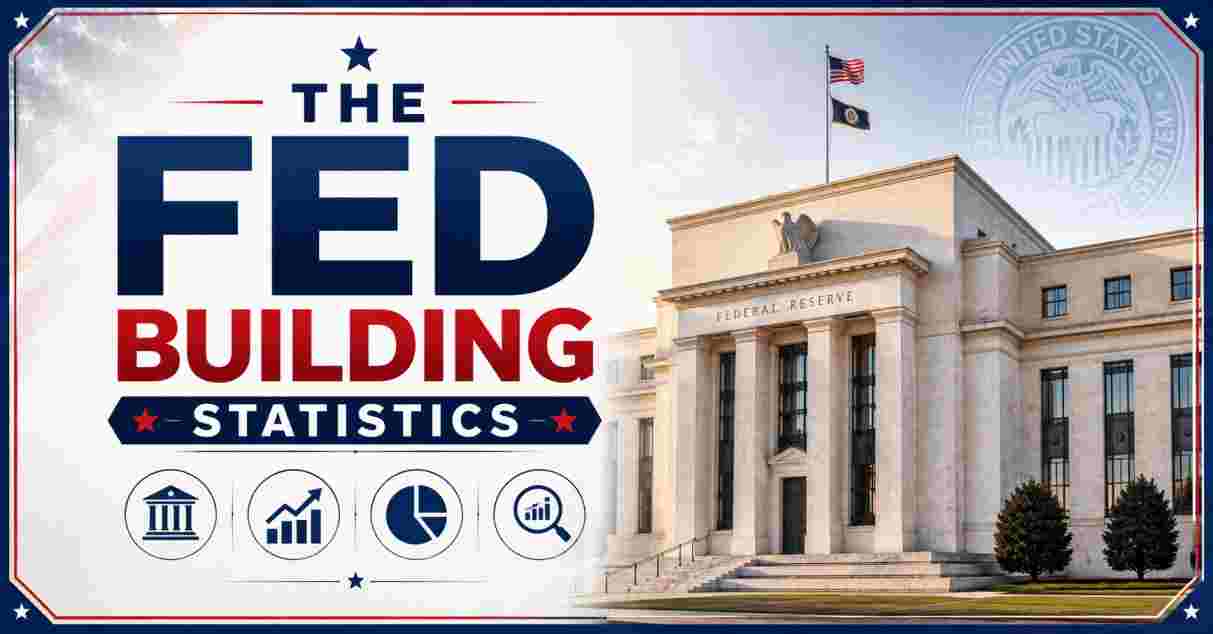
What is The Fed Building?
The Fed Building refers to the headquarters complex of the Federal Reserve Board in Washington, D.C., made up of two connected historic structures: the Marriner S. Eccles Building, completed in 1937 as the Fed’s original headquarters, and the neighboring 1951 Constitution Avenue Building, completed in 1932 and formally transferred to the central bank in 2018. The Eccles Building sits at 20th Street and Constitution Avenue N.W., overlooking the National Mall just three blocks from the White House, and both structures are listed in the D.C. Inventory of Historic Sites, with the Constitution Avenue building also appearing on the National Register of Historic Places. Together, these buildings house the offices of the Fed’s Board of Governors, the body that sets national monetary policy and oversees the broader Federal Reserve System.
Since 2022, both buildings have been undergoing a sweeping, multi-year modernization project — the first comprehensive renovation either structure has seen since they were originally built nearly a century ago. The scope covers everything from removing hazardous asbestos and lead paint to replacing decades-old electrical, plumbing, and HVAC systems, while preserving the buildings’ historic architecture and bringing them into compliance with modern safety, accessibility, and security codes. What began as a routine infrastructure upgrade has since become one of the most politically scrutinized construction projects in the country, drawing sustained criticism from the Trump administration over its ballooning cost and even triggering a Department of Justice criminal investigation into Fed Chair Jerome Powell’s congressional testimony about the project.
The Fed Building Facts in 2026
| Fact | Figure |
|---|---|
| Original renovation cost estimate (2021) | $1.9 billion |
| Current total renovation cost (2025-2026) | $2.5 billion |
| Cost increase from original estimate | About $600 million, over 30% |
| Construction start date | Mid-2022 |
| Expected completion date | 2027 |
| Buildings included in the project | 2 — the Eccles Building and 1951 Constitution Avenue Building |
| Age of the Eccles Building at renovation start | 93 years old (built 1937) |
| Age of the 1951 Constitution Avenue Building | 88 years old (built 1932) |
| Funding source | Federal Reserve’s own operating income, not taxpayer dollars |
Source: Federal Reserve renovation project documents; Wall Street Journal and CRE Daily reporting; Fortune, NBC News, and Fox Business 2025-2026 coverage.
Taken together, these figures show a project that has grown substantially from its original scope without ever drawing on general taxpayer funds. The jump from $1.9 billion to $2.5 billion represents more than 30% cost growth, a figure that has become the central flashpoint in an otherwise routine infrastructure story, largely because of who is paying attention to it rather than how the renovation itself has been financed. Because the Fed funds its own operations through interest income on government securities and fees charged to banks, with any surplus returned to the U.S. Treasury, the renovation’s cost overruns have had no direct impact on the federal budget or individual taxpayers, even though political rhetoric around the project has often implied otherwise.
What stands out most is the sheer scale of deferred maintenance both buildings carried into this project. Neither structure had undergone a comprehensive modernization since the 1930s, meaning workers were essentially opening up systems that had been running, patched, and re-patched for close to a century. That level of neglect helps explain why a project initially projected to run $1.9 billion has climbed as high as $2.5 billion, since the deeper contractors dug into century-old infrastructure, the more unplanned problems they inevitably uncovered.
Fed Building Renovation Cost Breakdown Statistics
| Cost Metric | Figure |
|---|---|
| 2021 original budget estimate | $1.9 billion |
| 2025-2026 revised total cost | $2.5 billion |
| Net cost increase | ~$600 million |
| Percentage cost increase | 30%+ |
| Buildings’ combined pre-renovation footprint | Includes a 126,388-sq-ft building purchased in 2018 |
| Project planning start | 2017 |
| Formal Fed Board approval | 2017, while Powell served as a board member |
| Site history | Built on land once part of the Potomac River |
Source: Engineering News-Record; CRE Daily; Fortune reporting on Fed renovation budget growth.
Fed Building Renovation Cost Growth (2021 vs 2025-2026)
2021 Original Estimate    █████████████████████████ $1.9B
2025-2026 Revised Cost    ███████████████████████████████████ $2.5B
The renovation budget’s growth traces back to a combination of site complications, mandated design changes, and simple inflation in materials and labor costs since the project was first approved in 2017. Because both buildings sit on land that was once part of the Potomac River, construction crews encountered unusually high groundwater levels that required deep wells to drain the site before foundational work could even begin — a complication no amount of pre-construction planning could have fully anticipated for buildings this old.
The 2018 purchase of the 126,388-square-foot Constitution Avenue building added further scope to what had originally been conceived as a single-building renovation, with the Fed later folding both properties into one combined procurement process specifically “to optimize coordination and gain efficiency benefits,” according to a 2021 audit report. While that consolidation made logistical sense on paper, it also meant the project’s overall price tag grew in step with the added square footage and complexity of coordinating two separate historic renovations simultaneously rather than sequentially.
Fed Building Hazardous Material and Site Discovery Statistics
| Discovery/Site Metric | Figure |
|---|---|
| Hazardous materials discovered during construction | Lead paint and asbestos |
| Impact of hazardous material discovery on cost | Contributed directly to the jump from $1.9B to $2.5B |
| Groundwater complication | Site sits on former Potomac River land |
| Mitigation required for groundwater | Deep wells installed to drain the site |
| Roof condition (documented 2018 photo) | Damaged roof coating, pooling water, surface cracks |
| Years since last comprehensive renovation (Eccles Bldg.) | ~85 years (1937 to 2022 groundbreaking) |
| Years since last comprehensive renovation (Constitution Ave. Bldg.) | ~90 years (1932 to 2022 groundbreaking) |
| Historic preservation status | Listed on D.C. Inventory of Historic Sites; one building also on National Register of Historic Places |
Source: Fox Business reporting on Fed-released renovation photos and video tour; Yahoo Finance renovation coverage; Federal Reserve public disclosures.
Deferred Maintenance Timeline Before 2022 Renovation
Eccles Building (built 1937)              █████████████████████████████████ 85 years without major renovation
Constitution Ave. Building (built 1932)   ███████████████████████████████████ 90 years without major renovation
The discovery of lead paint and asbestos once demolition crews began gutting the interior of both structures ranks among the most cited technical explanations for the project’s cost growth, and it’s a common story in renovations of buildings this age — hazardous materials that were standard construction practice decades ago now require specialized, costly remediation before any other work can proceed safely. Combined with photographic evidence the Fed itself released showing damaged roof coating, pooling water, and surface cracks dating back to at least 2018, the buildings’ physical condition heading into the project appears to have been considerably worse than routine external inspections alone might have suggested.
The requirement to preserve historic architectural elements while simultaneously modernizing electrical, plumbing, and HVAC systems throughout adds another layer of cost and complexity rarely present in ordinary commercial renovations. Because both buildings carry historic preservation designations, contractors couldn’t simply gut and rebuild interiors using the fastest or cheapest available methods; every structural and cosmetic change had to be balanced against preservation requirements, a constraint that consistently extends timelines and drives up costs on historic government renovation projects nationwide, not just at the Fed specifically.
Fed Building Political Controversy and Investigation Statistics
| Controversy Metric | Figure |
|---|---|
| Date of Trump’s site visit | July 24, 2025 |
| Key Trump administration critic | Russell Vought, OMB Director |
| Term used by Vought to describe the project | “Ostentatious” |
| DOJ subpoenas issued | Grand jury subpoenas, disclosed by Powell in January 2026 |
| Focus of DOJ criminal investigation | Powell’s June 2025 Senate Banking Committee testimony |
| Powell’s characterization of the probe | “Unprecedented” |
| Senate testimony date under scrutiny | June 25, 2025 |
| Reported political reaction on Capitol Hill | Described as a “rare GOP revolt” by some outlets |
Source: NBC News DOJ investigation coverage; CBS News and Yahoo News reporting on Powell’s video statement; Fox News Capitol Hill reaction coverage.
Fed Building Controversy Timeline
Jun 2025  ● Powell testifies before Senate Banking Committee
Jul 2025  ● Trump tours renovation site; Vought calls project "ostentatious"
Jan 2026  ● DOJ serves grand jury subpoenas over Powell's testimony
The renovation’s transformation from a technical infrastructure story into a genuine political controversy accelerated sharply once President Trump personally toured the construction site in July 2025, publicly sparring with Powell over the project’s cost during the visit. OMB Director Russell Vought’s characterization of the renovation as “ostentatious” and potentially “violating the law” escalated the dispute well beyond typical budget-oversight criticism, framing what had previously been treated as a routine capital project as a symbol of institutional overspending.
The situation intensified considerably when Powell disclosed in January 2026 that the Justice Department had served the Fed with grand jury subpoenas, opening a criminal investigation centered specifically on his June 2025 Senate testimony about the renovation’s scope and cost. Powell responded with a video statement calling the probe “unprecedented” for a sitting Fed chair and framing it as part of a broader pressure campaign tied to the administration’s frustration over the central bank’s interest rate policy — a claim that reportedly triggered pushback even from some Republican lawmakers wary of the precedent an unprecedented criminal probe into a Fed chair’s testimony could set for central bank independence going forward.
Fed Building Renovation Timeline and Completion Statistics
| Timeline Metric | Figure |
|---|---|
| Project planning began | 2017 |
| Public plans released | 2021 (87-page document) |
| National Capital Planning Commission review | 2021 |
| Construction groundbreaking | Mid-2022 |
| Original planned completion | Not publicly finalized in initial estimates |
| Currently projected completion year | 2027 |
| Total project duration (2017 planning to 2027 completion) | ~10 years |
| Total construction duration (2022 groundbreaking to 2027 completion) | ~5 years |
Source: NBC News and National Capital Planning Commission project records; Yahoo Finance renovation timeline coverage.
Fed Building Renovation: 10-Year Project Arc
2017        ● Planning begins, Fed Board approval
2021        ● 87-page public plan released; NCPC review
2022        ● Construction groundbreaking
2027        ● Projected completion
Viewed across its full arc, the renovation represents nearly a decade-long undertaking, starting with planning work in 2017 — back when Powell was still a board member rather than chair — through an anticipated 2027 completion date. The five-year construction phase alone, running from the 2022 groundbreaking to the 2027 target, is fairly typical for a project of this scale and historical complexity, even though the surrounding political controversy has made the timeline feel far more contentious than a standard multi-year federal construction schedule.
The 87-page planning document the Fed released publicly in 2021, followed by formal review from the National Capital Planning Commission that same year, demonstrates that the project followed established federal review processes well before it became a subject of political dispute in mid-2025. That four-year gap between public plan release and the point the renovation became a national political story is worth noting: the scope, budget structure, and general justification for the project were publicly documented years before cost growth turned it into a flashpoint, suggesting the controversy centers less on the renovation’s existence and more on how its costs escalated over time and who ultimately gets to scrutinize a constitutionally independent central bank’s internal spending decisions.
Fed Building Renovation Scope and Justification Statistics
| Scope Metric | Figure |
|---|---|
| Core justification categories cited by the Fed | Safety, accessibility, IT, security, sustainability, energy efficiency |
| Systems being replaced | Electrical, plumbing, heating, ventilation, air conditioning |
| Regulatory driver | Compliance with modern building codes |
| Additional stated goal | Adding office space while preserving historic architecture |
| Powell’s own description of undertaking such a project | “No one in office wants to do” a major historic renovation during their term |
| Prior renovation precedent (Fed’s own admission) | Neither building has had a comprehensive renovation in decades |
| External cost pressures cited by Fed officials | COVID-19 supply chain shocks, tariff-driven material costs |
Source: Federal Reserve modernization plan documents (2021); Fortune interview coverage of Jerome Powell; NBC News reporting on Fed officials’ cost explanations.
Fed's Stated Renovation Justifications (Category Breakdown)
Safety & Accessibility Compliance  ████████████████████ Core driver
IT, Security & Energy Efficiency   ████████████████ Core driver
Preserving Historic Architecture   ████████████ Constraint, not driver
The Fed’s own justification for the project centers on bringing two nearly century-old buildings into compliance with modern safety, accessibility, and building code requirements — categories that, taken individually, are difficult to dispute given how significantly construction and safety standards have evolved since the 1930s. Powell himself has acknowledged the political awkwardness of the timing, noting that “no one in office wants to do a major renovation of a historic building during their term,” a comment that reads today as almost prophetic given how the project has since unfolded politically.
Fed officials have also pointed to external, largely uncontrollable cost pressures as contributing factors beyond the buildings’ own hazardous material and structural issues, specifically citing COVID-19-era supply chain disruptions and tariff-driven increases in material costs that hit the construction industry broadly during the project’s active years. These explanations, while consistent with cost patterns seen across the broader U.S. construction sector during the same period, have done little to defuse the political dimension of the dispute, since critics have generally focused on the renovation’s absolute dollar growth rather than engaging with the sector-wide inflationary pressures the Fed cites as partial explanation. The broader dynamic of rising material and financing costs squeezing large capital projects mirrors patterns tracked elsewhere in the economy; our coverage of business bankruptcy statistics in the US documents a similar cost-pressure story playing out across the private sector during the same stretch of high rates and elevated construction costs.
Fed Building Institutional and Independence Context Statistics
| Institutional Metric | Figure |
|---|---|
| Fed funding structure | Self-funded via interest income and bank fees |
| Treatment of Fed’s excess profits | Returned to the U.S. Treasury |
| Fed chair’s term length | 4-year renewable term (Powell first appointed 2018) |
| Historical norm for Fed independence disputes | Rare prior to 2025-2026 renovation dispute |
| Number of Fed buildings previously subject to comparable public scrutiny | Essentially none, on this scale, in modern Fed history |
| Related interest rate policy context | Renovation dispute overlapped with ongoing rate-cut pressure from the administration |
| Broader economic backdrop | Elevated borrowing costs across consumer and corporate credit markets during the dispute |
Source: Federal Reserve institutional structure disclosures; NBC News analysis of Fed independence dynamics; general Federal Reserve System public documentation.
Federal Reserve Funding Flow (Self-Funded Model)
Interest income + bank fees   █████████████████████████ Fed operating budget (incl. renovation)
Excess profits                ███████████ Returned to U.S. Treasury
Because the Federal Reserve operates under a self-funding model, generating its own income through interest on government securities and fees charged to member banks, the renovation dispute has unfolded somewhat differently than a typical federal agency budget controversy. Excess profits beyond the Fed’s operating needs are routinely returned to the U.S. Treasury, meaning the renovation’s cost growth technically reduced the size of the Fed’s annual remittance to Treasury rather than requiring any direct congressional appropriation or taxpayer-funded budget increase — a structural nuance that has often gotten lost in the political framing of the dispute.
The controversy has also unfolded against a backdrop of broader tension between the White House and the central bank over interest rate policy, with the renovation dispute emerging as one visible front in a wider disagreement about the pace of rate cuts. That overlap has made it difficult to fully separate genuine fiscal oversight concerns about the renovation’s cost growth from the administration’s separate, longer-running frustration with Fed monetary policy decisions — a dynamic that has played out during a period when elevated borrowing costs have also weighed on consumer credit markets broadly, a trend explored further in our credit default swap statistics for the US report, which tracks how sustained higher rates have shaped credit risk pricing across the economy during the same period.
Readers following how elevated rates have filtered down to everyday household finances may also find our US credit card delinquency statistics report useful context, since consumer credit stress and the Fed’s rate-setting decisions sit at the center of much of the same political debate surrounding this renovation. The renovation dispute, in that sense, functions as a highly visible proxy for a much larger and more consequential argument about who ultimately controls the pace of borrowing costs across the entire US economy.
Disclaimer: The data research report we present here is based on information found from various sources. We are not liable for any financial loss, errors, or damages of any kind that may result from the use of the information herein. We acknowledge that though we try to report accurately, we cannot verify the absolute facts of everything that has been represented.