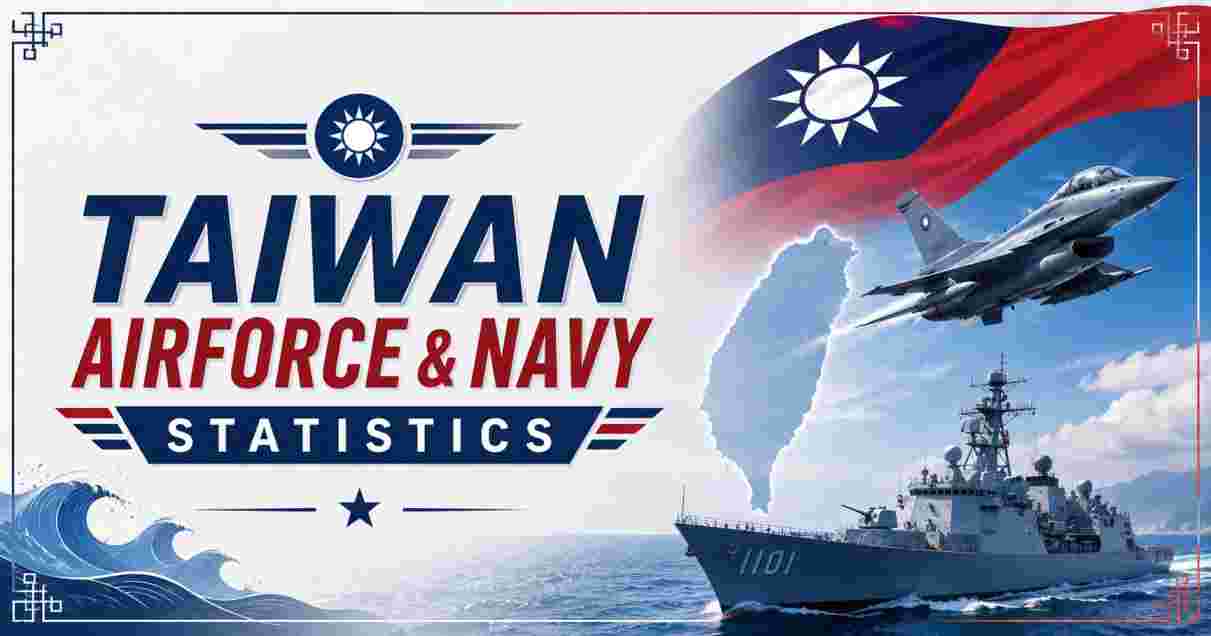
Taiwan Airforce & Navy in 2026
The Republic of China (ROC) Air Force and Navy stand as two of Asia’s most closely watched military branches — not because of their size, but because of the enormous strategic weight they carry. Sandwiched between the world’s second-largest economy and an increasingly assertive regional power, Taiwan’s 685-aircraft air force and 102-ship navy in 2026 are doing something that few militaries on Earth are asked to do: deter a superpower across just 180 kilometres of open water. The Republic of China Air Force (ROCAF), currently ranked #17 globally out of 162 air forces, operates six tactical combat wings backed by one of the most ambitious modernisation programs in Asia — the $8 billion procurement of 66 new-build F-16 Block 70 fighters on top of 139 already upgraded F-16V jets. Meanwhile the Republic of China Navy (ROCN) is quietly reshaping itself from a legacy surface fleet into a leaner, more survivable force built around stealth corvettes, fast missile craft, and — most significantly — its first-ever indigenous submarine.
What makes Taiwan’s 2026 defence posture genuinely fascinating is not just the hardware; it is the strategic calculus behind every procurement decision. Taiwan’s defence budget has climbed to NT$949.5 billion (approximately US$30.25 billion) in 2026, representing 3.32% of GDP — the first time the island has crossed the 3% threshold since 2009. President Lai Ching-te has publicly stated a target of 5% of GDP by 2030, a figure that would rival front-line NATO states. Beyond the raw numbers, Taiwan is pivoting from conventional platform-heavy spending toward asymmetric capabilities: precision missile batteries, drone swarms, underwater mines, and fast-attack craft designed not to match China ship-for-ship, but to make any invasion attempt prohibitively costly. The following facts, tables, and analysis pull together the most current, verified 2026 data on Taiwan’s Air Force and Navy statistics — drawn from GlobalMilitary.net, GlobalFirepower.com, WarpowerTaiwan.com, FlightGlobal, Naval News, Focus Taiwan (CNA), and Congressional Research Service briefings.
Interesting Facts: Taiwan Airforce & Navy 2026
TAIWAN AIRFORCE & NAVY — TOP FACTS AT A GLANCE (2026)
══════════════════════════════════════════════════════
  Air Force Global Rank      ██████████████░░░░░░  #17 / 162
  Total Aircraft (ROCAF)     ████████████████████  685 airframes
  Combat Aircraft            ████████████░░░░░░░░  319 jets
  F-16 Fleet (upgraded)      ██████████░░░░░░░░░░  139 F-16V jets
  New F-16 Block 70 on order █████░░░░░░░░░░░░░░░  66 jets
  Navy Total Ships           ████████████░░░░░░░░  102 hulls
  Active Submarines          ██░░░░░░░░░░░░░░░░░░  4 (+ 1 IDS trial)
  Frigates                   ██████░░░░░░░░░░░░░░  22 hulls
  Defense Budget 2026        ████████████████████  US$30.25B (3.32% GDP)
══════════════════════════════════════════════════════
| Fact | Data |
|---|---|
| ROCAF Global Rank (2026) | #17 out of 162 air forces worldwide |
| Total Active Aircraft (all branches) | 685 airframes (fixed-wing + rotary-wing) |
| Combat Aircraft | 319 fighters, multirole jets, attack aircraft |
| Attack Helicopters | 239 helicopters across all service branches |
| F-16V jets already in service (upgraded) | 139 jets under Peace Phoenix Rising programme |
| New F-16 Block 70 on order | 66 new-build jets (US$8 billion contract) |
| F-16 Block 70 — first delivery | 29 March 2025 (Greenville, South Carolina) |
| First 10 Block 70s to arrive in Taiwan | Scheduled 2026, routed via Hawaii & Guam |
| Full 66-jet delivery completion | Extended beyond 2026 into 2027 (confirmed delays) |
| ROCAF active personnel | Approximately 70,000 |
| ROCAF training aircraft fleet | Includes T-5 Brave Eagle advanced trainers replacing F-5 |
| F-5 Tiger II retirement | Completed 2025 — the type had served since 1965 |
| Mirage 2000-5 status | Still in service; slated to be replaced by incoming Block 70s |
| Underground hardened hangars | Active investment programme to protect aircraft from missile strikes |
| Annual ADIZ scrambles | Hundreds per year; China routinely sends PLAAF aircraft into Taiwan’s ADIZ |
Source: GlobalMilitary.net Taiwan Air Force 2026; WarpowerTaiwan.com (May 2026); Republic of China Air Force — Wikipedia (updated April 2026); The Aviationist (April 2025); FlightGlobal (November 2025)
Taiwan’s air arm is one of the most operationally stressed in Asia. The ROCAF’s 319 combat aircraft are not sitting on static alert — they are regularly scrambling to intercept People’s Liberation Army Air Force (PLAAF) incursions into Taiwan’s Air Defense Identification Zone (ADIZ). The retirement of the last F-5 Tiger II in 2025 closed a chapter that stretched back sixty years, and the rollout of the first F-16 Block 70 on 29 March 2025 opened a new one. What is less well appreciated is the survivability investment: Taiwan has been building hardened underground hangars at its main air bases, knowing that its airfields would be among the first targets in any conflict. The AN/APG-83 AESA radar fitted to the upgraded fleet gives Taiwanese pilots a genuine beyond-visual-range edge, and compatibility with AIM-120D missiles and AGM-88F HARM anti-radiation weapons adds suppression-of-enemy-air-defences capability that Taiwan’s older fleet simply did not have.
The Navy facts are equally striking. Taiwan operates 102 ships total as of 2026, but four of its submarines are decades old — two are World War II-era Tench-class vessels that have been kept operational well beyond any rational service life. The Hai Kun (SS-711), Taiwan’s first indigenous submarine, completed its first submerged sea trial in January 2026, but was still undergoing testing as of early 2026, with builder CSBC Corporation being fined for missing the November 2025 delivery deadline. Taiwan has signed contracts for two follow-on IDS small-variant submarines, and a “2+3+2” phased construction plan for a total of eight submarines is the ambition — but budget freezes by opposition lawmakers have complicated the timeline.
Taiwan Air Force Aircraft Fleet Strength 2026
TAIWAN AIR FORCE — AIRCRAFT FLEET COMPOSITION (2026)
═════════════════════════════════════════════════════
  Combat Aircraft (319)
  ████████████████████████████████████░░ 319

  Helicopters (239)
  ███████████████████████████░░░░░░░░░░░ 239

  Trainers (approx. 90+)
  ██████████░░░░░░░░░░░░░░░░░░░░░░░░░░░░ ~90

  Transport / Special Mission (~37)
  ████░░░░░░░░░░░░░░░░░░░░░░░░░░░░░░░░░░ ~37

  ─────────────────────────────────────
  TOTAL ACTIVE INVENTORY:  685 airframes
═════════════════════════════════════════════════════
| Aircraft Category | Type / Variant | Quantity (2026) | Role |
|---|---|---|---|
| Multirole Fighter | F-16V (Block 70, upgraded) | ~139 | Air superiority / Strike |
| New-Build Fighter (on order / arriving) | F-16C/D Block 70 | 66 ordered (deliveries ongoing) | Multirole / Air defence |
| Indigenous Fighter | F-CK-1 Ching-kuo (IDF, C/D model) | ~128 | Lightweight multirole |
| Air Defence Interceptor | Dassault Mirage 2000-5EI/DI | ~55 | High-altitude interception |
| Total Combat Aircraft | All fighter/multirole types | ~319 | Offensive & defensive |
| Advanced Jet Trainer | T-5 Brave Eagle | Active induction | Pilot pipeline |
| Combat Trainer | F-16B / F-CK-1D | ~61 combined | Conversion training |
| Patrol / ASW | P-3C Orion | 12 | Maritime patrol |
| Attack Helicopter | AH-64E Apache Guardian | 30 | Close air support |
| Utility Helicopter | UH-60 Black Hawk / CH-47 Chinook | Multiple variants | Logistics / SAR |
| Total Active Fleet (all branches) | All types combined | 685 | All missions |
| Aircraft on Order | Primarily F-16 Block 70 | 93 | Future delivery |
| ROCAF Global Rank | — | #17 / 162 | Air Force Index |
Source: GlobalMilitary.net Taiwan Air Force 2026 (updated January 2026); WarpowerTaiwan.com (May 2026); WDMMA.org Republic of China Air Force 2026; Republic of China Air Force — Wikipedia
The 685-airframe total includes every fixed-wing and rotary-wing platform across all service branches — Air Force, Army Aviation, and Naval Aviation combined. The headline figure that defence planners focus on is the 319 combat aircraft, which form the fighting core of Taiwan’s deterrent posture. The F-16V fleet of approximately 139 jets, all upgraded under the $4.5 billion Peace Phoenix Rising programme completed in December 2023, represents the most capable aircraft in current service. Each jet now carries the AN/APG-83 Scalable Agile Beam Radar (SABR), an AESA system that delivers substantially better detection range, jam resistance, and multi-target tracking than the previous mechanically scanned radar. Adding 66 new Block 70 jets to this base would push the total F-16 fleet to 205 aircraft, making it one of the largest single-type air-defence forces in Asia outside major powers. The Mirage 2000-5, while still effective at high altitude, is ageing and its replacement by incoming Block 70 jets is a stated ROCAF priority.
The T-5 Brave Eagle trainer programme addresses a long-standing gap in the pilot pipeline. With the F-5 retired in 2025, Taiwan needed a modern lead-in fighter trainer, and the domestically built T-5 fills that role while also supporting the indigenous defence industrial base. The P-3C Orion fleet of 12 aircraft provides critical maritime patrol coverage over the Taiwan Strait and surrounding waters — a mission that grows more important as PLAN submarine activity near Taiwan intensifies. The AH-64E Apache Guardians represent the most advanced attack helicopter in the ROCAF inventory, capable of anti-armour and precision strike missions that would be critical in any amphibious landing scenario.
Taiwan Air Force Key Fighter Aircraft Specifications 2026
FIGHTER AIRCRAFT PERFORMANCE COMPARISON (ROCAF 2026)
═════════════════════════════════════════════════════
  Max Speed (Mach)
  F-16V Block 70    ████████████████████  Mach 2.0
  F-CK-1C IDF       ███████████████░░░░░  Mach 1.8
  Mirage 2000-5     ████████████████████  Mach 2.2
  ─────────────────────────────────────
  Combat Radius (km)
  F-16V Block 70    ████████████████░░░░  ~550 km
  F-CK-1C IDF       ██████████░░░░░░░░░░  ~370 km
  Mirage 2000-5     ████████████░░░░░░░░  ~740 km
═════════════════════════════════════════════════════
| Aircraft | Radar | Max Speed | Combat Radius | Key Missiles | Service Entry (ROCAF) |
|---|---|---|---|---|---|
| F-16V Block 70 (upgraded) | AN/APG-83 AESA | Mach 2.0 | ~550 km | AIM-120D, AIM-9X, AGM-88F HARM, AGM-154C JSOW | 2018 (upgrade start); FOC 2021 |
| F-16C/D Block 70 (new-build) | AN/APG-83 AESA | Mach 2.0 | ~550 km+ | AIM-120D, AIM-9X, AGM-158C LRASM (planned) | First rollout March 2025 |
| F-CK-1C/D Ching-kuo (IDF) | Golden Dragon 53 (mechanically scanned) | Mach 1.8 | ~370 km | Tien Chien-II BVR AAM, Tien Chien-I IR AAM | 1994 |
| Mirage 2000-5EI | RDY-2 pulse-Doppler | Mach 2.2 | ~740 km | MICA active radar AAM, Magic II IR AAM | 1997 |
| Engine (F-16V) | GE F110-GE-129 / PW F100-PW-229 | — | — | 13,154 kg thrust (new Block 70) | — |
Source: Republic of China Air Force — Wikipedia; The Aviationist (April 2025); Asia Times (April 2025); Air & Space Forces Magazine
The gap in combat radius between the F-CK-1 IDF’s ~370 km and the Mirage 2000-5’s ~740 km tells you a great deal about how Taiwan’s fighter fleet was structured: the IDF was always a short-legged, point-defence aircraft designed for low-altitude interception close to the island, while the Mirage handled high-altitude offshore work. The F-16V bridges both roles more effectively with its ~550 km combat radius, sophisticated AESA radar, and its compatibility with AGM-88F HARM missiles — a critical asset for destroying enemy radar systems in the opening hours of a conflict. The new Block 70 jets will carry the General Electric F110 engine delivering 13,154 kg of thrust, a step up from the older F100 engines in the legacy fleet, giving greater fuel efficiency and increased weapons payload capacity. The integration of the AGM-158C Long Range Anti-Ship Missile (LRASM) onto Block 70 fighters, reported in early 2025, marks a significant escalation in Taiwan’s ability to threaten PLAN surface combatants at standoff distances exceeding 900 km.
The Mirage 2000-5, despite its age, remains Taiwan’s fastest frontline jet at Mach 2.2 and its four MICA active-radar missiles give it a credible beyond-visual-range engagement capability. The aircraft’s retirement — expected as incoming Block 70 jets arrive — will mark the end of France’s only enduring role in Taiwan’s air defence. Meanwhile, the F-CK-1’s limitations, particularly its short combat radius and older radar, have long been a concern for ROCAF planners; proposals to develop a longer-range indigenous fighter have reportedly been blocked by US political pressure to avoid provoking Beijing.
Taiwan Air Force Defence Systems & Modernisation 2026
TAIWAN AIR DEFENCE LAYERED COVERAGE (2026)
═══════════════════════════════════════════════
  Very Short Range  MANPADS / Phalanx CIWS
                    ██░░░░░░░░░░░░░░░░░░░░  ~5 km

  Short/Med Range   Sky Bow I / Tien Kung I
                    █████░░░░░░░░░░░░░░░░░  ~100 km

  Medium Range      Patriot PAC-3
                    ████████░░░░░░░░░░░░░░  ~160 km

  Long Range        Sky Bow III / Tien Kung III
                    ████████████░░░░░░░░░░  ~200+ km

  Airborne Defence  F-16V AESA / Mirage 2000
                    ████████████████████░░  Entire ADIZ
═══════════════════════════════════════════════
| System | Type | Status (2026) | Coverage / Capability |
|---|---|---|---|
| Tien Kung III (Sky Bow III) | Long-range SAM | Operational | 200+ km range, indigenously developed |
| Patriot PAC-3 | Medium-range SAM | Operational (multiple batteries) | ~160 km range, ballistic missile intercept |
| Tien Kung I / II (Sky Bow I/II) | Medium SAM | Operational | ~100 km range, area air defence |
| AN/APG-83 AESA Radar (on F-16V) | Airborne fire control | Operational across 139 jets | Enhanced BVR detection & jamming resistance |
| Link-16 Data Link | Tactical data network | Integrated into F-16V fleet | Real-time air picture sharing |
| AGM-88F HCSM (HARM) | Anti-radiation missile | Procured | Suppression of enemy air defences (SEAD) |
| AIM-120D AMRAAM | BVR air-to-air missile | Ordered for F-16V fleet | Active radar guided, ~180 km range |
| AGM-154C Block III JSOW | Glide weapon | Integrated on F-16V | Standoff precision strike |
| T-5 Brave Eagle trainer | Advanced jet trainer | Entering service | Replacing AT-3 / F-5 in training pipeline |
| Underground hardened hangars | Base hardening | Active construction | Survivability against PLA missile salvos |
Source: GlobalMilitary.net Taiwan Air Force 2026; Air & Space Forces Magazine (February 2024); Asia Times (April 2025)
Taiwan’s layered air-defence architecture in 2026 is arguably the most important strategic asset the island possesses, because it forces any potential attacker to defeat not just fighters but an integrated web of surface-to-air missiles, data links, early-warning radars, and hardened facilities. The Tien Kung III (Sky Bow III) system, with a range exceeding 200 km, gives Taiwan the ability to engage Chinese aircraft and cruise missiles well before they reach the island’s coastline. Stacked beneath it, the Patriot PAC-3 batteries handle ballistic missile threats, while Tien Kung I/II handles medium-altitude area defence. What ties these layers together in 2026 is the Link-16 data link now integrated across the F-16V fleet, giving pilots a fused air picture and allowing ground controllers to vector fighters precisely even in an electronic warfare environment.
The procurement of AGM-88F HARM missiles is particularly significant. These high-speed anti-radiation missiles home in on enemy radar emissions and are specifically designed to destroy the surface-to-air missile batteries and air defence radars that China would use to clear the skies over the Taiwan Strait. Combined with the APG-83 AESA radar’s superior jam resistance, Taiwanese F-16Vs are now configured not just for air-to-air combat but for the kind of suppression of enemy air defences (SEAD) mission that would be critical in any high-intensity conflict.
Republic of China Navy (ROCN) Fleet Strength 2026
TAIWAN NAVY — FLEET COMPOSITION BY CATEGORY (2026)
═══════════════════════════════════════════════════
  Frigates (22)
  ████████████████████████░░░░░░░░░░░░░░ 22 hulls

  Corvettes / FAC (30+)
  ████████████████████████████████░░░░░░ 30+ hulls

  Patrol Vessels (~25)
  ██████████████████████████░░░░░░░░░░░░ ~25 hulls

  Amphibious (~8)
  ████████░░░░░░░░░░░░░░░░░░░░░░░░░░░░░░  8 hulls

  Destroyers (4)
  ████░░░░░░░░░░░░░░░░░░░░░░░░░░░░░░░░░░  4 hulls

  Submarines (4 active + 1 IDS trials)
  █████░░░░░░░░░░░░░░░░░░░░░░░░░░░░░░░░░  4+1

  ─────────────────────────────────────
  TOTAL FLEET:  102 hulls
═══════════════════════════════════════════════════
| Vessel Category | Class / Type | Quantity (2026) | Notes |
|---|---|---|---|
| Aircraft Carrier | — | 0 | None in service or planned |
| Destroyers | Kee Lung-class (ex-USN Kidd-class) | 4 | Multi-mission; ex-USN ships |
| Frigates (multirole) | Cheng Kung-class (Perry-type) | 10 | Ex-USN Oliver Hazard Perry-class |
| Frigates (air defence) | Kang Ding-class (Lafayette-type) | 6 | French La Fayette origin |
| Frigates (ASW) | Chi Yang-class (Knox-class) | 6 | Ex-USN Knox-class; ASW focus |
| Corvettes (stealth) | Tuo Chiang-class | Multiple, expanding | Indigenous stealth catamaran; deliveries 2025–2026 |
| Fast Attack Craft | Kuang Hua VI-class | ~30 | Missile-armed; coastal defence |
| Submarines (active) | Hai Lung-class (Dutch Zwaardvis) | 2 | SS-793, SS-794; most capable |
| Submarines (legacy) | Hai Shih-class (WWII Tench/Balao) | 2 | SS-791, SS-792; limited combat value |
| IDS Submarine (trials) | Hai Kun-class (SS-711) | 1 | First submerged trial January 2026; not yet commissioned |
| Amphibious ships | Yushan LPD + Hsu Hai LSD | ~8 | Landing platform dock + dock landing ships |
| Mine warfare | Various | Active inventory | Defensive mining capability |
| Total Active Fleet | All hull types | ~102 | GlobalMilitary.net, May 2026 |
| Navy Index Score | — | 35.1 / 100 | Composite capability score |
Source: GlobalMilitary.net Taiwan Navy 2026 (102 ships); WarpowerTaiwan.com Navy (May 2026); WDMMW.org Republic of China Navy (2026); Republic of China Navy — Wikipedia
The Republic of China Navy’s 102-hull fleet is best understood not as a blue-water offensive force but as a layered coastal and near-sea defence network. At the top of the order of battle sit the four Kee Lung-class destroyers — former US Navy Kidd-class ships that remain the largest surface combatants in the fleet, equipped with RGM-84L Harpoon anti-ship missiles and SM-1MR Standard missiles for area air defence. The 22 frigates represent the numerical backbone of the surface fleet, but the type mix tells an interesting story: the Cheng Kung-class (Perry-type), Kang Ding-class (Lafayette-type), and Chi Yang-class (Knox-class) are all foreign-origin hulls, most of them acquired second-hand from the United States or sourced from France in the 1990s, and they are steadily ageing out.
The Tuo Chiang-class stealth corvettes are where Taiwan’s naval thinking is heading in 2026. These small, fast, indigenous catamarans are designed to be hard to detect, difficult to target, and lethal against larger surface ships with their HF-3 supersonic anti-ship missiles. Combined with the Kuang Hua VI fast-attack craft, these smaller, cheaper platforms reflect a deliberate asymmetric shift — building a fleet that survives by being elusive rather than by matching China tonne-for-tonne.
Taiwan Navy Submarine Force 2026
TAIWAN SUBMARINE FLEET — STATUS OVERVIEW (2026)
══════════════════════════════════════════════
  Hai Shih-class (WWII-era)    ██░░░░░░░░  2 boats | Limited value
  Hai Lung-class (Dutch 1980s) ████░░░░░░  2 boats | Main force
  Hai Kun (SS-711) IDS         █░░░░░░░░░  1 boat  | Under trials
  Planned IDS follow-ons       ░░░░░░░░░░  2 contracted (frozen budget)
  Full IDS programme target    ░░░░░░░░░░  8 total (long-term)
══════════════════════════════════════════════
| Submarine | Class | Origin | Status (2026) | Key Armament |
|---|---|---|---|---|
| ROCS Hai Shih (SS-791) | Hai Shih-class (Tench/GUPPY) | USA (WWII vintage) | Active — limited combat value | 533mm torpedo tubes |
| ROCS Hai Pao (SS-792) | Hai Shih-class (Balao/GUPPY) | USA (WWII vintage) | Active — limited combat value | 533mm torpedo tubes |
| ROCS Hai Lung (SS-793) | Chien Lung-class (Zwaardvis) | Netherlands (1980s) | Active — primary force | AEG SUT-264 torpedoes, Harpoon II anti-ship missiles, Mk-48 torpedoes |
| ROCS Hai Hu (SS-794) | Chien Lung-class (Zwaardvis) | Netherlands (1980s) | Active — primary force | AEG SUT-264 torpedoes, Harpoon II, Mk-48 torpedoes |
| ROCS Hai Kun (SS-711) | Hai Kun-class (IDS) | Taiwan (indigenous) | Sea trials ongoing — first submerged trial January 2026; delivery delayed | Digital sonar, integrated combat system, Mk-48 torpedoes |
| IDS Small Variant x2 | Hai Kun-class follow-on | Taiwan | Contracted — budget partially frozen | To be confirmed |
| Total IDS Programme Target | Hai Kun-class | Taiwan | 8 submarines (long-term plan) | — |
| IDS Programme Total Cost (prototype) | — | — | US$1.54 billion | — |
Source: Naval News (January 2026); Taipei Times (June 2025); NTI Taiwan Submarine Capabilities (2024); Hai Kun-class submarine — Wikipedia; Army Recognition (June 2025)
Taiwan’s submarine situation in 2026 is one of the most consequential stories in Asian naval affairs, and also one of the most fraught. The two Chien Lung-class submarines — ROCS Hai Lung and ROCS Hai Hu — acquired from the Netherlands in the 1980s, remain the only genuinely combat-capable boats in the fleet. Armed with Harpoon II anti-ship missiles purchased from the United States in 2008 and Mk-48 heavyweight torpedoes, these Dutch-designed vessels are Taiwan’s primary undersea deterrent. The two Hai Shih-class boats are World War II-era Tench and Balao class submarines that underwent GUPPY conversions during the Cold War; they remain technically operational but offer minimal modern combat value and serve largely as training platforms.
The Hai Kun (SS-711) is the programme that Taiwan’s defence planners have staked their future undersea deterrent on. Launched in September 2023, it completed its first submerged sea trial in January 2026, a milestone that came after months of delays and fines levied on builder CSBC Corporation for missing the November 2025 delivery deadline. At US$1.54 billion for the prototype alone, the IDS programme is among the most expensive per-unit indigenous weapons programmes in Taiwanese history. The “2+3+2” construction plan for a total of eight boats is the long-term objective, but the two contracted follow-on submarines have their budgets partially frozen by opposition lawmakers with pro-China leanings, creating deep uncertainty about the programme’s pace.
Taiwan Navy New Frigate Programme 2026
ROCN NEW LIGHT FRIGATE PROGRAMME (2026)
════════════════════════════════════════
  Current Frigates (ageing)   22 hulls ████████████████████████░░
  New Light Frigates ordered  12 units ████████████░░░░░░░░░░░░░░
  First prototype delivery    2026     ██░░░░░░░░░░░░░░░░░░░░░░░░
  Displacement (new)         ~2,500t   ██████████░░░░░░░░░░░░░░░░
  Displacement (current)     3,600–4,500t ███████████████████░░░░
════════════════════════════════════════
| Parameter | New Light Frigate (2026) | Current Cheng Kung-class |
|---|---|---|
| Number ordered | 12 total (2 prototypes + 10 production) | 10 hulls |
| Displacement | ~2,500 tonnes | ~4,200 tonnes |
| Length | 101 metres | ~138 metres |
| Beam | 12.3–12.6 metres | ~14 metres |
| Draught | 3.75–3.9 metres | ~4.5 metres |
| Variants | AAW (anti-air) + ASW (anti-submarine) | Multirole |
| Combat Management System | Lockheed Martin CMS-330 | Legacy US system |
| Main Gun | 76mm OTO Melara (STRALES/DART capable) | 76mm Oto Melara |
| Air Defence Missiles | TC-2N surface-to-air missiles (VLS) | SM-1MR Standard |
| Anti-Ship Missiles | HF-3 supersonic AShM | RGM-84 Harpoon |
| Anti-Submarine | S-70C helicopter + torpedoes | SH-2F LAMPS |
| Radar | BAE ARTISAN 3D radar | AN/SPS-49 |
| First prototype delivery | ~October 2026 (AAW variant) | In service 1993–present |
| Programme start | Construction began November 2023 | 1989 |
Source: Naval News; Newsweek (January 2025); TurDef.com Taiwan frigate programme
Taiwan’s new 12-frigate programme is one of the most telling indicators of where the Republic of China Navy’s doctrine is heading in 2026 and beyond. Rather than replacing the ageing Knox-class (Chi Yang) and Perry-class (Cheng Kung) frigates with vessels of similar size and cost, the ROCN has deliberately chosen smaller, lighter 2,500-tonne hulls that are cheaper to build, faster to commission, and easier to disperse across multiple ports — making the fleet harder to destroy in a first strike. The choice of two distinct variants — one optimised for anti-air warfare (AAW) and one for anti-submarine warfare (ASW) — reflects the dual threat Taiwan faces: China’s growing missile and aircraft threat from above, and the expanding PLAN submarine fleet operating in surrounding waters.
The BAE ARTISAN 3D radar on the new frigates is a modern, active phased array system already proven in the Royal Navy, giving the AAW variant significantly better tracking capability against fast-moving targets, including anti-ship cruise missiles. The HF-3 supersonic anti-ship missile, developed indigenously by Taiwan’s National Chung-Shan Institute of Science and Technology (NCSIST), offers a genuine standoff strike capability against PLAN surface combatants. With 12 planned frigates ultimately intended to decommission the ageing Knox-class vessels, and the first AAW prototype expected around October 2026, this programme represents a crucial generational transition in Taiwan’s surface combatant force.
Taiwan Military Defence Budget 2026
TAIWAN DEFENCE BUDGET GROWTH (% of GDP)
═══════════════════════════════════════════
  2019  ██░░░░░░░░░░░░░░░░░░░░░░  ~2.0%
  2020  ██░░░░░░░░░░░░░░░░░░░░░░  ~2.1%
  2021  ██░░░░░░░░░░░░░░░░░░░░░░  ~2.1%
  2022  ███░░░░░░░░░░░░░░░░░░░░░  ~2.4%
  2023  ███░░░░░░░░░░░░░░░░░░░░░  ~2.5%
  2024  ███░░░░░░░░░░░░░░░░░░░░░  ~2.5%
  2025  ████░░░░░░░░░░░░░░░░░░░░  ~2.7% (est.)
  2026  █████░░░░░░░░░░░░░░░░░░░  3.32%  ← RECORD HIGH
  2030  ████████░░░░░░░░░░░░░░░░  5.0%   ← TARGET
═══════════════════════════════════════════
  Each █ = ~0.5% of GDP
| Budget Item | Value (2026) |
|---|---|
| Regular Defence Budget 2026 | NT$949.5 billion (US$30.25 billion) |
| GDP Share (2026) | 3.32% — first time above 3% since 2009 |
| Special Supplemental Budget (proposed) | NT$1.25 trillion (~US$40 billion) over 8 years |
| Special Budget authorised (2021–2026) | NT$240 billion (~US$8.6 billion) |
| US$8B F-16 Block 70 programme | 66 new jets (funded under special budget) |
| US Taiwan Security Cooperation Initiative (FY2026) | US$1 billion authorized by US Congress |
| Taiwan Military Expenditure (2025 actual) | US$18.19 billion (Trading Economics) |
| Defence budget average annual growth (2019–2023) | ~5% per year |
| President Lai’s 2030 budget target | 5% of GDP |
| Taiwan Global Military Spending Rank | #21 worldwide |
Source: Focus Taiwan / CNA (August 2025); Politics Today (November 2025); Global Taiwan Institute (March 2026); Congressional Research Service IF12481 (February 2026); Trading Economics Taiwan Military Expenditure (May 2026)
The 2026 defence budget of NT$949.5 billion (US$30.25 billion) at 3.32% of GDP represents the most significant single-year milestone in Taiwan’s defence spending in over a decade. The crossing of the 3% threshold for the first time since 2009 signals a fundamental shift in Taipei’s political calculus — defence spending is no longer constrained by domestic fiscal conservatism but is now framed as an existential national security imperative. President Lai Ching-te’s stated goal of 5% of GDP by 2030 would put Taiwan on a par with Israel and far above most NATO members, reflecting the severity of the perceived threat from the People’s Liberation Army, which conducted a large-scale encirclement exercise around Taiwan in December 2025. The additional proposed US$40 billion special budget over eight years, if passed by the legislature, would accelerate asymmetric procurement well beyond what the regular budget allows.
Critically, the direction of spending is shifting as sharply as the total. Taiwan’s new supplemental budget prioritises asymmetric systems — precision artillery, unmanned aerial vehicles, naval mines, and fast missile units — over traditional platform purchases like additional frigates or tank battalions. This reflects persistent US pressure on Taipei to focus on cost-imposing defence strategies rather than trying to match China platform-for-platform, which Taiwan cannot afford and would lose anyway. The US Taiwan Security Cooperation Initiative’s $1 billion FY2026 authorisation by the US Congress further supplements Taiwan’s own spending, though geopolitical uncertainty around a potential Trump-Xi summit in 2026 has introduced real risk that US arms sales could be paused, threatening the F-16 delivery timeline and other pending procurements.
Taiwan Airforce & Navy Personnel Strength 2026
TAIWAN MILITARY MANPOWER — AIR FORCE & NAVY (2026)
═══════════════════════════════════════════════════
  ROCAF (Air Force)       ████████████████████░  ~70,000
  ROCN (Navy + Marines)   ████████████████░░░░░  ~45,000
  Total ROC Armed Forces  ████████████████████░  ~169,000–190,000
  Reserve Force           ████████████████████░  ~1.5–2.0 million
═══════════════════════════════════════════════════
  Each █ = ~5,000 personnel
| Service Branch | Personnel (2026) | Notes |
|---|---|---|
| Republic of China Air Force (ROCAF) | ~70,000 | Active duty; includes ground crew, support, pilots |
| Republic of China Navy (ROCN) | ~45,000 | Includes naval aviation and marines |
| Total ROC Armed Forces (active) | ~169,000–190,000 | All branches combined |
| Reserve Force | ~1.5–2.0 million registered | Reorganisation ongoing to improve mobilisation |
| One-year mandatory conscription | Fully operational 2025 | All eligible males; extended from 4-month service |
| Minimum volunteer soldier pay (2026) | NT$30,000/month | Up from NT$13,000–15,000 previously |
| Pilot training programme | T-5 Brave Eagle + F-16B/F-CK-1D | Transitioning from legacy AT-3 / F-5 |
| US pilot training assistance | Luke AFB, Arizona | ROCAF and ROCN pilots trained in USA |
| Taiwan Population | ~23.3–24 million | Defence industrial and manpower base |
| Defence Global Rank (overall military) | #14 worldwide | GlobalFirepower / GlobalMilitary.net 2026 |
Source: GlobalMilitary.net Taiwan Military 2026; WarpowerTaiwan.com (May 2026); Congressional Research Service IF12481 (February 2026); OCAC.gov.tw (August 2025)
Taiwan’s military manpower picture in 2026 is defined by two major structural shifts. First, the extension of mandatory conscription to one full year, which became fully operational in 2025 after years of debate, is beginning to address the chronic personnel shortages that have hobbled readiness across all branches. The previous four-month service was widely criticised as insufficient to produce combat-ready soldiers, sailors, or airmen; the new one-year programme is designed to give conscripts genuine operational skills rather than basic orientation. Second, the near-doubling of minimum volunteer soldier pay to NT$30,000 per month represents an attempt to make military service economically competitive in a society where private-sector technology jobs pay significantly more — a structural challenge for recruiting in a 24 million-person democracy surrounded by a geopolitical threat.
For the ROCAF’s ~70,000 personnel, the most pressing challenge is pilot pipeline throughput. The transition to T-5 Brave Eagle trainers and the absorption of 66 new Block 70 jets require not just mechanics and maintainers but fully qualified F-16V combat pilots, a training cycle that takes years. The ROCN’s ~45,000 personnel face analogous challenges with the Hai Kun submarine programme: operating a modern indigenous submarine requires specialised skills that Taiwan has historically had to source from retired submariners recruited from the United States, United Kingdom, Australia, South Korea, India, Spain, and Canada. The reserve reorganisation — aimed at improving mobilisation timelines for the 1.5–2.0 million registered reservists — is a parallel priority, recognising that in any conflict scenario Taiwan’s active force alone would be insufficient and the speed of reserve call-up would be decisive.
Disclaimer: The data research report we present here is based on information found from various sources. We are not liable for any financial loss, errors, or damages of any kind that may result from the use of the information herein. We acknowledge that though we try to report accurately, we cannot verify the absolute facts of everything that has been represented.