What is the Sting Drone by Wild Hornets?
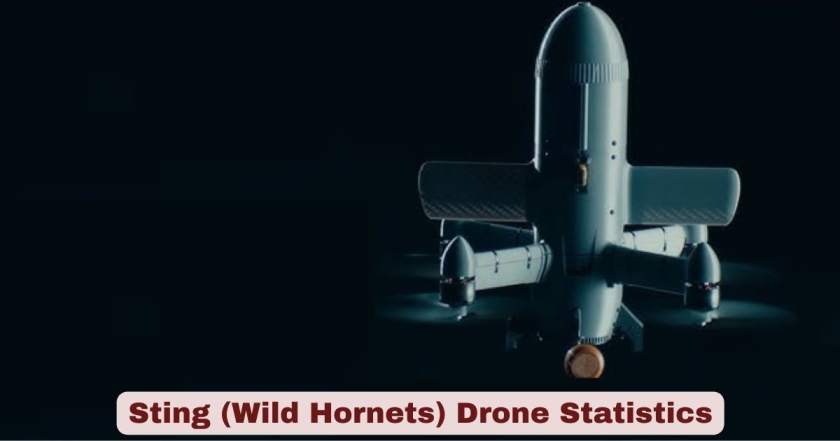
The Sting (Ukrainian: Стінг) is a Ukrainian-developed drone-intercepting loitering munition built by Wild Hornets — a non-profit charitable organisation turned miltech company that began in a Kyiv apartment in spring 2023 when a website developer named Dmytro Prodanyuk agreed to help a soldier friend supply FPV drones to Ukraine’s elite Separate Presidential Brigade. What followed is one of the most extraordinary stories in the history of weapons development: a volunteer organisation with no prior defence industry experience, funded almost entirely by public donations, producing drones from consumer 3D printers bought off the internet, that by March 14, 2026 had destroyed more than 3,900 Russian Geran and Shahed loitering munitions — including the first confirmed downing of Russia’s jet-powered Geran-3 in December 2025, a feat that no Western military system had achieved first. The Sting was built to answer a question that Ukraine’s battered air defence commanders were asking with increasing desperation by 2024: what do you do when Russia launches hundreds of Shahed drones simultaneously and your Patriot missiles at $4 million each and NASAMS rounds at $1 million each are being consumed faster than the West can manufacture replacements? The answer Wild Hornets arrived at was breathtakingly simple — you build a drone that costs $2,500 and crashes into the Shahed at 213 mph (343 km/h), guided in its final attack phase by AI thermal imaging that continues the intercept even when Russian electronic warfare jamming has cut the human pilot’s command link entirely.
As of March 14, 2026, the Sting has evolved from a proof-of-concept prototype photographed by The Telegraph in October 2024 into the most combat-tested interceptor drone in operational service anywhere in the world — a system that has been demonstrated to Danish military forces at a live exercise, that Fox News mistakenly identified as American military hardware during coverage of Operation Epic Fury on March 5, 2026, that the Pentagon is actively requesting to purchase following Iranian drone attacks on US assets, and that has already influenced the design philosophy of interceptor drone programmes in Israel, Russia, Belgium, Estonia, Latvia, and Czechia. Ukraine produced 100,000 interceptor drones in 2025 — an eightfold increase in production capacity from the prior year — and frontline units received an average of over 1,500 interceptor drones per day in December 2025 and January 2026. One in every three Russian aerial targets destroyed over Ukraine is now brought down not by a missile or a gun but by interceptor drones costing less than a used car — and the Sting, with its unmatched kill record and its origin story that starts in a Kyiv living room, is the icon of that transformation.
Interesting Facts About the Sting Drone 2026
| Fact | Detail |
|---|---|
| Full Name | Sting (Ukrainian: Стінг) — anti-drone interceptor loitering munition |
| Developer / Manufacturer | Wild Hornets Charitable Fund (Ukrainian: Дикі Шершні) — non-profit; registered LLC for corporate donors |
| Organisational Structure | Simultaneously a charitable fund (donations) and a registered LLC (corporate contracts) — unique dual model |
| Co-Founder | Dmytro Prodanyuk — former website developer and volunteer with “Svoboda Ukraine” charity |
| Second Co-Founder / Foreign Coordinator | Alex Roslin — Ukrainian-Canadian author and journalist; heads international fundraising |
| Other Named Member | Ivan — former journalist/blogger; joined after Dmytro’s initial fundraising request |
| Organisation Founded | Spring 2023 — by engineers working with the anti-tank unit of the Separate Presidential Brigade |
| Origin Event | February 2023: Separate Presidential Brigade soldier asked Prodanyuk if volunteers could supply FPV drones |
| First Fundraiser | Ukrainian journalist Yuri Butusov (Censor.net) raised ₴1.7 million (~$46,000) — after initially sceptical, confirmed legitimacy via soldier interviews |
| Second Fundraiser | Late June 2023 campaign: ₴1 million ($27,000) targeted; ₴400,000 ($11,000) raised in less than one week |
| Funding Model | ~90% donations and crowdfunding — backed by a global community in dozens of countries |
| Number of Engineers | ~25 engineers — unchanged since October 2024 |
| Daily Production Capacity | ~100 drones per day — confirmed by Prodanyuk and Wikipedia (March 2026) |
| Monthly Production (March 2025) | Over 10,000 units per month — across all Wild Hornets drone types |
| 3D Printing Technology | Elegoo and Bambu Lab FDM consumer-grade 3D printers — used in rows to print plastic airframe parts |
| Locally Sourced Materials | 65% locally sourced components — deliberate supply chain resilience strategy |
| Named After | Bumblebee / Hornet — the “Sting” of the hornet is the kill mechanism metaphor |
| Units Operated By | Over 100 Ukrainian military units — Armed Forces, National Guard, Special Operations Forces, SSU, HUR, Air Force, Border Guard |
| Wild Hornets Total Damage to Russia (March 2025) | $1.63 billion in estimated losses to Russian military assets |
| Wild Hornets Total Damage to Russia (2026) | Over $2 billion in destroyed Russian military equipment and installations |
| Fox News Misidentification | March 5, 2026 — Fox News aired Sting footage during Operation Epic Fury coverage, calling it “American high-tech arsenal”; Wild Hornets publicly corrected this via X |
| Pentagon Request | Following US military’s Iranian drone problem in Operation Epic Fury, US military asked Ukraine for help deploying interceptors including Sting |
| Russia Replication Attempts | After Sting became public in October 2024, Russia began attempting to replicate it — confirmed by early October 2025 reports |
Source: Wikipedia (Wild Hornets — updated March 13, 2026; Sting drone — updated March 14, 2026), Wild Hornets official website (wildhornets.com), Kyiv Post (July 2023 and October 2024), Forbes/DroneXL (March 2024), Ukraine Arms Monitor Substack (October 11, 2025), Military Times (March 11, 2026), CBS News (March 2026), Dev.ua (March 5, 2026), Self Reliance Central (March 12, 2026), Euronews (via Substack)
The origin story of Wild Hornets is a case study in what happens when engineers with no institutional barriers, no procurement bureaucracy, and no legacy systems to protect are given a clear operational problem and access to consumer-grade manufacturing tools. Dmytro Prodanyuk’s background as a website developer — not an aerospace engineer, not a military contractor, not a defence scientist — is actually central to understanding why Wild Hornets succeeded where established manufacturers might have failed. Without preconceptions about how drones “should” be built, Prodanyuk and his team approached the Sting from first principles: what is the minimum structure needed to fly fast enough to catch a Shahed, carry a thermal camera accurate enough to identify it, and be guided intelligently enough to hit it? The answer turned out to be a 3D-printed bullet-shaped quadcopter frame assembled in two minutes, piloted via VR goggles, and costing $2,500 — a product that professional defence engineers would likely never have arrived at because their training would have pushed them toward heavier, more complex, more expensive solutions.
The dual organisational structure — simultaneously operating as a charitable fund accepting global donations and a registered LLC accepting corporate and government contracts — reflects a sophisticated understanding of how to sustain a wartime drone programme without dependence on a single funding channel. The charitable fund structure allows anyone in any country to donate directly to Ukraine’s defence without navigating government procurement channels, creating a global crowdfunding base that has proved remarkably resilient. The LLC structure allows Wild Hornets to enter into formal contracts with Ukraine’s Defence Procurement Agency, international military partners, and corporate donors who require formal receipts and accountability structures. The result is an organisation that is, as Alex Roslin described it to international journalists, something like “a defence startup, a charity, and a social movement all at once” — and that combination has proven to be one of the most effective small-scale weapons production operations in modern warfare history.
Sting Drone Technical Specifications Statistics 2026
| Specification | Data |
|---|---|
| Configuration | Quadcopter — four-rotor, electric propulsion |
| Frame Design | 3D-printed bullet-shaped aerodynamic frame — large central dome housing battery/electronics; wide stabilising arms |
| Frame Material | Primarily 3D-printed plastic (Elegoo/Bambu Lab FDM process) + metal structural inserts |
| Assembly Time | 2 minutes per unit (manufacturer stated) |
| Weight | Not publicly disclosed |
| Max Speed (combat, Aug 2025) | 315 km/h (196 mph) — confirmed in footage released August 2025 |
| Max Speed (Wikipedia, updated Mar 14, 2026) | 213 mph (343 km/h) — latest confirmed specification |
| Cruise Speed at Altitude | Sustained 315 km/h confirmed on speedometer footage from Wild Hornets social media |
| Speed at Launch (autumn 2024) | ~160 km/h baseline — nearly doubled within one year of iterative development |
| Engagement Range | Up to 25 km (15 miles) |
| Altitude Ceiling | 10,000 ft (3,000 m) |
| Deployment Time | 15 minutes — from ground to airborne and on patrol |
| Launch Requirements | No catapult — takes off from any flat surface vertically |
| Primary Sensor | Kurbas thermal imaging camera from Odd Systems (Ukrainian manufacturer) — model Kurbas-640a |
| Sensor Capability | Infrared thermal imaging — detects drone heat signatures day and night |
| AI / Guidance | AI-assisted terminal guidance — autonomous target tracking and intercept completion |
| Human Control | FPV pilot via VR goggles — pilot flies to intercept zone; AI assists final engagement |
| Kill Method | Physical collision — kinetic ram; optionally with small warhead |
| Post-Kill / Miss Behaviour | If target already destroyed by another drone: Sting returns to base — confirmed operational feature |
| Compatible with | Any FPV ground control station — platform-agnostic |
| Pilot Training Time | 3 days — operators can learn to fly it in three days (manufacturer stated) |
| Unit Cost | ~$2,100–$2,500 (most common reference: $2,500 per CBS News, Military Times, March 2026) |
| Cost vs Shahed-136 | Shahed ~$35,000 vs Sting ~$2,500 = Sting is ~14× cheaper than the threat it destroys |
| Cost vs AIM-9X (NASAMS) | AIM-9X ~$1,000,000+ vs Sting ~$2,500 = 400:1 cost advantage |
| Cost vs Patriot PAC-3 | PAC-3 ~$4,000,000 vs Sting ~$2,500 = 1,600:1 cost advantage |
| Transport / Portability | Fits in a standard duffel bag — no specialist vehicle or platform required |
| Effectiveness Range (experienced crew) | 60–90% kill rate — Wild Hornets Telegram: “depending on crew experience and radar setup” |
| Time from Detection to Kill | ~10–15 seconds — Wild Hornets confirmed operational statistic |
Source: Wikipedia (Sting drone — updated March 14, 2026), Ukraine Arms Monitor Substack (October 11 and December 13, 2025), Wild Hornets official website, Defender Media (August 2025), CBS News (March 2026), Military Times (March 11, 2026), Kyiv Post (October 2024), Self Reliance Central (March 12, 2026), Militaeraktuell.at (October 28, 2025)
The technical specification statistics for the Sting are most striking not in their absolute performance numbers but in the rate of improvement those numbers represent. The trajectory from 160 km/h at launch in autumn 2024 to 315–343 km/h by mid-2025 — a speed increase of over 100% in under a year — captures the essence of Ukrainian wartime drone development: a continuous, live, battlefield-feedback-driven iteration cycle that compresses what would take a traditional defence programme 5 years into 12 months. Every time Russia adapted its Shahed tactics — flying lower, changing approach profiles, adding jamming — Wild Hornets’ 25 engineers received direct feedback from the frontline pilots within days and translated it into design changes within weeks. The Kurbas-640a thermal camera from Ukrainian startup Odd Systems is the key enabler of the Sting’s performance envelope: by detecting the heat signature of a Shahed’s engine rather than relying on visual identification, the Sting can engage in complete darkness, in fog, in rain, and at distances where a standard optical camera would see nothing but sky.
The portability specification — fits in a standard duffel bag, launches from any flat surface, deploys in 15 minutes without any support equipment — is what makes the Sting operationally revolutionary rather than merely technically impressive. The entire history of air defence has been shaped by the requirement for fixed installations: radar towers, launcher trucks, crew shelters, power connections, and communications infrastructure that must be built, maintained, and defended. A Sting crew of one pilot and one support person can carry their entire air defence capability in two bags, set up in a field in 15 minutes, engage any Shahed within 25 kilometres, and pack up and relocate in another 15 minutes — before Russian artillery can be brought to bear on their last known position. That operational flexibility has made the Sting not just an air defence tool but a fundamentally new paradigm for how forward-deployed forces protect themselves against drone attack.
Sting Drone Combat Performance & Kill Record Statistics 2026
| Metric | Data |
|---|---|
| Combat Introduction Date | Autumn 2024 — prototypes photographed by The Telegraph, October 2024 |
| Series Production Start | Early 2025 |
| First Major Media Confirmation | The Telegraph (UK) — October 2024; first public prototype image |
| Thermal Footage Released | May 2025 — Wild Hornets published thermal imaging footage of Sting downing a Shahed; described as “breakthrough in frontline drone defence” |
| 2-Month Milestone (Aug 2025) | 205 kills in 2 months — 78 Shaheds + 127 Gerans (Defender Media, August 2025) |
| 5-Month Milestone | Over 600 enemy UAVs intercepted — Ukraine Arms Monitor (October 2025) |
| October 2025 Monthly Performance | Over 1,000 enemy UAVs destroyed in October 2025 alone |
| Shahed % in Nov 5–20, 2025 | Accounted for 16.9% of ALL Shahed-type drones downed by Ukraine Nov 5–20, 2025 |
| Kill Record (March 6, 2026) | Over 3,900 Geran/Shahed drones — confirmed by Wild Hornets to CBS News |
| Kill Record (February 2026 per Wikipedia) | Over 3,900 Geran drones — Wikipedia (updated March 14, 2026) |
| February 2026 Monthly Rate | Drones credited with more than 70% of Shahed downings that month — Ukraine Commander-in-Chief Oleksandr Syrskyi |
| 1 in 3 Aerial Targets | One in every three Russian aerial targets destroyed over Ukraine downed by interceptors — Ukrainian Air Force, March 2026 (Defence News) |
| Over-Capital Intercept Rate | Over 70% of Shahed downings over Kyiv credited to interceptors — Syrskyi, March 2026 |
| Total Ukrainian Interceptors Produced (2025) | 100,000 interceptor drones — National Security and Defence Council of Ukraine |
| Production Growth | Eightfold increase in production capacity compared to prior period — NSDC |
| Daily Interceptor Deliveries (Dec 2025–Jan 2026) | Over 1,500 interceptor drones per day delivered to frontline units |
| Previous Period Daily Rate | ~1,000 per day (before December 2025 surge) |
| Historic Milestone — Geran-3 Kill | November 30 / December 2025 — first confirmed downing of jet-powered Russian Geran-3 by any interceptor drone; achieved by Sting equipped with Kurbas-640a camera |
| Geran-3 Speed Context | Geran-3 equipped with Tolou-10/13 turbofan engine — estimated cruise speed 300–350 km/h actual (intelligence predicted 550–600 km/h); previously considered uncatchable by electric interceptors |
| Shahed with Air-to-Air Missile | Sting also achieved first confirmed downing of a Shahed fitted with an air-to-air missile — novel Russian countermeasure defeated |
| Lancet Drone Reduction | Sting deployment reduced enemy Lancet drone strikes at the front by 75% within two months of introduction — Wild Hornets official |
| Danish Military Demo (Oct 2025) | Ukrainian specialists demonstrated Sting to Danish forces at counter-drone exercise; Sting successfully destroyed a QinetiQ Banshee target drone |
| Civilian Casualties Prevented | As of post-May 2025: 1,520 potential civilian casualties prevented — Wild Hornets Telegram |
Source: Wikipedia (Sting drone, March 14, 2026; Wild Hornets, March 13, 2026), Wild Hornets official website and Telegram, Ukraine Arms Monitor Substack (October 11 and December 13, 2025), Defender Media (August 2025), CBS News (March 2026), Military Times (March 11, 2026), Defence News (March 5, 2026), Dev.ua (March 5, 2026), Self Reliance Central (March 12, 2026)
The kill record statistics for the Sting are without parallel in the history of civilian-developed military technology. The 3,900 confirmed kills accumulated between May 2025 and March 6, 2026 — approximately ten months of operational service — represent a sustained kill rate of roughly 390 drones per month, 13 per day, or one every 110 minutes around the clock. For context: during the entire 2003 Iraq War, the US military’s total air-to-air kill count across all platforms and all missions was zero — there were no aerial engagements. The Sting achieved 3,900 kinetic aerial intercepts in ten months against a real, adaptive, technologically sophisticated threat, using hardware that costs $2,500 per unit. The November/December 2025 Geran-3 kill — the moment when the Sting caught and destroyed a jet-powered drone that intelligence assessments had predicted would fly at 550–600 km/h (though actual recordings showed 300–350 km/h) — was the milestone that transformed the Sting from an impressive but bounded capability into a legitimate threat to Russia’s next-generation drone programme.
The Lancet drone reduction statistic — a 75% decrease in Russian Lancet strikes within two months of Sting deployment at a front — deserves particular attention because it reveals a secondary effect far more significant than the raw kill count. The Lancet is Russia’s most feared precision loitering munition: expensive, accurate, and responsible for destroying a large proportion of Ukrainian artillery and air defence equipment. The fact that deploying Stings reduced Lancet activity by 75% is not primarily because the Stings were shooting down that many Lancets — it is because Russian Lancet operators began refusing to fly missions into airspace where they knew Stings were waiting. The interceptor’s effect on Russian pilot behaviour — forcing them to abort missions, fly longer evasive routes, or not fly at all — may ultimately represent a larger contribution to Ukraine’s air defence than the 3,900 direct kills, because it creates a deterrence effect that multiplies the Sting’s impact far beyond its physical intercept rate.
Wild Hornets Drone Family & Organisation Statistics 2026
| Metric | Data |
|---|---|
| Flagship Products | Sting (interceptor), Queen Hornet (FPV bomber), Wild Dragon (incendiary), Standard Wild Hornet (kamikaze FPV), Wally (night attack), Interceptors (recon drone hunters) |
| Standard Wild Hornet | Kamikaze FPV quadcopter; payload 1.5–3 kg (3.2–6.5 lb); speed up to 160 km/h |
| Queen Hornet | “Supersized” FPV bomber drone; carries up to 5 kg (11 lb) bombs; range 30 km; mission life 10–30 sorties |
| Wild Dragon | Incendiary drone — produced under contract with a separate Ukrainian company Steel Hornets |
| Interceptors (Recon Hunters) | Anti-air FPV designed to chase and intercept Russian reconnaissance UAVs — equipped with new camera and high-capacity batteries |
| Wally | Night attack drone with low-cost night vision system |
| Experimental Variants | Drones attached with automatic weapons and rocket launchers — filmed and claimed to be fielded |
| AI-Capable FPV | Claims to have already fielded FPV drones with automatic target recognition (AI auto-lock) |
| Ground Control Stations | Digital drone ground stations — compatible with DJI and Walksnail systems |
| Batteries | Wild Hornets produces its own high-performing batteries — described as superior signal quality |
| Customisation | Drones come in multiple variants customisable per unit need: digital/analog signal, automation features, night capability |
| Service to Military Units | Used by over 100 Ukrainian military units — number “constantly growing” |
| Total Confirmed Losses Destroyed (mid-2025) | 153 tanks, 231 armoured vehicles, 124 artillery/MLRS systems, 669 vehicles and ammo depots, 600+ Shahed/Gerbera drones, 1,268 recon/strike drones, 4 air-defence systems, 1,000+ Russian soldiers/positions |
| Queen of Hornets (2025 record) | One Queen of Hornets drone flew 185 missions in 2025 — up from a typical service life of 10–15 missions in 2024 |
| Production Transparency | Stopped publicly disclosing production figures after October 2024 — presumed security measure |
| Battle of Vovchansk | September 2024: Wild Hornet drones used to recapture the aggregate plant during the Battle of Vovchansk |
| Battle of Avdiivka | 2023–2024: Wild Hornet drones caused visually confirmed losses of 9 tanks and 12 IFVs |
| 95th Air Assault Brigade (Ukraine) | Used Wild Hornet drones during the 2024 Kursk offensive |
| 1st Tank Brigade | Used during the 2023 Ukrainian counteroffensive |
| Bulava Unit (Presidential Brigade) | Used Wild Hornets to stop a Russian counteroffensive at Urozhaine (successfully recaptured during offensive) |
| Wild Hornets Database | Operators given access to a constantly updated internal database of FPV drones, firmware, equipment, and tactics |
Source: Wikipedia (Wild Hornets — March 13, 2026), Wild Hornets official website (wildhornets.com), Kyiv Post (July 2023, October 2024), Forbes/DroneXL (March 2024), Ukraine Arms Monitor Substack (October 2025)
The drone family statistics reveal an organisation that has scaled from a five-volunteer team building 100–150 drones per month in Kyiv apartments to one capable of producing over 10,000 units per month in a dedicated manufacturing environment — while simultaneously maintaining the rapid iteration culture that produced the Sting. The Queen of Hornets’ 185-mission record in 2025 — compared to the 10–15 mission typical lifespan of just one year earlier — reflects fundamental improvements in airframe durability, battery longevity, and software reliability that have been achieved entirely through battlefield feedback loops rather than laboratory testing. Each of those 185 missions represents a live combat operation over some of the most electronically contested airspace on earth, which makes the achievement even more remarkable.
The Bulava unit’s record at Urozhaine — using Wild Hornet drones to stop a Russian counteroffensive and secure the recapture of that position — was one of the first documented instances of a Ukrainian unit using commercially crowdfunded volunteer-built drones as the primary tactical tool to hold and retake ground. What was once auxiliary capability has become the primary capability. The total destruction statistics — 153 tanks, 231 armoured vehicles, 124 artillery systems, over 1,000 soldiers — accumulated by an organisation of 25 engineers with an initial fundraising budget of $46,000 represents a return on investment that would be extraordinary by any standard. In the context of modern warfare, where state defence budgets are measured in hundreds of billions, the Wild Hornets’ cumulative $2 billion in damage inflicted on Russia from donations and small corporate contracts stands as one of the most cost-effective military investments in recorded history.
Sting Drone International Interest & 2026 Strategic Impact Statistics
| Metric | Data |
|---|---|
| Pentagon Purchase Request | US military formally requested to purchase Ukrainian interceptors including Sting following Iranian drone attacks on US assets in Operation Epic Fury — Military Times (March 11, 2026) |
| Pentagon Gulf State Interest | At least one Persian Gulf country also expressing purchase interest — Dev.ua (March 5, 2026) |
| Fox News Misidentification Date | March 5, 2026 — Fox News aired Sting kill footage as “American high-tech arsenal” |
| Wild Hornets Response | Posted publicly on X: “The footage shown in this segment features STING — a Ukrainian interceptor drone”; asked media to “keep correct captions” |
| Wild Hornets Gratitude | Also thanked Fox News “for the support and trust in their solutions” — professionally redirected the misattribution |
| Danish Military Demo | October 2025 — Sting destroyed a QinetiQ Banshee target drone at Danish counter-drone exercise; UK target drone used at ~185 mph max speed |
| QinetiQ Banshee Speed | ~185 mph — Sting travelling at up to 213 mph overtook and intercepted it |
| Russia’s Replication Attempts | Early October 2025 reports confirmed Russia began attempting to replicate the Sting after it became public |
| US Army Ukraine Assistance Request | “Following successful Iranian drone attacks on US military assets, the US military asked for Ukrainian help to deploy interceptors” — Wikipedia (Wild Hornets, March 2026) |
| Brave1 CEO Andrii Hrytseniuk Quote | “You don’t have time. Shahed drones will come not only to Ukraine, but to other countries. You need to use your time not to stick to previous conventional warfare, but to work on the new era.” — Military Times, March 11, 2026 |
| Brave1 Platform | Ukraine’s state-backed defence innovation hub — funds, tests, and fast-tracks new military technology from hundreds of Ukrainian startups; established 2023 |
| Ukraine Drone Total Produced (2025) | 100,000 interceptor drones — NSDC; production capacity grew eightfold |
| Daily Deliveries (Dec 2025–Jan 2026) | Over 1,500 interceptor drones per day to frontline units |
| 1 in 3 Aerial Targets Statistic | 1 in every 3 Russian aerial targets destroyed over Ukraine = interceptor drone — Ukrainian Air Force (Defence News, March 5, 2026) |
| Syrskyi on Kyiv Intercepts | Commander-in-Chief Oleksandr Syrskyi: interceptors credited with 70%+ of Shahed downings over Kyiv in February 2026 |
| Zelenskyy NATO Offer | Zelenskyy offered NATO allies Ukraine’s help in detecting and downing UAVs at October EU summit; Ukraine has “perhaps the world’s greatest experience” with drone warfare |
| Shahed Cost Context (March 2026) | Centre for Strategic and International Studies (CSIS): Shahed costs Russia as little as $35,000 to manufacture |
| Sting vs Shahed Value Ratio | Sting $2,500 vs Shahed $35,000 = Ukraine gains $32,500 net value per kill |
| “Drone Wall” Concept | EU officials discussing a European drone interception network along eastern border — Sting cited as the model capability |
| Wild Hornet Phoenix Pilot Quote | “We just need better radar. It allows you to see your enemy and your plane. You understand where you are and where your enemy is, and you can fly to that position.” — Defence News, March 5, 2026 |
Source: Military Times (March 11, 2026), Dev.ua (March 5, 2026), Wikipedia (Wild Hornets — March 13, 2026; Sting drone — March 14, 2026), Defence News (March 5, 2026), Ukraine Arms Monitor Substack (December 2025), Self Reliance Central (March 12, 2026), CBS News (March 2026)
The international interest statistics surrounding the Sting in March 2026 mark a threshold that Ukraine’s drone advocates had been pushing toward for two years: the moment when Western governments stopped politely acknowledging Ukraine’s drone expertise and started urgently asking to buy the products. The Pentagon’s request to purchase Ukrainian interceptors — driven directly by the embarrassment of Iranian Shahed attacks successfully hitting US assets in the first days of Operation Epic Fury while American forces scrambled to find adequate responses — is the single most strategically significant validation the Sting programme has received. For an organisation that began with a $46,000 crowdfunding campaign and 25 engineers with no defence industry background, receiving a purchase inquiry from the most powerful military in the world within months of first combat deployment is a commercial and strategic outcome that no defence startup has ever achieved in a comparable timeframe.
The Fox News misidentification incident of March 5, 2026 — where the network used footage of a Ukrainian Sting destroying a Russian Shahed and labelled it as part of “America’s high-tech military arsenal” countering Iranian drones — is simultaneously a source of frustration and a measure of the Sting’s global stature. When footage of your drone destroying enemy aircraft is so impressively effective that America’s most-watched news network assumes it must be American technology, you have achieved a quality standard that transcends national origin. Wild Hornets’ measured and professional response — publicly correcting the record while simultaneously thanking Fox News for its support — reflected a communications maturity that matched the technical maturity of the product itself. The “drone wall” concept now being discussed by EU officials, with the Sting cited as the model capability for Europe’s eastern border, is the logical institutional culmination of what began in a Kyiv apartment when a website developer said yes to a soldier’s request for help. What started as local self-defence is becoming the template for a continent’s air defence architecture.
Disclaimer: The data research report we present here is based on information found from various sources. We are not liable for any financial loss, errors, or damages of any kind that may result from the use of the information herein. We acknowledge that though we try to report accurately, we cannot verify the absolute facts of everything that has been represented.