
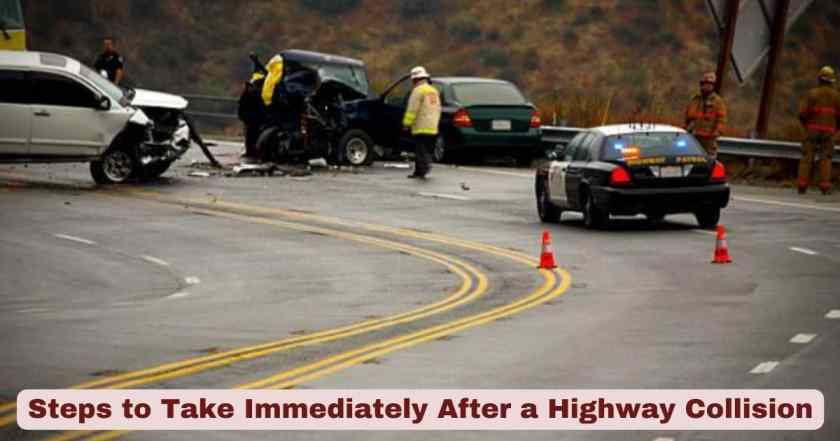
A highway crash might confuse drivers, leaving them unsure of what to do next. These accidents are worse than normal road crashes because of the high speed of traffic, the number of cars, and the lack of shoulder space. The first few minutes after an accident can have a big impact on both medical results and any future insurance or legal claims.
Because highway crashes tend to have stronger forces and generate chain reactions, it is important to act quickly and on purpose. Safety and medical care are always the most important things, followed by correct reporting and keeping evidence. How you act at the scene can change how fault and damages are looked at later.
The National Highway Traffic Safety Administration says that secondary collisions happen a lot when disabled cars stay in active lanes. That risk is why official safety advice puts so much emphasis on steps to improve positioning and visibility after a crash.
If You Can, Move to a Safer Place
If the car can still move, get it out of the lanes where traffic is moving. Turn on your danger lights right away. Even a slight delay in moving on large freeways could potentially put people in danger of another collision.
If the car cannot move:
- Turn on the hazard lights.
- If traffic is close, stay belted.
- Leave only when you are sure it is safe.
- Stay far away from the flow of vehicles.
- Call the police right away.
Call Emergency Services Right Away
Call 911 and give them your location, including mile markers or exit numbers. Ask for both police and medical help. A formal police report is an important record for later insurance and legal reviews. Even if the injuries do not look serious, ask for a medical exam. Some conditions show up hours later.
Check for Injuries and Avoid Risky Movements
First, check on yourself and your passengers, then others if it is safe. Do not try to transfer anyone who is gravely hurt unless there is an urgent risk, such as a fire or cars moving at them.
The Centers for Disease Control and Prevention say that adrenaline might hide symptoms after a violent hit. After the first shock wears off, you may feel pain, disorientation, or confusion. Write down what happened while it is still fresh in your mind.
Document the Scene While Details Are Fresh
If you can, get pictures and facts before the cars are taken away. Highway conditions change quickly once responders start clearing lanes.
Take photos and videos of:
- Positions of vehicles and damage
- Marks from skids and fields of trash
- The weather and the roads
- Signs for traffic and lane markings
- Injuries that can be seen
Get the names, phone numbers, and insurance information of other drivers as well.
Be Careful When You Make Statements
Be truthful with the police, but refrain from estimating the speed, distance, or individual responsible for the incident. Stress and confusion can change how you see things. It is better to give short, accurate responses than to guess at length.
Tell Your Insurance Company Right Away
Tell your insurance company about the accident within the time limit set by your policy. Give basic information and the report number if you have it. Early notice helps keep coverage rights and claim processing times in place.
Write down every interaction, claim number, and contact information for the adjuster.
Keep Medical and Expense Records Safe
Keep your discharge papers, test results, medicines, and bills. Maintain a record of your travel distance to medical appointments and the out-of-pocket expenses. Often, these records serve as the foundation for assessing the extent of damage.
Key Takeaways
- If it is safe to do so, move cars out of the way of traffic.
- Call 911 and get a police report.
- Even if your symptoms are delayed, see a doctor.
- Take pictures of cars, the road, and any damage.
- Exchange information about the driver and insurance.
- Do not argue or guess about problems on the side of the road.
- Keep all of your medical and spending records.