Nuclear Weapons in the US 2026
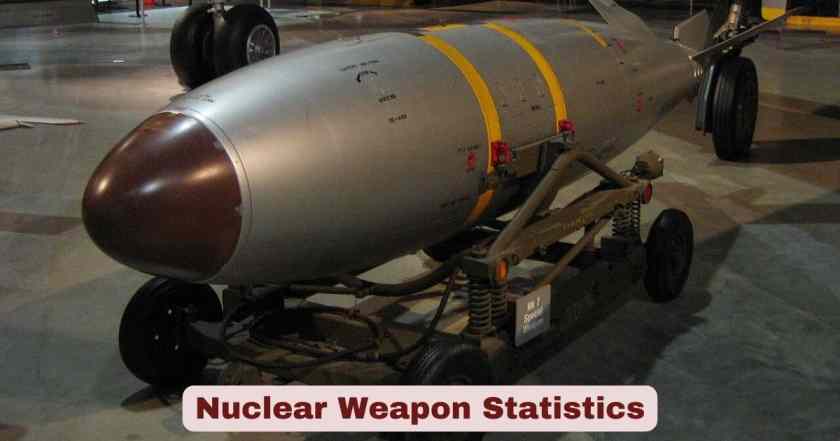
The United States maintains one of the world’s most sophisticated nuclear arsenals, representing a cornerstone of national defense strategy that has evolved significantly since the dawn of the atomic age. As America navigates an increasingly complex global security environment in 2026, understanding the scope, composition, and modernization efforts of the nation’s nuclear weapons inventory becomes essential for informed public discourse. The current state of American nuclear forces reflects decades of strategic planning, arms control negotiations, and technological advancement, all while balancing deterrence requirements against nonproliferation commitments under international treaties.
The American nuclear weapons program stands at a critical juncture in 2026, with the expiration of the New START treaty in February and an unprecedented modernization effort underway across all three legs of the nuclear triad. With approximately 5,177 total nuclear warheads in the inventory and roughly $60 billion allocated annually to sustain and recapitalize these forces, the United States faces strategic decisions that will shape nuclear policy for generations to come. The stockpile represents an 88 percent reduction from its Cold War peak, yet every delivery system and nearly every warhead type now undergoes simultaneous recapitalization—a massive undertaking designed to maintain credible deterrence against multiple peer competitors while upholding commitments to eventual nuclear disarmament.
Interesting Facts About Nuclear Weapons in the US 2026
| Fact Category | Statistic | Details |
|---|---|---|
| Total Warheads in US 2026 | 5,177 | Includes deployed, reserve, and retired warheads awaiting dismantlement |
| Deployed Strategic Warheads in US 2026 | 1,770 | Warheads assigned to operational delivery systems |
| Active Stockpile Size in US 2026 | 3,700 | Warheads maintained in operational status |
| Retired Warheads Awaiting Dismantlement in US 2026 | 1,477 | Non-functional warheads queued for disposal |
| Reserve/Nondeployed Warheads in US 2026 | 1,930 | Warheads in storage but not on launchers |
| Historical Testing Record in US | 1,030-1,054 | Total nuclear tests conducted between 1945-1992 |
| Reduction from Peak in US | 88% | Decrease from maximum of 31,255 warheads in 1967 |
| Nuclear Modernization Cost 2025-2034 | $946 billion | Projected 10-year expenditure for nuclear forces |
| Annual Nuclear Budget FY2026 in US | $60 billion | Funding across the nuclear enterprise |
| Minuteman III ICBMs Deployed in US 2026 | 400 | Single-warhead missiles on 24/7 alert status |
| Ohio-class Submarines in US 2026 | 14 | Strategic nuclear submarines in service |
| B-52H Bombers Nuclear-Certified in US 2026 | 46-74 | Strategic bombers capable of nuclear missions |
| B-2 Spirit Bombers in US 2026 | 20 | Stealth bombers with nuclear capability |
| Forward-Deployed Bombs in Europe 2026 | 100 | B61 nuclear bombs at NATO bases |
| New START Treaty Status 2026 | Expired February 5, 2026 | No successor agreement in place |
Data Source: U.S. Department of Energy National Nuclear Security Administration, Federation of American Scientists, Congressional Budget Office, Arms Control Association, U.S. Department of Defense
The data presented above represents the most current verified information available from official United States government sources and independent research organizations specializing in nuclear weapons analysis. These statistics paint a comprehensive picture of America’s nuclear arsenal as it exists in 2026, showing both the substantial reductions achieved since the Cold War era and the significant investments being made to modernize aging systems. The 5,177 total warheads figure includes all categories of weapons—from those deployed on alert-ready delivery systems to those awaiting final dismantlement—providing transparency consistent with nonproliferation treaty obligations.
Perhaps most striking is the scale of the modernization effort underway, with $946 billion projected over the next decade to recapitalize virtually every element of the nuclear enterprise. This represents the largest nuclear modernization program since the Cold War, driven by the aging of systems originally designed in the 1970s and 1980s, along with emerging threats from peer competitors. The 400 Minuteman III ICBMs remain on constant alert in their silos across Montana, Wyoming, and North Dakota, while the 14 Ohio-class submarines provide the most survivable leg of the deterrent with continuous at-sea patrols. Meanwhile, the bomber force of 46-74 B-52H and 20 B-2 aircraft offers flexibility and visible deterrence signaling, with modernization programs ensuring these platforms can carry next-generation weapons like the B61-12 precision-guided bomb and the forthcoming Long-Range Standoff cruise missile.
US Nuclear Weapons Stockpile Composition in the US 2026
| Stockpile Category | Number of Warheads | Percentage of Total |
|---|---|---|
| Deployed Strategic Warheads | 1,770 | 34.2% |
| Reserve/Nondeployed Warheads | 1,930 | 37.3% |
| Retired Warheads (Awaiting Dismantlement) | 1,477 | 28.5% |
| Total Inventory | 5,177 | 100% |
| Active Military Stockpile | 3,700 | 71.5% |
Data Source: U.S. Department of Energy, Federation of American Scientists, International Panel on Fissile Materials
The composition of America’s nuclear weapons stockpile in 2026 reflects a carefully structured approach to maintaining deterrence while reducing overall numbers. The 1,770 deployed strategic warheads represent those immediately available on intercontinental ballistic missiles, submarine-launched ballistic missiles, and at bomber bases, constituting the nation’s ready nuclear force. These weapons can be launched within minutes to hours depending on the platform, providing the assured second-strike capability that forms the foundation of nuclear deterrence. The deployed force is complemented by 1,930 reserve or nondeployed warheads, which are maintained in storage facilities in operational condition but without tritium bottles installed, allowing for rapid reconstitution if strategic circumstances demand an increase in deployed forces.
The 1,477 retired warheads awaiting dismantlement represent a continuing commitment to arms reduction, though the pace of dismantlement has slowed in recent years due to capacity constraints at production facilities. Since 2020, the United States has dismantled 405 nuclear warheads, with approximately 2,000 additional warheads in the retirement queue. This demonstrates the ongoing challenge of safely disposing of legacy weapons while simultaneously modernizing and maintaining the active stockpile. The active military stockpile of 3,700 warheads—comprising both deployed and reserve weapons—represents 71.5 percent of the total inventory, a figure that has remained relatively stable over the past several years even as the total inventory has gradually decreased through dismantlement activities.
Nuclear Triad Delivery Systems in the US 2026
| Delivery System Type | Platform | Quantity | Warheads |
|---|---|---|---|
| Land-Based ICBMs | Minuteman III LGM-30G | 400 deployed | 400 (single warhead each) |
| Sea-Based SLBMs | Ohio-class SSBNs with Trident II D5LE | 14 submarines, ~240 missiles | ~1,000 |
| Air-Delivered Weapons | B-52H Stratofortress | 46-74 nuclear-certified | ~300 |
| Air-Delivered Weapons | B-2A Spirit | 20 nuclear-certified | Variable |
| Total Deployed Delivery Systems | Combined Triad | 662 | 1,419-1,770 |
| Non-Strategic Nuclear Weapons | B61 gravity bombs | ~200 | 200 (100 in Europe, 100 in US) |
Data Source: U.S. Department of Defense, Congressional Research Service, Arms Control Association, State Department New START Data
The United States maintains its strategic deterrent through the nuclear triad concept, with land-based intercontinental ballistic missiles, submarine-launched ballistic missiles, and strategic bombers each providing complementary capabilities. The 400 Minuteman III ICBMs deployed at three Air Force bases represent the most responsive leg of the triad, capable of launching within minutes and nearly impossible to intercept once airborne. Each missile currently carries a single warhead to comply with the now-expired New START treaty limits, though the missiles were originally designed to carry three warheads. These systems are being replaced by the new Sentinel ICBM program, with first emplacement planned for the mid-2030s after experiencing significant cost overruns that triggered congressional review.
The sea-based leg consists of 14 Ohio-class submarines, each capable of carrying up to 20 Trident II D5LE missiles, providing the most survivable component of American nuclear forces. At any given time, approximately 10-12 submarines are operational, with 4-5 on hard alert patrols in the world’s oceans, making them virtually undetectable and immune to first-strike attacks. These submarines collectively deploy approximately 240 missiles carrying roughly 1,000 warheads, armed with a mix of W76-1, W76-2 (low-yield), and W88 Alt 370 warheads. The bomber force of 46-74 B-52H and 20 B-2A aircraft provides flexibility and visible signaling capabilities, able to be recalled even after launch and capable of forward deployment to reassure allies. Additionally, the United States maintains approximately 200 non-strategic nuclear weapons, primarily B61 gravity bombs, with 100 forward-deployed at six NATO bases in Belgium, Germany, Italy, Netherlands, Turkey, and the United Kingdom.
Nuclear Weapons Modernization Programs in the US 2026
| Modernization Program | System/Platform | Status in 2026 | Estimated Cost |
|---|---|---|---|
| LGM-35A Sentinel ICBM | Next-generation ICBM | In development, replanning after cost overruns | $141+ billion |
| Columbia-class SSBN | Next-generation submarine | Under construction, first delivery late 2020s | $128+ billion |
| B-21 Raider Bomber | Next-generation stealth bomber | Flight testing, IOC mid-2020s | $203+ billion for 100 aircraft |
| Long-Range Standoff (LRSO) Weapon | Air-launched cruise missile | Development/production | $16 billion |
| B61-12 Life Extension | Precision-guided gravity bomb | Full-rate production | Completion ~2026 |
| W87-1 Warhead | Warhead for Sentinel ICBM | Development, production begins 2031-2032 | $14+ billion |
| W80-4 Warhead | Warhead for LRSO missile | Development, first production 2027 | $12+ billion |
| W93/Mk7 Warhead | New submarine warhead | Early development stage | Cost estimates pending |
Data Source: Congressional Budget Office, U.S. Air Force, U.S. Navy, National Nuclear Security Administration, Government Accountability Office
The United States has embarked on the most comprehensive nuclear weapons modernization program since the Cold War, with virtually every delivery system and warhead type undergoing recapitalization simultaneously. The LGM-35A Sentinel program, formerly known as the Ground-Based Strategic Deterrent, aims to replace all 400 Minuteman III ICBMs with 634 new missiles (400 operational plus test and spares) designed to serve until 2075. However, the program triggered a critical Nunn-McCurdy breach in 2024 due to 37 percent cost overruns, requiring congressional review and program restructuring. The FY2026 budget includes $2.7 billion in discretionary funding plus $1.5 billion in mandatory funding from reconciliation legislation, though total program costs now exceed $141 billion.
The sea-based modernization centers on the Columbia-class submarine program, which will replace the aging Ohio-class boats beginning in the late 2020s with 12 new submarines each carrying 16 Trident II D5LE2 missiles. The Navy’s FY2026 budget requests $9.6 billion in discretionary funding plus $1.9 billion in mandatory funding for this program, which represents the service’s top acquisition priority. For the air leg, the B-21 Raider stealth bomber is currently in flight testing with initial operational capability targeted for the mid-2020s, planned procurement of at least 100 aircraft, and FY2026 funding of $5.8 billion in discretionary plus $4.5 billion in assumed mandatory funding. The Long-Range Standoff (LRSO) weapon program will provide 1,087 new nuclear-capable air-launched cruise missiles to replace aging AGM-86B ALCMs, with $1.1 billion requested in FY2026. On the warhead side, the B61-12 life extension program nears completion around 2026, while the W87-1 and W80-4 programs continue development with production beginning in the early 2030s.
Nuclear Testing History in the US 2026
| Testing Period | Type of Tests | Number Conducted | Test Sites |
|---|---|---|---|
| 1945-1992 Total | All nuclear explosive tests | 1,030-1,054 | Multiple sites worldwide |
| Atmospheric Tests | Above-ground detonations | 215-216 | Nevada, Pacific, Atlantic |
| Underground Tests | Below-ground detonations | 815-838 | Primarily Nevada Test Site |
| First Test (Trinity) | Plutonium implosion device | July 16, 1945 | Alamogordo, New Mexico |
| Last Test (Divider) | Underground test | September 23, 1992 | Nevada Test Site |
| Moratorium Period | Testing suspension | November 1958 – September 1961 | N/A |
| Post-1992 Moratorium | No explosive testing | 1992-present | Subcritical experiments only |
| Subcritical Experiments Since 1992 | Non-explosive tests | 34 | Nevada National Security Site |
Data Source: U.S. Department of Energy, Defense Nuclear Agency, Arms Control Association, National Nuclear Security Administration
The United States conducted an extensive nuclear weapons testing program spanning 47 years from the first Trinity test on July 16, 1945, through the final Divider test on September 23, 1992. Official counts vary slightly between sources, with the Department of Energy reporting 1,054 tests while some independent analyses cite 1,030 tests, a discrepancy arising from different counting methodologies for simultaneous or joint tests. Of these, approximately 215-216 were atmospheric tests conducted before the 1963 Partial Test Ban Treaty prohibited above-ground testing, spreading radioactive fallout globally and exposing populations to radiation hazards. The remaining 815-838 tests were conducted underground, primarily at the Nevada Test Site (now Nevada National Security Site), with additional tests at locations including the Pacific Proving Grounds, Alaska, Mississippi, Colorado, and New Mexico.
Since 1992, the United States has maintained a voluntary nuclear testing moratorium, ending explosive testing while developing the Science-Based Stockpile Stewardship Program to certify weapon reliability through computational modeling, subcritical experiments, and other non-explosive methods. The National Nuclear Security Administration has conducted 34 subcritical experiments since the moratorium began, which involve chemical explosives and nuclear materials but produce no self-sustaining nuclear chain reaction, remaining consistent with the zero-yield standard. This approach has allowed weapons scientists to maintain confidence in stockpile safety and effectiveness without full-scale testing. The United States signed the Comprehensive Nuclear-Test-Ban Treaty in 1996 but has not ratified it, and the treaty has not entered into force globally. The current administration continues to assess the optimal approach to ensuring stockpile reliability while maintaining test readiness at the Nevada National Security Site.
Arms Control Treaties and Limitations in the US 2026
| Treaty/Agreement | Status in 2026 | Key Limitations | Verification Measures |
|---|---|---|---|
| New START | Expired February 5, 2026 | 1,550 deployed strategic warheads; 700 deployed delivery systems | Data exchanges, inspections (suspended 2023) |
| Nuclear Non-Proliferation Treaty (NPT) | In force | No transfer of weapons to non-nuclear states | IAEA safeguards, review conferences |
| Comprehensive Test Ban Treaty (CTBT) | Signed but not ratified | Zero-yield nuclear testing | International monitoring system |
| Partial Test Ban Treaty | In force since 1963 | No atmospheric, space, or underwater tests | National technical means |
| Presidential Nuclear Initiatives (1991-1992) | Political commitment | Reduction of tactical nuclear weapons | No formal verification |
Data Source: U.S. Department of State, Arms Control Association, U.S. Congress, Treaty compliance reports
The New START treaty, which capped deployed strategic warheads at 1,550 and deployed delivery systems at 700, expired on February 5, 2026, leaving no bilateral nuclear arms control agreement between the United States and Russia for the first time in decades. The treaty had been extended for five years in 2021, but Russia suspended participation in February 2023, halting data exchanges and on-site inspections while both parties committed to adhering to the central limits through expiration. The Trump Administration has stated that a bilateral treaty is inadequate in 2026 given China’s rapid nuclear buildup, with officials calling for a new multilateral framework addressing all nuclear-armed states. As of early 2026, no replacement agreement has been negotiated, and the United States faces no treaty-based numerical constraints on its nuclear arsenal for the first time since 1972.
The United States remains a party to the Nuclear Non-Proliferation Treaty, which designates five nuclear-weapon states and obligates them to pursue good-faith negotiations toward nuclear disarmament while preventing proliferation to non-nuclear states. The U.S. has maintained transparency by periodically declassifying stockpile numbers, most recently revealing 3,748 warheads as of September 2023, though the practice of annual disclosures was discontinued during the Trump administration and resumed only sporadically under Biden. The Comprehensive Nuclear-Test-Ban Treaty was signed by the United States in 1996 but has never been ratified by the Senate, and the treaty cannot enter into force without ratification by 44 specific countries including the U.S., China, and several others. The Partial Test Ban Treaty of 1963 remains in effect, prohibiting nuclear tests in the atmosphere, outer space, and underwater, though underground testing remained permissible until the U.S. voluntary moratorium began in 1992.
Nuclear Weapons Production Facilities in the US 2026
| Facility | Location | Primary Function | Modernization Status |
|---|---|---|---|
| Los Alamos National Laboratory | New Mexico | Warhead design, plutonium operations | Pit production expansion underway |
| Lawrence Livermore National Laboratory | California | Warhead design, weapons physics | Modernization of facilities |
| Sandia National Laboratories | New Mexico/California | Non-nuclear components, testing | Infrastructure upgrades |
| Kansas City National Security Campus | Missouri | Non-nuclear component manufacturing | $700 million new facility opened 2014 |
| Pantex Plant | Texas | Warhead assembly/disassembly | Life extension work ongoing |
| Y-12 National Security Complex | Tennessee | Uranium processing, secondaries | Uranium Processing Facility under construction |
| Savannah River Site | South Carolina | Tritium production | H-Canyon operations |
| Nevada National Security Site | Nevada | Testing, experiments | Maintained for test readiness |
Data Source: National Nuclear Security Administration, Department of Energy, Government Accountability Office
The National Nuclear Security Administration manages a complex of eight major facilities comprising the Nuclear Security Enterprise, responsible for designing, producing, maintaining, and dismantling nuclear weapons. Los Alamos National Laboratory in New Mexico serves as the primary design laboratory and is undertaking a major expansion of plutonium pit production capacity, aiming to produce 30 pits per year by the early 2030s to support warhead life extension programs. Lawrence Livermore National Laboratory in California functions as the other weapons design laboratory, with both labs employing advanced computational capabilities to certify stockpile reliability without nuclear testing. Sandia National Laboratories, with locations in New Mexico and California, designs and tests the non-nuclear components of weapons, including arming, fusing, and firing systems.
The Kansas City National Security Campus produces approximately 85 percent of the non-nuclear components for nuclear weapons, operating from a modern $700 million facility that opened in 2014, replacing a deteriorating 1940s-era plant. The Pantex Plant in Texas is the nation’s only facility for assembling and disassembling nuclear weapons, conducting life extension work on existing warheads while safely dismantling retired weapons. The Y-12 National Security Complex in Tennessee processes highly enriched uranium and manufactures uranium components, with a major Uranium Processing Facility under construction to replace aging buildings from the 1940s. The Savannah River Site in South Carolina produces tritium, a radioactive gas essential for boosting weapon yields that must be regularly replenished due to its 12.3-year half-life. These facilities, on average about 50 years old, face significant modernization challenges, with NNSA planning to invest tens of billions of dollars over coming decades to ensure infrastructure can support the unprecedented warhead modernization workload.
Nuclear Weapons Budget and Costs in the US 2026
| Budget Category | FY2026 Amount | 10-Year Projection (2025-2034) | Percentage of Total |
|---|---|---|---|
| Total Nuclear Forces Budget | ~$60 billion | $946 billion | 100% |
| Operation and Sustainment | Variable | $357 billion | 37.7% |
| Strategic/Tactical Delivery Systems Modernization | Variable | $309 billion | 32.7% |
| Nuclear Weapons Laboratories and Facilities | Variable | $193 billion | 20.4% |
| Command, Control, Communications Systems | Variable | $154 billion | 16.3% |
| Warhead Modernization | Variable | Included in delivery systems | N/A |
| Potential Cost Growth Allowance | N/A | $129 billion | 13.6% |
Data Source: Congressional Budget Office, Department of Defense Budget, National Nuclear Security Administration Budget, Office of Management and Budget
The United States plans to spend approximately $946 billion over the 2025-2034 period to operate, sustain, and modernize its nuclear forces, according to Congressional Budget Office projections. This represents a 19 percent increase from CBO’s 2021 estimate, driven primarily by cost growth in major programs like the Sentinel ICBM and Columbia-class submarine, inflation, and the later time period covered. The FY2026 budget requests approximately $60 billion across the nuclear enterprise, split roughly two-thirds to the Department of Defense and one-third to the Department of Energy’s National Nuclear Security Administration. This annual funding level reflects a steady increase from about $40 billion per year in 2017, rising to projected $70+ billion annually by the early 2030s as modernization programs reach peak production.
Of the projected $946 billion total, approximately $357 billion (37.7 percent) covers operation and sustainment of current and future nuclear forces, including personnel costs, maintenance, and infrastructure support. Modernization of strategic and tactical delivery systems accounts for $309 billion (32.7 percent), encompassing development and procurement of the Sentinel ICBM, Columbia submarine, B-21 bomber, and associated warheads. The nuclear weapons laboratories and supporting facilities require $193 billion (20.4 percent) for activities not attributable to specific warhead programs, including modernization of production facilities for plutonium pits, uranium components, and non-nuclear parts. Command, control, communications, and early-warning systems modernization totals $154 billion (16.3 percent). Notably, CBO includes $129 billion (13.6 percent) as an allowance for potential cost growth based on historical acquisition patterns, recognizing that major defense programs typically exceed initial estimates—a concern validated by the Sentinel program’s recent 37 percent cost overrun.
Global Nuclear Weapons Context in 2026
| Country | Total Inventory | Deployed Warheads | Status |
|---|---|---|---|
| Russia | ~5,580 | ~1,549 | Largest stockpile globally |
| United States | 5,177 | 1,770 | Second largest stockpile |
| China | ~600-680 | ~280 | Rapidly expanding arsenal |
| France | ~290 | ~280 | Maintaining stable stockpile |
| United Kingdom | ~225 | ~120 | Planned expansion to 260 |
| Pakistan | ~170 | 0 | Growing arsenal |
| India | ~172 | 0 | Growing arsenal |
| Israel | ~90 | 0 | Undeclared nuclear state |
| North Korea | ~30-50 | 0 | Expanding capabilities |
| World Total | ~12,321 | ~3,912 | Declining but modernizing |
Data Source: Federation of American Scientists, Stockholm International Peace Research Institute, Arms Control Association, International Panel on Fissile Materials
The United States and Russia together possess approximately 86 percent of the world’s nuclear weapons and 83 percent of stockpiled warheads available for military use, maintaining overwhelming nuclear superiority despite significant reductions since the Cold War peak. The global inventory of approximately 12,321 warheads as of early 2026 represents a dramatic decline from the estimated 70,300 warheads that existed in 1986, with the United States reducing from a peak of 31,255 warheads in 1967 to 5,177 today—an 88 percent reduction. However, the pace of reductions has slowed considerably compared to the 1990s, and reductions now occur primarily through dismantlement of previously retired warheads rather than cuts to active military stockpiles.
China’s nuclear modernization represents perhaps the most significant shift in the global nuclear landscape, with the arsenal expanding from an estimated 350 warheads in 2020 to 600-680 by 2026, potentially approaching 1,000 warheads by 2030 according to U.S. intelligence assessments. This rapid buildup, combined with modernization of delivery systems including new ICBMs, submarines, and bombers, has fundamentally altered the strategic environment that previously featured only U.S.-Russian nuclear parity. Other nuclear-armed states including France (290 warheads), United Kingdom (225), Pakistan (~170), India (~172), Israel (~90), and North Korea (~30-50) maintain much smaller arsenals, with most countries either holding their stockpiles stable or modestly expanding. Of the global total, approximately 3,912 warheads are deployed with operational forces, with about 2,100 maintained on high alert status ready for immediate use, primarily by the United States, Russia, France, and the United Kingdom.
Nuclear Warhead Types and Capabilities in the US 2026
| Warhead Designation | Delivery System | Yield Range | Status |
|---|---|---|---|
| W76-1 | Trident II SLBM | 90-100 kilotons | Active, majority of SLBM warheads |
| W76-2 | Trident II SLBM | 5-7 kilotons | Active, low-yield option deployed 2020 |
| W88 | Trident II SLBM | 475 kilotons | Active, undergoing life extension |
| W87 | Minuteman III ICBM | 300 kilotons | Active |
| W78 | Minuteman III ICBM | 335-350 kilotons | Active |
| B61-3, -4, -7, -10 | Tactical aircraft | 0.3-170 kilotons | Active, being replaced |
| B61-11 | Strategic bombers | 400 kilotons | Active, earth-penetrating |
| B61-12 | Tactical/strategic aircraft | 0.3-50 kilotons | Production, precision-guided |
| B83-1 | Strategic bombers | 1,200 kilotons | Active, planned retirement |
| W80-3 | AGM-86B ALCM | 5-150 kilotons | Active |
Data Source: National Nuclear Security Administration, Federation of American Scientists, Nuclear Weapons Databook, Congressional Research Service
The United States maintains a diverse portfolio of nuclear warhead types designed for different strategic and tactical missions, ranging from low-yield tactical weapons to high-yield strategic warheads. The W76-1 warhead, with a yield of approximately 90-100 kilotons, comprises the majority of submarine-launched ballistic missile warheads, having undergone a life extension program to extend service life to 60 years. The Navy also deployed the W76-2 in 2020, a low-yield variant of approximately 5-7 kilotons designed to provide flexible response options across various scenarios. The more powerful W88 warhead, yielding 475 kilotons, equips a portion of the SLBM force and is currently undergoing the W88 Alt 370 life extension program to improve safety and reliability.
The land-based ICBM force relies primarily on the W78 and W87 warheads, each with yields around 300-350 kilotons, with the W87-1 currently in development to arm the future Sentinel ICBM. The aerial-delivered weapons include multiple variants of the B61 gravity bomb family, with the B61-12 representing the latest precision-guided version capable of yields from 0.3 to 50 kilotons through selectable yield options. This weapon combines GPS guidance for accuracy with dial-a-yield flexibility, allowing a single weapon type to serve both strategic and tactical roles. The massive B83-1 bomb, the largest weapon in the current arsenal at 1,200 kilotons, is planned for retirement and replacement by the proposed B61-13 variant. Air-launched cruise missiles carry the W80 warhead, with the W80-4 variant under development for the Long-Range Standoff weapon. These warheads undergo continuous surveillance, assessment, and periodic life extension to ensure they remain safe, secure, and effective without nuclear testing.
Nuclear Infrastructure Stewardship in the US 2026
| Stewardship Category | Scope | Investment/Activity |
|---|---|---|
| Nuclear Test Sites | Nevada, Pacific, Alaska, others | Ongoing environmental monitoring and safety protocols |
| Veterans Support Programs | ~550,000 atomic veterans | Radiation Exposure Compensation Act benefits |
| Total RECA Compensation | Various eligible claimants | >$1.2 billion distributed to US citizens |
| Pacific Communities Support | Marshall Islands populations | ~$759 million by 1998 |
| Legacy Site Management | Hanford, Savannah River, others | Environmental Management programs |
| Community Health Monitoring | Areas near historical test sites | Medical monitoring and support services |
| Environmental Management Budget | Legacy sites nationwide | Billions annually for site stewardship |
| Safety and Security Upgrades | Active production facilities | Continuous modernization of safety systems |
Data Source: Department of Energy, Radiation Exposure Compensation Act reports, Department of Justice, National Nuclear Security Administration
The United States maintains comprehensive stewardship programs for sites associated with the historical nuclear weapons program, demonstrating ongoing commitment to environmental management and public health. The Nevada National Security Site, which hosted the majority of U.S. nuclear tests, continues under federal management with environmental monitoring programs and safety protocols to ensure protection of surrounding areas. The government established the Radiation Exposure Compensation Act of 1990, which has provided more than $1.2 billion in benefits to U.S. citizens who may have been exposed to radiation during the testing era, offering medical monitoring and compensation to eligible individuals including veterans and civilians.
The Department of Energy’s Office of Environmental Management oversees stewardship activities at former production facilities including Hanford, Savannah River Site, and other locations that contributed to national defense during the Cold War. These programs receive billions of dollars annually to maintain site safety, conduct environmental monitoring, and ensure compliance with federal standards. Approximately 550,000 atomic veterans who served during the nuclear testing period qualify for specialized VA medical monitoring and benefits through dedicated support programs. The government also provided approximately $759 million by 1998 to support communities in the Marshall Islands affected by Pacific testing operations. These comprehensive stewardship efforts reflect the nation’s commitment to responsible management of the nuclear enterprise’s historical footprint while maintaining focus on current deterrence requirements.
Future Strategic Considerations in the US 2026
| Consideration Area | Specific Focus | Strategic Context |
|---|---|---|
| Arms Control Evolution | New START expired, discussions ongoing | Transition to new strategic frameworks |
| Multi-Polar Deterrence | China’s arsenal growing to ~1,000+ warheads | Adapting to three-party nuclear landscape |
| Modernization Investment | $946 billion over 10 years | Comprehensive nuclear enterprise recapitalization |
| Sentinel Program Development | Cost assessment and program adjustment | Ensuring capability delivery timeline |
| Production Capacity Expansion | Plutonium pit production scaling | Meeting increased warhead modernization requirements |
| Infrastructure Modernization | Facilities average 50+ years old | Comprehensive facility upgrades underway |
| Regional Deterrence | North Korea, Iran nuclear activities | Maintaining extended deterrence commitments |
| Technology Integration | Hypersonics, cyber defense, AI | Modernizing nuclear C3 systems |
Data Source: Department of Defense assessments, Congressional testimony, Government Accountability Office reports, Nuclear Posture Review 2022, Strategic planning documents
The United States is navigating an evolving nuclear strategic environment in 2026, marked by the February 5 expiration of the New START treaty and ongoing discussions about future arms control frameworks. The Trump Administration has emphasized the need for approaches that address the changing global landscape, particularly as China expands its nuclear forces toward potential parity with U.S. and Russian stockpiles within the decade. This represents a significant shift from the bilateral nuclear competition that characterized the Cold War era, requiring strategic planning that accounts for multiple peer competitors simultaneously while maintaining alliance commitments and extended deterrence guarantees.
The comprehensive modernization program continues advancing across all elements of the nuclear enterprise, with programs like the Sentinel ICBM undergoing assessment to ensure delivery of required capabilities. The program recently completed a Nunn-McCurdy review, a standard congressional oversight mechanism for major acquisitions, resulting in program adjustments to maintain the timeline for replacing Minuteman III missiles by the mid-2030s. The National Nuclear Security Administration is expanding plutonium pit production capacity to meet the requirements of multiple simultaneous warhead life extension programs, with new facilities coming online through the 2030s. Infrastructure across the Nuclear Security Enterprise is undergoing comprehensive modernization, with billions invested in upgrading facilities to support the increased workload. Meanwhile, the integration of advanced technologies including hypersonic delivery systems, enhanced cyber defenses, and artificial intelligence applications is strengthening nuclear command and control capabilities for the emerging strategic environment.
Disclaimer: This research report is compiled from publicly available sources. While reasonable efforts have been made to ensure accuracy, no representation or warranty, express or implied, is given as to the completeness or reliability of the information. We accept no liability for any errors, omissions, losses, or damages of any kind arising from the use of this report.