What is the Most Populated Province in Canada?
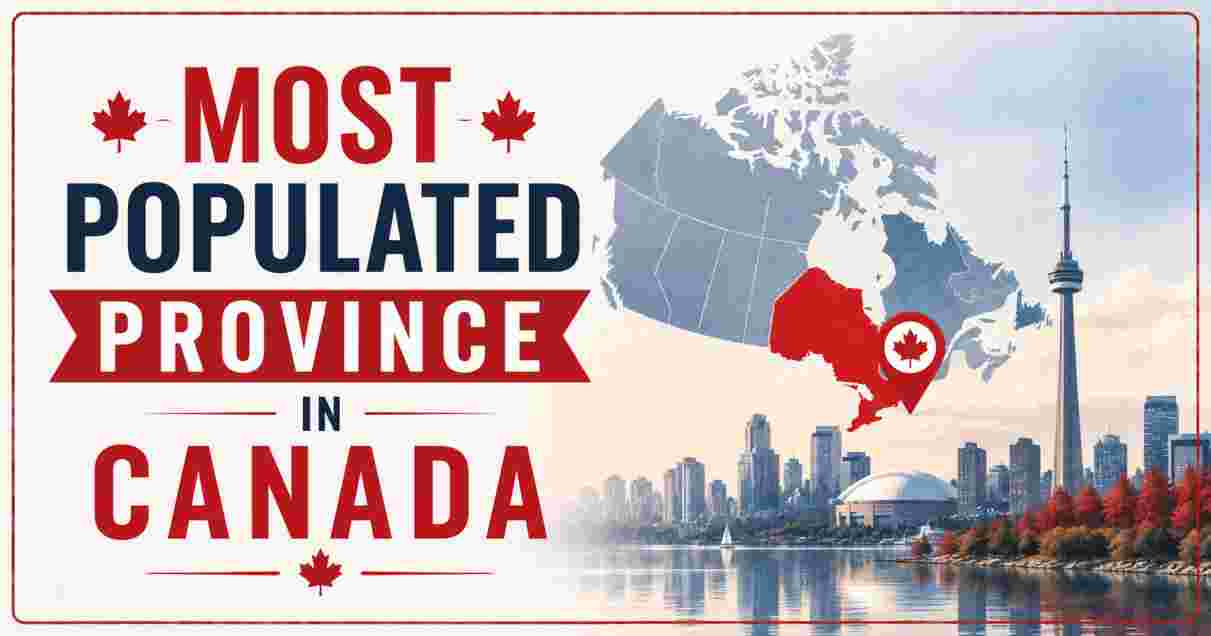
Ontario is, by a very wide margin, the most populated province in Canada in 2026 — and it has held that distinction without interruption since before Confederation in 1867. As of January 1, 2026, the Government of Ontario confirmed a population of 16,136,480 people, based on Statistics Canada’s preliminary quarterly estimates released on March 18, 2026. That single number represents nearly 39% of Canada’s entire national population of 41,472,081 — meaning that roughly two in every five Canadians live in a single province covering just 10.7% of the country’s total land area. Ontario’s concentration of population is not accidental or incidental: it reflects over 150 years of cumulative investment in infrastructure, economic institutions, immigration gateways, and urban development that have made the Greater Toronto Area one of the most attractive destinations for newcomers from around the world and one of the most productive regional economies in North America. The province is home to Canada’s financial capital (Toronto), the national capital (Ottawa), and six of the country’s most populous census metropolitan areas.
Understanding the most populated province in Canada in 2026 requires looking not just at Ontario’s absolute dominance but at the dynamic forces now reshaping provincial population rankings across the country. For the first time in generations, Canada’s population distribution is in meaningful flux. Ontario itself shrank by 119,070 people in the full calendar year 2025 — a reversal of the extraordinary immigration-driven growth of 2023–2024 that is attributable to the federal government’s policy-driven reduction of non-permanent residents. At the same time, Alberta has crossed the 5 million population threshold and is growing faster than any other province. Quebec, at just over 9 million people, holds second place comfortably but is also experiencing population decline. British Columbia, third largest at approximately 5.66 million, has been contracting for four straight quarters. The demographic competition among Canada’s provinces is entering a genuinely new chapter — one in which Ontario’s lead remains massive but is no longer growing, and in which Alberta’s trajectory points toward a future in which the western province could eventually challenge British Columbia for third place. This article draws exclusively on Statistics Canada quarterly estimates (Table 17-10-0009-01, released March 18, 2026), the Ontario Demographic Quarterly Highlights (Q4 2025, March 2026), the Government of Alberta Economic Outlook, and verified provincial and federal demographic publications.
Key Facts: Most Populated Province in Canada 2026
The following table captures the most essential and current Canadian provincial population facts 2026 — all drawn from Statistics Canada quarterly estimates as of January 1, 2026, and verified provincial government sources.
| Key Fact | Verified Stat |
|---|---|
| Most populated province in Canada (2026) | Ontario — 16,136,480 people (January 1, 2026) |
| Ontario’s share of Canada’s total population | ~38.9% — nearly 2 in 5 Canadians |
| Canada’s total population (January 1, 2026) | 41,472,081 (Statistics Canada, March 18, 2026) |
| 2nd most populated province | Quebec — 9,033,887 (January 1, 2026, Statistics Canada) |
| 3rd most populated province | British Columbia — 5,658,528 (January 1, 2026) |
| 4th most populated province | Alberta — ~5.05 million+ (growing; Q4 2025 estimate) |
| 5th most populated province | Manitoba — ~1.50 million (2025–26 estimate) |
| 6th most populated province | Saskatchewan — ~1.27 million (2025–26 estimate) |
| 7th most populated province | Nova Scotia — ~1.06 million (2025–26 estimate) |
| 8th most populated province | New Brunswick — ~870,000 (2025–26 estimate) |
| 9th most populated province | Newfoundland and Labrador — ~540,000 (2025–26 estimate) |
| 10th most populated province (smallest) | Prince Edward Island — ~180,000 (2025–26 estimate) |
| Ontario population change Q4 2025 | −54,892 people — second consecutive quarterly decline |
| Ontario population change full year 2025 | −119,070 people (−0.7%) — first annual decline in decades |
| Ontario annual population growth 2024 | +309,404 (+1.9%) — stark reversal from extraordinary prior year |
| Ontario non-permanent residents (January 1, 2026) | 1,200,779 — down 275,280 (−18.6%) from October 1, 2024 |
| Quebec population change full year 2025 | −9,576 people — also declining |
| British Columbia population change (since peak) | −41,461 since January 1, 2025 — four straight quarters declining |
| Alberta population growth full year 2025 | +59,970 — sole province with significant growth |
| Alberta population (Q1 2026) | 5.05 million — record high (Better Dwelling, April 2026) |
| 4 largest provinces’ combined population share | ~86.5% of Canada’s total (Wikipedia / Statistics Canada) |
| Ontario as destination for new immigrants (Q4 2025) | 42.3% of all new Canadian immigrants (35,159 of 83,168) |
| Ontario’s non-permanent resident peak (2024) | 1,476,059 (October 1, 2024) — shed 275,280 by Jan 1, 2026 |
| Canada’s population change Q4 2025 | −103,504 people (−0.2%) — second consecutive quarterly decline |
| Ontario median age (2026 est.) | ~42 years — older than national median of 40.8 |
| Ontario’s population at 2021 Census | 14,223,942 — grown by ~1.9 million since Census |
Data Sources: Statistics Canada — “The Daily: Canada’s Population Estimates, Fourth Quarter 2025” (released March 18, 2026, statcan.gc.ca); Government of Ontario — “Ontario Demographic Quarterly Highlights: Fourth Quarter” (ontario.ca, March 2026); Government of Canada — factsaboutcanada.ca citing Statistics Canada January 1, 2026 figures; Better Dwelling — “Canada’s Shrinking Population: Most Losses in Ontario, Alberta Grows” (April 6, 2026); Wikipedia — “Population of Canada by Province and Territory”; GlobalNews.ca — “Canadian population saw 2nd straight drop as 2025 ended” (March 19, 2026); uscanadainfo.com — Ontario Population 2026 (January 2026); superprof.ca — Population of Canada by Province
These 26 statistics establish the full landscape of provincial population in Canada as of 2026, and the most important story they tell is one of a country in demographic transition. Ontario at 16,136,480 remains untouchable in absolute population terms — its lead over second-place Quebec (9,033,887) is over 7.1 million people, a gap that is itself larger than the entire population of British Columbia. But Ontario’s −119,070 annual population loss in 2025 — following a gain of 309,404 in 2024 — is the most dramatic single-year reversal in provincial population history in the modern Statistics Canada era, driven almost entirely by the exodus of non-permanent residents whose numbers fell from 1,476,059 in October 2024 to 1,200,779 by January 2026, a loss of 275,280 temporary residents in 15 months. Ontario still attracts 42.3% of all new permanent immigrants to Canada, confirming its enduring pull as the primary destination for international newcomers — but in 2025–2026, that permanent immigration stream was insufficient to offset the larger outflow of temporary residents and the sustained loss of domestic migrants to Alberta and other provinces.
Canada’s Provincial Population Rankings 2026
Canada — All 10 Provinces by Population (January 1, 2026 / 2025–26 estimates)
(Statistics Canada quarterly Table 17-10-0009-01; released March 18, 2026)

1. Ontario          ████████████████████████████████████████████████████████  16,136,480
2. Quebec           ████████████████████████████                               9,033,887
3. British Columbia ████████████████                                           5,658,528
4. Alberta          ████████████████                                           ~5,050,000+
5. Manitoba         █████                                                      ~1,500,000
6. Saskatchewan     ████                                                       ~1,270,000
7. Nova Scotia      ███                                                        ~1,060,000
8. New Brunswick    ███                                                        ~870,000
9. Newfoundland/Lab ██                                                         ~540,000
10. P.E.I.          ▌                                                          ~180,000
     ──────────────────────────────────────────────────────────────────────────────────
     0          5M         10M         15M        16.1M
     The top 4 provinces = 86.5% of all Canadians
| Rank | Province | Population (Jan 1, 2026) | % of Canada | 2025 Annual Change |
|---|---|---|---|---|
| #1 | Ontario | 16,136,480 | ~38.9% | −119,070 (−0.7%) |
| #2 | Quebec | 9,033,887 | ~21.8% | −9,576 (declining) |
| #3 | British Columbia | 5,658,528 | ~13.6% | −41,461 since Jan 2025 |
| #4 | Alberta | ~5,050,000+ | ~12.2% | +59,970 (+1.2%) |
| #5 | Manitoba | ~1,500,000 | ~3.6% | Modest positive growth |
| #6 | Saskatchewan | ~1,270,000 | ~3.1% | +4,412 (small positive) |
| #7 | Nova Scotia | ~1,060,000 | ~2.6% | Net positive — Atlantic revival |
| #8 | New Brunswick | ~870,000 | ~2.1% | Net positive — Atlantic revival |
| #9 | Newfoundland & Labrador | ~540,000 | ~1.3% | Modest; aging challenges |
| #10 | Prince Edward Island | ~180,000 | ~0.43% | Modest positive |
| 3 Territories | YK + NWT + NU combined | ~135,000 | ~0.3% | Small positive overall |
| Canada total | All provinces + territories | 41,472,081 | 100% | −102,436 (−0.2%) in 2025 |
Data Sources: Statistics Canada — Quarterly Population Estimates, Table 17-10-0009-01 (released March 18, 2026); Government of Ontario — Ontario Demographic Quarterly Highlights Q4 2025 (ontario.ca); factsaboutcanada.ca citing Statistics Canada January 1, 2026 provincial figures; Better Dwelling — April 6, 2026; GlobalNews — March 19, 2026; uscanadainfo.com provincial population estimates; superprof.ca Canada Population by Province
The full provincial population ranking of Canada in 2026 reveals a deeply asymmetric country. The top four provinces — Ontario, Quebec, British Columbia, and Alberta — together account for approximately 86.5% of all Canadians, while the six remaining provinces and three territories share the remaining 13.5% of the national population across a land area larger than most continents. The gap between the largest (Ontario at 16.1 million) and the smallest province (Prince Edward Island at approximately 180,000) is a factor of nearly 90:1 — extraordinary by the standards of any federated nation. The four Atlantic provinces (Nova Scotia, New Brunswick, Newfoundland and Labrador, and PEI) together total just over 2.6 million people, a combined population smaller than the city of Calgary’s census metropolitan area. The three territories (Yukon, Northwest Territories, and Nunavut) account for a combined ~135,000 people despite covering over 40% of Canada’s total land area — the most extreme population-to-area ratio of any inhabited region in a democratic country.
The third and fourth position contest between British Columbia and Alberta is one of the defining demographic stories of the decade. British Columbia held a comfortable lead over Alberta for most of the past 30 years; by 2026, that lead has been dramatically narrowed. BC at 5,658,528 is now only approximately 600,000 ahead of Alberta’s ~5.05 million, and given BC’s current trajectory — four straight quarters of population decline losing a total of 41,461 people since January 2025 — while Alberta continues to grow (record high of 5.05 million in Q1 2026, growing at 0.14% per quarter), the Statistics Canada 2026 population projections explicitly note that Alberta is projected to surpass BC in population in almost all projection scenarios. That would mark the first time since the 1970s that British Columbia has not been Canada’s third most populated province, and would complete a western Canadian demographic reordering that is being driven by the same fundamental force — Alberta’s affordability and economic attractiveness relative to Vancouver’s housing crisis.
Ontario: Canada’s Most Populated Province in Detail 2026
Ontario Population — Key Statistics (January 1, 2026)
(Ontario Ministry of Finance / Statistics Canada Q4 2025 — released March 2026)

Total population Jan 1, 2026:             16,136,480
Q4 2025 population change:                −54,892  (2nd consecutive quarterly decline)
Q3 2025 population change:                −66,888  (first quarterly decline of cycle)
Full year 2025 population change:         −119,070 (−0.7%)
Full year 2024 population change:         +309,404 (+1.9%)

Non-permanent residents Jan 1, 2026:       1,200,779
Non-permanent residents Oct 1, 2024:       1,476,059
NPR decline since Oct 2024:               −275,280 (−18.6%)

Share of Canada's new immigrants (Q4 2025): 42.3%  (35,159 of 83,168 total)
Interprovincial migration loss Q4 2025:     −1,598 (lost to other provinces)
Net international migration Q4 2025:       −53,938 (net loss including NPR exit)

Ontario's population at 2021 Census:      14,223,942
Ontario's population peak (est.):         ~16,258,000 (Q3 2025, before declines began)
| Ontario Demographic Metric | Figure | Context |
|---|---|---|
| Total population — January 1, 2026 | 16,136,480 | Preliminary Statistics Canada estimate |
| Q4 2025 population change | −54,892 | Second consecutive quarterly decline |
| Q3 2025 population change | −66,888 | First quarterly decline since COVID |
| Full year 2025 population change | −119,070 (−0.7%) | Ontario shrank for the first time in decades |
| Full year 2024 population change | +309,404 (+1.9%) | Contrast to prior year boom |
| Non-permanent residents (Jan 1, 2026) | 1,200,779 | Down from 1,476,059 peak in October 2024 |
| NPR decline since peak (Oct 2024) | −275,280 (−18.6%) | Largest driver of Ontario population loss |
| Ontario’s share of new immigrants (Q4 2025) | 42.3% — 35,159 of 83,168 | Still dominant destination for permanent immigrants |
| Interprovincial migration loss Q4 2025 | −1,598 people | Losing residents to Alberta, NS, others |
| Net international migration Q4 2025 | −53,938 | Net loss once NPR exits counted |
| Population at 2021 Census | 14,223,942 | Grown by ~1.9M since Census |
| Toronto CMA interprovincial loss 2024/25 | −12,698 — worst of any Canadian CMA | StrategyCorp April 2026 |
| Ontario’s contribution to Canada’s national decline | 53% of national decline (Q1 2026) | Better Dwelling April 2026 |
| Ontario median age (estimated) | ~42 years | Older than national average of 40.8 |
| Ontario land area | 1,076,395 km² — 10.7% of Canada | 4th largest province by area |
| Ontario’s share of Canada’s population | ~38.9% | Largest provincial share since Confederation |
Data Sources: Government of Ontario — “Ontario Demographic Quarterly Highlights: Fourth Quarter” (ontario.ca, March 2026 release); Statistics Canada — “The Daily: Canada’s Population Estimates, Fourth Quarter 2025” (March 18, 2026); Better Dwelling — “Canada’s Shrinking Population: Most Losses in Ontario, Alberta Grows” (April 6, 2026); StrategyCorp — “Canada’s Urban Demographic Shift: Edmonton Leads, Toronto Retreats” (April 8, 2026); GlobalNews — “Canadian population saw 2nd straight drop as 2025 ended” (March 19, 2026)
Ontario’s population data for 2026 presents a province that is still Canada’s most populated by a dramatic margin but that is, for the first time in modern demographic history, losing residents on an annual basis. The −119,070 loss in 2025 follows a +309,404 gain in 2024 — a swing of nearly 430,000 people in net annual population change in a single year, the most dramatic such reversal in the province’s documented history. The cause is almost entirely attributable to the federal non-permanent resident policy change: Ontario’s NPR population fell from 1,476,059 in October 2024 to 1,200,779 by January 2026, a loss of 275,280 temporary residents in just 15 months. These were not marginal numbers — they included international students, temporary foreign workers, and asylum claimants who had been counted in Ontario’s population and were now either leaving the province or having their permits expire without renewal. Ontario’s own Ministry of Finance projections note that approximately 82,291 NPRs left in Q4 2025 alone, following cumulative losses of 192,989 in the four quarters prior to that.
What makes Ontario’s position structurally complicated, rather than simply declining, is that the province continues to attract 42.3% of all permanent immigrants to Canada — a share that has remained stable regardless of total immigration volumes. In Q4 2025, 35,159 of Canada’s 83,168 new permanent immigrants chose Ontario as their destination. This permanent immigration stream keeps Ontario’s long-term growth story intact even as the temporary resident adjustment plays out. The secondary pressure on Ontario’s population — interprovincial outmigration to Alberta — is documented in the −12,698 net interprovincial loss from the Toronto CMA in 2024/25 (StrategyCorp, April 2026), reflecting the housing affordability crisis that is pushing tens of thousands of Ontario residents, particularly young families and working-age professionals, to cheaper provinces. Ontario’s median age of approximately 42 — above the national average of 40.8 — signals an aging demographic profile that will sustain demand for healthcare, pension services, and elder care even as the working-age and immigrant-age population temporarily contracts.
Quebec and British Columbia: Provinces 2 and 3 in 2026
Quebec and British Columbia — Population Overview 2026
(Statistics Canada Q4 2025 estimates; released March 18, 2026)

QUEBEC:
  Population (Jan 1, 2026):      9,033,887
  Q4 2025 interprovincial loss: -1,579 (lost to other provinces)
  Annual 2025 population change: -9,576 (modest decline)
  Language profile: ~77% French mother tongue
  Capital: Quebec City | Largest city: Montreal CMA (~4.3 million)
  Quebec's unique status: Only majority French-speaking province; controls own immigration streams
  New Canada-Quebec immigration measure: Announced March 13, 2026 (may affect 2026 NPR estimates)

BRITISH COLUMBIA:
  Population (Jan 1, 2026):       5,658,528
  Annual decline since Jan 2025: -41,461 people (four consecutive declining quarters)
  Q4 2025 growth rate: -0.4% — among worst in country
  Largest city: Vancouver CMA (~3.3 million)
  BC interprovincial status: Now net POSITIVE in Q3/Q4 2025 — first since 2021
  Primary challenge: Most expensive housing market in Canada; young adults leaving
  Alberta gap: Alberta (~5.05M) now only ~600K behind BC (5.66M)
| Province | Population (Jan 2026) | % of Canada | 2025 Change | Key Driver |
|---|---|---|---|---|
| Quebec | 9,033,887 | ~21.8% | −9,576 | NPR exits; stable French immigration |
| Quebec vs. Ontario gap | — | — | −7.1 million behind Ontario | Consistent since 1867 |
| Quebec language character | ~77% French mother tongue | — | Stable | Unique in North America |
| Quebec immigration model | Province controls French-speaking selection | — | ~16.5% of national immigration | Canada-Quebec Accord 1991 |
| March 2026 Quebec measure | New immigration measure for Quebec workers | — | May boost 2026 NPR estimates | Stats Canada note, March 13, 2026 |
| British Columbia | 5,658,528 | ~13.6% | −41,461 (Jan–Jan) | NPR exits; interprovincial loss |
| BC population peak | ~5.7 million (Q3 2025) | — | Peaked Q3 2025 | Now declining |
| BC vs. Alberta gap | ~608,000 ahead of Alberta | Narrowing fast | BC declining, AB growing | — |
| BC interprovincial status Q3/Q4 | First net surplus since 2021 (+2,731) | — | Improvement | StrategyCorp April 2026 |
| Vancouver median home price | ~$1.9 million+ (single detached) | — | Primary out-migration driver | immigcanada.com |
| Statistics Canada projection | Alberta to surpass BC | “Almost all scenarios” | — | StatsCan Jan 27, 2026 |
Data Sources: Statistics Canada — Q4 2025 Daily release (March 18, 2026); factsaboutcanada.ca citing StatsCan January 1, 2026 provincial figures; StrategyCorp — “Canada’s Urban Demographic Shift” (April 8, 2026); Statistics Canada — “Population Projections for Canada, Provinces and Territories, 2025 to 2075” (January 27, 2026); Better Dwelling (April 6, 2026); Government of Ontario — Q4 2025 Demographic Quarterly
Quebec’s position as Canada’s second most populated province has been uninterrupted since Confederation — a 159-year demographic constant — but the mechanisms sustaining that position have shifted profoundly. Through the mid-20th century, Quebec maintained its demographic weight through the highest birth rate in Canada; after the Quiet Revolution dramatically reduced fertility in the 1960s, Quebec pivoted to using its unique provincial immigration powers — enshrined in the 1991 Canada-Quebec Accord — to attract French-speaking immigrants who help maintain both its population size and its linguistic character. The −9,576 annual population loss in 2025 reflects the same non-permanent resident policy shock hitting Ontario, moderated somewhat by Quebec’s distinct immigration frameworks. A new immigration measure for Quebec workers and employers announced on March 13, 2026 was specifically flagged by Statistics Canada in its Q4 2025 release as potentially impacting upcoming NPR estimates for 2026 — signalling that Quebec’s trajectory may improve in coming quarters as the federal government extends permit renewals that benefit Quebec’s labour market. With Montreal’s CMA at approximately 4.3 million people, Quebec possesses a metropolitan anchor comparable in scale to any in Canada outside Toronto, and its combination of cultural distinctiveness, lower cost of living than Ontario and BC, and active provincial immigration management makes it likely to stabilize its position even as national non-permanent resident numbers continue adjusting.
British Columbia’s population trajectory in 2026 is the most economically paradoxical of any major province: a jurisdiction that remains one of Canada’s most desirable destinations in terms of quality of life and climate, yet is losing population to interprovincial outflows because housing costs have become prohibitive for the majority of working-age Canadians. With Vancouver single detached homes averaging approximately $1.9 million, the economic calculus for young families choosing between BC and Alberta has become straightforward. BC’s four consecutive quarters of population decline since its peak in Q3 2025 — a total loss of 41,461 residents — has compressed the gap with Alberta to approximately 600,000 people (BC at 5,658,528 versus Alberta at ~5.05 million). The January 2026 Statistics Canada population projections — published on January 27, 2026 — stated explicitly that Alberta is projected to surpass British Columbia in population in almost all projection scenarios over the coming decades. When that happens, it will trigger a reordering of Canadian political and economic geography that has been building for two decades.
Canada’s Fastest and Slowest Growing Provinces 2026
Provincial Population Growth Rates — 2025 Full Year Performance
(Statistics Canada Q4 2025 release, March 18, 2026; Government of Ontario Q4 2025)

GROWING:
  Alberta          +59,970  (+1.2%)  |███████████████████████████████████████████████████████
  Saskatchewan     +4,412   (+0.3%)  |████████████████
  Nova Scotia      Positive          |████████████
  New Brunswick    Positive          |████████████
  Manitoba         Positive (small)  |████████

DECLINING:
  Ontario          -119,070 (-0.7%)  |████████████████████████████████████████████████████████
  British Columbia -41,461  (~-0.7%) |████████████████████████████████████████████████████████
  Quebec           -9,576   (-0.1%)  |██████

CANADA TOTAL:
  -102,436 (-0.2%) in 2025 — first time Canada's population has fallen since Confederation (1867)
| Province | 2025 Population Change | Growth Rate | Status |
|---|---|---|---|
| Alberta | +59,970 | +1.2% | Fastest growing — only significant provincial growth |
| Saskatchewan | +4,412 | +0.3% | Small positive |
| Nova Scotia | Net positive | — | Atlantic revival story |
| New Brunswick | Net positive | — | Atlantic revival story |
| Manitoba | Small net positive | — | Steady modest growth |
| Ontario | −119,070 | −0.7% | Largest absolute decline |
| British Columbia | −41,461 (Jan–Jan) | ~−0.7% | Large decline — NPR exits + interprovincial loss |
| Quebec | −9,576 | −0.1% | Modest decline |
| PEI | Small positive | — | — |
| Newfoundland & Labrador | Modest | — | Challenges continue |
| Canada total | −102,436 | −0.2% | First annual decline since Confederation |
Data Sources: Statistics Canada Q4 2025 Daily release (March 18, 2026); Government of Ontario — Q4 2025 Demographic Quarterly (ontario.ca); Better Dwelling — April 6, 2026; GlobalNews — March 19, 2026; DiscoverAirdrie.com citing Statistics Canada (March 19, 2026)
The 2025 annual provincial population growth data documents what is, by any historical measure, a remarkable year in Canadian demographic history. Canada’s national population fell by 102,436 people in 2025 — the first annual decline since Confederation in 1867, according to Wikipedia’s population of Canada article, citing Statistics Canada data. That milestone is directly attributable to the federal policy pivot on non-permanent residents: the NPR population peaked nationally at 3,149,131 in October 2024 and fell to 2,676,441 by January 1, 2026 — a loss of 472,690 temporary residents in 15 months. Since NPRs are counted in provincial population totals, their mass exit produced population declines in virtually every province simultaneously, with Ontario (−275,280 NPRs) and British Columbia (−significant NPR losses) bearing the largest absolute burdens. Alberta’s +59,970 population gain — making it the only province with meaningful net growth — stands as a direct counterpoint to this national narrative: Alberta’s lower concentration of NPRs, combined with its structural interprovincial migration advantage, allowed it to continue growing even as the country around it contracted.
The Atlantic province story in 2026 is the most encouraging regional demographic narrative in Canada, and one that contrasts sharply with the large-province contraction narrative. Nova Scotia, New Brunswick, Prince Edward Island, and Newfoundland and Labrador — all of which experienced chronic out-migration throughout the late 20th century — have benefited from a combination of remote-work-enabled in-migration from expensive Ontario and BC markets, targeted Provincial Nominee Programs that have successfully attracted immigrants to smaller communities, and the affordability advantage that the Atlantic region now holds against Canada’s major metros. Nova Scotia at approximately 1.06 million and New Brunswick at approximately 870,000 are both recording net positive population growth in 2025–26, a trend that would have been statistically surprising just ten years ago and that reflects the structural rebalancing of Canadian population distribution now underway. The long-term question is whether this Atlantic growth is durable — sustained by genuinely improving economic conditions and community investment — or transitional, representing a temporary arbitrage that will moderate as housing prices in Atlantic cities begin to reflect the new demand.
Ontario’s Major Cities and Population Centres 2026
Ontario's Major Census Metropolitan Areas — Population Estimates 2025–26
(Statistics Canada CMA data; StrategyCorp April 2026; superprof.ca)

Greater Toronto Area (Toronto CMA)     |████████████████████████████████████████████████ ~7.0M+
Ottawa-Gatineau CMA (Ontario side)     |██████████████                                  ~1.5M+
Hamilton CMA                           |████████████                                    ~820,000
London CMA                             |█████████                                       ~570,000
Kitchener-Cambridge-Waterloo CMA       |████████                                        ~535,000
St. Catharines-Niagara CMA             |████████                                        ~475,000
Oshawa CMA                             |███████                                         ~420,000
Windsor CMA                            |██████                                          ~360,000
Barrie CMA                             |█████                                           ~230,000
Kingston CMA                           |████                                            ~190,000

Toronto: Canada's most populous city and 4th largest in North America
Toronto CMA interprovincial LOSS 2024/25: −12,698 — worst of any Canadian CMA
But Ontario still receives 42.3% of ALL new Canadian immigrants
| Ontario CMA / City | Population Estimate (2025–26) | Status | Notable 2026 Trend |
|---|---|---|---|
| Greater Toronto Area (Toronto CMA) | ~7.0 million+ | Canada’s largest | Net interprovincial loss of −12,698 (2024/25) |
| Ottawa-Gatineau (Ontario portion) | ~1.0–1.1 million (Ontario side) | Growing | Ottawa gained +3,581 interprovincial (2024/25) |
| Hamilton CMA | ~820,000 | Growing moderately | Benefiting from GTA overflow |
| London CMA | ~570,000 | Steady | Regional hub growth |
| Kitchener-Cambridge-Waterloo | ~535,000 | Growing — tech cluster | Innovation corridor growth |
| St. Catharines-Niagara | ~475,000 | Modest growth | Border city dynamics |
| Oshawa CMA | ~420,000 | Moderate growth | GTA eastern anchor |
| Windsor CMA | ~360,000 | Modest | US border city; auto sector |
| Barrie CMA | ~230,000 | Growing | GTA commuter belt |
| Kingston CMA | ~190,000 | Modest positive | Net interprovincial gain +253 (2024/25) |
| Toronto CMA total percentage of Canada | ~17% of all Canadians | Dominant | Largest Canadian CMA |
| Toronto median home price (detached) | ~$1.4 million+ | Affordability crisis | Primary driver of GTA outmigration |
Data Sources: StrategyCorp — “Canada’s Urban Demographic Shift: Edmonton Leads, Toronto Retreats” (April 8, 2026); superprof.ca — Canada Population by Province (CMA data); immigcanada.com — Toronto median home price comparison; Statistics Canada CMA estimates (Table 17-10-0009-01); GlobalNews — Ontario’s immigrant share (March 2026)
Ontario’s urban geography is organized around the Greater Toronto Area to a degree that has no parallel in Canadian provincial demographics. The Toronto Census Metropolitan Area — encompassing Toronto proper plus Mississauga, Brampton, Markham, Vaughan, Richmond Hill, Oakville, Burlington, and surrounding municipalities — contains approximately 7 million people, representing roughly 43% of Ontario’s entire provincial population and approximately 17% of all Canadians. This concentration is a function of 150 years of self-reinforcing economic agglomeration: financial services, technology, media, healthcare, education, and government institutions clustered in and around Toronto have made the GTA the most economically productive region in Canada and, by global standards, one of the more productive mid-size metropolitan economies in North America. The city of Toronto proper receives approximately 19% of all Canadians within its broader metropolitan orbit, making it the fourth-largest metropolitan area in North America after New York, Los Angeles, and Chicago.
Yet even the GTA’s formidable economic and institutional gravity is showing demographic strain in 2026. Toronto CMA’s net interprovincial migration loss of −12,698 in 2024/25 — the worst of any Canadian Census Metropolitan Area, according to StrategyCorp’s April 2026 analysis — reflects a population that is choosing affordability over agglomeration in increasing numbers. A Toronto detached home price of approximately $1.4 million+ has made homeownership inaccessible for a growing share of young working families, who are choosing Calgary ($710,000 detached median) or Edmonton ($485,000) instead. The cities that are benefiting within Ontario are those positioned as GTA alternatives: Hamilton, Kitchener-Waterloo, and Barrie are all recording growth from GTA spillover migration, while Ottawa and Kingston are the only Ontario CMAs that recorded positive net interprovincial migration in 2024/25 (Ottawa: +3,581, Kingston: +253). The concentration of Ontario’s population into the GTA and a handful of secondary cities means that the province’s demographic health is tightly coupled to the GTA’s ability to remain economically competitive — and in 2026, the affordability challenge to that competitiveness is real and growing.
Disclaimer: The data research report we present here is based on information found from various sources. We are not liable for any financial loss, errors, or damages of any kind that may result from the use of the information herein. We acknowledge that though we try to report accurately, we cannot verify the absolute facts of everything that has been represented.