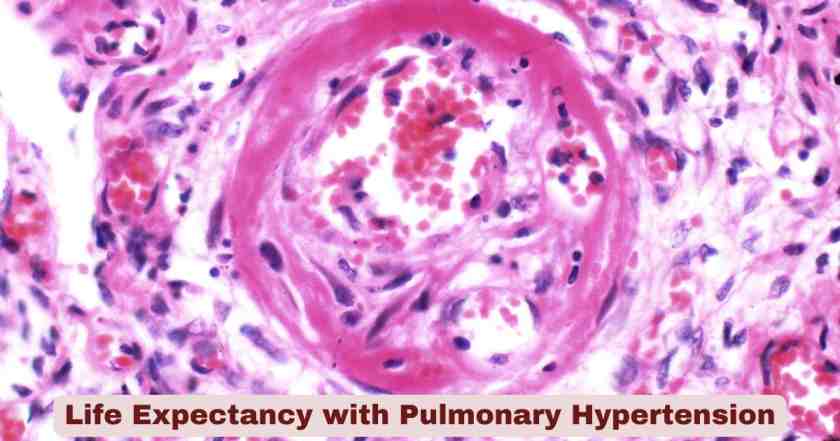
Life Expectancy with Pulmonary Hypertension in America 2026
Pulmonary hypertension (PH) is a serious, progressive disease of the pulmonary arteries that silently advances until the right side of the heart begins to fail. In the United States, it remains one of the most underdiagnosed cardiovascular conditions, cutting across all age groups, ethnicities, and demographics — though women between the ages of 30 and 60 carry the heaviest diagnostic burden. When most people hear the phrase “high blood pressure,” they picture a manageable lifestyle condition. Pulmonary hypertension is a fundamentally different beast. It narrows and stiffens the arteries that carry blood from the heart into the lungs, forcing the right ventricle to work far harder than it was designed to. Over time, that overloaded chamber weakens, fails, and — without timely treatment — this disease becomes fatal.
Understanding life expectancy with pulmonary hypertension in 2026 requires looking at decades of registry data, real-world US outcomes, and the measurable gains that modern treatment has delivered. The good news — and there genuinely is good news — is that survival timelines have stretched dramatically compared to the pre-treatment era of the 1980s, when a median of 2.8 years was the bleak reality following diagnosis. Today, patients who achieve low-risk status under contemporary therapy can expect survival well beyond 10 years. The picture is still sobering, but it is no longer hopeless. The statistics compiled below paint an honest, data-driven portrait of where things stand in America as of 2026, drawing exclusively from confirmed, verified sources including the CDC WONDER database, the NIH, the National Heart, Lung, and Blood Institute (NHLBI), the REVEAL Registry, and peer-reviewed analyses of federal health data.
Interesting Key Facts About Life Expectancy with Pulmonary Hypertension 2026
Before diving into granular survival statistics, it is worth pausing on the most striking facts that define the landscape of pulmonary hypertension life expectancy in 2026. These are data points that often surprise even medically informed readers — and they matter for everyone from newly diagnosed patients to the caregivers and clinicians supporting them.
| Fact | Key Figure / Detail |
|---|---|
| Median survival without treatment (pre-1994) | 2.8 years from diagnosis (NIH Registry, 1981–1985) |
| Median survival with modern treatment | Approximately 7 to 10+ years (low-risk patients) |
| First approved PAH medication | Epoprostenol (Flolan), approved 1994 |
| Number of FDA-approved PAH therapies in the US | 16 therapies as of 2024–2026 |
| Average time from symptom onset to diagnosis | 2.3 to 3.9 years — a dangerous, persistent gap |
| Female predominance in PAH | 79.5% of PAH patients are female (REVEAL Registry) |
| Female-to-male ratio in PAH | 4.8:1 (REVEAL Registry, 2,967 patients) |
| US prevalence of PAH | 15 to 50 cases per million Americans |
| PAH patients aged 65+ per million adults | Estimated 451 per million adults aged 65 and older |
| PAH patients aged 19–64 per million adults | Estimated 109 per million adults aged 19–64 |
| Age-adjusted PH mortality rate (CDC WONDER, 1999–2019) | 7.9 per 100,000 individuals |
| Annual increase in PH mortality rate (CDC data) | +1.9% per year from 1999 to 2019 |
| Total PH-related US deaths (1999–2019) | 429,105 deaths recorded where PH was listed as a cause |
| Crude PH mortality rate, adults 85+ | 105.4 per 100,000 — the highest of any age group |
| Rural PH age-adjusted mortality rate | 10.75 per 100,000 — higher than the national average |
| Black Americans vs. White Americans mortality disparity | Non-Hispanic Black persons: 9.1 per 100,000 vs. 6.5 for NH Whites (2010 data) |
| Mean age at PAH diagnosis (REVEAL Registry) | 53 years (range: ±14 years) |
| Global PAH mortality rate decline (1990–2021) | Age-standardized mortality fell 22.9% globally |
Data Sources: CDC WONDER Database; NIH National Registry (1981–1985); REVEAL Registry; Pulmonary Hypertension Association Registry (PHAR); PMC/PubMed peer-reviewed analyses of US federal mortality data; Global Burden of Disease Study 2021 (Lancet Respiratory Medicine, 2024)
These facts frame a critical paradox at the heart of pulmonary hypertension mortality in the United States: despite real, measurable therapeutic progress and 16 FDA-approved treatment options, overall mortality at the population level has continued to creep upward over the past two decades. The data from the CDC WONDER database — covering 429,105 US deaths linked to pulmonary hypertension between 1999 and 2019 — tell a story of uneven progress. While individual patients who receive early, guideline-directed, combination therapy can now survive a decade or longer, large swaths of the American patient population — especially elderly individuals, Black Americans, and patients in rural areas — are still being diagnosed too late, treated too conservatively, or simply never reached by the advances concentrated at specialized PH centers. The 2.3-to-3.9-year diagnostic delay is not a minor inconvenience: it represents years of disease progression happening unchecked, right ventricles silently deteriorating, and survival windows irretrievably narrowing. This tension between what is possible for informed, early-treated patients and what actually happens across the US patient population defines the challenge heading into 2026.
Pulmonary Hypertension Survival Rates by Year 2026
Understanding pulmonary hypertension survival rates requires separating two distinct eras: the pre-treatment period captured by the NIH Registry, and the contemporary treatment era captured by the REVEAL Registry and the Pulmonary Hypertension Association Registry (PHAR). Both datasets were collected from US patients and remain the most rigorously validated sources of survival data available.
| Time Point | NIH Registry Survival (1981–1985, No PAH Therapies) | REVEAL Registry Survival (2006–2009, Modern Therapies) | PHAR Survival (2015–2020, Contemporary Era) |
|---|---|---|---|
| 1-Year | 68% | 85–91% | 92% (8% mortality) |
| 2-Year | ~55% | ~77% | 84% (16% mortality) |
| 3-Year | 48% | 68% | 79% (21% mortality) |
| 5-Year | 34% | 57% | Data pending long-term follow-up |
| 7-Year | ~20% | 49% | Data pending |
| Median Survival | 2.8 years | ~7 years | Approaching 10+ years for low-risk patients |
Data Sources: NIH National Prospective Study of Primary Pulmonary Hypertension (Ann Intern Med, 1987); REVEAL Registry (Registry to Evaluate Early and Long-Term PAH Disease Management); Pulmonary Hypertension Association Registry (PHAR), Journal of the American Heart Association, 2022
The progression from a 2.8-year median survival in the 1981–1985 NIH Registry to a 7-year median in the REVEAL era, and now to the possibility of 10+ years for patients achieving low-risk status, is one of the most meaningful clinical trajectories in modern pulmonary medicine. The REVEAL Registry followed 2,635 patients across 55 US centers, and what it found redefined expectations: 1-year survival of 85%, 3-year survival of 68%, 5-year survival of 57%, and 7-year survival of 49%. The more recent PHAR data — enrolling patients between 2015 and 2020, when combination therapy had become standard — pushed 1-year survival even higher to 92% (mortality of only 8%). But the aggregate numbers mask critical variation. High-risk patients in the PHAR still faced 1-year mortality of 12–19%, rising to 28–55% at 3 years — figures that underscore why high-risk PAH remains a medical emergency. The takeaway for 2026 is that functional class, right heart hemodynamics, biomarkers, and exercise capacity at the time of diagnosis are the single most powerful determinants of how long a person with pulmonary hypertension will live. Low-risk patients can outlive the statistics by a decade or more; high-risk patients cannot afford delays in escalating therapy.
Pulmonary Hypertension Survival by Risk Category 2026
Risk stratification using validated tools such as the REVEAL Risk Score 2.0 and the ESC/ERS risk assessment model has transformed how survival is estimated at the individual level. These frameworks categorize patients into low, intermediate, and high risk based on functional class, biomarkers, hemodynamics, and exercise performance — and the survival differences between categories are stark.
| Risk Category | 1-Year Mortality (PHAR, 2015–2020) | 2-Year Mortality | 3-Year Mortality | Treatment Implication |
|---|---|---|---|---|
| Low Risk | 1% | 4–6% | 7–11% | Maintain current therapy; monitor closely |
| Intermediate Risk | 7–8% | 11–16% | 18–20% | Therapy escalation recommended |
| High Risk | 12–19% | 22–38% | 28–55% | Urgent escalation; transplant evaluation |
| Treatment-naïve, combination therapy | 57% better 1-year survival vs. monotherapy | — | — | Combination therapy strongly preferred |
Data Sources: Pulmonary Hypertension Association Registry (PHAR), Journal of the American Heart Association (2022); 2022 ESC/ERS Guidelines for Pulmonary Hypertension; 2024 World Symposium on Pulmonary Hypertension (WSPH) Proceedings
The stratification data from the PHAR make one thing abundantly clear: where a patient sits on the risk spectrum at the time of their first evaluation is the most powerful predictor of how long they will live. A low-risk patient faces just 1% mortality in year one — essentially a near-normal short-term prognosis. A high-risk patient faces up to 19% mortality in year one and potentially 55% at three years — outcomes that rival aggressive malignancies. Perhaps the most actionable finding embedded in this risk data is the treatment response: patients who started on combination therapy from the outset had a 57% improvement in 1-year survival compared to those who began on monotherapy. This finding, drawn from the PHAR and consistent with the 2024 WSPH Proceedings, has firmly established upfront combination therapy as the standard of care across all risk categories except those contraindicated. The 2022 ESC/ERS guidelines codified low-risk status as the explicit treatment goal — the target that clinicians and patients should work toward from the moment of diagnosis. Patients who achieve and sustain low-risk status do not just live longer; they live better, with preserved functional capacity and substantially reduced hospitalization burden.
Pulmonary Hypertension Mortality by Demographics 2026
The CDC WONDER database has provided the most comprehensive portrait of who dies from pulmonary hypertension in the United States and at what rate. The data, spanning 1999 to 2019 and covering 429,105 deaths, reveals persistent and deeply troubling disparities by age, sex, race, and geography that have not meaningfully resolved despite two decades of therapeutic advancement.
| Demographic Group | Age-Adjusted Mortality Rate (per 100,000) | Key Finding |
|---|---|---|
| Overall US population | 7.9 | Increased +1.9% per year from 1999–2019 |
| Female | Higher than males | PH mortality disproportionately concentrated in women |
| Non-Hispanic Black persons | 9.1 | Significantly higher than NH Whites |
| Non-Hispanic White persons | 6.5 | Lower but still rising |
| Adults aged 85 and older | 105.4 (crude rate) | Highest of all age groups — nearly 10× national average |
| Rural Americans | 10.75 | Exceeds overall national rate by ~36% |
| PH + Left Heart Disease (co-occurrence) | Rising at ~double annual rate | Growing subgroup with uniquely poor outcomes |
| Total PH-related deaths (1999–2019) | 429,105 | PH listed as a cause on all these death certificates |
Data Sources: CDC WONDER (Wide-Ranging Online Data for Epidemiology Research) Database; ScienceDirect/PubMed analysis of ICD-10 coded US death certificates, published 2022; Rural-Urban PH Mortality Analysis, CDC WONDER (2004–2019)
What the CDC WONDER mortality data captures is an inconvenient but important reality: therapeutic progress has not been distributed equitably across American society. While the scientific literature celebrates improved survival in clinical trial populations and specialized PH centers, the national mortality rate for pulmonary hypertension was still climbing by nearly 2% per year through the end of the study period. Non-Hispanic Black Americans continue to face an age-adjusted mortality rate of 9.1 per 100,000 — 40% higher than the 6.5 rate for Non-Hispanic White Americans — a disparity that has persisted stubbornly over the entire two-decade observation window. Rural Americans face even more pronounced disadvantage, with an age-adjusted mortality rate of 10.75 per 100,000, reflecting barriers in access to specialized PH centers, delays in diagnosis, and lower rates of guideline-directed combination therapy. The elderly population — particularly adults aged 85 and older — face a crude mortality rate of 105.4 per 100,000, a figure that reflects not just the progression of underlying PH but also the compounding burden of comorbidities. Until systemic barriers to early diagnosis and equitable treatment access are resolved, these disparities will remain a defining feature of pulmonary hypertension in America.
Pulmonary Hypertension Prevalence and Incidence Statistics 2026
Knowing how many Americans are living with pulmonary hypertension in 2026 is foundational to understanding the full scope of the public health challenge. Prevalence and incidence data, while heterogeneous across studies due to varying diagnostic thresholds and registry methodologies, converge on a consistent picture: PH is rare but growing, and its burden falls unevenly.
| Metric | Statistic | Source / Registry |
|---|---|---|
| PAH prevalence in US & Europe | 15 to 50 cases per million | AJMC/REVEAL Registry analysis |
| General population PAH prevalence | 0.03–0.05 per 1,000 population | Published Medicaid cohort analysis, 2025 |
| Medicaid beneficiary PH prevalence | 1.7 to 1.8 per 1,000 persons | Morehouse/Tufts Medicaid study, Pulmonary Circulation, 2025 |
| Medicaid beneficiary PAH prevalence | 0.4 to 0.5 per 1,000 persons | Pulmonary Circulation, 2025 |
| PAH prevalence, adults 65+ | 451 per million adults | US real-world commercial data analysis |
| PAH prevalence, adults 19–64 | 109 per million adults | US real-world commercial data analysis |
| Idiopathic/heritable/anorexigen PAH | 52.6% of all PAH cases | AJMC epidemiology review, 2025 |
| Global PAH prevalence increase (1990–2021) | Age-standardized rate increased 22.8% | GBD Study 2021, Lancet Respiratory Medicine, 2024 |
| New US PAH cases estimated annually | ~200,000 new diagnoses per year | AJMC clinical review |
| Mean age at diagnosis (REVEAL Registry) | 53 years | REVEAL Registry (2,967 patients) |
| Female proportion of PAH patients | 79.5% | REVEAL Registry |
| Connective tissue disease-associated PAH | ~25% of PAH patients | REVEAL Registry |
| Congenital heart disease-associated PAH | ~10% of PAH patients | REVEAL Registry |
Data Sources: REVEAL Registry (55-center US observational study); Medicaid Analytic Extract (MAX) data, Pulmonary Circulation (April 2025); AJMC Pulmonary Arterial Hypertension Epidemiology Review (2025); GBD 2021 PAH Collaborators, Lancet Respiratory Medicine (2024)
The prevalence picture for pulmonary hypertension in the United States is complicated by one persistent challenge: the disease is vastly underdiagnosed. The 2.3-to-3.9-year average diagnostic delay means that a substantial portion of the patients who actually have PH at any given moment have not yet been captured in prevalence counts. The 15 to 50 cases per million figure for pulmonary arterial hypertension is likely a conservative floor rather than a true ceiling. Among Medicaid enrollees — who tend to have higher burdens of comorbid illness — prevalence of the broader pulmonary hypertension category was 1.7 to 1.8 per 1,000 persons, several times higher than population-wide estimates. The demographic profile of the REVEAL Registry — 79.5% female, mean age 53, with 25% of cases linked to connective tissue diseases — has direct clinical implications. Women between 30 and 60 presenting with unexplained dyspnea and fatigue deserve early echocardiographic screening. Clinicians managing patients with systemic sclerosis, lupus, sickle cell disease, or HIV should maintain a low threshold for PAH workup, given the established associations between these conditions and pulmonary hypertension.
Diagnostic Delay and Its Impact on Life Expectancy with Pulmonary Hypertension 2026
One of the most consequential statistics in the entire field of pulmonary hypertension is how long it takes to arrive at a correct diagnosis. The symptoms of PH — fatigue, breathlessness, reduced exercise tolerance — are maddeningly nonspecific. They overlap with asthma, deconditioning, heart failure, anemia, and anxiety, among dozens of other conditions. The result is a diagnostic odyssey that, even in 2026, has not meaningfully shortened since the NIH Registry era.
| Diagnostic Delay Metric | Statistic | Clinical Implication |
|---|---|---|
| Mean delay from symptom onset to PAH diagnosis | 2.3 to 3.9 years (US studies) | Disease progresses significantly during this window |
| Median time from CUD to PAH diagnosis (US EHR data) | 2.26 years (0.73–4.22 IQR) | Confirmed using Optum US claims & EHR database |
| Average diagnosis delay (AJMC clinical review) | 2.3 to 2.8 years | Widespread across US clinical practice |
| Healthcare consumption starting before diagnosis | Up to 5 years before formal PAH diagnosis | Patients burden the system without a clear diagnosis |
| Misdiagnosis rate / inappropriate treatment | Common; no simple early diagnostic test available | Right heart catheterization remains the gold standard |
| Patients in functional class III/IV at diagnosis | Majority of newly diagnosed patients | Late-stage presentation remains the norm |
| Proportion of patients with prior incorrect diagnosis | Frequently reported across US registry data | Delays guideline-directed therapy initiation |
| Effect of early vs. late diagnosis on survival | Early diagnosis significantly improves survival | Late-stage diagnosis tied to higher hospitalization and mortality |
Data Sources: PMC/Optum US Claims and Electronic Health Records Database (published in Pulmonary Circulation); AJMC clinical management review; NIH and NHLBI-funded registry analyses
The 2.26-year median diagnostic delay — confirmed using a nationwide US claims database covering 854,722 patients with chronic unexplained dyspnea (CUD), of whom 582 (0.1%) had PAH — is not just a clinical curiosity. It is a death sentence for months or years of quality life and, in many cases, a direct driver of the high-risk functional class in which most patients first present. By the time a patient receives a confirmed pulmonary arterial hypertension diagnosis and begins guideline-directed therapy, their right ventricle has often already undergone significant, partially irreversible remodeling. Healthcare consumption — emergency room visits, cardiology consultations, pulmonology referrals, repeated echocardiograms — has been documented to begin surging up to 5 years before a formal PAH diagnosis, suggesting that the healthcare system is encountering these patients repeatedly without connecting the dots. The clinical implication is straightforward and urgent: any patient with unexplained dyspnea lasting more than a few months, particularly women aged 30–60 or patients with connective tissue diseases, HIV, liver disease, or family history of PH, should be evaluated with echocardiography followed by right heart catheterization — the diagnostic gold standard. Every year of delay is a year of avoidable disease progression.
Economic Burden of Pulmonary Hypertension 2026
Beyond the human cost of life expectancy with pulmonary hypertension, the financial burden on patients, payers, and the US healthcare system is staggering — and it scales directly with disease severity. A comprehensive 2025 analysis published in PharmacoEconomics using real-world US insurance data from 2018 to 2020 placed PAH healthcare costs more than eight times higher than matched controls without the disease.
| Economic Metric | Statistic | Data Period / Payer |
|---|---|---|
| Mean healthcare cost, PAH patients | $3,069 per patient per month | US commercial insurance, real-world data |
| Mean healthcare cost, non-PH controls | $1,571 per patient per month | Matched comparison group |
| Hospitalization cost (≥1 admission) | $46,118 average per patient | US commercial & Medicaid data |
| Readmission cost (within 1 year) | $35,188 average per patient | US commercial & Medicaid data |
| 30-day readmission rate in PAH | 1 in 5 patients rehospitalized within 30 days | US registry and claims analysis |
| 1-year readmission rate in PAH | 79.3% of hospitalized PAH patients | US hospitalization database |
| Highest-severity monthly cost | Up to $14,614 per month | Systematic review, USD 2024 adjusted |
| Hospitalization rate (annual) | ~18% of PAH patients hospitalized at least once/year | US real-world analysis |
| Risk of any-cause hospitalization vs. controls | ~7 times higher for PAH patients | US commercial data comparison |
| Medicaid average hospital bed days | 0.5 days per year higher than non-PH enrollees | Medicaid MAX data, 2009–2012 |
| Average yearly Medicaid cost, PH patients | $6,997 higher per year vs. non-PH enrollees | Medicaid Analytic Extract |
| All-cause mortality rate | 1.9 per 100 person-months | US PAH comorbidity study, AJRCCM 2025 |
Data Sources: PharmacoEconomics (2025) — Economic Burden of PAH in the US (Merck/Milliman retrospective study, 2018–2020 data); AJMC Economic Burden Review; American Journal of Respiratory and Critical Care Medicine (2025); Medicaid Analytic Extract (MAX) analysis, Pulmonary Circulation (2025)
The economics of pulmonary hypertension in America lay bare a painful reality: this disease does not just shorten lives — it consumes an extraordinary share of healthcare resources, with costs escalating in direct proportion to disease severity and rising most sharply in the final months of a patient’s life. PAH patients faced healthcare costs of $3,069 per patient per month, nearly double the $1,571 seen in matched controls — and that already-elevated baseline surges when a patient is hospitalized, where average costs hit $46,118 for a single admission. The 79.3% one-year rehospitalization rate — and the fact that 1 in 5 PAH patients is readmitted within 30 days — reveals a healthcare system repeatedly responding to acute decompensations rather than preventing them. At the highest severity levels, monthly costs can reach $14,614, and over two-thirds of US patients with PAH carry at least one additional cardiopulmonary comorbidity that independently drives up both hospitalization rates and mortality. The all-cause mortality rate of 1.9 per 100 person-months in patients with multiple comorbidities underscores why managing pulmonary hypertension as an isolated diagnosis misses the full clinical reality. For a disease affecting a relatively small but deeply vulnerable population, the per-patient economic burden is enormous — and it underscores the health-economic case for earlier diagnosis, upfront combination therapy, and systematic risk-based monitoring to avoid the repeated hospitalizations that dominate PAH expenditures.
Pulmonary Hypertension Mortality Trends Over Time 2026
Tracking pulmonary hypertension mortality over time in the United States reveals a discouraging but important trend: despite robust investment in therapeutic development and the approval of 16 PAH-specific drugs, the population-level age-adjusted mortality rate has been rising steadily for decades. This temporal data, drawn entirely from the CDC WONDER database using ICD-10 coded US death certificates, is perhaps the most important reality check on the limits of clinical progress.
| Time Period / Metric | Age-Adjusted Mortality Rate (per 100,000) | Trend / Change |
|---|---|---|
| 1980–2001 | ~5.2 to 6.5 | Stable through 2001, then gradual increase |
| 1999–2019 average | 7.9 | Overall 20-year average (CDC WONDER) |
| Annual rate of increase (1999–2019) | +1.9% per year | Consistent upward trend across period |
| Non-Hispanic Black, 2010 | 9.1 | Highest racial group mortality rate |
| Non-Hispanic White, 2010 | 6.5 | Persistent racial gap |
| PH + Left Heart Disease co-occurrence | Rising at ~double the overall PH rate | Fastest-growing PH mortality subgroup |
| Rural PH mortality (2004–2019) | 10.75 | 36% above national average |
| Total US PH-involved deaths (1999–2019) | 429,105 | 20-year cumulative total |
| Global age-standardized PAH mortality (1990–2021) | Fell by 22.9% globally | US trend diverges from global improvement |
| Global PAH disability-adjusted life years (1990–2021) | Fell by 37.6% globally | Progress concentrated in higher-income nations with access |
Data Sources: CDC WONDER (Wide-Ranging Online Data for Epidemiology Research) Database, ICD-10 coded death certificates 1999–2019; ScienceDirect mortality trend analysis (Annals of Epidemiology, 2022); Global Burden of Disease Study 2021 — GBD PAH Collaborators, Lancet Respiratory Medicine (2024)
The contrast between what is happening globally and what is happening within the United States is both striking and instructive. Globally, the age-standardized mortality rate for pulmonary arterial hypertension fell by 22.9% between 1990 and 2021, and disability-adjusted life years dropped by 37.6% — real, meaningful progress driven by therapeutic advances and improved healthcare delivery in high-income countries with centralized health systems. Yet within the United States over a similar period, the overall age-adjusted PH mortality rate rose by approximately 1.9% annually, accumulating to a 20-year total of 429,105 deaths where PH was listed as a contributing cause. The fastest-growing subgroup — patients with co-occurring PH and left heart disease — saw mortality increasing at nearly double the rate of the overall PH group. This divergence from the global trend is not a mystery: it reflects the fragmented nature of the US healthcare system, persistent racial and geographic disparities, diagnostic delays that have remained stubbornly unchanged for 40 years, and the reality that the most sophisticated PH therapies remain concentrated at academic medical centers that many patients — particularly rural, elderly, and minority patients — cannot easily access. The 10.75 per 100,000 rural mortality rate, exceeding the national average by more than a third, is perhaps the starkest single data point in this section. Geography, in 2026, is still effectively a risk factor for dying of pulmonary hypertension in America.
Disclaimer: The data research report we present here is based on information found from various sources. We are not liable for any financial loss, errors, or damages of any kind that may result from the use of the information herein. We acknowledge that though we try to report accurately, we cannot verify the absolute facts of everything that has been represented.