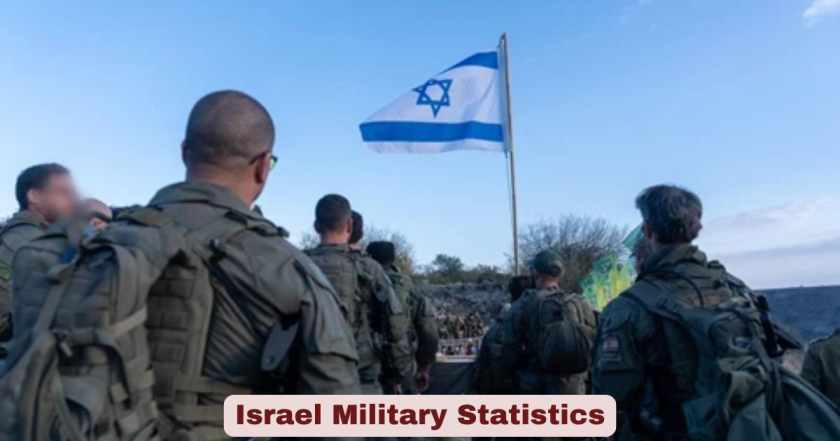
Israel Defense Force in 2026
The Israel Defense Forces (IDF) — known in Hebrew as Tzva Haganah LeYisrael — is the unified military of the State of Israel, comprising the Israeli Ground Forces, the Israeli Air Force (IAF), and the Israeli Navy, all operating under a single unified command structure rather than the separate service departments common in many other democratic militaries. Founded on May 26, 1948, just days after Israel’s declaration of independence, the IDF was built on the institutional foundations of the Haganah (the Jewish paramilitary organisation that operated under British Mandate), combined with the Irgun and Lehi militant factions, and drew on the doctrinal legacy of Jewish underground fighters who had learned their craft defending Zionist settlements against Arab attacks in the preceding decades. From its founding crisis — the 1948 Arab-Israeli War in which five Arab armies invaded simultaneously — the IDF has never had the luxury of building itself at leisure. Every major doctrinal development, every procurement decision, and every organisational reform has occurred while the organisation was simultaneously managing active security threats. That compressed, crisis-driven evolution has produced a military institution unlike any other in the democratic world: a universal conscription force (with some exceptions) in which military service is the central civic institution of Israeli society, a reserve-based warfighting model that allows Israel to maintain a small standing army but mobilise hundreds of thousands of trained soldiers within 48 hours, and a technology-first doctrine that compensates for numerical disadvantage against larger adversaries through qualitative superiority in intelligence, precision fire, cyber warfare, and air dominance.
As of March 30, 2026 — today — Israel’s military is operating at a wartime posture unlike anything since the 1973 Yom Kippur War. The Knesset passed Israel’s 2026 national budget in the early hours of this morning, approving an historic $44.8 billion defense budget — the largest in Israeli history — in a 62–55 vote that also approved a record $268 billion in total government spending. This defense budget represents an increase of approximately $9.48 billion over the previous year’s military budget and follows the budget’s approval by the Joint Committee of the Finance Committee and the Foreign Affairs and Defense Committee on March 24, 2026. The budget reflects the full weight of Israel’s Operation Roaring Lion — the sustained military campaign against Iran that began on February 28, 2026 and is ongoing — which has added an extraordinary burden of real-time military expenditure on top of the already-elevated costs of the Gaza and Lebanon campaigns that began on October 7, 2023. Israel’s Ministry of Defense confirmed on March 26 that 200 cargo aircraft had landed in Israel in approximately one month of the Iran war, carrying approximately 8,000 tonnes of military equipment, weaponry, and munitions — an air and sea supply bridge that Finance Minister Bezalel Smotrich described as enabling Israel to “finish the campaign and dramatically improve our geopolitical and diplomatic standing.” The IDF is ranked the 15th most powerful military force on Earth in the 2026 Global Firepower Index — a remarkable position for a nation of approximately 9.5 million people surrounded by a region of more than 400 million.
Interesting Key Facts About Israel Military Statistics in 2026
| Key Fact | Verified Statistic / Detail |
|---|---|
| 2026 IDF defense budget — approved today | ~$44.8 billion — Knesset vote, March 30, 2026 (NIS 143 billion+ total) |
| 2026 total Israeli government budget | $268 billion — record — Knesset, March 30, 2026 |
| Knesset 2026 budget vote | Passed 62–55 in early hours of March 30, 2026 |
| 2025 total military budget (base + supplemental) | $42.7 billion ($32.7B base + $12.5B supplemental) — Breaking Defense |
| 2024 total military expenditure (SIPRI / Trading Economics) | $46.5 billion (USD) — TradingEconomics.com |
| 2024 defense spend as % of GDP | 8.78% — TheGlobalEconomy.com; SIPRI |
| 2023 defense spend as % of GDP | 5.32% — World Bank / SIPRI |
| 2026 estimated defense spend as % of GDP | ~8.0% — defensebudget.org estimate (January 22, 2026) |
| Increase since 2015–2016 defense budget | ~153% in 10 years — from $17.65 billion (2015) to $44.8 billion (2026) |
| Daily cost of fighting (IDF estimate) | NIS 1.5 billion (~$410 million) per day in direct military expenditure |
| Global military spending rank (2026) | #12 highest absolute military spender globally — defensebudget.org (Jan 22, 2026) |
| Global Firepower rank (2026) | #15 most powerful military out of 145 nations assessed |
| Total military personnel | ~634,500 across all branches |
| Active duty (standing force) | ~170,000 active duty personnel |
| Reserve forces | ~465,000 trained reservists |
| IDF conscription — men | 32 months mandatory service |
| IDF conscription — women | 24 months mandatory service |
| Current reserve mobilisation (2026) | ~40,000 reservists at any given time (down from 300,000 at October 7, 2023 peak) |
| Military manpower shortfall (early 2026) | 10,000–12,000 soldiers — acknowledged shortfall from sustained multi-front warfare |
| Israel Air Force aircraft total | ~531 aircraft — TheWorldData (March 18, 2026) |
| Missile defense system | 5-layer system — combat-proven: Iron Dome, David’s Sling, Arrow 2, Arrow 3, Iron Beam |
| Iron Dome — intercept rate (claimed) | ~90% short-range rocket intercept rate |
| Defense exports — 2024 (record) | $14.795 billion — Israel Ministry of Defense SIBAT; 4th consecutive all-time record |
| Operation Roaring Lion — start date | February 28, 2026 — Israeli strikes on Iran |
| Operation Roaring Lion — 200 cargo flights | 200 cargo aircraft landed carrying ~8,000 tonnes of military equipment — March 26, 2026 |
| Gaza ceasefire | Mid-October 2025 — IDF continues to maintain brigades in Gaza |
| Netanyahu 10-year defence investment commitment | NIS 350 billion (~$108 billion) for domestic arms and munitions production |
| Elbit Systems deal (March 30, 2026) | $48 million — 155mm artillery shells from Elbit facilities |
| US military aid to Israel (FY2026) | $3.8 billion annual baseline + additional supplemental war assistance |
| Israel’s first nuclear-capable submarine | Dolphin-class submarines; widely believed to carry nuclear-capable cruise missiles |
| Nuclear weapons (estimated, unofficial) | ~90 nuclear warheads — Bulletin of Atomic Scientists (neither confirmed nor denied by Israel) |
Source: Breaking Defense — “Israel approves $45B defense budget as Iran war rages” (March 30, 2026 — published today); Times of Israel — “Israel leads global surge in military spending” (April 28, 2025, citing SIPRI); defensebudget.org — Israel Military Spending 2026 (January 22, 2026)
The single most important fact in this entire article — confirmed just hours ago by Breaking Defense’s Seth Frantzman on March 30, 2026 — is that the Knesset passed Israel’s 2026 national budget in the early hours of this morning with a defense allocation of approximately $44.8 billion, in a 62–55 vote. This number is the culmination of a fiscal escalation that is almost without precedent in modern democratic governance: from a $17.65 billion defense budget in 2015–2016 to $44.8 billion in 2026 is a 153% increase in ten years, but the steepest part of that curve has come in just the past two to three years. The $9.48 billion year-over-year increase from 2025 to 2026 is itself roughly equal to the entire annual defense budget of many mid-sized European NATO members. Finance Minister Bezalel Smotrich’s statement — that the budget gives Israel “the ability to win” and to “dismantle and reassemble the Middle East” — is a maximalist framing of Israel’s strategic ambitions that reflects the political and military confidence of a state that has struck Iran directly, degraded Hezbollah in Lebanon, maintained its Gaza operation for over two years, and managed to sustain its economy and democratic institutions simultaneously.
The Global Firepower ranking of #15 out of 145 nations assessed is a statistic that demands contextualisation. Israel is a country of approximately 9.5 million people — roughly the size of New Jersey — surrounded by a region of over 400 million people, several of whose governments have at various points in history declared their intention to destroy it. That a nation of 9.5 million ranks as the world’s 15th most powerful military force is a testament to 60 years of prioritised defense investment, universal conscription, world-class military technology development, and strategic depth through deterrence. The ~90 nuclear warheads estimated by the Bulletin of Atomic Scientists — which Israel neither confirms nor denies through its policy of nuclear opacity — form the ultimate strategic deterrent underlying all conventional force calculations. The five-layer missile defense system — Iron Dome for short-range rockets, David’s Sling for medium-range ballistic missiles, Arrow 2 and Arrow 3 for long-range and exo-atmospheric threats, and the emerging Iron Beam directed energy weapon — is the most comprehensive and combat-tested layered missile defense architecture in the world, having faced real operational conditions across every layer during the October 2023 war and the 2026 Iran campaign.
Israel Defense Budget Statistics in 2026
IDF Defense Budget — Annual Trajectory and 2026 Allocations
| Budget Metric | Figure |
|---|---|
| 2015–2016 defense budget (baseline) | $17.65 billion |
| 2023 defense budget (pre-Gaza war year) | ~$27.5 billion (NIS ~88 billion) |
| 2024 total defense expenditure (SIPRI/Trading Economics) | $46.5 billion — nearly doubled vs. 2023 |
| 2024 defense as % of GDP (World Bank / SIPRI) | 8.78% — second highest % globally (after Ukraine) |
| 2024 global military spending surge (SIPRI) | World reached $2.7 trillion — steepest rise since Cold War — Israel had largest single-country increase |
| 2025 base defense budget | $32.7 billion (~NIS 100 billion) |
| 2025 supplemental war budget | $12.5 billion |
| 2025 total defense spending | $42.7 billion (base + supplemental) |
| 2025 total Israeli national budget | NIS 756 billion (~$203.5 billion) — +21% vs. 2024 |
| 2025 Defense Ministry standalone budget | NIS 110 billion (~$29 billion) — record at time |
| 2026 approved defense budget (Knesset, March 30) | ~$44.8 billion (NIS 143 billion+) |
| 2026 total national budget | $268 billion — record |
| 2026 defense increase vs. 2025 | +$9.48 billion (+22%) over prior year’s military budget |
| 2026 base approved budget (NIS) | NIS 112 billion (~$34 billion) |
| 2026 war supplement (first Knesset reading) | NIS 32 billion (~$10.4 billion) — passed March 17, 2026 (53–45) |
| 2026 deficit ceiling (post-war supplement) | 5.1% of GDP (up from 3.9% estimate before supplement) |
| 2026 debt-to-GDP (estimated) | ~70% (up from 68.5% in 2025) — Bank of Israel |
| 2026 GDP growth — revised forecast | 4.7% (down from Finance Ministry’s 5.2% projection) |
| Daily military expenditure (IDF estimate) | NIS 1.5 billion (~$410 million/day) — direct military cost |
| Netanyahu 10-year arms industry commitment | NIS 350 billion (~$108 billion) for domestic arms production |
| Additional war supplement expected | Additional supplement related to Iran war expected before year-end |
| 2026 estimated as % of GDP | ~8.0% |
| Historical peak defense spending as % of GDP | 30.5% in 1975 |
| Historical average defense spending as % of GDP | 11.7% |
Source: Breaking Defense — “Israel approves $45B defense budget as Iran war rages” (March 30, 2026); Times of Israel — SIPRI report (April 28, 2025); Trading Economics — Israel Military Expenditure (updated April 2026); TheGlobalEconomy.com — Israel military % of GDP (2024: 8.78%); defensebudget.org — Israel Military Spending (January 22, 2026)
The defense budget trajectory since October 7, 2023, is perhaps the most dramatic fiscal escalation in any democratic state since the Second World War — and the historical context is essential for understanding what the 2026 $44.8 billion figure actually means. Israel’s historical average defense spending of 11.7% of GDP stretches across an 80-year history that includes the 1948 Independence War, the 1956 Suez Crisis, the 1967 Six-Day War, the 1973 Yom Kippur War, and the Lebanon wars of 1982 and 2006. Even against that extraordinary backdrop, the 2024 jump from $27.5 billion to $46.5 billion — a near-doubling in a single year — stands out as one of the most rapid budget escalations in Israeli history, driven by the simultaneous prosecution of the Gaza campaign, the Lebanon operations against Hezbollah, and the preparation for eventual confrontation with Iran. The 2026 $44.8 billion figure would, under normal pre-war conditions, be breathtaking. In the context of Operation Roaring Lion and the Iran campaign, Finance Minister Smotrich has explicitly warned that an additional war supplement is expected before year-end — meaning the final 2026 defense total could exceed even this record figure.
The daily cost of $410 million in direct military expenditure — NIS 1.5 billion per day — is the number that most viscerally illustrates the operational burden of sustained multi-front warfare. At that burn rate, every week of fighting costs approximately $2.87 billion. Every month costs approximately $12.4 billion. The 200 cargo aircraft that landed in Israel in the first month of Operation Roaring Lion, carrying 8,000 tonnes of military equipment — confirmed by the Israeli Ministry of Defense on March 26 — are the logistical expression of that financial reality: Israel is burning through munitions and equipment at a rate that requires a sustained international supply bridge to maintain. The Elbit Systems $48 million artillery shell contract signed on March 30 itself — announced the same day as the budget vote — reflects the government’s explicit strategy of using the war to rapidly expand domestic defense production capacity: the munitions are being manufactured “around the clock in three shifts” at Elbit facilities nationwide, as part of Israel’s broader plan to reduce dependence on external suppliers and build the production base for the NIS 350 billion domestic arms industry investment Netanyahu has committed to.
IDF Personnel & Force Structure Statistics in 2026
IDF Manpower — Active Duty, Reserves, Conscription & Branch Data
| Personnel Metric | Figure |
|---|---|
| Total military personnel (all branches) | ~634,500 |
| Active duty (standing forces) | ~170,000 |
| Reserve forces | ~465,000 trained reservists |
| Paramilitary (Border Police — Magav) | ~8,000–12,000 |
| Men — conscription length | 32 months |
| Women — conscription length | 24 months |
| Conscription eligibility | All Israeli citizens aged 18 — some exemptions (Haredi Orthodox, Arabs — though changing) |
| Haredi conscription — 2025 Supreme Court ruling | Israeli Supreme Court ruled Haredi must be conscripted — active political issue |
| Current average reservists mobilised (2026) | ~40,000 at any given time — budget planned around this figure |
| Peak reservists mobilised (October 7, 2023) | ~300,000 — simultaneous mobilisation |
| Reserve mobilisation capability (full) | Full mobilisation can reach 300,000+ within 48 hours |
| Manpower shortfall (early 2026) | 10,000–12,000 soldiers — consequence of sustained multi-front warfare |
| Diaspora recruitment outreach (new, 2026) | IDF exploring recruitment of Jewish diaspora from North America and Europe — first time in IDF history |
| IDF branches | Ground Forces, Air Force (IAF), Navy |
| Chief of Staff (2026) | Lt. Gen. Herzi Halevi (current chief during ongoing operations) |
| Ground Forces — primary formations | Multiple armoured, infantry, paratroop, engineering, intelligence divisions |
| Special Forces | Sayeret Matkal (general staff reconnaissance), Shaldag (air force SF), Shayetet 13 (naval SF), Yamam (counter-terror) |
| IDF’s founding date | May 26, 1948 |
| Women in combat roles | Yes — women serve in mixed combat battalions including Lions of the Jordan Valley |
| Israeli Army presence in Jordan Valley (2026) | Old 1970s-era forts refurbished as permanent bases — Zamir directive |
Source: Global Firepower 2026 Index (reviewed January 20, 2026); IDF official website; Breaking Defense (March 30, 2026)
The IDF’s force structure — built around a small, highly trained professional standing force supplemented by an enormous reserve cadre that can be mobilised within hours — is one of the defining characteristics of the Israeli military and one of the keys to understanding how a nation of 9.5 million maintains a top-15 global military capability. The 170,000 active-duty personnel represent the permanent professional core: the standing army, air force, and navy that maintain continuous operational capability and conduct day-to-day security operations. But the 465,000 trained reservists are the warfighting bulk of the IDF’s true order of battle — armoured brigade commanders who work as accountants during peacetime, fighter pilots who fly commercial aircraft for El Al, and infantry officers who run software companies, all of whom can report to their unit assembly points within 48 hours of receiving an emergency call-up. The 2023 simultaneous mobilisation of 300,000 reservists — the largest since the Yom Kippur War — demonstrated that this reserve system still functions at extraordinary scale when existential threat demands it.
The 10,000 to 12,000 soldier manpower shortfall acknowledged by IDF leadership in early 2026 is a direct consequence of what happens to a reserve-based force when it sustains extended multi-front warfare at high intensity for more than two years. Reservists who were called up in October 2023 have rotated through multiple deployments in Gaza, Lebanon, the Syrian border, and the Iran campaign — each rotation pulling them away from their civilian careers, their families, and the psychological recovery time that makes sustained reserve service sustainable. The IDF’s unprecedented decision to explore recruitment of Jewish diaspora members from North America and Europe — offering immigration and enlistment pathways to young Jews outside Israel — signals that the traditional conscription base is being genuinely stretched for the first time since the large aliyah waves of the 1990s. The Haredi (ultra-Orthodox) conscription controversy — brought to a head by the Israeli Supreme Court’s 2025 ruling that the Haredi exemption was unconstitutional — adds a domestic political dimension to the manpower situation that has no easy resolution, as the Haredi parties that are essential to Netanyahu’s coalition have made resistance to conscription a non-negotiable condition of their participation in government.
Israel Air Force & Defense Technology Statistics in 2026
IAF Aircraft, Missile Defense & Military Technology Key Data
| Air Force / Technology Metric | Figure |
|---|---|
| Total IAF aircraft | ~531 aircraft |
| F-35I Adir | ~50+ aircraft — most advanced version of F-35 (Israeli-customized) |
| F-16 variants (Sufa, Barak) | Largest F-16 fleet outside US |
| F-15 variants (Baz, Ra’am) | Significant fleet — also carrying strike payloads |
| IAF combat role — Operation Roaring Lion | IAF conducting combat missions over Iran since February 28, 2026 |
| Iron Dome | Short-range rockets, mortars, artillery — ~90% intercept rate |
| David’s Sling (Sling Stone) | Medium-range — cruise missiles, large rockets, ballistic missiles |
| Arrow 2 | Long-range atmospheric ballistic missile defense |
| Arrow 3 | Exo-atmospheric — longest-range interception; space-capable |
| Iron Beam | Directed-energy (laser) — emerging 5th layer; short-range; very low cost-per-intercept |
| 5-layer missile defense — assessment | Combat-proven — tested against Hamas rockets, Hezbollah missiles, Iranian ballistic missiles, Iranian drones |
| Iron Dome — intercepts in Oct 2023 war | Intercepted thousands of rockets and UAVs |
| Arrow 3 — first real-world intercept | Intercepted Iranian ballistic missiles in April 2024 strikes |
| Hermes, Heron, Harop — drone systems | Israeli-developed — Harop is loitering munition (kamikaze drone) |
| Cyber warfare capability | Unit 8200 — world-class signals intelligence and cyber unit |
| Merkava tank — latest version | Merkava Mark 4 / Mark 4M (Trophy APS) — world’s most survivable tank by some assessments |
| Trophy (APS) | Active Protection System — proven in combat; intercepts RPGs and ATGMs |
| Jericho missiles (ballistic) | Long-range ballistic missile capability — nuclear-capable |
| Dolphin-class submarines | 5 in service + 1 additional — widely assessed to carry nuclear-capable cruise missiles |
| Defense exports — 2024 (record) | $14.795 billion — 4th consecutive annual record |
| Defense export growth | Sustained double-digit growth in exports — driven by drone, missile defense, cyber systems |
Source: GlobalMilitary.net (updated January 16, 2026); Global Firepower 2026 (reviewed January 20, 2026); IDF official; IMSL; Rafael Advanced Defense Systems; Elbit Systems; Israel Ministry of Defense SIBAT 2024 Export Report; Bulletin of the Atomic Scientists
The Israeli Air Force’s 531-aircraft fleet is both the most battle-tested and, by qualitative assessment, one of the most capable air forces in the world — a result of 75 years of continuous operational deployment combined with direct access to US technology and a domestic defense industry that has consistently customised American platforms to Israeli operational requirements. The F-35I Adir — the Israeli-customised variant of the F-35A, incorporating Israeli avionics, electronic warfare systems, and software modifications — is widely assessed by aviation analysts as the most capable version of the F-35 flying anywhere, because Israel’s technology integration adds systems that the base F-35 does not carry and that the Israeli Air Force has had decades of operational experience developing. The IAF’s F-16 fleet is the largest outside the United States — a relationship that has been sustained through decades of Foreign Military Sales agreements that have simultaneously provided the IAF with advanced platforms and the US defense industry with a world-class operational test environment. The IAF’s combat operations over Iran since February 28, 2026 — striking Iranian nuclear infrastructure, ballistic missile sites, and Revolutionary Guard command facilities — represent the most significant offensive air campaign the IAF has conducted since the 1973 Yom Kippur War, and they are being watched closely by air forces worldwide as a real-world test of stealth penetration, long-range strike, and electronic warfare capabilities.
The $14.795 billion in defense exports in 2024 — the fourth consecutive annual record — is one of the most economically significant statistics in Israeli defense, because it demonstrates that the IDF’s operational experience is being converted into marketable products and systems that 166 countries worldwide are willing to pay premium prices for. Drone systems, missile defense technology, cyber solutions, electronic warfare, and communications systems are Israel’s primary export categories, and the operational track record of systems like Iron Dome (combat-proven against thousands of real rockets) and the Hermes and Heron drone platforms (thousands of operational hours in active conflict) provides a marketing credibility that no laboratory test can replicate. The Netanyahu 10-year, NIS 350 billion (~$108 billion) commitment to building a domestic munitions and arms production base — announced at the IAF pilot graduation and confirmed in the 2026 budget discussions — signals an intent to move beyond the current mixed domestic/import procurement model toward a more self-sufficient production capability that would further reduce the strategic vulnerability of dependence on external supply chains during wartime.
Israel Military Operations & Recent Conflict Statistics in 2026
Key Operational Data — Gaza, Lebanon, Iran & Current Deployments
| Operational Metric | Figure / Detail |
|---|---|
| October 7, 2023 attack — Israeli killed | ~1,200 Israelis killed — Hamas-led attack |
| October 7, 2023 — hostages taken | 251 hostages abducted to Gaza |
| Gaza operation — start date | October 7, 2023 |
| Gaza ceasefire | Mid-October 2025 — IDF maintains brigades in Gaza |
| IDF brigades remaining in Gaza (post-ceasefire) | Several brigades — continuing presence |
| Lebanon campaign — target | Hezbollah infrastructure, command, and missile arsenal |
| Syria border operations | Ongoing — Golan and buffer zone secured |
| Jordan Valley permanent bases | Old 1970s forts refurbished as permanent IDF bases in 2025–2026 |
| Operation Roaring Lion — start | February 28, 2026 — Israeli strikes on Iran |
| Iran campaign — supply bridge | 200 cargo flights in ~1 month; ~8,000 tonnes equipment — March 26, 2026 statement |
| Cargo flights — destination not specified | Ministry did not specify origin countries of the 200 flights |
| Elbit Systems artillery deal (March 30, 2026) | $48 million — 155mm artillery shells; manufactured in three shifts |
| 2026 Joint Committee defense budget approval | March 24, 2026 — unanimously approved |
| Knesset war supplement — first reading | March 17, 2026 — NIS 32 billion; passed 53–45 |
| IDF reservist doctrine — 2026 budget | Premised on average 40,000 reservists mobilised — eases civilian economic burden |
| IDF Chief of Staff directive (Zamir) | “Neutralize threats before they reach our doorstep” — proactive offense posture |
| Diaspora recruitment (new initiative) | Outreach to North America and Europe — Jewish diaspora enlistment pathway |
| Multi-front definition (2026) | Gaza, Lebanon, Syria/Golan, Jordan Valley, Iran — simultaneous active fronts |
| IDF special operations | Active across multiple theatres — Sayeret Matkal, Shayetet 13, Shaldag |
Source: Breaking Defense (March 30, 2026); Israel Ministry of Defense (March 26, 2026 and March 30, 2026); IDF official sources
The operational statistics of the IDF in 2026 document a military that has been engaged in virtually continuous combat operations for more than two and a half years — an operational tempo that no other democratic military in the world is currently sustaining simultaneously across multiple active fronts. The compression from 300,000 simultaneous reservists in October 2023 to an average of 40,000 in 2026 — while remaining in active combat in multiple theatres — reflects the extraordinary operational evolution the IDF has undergone in managing a prolonged, multi-front war without the complete economic disruption that would follow from keeping 300,000 people away from their civilian jobs indefinitely. The Gaza ceasefire of mid-October 2025 — which brought the most intensive phase of the Gaza campaign to an end after approximately two years of high-intensity urban warfare — allowed the IDF to redeploy significant combat power northward and eastward, partially explaining the bandwidth available for the launch of Operation Roaring Lion against Iran in February 2026.
The 200 cargo flights carrying 8,000 tonnes of military equipment in the first month of the Iran campaign is a logistical data point of profound strategic significance. It documents both the extraordinary munitions consumption of modern high-intensity air and missile warfare and the critical dependence of the Israeli war effort on the functioning of an international supply and equipment bridge that has operated continuously since October 2023. The fact that the Ministry of Defense explicitly did not name the origin countries of these flights — in a statement that was otherwise remarkably detailed about weights, flight counts, and strategic purpose — reflects the diplomatic sensitivity of the international support structure underlying Israel’s military operations. The Elbit Systems $48 million artillery shell contract signed on the same day as the budget vote signals exactly what the government has concluded from 30 months of continuous warfare: domestic munitions production is a strategic vulnerability that must be addressed through massive, sustained investment, regardless of the short-term cost.
Disclaimer: The data research report we present here is based on information found from various sources. We are not liable for any financial loss, errors, or damages of any kind that may result from the use of the information herein. We acknowledge that though we try to report accurately, we cannot verify the absolute facts of everything that has been represented.