Where Are the Islands Near Dubai?
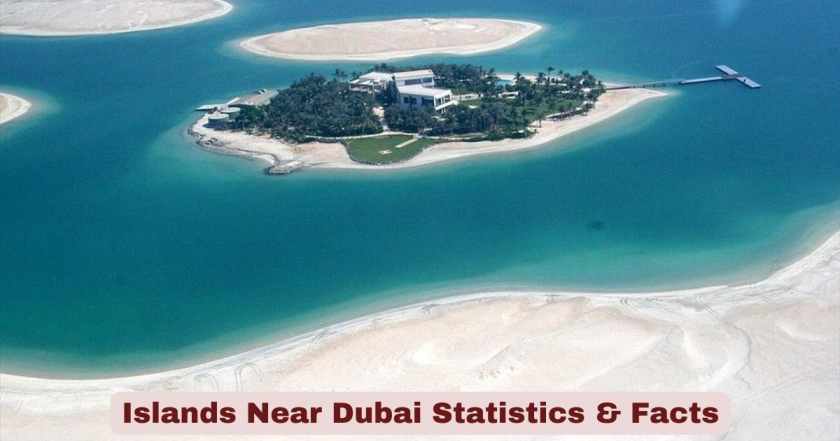
Dubai is home to one of the most extraordinary concentrations of artificial islands on earth — a collection of man-made archipelagos, purpose-built lifestyle destinations, and engineering mega-projects that have collectively added hundreds of kilometres of new coastline to what was once a flat, featureless stretch of the Arabian Gulf shoreline. The Persian Gulf’s shallow coastal waters off Dubai — rarely deeper than 10 to 15 metres at the construction sites — made large-scale dredging and land reclamation technically feasible in a way that deeper ocean environments would not allow. Beginning in 2001 with the launch of Palm Jumeirah, and continuing through projects announced as recently as 2023, the government of Dubai under Sheikh Mohammed bin Rashid Al Maktoum has systematically converted open sea into residential communities, luxury hotel precincts, entertainment hubs, and investment assets that collectively represent some of the most recognisable real estate developments in modern history. The islands cluster along Dubai’s southwestern, central, and northern coastlines, with the principal developments falling within a 30-kilometre coastal arc stretching from Jebel Ali in the south to the Deira district in the north — all within easy reach of Downtown Dubai, Dubai Marina, and Dubai International Airport.
As of March 2026, the islands near Dubai collectively represent an ecosystem of extraordinary diversity: Palm Jumeirah is a fully mature luxury community home to over 10,000 residents and some of the world’s most expensive real estate; Bluewaters Island is a thriving entertainment and lifestyle hub anchored by the world’s tallest Ferris wheel; The World Islands are slowly awakening after a decade of post-2008 dormancy, with luxury resorts and ultra-prime villas finally opening; Palm Jebel Ali is roaring back to life after a 15-year construction pause, with AED 5 billion+ in contracts awarded and the first villa handovers expected in 2027; and Dubai Islands (formerly Deira Islands) is evolving into a five-island, 17 km² waterfront city targeted for full completion by 2030. Together, these islands constitute one of the boldest and most sustained exercises in urban geography ever undertaken — a literal reshaping of a nation’s coastline driven by tourism targets, real estate investment, and a vision of Dubai as a city-state without physical limits.
Interesting Facts About Islands Near Dubai 2026
| Fact | Detail |
|---|---|
| Total Number of Major Artificial Island Projects | 5 major projects: Palm Jumeirah, Palm Jebel Ali, Dubai Islands (formerly Deira Islands), The World Islands, Bluewaters Island |
| Primary Developer | Nakheel Properties (government-owned; subsidiary of Dubai Holding Real Estate) for most projects; Meraas Holding for Bluewaters Island |
| Primary Dredging Contractors | Van Oord (Netherlands) and Boskalis (Netherlands) — created Palm Jumeirah and The World Islands |
| Year First Island Project Launched | 2001 (Palm Jumeirah construction began) |
| Total New Coastline Added by All Projects | Over 500+ km (combined estimates across all projects) |
| Construction Material Used | Sand dredged from the seabed; rock from mainland quarries; no concrete or steel for island formation |
| Palm Jumeirah Sand Used | 94 million cubic metres from deep sea beds ~6 nautical miles offshore |
| Palm Jumeirah Rock Used | 5.5 million cubic metres from over 16 quarries in Dubai |
| Persian Gulf Depth at Construction Sites | Typically 10–15 metres — shallow enough for economical dredging |
| Key Environmental Impact | Loss of coral reefs, disruption of marine ecology, erosion of island edges, interference with fish reproductive cycles |
| 2008 Financial Crisis Impact | Multiple projects (Palm Jebel Ali, The World, Palm Deira) halted entirely; Dubai property prices fell 58% from peak Q4 2008 |
| Dubai Property Market Recovery | Residential prices rose 17.9% (Aug 2012 to Aug 2013); market since surpassed pre-2008 peaks |
| Dubai Total Property Transactions (Jan–Nov 2025) | Over 197,000 transactions worth AED 624 billion — surpassed full-year records before December 2026 |
| Dubai 2026 Residential Price Growth Forecast | 5%–8% appreciation (moderated from 12%–22% in 2024–2025) |
| Dubai 2026 New Residential Units Scheduled for Delivery | ~120,000 units — more than triple the 35,000 completed in 2025 |
| Gross Rental Yields (Dubai overall) | 6.7%–7% — roughly double London or New York yields |
| Governing Vision | Dubai Urban Master Plan 2040 — all major island projects aligned with it |
| Foreign Ownership Rights | All island projects designated freehold — 100% ownership for all nationalities |
| Iran Conflict Impact (Feb 28, 2026) | Iranian missile strikes hit areas near Palm Jumeirah, Burj Al Arab, and Dubai Airport on Feb 28, 2026 (confirmed by Britannica, The Hindu) |
Source: Wikipedia (Palm Islands, The World Islands, Bluewaters Island, Palm Jebel Ali, Dubai Islands), Britannica (updated March 11, 2026), Sands of Wealth (Jan 2026), Dubai Statistics Centre, Nakheel Properties, Totality Real Estate (2025)
The scale statistics behind Dubai’s artificial island programme are almost incomprehensible until you hold them next to reference points. The 94 million cubic metres of sand used just for Palm Jumeirah — drawn from seabeds 6 nautical miles offshore — would fill 37,600 Olympic swimming pools. The fact that no concrete or steel was used in forming the islands themselves, because Sheikh Mohammed bin Rashid Al Maktoum specifically ordered the islands to be built from the natural materials of the Gulf seafloor, means these structures are essentially compressed and reinforced sand formations held together by carefully engineered rock breakwaters. The environmental cost has been real and documented: marine biologists recorded loss of coral reefs, disruption to fish reproduction cycles, and ongoing erosion challenges that have required continuous maintenance investment to prevent the island edges from gradually washing away.
The February 28, 2026 Iranian missile strikes near Palm Jumeirah, the Burj Al Arab, and Dubai Airport added a dimension to the island story that no planner anticipated — confirming that these iconic luxury developments, conceived as symbols of peace and prosperity, are not immune to the regional geopolitics that have always defined the Gulf. Dubai’s real estate market had already set record transaction values in 2025, with AED 624 billion in deals in the first eleven months alone, and the Dubai 2026 delivery pipeline of 120,000 new residential units — more than three times 2025’s completions — had already introduced concerns about supply-demand balance. Against this already complex backdrop, the geopolitical disruption of Operation Epic Fury has introduced a new variable that no market model had priced in, and whose full impact on the islands’ long-term real estate and tourism trajectories remains to be assessed.
Palm Jumeirah Statistics 2026
| Metric | Data |
|---|---|
| Location | ~3 km off the Jumeirah coast, Dubai — coordinates 25°07′N, 55°08′E |
| Developer | Nakheel Properties |
| Architect / Master Planner | Helman Hurley Charvat Peacock (US architectural firm) |
| Construction Start | 2001 |
| Sand & Infrastructure Ready | 2004 |
| Buildings Construction Began | 2006 |
| First Residents Arrived | 2007 |
| Official Opening Ceremony | 2010 |
| Shape | Palm tree with a trunk, 17 fronds, and a circular crescent breakwater |
| Coastline Added | 56 km (35 miles) of new coastline |
| Total Land Area | ~5.72 km² |
| Total Buildings | 381 buildings — 189 villas + 1,734 residential units + 21,206 residential units + 1,768 commercial units |
| Residential Units | 21,206 residential units |
| Commercial Units | 1,768 commercial units |
| Villas | 1,734 villas |
| Residents (est.) | Over 10,000+ residents (some estimates significantly higher) |
| Hotels (by 2009) | 28 hotels had opened by 2009; many more since |
| Flagship Hotels | Atlantis The Palm, Atlantis The Royal, One&Only The Palm, Waldorf Astoria, Jumeirah Zabeel Saray |
| Palm Monorail | Connects the Trunk to the Crescent; integrated with Dubai Metro (enhanced by 2026) |
| Total Resale Transactions (Dec 2024–Nov 2025) | 1,229 transactions generating AED 12.1 billion (~$3.2 billion) |
| YoY Sales Value Growth (2025) | +18.5% |
| YoY Sales Volume Change (2025) | -8.5% (fewer transactions but at much higher prices) |
| Median Price per sq ft (Q2 2025) | ~AED 2,982 — nearly double the Dubai citywide baseline |
| Average Price per sq ft (Palm Jumeirah 2025) | ~AED 4,980 per sq ft — benchmark for all Dubai luxury comparisons |
| Villa Price Range (2026) | AED 25M–AED 45M (4-bed renovated); up to AED 200M+ for custom mansions |
| Record Sale (2025) | Land plot of ~90,000 sq ft sold for AED 365 million |
| Annual Rental Yield | 4%–7% |
| Price Appreciation Since Launch | ~703% from original launch prices |
| Price Appreciation Since Jan 2020 | +146% (villas) |
| 12% YoY Price Growth (2025) | Villas at the high end showing 12%–18% annual appreciation |
| Service Charge | ~1% of property value annually |
| Foreign Ownership | 100% freehold — any nationality |
Source: Propsearch.ae (updated January 8, 2026), Sotheby’s International Realty UAE (December 2025), Burj Mayfair (October 2025), AIQYA Q2 2025 Market Report, LuxuryProperty.com Market Report 2024, Britannica (updated March 11, 2026), Place Overseas, Wikipedia
Palm Jumeirah’s 2026 real estate statistics confirm what analysts have been saying for years: this island has crossed from being a development project into being a mature, supply-constrained luxury asset class with dynamics more similar to Monaco’s waterfront or London’s Belgravia than to a developing real estate market. The AED 12.1 billion in resale transactions generated between December 2024 and November 2025 from just 1,229 deals — an average transaction value of roughly AED 9.8 million per deal — illustrates the extraordinary concentration of wealth being deployed here. The 18.5% increase in total sales value alongside an 8.5% decrease in transaction volume is the classic signature of a market with constrained supply and rising prices: fewer deals, each at significantly higher prices. The median price per square foot of AED 2,982 — nearly double Dubai’s citywide average — reflects a premium that has held steady despite the emergence of multiple competing waterfront communities across the city.
The architectural evolution of Palm Jumeirah in 2026 is as telling as the price data. The “Mediterranean White” and “Arabic Traditional” villa styles that defined the island’s original character in the mid-2000s are being systematically demolished and replaced with “Modern Minimalist” and “Tropical Modernism” architecture featuring floor-to-ceiling glass, integrated smart home systems, retractable glass walls merging indoor and outdoor spaces, and private spa facilities in repurposed basements. This renovation wave has created a secondary property market dynamic where the most value accrues to properties that have been fully stripped and rebuilt, commanding premiums of 28%–34% over comparable un-renovated units as confirmed by Dubai Land Department transaction data from late 2025. Palm Jumeirah today is not the island that opened in 2010 — it is something newer, more expensive, and more globally competitive than its creators envisioned.
Palm Jebel Ali Statistics 2026
| Metric | Data |
|---|---|
| Location | ~Southwest of Palm Jumeirah, adjacent to Jebel Ali district |
| Developer | Nakheel Properties (subsidiary of Dubai Holding Real Estate) |
| Construction First Started | October 2002 |
| Original Planned Completion | Mid-2008 |
| Halted | 2008 financial crisis — on hold for ~15 years |
| Relaunched | May 31, 2023 — announced by Sheikh Mohammed bin Rashid Al Maktoum |
| Masterplan Approval | May 2023 (Sheikh Mohammed); further detail approved by Sheikh Hamdan in 2024 |
| Size vs Palm Jumeirah | 50% larger than Palm Jumeirah |
| Total Span | 13.4 kilometres |
| Number of Fronds | 16 fronds |
| Total Development Area | 10.5 million square metres |
| Total Coastline Added | ~110 kilometres |
| Total Beachfront Added | ~91 kilometres |
| Planned Population Capacity | 35,000 families |
| Planned Hotels & Resorts | 80+ hotels |
| Planned Villas (revised plan) | 1,700 villas + 6,000 apartments |
| First Phase Villas (Fronds 1–6) | 723 ultra-luxury villas — construction contract awarded Oct 2024 |
| Villa Construction Contract Value | AED 5 billion+ (awarded to Ginco General Contracting, Shapoorji Pallonji Mideast, United Engineering Construction Company) |
| Marine Works Contract | AED 810 million to Jan De Nul Dredging (awarded Aug 2024) |
| DEWA Substations Contract | AED 270 million (Oct 2024) — two substations to power villa delivery |
| Infrastructure Contracts (Total, June 2025) | AED 750 million+ additional infrastructure contracts |
| First 8 Fronds Site-Ready | Q1 2025 |
| First Villa Handover Target | Q1 2027 |
| Core Infrastructure Completion Target | Q4 2026 |
| Initial Villa Price Range (2023–2024 launches) | AED 20 million – AED 35 million |
| Phase 1 Villa Sales | Sold out in record time (late 2023 launch); 700+ homes sold by early 2025 |
| Price vs Palm Jumeirah | ~55% lower per sq ft — positioned as growth opportunity vs. Palm Jumeirah’s maturity premium |
| Friday Mosque Design | Unveiled December 15, 2025 — 40 metres tall; capacity 1,000 worshippers |
| Arabic Poem Boardwalk | Original poem by Sheikh Mohammed — boardwalk design scrapped in revised masterplan |
| Legal Controversy | In 2022, Nakheel sought court cancellation of original contracts; 724 villa contracts made void; international arbitration claims filed by investors from Germany, Morocco, UK |
| Alignment | Dubai 2040 Urban Master Plan and Dubai Economic Agenda D33 |
Source: Wikipedia (Palm Jebel Ali, updated January 2026), Dubai Holding official press release (November 8, 2024), Time Out Dubai (December 15, 2025), Place Overseas, Prelaunch.ae, Propsearch.ae, Platinumlist.net (June 17, 2025)
Palm Jebel Ali’s 2026 statistics document one of the most dramatic construction revivals in recent real estate history. After sitting dormant for 15 years following the 2008 financial crisis — years during which Nakheel itself nearly collapsed under $4.6 billion in debt and ultimately had to be bailed out by the Abu Dhabi government — the project was relaunched with what Dubai Holding CEO Khalid Al Malik described in November 2024 as “milestones achieved in record time.” The pace since the May 2023 relaunch has been genuinely impressive: an AED 810 million marine contract awarded and commenced within 15 months; a 6-kilometre access road contract awarded and under construction; AED 5 billion+ in villa construction contracts awarded in October 2024 alone; and the first 8 fronds site-ready for villa works by Q1 2025 as originally targeted. The sold-out Phase 1 villa launch in late 2023, achieving sell-through in what Nakheel described as “record time,” confirmed that global ultra-high-net-worth appetite for Palm Jebel Ali is substantial despite the project’s turbulent history.
The legal controversy surrounding the 2022 contract cancellation is the sharpest shadow hanging over the project’s revival. Nakheel’s decision to seek court cancellation of 724 original villa contracts — without notifying the affected investors, and offering refunds of original investment without compensation for nearly two decades of lost returns — triggered international arbitration claims from investors in Germany, Morocco, and the United Kingdom. The irony is acute: just as the project was relaunched with renewed commitment in 2023, a cohort of original investors who had waited 15 years for delivery found their contracts retroactively voided. For new buyers entering at the 2023–2024 launch prices of AED 20 million–AED 35 million, the 55% discount to equivalent Palm Jumeirah pricing and the project’s alignment with the Dubai 2040 Urban Master Plan represent a compelling investment thesis. Whether the first handovers in Q1 2027 arrive on schedule will be the defining test of whether the Dubai Holding-era Nakheel has truly resolved the execution failures that defined the original Nakheel era.
The World Islands Statistics 2026
| Metric | Data |
|---|---|
| Location | ~4 km off the coast of Dubai — between Palm Jumeirah and the outer Gulf |
| Developer | Nakheel Properties |
| Dredging Contractors | Van Oord and Boskalis (Netherlands) |
| Designed By | Creative Kingdom Dubai |
| Construction Start | 2003 |
| Construction Halted | 2008 financial crisis |
| Total Number of Islands | 300 islands |
| Island Size Range | 250,000 to 900,000 sq ft (1.4 to 4.2 hectares / 3.5 to 10.4 acres) each |
| Total Archipelago Area | 6 km × 9 km oval; total land ~5.4 miles (8.7 km) across |
| Total Shoreline Created | ~232 km (144 miles) |
| Shape | World map — seven continent clusters |
| Distance Between Islands | Average 100 metres |
| Sand Used | 321 million cubic metres |
| Rock Used | 386 million tonnes |
| Original Estimated Total Cost | ~$13 billion CAD (2005) (some sources cite $14–15 billion USD by 2008) |
| % Islands Sold by 2008 | ~70% |
| Status (May 2025) | Still no underwater power cables laid — each developer provides own diesel generators |
| Only Early Completed Island | Lebanon Island — first commercially developed (events and parties, as of July 2012) |
| Most Advanced Development | Heart of Europe (THOE) — European-themed luxury cluster across ~6 islands (Austria, Germany, Netherlands, Ukraine, Sweden, Switzerland) |
| THOE Total Project Value | $5 billion |
| THOE Phases | 3 development phases — targeted for completion 2026 |
| THOE Notable Venues | Côte d’Azur Monaco Hotel, The Floating Seahorse villas, Sweden Palace, Germany Villas, Portofino, The Floating Lido |
| InterContinental Resort Portofino | Partnership between IHG Hotels & Resorts and THOE; 460+ rooms and suites; opening early 2026 |
| Anantara World Islands Dubai Resort | Clarence Island — Thai-inspired luxury resort; open; features Helios, Luna, Qamar, HamacLand restaurants |
| Amali Island | Private enclave of 24 beachfront villas — ultra-exclusive residential launch; among most exclusive in Dubai 2025–2026 |
| Coral Island (Nakheel) | Nakheel developing resort covering 20+ islands (North America cluster); includes marina and hotel village |
| OQYANA | Australia and New Zealand islands (14 islands) — purchased by Investment Dar of Kuwait; developed as a resort |
| Most Expensive Sale (2026) | Luxury villa sold for AED 220 million — confirmed by Gulf News, March 12, 2026 |
| Sub-community Size Range | 150,000 sq ft to 450,000 sq ft |
| Current Development Status | Evolving into “a curated constellation of distinct luxury experiences” — from a near-abandoned ghost development to active luxury resort zone |
Source: Wikipedia (The World Islands, updated 2025), Provident Estate Area Guide, Elite Traveler (2026), Gulf News (March 12, 2026), Nakheel Properties official communications, Hotelier Middle East
The World Islands’ 2026 statistics tell the story of a project that came closer to permanent failure than any other Dubai mega-development, and yet has somehow found a second life — not as the dense, populated archipelago of Nakheel’s original vision, but as something far more exclusive and rarefied. The $13–15 billion invested by 2008 was followed by a decade in which almost no visible above-ground development occurred, the sand islands eroded at their edges, no utilities infrastructure was completed, and the world watched what appeared to be one of the most spectacular real estate follies in history slowly dissolve back into the Gulf. The fact that as of May 2025 still no underwater power cables have been laid — meaning every development on The World Islands runs on privately operated diesel generators — is perhaps the most stark measure of how far short the project fell of its original infrastructure promises.
The revival underway in 2026 is real, but it is the revival of a fundamentally different concept. Instead of the planned mixture of residential, commercial, resort, and amenity zones across all 300 islands, what is actually developing is a small number of ultra-luxury, individually curated resort and residential islands — the Heart of Europe’s 6-island $5 billion cluster, the Anantara resort on Clarence Island, the 24-villa Amali Island development, and Nakheel’s own Coral Island resort project. The AED 220 million villa sale confirmed by Gulf News on March 12, 2026 — just weeks after Iranian missile strikes near the Dubai coastline — is a remarkable data point: ultra-high-net-worth buyers are still transacting at record prices on these islands even as regional geopolitical risk reaches levels not seen since the 1980s.
Bluewaters Island Statistics 2026
| Metric | Data |
|---|---|
| Location | ~400 metres off the Jumeirah Beach Residence (JBR) coastline, near Dubai Marina |
| Developer | Meraas Holding (Dubai-based) |
| Dredging Contractor | Van Oord (Netherlands) |
| Approval / Unveil Date | February 13, 2013 |
| Construction Start | May 20, 2013 |
| Opening Date | November 2018 |
| Total Project Cost | AED 6 billion (~$1.6 billion USD) |
| Land Area | ~46 million square metres within the Dubai Marina zone |
| Distance from Downtown Dubai | ~25.6 km (~23 minutes by car) |
| Distance from Dubai Airport | ~35.7 km (~29 minutes by car from Deira City Centre direction) |
| Total Buildings | 16 buildings — 10 residential, 2 hotels, 1 mosque, retail/entertainment buildings |
| Residential Buildings | 10 |
| Hotels | 2 (including Caesars Palace Dubai) |
| Retail & Dining Outlets | 160+ |
| Shops at The Wharf | 130+ shops, restaurants, and cafés |
| Parking Spaces | 2,400 |
| Driverless Transport Vehicles | 25 driverless vehicles, each carrying 24 passengers |
| Forecast Annual Visitors | 3 million+ per year |
| Ain Dubai Height | 250 metres (820 ft) — world’s tallest Ferris wheel since October 2021 |
| Ain Dubai — Previous Record Holder | High Roller, Las Vegas (167.6 m) — surpassed by Ain Dubai |
| Ain Dubai Capsules | 48 air-conditioned cabins |
| Ain Dubai Capacity per Rotation | 1,400 passengers |
| Ain Dubai Rotation Time | ~38–40 minutes per full rotation |
| Ain Dubai Hub & Spindle Weight | Equal to 4 Airbus A380 aircraft |
| Ain Dubai Ticket Price | AED 130 (adults), AED 100 (children) |
| Ain Dubai Views | 360° views — Dubai Marina, Palm Jumeirah, Arabian Gulf, Burj Al Arab |
| Madame Tussauds Dubai | First and only Madame Tussauds in the Middle East — 6 zones: music, fashion, film, leaders, sports, Bollywood |
| DSF Drone Show (Dec 2025) | 1,000+ advanced LED drones lighting the sky above Bluewaters — returned for Dubai Shopping Festival 2025 |
| Best Visit Season | October to April — cooler months; summer temperatures prohibitively high |
| Average Property Price per sq ft | AED 3,781 per sq ft (mid-2025) |
| Metro Access | Nearest metro: DMCC station or Jebel Ali station + short taxi |
| Bus Access | RTA bus F57 from Jebel Ali Metro Station |
| Water Taxi Access | RTA Abra service from mainland |
Source: Wikipedia (Bluewaters Island, updated January 31, 2026), Bayut Area Guide, Homevy Community Guide (June 2025), Dubai-tickets.co, Bluewatersdubai.ae official website, Bhomes.com, Thecitydubai.com (April 2025), AIQYA 2025
Bluewaters Island’s 2026 statistics make it the most successfully delivered of all Dubai’s artificial island projects — the only one that opened on time, within a reasonable range of its construction budget, and immediately drew the visitor numbers and residential demand it was designed to attract. The AED 6 billion ($1.6 billion) price tag for an island of its scale, delivered in just 5 years from approval to opening, represents exceptional execution by any international standard. The Ain Dubai at 250 metres — equivalent to roughly 82 floors of a standard high-rise — is a genuine record-holder: it surpassed the Las Vegas High Roller (167.6 m) in October 2021 to become the world’s tallest Ferris wheel, a title it still holds as of March 2026. The sheer fact that its hub and spindle weigh as much as four Airbus A380 aircraft gives some sense of the engineering complexity involved in building a structure that must rotate smoothly at that scale while accommodating 1,400 people simultaneously in 48 air-conditioned capsules.
The 25 driverless transport vehicles circulating within Bluewaters Island — each carrying 24 passengers — make it one of the few self-contained urban environments in the UAE with dedicated autonomous transit. The 3 million+ annual visitor forecast has been substantially supported by the growth of the Gordon Ramsay Hell’s Kitchen restaurant at the Caesars Palace hotel, the Madame Tussauds (the only one in the Middle East), Cove Beach, and the island’s position as an alternative to the crowds of JBR and Dubai Marina just across the pedestrian bridge. Property pricing at AED 3,781 per sq ft (mid-2025) places Bluewaters Island significantly above Dubai Islands’ AED 2,317 but below Palm Jumeirah’s AED 4,980 — a sensible premium-but-not-ultra-premium position that has supported steady residential demand from professionals, couples, and smaller families seeking waterfront living without the full Palm Jumeirah price commitment.
Dubai Islands (Formerly Deira Islands) Statistics 2026
| Metric | Data |
|---|---|
| Official Current Name | Dubai Islands (rebranded August 2022; previously Deira Islands, Palm Deira) |
| Location | Off the coast of Deira, northern Dubai — northeast of Downtown Dubai |
| Developer | Nakheel Properties |
| Initial Launch | 2004 (as Palm Deira) |
| Halted | 2008 financial crisis |
| Rebranded and Relaunched | August 2022 |
| Total Area | 17 km² (4,000 acres) — spread across 5 islands |
| Number of Islands | 5 islands: Central Island, Marina Island, Shore Island, Golf Island, Elite Island |
| Planned Hotels | 80+ hotels (some sources cite “almost 100”) |
| Beachfront Length | 20+ kilometres of Blue Flag-certified beaches |
| Parks & Open Space | ~2 km² of parks and golf courses |
| Marina Capacity | 6 marina berths; mooring for 600+ boats and 13 superyachts; 248 wet berths (vessels up to 47 m); 40 dry berths |
| Total Coastline & Promenade | 60+ km of new beachfront and waterfront promenades |
| Infrastructure Investment by Aug 2017 | AED 7.5 billion (~$2.03 billion USD) |
| Mainland Bridge | Infinity Bridge — connecting islands to mainland (opened December 2016 for original Deira Islands) |
| Hotels Currently Open (mid-2025) | 3 hotels: Hotel RIU Dubai (800 keys, opened 2020); Centara Mirage Beach Resort Dubai (607 keys, opened 2021); Park Regis by Prince (159 keys, opened 2024) — total 1,500+ rooms |
| Rixos Dubai Islands (opening) | Q4 2026 — luxury residences and hotel |
| Bay Villas (residential) | Phase 1 delivery 2026 |
| Deira Mall (planned) | 600,000 m² (6.5 million sq ft); 1,100+ retail spaces; 3 floors |
| Deira Night Souk (planned) | 1.9 km along coastline — billed as the world’s largest night market; ~5,300 shops + 100 quayside cafés |
| Transaction Volume 2024 | 2,600+ units sold; generating ~AED 9.8 billion in value (+175% YoY volume growth) |
| Off-Plan Price per sq ft (late 2024) | AED 2,162 |
| Off-Plan Price per sq ft (Q1 2025) | AED 2,317 (+7% quarterly) |
| Off-Plan Price per sq ft (mid-2025) | AED 2,340 |
| Price vs Palm Jumeirah | ~55% lower per sq ft (AED 2,317 vs AED 4,980) |
| Property Mix | 92% apartments, 8% villas |
| Entry Price for Investor Visa Qualification | From AED 750,000 (~$204,000) — qualifies for UAE 2 or 10-year investor visa |
| Full Project Completion Target | 2030 |
| Alignment | Dubai 2040 Urban Master Plan |
| Distance from Dubai Airport | ~21 minutes by car |
| Distance from Downtown Dubai | ~27 minutes by car |
Source: Wikipedia (Dubai Islands, updated 2025), Totality Real Estate (2025), Hotelier Middle East, Driven Properties Area Guide, Blackridge Research, AARONZ Area Guide (December 2025), Luxhabitat, Nakheel official masterplan communications
Dubai Islands’ 2026 statistics position it as the most price-accessible and highest-growth-potential of all Dubai’s major island developments — the one where the 55% discount to Palm Jumeirah pricing combined with the 175% year-on-year transaction volume growth in 2024 creates a profile that investment analysts are comparing to Palm Jumeirah’s early years. The three hotels already operating — Hotel RIU (800 keys), Centara Mirage (607 keys), and Park Regis (159 keys) — provide proof of concept for the hospitality model, even though they represent barely a fraction of the 80+ hotels ultimately planned. The AED 9.8 billion generated from 2,600+ transactions in 2024 alone — a market that barely existed two years earlier — is the clearest signal that institutional and high-net-worth capital is rotating into this development ahead of the infrastructure curve. The 7% quarterly price appreciation recorded from late 2024 to Q1 2025 is steep enough that early buyers in 2023–2024 have already seen significant mark-to-market gains on paper.
The Deira Night Souk — planned as the world’s largest night market at 1.9 kilometres along the coastline with 5,300 shops and 100 quayside cafés — has yet to begin physical construction, which accurately captures where Dubai Islands sits on its development curve: a project of extraordinary ambition backed by real and accelerating capital deployment, but with its most transformative components still entirely prospective. The 2030 full completion target means buyers and investors committing in 2026 are accepting a 4-year construction timeline risk alongside their real estate position. The Rixos Dubai Islands residential and hotel project scheduled for Q4 2026 delivery will be the most important near-term test of whether the project’s hospitality vision can deliver operational quality that matches the price points being achieved on paper in the off-plan market.
Disclaimer: The data research report we present here is based on information found from various sources. We are not liable for any financial loss, errors, or damages of any kind that may result from the use of the information herein. We acknowledge that though we try to report accurately, we cannot verify the absolute facts of everything that has been represented.