Most of us go to bed with a phone within arm’s reach. It lies on the nightstand, glows on the mattress while we scroll through social media, or even hides under the pillow “just in case”. Tablets often join this routine too – for late-night shows, reading, or checking emails one last time before sleep.
This habit feels natural and convenient, but it also raises a quiet question in the back of the mind: is it safe to sleep next to your phone every night? People worry about phone radiation, constant EMF exposure and what all of this means for long-term health. At the same time, few are willing to leave their devices in another room, especially when the phone also works as an alarm, a sleep tracker, and a way to stay connected.
In this article, we will look at what actually happens when you sleep close to your phone or tablet, how electronic devices can affect sleep quality, and which small changes reduce unnecessary exposure. The goal is not to scare you into throwing gadgets out of the bedroom, but to help you understand the risks, choose better habits, and feel more confident about the technology that stays next to you at night.
Why we keep phones and tablets in the bedroom
There are many practical reasons why our devices end up living on the nightstand. A phone replaces the classic alarm clock, tracks sleep, and keeps us available if family needs to reach us. A tablet makes it easy to finish a show, read a few pages, or browse the news without getting out of bed. For many people, the bedroom has quietly turned into an extension of the living room and the office.
There is also an emotional side. Having a phone within reach can feel like a safety net. It is a flashlight in the middle of the night, a quick way to check the baby monitor app, or a way to see the time without fully waking up. Over the years, these small conveniences turn into a habit: we plug in the charger, place the device right next to the pillow and fall asleep with the screen still warm.
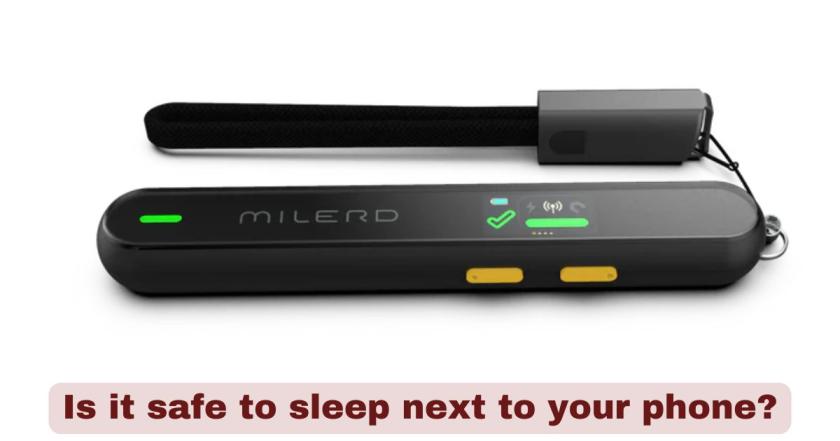
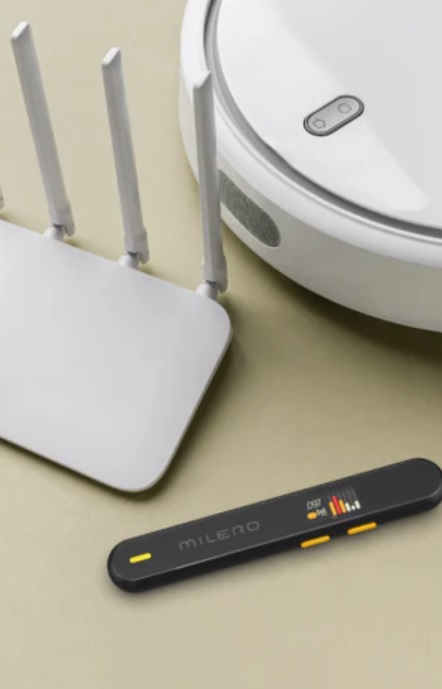
At the same time, a lot of people are not fully comfortable with this routine. They hear about electromagnetic fields, phone radiation and blue light, but do not know how serious the risk is in their own bedroom. That is why some prefer to check the situation instead of guessing, using an EMF analyzer to see how strong the fields are around the bed and furniture. Others go a step further and map out the “hot spots” near routers, chargers and power strips with an EMF detection meter before deciding where it is actually safe and comfortable to keep their devices at night.
What science says about sleeping near electronic devices
When people worry about sleeping next to a phone, they usually mix two different issues: electromagnetic fields and the way we use screens at night. Both matter, but they work in different ways.
Phones, tablets, routers and other wireless devices emit low-level electromagnetic fields, often called EMF or phone radiation. These are non-ionizing fields, which means they do not have enough energy to directly damage DNA the way X-rays or ultraviolet radiation can. Most current safety limits are based on preventing excessive heating of tissues, and everyday exposure from a single device on the nightstand typically stays far below those limits.
However, “below the limit” does not automatically answer every question. Researchers continue to study long-term, low-level EMF exposure, especially for people who keep devices close to the body for many hours a day. The results are not always consistent, and there is still ongoing discussion in the scientific community. Because of that, many experts suggest a simple principle: if you can reduce unnecessary exposure without sacrificing comfort, it is a reasonable step.
The picture becomes clearer when we look at how phones and tablets affect sleep itself. Here, the data is much more conclusive: regular use of screens before bed and at night does indeed worsen the quality of sleep, even if you spend enough hours in bed..
How phones and tablets can disturb your sleep
Bright screens in the evening suppress melatonin, the hormone that helps the body understand it is time to sleep. Blue-rich light from a smartphone or tablet sends the opposite signal: stay awake, stay alert. Late-night scrolling keeps the brain in a state of mild excitation, and constant notifications prevent deeper, more restorative stages of sleep.
Studies on smartphone use before bed show typical patterns: people take longer to fall asleep, wake up more during the night and feel less rested in the morning. Keeping a phone under the pillow or in your hand also makes it more likely that you will quickly check every vibration or sound, even if you do not fully wake up.
Children and teenagers can be especially sensitive to these effects. Their sleep patterns are still forming, and a habit of falling asleep with a phone in bed can lead to chronic sleep debt, difficulty concentrating and increased irritability during the day.
How to make your bedroom feel safer and calmer
You do not have to turn your bedroom into a laboratory to make nights feel safer. Most useful changes are simple habits that reduce unnecessary exposure and help the brain relax before sleep.
The easiest step is distance. Instead of keeping your phone on the pillow or in your hand, place it on a shelf or dresser a bit farther from the bed. Even moving a device one or two arm’s lengths away cuts down exposure near your head and makes it less tempting to reach for the screen every time you wake up for a moment.
The next habit is to quiet the phone itself. Switching to airplane mode at night stops active wireless communication and removes the constant stream of notifications. If you need to stay reachable for emergencies, you can keep mobile connection on but silence non-essential apps and turn off vibration. A dim, warm display mode in the evening also helps your body understand that bedtime is approaching.
Think about the way you charge devices as well. Try not to use the nightstand as a charging station for every phone, tablet, watch and headset in the house. Charging in another corner of the room, or even in the hallway for gadgets you do not need at night, reduces both the physical clutter and the feeling that your bed is surrounded by electronics.
Taken together, these small choices create a different atmosphere: the room feels more like a place for rest and less like an extension of your desk. You still have all the benefits of modern devices, but on your own terms, with a clear boundary between daytime connectivity and night-time recovery.
When your night-time tech habits become a problem
Gadgets in the bedroom are not always an issue, but certain patterns show that your habits are starting to work against you. One of the clearest signs is feeling unable to fall asleep without a phone in your hand. If scrolling, checking messages or watching short videos becomes the only way you can relax, your brain slowly learns to associate bedtime with stimulation instead of rest.
Regular night-time interruptions are another warning signal. If you routinely wake up to check every notification, reply to late messages or “just see what time it is”, your sleep becomes shallow and fragmented. Even when the total time in bed looks normal, you can still wake up tired, unfocused and more irritable than usual.
For some people, constant worry about EMF and phone radiation also turns into a separate source of stress. You might move the phone around the room without a clear plan, or feel anxious every time you plug in a charger. In that case it helps to step back, look honestly at your habits and work with facts instead of fears: define what you really need your devices for at night, simplify the routine and, if necessary, use reliable measurements from a trusted brand like Milerd to understand what is actually happening in your home.
Small changes that protect your sleep and peace of mind
You do not have to throw every device out of the bedroom to protect your sleep. Often, the most effective approach is to decide what really needs to stay near you at night and then set simple, consistent rules. Keeping the phone a little farther away, charging it away from the pillow and turning off non-essential alerts already makes a noticeable difference in how your nights feel.
It also helps to build a short, screen-free buffer before bed. Reading a printed book, stretching or just planning the next day with pen and paper sends a very different message to the brain than fast scrolling under bright light. Even fifteen to twenty minutes of this quiet time can make it easier to fall asleep without feeling “pulled back” to the screen.
If you are still uneasy about EMF or the number of devices at home, treat it as a practical project rather than a vague fear. Map out where you sleep, where your main sources of radiation and noise are, and decide what you can realistically move, switch off or limit. In the end, the goal is not to live in constant worry about technology, but to use it consciously: let your phone and tablet work for you during the day, while your bedroom at night remains a place for recovery, clear head and calm.