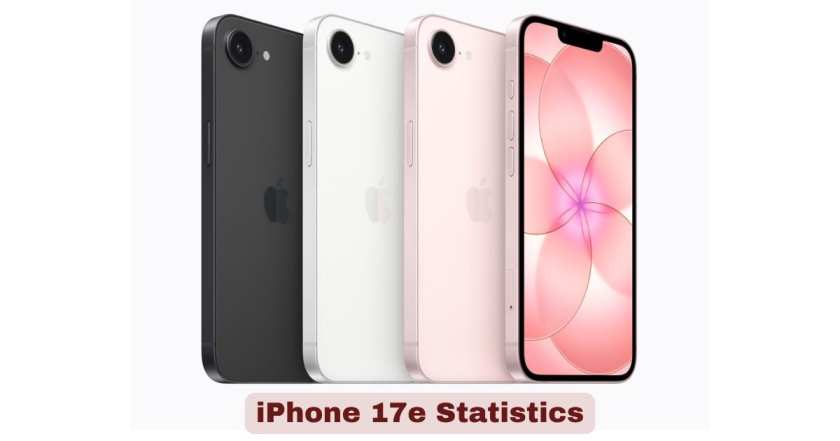
What is iPhone 17e in 2026
The iPhone 17e is Apple’s most affordable iPhone 17 series model, officially announced on March 2, 2026, and made available for purchase starting March 11, 2026. Positioned as the entry-level gateway into Apple’s iPhone 17 family, the iPhone 17e 2026 brings a powerful blend of flagship-grade components — the same A19 chip powering the full iPhone 17 lineup, a 48MP Fusion camera, MagSafe wireless charging, and 256GB base storage — all at a starting price of $599. For consumers who have been holding onto older devices like the iPhone 11 or iPhone 12, the jump to the iPhone 17e in 2026 represents one of the most compelling upgrade arguments Apple has ever made for its budget-friendly tier. It is available in three premium matte-finish colors — Black, White, and the newly introduced Soft Pink — and ships with iOS 26.3 out of the box.
What makes the iPhone 17e 2026 genuinely stand out in a crowded mid-range smartphone market is how much Apple has addressed the shortcomings of its direct predecessor, the iPhone 16e. The addition of MagSafe alone — a feature conspicuously absent from the iPhone 16e — opens the door to an entire ecosystem of magnetic accessories, from wireless chargers to car mounts and wallet attachments. On top of that, the switch to Ceramic Shield 2 on the front glass brings 3x better scratch resistance compared to the iPhone 16e, while the new C1X cellular modem delivers speeds up to 2x faster than the C1 modem found in the 16e. The iPhone 17e is not a watered-down phone — it is a deliberate, carefully engineered value proposition that makes the iPhone 17 experience accessible to millions of buyers who cannot or will not spend $799 or more on a standard iPhone 17.
iPhone 17e 2026 — Key Interesting Facts
The table below highlights the most important and surprising facts about the iPhone 17e 2026 that every buyer should know before making a purchasing decision.
| Fact Category | iPhone 17e 2026 — Key Fact |
|---|---|
| Announcement Date | March 2, 2026 |
| Release / Availability Date | March 11, 2026 |
| Pre-order Start Date | March 4, 2026 |
| Starting Price (US) | $599 for 256GB model |
| Storage Upgrade Price (US) | $799 for 512GB model |
| Monthly Payment Option | $24.95/month for 24 months (US) |
| Base Storage Increase vs iPhone 16e | 2x more — jumped from 128GB to 256GB at same price |
| Storage vs iPhone 12 (entry model) | 4x more storage at the same $599 price |
| Effective Price Saving vs iPhone 16e 256GB | $100 cheaper (16e charged $699 for 256GB) |
| Colors Available | Black, White, Soft Pink (new color in 2026) |
| Countries Available at Launch | Over 70 countries worldwide |
| New Feature Added vs iPhone 16e | MagSafe — first time on an ‘e’ model |
| Ceramic Shield Version | Ceramic Shield 2 — 3x better scratch resistance than 16e |
| Operating System at Launch | iOS 26.3 |
| Apple Intelligence Support | Yes — full Apple Intelligence integration |
| Design Origin | Shares dimensions with iPhone 13, 14, and iPhone 16e |
| Recycled Content | Made with 30% recycled content overall |
| Recycled Aluminum in Enclosure | 85% recycled aluminum |
| Recycled Cobalt in Battery | 100% recycled cobalt |
| Renewable Energy in Manufacturing | 55% renewable electricity in supply chain |
Source: Apple Newsroom, Apple.com
The facts table above paints a clear picture of exactly what Apple has engineered with the iPhone 17e 2026 and why this device represents genuine value in its pricing tier. The single most headline-grabbing detail is the storage leap — by doubling the base storage from 128GB to 256GB while holding the price steady at $599, Apple has effectively made the iPhone 17e cost $100 less than what you would have paid for an equivalent iPhone 16e 256GB model. That is a rare move from Apple, and it signals real cost reductions on the OLED panel side that the company has quietly passed along to consumers. The addition of MagSafe also corrects what was widely considered the biggest criticism of the iPhone 16e — its absence frustrated existing iPhone users who had built entire charging and accessory ecosystems around MagSafe over the previous four years.
From a sustainability standpoint, the numbers are worth noting. With 85% recycled aluminum in the enclosure, 100% recycled cobalt in the battery, and 55% renewable electricity used across the supply chain, the iPhone 17e 2026 reflects Apple’s Apple 2030 carbon-neutral commitment in meaningful, measurable ways. The 30% recycled content figure may sound modest, but within the constraints of consumer electronics manufacturing, it represents real supply chain transformation. The fact that this device ships to over 70 countries simultaneously also speaks to Apple’s confidence in the iPhone 17e as a global volume driver — not just a niche budget option for one or two markets.
iPhone 17e 2026 Full Technical Specifications
| Specification | iPhone 17e 2026 Details |
|---|---|
| Display Size | 6.1 inches (diagonal, OLED) |
| Display Type | Super Retina XDR OLED |
| Display Resolution | 2532 × 1170 pixels at 460 PPI |
| Refresh Rate | 60Hz |
| Brightness (Typical) | 800 nits |
| Peak HDR Brightness | 1200 nits |
| Contrast Ratio | 2,000,000:1 |
| Color Space | Wide Color (P3) |
| Front Glass | Ceramic Shield 2 |
| Chip | Apple A19 |
| CPU | 6-core (2 performance + 4 efficiency cores) |
| GPU | 4-core with Neural Accelerators |
| Neural Engine | 16-core |
| RAM | 8GB |
| Base Storage | 256GB |
| Max Storage | 512GB |
| Rear Camera | 48MP Fusion (f/1.6 aperture, OIS) |
| Optical-Quality Zoom | 2x (12MP Telephoto via sensor crop) |
| Digital Zoom | Up to 10x |
| Front Camera | 12MP TrueDepth (f/1.9, Autofocus) |
| Video Recording | 4K Dolby Vision at up to 60fps |
| Battery Capacity | 4,005 mAh |
| Video Playback (Offline) | Up to 26 hours |
| Video Playback (Streamed) | Up to 21 hours |
| Audio Playback | Up to 90 hours |
| Fast Charge Speed | 50% in ~30 minutes (20W+ adapter required) |
| MagSafe / Qi2 Wireless Charging | Up to 15W |
| Previous Gen Wireless Charging | 7.5W (iPhone 16e for comparison) |
| Cellular Modem | Apple C1X |
| Modem Speed vs C1 | Up to 2x faster than iPhone 16e |
| Modem Energy Efficiency vs 16 Pro | 30% less energy than iPhone 16 Pro modem |
| Connectivity | Wi-Fi 6 (802.11ax), Bluetooth 5.3, NFC, 5G sub-6 GHz |
| IP Rating | IP68 (6 meters, up to 30 minutes) |
| Dimensions (H × W × D) | 146.7 × 71.5 × 7.80 mm |
| Weight | 169 grams (5.96 oz) |
| Frame Material | Aerospace-grade aluminum |
| SIM Support | Dual eSIM only (no physical SIM card) |
| Navigation | GPS, GLONASS, Galileo, QZSS, BeiDou, NavIC |
| Biometrics | Face ID (TrueDepth camera) |
| Action Button | Yes |
| Camera Control Button | No |
| Dynamic Island | No (retains notch design) |
| Operating System | iOS 26.3 at launch |
Source: Apple Technical Specifications Page, Wikipedia — iPhone 17e
The full specifications of the iPhone 17e 2026 confirm this is a device that punches significantly above its price class in several critical areas. The A19 chip is the identical generation used in every other iPhone 17 model — the only difference is that the iPhone 17e uses a binned 4-core GPU rather than the 5-core GPU found in the standard iPhone 17. In real-world performance, this gap is barely perceptible for everyday tasks. The 2532 × 1170 resolution at 460 PPI means the display is genuinely sharp, and the Ceramic Shield 2 front glass — previously a premium feature — now extends to the entry-level model, giving buyers meaningful durability without needing a case. The IP68 rating at 6 meters depth provides the same water resistance as Apple’s flagship iPhones.
Where the iPhone 17e makes calculated compromises is the display refresh rate and camera system. The 60Hz refresh rate feels dated in 2026, where even mid-range Android devices commonly ship with 120Hz panels. Similarly, the absence of an Ultra Wide camera and the reliance on a sensor-crop 2x zoom rather than a dedicated telephoto lens means heavy photography users will feel the limitation. That said, the 48MP Fusion camera with optical image stabilization, Night Mode, 4K Dolby Vision at 60fps, and Smart HDR 5 processing makes this a genuinely capable camera for the vast majority of everyday users. The shift to Dual eSIM only — dropping physical SIM card support entirely — is also a notable change that travelers in regions with limited eSIM support should be aware of before purchasing.
iPhone 17e 2026 Pricing & Storage Options
| Model | Storage | US Price | UK Price | Monthly (US, 24mo) |
|---|---|---|---|---|
| iPhone 17e (Base) | 256GB | $599 | £599 | $24.95/month |
| iPhone 17e (Max Storage) | 512GB | $799 | £799 | ~$33.29/month |
Source: Apple.com, PhoneArena, Macworld
The iPhone 17e 2026 price structure is strategically straightforward — Apple offers just two storage configurations with a clean $200 step-up between them. At $599 for 256GB, the iPhone 17e represents the most value Apple has ever packed into its entry-level pricing tier, particularly when you factor in that the equivalent iPhone 16e 256GB cost $699 last year. The $24.95 per month financing option through Apple also lowers the barrier to entry significantly for buyers who prefer to spread the cost, making the iPhone 17e accessible to a broader income bracket than its sticker price might suggest. Carrier promotions from Verizon, AT&T, and T-Mobile have further sweetened the deal, with several major US carriers offering trade-in deals that effectively bring the iPhone 17e to the buyer at no upfront cost for eligible trade-in devices.
The 512GB model at $799 deserves separate consideration. At that price point, the iPhone 17e actually sits just $0 cheaper than the entry-level standard iPhone 17 — which also starts at $799 — making the buying decision between the two models a genuine tradeoff conversation about whether users need dual cameras, Dynamic Island, and a 120Hz ProMotion display, or whether they prefer maximizing local storage at a comparable price. For most buyers, the 256GB base model will be more than sufficient given the availability of iCloud+ storage plans starting at $0.99/month.
iPhone 17e 2026 vs iPhone 16e — Upgrade Comparison
| Specification | iPhone 17e (2026) | iPhone 16e (2025) | Improvement |
|---|---|---|---|
| Chip | A19 | A18 | Newer generation |
| Base Storage | 256GB | 128GB | 2x more storage |
| Starting Price | $599 | $599 (128GB) / $699 (256GB) | Effectively $100 cheaper for same storage |
| MagSafe / Qi2 Charging | Yes — up to 15W | No (Qi only, 7.5W) | 2x wireless charging speed |
| Front Glass | Ceramic Shield 2 | Ceramic Shield (1st gen) | 3x better scratch resistance |
| Cellular Modem | C1X | C1 | Up to 2x faster |
| Modem Energy Efficiency | 30% less energy than 16 Pro modem | Standard C1 efficiency | Major efficiency gain |
| Colors | Black, White, Soft Pink (new) | Black, White | +1 new color |
| iOS at Launch | iOS 26.3 | iOS 18 | 2 major versions newer |
| Battery Life (Video Playback) | Up to 26 hours | Up to 26 hours | Same |
| Battery Life (Streamed Video) | Up to 21 hours | Up to 21 hours | Same |
| Camera (Rear) | 48MP Fusion | 48MP Fusion | Same hardware |
| Camera Control Button | No | No | Same |
| Dynamic Island | No (notch) | No (notch) | Same |
| Weight | 169g | 167g | +2g |
| IP Rating | IP68 | IP68 | Same |
Source: Apple Newsroom, MacRumors, Macworld
The side-by-side comparison between the iPhone 17e and iPhone 16e makes it clear that Apple focused its upgrade efforts on the areas users complained about most loudly with the 16e. MagSafe was far and away the single biggest omission of the iPhone 16e, and Apple has corrected that decisively — the 15W wireless charging speed now available on the 17e is double what the 16e offered with standard Qi. The C1X modem delivering speeds up to 2x faster than the C1 found in the 16e is another genuine under-the-hood upgrade that will make a real difference for users in areas with strong 5G coverage. These improvements, combined with Ceramic Shield 2 and the storage doubling, represent a meaningful package upgrade even if the chassis, camera hardware, and battery capacity remain largely unchanged.
It is worth being candid about where the iPhone 17e 2026 has not moved the needle compared to the iPhone 16e. Battery life — both in terms of rated hours (26 hours offline video, 21 hours streamed) and battery capacity (4,005 mAh) — is unchanged. The camera hardware is the same 48MP Fusion system, though Apple’s improved image processing pipeline does produce better portrait and HDR results at the software level. The display remains a 60Hz panel, and the design is nearly identical to the iPhone 14 form factor that has been in continuous use since 2022. For users upgrading from an iPhone 16e bought within the last year, the iPhone 17e is a harder sell. But for anyone on an iPhone 13, 12, 11, or older, the upgrade case is compelling across essentially every dimension.
iPhone 17e 2026 Battery & Charging Statistics
| Battery Metric | iPhone 17e 2026 Data |
|---|---|
| Battery Capacity | 4,005 mAh |
| Offline Video Playback | Up to 26 hours (Apple rated) |
| Streamed Video Playback | Up to 21 hours (Apple rated) |
| Audio Playback | Up to 90 hours |
| Battery Score (PhoneArena Lab) | 6 hours and 46 minutes compound score |
| Improvement vs iPhone 16e (PhoneArena) | ~40 minutes better compound battery score |
| CNN Underscored 4K Video Test | 16 hours and 18 minutes of continuous 4K video |
| Fast Charge Minimum Adapter Required | 20W USB-C |
| 50% Charge Time | ~30 minutes (with 20W+ adapter) |
| MagSafe / Qi2 Wireless Speed | 15W |
| iPhone 16e Wireless Speed (Qi) | 7.5W |
| Wireless Charging Speed Improvement | 2x faster vs iPhone 16e |
| C1X Modem Energy vs iPhone 16 Pro Modem | 30% less energy consumption |
| Real-World Daily Usage (User Reports) | Full day — social media, streaming, calls, navigation |
| Gaming Endurance Estimate | 4–5 hours intensive gameplay to 20% battery |
| Video Streaming Estimate | 6–7 hours continuous streaming |
Source: Apple.com, PhoneArena Review, CNN Underscored, Apple Newsroom
The iPhone 17e 2026 battery life story is genuinely strong despite the battery hardware remaining identical to the iPhone 16e. Apple’s efficiency gains through the A19 chip and the more power-efficient C1X cellular modem — which consumes 30% less energy than the modem in the iPhone 16 Pro — have allowed the device to extract measurably better real-world endurance from the same 4,005 mAh cell. PhoneArena’s independent lab testing recorded a compound score of 6 hours and 46 minutes, nearly 40 minutes better than the iPhone 16e. CNN Underscored’s continuous 4K video test registered an impressive 16 hours and 18 minutes — a number that puts the iPhone 17e comfortably in the all-day battery conversation even under demanding workloads.
The addition of MagSafe and Qi2 at 15W is arguably the most practically impactful charging upgrade in the iPhone 17e 2026. By doubling wireless charging speed from the 7.5W Qi standard of the iPhone 16e, Apple has made overnight wireless charging far more practical and reduced the time cost of topping up on a MagSafe stand during short breaks throughout the day. The 50% in approximately 30 minutes fast charge capability via the 20W USB-C wired connection remains class-competitive, though it is worth noting that the standard iPhone 17 supports 40W wired charging — a gap that buyers who live off fast charging should factor into their decision.
iPhone 17e 2026 Camera Specifications & Performance
| Camera Feature | iPhone 17e 2026 Specification |
|---|---|
| Rear Camera System | Single lens — 48MP Fusion |
| Main Lens Focal Length | 26mm |
| Main Lens Aperture | f/1.6 |
| Optical Image Stabilization | Yes — lens-shifted OIS |
| Focus System | Hybrid Focus Pixels (Autofocus) |
| 2x Telephoto | 12MP via sensor crop (optical-quality, not hardware zoom) |
| Telephoto Focal Length | 52mm |
| Max Digital Zoom | 10x |
| Rear Panorama Resolution | Up to 63MP |
| Front Camera | 12MP TrueDepth |
| Front Aperture | f/1.9 |
| Front Camera Autofocus | Yes (Focus Pixels) |
| Portrait Mode | Yes — people, dogs, cats (next-gen, depth saved post-capture) |
| Night Mode | Yes (rear and front) |
| Video — Max Quality | 4K Dolby Vision at 60fps |
| Slo-Mo Video | 1080p at 120fps or 240fps |
| Spatial Audio Recording | Yes |
| Wind Noise Reduction | Yes |
| HDR Processing | Smart HDR 5 |
| Photographic Styles | Yes |
| Lens Protection | Sapphire crystal lens cover |
| Camera Control Button | No (not present on iPhone 17e) |
| Ultra Wide Camera | No |
| Dedicated Hardware Telephoto | No |
Source: Apple Technical Specifications Page, PhoneArena, Apple Newsroom
The iPhone 17e 2026 camera system is the most nuanced part of this device’s spec sheet. On paper, the 48MP Fusion camera with f/1.6 aperture, OIS, Night Mode, Smart HDR 5, and 4K Dolby Vision at 60fps sounds like a premium shooter — and in controlled or well-lit scenarios, it genuinely delivers results that rival cameras found in phones costing $300 to $400 more. The upgraded software pipeline around portrait mode is a real-world improvement; the fact that the iPhone 17e can now recognize people, dogs, and cats and retroactively apply portrait blur to already-captured photos is a meaningful quality-of-life feature that the iPhone 16e lacked. The 12MP front camera with autofocus also ensures selfies and FaceTime calls at 1080p remain sharp and usable.
Where the camera limitations become tangible is in versatility. The absence of a hardware Ultra Wide camera means there is no 0.5x zoom option — a feature that has become one of the most used lenses on modern iPhones for architecture, interiors, and group shots in tight spaces. The 2x Telephoto via sensor crop is technically impressive but is not true optical zoom — at the full 10x digital zoom, image quality degrades noticeably. Apple’s decision to omit the Camera Control button — a physical hardware shortcut for camera functions introduced with the iPhone 16 lineup — also means the iPhone 17e misses out on quick access to visual intelligence and one-press shooting. For casual photographers and social media users, the camera will feel more than sufficient. For users who frequently rely on wide-angle shots or demanding telephoto reach, the step up to the standard iPhone 17 at $799 becomes a more compelling conversation.
iPhone 17e 2026 vs Competition — Market Positioning
| Device | Price | Chip / Processor | Base Storage | Rear Cameras | Display Refresh | Wireless Charging |
|---|---|---|---|---|---|---|
| iPhone 17e (2026) | $599 | Apple A19 | 256GB | 1 (48MP) | 60Hz | MagSafe 15W |
| iPhone 17 (2025) | $799 | Apple A19 | 128GB | 2 (Wide + Ultra Wide) | 120Hz ProMotion | MagSafe 25W |
| iPhone 16e (2025) | $599 | Apple A18 | 128GB | 1 (48MP) | 60Hz | Qi 7.5W |
| Google Pixel 10a (2026) | $499–$500 | Google Tensor G5 | 128GB | 2 (Wide + Ultra Wide) | 120Hz | 18W wireless |
| Samsung Galaxy S25 FE (2026) | ~$649 | Snapdragon 8 Elite | 128GB | 3 cameras | 120Hz | 25W wireless |
| Nothing Phone (4a) Pro (2026) | ~$449 | Snapdragon 7s Gen 3 | 256GB | 2 cameras | 120Hz | 15W wireless |
Source: MacRumors, CNN Underscored, Macworld, PhoneArena
Looking at the iPhone 17e 2026 in its competitive context reveals both the strengths and the clear trade-offs Apple has made. Among iOS devices, the value argument is iron-clad — you get the same A19 chip as the $799 iPhone 17 at a $200 discount, with the compromises being a single camera, 60Hz display, and the absence of Dynamic Island. Against Android competition, the picture is more nuanced. The Google Pixel 10a at $499–$500 is a legitimate challenger — it costs $100 less, offers dual cameras including an Ultra Wide lens, and comes with a 120Hz display. However, the iPhone 17e counters with a meaningfully faster chip: CNN Underscored’s Geekbench 6 multi-core testing showed the iPhone 17e outperforming the entire Google Pixel 10 family — including the Pixel 10a — and even edging out the slightly more expensive Samsung Galaxy S25 FE.
The Samsung Galaxy S25 FE at approximately $649 costs $50 more than the iPhone 17e while offering three cameras and a 120Hz display, but it starts with only 128GB of storage compared to the iPhone 17e’s 256GB base. For buyers already embedded in the Apple ecosystem — with an Apple Watch, AirPods, MacBook, or iPad — the iPhone 17e remains uniquely compelling because of seamless cross-device integration that no Android device can fully replicate. The MagSafe ecosystem is another exclusive advantage; while Google’s new PixelSnap magnetic charging is a step in that direction for Pixel users, the breadth of accessories available for MagSafe in 2026 is still significantly wider.
iPhone 17e 2026 Performance Benchmarks
| Benchmark / Performance Test | iPhone 17e 2026 Result |
|---|---|
| Geekbench 6 Multi-Core vs iPhone 16e | ~9% improvement |
| Geekbench 6 Multi-Core vs iPhone 17 | Practically tied (within margin) |
| Geekbench 6 Multi-Core vs iPhone 17 Pro | ~12% behind iPhone 17 Pro |
| Geekbench 6 vs Google Pixel 10 Family | Outperforms entire Pixel 10 range |
| Geekbench 6 vs Samsung Galaxy S25 FE | Edges out Galaxy S25 FE |
| CPU Speed vs iPhone 11 | Up to 2x faster (Apple rated) |
| GPU Cores | 4-core (vs 5-core in standard iPhone 17) |
| Ray Tracing Support | Yes — hardware-accelerated |
| AAA Gaming Support | Yes (Arknights: Endfield tested at launch) |
| Apple Intelligence | Full support (requires 8GB RAM) |
| Neural Engine Cores | 16-core |
| C1X Modem 5G Speed Test (Daring Fireball) | 500+ Mbps download (Center City Philadelphia) |
| C1X Upload Speed (Daring Fireball) | 40–50 Mbps upload |
| 5G Connectivity | Sub-6 GHz with 4×4 MIMO |
Source: CNN Underscored, Apple Newsroom, Daring Fireball, MacRumors
The iPhone 17e 2026 performance figures confirm that Apple’s decision to use the full A19 chip — even in a binned, 4-GPU-core configuration — creates a device that is definitively the fastest mainstream smartphone available under $600 in 2026. The roughly 9% Geekbench 6 multi-core improvement over the iPhone 16e may seem modest in raw percentage terms, but combined with the efficiency gains from the C1X modem and the improvements to iOS 26’s power management, the device feels perceptibly faster in real-world navigation, app loading, and multi-tasking. The fact that it essentially ties the standard iPhone 17 in multi-core performance while costing $200 less is a remarkable statement about Apple’s ability to democratize flagship-level performance.
Hardware-accelerated ray tracing on a $599 phone is genuinely unprecedented in this price bracket, and it signals Apple’s commitment to the iPhone 17e as a legitimate gaming device. The C1X modem’s real-world 5G results — 500+ Mbps downloads recorded in independent testing — are competitive with premium flagship Android devices. The 30% energy savings from the C1X modem versus the iPhone 16 Pro’s Qualcomm modem means that the performance gains come without a battery life penalty, which is a key engineering achievement. Apple Intelligence with full support — writing tools, Clean Up, Visual Intelligence, Genmoji, and more — is also available on the iPhone 17e thanks to its 8GB of RAM, putting it on equal footing with every other iPhone 17 model in the AI feature set.
iPhone 17e 2026 — Environmental & Sustainability Statistics
| Environmental Metric | iPhone 17e 2026 Data |
|---|---|
| Total Recycled Content | 30% |
| Recycled Aluminum in Enclosure | 85% |
| Recycled Cobalt in Battery | 100% |
| Renewable Electricity in Manufacturing | 55% of supply chain |
| Packaging Material | 100% fiber-based (no plastic) |
| Packaging Recyclability | Fully recyclable — including in household bins |
| Apple 2030 Goal | Carbon neutral across entire footprint by 2030 |
| Emergency SOS via Satellite | Free for 2 years for all iPhone 17e users |
| Software Support Longevity | iPhones typically receive 5–7 years of iOS updates |
Source: Apple Newsroom, Apple.com Environmental Reporting
Apple’s sustainability commitment embedded within the iPhone 17e 2026 is a meaningful component of the overall product story. The use of 100% recycled cobalt in the battery is a direct response to the environmental and ethical concerns around cobalt mining — a notoriously difficult supply chain challenge for the entire electronics industry. 85% recycled aluminum in the enclosure reduces the energy-intensive process of mining and smelting primary aluminum, one of the most carbon-intensive materials in smartphone manufacturing. The 55% renewable electricity used across Apple’s supply chain for this device reflects the broader Apple 2030 target — an ambitious commitment to be carbon neutral across the company’s entire footprint, including manufacturing, by the end of this decade.
From a long-term ownership perspective, the iPhone 17e 2026 is also designed to maximize lifespan. Apple’s track record of providing 5 to 7 years of iOS software updates means a device purchased today at $599 will likely receive security patches, new features, and performance improvements well into 2031 or 2032. The inclusion of Emergency SOS via satellite free for two years adds genuine safety value, particularly for buyers in rural areas or those who travel to regions with poor cellular coverage. The 100% fiber-based packaging — which Apple notes can go directly into household recycling bins in most regions — completes a product that, at its price point, makes a credible case for being one of the most responsibly engineered consumer electronics devices available in mid-2026.
Disclaimer: The data research report we present here is based on information found from various sources. We are not liable for any financial loss, errors, or damages of any kind that may result from the use of the information herein. We acknowledge that though we try to report accurately, we cannot verify the absolute facts of everything that has been represented.