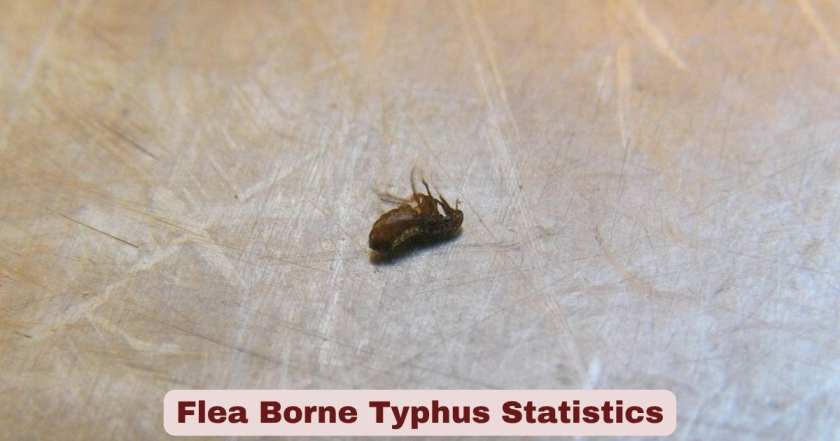
What Is Flea Borne Typhus?
Flea-borne typhus — also known as murine typhus or endemic typhus — is a bacterial infectious disease caused by Rickettsia typhi and transmitted to humans through contact with infected fleas, most commonly the Oriental rat flea (Xenopsylla cheopis) and the cat flea (Ctenocephalides felis). Unlike its more historically infamous cousin, epidemic louse-borne typhus (Rickettsia prowazekii), which killed millions during wars and famines, flea-borne typhus is a milder disease — but “milder” is a relative term that deserves careful qualification in 2026. A disease in which nearly 90% of diagnosed cases in Los Angeles County required hospitalization in 2025, and which can progress to multi-organ failure, septic shock, myocarditis, and death if not treated promptly, is not merely a mild nuisance. Flea-borne typhus is a re-emerging infectious disease in the United States, with the three primary endemic zones — southern California, southern Texas, and Hawaii — all recording significant case numbers in recent years. The CDC (updated December 11, 2025) has explicitly described the disease as showing signs of re-emergence, and public health authorities from Los Angeles to Galveston are issuing increasingly urgent warnings as annual case counts climb to levels not seen in decades.
The epidemiological story of flea-borne typhus in America is one of dramatic rise, deliberate defeat, and troubling return. During the 1930s and 1940s, thousands of cases were reported annually in the United States — peaking at 5,401 reported cases in 1944. Post-World War II campaigns using DDT on rat runs and rodenticide programs across the US South drove the annual count below 100 by 1958, and the disease was so well-controlled that in 1987, the Council of State and Territorial Epidemiologists voted to remove flea-borne typhus from the nationally notifiable disease list, when total US cases had fallen to just 49. That decision now looks like a public health premature victory lap: in Los Angeles County alone, 220 cases were documented in 2025 — the highest-ever recorded total, representing more than four times the entire national case count of 1987 in a single county. In Texas, 847 cases were reported in 2024 — the state’s highest single-year figure. The disease never truly went away; it adapted its transmission cycle from rats and rat fleas to opossums, stray cats, and the ubiquitous cat flea, becoming embedded in urban and suburban wildlife ecosystems that are far harder to control than the rat colonies that were the original targets.
Interesting Facts: Flea Borne Typhus | Key Stats at a Glance
| Fact | Detail |
|---|---|
| Causative bacterium | Rickettsia typhi (primary); Rickettsia felis also causes flea-borne typhus |
| Common names | Flea-borne typhus, murine typhus, endemic typhus — all refer to the same disease |
| Primary vectors in US | Oriental rat flea (Xenopsylla cheopis) and cat flea (Ctenocephalides felis) |
| Primary reservoir animals (US) | Rats, opossums (Didelphis virginiana), free-roaming cats — in Texas and California, opossums have largely replaced rats |
| US states with most cases | Southern California, Southern Texas, and Hawaii — CDC (December 2025) |
| National notifiable disease status | Removed from US national notifiable list in 1987 — too few cases at the time |
| US cases in 1987 (when removed from list) | 49 total US cases |
| Peak US cases historically | 5,401 in 1944 — before DDT and rodenticide campaigns |
| LA County cases (2021) | 141 cases |
| LA County cases (2022) | 171 cases |
| LA County cases (2023) | 124 cases (slight decrease) |
| LA County cases (2024) | 187 cases |
| LA County cases (2025) | 220 cases — all-time recorded high (LA County DPH, April 2, 2026) |
| LA County hospitalization rate (2025) | ~90% — nearly 9 in 10 diagnosed patients required hospitalization |
| LA County 2025 age range of cases | 1 to 85 years — all age groups affected |
| LA County 2025 outbreaks | 3 localized outbreaks — Central Los Angeles, Santa Monica, and Willowbrook |
| Texas cases (2023) | 835 cases — single-year record at time |
| Texas cases (2024) | 847 cases — highest Texas annual total |
| Texas cumulative cases (2008–2023) | Over 6,700 cases in Texas alone |
| Texas hospitalization rate | ~70% of Texas cases were hospitalized (2008–2023 data) |
| Texas fatalities (2008–2023) | 14 fatalities attributed to flea-borne typhus in Texas |
| California surveillance (2011–2019) | 881 total cases — 78% in Los Angeles County, 19% in Orange County |
| Estimated true incidence | Fewer than one-third of cases are ever diagnosed — actual burden significantly higher |
| Incubation period | 3–14 days after contact with infected fleas or flea feces (CDC) |
| Mean incubation (MSD Manual) | Mean of 10–11 days |
| Transmission route | NOT person-to-person — flea feces rubbed into skin wounds, scratches, or eyes |
| Seasonal pattern | Cases occur year-round but peak in late summer and fall |
Source: LA County Department of Public Health (April 2, 2026), CDC About Flea-borne Typhus (updated December 11, 2025), CDC Clinical Overview of Flea-borne Typhus (updated April 18, 2025), Texas DSHS Flea-Borne Typhus page, PMC California surveillance study Yomogida et al. (2024), PMC Rickettsia typhi in Southern California commentary (2024), MMWR Fleaborne Typhus–Associated Deaths LA County 2022 (2023), CDC EID spinosad/opossum study (June 2025), PMC History Rats Fleas Opossums Part II (2020)
The 90% hospitalization rate in Los Angeles County in 2025 deserves very careful interpretation. On its face, it seems shocking for a disease often described as “moderately severe but rarely fatal.” The explanation is rooted in the diagnostic gap: fewer than one-third of flea-borne typhus cases are believed to be diagnosed at all. The cases that get counted are overwhelmingly the sickest ones — people ill enough to seek significant medical care, sick enough to generate the diagnostic workup (blood tests, serology) that eventually identifies Rickettsia typhi. Mild cases, where a patient has a week of fever, headache, and malaise before recovering, are almost never diagnosed as typhus. They become influenza, “a viral illness,” or simply an unexplained fever. This diagnostic filtering effect means the 90% hospitalization figure describes the diagnosed case population, not the true disease population — but it also means the diagnosed cases are genuinely serious and require urgent attention.
The comparison of 220 LA County cases in 2025 versus 49 total US cases in 1987 is perhaps the most striking epidemiological data point in this entire dataset. The same disease. One county in 2025 reporting more than four times the entire national case count from the year it was deemed rare enough to remove from mandatory national surveillance. That contrast does not reflect a statistical anomaly or changed reporting practices — Los Angeles County has required flea-borne typhus reporting since well before 1987. It reflects a genuine disease resurgence driven by expanding reservoir animal populations, climate-driven flea proliferation, and urban development patterns that have placed millions of humans in close proximity to opossum, rat, and feral cat habitats. The disease adapted; the surveillance policy did not keep pace.
Flea Borne Typhus Symptoms | Clinical Signs & Disease Course
| Symptom / Clinical Feature | Detail |
|---|---|
| Onset | Sudden onset typically 1–2 weeks after flea exposure (CDC: 3–14 days; mean ~10–11 days) |
| Fever | Almost universal — often high; can last up to 2–3 weeks without treatment |
| Headache | One of the most consistent early symptoms |
| Chills | Common early symptom — often described as shaking chills |
| Malaise/fatigue | Profound weakness and exhaustion |
| Body aches (myalgia) | Muscle aches, often severe |
| Nausea and vomiting | Commonly reported, especially in early phase |
| Rash | Macular or papular rash — sparse and discrete in flea-borne typhus; absence does not rule out diagnosis |
| Rash timing | Usually appears after fever has been present several days |
| Abdominal pain | Frequently reported |
| Cough | Can occur |
| Altered mental status | Neurological manifestations possible in severe cases |
| Anorexia | Loss of appetite common |
| Laboratory: thrombocytopenia | Low platelet count — common laboratory finding |
| Laboratory: hyponatremia | Low sodium — common laboratory finding |
| Laboratory: elevated liver enzymes | Elevated hepatic transaminases (hepatitis pattern) |
| Laboratory: anemia | Mild anemia frequently noted |
| Laboratory: leukopenia | Low white blood cell count |
| Laboratory: CSF abnormalities | Abnormalities consistent with aseptic meningitis in some cases |
| Severe manifestations | Hemophagocytic lymphohistiocytosis (HLH), myocarditis, septic shock, disseminated intravascular coagulation — documented in LA County 2022 deaths |
| Organ systems at risk (untreated) | Liver, kidneys, heart, lungs, and brain |
| Complications rate | 26–28% of cases have complications |
| ICU requirement | Up to one-third of cases require intensive care |
| % who know they were bitten by a flea | Most people do NOT know they were bitten — exposure often unrecognized |
| Fever duration without treatment | Up to 2–3 weeks |
| Course with early doxycycline | Less severe illness, shorter recovery time |
Source: CDC About Flea-borne Typhus (December 11, 2025), CDC Clinical Overview of Flea-borne Typhus (April 18, 2025), Texas DSHS, MSD Manual Murine Endemic Typhus, MMWR Fleaborne Typhus Associated Deaths LA County (2023), PMC History Rats Fleas Opossums Part I (2020), PMC Rickettsia typhi Southern California (2024), LA County DPH (April 2, 2026)
The clinical presentation of flea-borne typhus is a textbook example of a disease that is easy to miss and dangerous to delay. Fever, headache, malaise, and body aches are the presenting symptoms of dozens of common illnesses — influenza, COVID-19, mononucleosis, urinary tract infection, and many others. The rash that might point a clinician toward a rickettsial illness is sparse, often appears only after several days of fever, and is absent or unnoticed in a significant proportion of cases. Critically, most people do not know they have been bitten by a flea — flea bites are small, often itch only briefly, and are easily attributed to a mosquito, clothing irritation, or other cause. A patient presenting with five days of fever and headache who lives near an opossum-dense neighborhood but doesn’t recall a flea bite will almost never mention flea exposure, and a physician not actively thinking about typhus will not ask.
This diagnostic gap has direct mortality implications. The three deaths documented in Los Angeles County in 2022 — the subject of a CDC MMWR report published in 2023 — all involved patients with underlying medical conditions and included severe presentations of hemophagocytic lymphohistiocytosis (HLH), myocarditis, and septic shock with disseminated intravascular coagulation. These are catastrophic complications that develop when Rickettsia typhi remains uncontrolled by the immune system because no antibiotic therapy was initiated — because the diagnosis was not made in time. The 12.6-day mean time from symptom onset to a positive antibody test in California surveillance data explains exactly why: serologic confirmation takes weeks, antibodies are often absent in the first days of illness, and clinicians who do not start empiric doxycycline while awaiting results are exposing their patients to significant risk.
Flea Borne Typhus by Region | US Geographic & Epidemiological Data
| Geographic / Epidemiological Metric | Data |
|---|---|
| Primary US endemic regions | Southern California, Southern Texas, Hawaii |
| Disease trend since 2008 | Cases increased significantly — CDC considers re-emerging disease in certain US areas |
| LA County: cases 2010 | 31 cases |
| LA County: cases 2025 | 220 cases — 7× increase since 2010 |
| LA County: 2025 outbreaks | 3 localized outbreaks: Central Los Angeles City, City of Santa Monica, unincorporated Willowbrook |
| California total (2011–2019) | 881 cases — 78% LA County, 19% Orange County |
| California 2011 cases | 47 cases |
| California 2018 cases | 164 cases |
| California 2019 cases | 140 cases |
| California 2022 cases | 171 cases (statewide) |
| California hospitalization rate (2011–2019) | 83% hospitalized; median length of stay 4 days |
| California: readmission rate | 3% required readmission |
| California: time symptom onset to positive test | Mean 12.6 days |
| Texas cases (2008) | First year of current tracking period |
| Texas cases (2010) — minimum | 135 cases — lowest year 2008–2023 |
| Texas cases (2023) — previous record | 835 cases |
| Texas cases (2024) — current record | 847 cases |
| Texas cumulative (2008–2023) | Over 6,700 cases |
| Texas hospitalization rate | ~70% of reported cases hospitalized |
| Texas fatalities (2008–2023) | 14 fatalities |
| Texas geographic expansion | Cases expanding beyond Rio Grande Valley to Dallas-Fort Worth, Houston, Austin, San Antonio |
| Hawaii: geographic concentration | 73% of Hawaii cases occur in Maui County (lower rainfall = more flea activity) |
| Northern California (2018–2019) | LA County resurgence involved rats as reservoir — different from opossum/cat flea cycle |
| US case count in 1987 | 49 total US cases — year removed from national notifiable list |
| 1930s–1940s annual US cases | Thousands per year — thousands of cases annually reported |
| US peak historical case count | 5,401 reported cases in 1944 |
Source: CDC About Flea-borne Typhus (December 11, 2025), LA County DPH (April 2, 2026), ABC7 (April 2026), PMC Yomogida et al. — Surveillance of Flea-Borne Typhus in California 2011–2019 (2024), Texas DSHS, TPR Texas Public Radio (September 7, 2025), MMWR 2022 LA County deaths (August 2023), PMC History Rats Fleas Opossums Part II (2020)
The Texas data pattern mirrors and amplifies what is happening in California, with one important additional dimension: the geographic expansion of the disease beyond its traditional southern Rio Grande Valley heartland. Texas cases expanding into Dallas-Fort Worth, Houston, Austin, and San Antonio — major metropolitan areas — means the disease is moving from historically hot and humid border regions into the broader Texas urban ecosystem. The 847 Texas cases in 2024 represent a case burden that should be generating significantly more national attention than it does, partly because Texas has maintained notifiable disease reporting while the federal government stopped tracking nationally in 1987. The combination of Texas’s 847 cases and California’s estimated several hundred cases in 2024 suggests a true US national burden that substantially exceeds what any single tracking system captures.
The ecological transformation of flea-borne typhus transmission in the United States is as significant as the case count trends. In the early 20th century, the disease was firmly a rat-and-rat-flea problem, concentrated in port cities and Southern rural areas with poor sanitation and rat-infested grain stores. Modern urban flea-borne typhus is a different beast: it circulates primarily between opossums and cat fleas in Southern California and parts of Texas, with the opossum (Didelphis virginiana) serving as an amplifying host that maintains Rickettsia typhi at high prevalence in flea populations across urban neighborhoods. Because opossums are nocturnal, abundant in suburban and urban California and Texas, frequently rummage near homes, and appear to show no illness from the infection, there is no visible signal of disease in the reservoir population. Fleas on opossums carrying typhus look identical to fleas on opossums not carrying typhus, and both opossums look perfectly healthy.
Flea Borne Typhus Diagnosis, Treatment & Prevention | 2025–2026 Data
| Diagnosis / Treatment / Prevention | Detail |
|---|---|
| Treatment of choice | Doxycycline — for adults and children of all ages |
| Recommended doxycycline duration | At least 3 days after fever resolves and evidence of clinical improvement — usually 7–10 days total |
| When to start treatment | Do not delay pending lab confirmation — start on clinical suspicion |
| Treatment in children | Doxycycline recommended for all ages — short courses (5–10 days) do not cause permanent tooth staining |
| Alternative if doxycycline intolerant | Chloramphenicol (reference); minocycline used successfully in some cases |
| Response to treatment | Typically swift and effective — most patients recover fully with prompt treatment |
| Case-fatality rate (treated) | <1% among patients who receive doxycycline |
| Case-fatality rate (untreated/delayed) | Higher — up to 0.4% overall including untreated and delayed |
| Diagnostic test of choice | Indirect fluorescent antibody (IFA) assay on serum specimens |
| Serological requirement for confirmation | 4-fold rise in antibody titer between acute and convalescent samples |
| PCR usefulness | Most sensitive if collected first week of illness, before doxycycline — negative PCR cannot rule out infection |
| Antibody detection timing | Antibodies usually absent in first few days — serology is retrospective confirmation |
| Lab diagnosis lag time | Reference laboratory results can take several weeks |
| IHC testing | Immunohistochemistry can detect typhus group Rickettsia (including R. typhi) |
| Cross-reactivity | R. typhi antigens cross-react with R. prowazekii, R. felis, and less often R. rickettsii |
| Immunity after infection | Robust immune response with elevated antibody titers for months to years — life-long immunity unknown |
| Vaccine availability | No vaccine available to prevent flea-borne typhus |
| Pet flea prevention | Year-round flea control products (collars, oral medication, topical) — discuss with veterinarian |
| Permethrin warning | Permethrin should NOT be used on cats |
| Rodent and wildlife control | Store food in sealed containers; remove brush/rock piles; seal home entry points; secure trash lids |
| Flea treatment BEFORE rodent control | Critical: Treat for fleas BEFORE beginning rodent extermination — dying rodents release infected fleas searching for new hosts |
| Novel opossum flea control (2023–2024 study) | Oral spinosad (flea preventive) given to opossums killed 98% of fleas — CDC Emerging Infectious Diseases study |
| Insect repellent | Use EPA-registered repellents labeled for use against fleas when outdoors |
| When to seek care | Promptly if symptoms develop — especially after flea exposure or contact with outdoor animals |
| Reporting in California | Mandated reportable condition — providers and labs must report within 7 calendar days |
| Reporting in most US states | Not nationally notifiable — reporting varies by state |
Source: CDC Clinical Overview of Flea-borne Typhus (April 18, 2025), CDC About Flea-borne Typhus (December 11, 2025), CDC EID June 2025 spinosad/opossum study (Blanton LS et al.), PMC Manifestations and Management of Flea-Borne Rickettsioses, MSD Manual Professional (2026), MMWR 2022 LA County deaths (2023), Texas DSHS, LA County DPH (April 2, 2026)
The two most important clinical messages in all of flea-borne typhus management are deceptively simple, but their execution remains imperfect. First: start doxycycline based on clinical suspicion and epidemiological context — do not wait for lab confirmation. The antibodies that confirm Rickettsia typhi infection are often absent in the first week of illness, the window when treatment is most effective, and sending blood to a reference laboratory and waiting weeks for results while the bacteria continues to damage the patient’s organs is a formula for exactly the catastrophic outcomes seen in the LA County 2022 deaths. Every major clinical authority — the CDC, the MSD Manual, infectious disease specialists — states unambiguously that treatment should never be withheld pending diagnostic tests. Second: the treatment is straightforward, highly effective, and well-tolerated. Doxycycline is inexpensive, widely available, and will typically produce clinical improvement within 24–72 hours in patients with flea-borne typhus. The window of maximum benefit is early; the cost of delay is compounding multi-organ damage.
The novel spinosad opossum study published in CDC Emerging Infectious Diseases in June 2025 represents a genuinely new approach to the ecological problem of flea-borne typhus control. Researchers in Galveston, Texas, demonstrated that oral spinosad — an FDA-approved flea preventive medication used in dogs and cats — kills 98% of fleas infesting opossums when ingested by the opossums. Because opossums are the primary reservoir host in southern California and Texas, treating the reservoir animal rather than trying to control flea populations on the landscape could be a transformative vector control strategy. Trapping, medicating, and releasing opossums, or baiting opossum feeding stations with spinosad, could substantially reduce the proportion of infected fleas in urban wildlife populations. This research is early-stage but represents exactly the kind of ecologically sophisticated intervention the modern urban typhus problem demands — one that acknowledges that the disease is now embedded in urban opossum populations that cannot simply be exterminated the way rat colonies were targeted with DDT in the 1940s.
Flea Borne Typhus Biology & Transmission | How the Disease Spreads
| Biology / Transmission Metric | Detail |
|---|---|
| Primary causative organism | Rickettsia typhi — obligate intracellular bacterium |
| Second causative organism | Rickettsia felis — discovered 1990; found in cat fleas worldwide |
| Flea species — primary US vectors | Oriental rat flea (Xenopsylla cheopis) and cat flea (Ctenocephalides felis) |
| Total flea species implicated as vectors | More than 11 species in 8 genera |
| Transmission mechanism | Infected flea feces (flea dirt) rubbed into skin wounds, scratches, or eyes — NOT from the flea bite itself |
| Flea infection duration | Once infected, a flea remains infected for the rest of its life |
| Vertical transmission in fleas | Infected female fleas can transmit organisms to their progeny |
| Person-to-person transmission | Does not occur — flea-borne typhus is NOT contagious between people |
| Primary reservoir (historically) | Rats (Rattus rattus and R. norvegicus) — maintained organism for millennia |
| Primary US reservoir (modern — CA and TX) | Opossums (Didelphis virginiana) as amplifying host; cat fleas as primary vector |
| Do reservoir animals get sick? | No — infected animals (rats, opossums, cats) do not develop illness from carrying R. typhi |
| Cat flea advantage as vector | Cat flea is non-selective — feeds on many host species including humans |
| Cat flea vs rat flea | Cat flea is far more abundant in modern US urban environments than rat fleas |
| Outdoor cats and dogs as risk | Pets allowed outside can carry infected fleas indoors — even if the pet shows no signs of illness |
| R. typhi in cat fleas from opossums | Consistent detection of R. typhi in cat fleas collected from opossums in Texas and California |
| R. typhi prevalence in domestic cat fleas | Lower than in opossum-collected fleas — opossums are more significant wildlife reservoir |
| Climate factor | Fleas thrive under warmer conditions — reproduce faster and typhus bacteria multiply more rapidly in warmer temperatures |
| Urban wildlife exposure | Urban expansion into wildlife habitats has increased human-opossum-flea contact |
| Rodent displacement factor | Post-1940s: brown/black rats controlled by DDT; opossum-cat flea cycle persisted because DDT had little spillover into opossums |
| Opossums and spinosad (2025 study) | Oral spinosad in opossums killed 98% of infesting fleas — potential biocontrol strategy |
| Maui County (Hawaii) dominance | 73% of Hawaii FBT cases occur in Maui County due to lower rainfall supporting more flea activity |
| Global distribution | Tropical, subtropical, and temperate climates worldwide — Southeast Asia, Africa, Central/South America, southern Europe, Middle East |
| Port city historical concentration | Historically most prevalent in port cities where rat populations and rat fleas were densest |
Source: CDC About Flea-borne Typhus (December 11, 2025), CDC Clinical Overview (April 18, 2025), CDC Emerging Infectious Diseases Blanton et al. (June 2025), PMC History Rats Fleas Opossums Part I (2020), PMC History Rats Fleas Opossums Part II (2020), PMC Manifestations and Management of Flea-Borne Rickettsioses, MSD Manual Professional (2026), LA County DPH (April 2, 2026), TPR (September 7, 2025)
The ecological pivot from rats-and-rat-fleas to opossums-and-cat-fleas is the fundamental reason why flea-borne typhus has proven so difficult to eliminate from California and Texas despite the dramatic success of mid-20th century control programs. The 1940s DDT campaigns worked precisely because they were targeted: spray DDT along rat runs and harborages, kill the Oriental rat fleas that were the primary vectors, and break the transmission cycle. The cat flea (Ctenocephalides felis) is a different challenge entirely. It is one of the most abundant parasitic arthropods in the world, it will feed on virtually any warm-blooded animal, and its primary urban host — the domestic cat — is essentially untreatable as a vector control target because cats are property that their owners, not public health authorities, manage. Add to this the opossum, which occupies every urban and suburban neighborhood in California and Texas, forages nocturnally near human homes and garbage, carries infected cat fleas at high prevalence, and is explicitly protected in many jurisdictions as a non-pest wildlife species, and you have a transmission cycle that is structurally resistant to the 20th-century playbook.
The climate change dimension adds another layer of urgency to the flea-borne typhus resurgence. Fleas thrive in warm conditions — they reproduce faster, their development cycle accelerates, and Rickettsia typhi multiplies more rapidly within the flea when ambient temperatures are elevated. The lengthening of flea season driven by warmer winters in Southern California and Texas is directly extending the period of human exposure risk. What was once a sharply seasonal disease with a late summer and fall peak is increasingly a year-round risk, as LA County public health officials have explicitly noted — a change that complicates both clinical awareness (physicians expect typhus in August, not February) and prevention messaging. The convergence of urban wildlife proliferation, climate-extended flea seasons, population density in endemic areas, and an apparently increasing susceptible human population creates the conditions for exactly the kind of ongoing resurgence the 2025 case counts represent.
Disclaimer: The data research report we present here is based on information found from various sources. We are not liable for any financial loss, errors, or damages of any kind that may result from the use of the information herein. We acknowledge that though we try to report accurately, we cannot verify the absolute facts of everything that has been represented.