
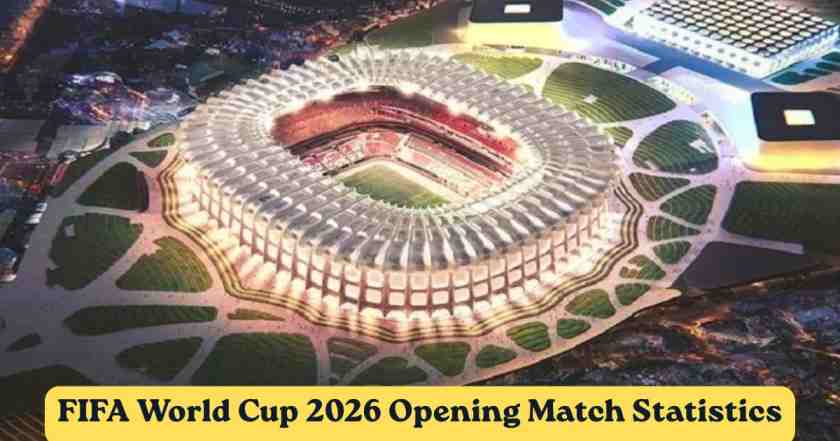
FIFA World Cup 2026 Opening Match
The FIFA World Cup 2026 — officially titled FIFA World Cup 26™ and branded under the tagline “We Are 26” — is the 23rd edition of the FIFA World Cup, the planet’s most-watched and commercially powerful sporting event. Hosted jointly across three nations — the United States, Mexico, and Canada — the tournament runs from Thursday, June 11 to Sunday, July 19, 2026, spanning 39 days across 16 host cities and 16 stadiums. For the first time in the competition’s history, 48 national teams will participate — a dramatic expansion from the 32-team format used since 1998 — competing across 12 groups of four teams each, with 104 total matches to be played, up from 64 at Qatar 2022. That represents a 63% increase in matches and a 50% increase in participating nations in a single edition, making this the largest structural transformation the tournament has ever undergone. The United States serves as the primary host, staging 78 of the 104 matches — 75% of all games — across 11 American cities, while Mexico contributes 3 cities and Canada adds another 2, giving the tournament an unprecedented continental footprint stretching from Vancouver in the northwest to Miami in the southeast, with MetLife Stadium in East Rutherford, New Jersey confirmed as the venue for the World Cup Final on July 19, 2026.
The scale of FIFA World Cup 2026 goes well beyond the pitch. FIFA’s 2023–2026 commercial cycle is projected to generate approximately $13 billion in total revenue — roughly 73% more than the $7.5 billion generated across the prior 2018–2022 cycle — with approximately $9 billion of that expected in the tournament year alone, making it more financially significant than the Paris 2024 Olympics ($5.24 billion) by a wide margin. The total prize money pool has been raised to a record $871 million, a ~98% increase over the $440 million distributed at Qatar 2022, with the tournament winner set to collect $50 million. Every participating nation is now guaranteed a minimum of $12.5 million — a combination of a $10 million qualification payment and $2.5 million in preparation funds — reflecting both the expanded revenue base and the higher costs teams face competing across a three-country, multi-timezone host environment. The Final Draw took place on December 5, 2025, in Washington, D.C., with FIFA Legends Ronaldo Nazário, Francesco Totti, Hristo Stoichkov, and Alexi Lalas among the participants, cementing the global spectacle that will begin on June 11, 2026, when Mexico steps onto the Estadio Azteca pitch to face South Africa in the tournament’s historic opening match.
Interesting Facts About FIFA World Cup 2026 Opening Match
| Fact | Detail |
|---|---|
| Official Tournament Name | FIFA World Cup 26™ (Canada, Mexico, USA) |
| Opening Match Date | Thursday, June 11, 2026 |
| Opening Match | Mexico vs. South Africa |
| Opening Match Venue | Estadio Azteca (Mexico City Stadium), Mexico City, Mexico |
| Kickoff Time (Local — Mexico City) | 1:00 PM CDT |
| Kickoff Time (ET / New York) | 2:00 PM ET (Fox broadcast) |
| Kickoff Time (UK / London) | 7:00 PM BST |
| Kickoff Time (Paris / Berlin) | 8:00 PM CEST |
| Group | Group A |
| Estadio Azteca World Cup Count | 3rd World Cup hosted — only stadium ever to do so |
| Previous World Cups at Azteca | 1970 Final (Brazil 4–1 Italy) & 1986 Final (Argentina 3–2 W. Germany) |
| Stadium Official 2026 FIFA Name | Mexico City Stadium (sponsored name: Estadio Banorte) |
| Stadium Capacity (2026) | ~87,500 (after 2025–2026 renovations) |
| Renovation Cost (Azteca 2026) | ~2 billion Mexican pesos (~€110 million) |
| Stadium Opened | May 29, 1966 |
| Stadium Altitude | 2,250 meters (7,200 feet) above sea level |
| Largest Stadium in Latin America | Yes — Estadio Azteca |
| Opening Ceremony Location | Estadio Azteca — before Mexico vs. South Africa kickoff |
| Opening Ceremony Song | “Desire” — performed by Robbie Williams and Nicole Scherzinger |
| Mexico vs. South Africa All-Time H2H | 4 meetings total — Mexico 2 wins, 1 draw, 1 loss |
| Only World Cup Meeting Before 2026 | 2010 World Cup Opening Match — drew 1–1 (Soccer City, Johannesburg) |
| 2010 Goal Scorers | Siphiwe Tshabalala (RSA) & Rafael Márquez (MEX) |
| South Africa’s Last World Cup Before 2026 | 2010 — 24-year absence before returning |
| Mexico World Cup Appearances | 18th appearance (most in CONCACAF history) |
| Mexico Head Coach | Javier Aguirre (3rd spell; won 2025 CONCACAF Nations League & 2025 Gold Cup) |
| South Africa Head Coach | Hugo Broos (Belgian; guided Bafana since 2021) |
| 1,000th Match in World Cup History | Tunisia vs. Japan — June 20, Monterrey (NOT the opening match) |
| Tournament Final Date | Sunday, July 19, 2026 |
| Final Venue | MetLife Stadium, East Rutherford, New Jersey, USA |
Source: Wikipedia (2026 FIFA World Cup Group A), FIFA Inside (updated match schedule), FourFourTwo (opening ceremony), WhenSport.com (Match 1 details), WorldCupWiki (Mexico vs. South Africa preview), Yahoo Sports (schedule & groups)
Every fact about the FIFA World Cup 2026 opening match carries the fingerprints of history. The decision to assign Mexico vs. South Africa as the curtain-raiser is no accident — it is a deliberate, emotionally resonant callback to June 11, 2010, exactly 16 years earlier, when these exact two nations opened the 2010 FIFA World Cup in Johannesburg with a 1–1 draw that remains one of the most electric moments in World Cup history. Siphiwe Tshabalala’s thunderous long-range strike in that opener is permanently embedded in the tournament’s folklore, and Rafael Márquez’s equaliser gave Mexico parity. Now, on June 11, 2026, the same pairing returns — this time at the Estadio Azteca, the most iconic stadium in the Western Hemisphere, where the atmosphere will be amplified by the full weight of home advantage for El Tri and the roar of a Mexico City crowd of nearly 87,500 at 2,250 meters above sea level, an altitude that gives Mexico an inherent physiological edge that no visiting team can replicate through preparation alone. Estadio Azteca becoming the first stadium in history to host three FIFA World Cups — and the only one to have welcomed four separate FIFA tournaments (World Cup, U-20, U-17, and Confederations Cup) — makes the choice of venue the football equivalent of returning to a sacred cathedral.
The opening ceremony at Estadio Azteca will precede the Mexico vs. South Africa kickoff, with Robbie Williams and Nicole Scherzinger expected to perform the official tournament anthem “Desire” — which they debuted at the December 2025 Final Draw in Washington, D.C. The renovation of Estadio Azteca ahead of the 2026 tournament — costing approximately 2 billion Mexican pesos (~€110 million) — included restoration of the facade, new LED lighting, high-resolution LED screens, new changing rooms, a redesigned player tunnel, and full seat replacement throughout the bowl. The stadium, which reopened in March 2026, stands as a testament to Mexico’s commitment to making its third hosting of the World Cup the most memorable yet. For South Africa, opening the world’s biggest tournament against a host nation — for the second time in their history — represents an opportunity to rewrite the narrative from 2010, when they became the only host nation in World Cup history to be eliminated in the group stage.
FIFA World Cup 2026 Opening Match Key Statistics 2026
| Statistic | Data |
|---|---|
| Match Number | Match 1 of 104 |
| Tournament Phase | Group Stage — Group A, Matchday 1 |
| Date | Thursday, June 11, 2026 |
| Kickoff Time (Local) | 1:00 PM CDT (Mexico City) |
| Kickoff Time (ET) | 2:00 PM ET |
| Kickoff Time (BST) | 7:00 PM |
| Teams | Mexico 🇲🇽 vs. South Africa 🇿🇦 |
| Host Team | Mexico (co-host of the 2026 World Cup) |
| Venue | Estadio Azteca (Mexico City Stadium) |
| City | Mexico City, Mexico |
| Stadium Capacity | ~87,500 |
| Altitude of Venue | 2,250 meters (7,200 ft) above sea level |
| Mexico’s Group A Opponents | South Africa, South Korea, Czechia |
| Mexico vs. South Africa H2H Record | Mexico: 2W–1D–1L in 4 meetings |
| Mexico World Cup Appearances | 18 (CONCACAF record) |
| South Africa World Cup Appearances | 3rd appearance (1998, 2010, 2026) |
| South Africa’s Absence from World Cup | 24 years (last appeared 2010) |
| Mexico’s World Cup Best Finish | Quarterfinals (1970 & 1986 — both as hosts) |
| Mexico’s Round-of-16 Streak | 7 consecutive exits at Round of 16 (1994–2018) |
| Mexico Head Coach | Javier Aguirre |
| South Africa Head Coach | Hugo Broos |
| Mexico FIFA Ranking (Dec 2025 Draw) | Pot 1 team (host nation seeding) |
| South Africa FIFA Ranking | Pot 4 team |
| TV Broadcast (USA) | Fox (English) |
| TV Broadcast (UK) | ITV |
| Mexico Home Strip | Green, White, Red |
| South Africa Home Strip | Yellow, Green |
| Tournament Opening Song | “Desire” by Robbie Williams & Nicole Scherzinger |
| Match Scheduled Across Time Zones | Mexico City: 1 PM | New York: 2 PM | London: 7 PM | Paris: 8 PM | Tokyo: 3 AM (+1) | India: 11:30 PM |
Source: FIFA Inside (updated match schedule), Wikipedia (2026 FIFA World Cup Group A), WhenSport.com, Yahoo Sports, FourFourTwo (opening ceremony)
The raw opening match statistics for FIFA World Cup 2026 tell a story of extraordinary symmetry and sporting weight. Mexico vs. South Africa is not just the first game of a 104-match tournament — it is Match 1 of the first-ever 48-team World Cup, carrying the burden of inaugurating an entirely new era of the competition. The 1:00 PM CDT local kickoff in Mexico City translates to 2:00 PM Eastern Time in the United States — a prime afternoon slot designed to maximize North American viewership and prime-time broadcast reach across Europe, where the match will air at 7:00 PM BST in the UK on ITV and 8:00 PM CEST across continental Europe. Mexico’s playing record at the Estadio Azteca across past World Cups is a source of profound national pride — it was here that Pelé’s Brazil won the 1970 Jules Rimet Trophy and where Maradona’s Argentina lifted the 1986 World Cup, with the Argentine genius having scored both the “Hand of God” and the “Goal of the Century” in that same tournament at the very same venue. Mexico, playing their 18th World Cup appearance — a CONCACAF record — arrive as heavy favourites to top Group A, powered by the roaring support of a home crowd at altitude that no away side can match.
For South Africa, the opening match statistics frame a team returning to the world stage after a 24-year absence — and doing so against a host nation at one of the most daunting venues on the planet. Yet there is confidence in the Bafana Bafana camp rooted in tangible achievement: they topped their CAF qualifying group above Nigeria, reached fourth place at the 2023 Africa Cup of Nations, and were guided through the qualifiers by Hugo Broos — the 74-year-old Belgian coach who also won the 2017 AFCON with Cameroon. Their all-time head-to-head record with Mexico stands at 2 Mexican wins, 1 draw, 1 South African win — a near-even historical balance that gives Bafana Bafana every statistical reason for belief. The 2010 World Cup opener remains the touchstone: on that occasion, South Africa were the hosts and held El Tri to a draw with a goal still celebrated across the country. In 2026, the roles are reversed — and with them, the psychological pressure is squarely on Mexico to deliver on home soil in front of a nation expecting nothing less than a deep tournament run.
Estadio Azteca (Mexico City Stadium) Statistics 2026
| Venue Statistic | Data |
|---|---|
| Official FIFA 2026 Name | Mexico City Stadium |
| Common Name | Estadio Azteca |
| Sponsorship Name (non-FIFA events) | Estadio Banorte (since 2025) |
| Location | Calzada de Tlalpan 3465, Santa Úrsula Coapa, Mexico City |
| Opened | May 29, 1966 |
| Original Capacity (1966) | 107,494 |
| Current Capacity (2026, post-renovation) | ~87,500 |
| Largest Stadium in Latin America | Yes |
| Home Teams | Club América and Mexico National Team |
| World Cups Hosted | 3 — 1970, 1986, 2026 (only stadium ever) |
| FIFA Tournaments Hosted Total | 4 — World Cup (×3), U-20 WC, U-17 WC, Confederations Cup |
| World Cup Finals Hosted | 2 — 1970 (Brazil 4–1 Italy) and 1986 (Argentina 3–2 W. Germany) |
| Altitude | 2,250 meters (7,200 ft) above sea level |
| 2026 Renovation Cost | ~2 billion Mexican pesos (~€110 million) |
| Stadium Reopening Date | March 2026 |
| Renovation Includes | New LED lighting, LED screens, new seats, facade restoration, new changing rooms & player tunnel |
| Total Matches Hosted at 2026 WC | 5 (Group stage + Round of 32 + Round of 16) |
| Confirmed 2026 Matches | June 11 (Opening), June 17, June 24 (Group A), June 30 (R32), July 5 (R16) |
| Access | Metro Line 2 → Tasqueña → Tren Ligero (light rail) to Estadio Azteca |
| Notable Historical Moments | Pelé’s 1970 WC final, Maradona “Hand of God” & “Goal of the Century” (1986), Siphiwe Tshabalala 2010 WC opener goal (Mexico vs. South Africa) |
| Stadium Architects | Pedro Ramírez Vázquez and Rafael Mijares Alcérreca |
| Climate | Open-air; GrassMaster pitch open to the sky |
| Unique Record | Only stadium to host both a World Cup Final and a World Cup Opening Match in different years |
Source: FourFourTwo (Estadio Azteca 2026 guide), StadiumDB.com, SofaScore Stadium Guide, MexicoTravelandLeisure.com, Wikipedia (Estadio Azteca)
Estadio Azteca is not merely a sports venue — it is the single most historically significant football stadium in the Western Hemisphere, and arguably on Earth. When the 2026 World Cup opening match is played there on June 11, the stadium will become the only arena in history to host three separate FIFA World Cups — a distinction it will share with no other venue on the planet. Its place in football mythology was secured long before the 2026 tournament: it hosted Pelé’s third and final World Cup winner’s medal as Brazil defeated Italy 4–1 in the 1970 final, and then witnessed Diego Maradona at the absolute peak of his powers in 1986, when the Argentine legend scored both the infamous “Hand of God” and the “Goal of the Century” against England in the quarterfinals — in the same match — before lifting the World Cup in the same stadium. The 2025–2026 renovation, costing approximately 2 billion Mexican pesos (~€110 million), transformed the stadium’s internals while preserving its iconic exterior: new high-resolution LED screens throughout the bowl, complete seat replacement, a redesigned player tunnel, new changing rooms, and restored facade, with the stadium reopening in March 2026 ahead of the tournament.
The altitude factor at the Estadio Azteca is one of the most significant statistical variables of the 2026 opening match — and of every game played in Mexico City during the tournament. Sitting at 2,250 meters (7,200 feet) above sea level, the venue sits higher than the base camps of many elite mountaineering expeditions. At this altitude, the reduced atmospheric pressure means oxygen concentration in each breath is approximately 20–25% lower than at sea level, leading to faster fatigue, reduced cardiovascular performance, and longer recovery times for players unaccustomed to the conditions. Mexico’s national team trains regularly at altitude and its players in Liga MX are often altitude-adapted, giving them a measurable physical edge in every game played at the Azteca. This advantage was a documented factor in both of Mexico’s quarterfinal appearances — in 1970 and 1986 — and it will be just as significant in 2026 when South Africa must contend with the altitude, the heat, the crowd of ~87,500, and the pressure of facing a motivated host nation in the tournament’s very first match.
FIFA World Cup 2026 Tournament Format Statistics 2026
| Format Statistic | Data |
|---|---|
| Edition Number | 23rd FIFA World Cup |
| Host Nations | United States, Mexico, Canada |
| Total Teams | 48 (up from 32 in 2022 — +50%) |
| Group Stage Format | 12 groups of 4 teams each |
| Teams Advancing from Group Stage | Top 2 per group + 8 best third-place teams = 32 teams |
| First New Knockout Round | Round of 32 (new in 2026) |
| Total Matches | 104 (up from 64 in 2022 — +63%) |
| Group Stage Matches per Team | 3 matches |
| Matches for Finalists | 8 matches (up from 7 in prior formats) |
| Tournament Duration | 39 days (June 11 – July 19, 2026) |
| Host Cities | 16 (11 USA, 3 Mexico, 2 Canada) |
| Host Stadiums | 16 |
| USA Matches | 78 of 104 matches (75% of all games) |
| Final Venue | MetLife Stadium, East Rutherford, New Jersey |
| Final Date | Sunday, July 19, 2026 |
| Opening Match | Mexico vs. South Africa — June 11, Estadio Azteca |
| First Match Date | June 11, 2026 |
| Last Group Stage Match | June 26, 2026 |
| Final Draw Date | December 5, 2025 — Washington, D.C. |
| Final Draw Venue | Washington, D.C., USA |
| Referees Appointed (April 9, 2026) | 52 referees, 88 assistant referees, 30 video assistant referees |
| Player Release Deadline (for clubs) | May 25, 2026 |
| Final Club-Level Matchday | May 24, 2026 |
| Tiebreaker Order | Goal difference → Goals scored → Head-to-head → Fair play → Draw |
| 1,000th World Cup Match | Tunisia vs. Japan — June 20, Monterrey (Estadio BBVA) |
| Previous Format Change | Last changed in 1998 (32 teams); 2026 is first change in 28 years |
| Defending Champion | Argentina (2022 Qatar World Cup winners) |
Source: Wikipedia (2026 FIFA World Cup), FIFA Inside (updated schedule), Roadtrips.com, Yahoo Sports (schedule & groups), Doc’s Sports (79 Financial Stats)
The FIFA World Cup 2026 format statistics represent the most significant structural overhaul the tournament has seen since 1998, when it expanded from 24 to 32 teams. That previous change stood for 28 years before 2026’s expansion to 48 teams made the current edition an entirely new competitive landscape. The jump from 64 to 104 matches — a 63% increase — fundamentally changes the economics of the tournament: more matches mean more broadcast hours, more commercial inventory, more ticket revenue, more hotel nights, and more merchandise across a substantially larger geographic footprint. The addition of the Round of 32 — a new knockout stage inserted between the group stage and the traditional Round of 16 — means that teams can now go from the group stage to the quarterfinals in just two matches, compressing the knockout intensity while maintaining the same number of rounds. Every one of the 48 qualified nations will play a minimum of three group stage matches, with the 32 teams that advance playing at least one additional knockout game before being eliminated.
The geographic distribution of the 2026 FIFA World Cup is unlike any tournament in history. With 16 host cities across three countries, the tournament stretches from Vancouver, Canada in the northwest to Miami, Florida in the southeast — a span of over 5,000 kilometers. The USA’s 11 host cities stage 78 of 104 matches, reflecting America’s status as the primary commercial engine of the event. The Final Draw on December 5, 2025 in Washington, D.C., revealed the 12 groups and activated the commercial and logistical machinery of a tournament that FIFA president Gianni Infantino called the organization’s most ambitious undertaking. The appointment of 52 match referees, 88 assistant referees, and 30 video assistant referees — confirmed on April 9, 2026 — reflects the operational complexity of running a tournament across three countries, multiple time zones, and 16 simultaneous logistical hubs. When the opening whistle sounds on June 11 at Estadio Azteca, it will set in motion 39 continuous days of football that will not conclude until MetLife Stadium’s floodlights illuminate a new world champion on the evening of July 19, 2026.
FIFA World Cup 2026 Prize Money & Financial Statistics 2026
| Financial Metric | Data |
|---|---|
| Total Prize Money Pool | $871 million (confirmed at 36th FIFA Council meeting, Vancouver, April 28, 2026) |
| Prior Prize Pool (Qatar 2022) | $440 million |
| Prize Money Increase vs. 2022 | ~98% increase — nearly double |
| Tournament Winner Prize | $50 million |
| Runner-Up Prize | $33 million |
| 3rd Place Prize | $29 million |
| 4th Place Prize | $27 million |
| Quarterfinalist Prize | Approximately $23 million (projected) |
| Round of 32 finish (17th–32nd) | $14.5 million |
| Group Stage exit (33rd–48th) | $12.5 million guaranteed |
| Qualification Payment (per team) | $10 million |
| Preparation Payment (per team) | $2.5 million |
| Minimum Guaranteed (per team) | $12.5 million ($10M qualification + $2.5M preparation) |
| Argentina Prize (2022 winners, comparison) | $42 million |
| FIFA Club Benefit Programme (CBP) | $355 million — paid to clubs for player release & insurance |
| FIFA’s 2023–2026 Cycle Revenue (projected) | ~$13 billion |
| 2022–2026 vs. 2018–2022 Revenue Growth | +73% ($7.5B → $13B) |
| 2026 World Cup Ticket/Hospitality Revenue | ~$3 billion (projected) |
| 2022 Qatar Ticketing Revenue (comparison) | ~$950 million |
| FIFA Ticket Demand vs. Supply | 500 million+ ticket requests for ~7 million available tickets |
| Most Expensive Final Ticket (official resale) | ~$10,990 (Category 1 seat) |
| FIFA’s 2025 Annual Revenue | $2.66 billion |
| FIFA Total Assets (2025) | $9.48 billion (+54% year-over-year) |
| Total Economic Output Estimate (FIFA-WTO study) | $47 billion from the Club World Cup and 2026 World Cup combined |
| FIFA Forward 3.0 Development Programme | $2.25 billion distributed across all 211 FIFA member associations |
Source: CNBC (May 4, 2026 — FIFA Council Vancouver), Man of Many (prize money update), Doc’s Sports (79 Financial Stats), ProfileNews.com (revenue breakdown), The Global Statistics (FIFA revenue), WorldCupRadar (prize money history)
The FIFA World Cup 2026 prize money and financial statistics confirm what had long been projected: this is the most commercially powerful sporting event in human history, by a significant margin. The $871 million total prize pool — confirmed at the 36th FIFA Council meeting in Vancouver on April 28, 2026, just weeks before the opening match — represents a ~98% increase over the $440 million distributed at Qatar 2022, arriving after FIFA president Gianni Infantino described the organization as being in its “most solid financial position ever.” The $50 million top prize for the tournament winner eclipses the $42 million Argentina received for winning in 2022, and the minimum guarantee of $12.5 million per participating nation — even for those eliminated in the group stage — is itself larger than the annual operating budget of most of the world’s football federations. The FIFA Club Benefit Programme of $355 million paid to clubs for releasing players and covering injury insurance represents a further maturation of FIFA’s relationship with the club game, though European clubs and players’ unions have continued to press for a higher share of a revenue cycle now expected to reach ~$13 billion.
The ticketing economics of FIFA World Cup 2026 are among the most striking statistics attached to the tournament. With 500 million+ ticket requests received for approximately 7 million available seats — a demand-to-supply ratio of roughly 70:1 — the pressure on FIFA’s dynamic pricing system has been immense. A CNBC review found prices ranging from $380 for a Category 2 group stage ticket in Philadelphia to $4,105 for Category 1 tickets to the USA vs. Paraguay match at SoFi Stadium in Los Angeles — and on FIFA’s official resale platform, at least one listing for the July 19 final reached $11.5 million. The total $3 billion projected ticket and hospitality revenue — more than triple the $950 million earned from ticketing at Qatar 2022 — reflects both the expanded match count (104 vs. 64) and a fundamental shift toward premium “comprehensive experience” hospitality packages. A FIFA-WTO economic study estimated that the Club World Cup and 2026 World Cup combined will generate $47 billion in total economic output — a figure that underscores how this tournament transcends sport and functions as a multi-year economic engine for every host city, sponsor, broadcaster, and commercial partner within its vast orbit.
FIFA World Cup 2026 Group A Statistics 2026
| Match | Teams | Date | Venue | Kickoff (ET) |
|---|---|---|---|---|
| Match 1 (Opening) | Mexico 🇲🇽 vs. South Africa 🇿🇦 | June 11, 2026 (Thu) | Estadio Azteca, Mexico City | 2:00 PM ET |
| Match 2 | South Korea 🇰🇷 vs. Czechia 🇨🇿 | June 11, 2026 (Thu) | Estadio Akron, Guadalajara | 9:00 PM ET |
| Match 3 | Czechia 🇨🇿 vs. South Africa 🇿🇦 | June 18, 2026 (Thu) | Mercedes-Benz Stadium, Atlanta | 12:00 PM ET |
| Match 4 | Mexico 🇲🇽 vs. South Korea 🇰🇷 | June 18, 2026 (Thu) | Estadio Akron, Guadalajara | 9:00 PM ET |
| Match 5 | Czechia 🇨🇿 vs. Mexico 🇲🇽 | June 24, 2026 (Wed) | Estadio Azteca, Mexico City | 9:00 PM ET |
| Match 6 | South Africa 🇿🇦 vs. South Korea 🇰🇷 | June 24, 2026 (Wed) | Estadio BBVA, Monterrey | 9:00 PM ET |
| Group A Team | Pot (Draw) | FIFA Confederation | World Cup Appearances | World Cup Best Result | Head Coach |
|---|---|---|---|---|---|
| Mexico | Pot 1 (host) | CONCACAF | 18 | Quarterfinals (1970, 1986) | Javier Aguirre |
| South Africa | Pot 4 | CAF | 3rd (1998, 2010, 2026) | Group Stage (best: 2010 — host) | Hugo Broos |
| South Korea | Pot 2 | AFC | 11th appearance | Semifinals (2002 — as host) | Hong Myung-bo |
| Czechia | Pot 4 | UEFA | 1st as Czech Republic (Czechoslovakia appeared 9×) | Final (1934, 1962 — as Czechoslovakia) | Ivan Koubek |
Source: Wikipedia (2026 FIFA World Cup Group A), Yahoo Sports (Group A schedule), FIFA Inside, RotoWire (Group A preview), myKhel (Group A preview)
FIFA World Cup 2026 Group A is simultaneously the most historically charged and tactically intriguing group of the tournament’s group stage. The fact that the entire opening day of the World Cup is dedicated to Group A — with Mexico vs. South Africa at 1:00 PM local in Mexico City and South Korea vs. Czechia at 10:00 PM local in Guadalajara — gives the group an outsized presence in the tournament’s opening narrative. Mexico, seeded in Pot 1 as a co-host and entering their 18th World Cup appearance (a CONCACAF record), carry the heaviest expectations of any team in the group, reinforced by the fact that their two greatest World Cup results — both quarterfinal appearances — came when they were hosts in 1970 and 1986. Under Javier Aguirre’s third managerial spell, a squad featuring talents like Raúl Jiménez, Hirving Lozano, and Edson Álvarez will be expected to not merely qualify from this group but to win it emphatically and finally break the Round of 16 curse that has haunted El Tri across seven consecutive tournaments (1994–2018). South Korea, potentially in Son Heung-min’s final World Cup, arrive as the group’s second-strongest side on paper, with 11 World Cup appearances and a semifinal pedigree from their 2002 co-hosting with Japan.
The statistical subplot most likely to define Group A’s final standings is the tension between South Korea and Czechia for second place. The Czechs arrive at their first World Cup as an independent republic (Czechoslovakia appeared nine times) under coach Ivan Koubek, who took the job just days before the European playoffs and guided them through two consecutive penalty shootouts in five days to qualify. Despite the dramatic path to 2026, Czechia showed the character to win when it mattered most — a quality that could be decisive across three group games with no margin for error. Meanwhile, South Africa — under the steady hand of Hugo Broos — return to the World Cup stage for the first time since 2010 and will look to use the chaos of a compressed group schedule and the physical demands of altitude (Azteca) and heat (Guadalajara, Monterrey, Atlanta) to exploit the vulnerabilities of more fancied sides. The June 24 simultaneous final matchday — with Mexico vs. Czechia and South Africa vs. South Korea kicking off at the same time — ensures that Group A will be decided in real time, with every goal carrying maximum mathematical consequence across both matches.
Disclaimer: The data research report we present here is based on information found from various sources. We are not liable for any financial loss, errors, or damages of any kind that may result from the use of the information herein. We acknowledge that though we try to report accurately, we cannot verify the absolute facts of everything that has been represented.