Eurovision Song Contest in 2026
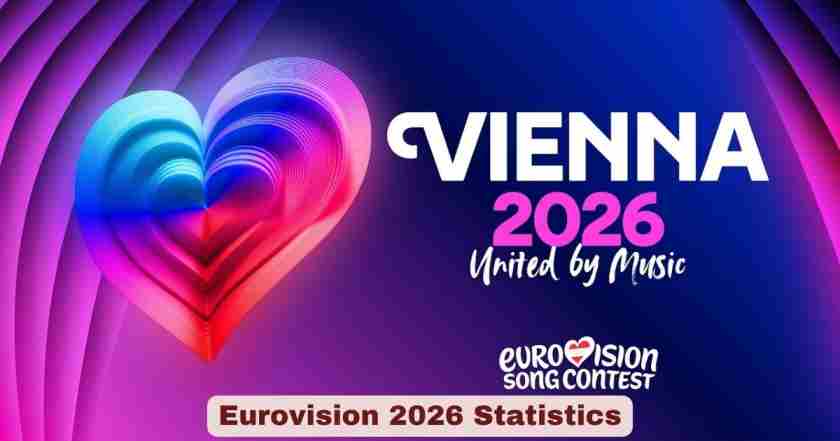
The Eurovision Song Contest 2026 is the 70th edition of the world’s longest-running annual television music competition — and it arrives at a milestone anniversary with a combination of splendor, controversy, and the kind of political theater that has always made Eurovision as much a cultural event as a musical one. Taking place in Vienna, Austria, the contest is hosted by the Austrian Broadcasting Corporation (ORF) following JJ’s victory at Eurovision 2025 in Basel, Switzerland, where his operatic ballad “Wasted Love” earned 436 points to give Austria its third Eurovision win and its first since 2014. Vienna is hosting for the third time — having previously done so in 1967 and 2015 — and the city’s centuries-deep musical heritage, from Mozart and Beethoven to the Vienna State Opera where JJ himself performs, makes it a particularly resonant setting for the contest’s landmark seventieth anniversary. The three shows will take place at the 16,152-seat Wiener Stadthalle, Austria’s largest indoor arena, with Semi-Final 1 on May 12, Semi-Final 2 on May 14, and the Grand Final on Saturday, May 16, 2026 — all presented by Victoria Swarovski and Michael Ostrowski.
What defines Eurovision 2026 beyond its anniversary milestone is the convergence of record-breaking circumstances that surround it. 35 countries are participating — the smallest number since 2003, before the introduction of semi-finals — with five countries (Iceland, Ireland, the Netherlands, Slovenia, and Spain) boycotting in protest of Israel’s inclusion in the context of the ongoing Gaza war. This marks the largest boycott in the contest’s history since 1970, when multiple countries withdrew over different protests. Simultaneously, three countries return — Bulgaria, Moldova, and Romania — bringing new voices back to a stage that has been their home before. The stage design, by Florian Wieder (his ninth Eurovision design), is inspired by the “creative spirit of the Viennese Secession” art movement, built around three leitmotifs: “The Leaf,” “The Curved Line,” and “The Construct.” A special “Chameleon Heart” logo — comprising 70 layers of the Eurovision heart in 3D — was created to celebrate the 70th anniversary. Beyond the contest itself, Eurovision Week spans the Rathausplatz Eurovision Village (free and open May 10–17), the EuroClub at Prater Dome (May 11–16), and a “Turquoise Carpet” opening ceremony at Vienna City Hall on May 10.
Interesting Facts about Eurovision 2026
| Fact | Detail |
|---|---|
| Edition number | 70th Eurovision Song Contest |
| Host city | Vienna, Austria |
| Host broadcaster | ORF (Österreichischer Rundfunk) |
| Semi-Final 1 | Tuesday, 12 May 2026 |
| Semi-Final 2 | Thursday, 14 May 2026 |
| Grand Final | Saturday, 16 May 2026 at 21:00 CEST |
| Venue | Wiener Stadthalle — Austria’s largest indoor arena |
| Venue capacity | 16,152 seats |
| Hosts | Victoria Swarovski and Michael Ostrowski |
| Reason Vienna is hosting | JJ’s win at Eurovision 2025 with “Wasted Love” (436 points) |
| Austria’s previous host years | 1967 and 2015 — both times in Vienna |
| Number of participating countries | 35 — the fewest since 2003 |
| Countries boycotting | 5: Iceland, Ireland, Netherlands, Slovenia, Spain — over Israel/Gaza |
| Boycott record | Largest number of boycotting countries since 1970 |
| Countries returning | 3: Bulgaria (since 2022), Romania (since 2023), Moldova (since 2024) |
| Grand Final qualifiers | 25 countries — Big 4 + Austria + 10 best from each semi-final |
| Big 4 (auto-qualified) | France, Germany, Italy, United Kingdom (Spain boycotting — Big 5 becomes Big 4) |
| Semi-final structure | 2 semi-finals × 15 countries each — top 10 from each advance |
| Stage designer | Florian Wieder — 9th Eurovision design; inspiration: Viennese Secession |
| Three stage leitmotifs | “The Leaf,” “The Curved Line,” “The Construct“ |
| Anniversary logo | “Chameleon Heart” — 70 layers of Eurovision heart in 3D |
| Logo studio | Pals — Sheffield-based branding studio |
| Eurovision Village | Rathausplatz — free entry, May 10–17, 11:00–midnight daily |
| EuroClub venue | Prater Dome — 3 floors, 2,500-person capacity, May 11–16 |
| EuroClub weekly pass price | €120 |
| Opening ceremony + Turquoise Carpet | May 10, 2026 at Vienna City Hall (Rathaus) |
| Volunteers sought by ORF | Up to 800 volunteers for May 1–17 |
| Album release | Eurovision Song Contest: Vienna 2026 — digital 17 April, CD 24 April, vinyl 22 May — via Universal Music Group |
| Vienna hotel beds | Over 80,000 hotel beds in the city |
| Vienna airport connections | International airport with connections to over 65 countries |
| Grand Final opening act | JJ performing “The Queen of the Night” with Vienna Radio Symphony Orchestra, dancers, and acrobats |
Source: Eurovision Song Contest 2026 Wikipedia (updated April 2026), eurovision.tv/event/vienna-2026, eurovisionworld.com/eurovision/2026, EBU announcement (December 15 2025), ESCXTRA (December 15 2025), Eurovision Song Contest Wikipedia
The 70th anniversary framing gives Eurovision 2026 in Vienna a symbolic weight that very few editions can match. Vienna is one of only a handful of cities to have hosted three times — and on each occasion, its hosting rights were earned by Austrian victory: Udo Jürgens winning in 1966 sent the 1967 contest to the Hofburg Palace; Conchita Wurst’s iconic 2014 triumph brought the 2015 contest to the same Wiener Stadthalle now being used again; and JJ’s operatic countertenor ballad in 2025 completes the hat-trick. The 16,152-seat Wiener Stadthalle also hosted the 2015 contest — meaning the venue has genuine institutional memory of what works and what doesn’t at this scale, a significant operational advantage. Vienna’s credentials beyond the arena are equally strong: 80,000+ hotel beds, an international airport serving 65+ countries, and centuries of music culture combine to make it one of the most naturally prepared Eurovision host cities in recent memory.
The 35-country field — smallest since 2003 — tells a story that goes far beyond logistics. Five established, previously enthusiastic participants chose not to attend rather than share a stage with Israel amid the ongoing Gaza conflict. Spain’s withdrawal is particularly significant, because it converts the traditional “Big Five” automatic qualifier group into a “Big Four” for 2026, reducing automatic finalists by one. The contest’s organizers have navigated these tensions carefully — the EBU has not expelled Israel as it expelled Russia in 2022 — but the growing political dimension of Eurovision participation is undeniable and is reshaping the contest’s geography and identity in real time. At the same time, Bulgaria, Romania, and Moldova’s returns show that Eurovision’s pull remains strong: even countries that sat out recent editions come back, because the platform for national representation and cultural expression that Eurovision provides is simply not replicated anywhere else.
Eurovision 2026 Host — JJ’s Winning Song & Austria’s History
| Metric | Detail |
|---|---|
| 2025 Winner | JJ (Johannes Pietsch) representing Austria |
| Winning song | “Wasted Love” |
| Total points scored | 436 points |
| Jury vote | 258 points — led the jury vote |
| Televote | 178 points |
| 2025 Grand Final venue | St. Jakobshalle, Basel, Switzerland — capacity ~6,500 |
| 2025 contest edition | 69th Eurovision Song Contest |
| 2025 date | 17 May 2025 |
| 2nd place — Eurovision 2025 | Yuval Raphael (Israel) — “New Day Will Rise” — 357 points |
| 3rd place — Eurovision 2025 | Tommy Cash (Estonia) — “Espresso Macchiato” — 356 points |
| Countries awarding 12 points (jury) to Austria | 8 countries: Belgium, Finland, Germany, Ireland, Latvia, Netherlands, Norway, Sweden |
| JJ’s winning margin over 2nd place | 79 points |
| JJ’s real name | Johannes Pietsch |
| JJ’s background | Countertenor opera singer; born Vienna 2001, raised in Dubai; Austrian-Filipino |
| JJ performs at | Vienna State Opera |
| JJ’s previous fame | Finalist on Austrian TV talent show Starmania (2021) |
| Wasted Love’s songwriters | JJ, Teodora Špirić (Austria 2023), and Thomas Turner |
| Austria’s previous Eurovision wins | 1966 (Udo Jürgens, “Merci, Chérie”), 2014 (Conchita Wurst, “Rise Like a Phoenix”) |
| Austria’s total wins | 3 |
| Austria’s record for longest gap between wins | 48 years between 1966 and 2014 |
| Austria’s debut at Eurovision | 1957 in Frankfurt; Bob Martin finished last with “Wohin, Kleines Pony?” |
| “Wasted Love” note | Lowest-scoring winning song in the current split-vote scoring system |
Source: eurovision.tv (JJ winner story, May 2025), EBU announcement (May 17 2025), eurovisionworld.com 2025 results, NBC News (May 17 2025), List of Eurovision Song Contest Winners Wikipedia, Eurovision Fandom Wiki (Wasted Love)
JJ’s victory at Eurovision 2025 is one of the most artistically distinctive wins the contest has produced in the modern era. A countertenor — a male singer with a vocal range in the alto or soprano register — performing an operatic ballad that crescendos into an electronic club finale is not the typical Eurovision winning formula. It is not bubblegum pop, not a power ballad, not a folk-inflected anthem. It is something genuinely unusual: a crossover between the classical conservatory and the late-night dancefloor, built around a voice that most Eurovision audiences had never encountered before. JJ’s background tells the full story — an Austrian-Filipino artist who grew up in Dubai, returned to Vienna at 15, reached the finals of Starmania at 20, and now performs at the Vienna State Opera while studying classical music, all before his 25th birthday. The song itself — about unrequited love and finding strength through pain — is deceptively simple in its emotional core but technically extraordinary in its execution.
The 436-point final tally represents the lowest winning score under the current split-vote system, which has been in place since 2016. That is not a reflection of a weak victory but of a more competitive field: the 79-point margin over second-place Israel (357 points) may look comfortable in retrospect, but the vote reveal was dramatically tense, with Israel holding the top position throughout the televote phase before JJ’s massive jury lead — 258 jury points — proved decisive. The fact that 8 countries awarded JJ their maximum 12 jury points speaks to the professional music establishment’s recognition of something genuinely exceptional. It also meant that the 2026 contest would go to a city with an extraordinarily deep musical identity — Vienna, where Mozart composed, Beethoven premiered, and Schubert lived — to celebrate 70 years of Eurovision.
Eurovision Song Contest All-Time History | Records & Statistics
| Record / Statistic | Data |
|---|---|
| Contest founded | 1956 — Lugano, Switzerland |
| First participating countries | 7 countries in 1956 |
| First winner | Switzerland (1956) with Lys Assia singing “Refrain” |
| Total editions (as of 2025) | 69 contests held (2026 will be the 70th) |
| Countries that have won | Songs representing 27 different countries |
| Most wins — joint record | Ireland and Sweden — 7 wins each |
| Ireland’s wins | 1970, 1980, 1987, 1992, 1993, 1994, 1996 |
| Sweden’s wins | 1974, 1984, 1991, 1999, 2012, 2015, 2023 |
| Most consecutive wins | Ireland — 3 in a row (1992, 1993, 1994) |
| Most participations (country) | Germany — participated in all but one edition |
| Peak participant count | 43 countries in 2008 — record highest |
| Smallest participant count (modern era) | 35 countries in 2026 — fewest since 2003 |
| Semi-finals introduced | 2004 — first semi-final; 2008 — second semi-final added |
| Global annual TV audience | Between 100 and 200 million viewers in the 21st century |
| 2023 global viewers | 162 million |
| 2024 global viewers | Approximately 163 million |
| Largest live audience ever | ~38,000 people at Copenhagen’s Parken Stadium in 2001 |
| 2025 Grand Final audience (Basel) | ~6,500 inside St. Jakobshalle; estimated 160+ million global TV audience |
| Total songs performed (all-time) | Over 1,500 songs from ~50 countries |
| 1,000th entry | Ireland’s Brian Kennedy — “Every Song is a Cry for Love” (2006) |
| If played without break | All Eurovision songs would take ~72 hours to hear |
| Guinness World Record | Recognized in 2015 as the longest-running annual TV music competition |
| Winning trophy (since 2008) | Handmade sandblasted glass in the shape of a 1950s microphone |
| The 1969 tie | 4 co-winners: UK, Spain, Netherlands, France — all awarded equal points |
| Contest cancelled | 2020 — only ever cancelled once, due to COVID-19 |
| Contest first broadcast online | 2001 — via official Eurovision website |
| Most famous winner ever | ABBA (Sweden, 1974) — “Waterloo” voted most popular song of Eurovision’s first 50 years at 2005 Congratulations concert |
| Céline Dion connection | Won for Switzerland in 1988 — “Ne partez pas sans moi” |
| Most streamed Eurovision song (Spotify) | “Arcade” by Duncan Laurence (Netherlands, 2019) — worldwide sleeper hit in 2020–2021 |
| “Waterloo” voted best | ABBA’s 1974 winner voted most popular of first 50 years at the 2005 Congratulations concert |
Source: eurovision.tv/about/facts-and-figures, Eurovision Song Contest Wikipedia (updated April 2026), List of Eurovision Song Contest Winners Wikipedia (updated April 2026), EBU announcement May 2023 (162 million viewers), EBU announcement May 2025 (JJ win), EBSCO Research Starters (Eurovision Song Contest)
Ireland and Sweden’s joint record of seven victories each is one of Eurovision’s most enduring statistical rivalries. Ireland’s dominance in the 1990s — including that extraordinary three consecutive wins (1992, 1993, 1994) — established a benchmark for consistency that no other country has matched across a three-year span. Sweden’s record is spread more evenly across decades, culminating in Loreen’s historic 2023 win — her second victory after 2012’s “Euphoria,” making her the first and only performer to win Eurovision twice (alongside Ireland’s Johnny Logan, who also won twice, but as a performer). The two countries’ different paths to the same total wins speaks to how Eurovision success can come through sustained excellence, or through streaks of near-unbeatable entries, or both.
The ABBA effect on Eurovision’s cultural legacy cannot be overstated. The contest launched a band that would become one of the best-selling music acts in history, with estimated global sales of 400 million records — and that singular example has fueled the persistent narrative that Eurovision is a launchpad for genuine international stardom. In practice, the list of post-Eurovision global superstars remains short: ABBA, Céline Dion, and to a somewhat lesser degree Måneskin and Duncan Laurence in the modern era. But the contest’s global audience of 100–200 million viewers annually, its presence in 232 countries and territories via streaming, and its record TikTok engagement (4.8 billion views of #Eurovision2023, 105 million unique TikTok accounts reached) confirm that Eurovision’s cultural footprint extends far beyond the nations competing in it.
Eurovision 2026 Countries | Full 35-Nation Participant List & Semi-Final Structure
| Category | Countries | Notes |
|---|---|---|
| Auto-qualified (Big 4 + Host) | Austria (host), France, Germany, Italy, United Kingdom | Spain boycotting — Big 5 becomes Big 4 |
| Semi-Final 1 (12 May) | 15 countries competing — 10 qualify | Germany and Italy vote in SF1 |
| Semi-Final 2 (14 May) | 15 countries competing — 10 qualify | Austria, France, UK vote in SF2 |
| Grand Final | 25 countries (5 auto-qualifiers + 10 from SF1 + 10 from SF2) | 16 May 2026 |
| Boycotting countries (5) | Iceland, Ireland, Netherlands, Slovenia, Spain | Protest against Israel’s inclusion (Gaza war) |
| Returning countries (3) | Bulgaria (last in 2022), Romania (last in 2023), Moldova (last in 2024) | All absent for 1–3 years |
| Non-European participants | Australia, Israel | EBU associate members |
| Countries confirmed entering | Albania, Armenia, Australia, Austria, Azerbaijan, Belgium, Bulgaria, Croatia, Cyprus, Czech Republic, Denmark, Estonia, Finland, France, Georgia, Germany, Greece, Hungary, Israel, Italy, Latvia, Lithuania, Luxembourg, Malta, Moldova, Montenegro, North Macedonia, Norway, Poland, Portugal, Romania, San Marino, Serbia, Switzerland, Ukraine, United Kingdom | 35 total as announced December 2025 |
| Germany representative (2026) | Sarah Engels | Sortiraparis/Official Charts |
| Italy representative (2026) | Sal Da Vinci — “Per Sempre Sì” | Sortiraparis |
| France representative (2026) | Monroe — “Regarde!” | Sortiraparis / Official Charts |
| Voting system | National jury (50%) + national televote (50%) + “Rest of the World” aggregate online vote | Eurovision.tv |
| Points scale | 1, 2, 3, 4, 5, 6, 7, 8, 10, 12 points from jury and televote separately | Eurovision.tv |
| “Douze points” tradition | 12 points = maximum score — iconic phrase in Eurovision culture | General knowledge |
Source: Eurovision Song Contest 2026 Wikipedia (updated April 2026), EBU announcement December 15 2025, eurovisionworld.com/esc/35-countries-will-take-part-in-eurovision-2026, eurovision.tv/event/vienna-2026/all-participants, Official Charts (April 2026), Sortiraparis (April 2026)
The 35-country participant list for 2026 is the most politically charged in decades. Eurovision has always had a political dimension — academic studies have documented voting “blocs” and “clusters” of countries that consistently favor each other, and landmark moments like Russia’s expulsion in 2022 showed that geopolitics can directly reshape the contest’s participating community. But the five-country boycott over Israel in 2026 represents something qualitatively different: countries not simply absenting themselves but explicitly citing the contest organizers’ decision to allow a country to compete as incompatible with their broadcasters’ core public values. Spain’s withdrawal is particularly consequential because Spain is one of the founding “Big Five” financial contributors to the EBU — its absence reduces automatic finalist places from five to four and changes the structural mathematics of the Grand Final.
The voting architecture for Eurovision 2026 preserves the dual-input system that has governed results since 2016: each participating country’s national jury (professional music experts watching the dress rehearsal) and national televote (public audiences casting votes during the live show) each contribute equally to the final scores, with the jury results announced first by national spokespersons in the traditional dramatic fashion, and the televote totals then released in a second wave. The “Rest of the World” aggregate online vote — introduced in 2023 to give Eurovision’s global diaspora audience a formal voice — adds an additional dimension that can move results. As JJ’s 2025 win illustrated, the jury and public can diverge dramatically (258 jury points vs 178 public points for “Wasted Love”), and navigating that tension between critical acclaim and popular appeal is exactly what makes predicting Eurovision outcomes so delightfully difficult.
Eurovision Song Contest Records | Wins by Country & Greatest Moments
| Rank / Record | Country / Artist / Song | Wins / Detail |
|---|---|---|
| Joint most wins | Ireland 🇮🇪 and Sweden 🇸🇪 | 7 wins each |
| 3rd most wins | Luxembourg 🇱🇺 | 5 wins |
| 3rd most wins (tied) | France 🇫🇷, Netherlands 🇳🇱, United Kingdom 🇬🇧 | 5 wins each |
| Israel wins | Israel 🇮🇱 | 4 wins |
| Austria wins | Austria 🇦🇹 | 3 wins (1966, 2014, 2025) |
| Longest wait for first win | Portugal 🇵🇹 | 53 years — debuted 1964, first won 2017 |
| First debut-entry win | Serbia 🇷🇸 | Won with debut entry in 2007 |
| Longest gap between wins | Austria 🇦🇹 | 48 years between 1966 and 2014 |
| Only 4-way tie in history | 1969 — UK, Spain, Netherlands, France | All scored equal points; rules updated after |
| Two-time winner (performer) | Loreen (Sweden) | 2012 “Euphoria” + 2023 “Tattoo” — first woman to win twice |
| Two-time winner (performer) | Johnny Logan (Ireland) | 1980 “What’s Another Year” + 1987 “Hold Me Now” |
| Three-time victor (person) | Johnny Logan (Ireland) | Two wins as performer, one as songwriter (1992 via Linda Martin) — only person with 3 credits |
| Most streamed winner (Spotify) | “Arcade” — Duncan Laurence (Netherlands 2019) | Became sleeper hit in 2020–2021 |
| Most famous post-Eurovision act | ABBA — Sweden 1974, “Waterloo” | ~400 million records sold globally |
| Most 2nd-place finishes | United Kingdom 🇬🇧 | 16 runner-up finishes (most recently 2022) |
| All-time points record (Sweden) | Sweden ranked first by cumulative points received | 4,128 total points over contest history (Statista) |
| Biggest audience ever | ~38,000 at Copenhagen Parken Stadium, 2001 | First Estonian victory |
| Record peak participants | 43 countries in 2008 | After breakup of Soviet Union, introduction of second semi-final |
| Most covered Eurovision song | “Nel Blu Dipinto Di Blu” (“Volare”) — Italy 1958 | Covered by Dean Martin, Cliff Richard, David Bowie and many more |
| First winning song over 300 points (non-winner) | Russia 2015 “A Million Voices” | First non-winning song to score 300+ points |
| Iceland’s best results | Second place in 1999 and 2009 | Never won; best record of any non-winner |
| Only cancellation in history | 2020 — COVID-19 pandemic | First and only time the contest was cancelled |
| Finland’s wait for first win | 44 years from 1961 debut to 2006 win (Lordi) | Eurovision stats / EuroVisionStats.com |
| 2026 Grand Final interval acts | Lordi (Finland 2006), Verka Serduchka (Ukraine 2007), Il Volo (Italy 2015), Erika Vikman (Finland 2025) | All performing past entries; celebrating 70 years |
Source: eurovision.tv/about/facts-and-figures, Eurovision Song Contest Wikipedia (updated April 2026), List of Eurovision Song Contest Winners Wikipedia (updated April 2026), Statista Eurovision statistics, EBSCO Research Starters, eurovisionworld.com stats
Ireland’s seven wins — all but one of which came in a 26-year window from 1970 to 1996 — represent a run of national success that reshaped Eurovision’s perception of itself. The Irish dominated the contest in the 1990s so thoroughly that the satirical suggestion that Ireland was deliberately trying to avoid hosting by sending deliberately weak entries became a running joke at the time (a narrative famously lampooned in the musical Father Ted). In contrast, Sweden’s seven wins are distributed across six decades, from “Waterloo” in 1974 to “Tattoo” in 2023, reflecting a sustained national investment in pop music quality that has made the country — and particularly the talent behind Sweden’s global pop exports — a Eurovision powerhouse across multiple eras. Loreen’s achievement in winning twice as a performer (2012 and 2023) is statistically unique: no other performer has won the Eurovision Grand Final on two separate occasions.
The “Waterloo” legacy remains Eurovision’s most powerful testament to what winning the contest can mean. ABBA were not superstars before 1974 — they were a competent Swedish pop group who had been passed over for national selection several times. Winning Eurovision gave them the international television exposure that launched one of the most commercially successful music careers in history. That origin story still drives the contest’s cultural mythology: the idea that for the right artist, Eurovision remains the world’s largest single-night launchpad for international music success. The 2026 Grand Final’s interval acts — Lordi, Verka Serduchka, Il Volo, and Erika Vikman performing past competing entries as part of the 70th anniversary celebrations — are precisely the kind of warm, nostalgic acknowledgment of that mythology that makes Eurovision unique: a contest that reveres its own history while reaching for its next chapter.
Disclaimer: The data research report we present here is based on information found from various sources. We are not liable for any financial loss, errors, or damages of any kind that may result from the use of the information herein. We acknowledge that though we try to report accurately, we cannot verify the absolute facts of everything that has been represented.