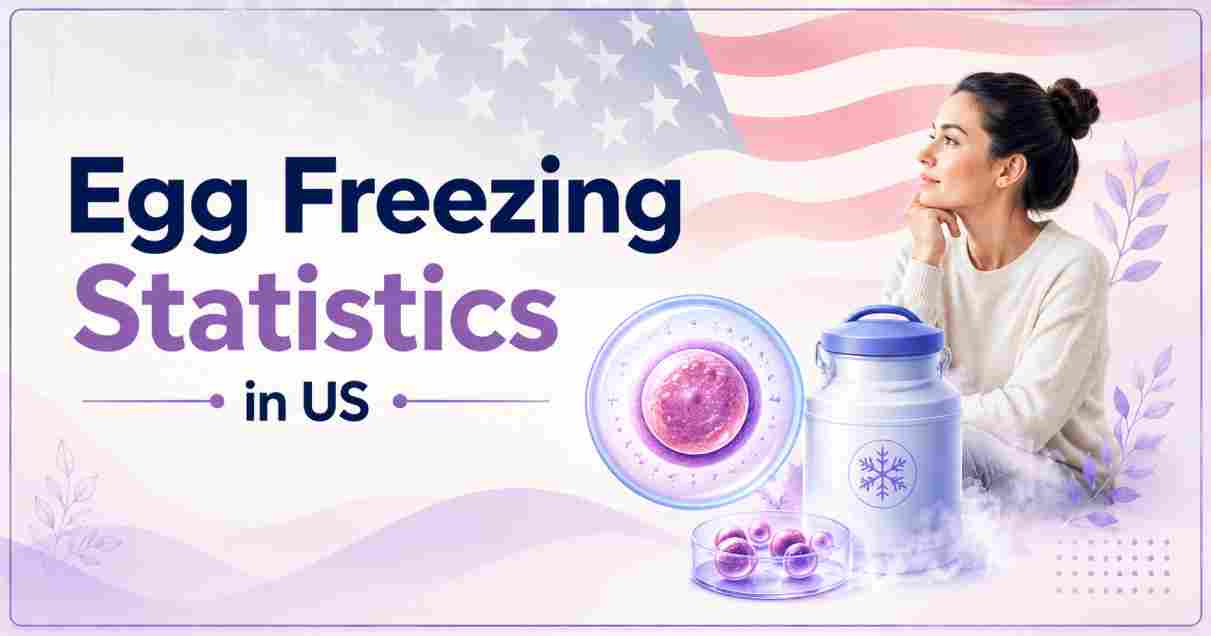
Egg freezing — medically known as oocyte cryopreservation — has moved from a fringe fertility technology to a mainstream reproductive decision for millions of American women in 2026. What was labelled “experimental” by the American Society for Reproductive Medicine (ASRM) as recently as 2012 is now a well-established, non-experimental medical procedure offered at hundreds of clinics across the country, backed by over a decade of growing outcome data. The numbers tell the story of a sector in rapid expansion: nearly 14,000 women elected to freeze their eggs in 2018 alone (Society for Assisted Reproductive Technology, SART), and that figure has grown substantially in every year since. The core appeal is straightforward — a woman who freezes her eggs at 32 is effectively banking the reproductive potential she had at 32, regardless of when she eventually decides to use them. No other reproductive technology offers quite that promise. But the full picture is considerably more complex, and understanding the real statistics behind egg freezing costs, success rates by age, side effects, and insurance coverage in 2026 is essential for anyone making this decision seriously.
The context for the 2026 egg freezing landscape is shaped by three converging forces. First, technology has improved dramatically: the shift from slow-freeze to vitrification (ultra-rapid freezing in liquid nitrogen) has raised egg survival rates after thawing to approximately 90%, a transformation from the much lower survival rates of earlier methods. Second, employer coverage has expanded: tech giants like Apple and Facebook were early movers in offering egg freezing as a benefit, and today a growing share of large US employers cover some or all of the cost as part of fertility benefits packages. Third, and most critically, the data on outcomes is now far richer than it was even five years ago. An 8-year study from Extend Fertility clinic (published in Fertility and Sterility, 2025) covering 4,659 egg freezing cycles for 3,138 patients between 2016 and 2023 provides the most detailed US-specific outcome data available. It shows that the mean age at which women froze eggs dropped from 36.9 years in 2016 to 35.0 years in 2023 — a meaningful shift toward younger, higher-efficacy freezing. The statistics in this article are drawn from that study and other verified 2025–2026 sources to give the most accurate picture currently available.
Interesting Facts: Egg Freezing Statistics in US 2026
EGG FREEZING IN THE US — SNAPSHOT (2026)
==========================================

  Vitrification egg survival rate after thaw:   ~90%
  Overall live birth chance from frozen egg:     39%
  Live birth chance (women ≤38, 20+ eggs frozen): 70%
  Live birth chance (women ≤38):                 51%

  Mean age at egg freezing (Extend Fertility, 2023): 35.0 years
  Mean age at egg freezing (Extend Fertility, 2016): 36.9 years
  → Trending younger = improving outcomes over time

  National average cost (1 cycle, all-in):  $12,000–$20,000
  Average patient cycles completed:         2 cycles
  Patients completing 3+ cycles:            20%+
  Annual storage fees:                      $500–$1,000/yr
| Fact | Data (2026) |
|---|---|
| First human birth from a frozen egg | 1986 — vitrification technique developed thereafter |
| ASRM removed “experimental” label | 2012 — egg freezing now fully standard-of-care |
| US women who froze eggs in 2018 (SART) | ~14,000 — first major year of mainstream adoption |
| Mean age at egg freezing (2016 vs 2023, Extend Fertility study) | 36.9 years (2016) → 35.0 years (2023) |
| Egg survival rate after thaw (vitrification method) | ~90% — major improvement over slow-freeze era |
| Overall live birth rate per frozen egg | 39% cumulative live birth per warming cycle (New Hope Fertility, 2026) |
| Live birth rate: women 38 and under | 51% |
| Live birth rate: women 38 and under with 20+ eggs frozen | 70% |
| Live birth chance with 15+ mature eggs frozen (under 35) | Up to 80% for at least one live birth |
| Live birth chance with 20–30 mature eggs frozen | 75–80% for a future live birth |
| Recommended egg count for one live birth (ASRM guidance) | 10–20 mature eggs (age-dependent) |
| Average number of cycles patients complete | 2 cycles (FertilityIQ patient-reported data) |
| Patients who complete 3 or more cycles | More than 20% (FertilityIQ) |
| Utilisation rate: elective freezers who return to use eggs | ~41.1% (58.9% “no-use” rate per Repro. Biology & Endocrinology, 2022) |
| Returners who come back with a spouse/partner | 62.5% of those who return to use eggs |
| States with fertility insurance mandates (2026) | 25 states + Washington D.C. |
| TrumpRx.gov fertility drug discount (launched Feb 2026) | Up to 84% discount on Gonal-f, Ovidrel, Cetrotide — saves ~$2,200/cycle |
| Serious adverse event risk in a single cycle | Under 2.5% (Cofertility, 2025) |
| Severe OHSS rate | 0.1–2% of cycles |
| Baby born from embryo frozen for 27 years | Verified case — illustrates long-term viability of cryopreservation |
Source: Extend Fertility / Fertility and Sterility (2025), New Hope Fertility Blog (April 2026), FertilityIQ, Cofertility (2025–2026), Infertilitycurehub.com (April 2026), RESOLVE Insurance Coverage by State (December 2025), Reproductive Biology and Endocrinology (2022), UCLA Health, ASRM
The jump in mean freezing age from 36.9 to 35.0 over just seven years at one of the US’s largest dedicated egg freezing clinics is not merely a statistical curiosity. It reflects a genuine cultural and educational shift: more women are learning about the steep age-related decline in egg quality and quantity earlier in their reproductive window, and acting on that knowledge. A woman who freezes at 35 instead of 37 is not gaining two years; she is operating in a meaningfully different biological window, where egg quality is higher, ovarian reserve is stronger, and the odds of retrieving an adequate number of mature eggs in a single cycle are substantially better. The 70% live birth rate for women who freeze 20 or more eggs before age 38 compared to 39% overall is the clearest statistical argument for both freezing younger and banking more eggs. That 31-percentage-point gap is not subtle — it is the difference between a reproductive insurance policy that is highly likely to pay out and one that is far more uncertain.
The 58.9% “no-use” rate is one of the most important and underreported statistics in the egg freezing literature. The majority of women who freeze their eggs never return to use them — most commonly because they conceived naturally in the interim, or because their life circumstances changed. This is not necessarily a negative outcome — for many patients, the security of knowing frozen eggs exist reduces anxiety and allows them to make relationship and career decisions without reproductive urgency. But it does mean the financial investment of egg freezing is often a form of insurance that is never claimed, and patients need to factor this into their planning: the average person who freezes eggs and never uses them will spend $15,000–$25,000 in cycle costs plus $500–$1,000 per year in storage for eggs they ultimately do not retrieve.
Egg Freezing Costs in the US 2026 — Full Breakdown
EGG FREEZING COST BREAKDOWN — US 2026
======================================
(One complete cycle, national averages)

  Clinical procedure fees:        $8,000–$15,000
  + Fertility medications:        $3,500–$6,000
  + First year storage (often incl.): $500–$1,000
  ─────────────────────────────────────────────────
  TOTAL ONE CYCLE:                $12,000–$20,000
  National average (FertilityIQ): ~$16,000
  (Clinic ~$11,000 + Meds ~$5,000)

  ONGOING COSTS:
  Annual storage:             $500–$1,000/yr
  10-year cumulative storage: $4,500–$9,000
  Future FET transfer cycle:  $5,800–$11,300

  LIFETIME INVESTMENT (2 cycles + 10 yrs storage + 1 transfer):
  Estimated range: $35,000–$60,000+
| Cost Component | National Average Range (2026) | Notes |
|---|---|---|
| Clinical procedure fees (1 cycle) | $8,000–$15,000 | Monitoring, retrieval, anesthesia, vitrification |
| Fertility medications (1 cycle) | $3,500–$6,000 | Billed separately through specialty pharmacies |
| National average total (1 cycle all-in) | ~$12,000–$20,000 | FertilityIQ / eggfreezingcost.com (April 2026) |
| FertilityIQ national average (1 cycle) | ~$16,000 (~$11K clinic + ~$5K meds) | Most widely cited patient-data figure |
| New York / San Francisco clinics | $18,000+ per cycle | Premium market premium |
| Mid-size / smaller US cities | ~$10,000–$12,000 per cycle | Lower cost markets |
| CNY Fertility (lower-cost clinic example) | ~$5,795 full cycle (~$1,900 meds) — vs $16,000 national avg | Significant variation exists nationally |
| Annual egg storage fees | $500–$1,000 per year | National average ~$800; CNY ~$600 |
| 10-year cumulative storage cost | $4,500–$9,000 | At $500–$1,000/yr after first complimentary year |
| Frozen Embryo Transfer (FET) cycle | $5,800–$11,300 per transfer attempt | When ready to use eggs — separate cost |
| Typical total investment (2 cycles + 10 yrs storage + 1 transfer) | $35,000–$60,000+ | Most patients do 2 cycles; 20%+ do 3 |
| TrumpRx.gov medication discount (from Feb 2026) | Up to 84% off Gonal-f, Ovidrel, Cetrotide — saves ~$2,200/cycle | Does not cover all protocols; cannot combine with insurance |
| States with fertility insurance mandates covering some egg freezing | 25 states + DC (as of 2026) | Medical necessity often required; elective mostly self-pay |
| Illinois mandate update (Jan 2026) | Now covers single individuals and LGBTQ+ patients; up to 4 retrievals lifetime (+ 2 if live birth) | Previously limited to employers with 25+ employees |
| Self-insured employer plans | Exempt from ALL state mandates — covers majority of US workers | Federal ERISA exemption applies |
Source: eggfreezingcost.com (last verified April 2026), FertilityIQ, Cofertility (March 2026), CNY Fertility (March 2026), BetterCare (April 2026), Infertilitycurehub.com (April 2026), RESOLVE Insurance Coverage by State (December 2025), ILHealthAgents.com (February 2026)
The $12,000–$20,000 per-cycle range is the honest national figure, but two critical caveats apply. First, most patients do not complete just one cycle. FertilityIQ patient data shows the average egg freezing patient completes two cycles, and over 20% complete three — meaning the realistic total procedure investment for many patients is $24,000–$40,000+ before storage or transfer costs. Second, what clinics advertise often is not what patients pay. A common pattern is a headline price of $8,000–$10,000 for the procedure that excludes medications (an additional $3,500–$6,000), pre-cycle testing, anaesthesia, and long-term storage. Patients who calculate carefully should always request a complete itemised cost estimate rather than accepting a package price at face value.
The February 2026 launch of TrumpRx.gov fertility drug discounts — offering up to 84% off three key fertility medications (Gonal-f, Ovidrel, and Cetrotide) — is the most significant new development in egg freezing affordability this year. The savings of approximately $2,200 per cycle on medications represent a meaningful reduction, particularly for patients at clinics where medications are already billed at lower negotiated rates. However, the programme covers only three specific drugs, cannot be combined with insurance discounts, and does not apply to other commonly used fertility medications. The 25-state insurance mandate landscape also deserves a frank caveat: the majority of US workers are employed by self-insured companies, which are exempt from all state mandates under federal ERISA regulations. For these workers — who likely represent the majority of the working population — insurance coverage for elective egg freezing remains essentially unavailable regardless of which state they live in.
Egg Freezing Success Rates by Age 2026
EGG FREEZING SUCCESS RATES BY AGE — 2026
==========================================
(Live birth probability estimates from verified 2025–2026 clinical data)

  Age at Freezing:    Approx. Live Birth Rate (per warming cycle)
  ┌──────────────────────────────────────────────────────────────┐
  │ Under 35:          ~52%    ████████████████████████████      │
  │ 35–37:             ~40–45% ████████████████████████         │
  │ 38–39:             ~30–35% █████████████████                │
  │ 40–42:             ~20–25% █████████████                    │
  │ 43+:               <15%    ███████                          │
  └──────────────────────────────────────────────────────────────┘
  Source: New Hope Fertility (April 2026), OVU.com (Feb 2026),
          Extend Fertility / Fertility & Sterility (2025)

  With 20+ eggs frozen (any age ≤38):   ~70% live birth probability
  With 15+ mature eggs frozen (< 35):   up to 80%
  With < 10 eggs frozen:                < 60%
| Age at Egg Freezing | Approx. Live Birth Rate | Key Notes |
|---|---|---|
| Under 35 | ~52% live birth rate (New Hope Fertility, 2026) | Best window; highest egg quality and quantity |
| Under 35 with 15+ mature eggs | Up to 80% chance of at least one live birth | Target number achievable more easily at this age |
| 35–37 | ~40–45% | Still strong; ASRM considers this the “ideal window” upper range |
| 38 and under (combined) | 51% live birth overall | Rises to 70% with 20+ eggs banked |
| 38–39 | ~30–35% | Still viable; may need multiple cycles to accumulate enough eggs |
| 40–42 | ~20–25% | Multiple cycles typically required; IVF with donor eggs increasingly discussed |
| Women freezing at 40+ | Rates close to 0 with very few eggs | Late-40s freezing clinically not recommended for elective purposes |
| 20+ eggs frozen (≤38) | 70% live birth probability | Egg count matters as much as age |
| 20–30 mature eggs | 75–80% chance of future live birth | Optimal bank size per clinical evidence |
| Fewer than 10 eggs | Below 60% live birth probability | Often insufficient; additional cycles recommended |
| Clinical pregnancy per oocyte (single egg) | 4–12% per oocyte (UCLA Health) | Highlights why volume matters |
| Fertilisation rate of thawed eggs | 70–80% of thawed eggs fertilise successfully | After 90% thaw survival rate |
| Optimal age per ASRM guidance | Mid-30s or younger | Best balance of biological and practical timing |
Source: New Hope Fertility Blog (April 22, 2026), OVU.com Egg Freezing Guide (updated February 16, 2026), Extend Fertility / Fertility and Sterility (2025), Infertilitycurehub.com (April 9, 2026), UCLA Health, ASRM
The age-related decline in egg quality and quantity is the biological reality that anchors every success rate figure in this table. A woman’s ovaries contain a fixed, finite number of eggs from birth — there is no mechanism for regeneration. From the early 30s, the rate of decline accelerates, and after the mid-30s it accelerates further. What this means clinically is that a 32-year-old stimulation cycle typically retrieves significantly more mature eggs than a 38-year-old cycle on the same protocol — not just because more eggs exist, but because the quality differential compounds: younger eggs are more likely to survive freezing, thawing, fertilisation, embryo development, and implantation successfully. The 4–12% per oocyte clinical pregnancy rate (UCLA Health data) explains why the number of eggs retrieved per cycle matters so much: at a 4% per-egg rate, retrieving 15 eggs generates an estimated 60% cumulative probability, while retrieving 8 gives approximately 32%.
The Extend Fertility 8-year study’s finding that mean freezing age dropped from 36.9 to 35.0 years between 2016 and 2023 is practically significant: it means the clinic’s patients are increasingly freezing in the window where outcomes are meaningfully better. The fact that the 20+ egg threshold at or under age 38 produces a 70% live birth probability is the clearest evidence-based target for counselling patients — it gives a concrete, measurable goal (20 mature eggs) and a concrete time window (before 38) that is actionable and well-supported by clinical data.
Egg Freezing Age Limits in the US 2026
AGE GUIDELINES FOR EGG FREEZING — 2026
========================================

  FREEZING AGE RANGE (most US clinics):
  ┌────────────────────────────────────────────────────────────┐
  │ Minimum age:    18 (legal adult; consent-based)           │
  │ Optimal window: Mid-20s to mid-30s (ASRM)                │
  │ Accepted range: Up to age 40–43 (clinic-dependent)       │
  │ Upper use limit: Most clinics = 50–55 years old          │
  └────────────────────────────────────────────────────────────┘

  NOTE: No universal federal age limit exists.
  Each clinic sets its own upper age thresholds.
  ASRM sets clinical guidelines, not legal limits.
| Age Consideration | Guideline / Data | Source |
|---|---|---|
| Minimum age to freeze eggs (US) | 18 years old — must be a legal adult and provide informed consent | Standard medical ethics / clinic policy |
| Optimal freezing window (ASRM) | Mid-20s to mid-30s — highest egg quality and quantity | ASRM guidelines |
| Maximum age most US clinics will stimulate for egg freezing | Typically 40–43 years old, clinic-dependent | OVU.com (2026); Rejuvenating Fertility (2026) |
| Upper age limit for using frozen eggs (uterine pregnancy) | Most clinics cap at 50–55 years old — driven by obstetric risk, not legal requirement | UCLA Health; clinic-by-clinic policy |
| Federal legal age limit for egg freezing | None — no federal law regulates age ceiling | US legal framework |
| ASRM position on post-menopausal pregnancies | ASRM advises clinics to counsel patients on heightened obstetric risks with advanced maternal age | ASRM Ethics Committee |
| Women in late 30s / early 40s: clinical reality | IVF and donor eggs increasingly discussed as preferable alternative — egg quality decline severe | UCLA Health / ASRM |
| Age and ovarian reserve correlation | After mid-30s: decline accelerates significantly — AMH levels fall, antral follicle count drops | ASRM / OVU.com (2026) |
| Ideal age from a biological standpoint | Younger than 35 — single cycle more likely to retrieve sufficient eggs | Multiple clinical sources |
| Practical optimal balance (career/relationship stage) | 32–36 — most clinics identify this as the balanced “real world” window | Cofertility; UCSF CRH |
Source: OVU.com (February 2026), UCLA Health, ASRM, Cofertility (2026), Rejuvenating Fertility (March 2026), UCSF Center for Reproductive Health
The age limit question is one of the most searched aspects of egg freezing and one where confusion is rampant — partly because there is no single federal standard, and partly because “age limit for freezing” and “age limit for using frozen eggs” are two separate clinical considerations that get conflated. Most US fertility clinics will perform egg freezing on women up to approximately 40–43 years old, though success rates at the upper end of this range are substantially lower, and an increasing proportion of these patients will be counselled toward donor eggs and IVF as a more clinically reliable path. The upper age for carrying a pregnancy using frozen eggs is typically 50–55 at most US clinics — not because the eggs cannot be thawed and fertilised, but because obstetric risk rises sharply with maternal age at the time of pregnancy, with heightened rates of hypertension, gestational diabetes, and caesarean section.
For women under 35, the calculus is different but worth scrutinising from a different angle: freezing too early — in one’s early 20s — means spending money to preserve eggs that will likely not be needed for a decade or more, accumulating substantial storage costs in the interim, and potentially missing the biological window where natural conception remains most likely. The UCSF Center for Reproductive Health and most reproductive endocrinologists identify the 32–36 range as the practical sweet spot — old enough to have career clarity about why delay is genuinely desired, young enough that egg quality and quantity still support strong outcomes from a single or double cycle.
Egg Freezing Side Effects & Risks 2026
EGG FREEZING RISKS — SEVERITY OVERVIEW (2026)
===============================================

  COMMON / MILD (most patients):
  ┌──────────────────────────────────────────────────────────┐
  │ Bloating, abdominal fullness      Very common           │
  │ Breast tenderness                 Common                │
  │ Mild cramping during retrieval    Common                │
  │ Spotting post-retrieval           Common                │
  │ Temporary hormonal mood changes   Common                │
  └──────────────────────────────────────────────────────────┘

  SERIOUS (rare):
  ┌──────────────────────────────────────────────────────────┐
  │ OHSS (all forms):         2–5% of cycles               │
  │ Severe OHSS:              0.1–2% of cycles             │
  │ Ovarian torsion:          Rare (<0.5%)                 │
  │ Intraperitoneal hemorrhage: Rare (<0.5%)               │
  │ Pelvic infection:         Rare (<0.5%)                 │
  │ Serious adverse event overall: <2.5% per cycle         │
  └──────────────────────────────────────────────────────────┘
| Side Effect / Risk | Prevalence / Data | Source |
|---|---|---|
| Bloating, abdominal fullness during stimulation | Very common — experienced by most patients | Cofertility (2026); ScienceNewsToday (2026) |
| Breast tenderness during hormone injections | Common | Multiple clinical sources |
| Mild cramping at/after egg retrieval | Common — typically resolves within days | Cofertility (2026) |
| Light spotting post-retrieval | Common | Standard clinical outcome |
| Temporary mood changes / hormonal effects | Common — resolve within days of stopping medications | Cofertility (2026) |
| OHSS (all forms — mild, moderate, severe) | ~2–5% of egg freezing cycles (FertilityIQ) | FertilityIQ; Rejuvenating Fertility (March 2026) |
| Severe OHSS | 0.1–2% of cycles — can cause shortness of breath, pain, vomiting; hospitalisation in worst cases | Cofertility (2025); ScienceNewsToday (2026) |
| OHSS risk indicators | 25+ follicles over 14mm diameter + estrogen >2,500 pg/ml — warning signs per FertilityIQ | FertilityIQ |
| OHSS prevention | Leuprolide trigger instead of hCG; cabergoline for fluid reduction; careful monitoring | FertilityIQ; Cofertility |
| Ovarian torsion | Rare (<0.5%) — ovary twists on itself due to enlargement; surgery required | Cofertility (2025) |
| Intraperitoneal hemorrhage | Rare (<0.5%) — needle punctures blood vessel during retrieval | Cofertility (2025) |
| Pelvic infection | Rare (<0.5%) | Cofertility (2025) |
| Serious adverse event risk per cycle (overall) | Under 2.5% | Cofertility (2025) |
| Cancer risk from egg freezing hormones | No scientific evidence of increased risk for invasive ovarian or breast cancer | Cofertility; ScienceNewsToday (2026) |
| Baby health: frozen egg vs natural conception | Experts consider babies from frozen eggs as healthy as naturally conceived babies | Cofertility; UCLA Health |
| Long-term egg storage: quality degradation | No degradation demonstrated even after 10+ years in liquid nitrogen | Rejuvenating Fertility (2026) |
| Emotional / psychological risks | Disappointment if insufficient eggs retrieved; no guarantee of future pregnancy | ScienceNewsToday (2026) |
Source: Cofertility Side Effects Guide (2025), Cofertility OHSS Guide (2025), FertilityIQ Risks of Egg Freezing, Rejuvenating Fertility (March 18, 2026), ScienceNewsToday (updated April 8, 2026)
The side effect profile of egg freezing is, in most cases, manageable and temporary — but the variability matters. The vast majority of patients experience mild side effects: bloating, breast tenderness, minor cramping around retrieval, and transient mood changes from the hormonal medications. These are real, sometimes uncomfortable, but they resolve within days to a week and do not require medical intervention. The 2–5% of cycles that produce some form of OHSS represent the most significant near-term clinical risk category. Mild OHSS — abdominal discomfort, nausea, bloating — can be monitored at home and typically resolves on its own within one to two weeks. Severe OHSS (0.1–2% of cycles) is the medically serious end of the spectrum: it involves significant fluid shifts, respiratory distress, and in worst cases requires hospitalisation and active management. Modern clinical protocols have substantially reduced severe OHSS rates through careful monitoring, trigger medication selection, and dose adjustment — but it has not been eliminated.
The cancer question is one that concerns many women and deserves a clear factual answer: current scientific evidence does not show an increased risk of invasive ovarian or breast cancer from the hormonal medications used in egg freezing. This has been studied specifically because of early theoretical concerns about ovarian stimulation and estrogen-sensitive cancers, and the data consistently does not support an elevated risk. Similarly, studies consistently show that babies born from frozen eggs are as healthy as babies conceived naturally — a finding that addresses a related concern about epigenetic effects of cryopreservation. The long-term storage question is also resolved: liquid nitrogen storage has been shown to preserve egg viability indefinitely, with no measurable degradation in egg quality even after 10 or more years, as illustrated by the confirmed case of a baby born from an embryo frozen for 27 years.
Egg Freezing Insurance Coverage & Employer Benefits 2026
INSURANCE & COVERAGE LANDSCAPE — US 2026
==========================================

  States with Fertility Insurance Mandates (2026):
  25 states + Washington D.C. have some form of mandate

  BUT: Self-insured employer plans (most US workers)
       are EXEMPT from ALL state mandates via federal ERISA

  Elective egg freezing insurance coverage (general):
  ┌──────────────────────────────────────────────────────────┐
  │ Medically necessary (e.g. cancer patients): Often covered│
  │ Elective fertility preservation: Mostly self-pay         │
  │ Employer benefit programmes: Growing but not universal   │
  └──────────────────────────────────────────────────────────┘

  Illinois 2026 Update:
  Covers single individuals + LGBTQ+ (expanded Jan 2026)
  Up to 4 retrievals lifetime; +2 if live birth (max 6)
  Includes PGT (preimplantation genetic testing) from Jan 2026
| Insurance / Coverage Metric | Data (2026) | Source |
|---|---|---|
| US states with some fertility insurance mandate | 25 states + Washington D.C. | RESOLVE (December 2025) |
| Federal mandate for egg freezing coverage | None — no federal requirement exists | US law |
| Self-insured employer plans: mandate exemption | Exempt from all state mandates under federal ERISA | RESOLVE; ILHealthAgents.com (2026) |
| Illinois mandate update (January 1, 2026) | Expanded to single individuals and LGBTQ+ patients; up to 4 lifetime retrievals | ILHealthAgents.com (February 2026) |
| Illinois: PGT (preimplantation genetic testing) coverage | Added to mandate from January 1, 2026 | ILHealthAgents.com (February 2026) |
| Illinois small employer exemption | Employers with fewer than 25 employees still exempt | ILHealthAgents.com (2026) |
| Medically necessary egg freezing coverage | More widely covered — cancer, endometriosis, early menopause diagnoses | CNY Fertility; CCRM (2026) |
| Elective egg freezing: insurance coverage | Limited — mostly self-pay outside employer benefit packages | eggfreezingcost.com (April 2026) |
| Major tech companies offering egg freezing benefit | Apple, Facebook (Meta), and growing list of large employers | Multiple media reports (2025–2026) |
| Employer benefit plans trend | Growing — more Fortune 500 companies adding fertility benefits | Infertilitycurehub.com (2026) |
| TrumpRx.gov programme (launched Feb 2026) | Up to 84% off Gonal-f, Ovidrel, Cetrotide — saves ~$2,200/cycle | Infertilitycurehub.com (April 2026) |
| Nevada: new fertility law (A.B. 428, 2025) | Added fertility preservation coverage provisions | RESOLVE (December 2025) |
| Georgia: coverage requirement (from Jan 1, 2026) | Every health benefit policy must include standard fertility preservation when medically necessary treatment may cause iatrogenic infertility | RESOLVE (December 2025) |
Source: RESOLVE Insurance Coverage by State (December 2025), ILHealthAgents.com (February 2026), Infertilitycurehub.com (April 9, 2026), eggfreezingcost.com (April 2026), CNY Fertility
The insurance landscape for egg freezing in 2026 is best described as improving but still deeply inadequate for the majority of women who need it. The expansion to 25 states plus DC with some form of fertility mandate is a meaningful policy advance from where the map stood five years ago — but the ERISA exemption for self-insured employers effectively neutralises state mandates for the majority of working Americans. Most large US employers — those most likely to have the financial capacity to offer fertility benefits — self-insure their health plans precisely to avoid state mandate compliance, which means that a woman working for a large corporation in Illinois (the most expansive state mandate in the country as of 2026) may have zero employer insurance coverage for egg freezing, while her neighbour working for a small fully-insured company might have full coverage.
The practical advice that emerges from this landscape is to treat insurance coverage as a bonus rather than a baseline assumption, and to engage in three specific conversations before committing to a clinic: first, a direct conversation with HR about whether the employer plan covers fertility preservation and whether that plan is fully insured or self-insured; second, a conversation with the fertility clinic about whether any components of the cycle (consultations, blood work, ultrasound monitoring) might be billable to medical insurance; and third, an inquiry about whether the clinic participates in any financing programmes — most major US fertility practices now offer payment plans, and some have direct relationships with healthcare financing companies like Prosper Healthcare Lending or Align Finance that extend multi-year low-interest payment options specifically for fertility treatment cycles.
Disclaimer: The data research report we present here is based on information found from various sources. We are not liable for any financial loss, errors, or damages of any kind that may result from the use of the information herein. We acknowledge that though we try to report accurately, we cannot verify the absolute facts of everything that has been represented.