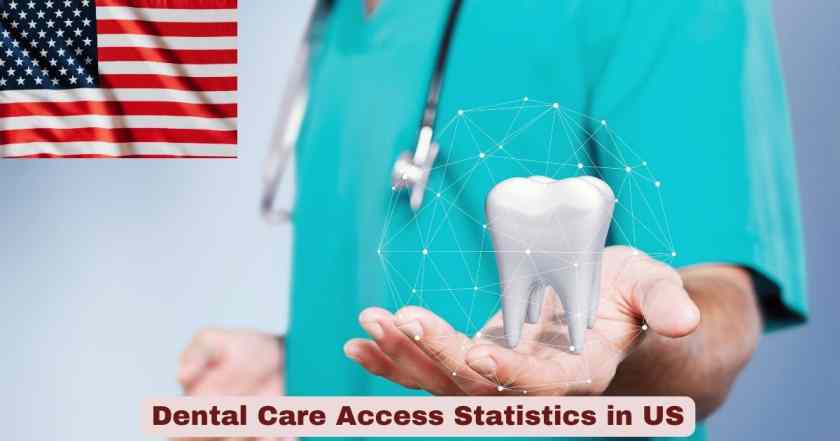
Dental Care Access in America 2026 — Overview
Dental care is one of the most quietly catastrophic gaps in the American healthcare system — and the scale of that gap in 2026 is staggering once the data is laid out in full. Start with the most basic number: approximately 72 million US adults have no dental insurance whatsoever, according to CareQuest Institute research. That is roughly more than one in four American adults navigating a system where a single crown can cost $950 to $3,000 out of pocket, a root canal runs $984 to $1,337, and even a routine cleaning without insurance averages around $100 — all at a time when the US dental services industry generates an estimated $172–$179 billion in annual revenue. The paradox is complete: the United States is home to the largest dental services market in the world, yet tens of millions of its residents are effectively locked out of it. The consequences are not cosmetic. 1 in 5 adults aged 20–64 has at least one untreated cavity. Over $45 billion in US productivity is lost annually due to untreated dental disease. 34 million school hours are lost every year because of unplanned emergency dental care. And nearly 2 million Americans visit emergency rooms annually for dental problems that could have been prevented with regular access to a dentist.
The access crisis in 2026 is shaped by overlapping structural failures that no single policy fix has resolved. Traditional Medicare still does not cover routine dental care — which means the moment most Americans turn 65 and lose their employer-sponsored dental benefits, they face a coverage cliff precisely when their need for restorative care is highest. Medicaid dental coverage for adults varies dramatically by state — comprehensive coverage was available in only 28 states and Washington D.C. as of 2023, and even in states with coverage, only about 20% of dentists nationwide accept Medicaid, citing low reimbursement rates, administrative burden, and missed appointments as barriers. Geography adds another layer: approximately 62 million Americans live in a dental health professional shortage area (HPSA), with 67% of those shortage areas in rural communities. What this means in practice is that for tens of millions of Americans — the low-income, the elderly, the rural, the uninsured — dental care is not a scheduled appointment but an emergency-room visit for pain relief that provides no real treatment and sends them home with a prescription for antibiotics and opioids.
Dental Care Access US 2026 — Key Interesting Facts
| Fact | Detail |
|---|---|
| Adults Without Dental Insurance | Approximately 72 million US adults have no dental insurance (Clerri / CareQuest research) |
| Adults Without Dental Insurance (%) | Over 25% of US adults — more than one in four — lack dental coverage (CareQuest Institute 2024 SOHEA survey) |
| Uninsured Dentist Visit Rate | Only 15.2% of uninsured adults visited a dentist in the past year vs 53.1% of privately insured adults |
| Productivity Lost to Untreated Dental Disease | Over $45 billion in US productivity is lost annually due to untreated dental disease (CDC / NIDCR) |
| School Hours Lost to Emergency Dental Care | 34 million school hours are lost every year due to unplanned emergency dental care (CDC Data Brief, June 2025) |
| Adults with Untreated Cavities | 1 in 5 adults aged 20–64 has at least one untreated cavity (CDC 2024 Oral Health Surveillance Report) |
| Adults in Dental HPSAs | Approximately 62 million Americans live in a dental health professional shortage area; 67% of HPSAs are in rural communities (2025 data) |
| Dentists Who Accept Medicaid | Only ~20% of dentists nationwide accept Medicaid patients, citing low reimbursement and administrative burden |
| Medicare Dental Coverage | Traditional Medicare does not cover routine dental care — leaving most seniors uninsured for dental upon retirement |
| Seniors Without Dental Coverage | 56% of adults aged 65+ are uninsured for dental care |
| Emergency Room Visits for Dental Issues | Average annual rate of ~59.4 ER visits per 10,000 people for tooth disorders (2020–2022); estimated ~1.9 million annual ER visits (CDC NCHS Data Brief, June 2025) |
| US Dental Services Market (2025) | Estimated at $172–$179 billion annually in the United States |
| US Dental Services Projection (2034) | Expected to reach $254.7 billion by 2034 at a CAGR of 4.4% |
| Children Without Dental Insurance Visit Rate | Only 20.4% of uninsured children received dental care vs 63.2% of privately insured children |
| Gum Disease Prevalence | 42% of US adults aged 30 and older have some form of periodontal (gum) disease — a risk factor for heart disease, diabetes, and Alzheimer’s |
Source: CareQuest Institute — State of Oral Health Equity in America survey (2024); CDC — 2024 Oral Health Surveillance Report; CDC NCHS Data Brief No. 531 (June 2025); NIDCR — Oral Health in America; Clerri dental insurance analysis; Precedence Research; Towards Healthcare — US Dental Services Market (2025); ADA Health Policy Institute
The 72 million uninsured adults figure is not a static number — it reflects a structural feature of the American dental care system that has existed for decades and has proven resistant to reform. Unlike medical insurance, which became an employer benefit largely through post-WWII economic incentives, dental insurance was always treated as a separate, optional add-on — a framing that has persisted into 2026, when the oral-systemic health connection is well established in medical literature. The fact that only 15.2% of uninsured adults visited a dentist in the past year — compared to 53.1% of privately insured adults — illustrates the most direct consequence of the coverage gap. Dental insurance does not just pay for care: it fundamentally determines whether care is sought at all. Without it, the dental care model collapses from prevention-based to crisis-based, which is both more expensive and more damaging to long-term health.
The $45 billion in annual productivity losses from untreated dental disease is a figure that recurs consistently across federal health agency reports and gives the access crisis a macroeconomic dimension beyond individual suffering. Those losses come from missed workdays, reduced productivity from dental pain, and the time spent seeking emergency care that provides only pain relief rather than treatment. The 34 million school hours lost annually add an educational-attainment dimension: children with untreated dental pain miss school, struggle to concentrate when present, and fall behind — creating compounding disadvantages for the lowest-income families who are already most likely to lack dental coverage. These are not abstract policy statistics. They are the downstream consequences of a coverage architecture that treats oral health as optional.
Dental Insurance Coverage in the US 2026 — Who Has It & Who Doesn’t
| Population Group | Dental Insurance Data |
|---|---|
| All US Adults Without Dental Insurance | ~72 million adults — over 25% of the adult population |
| Adults Who Lost Coverage in Past Year | 12% of currently uninsured adults lost coverage within the past year (CareQuest 2024) |
| Adults Without Health Insurance Also Lacking Dental | Over 80% of adults without health insurance also lack dental coverage |
| Medicare/Medicaid Recipients Lacking Dental Insurance | About one-third of Medicare and Medicaid recipients lack dental insurance |
| Adults Ages 18–29 (Uninsured Rate) | 34% — highest young-adult uninsured rate; often aged off parental insurance |
| Seniors (Age 65+) Uninsured for Dental | 56% — Medicare’s lack of dental coverage creates a retirement coverage cliff |
| Adults Age 60+ (Uninsured Rate) | 31% — older adults face coverage gaps at higher rates than middle-aged adults |
| Income Under $30,000 (Uninsured Rate) | 38% lack dental insurance — over twice as likely as those earning $100,000+ |
| Income Over $100,000 (Uninsured Rate) | 17% — significantly lower uninsured rate |
| Without High School Diploma (Uninsured Rate) | Nearly 40% lack dental insurance |
| Postgraduate Degree (Uninsured Rate) | 18% — less than half the rate of those without a diploma |
| Hispanic Adults (Uninsured Rate) | 30% — highest of all racial/ethnic groups surveyed |
| Asian/Pacific Islander Adults (Uninsured Rate) | 19% — lowest of major racial/ethnic groups |
| Privately Insured Adults Who Visited Dentist (Past Year) | 53.1% |
| Uninsured Adults Who Visited Dentist (Past Year) | 15.2% — less than one-third the insured rate |
Source: CareQuest Institute — “State of Oral Health Equity in America” (SOHEA) survey, conducted by NORC at the University of Chicago, March–May 2024 (9,000+ participants); Dimensions of Dental Hygiene (May 2025); DrBicuspid.com (June 2025); Clerri dental statistics
The demographic breakdown of dental uninsurance reads as a precise map of structural disadvantage in the United States. The 34% uninsured rate among young adults 18–29 reflects a coverage architecture that built a dependency on parental insurance and employer-sponsored benefits — systems that leave a predictable gap for young adults in the transition to independent working life. The 56% of seniors who are uninsured for dental care is the most politically contentious number in the entire dataset, because it is the product of a specific policy choice: the exclusion of routine dental care from traditional Medicare when it was created in 1965. That choice, made in a different era of dental medicine, has never been fully corrected, despite decades of advocacy. The result is that Americans who spent their working lives with employer dental coverage lose it precisely at the age when tooth loss, gum disease, and the need for crowns, bridges, and implants accelerates.
The income gradient of dental uninsurance — 38% of those earning under $30,000 uninsured versus 17% of those earning over $100,000 — is steeper than many other forms of health inequality. This is partly because dental insurance is predominantly employer-sponsored, and low-income workers are disproportionately employed in service, retail, and agricultural jobs where dental benefits are not standard. It is also because even when dental insurance is technically available, the annual maximums — typically $1,000 to $1,500 — are so low that a single crown or root canal can exhaust the entire year’s benefit in one procedure, leaving patients to pay the rest out of pocket. The result is a coverage system that functions well for routine preventive care but collapses under the weight of any significant restorative need.
Dental Care Costs in the US 2026 — Procedure Price Guide
| Procedure | Average Cost Without Insurance | With Insurance (Typical Out-of-Pocket) |
|---|---|---|
| Routine Cleaning | ~$100–$200 | Often covered at 100% for 2 visits/year |
| Comprehensive Exam | ~$75–$150 | Often covered at 100% preventive |
| Dental X-rays (Bitewing) | ~$25–$50 per image; ~$146 full set | Often covered at 100% preventive |
| Composite Resin Filling (per tooth) | $100–$450 (avg. ~$226 per CareCredit data) | ~50–80% covered; patient pays $50–$150 typically |
| Silver Amalgam Filling | ~$139 average | ~50–80% covered |
| Simple Tooth Extraction | ~$177 average | ~50–80% covered after deductible |
| Surgical Tooth Extraction | ~$363 average | ~50% covered |
| Wisdom Tooth Removal (1 impacted) | ~$835 average | ~50% covered |
| Wisdom Teeth (4 impacted) | ~$3,340 average | ~50% covered; patient often pays $1,500–$2,000+ |
| Molar Root Canal | ~$1,337 average | ~50–80% covered after deductible |
| Front Tooth Root Canal | ~$984 average | ~50–80% covered |
| Dental Crown (Porcelain) | $950–$3,000 (avg. $1,200–$1,800) | ~50% covered; patient pays ~$400–$1,200 |
| Dental Crown (Metal) | $1,100–$2,000 | ~50% covered |
| Deep Cleaning — Scaling & Root Planing (per quadrant) | ~$242 average | ~50–80% covered |
| Dental Implant (full — post, abutment, crown) | $3,000–$5,000+ per tooth | Rarely covered; often considered cosmetic |
| Dental Sealant (per tooth) | ~$42 average | Often covered for children |
| Full-Mouth Periodontal Surgery | ~$7,889 average | ~50% covered; large out-of-pocket exposure |
| Annual Maximum (Typical Dental Insurance) | — | $1,000–$1,500 — resets every year |
Source: CareCredit average dental procedure costs (Becker’s Dental, 2024); ADA Health Policy Institute 2025–2026 Dental Fee Survey; Wealthvieu — Average Dental Costs US 2026; FavDentistry Dental Crown Cost 2026; North American Community Hub — US Dental Care Costs 2025
The dental cost table above illustrates why the coverage gap produces such dramatic consequences. A single molar root canal ($1,337) followed by a required crown ($1,200–$1,800) is a combined cost of $2,500–$3,100 — a sum that exceeds the entire annual maximum of most standard dental insurance plans, which typically sit at $1,000–$1,500. This means that even an insured patient needing a root canal and crown in the same year will likely hit their annual cap and face hundreds or thousands of dollars in additional out-of-pocket costs. For an uninsured patient, the full procedure cost falls entirely on them — which explains why so many Americans choose extraction over restoration. A simple tooth extraction averages around $177, making it a financially rational choice for someone without insurance who cannot afford a $3,000 save-the-tooth procedure, even if the long-term consequences of tooth loss are significantly worse.
The implant cost structure is particularly telling of how dental care economics work in America. A single dental implant — the gold standard treatment for a missing tooth, comprising the post, abutment, and crown — costs $3,000 to $5,000+ per tooth. Full-mouth reconstruction with implants can cost $30,000 or more. Most dental insurance plans either exclude implants entirely or cover only a portion, classifying them as cosmetic or elective. For the 72 million Americans without dental insurance, this pricing structure means that a missing tooth becomes a permanent condition rather than a treatable one. The irony is that leaving a tooth unrestored creates secondary dental problems — bone loss, shifting of adjacent teeth, bite changes — that generate further costs down the road. The most expensive dental care in the long run is often the care that was skipped because it was unaffordable in the short run.
Oral Health Disparities by Race & Income — 2024–2026 Data
| Population Group | Oral Health Disparity Data |
|---|---|
| Untreated Decay — Mexican American Children | 18.5% prevalence of untreated decay vs 8.1% for non-Hispanic White children (CDC 2024 Oral Health Surveillance Report) |
| Untreated Decay — High Poverty Children | 18.0% of children in high-poverty groups vs 6.6% in low-poverty groups |
| Hispanic Adult Uninsured Rate | 30% — highest of any major racial/ethnic group |
| Black and Hispanic Adults | Experience higher rates of untreated decay and tooth loss than White adults |
| Black Adults (EPI data) | Black women paid 25.3% less on average — compounding financial dental access barriers |
| Low-Income Adults — Dentist Visits | Often use emergency rooms for dental care rather than dental offices |
| Uninsured Children Dental Visit Rate | 20.4% vs 63.2% of privately insured children — a 3× utilization gap |
| Rural Residents Preventive Dental Visits | 35% of rural residents attend preventive visits vs 60% of urban residents |
| Rural Proximity to Dental Services | 40% of rural residents vs 75% of urban residents live within 5 km of dental services |
| Low-Income Adults — Unmet Dental Need | 80% of adults with an unmet dental care need cannot afford care (ADA/Koerner Center, 2026) |
| Smokers — Untreated Decay | Smoking increases likelihood of untreated decay by nearly 100% compared to non-smokers |
| Income Under $30,000 — Dental Uninsurance | 38% uninsured — more than twice as likely as those earning $100,000+ |
| Comprehensive Medicaid Dental (2023) | Only 28 states + D.C. offered comprehensive Medicaid dental benefits to adult enrollees |
| States with Dental Therapist Licensing | Only 13 states license dental therapists — 37 states restrict scope-of-practice limiting workforce solutions |
Source: CDC — 2024 Oral Health Surveillance Report (October 2024); CDC — Oral Health Disparities (2024); Remote Area Medical (August 2025); KFF — Medicaid Dental Coverage (August 2025); Koerner Center — Oral Health Disparities in the US (February 2026); Dimensions of Dental Hygiene (May 2025)
The racial and income disparities in dental care access are among the most persistent and well-documented inequities in the entire American health system. A Mexican American child having a 18.5% rate of untreated tooth decay versus 8.1% for a non-Hispanic White child is not a matter of individual health choices — it is the downstream output of a coverage system that is correlated tightly with income and employment type, which are themselves correlated with race and ethnicity. Children in the highest poverty households have nearly three times the untreated decay rate of children in low-poverty households. These numbers from the CDC’s 2024 Oral Health Surveillance Report — the most recent comprehensive federal oral health assessment — confirm that despite decades of public health progress, the fundamental access disparities have not closed.
The rural access crisis has its own distinct character. When 40% of rural residents live more than 5 km from any dental services, the calculation for whether to seek preventive care changes entirely. The financial cost of prevention includes not just the dental visit but the travel time, fuel costs, and often missed wages from a job without flexible hours. When the nearest dentist is an hour’s drive away and there is no dental insurance, a toothache becomes something to endure rather than treat. The 35% preventive dental visit rate in rural areas versus 60% in urban areas is the predictable result of these geographic and economic conditions. The 37 states that restrict scope-of-practice for dental therapists — mid-level providers who can perform basic restorative care under dentist supervision, modeled on physician assistants in medicine — represent a policy gap that has prevented one of the most evidence-supported solutions for rural dental deserts from scaling nationally.
Emergency Room Dental Visits — Statistics 2020–2026
| Metric | Data |
|---|---|
| Average Annual ER Visit Rate for Tooth Disorders | 59.4 visits per 10,000 people (2020–2022 average) — down from 88.4 per 10,000 in 2014–2016 |
| Estimated Annual ER Dental Visits (2020–2022) | Approximately 1.94 million annual ER visits for tooth disorders |
| Prior Peak ER Visits (2014–2016) | Approximately 2.79 million estimated annual visits at peak |
| ER Dental Visits — Primary Driver | Patients who lack access to routine dental care — ER provides pain relief, not treatment |
| ER Treatment Limitation | ER care for dental conditions is palliative only — focuses on extractions and pain management; does not restore teeth |
| Opioids as Sole Pain Relief at ER Dental Visits | Decreased from 38.1% in 2014–2016 to 16.5% in 2020–2022 — notable reduction |
| Annual Productivity Lost to Dental Disease | Over $45 billion (CDC / NIDCR; PubMed, June 2025) |
| School Hours Lost to Emergency Dental | 34 million hours per year nationally |
| Low-Income Adults & ER Dental Visits | Low-income adults more likely to use emergency rooms for dental care — limited to pain management |
| Government Annual Dental Expenditure | US government spends over $124 billion annually on dental treatments (Precedence Research) |
| Why Patients Go to ER for Dental | Cost barriers, no dental coverage, no accessible dentist, after-hours dental pain |
Source: CDC NCHS Data Brief No. 531 — “Emergency Department Visits for Tooth Disorders: United States, 2020–2022” (June 2025); NIDCR — Oral Health in America; Precedence Research — US Dental Services Market (2026)
The nearly 2 million annual emergency room visits for dental problems in the United States represent one of the clearest examples of system failure in American healthcare — care delivered in the most expensive possible setting that provides the least possible benefit. Emergency rooms are not equipped to perform fillings, root canals, or crowns. When a patient arrives with a dental abscess or severe toothache, the ER can prescribe antibiotics and pain medication, sometimes perform a simple extraction, and send the patient home. The underlying dental problem — the decayed tooth, the infected root — remains. The patient will return, likely to the same ER, in days or weeks, in the same or worse condition. The cost of an ER visit for a dental problem — typically $500 to $2,000 or more — is vastly higher than the routine dental care that would have prevented it.
The reduction in opioid prescribing at ER dental visits — from 38.1% in 2014–2016 to 16.5% in 2020–2022 — is one of the genuinely positive trends in this data, reflecting the impact of opioid prescribing guidelines and state prescription drug monitoring programs. However, the baseline fact that 1.94 million Americans per year are going to emergency rooms for dental pain remains alarming. The $45 billion annual productivity loss from untreated dental disease, combined with the 34 million school hours lost, establishes that the economic case for expanding dental coverage is not primarily a healthcare argument — it is a labor market and educational attainment argument. Every dollar spent on preventive dental care for the uninsured population displaces a much larger dollar cost downstream in emergency care, lost productivity, and diminished human capital.
US Dental Services Market 2026 — Industry Data
| Metric | Data |
|---|---|
| US Dental Services Industry Revenue (2025) | Estimated $172–$179 billion annually |
| Revenue CAGR (5-Year to 2025) | 2.7% CAGR (IBISWorld, Dentists in the US Industry Analysis 2025) |
| US Dental Services Projection (2030) | $210.9 billion |
| US Dental Services Projection (2034) | $254.7 billion at 4.4% CAGR (Towards Healthcare / Precedence Research) |
| Globally Active Dentists in US (2023) | 202,304 professionally active dentists (ADA) |
| Dental Hygienists Employed (2024) | Approximately 225,000 — vacancy rates near 15% in many metros |
| Dental Hygienist Median Wage (2024) | $87,530 (Bureau of Labor Statistics) |
| Counties in Dental HPSA (2025) | 65% of US counties are dental health professional shortage areas (Mordor Intelligence) |
| DSOs — Combined Locations | Heartland Dental, Aspen Dental, Pacific Dental Services manage roughly 4,000 combined locations |
| Dominant Payment Method (2024) | Private health insurance — still the leading payment method |
| Fastest-Growing Payment Type (2025–2034) | Out-of-pocket / self-pay — driven by cosmetic dentistry and high-deductible plans |
| Dominant Service Segment | Endodontic procedures — dominant revenue segment in 2024 |
| Fastest-Growing Service Segment | Cosmetic dentistry — fastest projected growth through 2034 |
| Government Annual Dental Spending | Over $124 billion annually |
| Dental Therapists Licensed (States) | Only 13 states have licensed dental therapists; 37 restrict their scope of practice |
Source: IBISWorld — Dentists in the US Industry Analysis 2025; Mordor Intelligence — United States Dental Services Market (February 2026); Towards Healthcare / Precedence Research (2025); ADA (2023 professionally active dentist count); BLS Occupational Outlook (2025); Certify Health — Dental Market Study 2025
The $172–$179 billion US dental services market in 2025 is one of the larger segments of American healthcare — comparable in scale to the entire pharmaceutical retail market — yet it operates with dramatically less insurance coverage infrastructure than medical care. The 2.7% CAGR of the past five years reflects steady underlying demand growth driven by an aging population, rising cosmetic dentistry interest, and a backlog of deferred care from the pandemic years. The projected $254.7 billion market by 2034 assumes continued consolidation under Dental Service Organizations (DSOs), which have transformed the industry structure: Heartland Dental, Aspen Dental, and Pacific Dental Services alone manage roughly 4,000 combined locations, using economies of scale to reduce supply costs and deploy AI-assisted diagnostic tools across their networks.
The 65% of US counties classified as dental health professional shortage areas is perhaps the most damning single statistic in the industry overview — it means that the majority of American counties do not have enough dentists to serve their population even at current (already inadequate) utilization rates. The 15% hygienist vacancy rate in many metro areas indicates that the shortage is not just geographic but also professional-pipeline-driven, as dental school capacity has not kept pace with population growth and the retirement of older practitioners. The only 13 states that license dental therapists highlights a workforce solution that has been politically resisted by organized dentistry in most states, despite evidence from Minnesota — the first state to license dental therapists in 2009 — that they effectively expand access in underserved communities without compromising quality of care.
Oral Health Outcomes in the US 2026 — Disease Prevalence Data
| Condition / Outcome | Prevalence Data |
|---|---|
| Adults Who Have Had at Least One Cavity (Lifetime) | Over 90% of adults aged 20+ have experienced tooth decay |
| Adults with Untreated Cavities (Ages 20–64) | 1 in 5 (approximately 25%) have at least one untreated cavity |
| Children with Cavities in Baby Teeth (Ages 6–8) | More than 52% have had a cavity in at least one primary tooth |
| Children with Cavities in Permanent Teeth (Ages 12–19) | 57% have had cavities in permanent teeth |
| Untreated Decay — Young Adults (Ages 20–34) | Approximately 22% — highest rate of any adult age group |
| Untreated Decay — Seniors (Ages 65+) | Approximately 13% — lower than young adults but still significant |
| Untreated Decay in Primary Teeth — Ages 2–5 | 11% of young children already have untreated decay |
| Untreated Decay — Ages 6–8 | 18% — nearly doubles from ages 2–5 |
| Gum Disease (Periodontal Disease) | 42% of US adults aged 30+ have periodontal disease |
| Gum Disease — Ages 45–64 | Almost 50% of adults in this age range are affected |
| Gum Disease Risk Factor | Linked to nearly 60 other adverse health conditions — including Alzheimer’s, diabetes, and heart disease |
| Tooth Loss — Adults 75+ | ~1 in 5 older adults (age 75+) have lost all their natural teeth |
| Adults Reporting Oral Pain in Past Year | Over 40% of individuals reported oral pain in the last year |
| Adults 80%+ Expected to Have Cavity by Age 34 | More than 80% are expected to have had at least one cavity by age 34 |
Source: CDC — 2024 Oral Health Surveillance Report; NIDCR — Oral Health in America; Precedence Research; The Global Statistics — Dental Health Statistics US 2025 (July 2025); Forbes Health / CDC data compilation (2024)
The oral disease burden in the United States in 2026 is simultaneously a triumph of modern dentistry — far fewer Americans lose all their teeth than previous generations — and a persistent public health failure. 90% of adults over 20 having experienced tooth decay is not a number that dental science has meaningfully improved in generations, despite the widespread availability of fluoride toothpaste, community water fluoridation, and dental sealants. The 22% untreated decay rate among young adults aged 20–34 — the highest of any adult age group — points to the coverage transition problem: children with Medicaid dental benefits age out of those benefits at 19–21, precisely when they enter a life stage where employer dental coverage is not guaranteed and dental appointments become a lower financial priority than rent.
The gum disease prevalence data is perhaps the most medically serious number in the entire disease burden profile. With 42% of adults aged 30 and older affected, periodontal disease is not a niche condition — it is America’s most common chronic infection. Its linkage to nearly 60 other adverse health conditions, including Alzheimer’s disease, cardiovascular disease, and diabetes, means that the dental access gap has implications far beyond oral health. Untreated gum disease is not just about losing teeth. It is a systemic inflammatory process that increases cardiovascular risk, worsens glycemic control in diabetics, and has been associated with adverse pregnancy outcomes. Every American who cannot afford the $242 per quadrant deep-cleaning procedure that treats periodontal disease because they lack dental insurance is not just risking tooth loss — they are carrying an additional burden of systemic disease risk that the medical system will eventually encounter in far more expensive settings.
Disclaimer: The data research report we present here is based on information found from various sources. We are not liable for any financial loss, errors, or damages of any kind that may result from the use of the information herein. We acknowledge that though we try to report accurately, we cannot verify the absolute facts of everything that has been represented.