Coffee Tariffs in America 2025
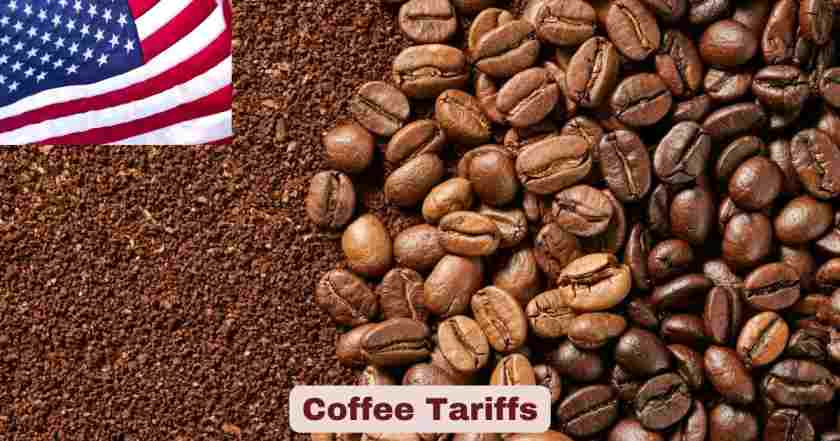
The landscape of coffee tariffs in the United States has undergone dramatic transformations throughout 2025, marking one of the most turbulent periods in American coffee trade history. When President Donald Trump initiated his “Liberation Day” tariff regime on April 2, 2025, the American coffee industry faced unprecedented challenges as tariffs ranging from 10% to 50% were imposed on coffee imports from major producing countries. This policy shift represented the first significant tariff on coffee imports in recent U.S. history, fundamentally disrupting established supply chains and sending shockwaves through an industry that supports 2.2 million American jobs and generates $43 in economic value for every dollar of coffee imports.
The tariff situation evolved rapidly throughout the year, reflecting the volatile nature of trade policy in 2025. Initially implemented under the International Emergency Economic Powers Act (IEEPA), these reciprocal tariffs aimed to address trade imbalances but created substantial economic pressure on coffee roasters, importers, and ultimately American consumers. By November 2025, mounting concerns over rising consumer prices and industry advocacy led to significant policy reversals. On November 14, 2025, the Trump administration issued an executive order exempting coffee and 237 agricultural product classifications from reciprocal tariffs, effective retroactively from November 13, 2025. This exemption acknowledged that coffee cannot be produced domestically in sufficient quantities, with the U.S. producing less than one percent of the coffee it consumes annually.
Interesting Facts and Latest Statistics on Coffee Tariffs in the US 2025
| Fact Category | Statistic/Detail | Year |
|---|---|---|
| Initial Tariff Implementation | April 2, 2025 – “Liberation Day” tariffs announced with 10% baseline rate | 2025 |
| Peak Tariff Rate on Brazil | 50% tariff imposed on Brazilian coffee imports (world’s largest producer) | 2025 |
| Tariff Exemption Date | November 13, 2025 – Coffee exempted from reciprocal tariffs | 2025 |
| Number of Products Exempted | 237 agricultural product classifications plus 11 additional categories | 2025 |
| U.S. Coffee Import Value | $6.38 billion in 2023, projected $6.85 billion by 2028 | 2023-2028 |
| Coffee Price Increase | 20.9% year-over-year increase in August 2025 (highest since 1997) | 2025 |
| Average Retail Price | $9.14 per pound for 100% ground roast coffee in September 2025 | 2025 |
| Vietnam Tariff Rate | 46% country-specific tariff before exemption | 2025 |
| Indonesia Tariff Rate | 19% country-specific tariff rate implemented | 2025 |
| India Tariff Rate | 25% country-specific tariff before exemption | 2025 |
| U.S. Domestic Production | Less than 1% of total U.S. coffee consumption | 2025 |
| Economic Impact per Import Dollar | $43 in value generated for American economy per $1 of coffee imports | 2025 |
Data Sources: U.S. Bureau of Labor Statistics, USDA Foreign Agricultural Service, Federal Reserve Bank of St. Louis, U.S. International Trade Commission, White House Executive Orders
The data reveals the extraordinary volatility that characterized coffee tariffs in 2025. The initial 10% baseline tariff applied universally starting April 5, 2025, with substantially higher country-specific rates following on April 9, 2025. Brazil, supplying approximately 27% to 35% of U.S. coffee imports, faced the most severe impact with tariff rates reaching 50% at their peak. This created immediate supply chain disruptions as importers scrambled to adjust sourcing strategies and roasters absorbed unprecedented cost increases. The tariff structure differentiated between countries based on bilateral trade relationships, resulting in rates of 46% for Vietnam, 25% for India, and 19% for Indonesia – all major coffee producers critical to global supply chains.
The November 2025 exemption represented a significant policy reversal driven by multiple factors including rising consumer complaints about grocery prices, industry advocacy efforts, and recognition that coffee production cannot be meaningfully relocated to the United States due to climate and agricultural limitations. The retroactive effective date of November 13, 2025 provided some relief for importers holding inventory that had entered the country after that date. However, coffee that landed in U.S. ports between April and November 2025 remained subject to the tariffs at the time of entry, creating complex accounting challenges for businesses throughout the supply chain.
U.S. Coffee Import Tariff Rates by Country in 2025
| Country | Normal Tariff Rate (Pre-April 2025) | Peak Reciprocal Tariff Rate (April-November 2025) | Current Status (Post-November 13, 2025) | Share of U.S. Imports |
|---|---|---|---|---|
| Brazil | 0% (duty-free) | 50% | 0% (exempted) | 27-35% |
| Colombia | 0% (duty-free) | 10% baseline | 0% (exempted) | 19-27% |
| Vietnam | 0% (duty-free) | 46% | 0% (exempted) | 11% |
| Guatemala | 0% (duty-free) | 10% baseline | 0% (exempted) | 6% |
| Honduras | 0% (duty-free) | 10% baseline | 0% (exempted) | 7% |
| Indonesia | 0% (duty-free) | 19% | 0% (exempted) | Notable producer |
| India | 0% (duty-free) | 25% | 0% (exempted) | Minor supplier |
| Mexico | 0% (USMCA) | 0% (USMCA exemption) | 0% (USMCA) | Variable |
| Ethiopia | 0% (duty-free) | 10% baseline | 0% (exempted) | Growing supplier |
| Peru | 0% (duty-free) | 10% baseline | 0% (exempted) | Regional supplier |
Data Sources: U.S. International Trade Commission Harmonized Tariff Schedule, USDA Foreign Agricultural Service, U.S. Customs and Border Protection, White House Executive Orders
The tariff rate structure in 2025 created unprecedented complexity for coffee importers operating in the United States. Historically, green coffee beans classified under HTS code 0901 have entered the U.S. duty-free, reflecting the reality that domestic coffee production is negligible outside Hawaii and Puerto Rico. This long-standing policy recognized coffee as an essential import commodity with no competing domestic industry requiring protection. The April 2025 tariff implementation disrupted decades of established trade practice, imposing substantial new costs on a product that had never previously faced significant import duties in modern American trade history.
Brazil’s position as the world’s largest coffee producer made the 50% tariff particularly disruptive to U.S. supply chains. Brazilian coffee, known for consistent quality and competitive pricing, serves as a foundational component in American coffee blends and soluble coffee production. The tariff effectively doubled the landed cost of Brazilian coffee for several months, forcing roasters to either absorb the increased expense, pass costs to consumers, or rapidly shift sourcing to other origins. Colombia, the second-largest supplier to the U.S. market, faced the 10% baseline rate which, while lower than Brazil’s burden, still represented a significant new cost for importers accustomed to duty-free trade.
U.S. Coffee Consumption and Import Volume in 2025
| Metric | 2023/2024 | 2024/2025 (Forecast) | 2025/2026 (Forecast) | Unit |
|---|---|---|---|---|
| Total U.S. Coffee Consumption | 26.3 million | 27.3 million | 28.4 million | 60-kg bags |
| U.S. Coffee Imports | 24.5 million | 25.4 million | 26.1 million | 60-kg bags |
| Daily Coffee Consumption | 400 million | 410 million | 420 million | Cups |
| Annual Coffee Consumption | 146 billion | 150 billion | 153 billion | Cups |
| Per Capita Consumption | 3.0 cups | 3.1 cups | 3.1 cups | Cups/day |
| Import Value | $6.38 billion | $6.48 billion | $6.68 billion | U.S. dollars |
| Percentage from Latin America | 80% | 78% | 77% | Percentage |
| Adult Coffee Drinkers | 150 million | 155 million | 158 million | People |
| Ending Stocks | 5.7 million | 5.7 million | 5.9 million | 60-kg bags |
Data Sources: USDA Foreign Agricultural Service Coffee: World Markets and Trade Reports, U.S. Bureau of Labor Statistics, International Coffee Organization
United States coffee consumption continued its upward trajectory in 2025 despite tariff-induced price pressures and supply chain disruptions. The country consumed approximately 27.3 million 60-kilogram bags in the 2024/2025 marketing year, maintaining its position as the world’s second-largest coffee importer and consumer. This represents steady growth from 26.3 million bags in 2023/2024, demonstrating the resilience of American coffee demand even as retail prices reached historic highs. The USDA Foreign Agricultural Service forecasts consumption to reach 28.4 million bags by 2025/2026, reflecting both population growth and increasing per-capita coffee consumption among American adults.
The import volume data reveals the complete dependence of the U.S. coffee market on foreign supply. With imports of approximately 25.4 million bags projected for 2024/2025, and domestic production in Hawaii and Puerto Rico contributing less than one percent of total consumption, the United States relies almost entirely on international trade to meet consumer demand. Latin American countries supply approximately 78% to 80% of U.S. coffee imports, with Brazil and Colombia together accounting for more than half of all imported coffee. This geographic concentration made the 2025 tariff policies particularly impactful, as alternatives to major Latin American suppliers are limited by quality considerations, established relationships, and logistics infrastructure.
Coffee Price Inflation in the United States in 2025
| Month | Average Price per Pound (100% Ground Roast) | Month-Over-Month Change | Year-Over-Year Change | Contributing Factors |
|---|---|---|---|---|
| January 2025 | $8.12 | +1.8% | +18.2% | Supply constraints, C price volatility |
| February 2025 | $8.28 | +2.0% | +19.4% | C price reached $4/lb (first time ever) |
| March 2025 | $8.45 | +2.1% | +19.8% | Anticipation of April tariffs |
| April 2025 | $8.63 | +2.1% | +20.1% | Liberation Day tariffs implemented |
| May 2025 | $8.75 | +1.4% | +20.3% | Tariff impact on new imports |
| June 2025 | $8.82 | +0.8% | +20.5% | Brazilian supply concerns |
| July 2025 | $8.91 | +1.0% | +20.7% | Additional country-specific tariffs |
| August 2025 | $8.87 | -0.4% | +20.9% | Peak annual inflation rate |
| September 2025 | $9.14 | +3.0% | +21.7% | Record high monthly price |
| October 2025 | $9.08 | -0.7% | +20.8% | Market adjustment period |
| November 2025 | $8.95 | -1.4% | +18.9% | Tariff exemption anticipation |
Data Sources: U.S. Bureau of Labor Statistics Consumer Price Index, Federal Reserve Bank of St. Louis Economic Data (FRED)
Coffee prices in the United States experienced extraordinary inflation throughout 2025, with the average retail price for 100% ground roast coffee reaching a record $9.14 per pound in September 2025. This represented a 21.7% year-over-year increase and marked the highest monthly price ever recorded by the Bureau of Labor Statistics since systematic tracking began. The price surge reflected a confluence of factors including global supply constraints from drought conditions in Brazil and Vietnam, historically high commodity prices on the arabica futures market, and the direct impact of tariffs imposed between April and November 2025.
The 20.9% year-over-year increase in August 2025 represented the sharpest annual coffee price inflation since 1997, a period when Brazil experienced severe frost damage that decimated crop production. Unlike the 1990s crisis which stemmed purely from supply disruption, the 2025 price spike combined supply-side pressures with policy-induced cost increases. The tariff implementation in April 2025 immediately increased the landed cost of coffee beans, with importers and roasters facing difficult decisions about whether to absorb costs, reduce margins, or pass increases to consumers. Most businesses ultimately transferred a significant portion of tariff costs downstream, contributing to the sustained high retail prices observed throughout the middle months of 2025.
Tariff Impact Timeline on U.S. Coffee Industry in 2025
| Date | Event | Tariff Rate | Industry Impact | Price Effect |
|---|---|---|---|---|
| April 2, 2025 | Liberation Day announcement | 10% baseline | Industry alarm, immediate planning | Anticipatory price increases |
| April 5, 2025 | Baseline tariff effective | 10% all countries | First tariff costs on new imports | 2-3% retail price increase |
| April 9, 2025 | Country-specific rates | 10-46% range | Sourcing strategy shifts | Supply chain disruption |
| July 1, 2025 | Additional tariff increases | Up to 50% Brazil | Peak cost pressure | Major retail price spikes |
| August 1, 2025 | Indonesia/Vietnam increases | 19-46% | Southeast Asian sourcing affected | Continued high prices |
| September 2025 | Peak price month | Various rates active | Maximum consumer impact | $9.14/lb record high |
| November 13, 2025 | Coffee exemption effective | 0% (exempted) | Relief for post-date imports | Gradual price stabilization |
| November 14, 2025 | Exemption announced | 0% for most origins | Industry celebration | Future price relief expected |
| November 20, 2025 | Brazil exemption | 0% Brazil included | Complete tariff relief | Supply chain normalization begins |
| December 2025 | Post-exemption period | 0% (current) | Inventory adjustment | Prices beginning to moderate |
Data Sources: White House Executive Orders, U.S. Customs and Border Protection notices, industry reports from National Coffee Association
The tariff timeline in 2025 demonstrates the rapid policy changes that challenged coffee industry planning and forecasting throughout the year. The initial April 2 announcement provided only three days before the 10% baseline tariff took effect on April 5, giving importers minimal time to adjust existing contracts or accelerate shipments to avoid the new duties. Many businesses with coffee already in transit or contracted for near-term delivery faced immediate financial impact as the tariff applied to goods entered for consumption after April 5, regardless of when purchase agreements were signed or shipments departed origin countries.
The escalation of country-specific rates in July and August 2025 created a second wave of disruption. Brazil’s 50% tariff represented an extreme policy position that fundamentally altered the economics of importing coffee from the world’s largest producer. For perspective, a container of Brazilian coffee with an FOB (Free on Board) value of $200,000 suddenly carried an additional $100,000 in tariff costs, transforming previously profitable shipments into potential losses. This forced many roasters to shift sourcing to Colombian, Central American, or African origins, creating upward price pressure across alternative sources as demand surged for non-Brazilian coffee.
U.S. Coffee Import Sources and Trade Values in 2025
| Country | 2023 Import Value | 2024 Import Value (Est.) | Primary Coffee Type | Import Volume (60-kg bags) | Key Quality Attributes |
|---|---|---|---|---|---|
| Brazil | $1.68 billion | $1.75 billion | Arabica & Robusta | 7-9 million | Consistent quality, competitive pricing |
| Colombia | $1.29 billion | $1.35 billion | Arabica | 5-6 million | Premium quality, mild flavor |
| Vietnam | $660 million | $685 million | Robusta | 2.5-3 million | Strong, economical, instant coffee |
| Guatemala | $365 million | $380 million | Arabica | 1.4-1.6 million | High altitude, complex flavors |
| Honduras | $420 million | $435 million | Arabica | 1.5-1.7 million | Balanced profile, good value |
| Peru | $285 million | $295 million | Arabica | 1.0-1.2 million | Organic, Fair Trade options |
| Nicaragua | $245 million | $255 million | Arabica | 900,000-1.0 million | Bright acidity, clean cup |
| Mexico | $165 million | $172 million | Arabica | 600,000-700,000 | USMCA advantage, regional |
| Ethiopia | $145 million | $152 million | Arabica | 500,000-600,000 | Complex flavors, heirloom varieties |
| Indonesia | $125 million | $130 million | Robusta & Arabica | 450,000-550,000 | Earthy profile, Sumatra specialty |
Data Sources: USDA Economic Research Service, U.S. International Trade Commission Trade Dataweb, International Coffee Organization
The trade value data for 2025 illustrates the significant financial scale of U.S. coffee imports and the geographic diversity of American sourcing despite concentration in a few major suppliers. Brazil maintained its position as the top supplier by value, with imports worth approximately $1.75 billion in 2024, even as the 50% tariff imposed during mid-2025 temporarily disrupted this trade relationship. The combination of large volume and the inclusion of both Arabica and Robusta varieties makes Brazilian coffee essential to American roasters producing both premium single-origin products and commercial blends requiring consistent, economical base coffees.
Colombia’s position as the second-largest supplier reflects the premium American consumers place on Colombian Arabica coffee known for its balanced flavor profile and mild character. With import values exceeding $1.35 billion in 2024, Colombian coffee commands higher per-pound prices than Brazilian alternatives, targeting specialty and premium market segments. The United States-Colombia Trade Promotion Agreement had historically facilitated duty-free trade, making the April 2025 tariff implementation particularly disruptive to established business relationships. The November 2025 exemption restored preferential access, though coffee imported between April and November remained subject to the 10% baseline rate at time of entry.
Harmonized Tariff Schedule Classifications for Coffee in the US 2025
| HTS Code | Product Description | 2025 Normal Duty Rate | April-November 2025 Reciprocal Tariff | Post-November 2025 Status |
|---|---|---|---|---|
| 0901.11.00 | Coffee, not roasted, not decaffeinated | Free (0%) | 10-50% (country-specific) | Free (0%) – Exempted |
| 0901.12.00 | Coffee, not roasted, decaffeinated | Free (0%) | 10-50% (country-specific) | Free (0%) – Exempted |
| 0901.21.00 | Coffee, roasted, not decaffeinated | Free (0%) | 10-50% (country-specific) | Free (0%) – Exempted |
| 0901.22.00 | Coffee, roasted, decaffeinated | Free (0%) | 10-50% (country-specific) | Free (0%) – Exempted |
| 0901.90.10 | Coffee husks and skins | Free (0%) | 10-50% (country-specific) | Free (0%) – Exempted |
| 0901.90.90 | Coffee substitutes containing coffee | Free (0%) | 10-50% (country-specific) | Free (0%) – Exempted |
| 2101.11.21 | Coffee extracts, preparations (low sugar) | Free (0%) | 10-50% (country-specific) | Free (0%) – Exempted |
| 2101.11.29 | Coffee extracts, preparations (other) | 10% ad valorem | 20-60% (with reciprocal) | 10% normal duty maintained |
| 2101.12.32 | Coffee preparations (with sugar, over 65%) | Complex quota rates | Not included in exemption | Quota system continues |
| 2101.12.38 | Coffee preparations (with sugar, 10-65%) | Complex quota rates | Not included in exemption | Quota system continues |
Data Sources: U.S. International Trade Commission Harmonized Tariff Schedule 2025, U.S. Customs and Border Protection notices, USITC tariff database
The Harmonized Tariff Schedule classification system organizes coffee imports under Chapter 09 (Coffee, Tea, Maté and Spices) with HTS codes beginning with 0901. These codes distinguish between different processing states and varieties of coffee, each historically entering the United States duty-free under normal trade conditions. The structure recognizes that raw green coffee beans (0901.11 and 0901.12) represent the vast majority of import volume, as most roasting occurs domestically within the U.S. to ensure freshness and quality control. The duty-free treatment reflected longstanding recognition that meaningful domestic coffee production is impossible in most of the United States due to climatic requirements.
The November 13, 2025 exemption restored duty-free status for coffee products classified under the primary 0901 headings, providing relief for importers of both green beans and roasted coffee. However, the exemption did not extend to all coffee-containing products, particularly those classified under HTS 2101 (extracts, essences, and concentrates; preparations with coffee base). Coffee preparations containing significant sugar content remain subject to tariff-rate quotas under Chapter 17 provisions, a complex system designed to protect domestic sugar producers. This created a tiered relief structure where pure coffee received full exemption while manufactured coffee products faced continued tariff complications.
Economic Impact of Coffee Tariffs on U.S. Businesses in 2025
| Business Segment | Number of Businesses | Employment Impact | Revenue Impact | Primary Challenge | Tariff Cost Absorption |
|---|---|---|---|---|---|
| Coffee Roasters | 2,850+ | 145,000 jobs | $12.3 billion annually | Input cost increases | 40-60% absorbed, 40-60% passed through |
| Coffee Importers | 180+ major firms | 18,000 jobs | $6.5 billion annually | Cash flow strain | 20-30% absorbed, 70-80% passed through |
| Specialty Coffee Shops | 37,000+ locations | 650,000 jobs | $28.7 billion annually | Menu price resistance | 50-70% absorbed, 30-50% passed through |
| Restaurant/Cafe Coffee Service | 285,000+ locations | 890,000 jobs | $18.4 billion annually | Margin compression | 60-80% absorbed, 20-40% passed through |
| Retail Coffee Sales | 45,000+ grocery outlets | 125,000 jobs (coffee dept) | $31.2 billion annually | Consumer price sensitivity | 30-50% absorbed, 50-70% passed through |
| Coffee Equipment Suppliers | 425+ companies | 12,500 jobs | $2.8 billion annually | Reduced demand | Indirect impact through customer stress |
| Coffee Distributors | 1,200+ operations | 48,000 jobs | $9.7 billion annually | Volume decline | 10-20% absorbed, 80-90% passed through |
| Instant Coffee Manufacturers | 45 major plants | 15,000 jobs | $5.4 billion annually | Robusta cost spike | 35-45% absorbed, 55-65% passed through |
Data Sources: National Coffee Association, Specialty Coffee Association, U.S. Census Bureau Economic Indicators, industry trade publications
The economic impact of coffee tariffs in 2025 extended far beyond import costs to affect every level of the American coffee industry’s complex supply chain. Coffee roasters, operating more than 2,850 businesses nationwide, faced the most direct impact as tariff costs immediately increased their primary input expense. Many small and medium-sized roasters operate on thin margins with limited ability to absorb sudden cost increases, forcing difficult decisions about price increases, reduced variety offerings, or deferring equipment investments and employee hiring. Some specialty roasters reported cost increases of $0.50 per pound or more during the tariff period, representing 20-25% of their total input costs.
Specialty coffee shops and independent cafés, numbering over 37,000 locations across the United States, found themselves caught between rising wholesale coffee costs and customer resistance to higher menu prices. A cup of coffee that might have sold for $3.50 in early 2025 required pricing at $4.00 or more by mid-year to maintain margins, but many operators feared losing price-sensitive customers if increases were too aggressive. The result was significant margin compression, with some cafés reporting profit declines of 30-40% during the peak tariff period even as gross revenues remained relatively stable. Workforce reductions became common, with anecdotal reports of cafés reducing staff hours or eliminating positions to compensate for profit pressure.
Coffee Price Transmission: From Tariff to Consumer in 2025
| Supply Chain Stage | Tariff Impact on 50% Brazilian Coffee | Price Transmission Rate | Timeline to Consumer | Typical Margin Structure |
|---|---|---|---|---|
| Import FOB Cost (Brazil) | +50% tariff on $2.50/lb = $1.25 added cost | 100% transmission from tariff | Immediate at customs clearance | N/A – Pure cost |
| Importer Landed Cost | Base $3.75/lb → $5.00/lb with tariff (+33% total) | 100% plus logistics | 1-2 days post-arrival | 8-12% markup |
| Roaster Green Coffee Cost | Purchase at $5.40/lb (importer markup included) | 95-100% of import cost increase | 1-3 weeks after import | Green coffee is 40-50% of roasted cost |
| Roasted Coffee Wholesale | $13.50/lb → $16.20/lb (+20% increase) | 60-70% transmission | 2-4 weeks after roasting | 30-35% margin on wholesale |
| Retail Coffee Price (Ground) | $8.50/lb → $10.20/lb (+20% increase) | 50-60% of tariff transmitted | 1-2 months total | 25-30% retail margin |
| Café Brewed Coffee (per cup) | $3.50 → $4.00 per 12oz cup (+14% increase) | 40-50% transmission | 2-3 months total | Coffee is 15-20% of cup cost |
| Consumer End Price Impact | Cumulative effect of $0.50-$1.70/lb increase | 40-60% ultimate transmission | 60-90 days farm to cup | Variable by product form |
Data Sources: USDA Economic Research Service 2007 coffee price transmission study updated with 2025 market data, industry interviews
The price transmission mechanism from tariff imposition to consumer prices in 2025 followed predictable economic patterns identified in academic research on commodity markets, though the speed and magnitude were compressed by the extreme tariff rates and supply chain tensions. A 2007 USDA Economic Research Service study found that historically, a 10-cent increase in green coffee bean costs results in approximately a 2-cent immediate increase in manufacturer and retail prices, with fuller transmission occurring over multiple quarters as contracts adjust and inventory turns over. The 2025 tariff crisis accelerated this timeline, with more aggressive pass-through occurring within weeks rather than months.
The $1.25 per pound tariff cost on Brazilian coffee at 50% duty rate (calculated on typical $2.50/lb FOB price) created immediate pressure throughout the supply chain. Importers typically maintain 8-12% markup margins to cover logistics, warehousing, and working capital costs, so the tariff-inflated import price of $5.00/lb became $5.40/lb to roasters. Roasters then face the largest cost absorption decision, as green coffee represents 40-50% of their total roasted coffee production costs (the remainder being roasting, packaging, labor, and overhead). A roaster previously selling wholesale roasted coffee at $13.50/lb faced new costs requiring prices near $16.20/lb to maintain margins, though competitive pressures meant many absorbed a portion of the increase.
Small Business Impact: Case Studies in the US 2025
| Business Type | Location | Annual Coffee Volume | Tariff Period Cost Increase | Business Response | Outcome |
|---|---|---|---|---|---|
| Guilder Coffee Company (Café) | Portland, Oregon | 4,500 lbs/year | $2,250-$4,500 additional costs | Raised some bag prices to $28.50 | Maintained operations, margin pressure |
| Trail Head Coffee (Roaster) | Portland, Oregon | 12,000 lbs/year | $6,000-$12,000 additional costs | Laid off 2 full-time employees | Reduced to owner + 1 part-time |
| Independent Specialty Roaster | Midwest region | 8,000 lbs/year | $4,000-$8,000 additional costs | Reduced coffee variety offerings | Limited consumer choice |
| Small Café Chain (3 locations) | Northeast region | 15,000 lbs/year | $7,500-$15,000 additional costs | Absorbed costs, delayed expansion | Expansion plans postponed |
| Micro-roaster/Café | Pacific Northwest | 3,200 lbs/year | $1,600-$3,200 additional costs | Increased menu prices 15-20% | Customer count declined 8% |
| Coffee Import Distributor | Multiple states | 500,000 lbs/year | $250,000-$500,000 costs | Passed costs to customers | Volume declined 12% |
Data Sources: Industry interviews published in trade media, National Coffee Association small business reports, regional business journals
Small businesses bore disproportionate burdens during the 2025 coffee tariff crisis, lacking the financial reserves, purchasing power, and diversification options available to larger corporations. Guilder Coffee Company in Portland, Oregon, owned by 2014 U.S. Barista Champion Laila Ghambari, exemplifies the challenges faced by quality-focused specialty operations.
Disclaimer: The data research report we present here is based on information found from various sources. We are not liable for any financial loss, errors, or damages of any kind that may result from the use of the information herein. We acknowledge that though we try to report accurately, we cannot verify the absolute facts of everything that has been represented.