Where is Ceuta located?
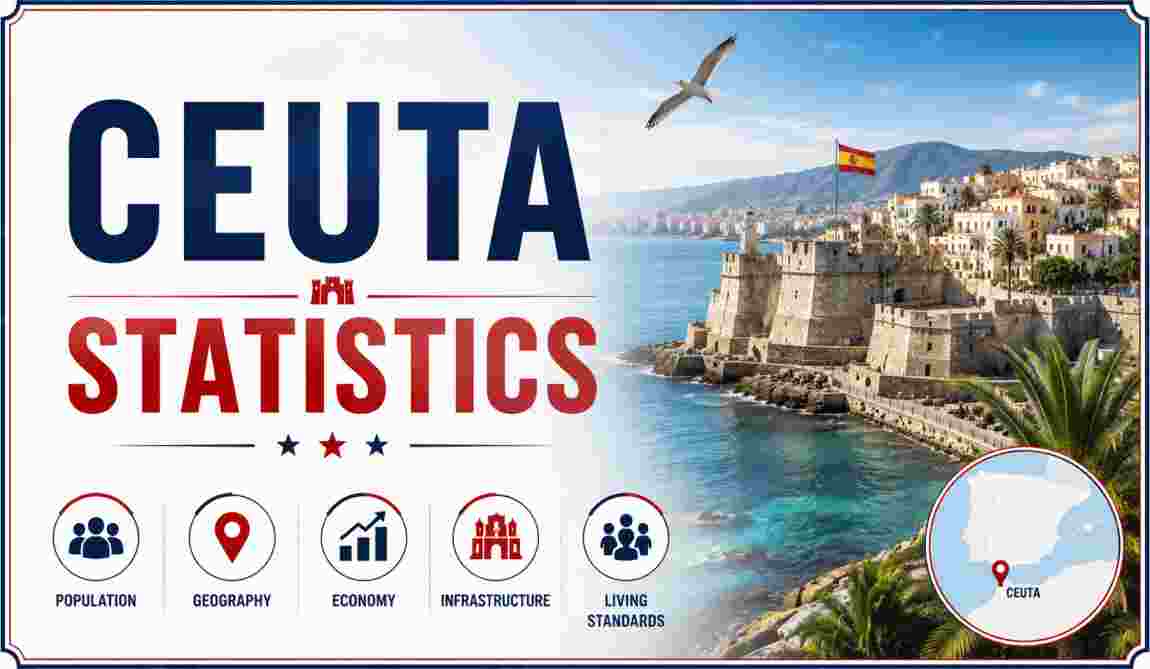
Ceuta is one of Spain’s two autonomous cities sitting not on the European mainland but on the northern tip of Africa, directly across the Strait of Gibraltar from the Spanish province of Cádiz. Perched on a narrow isthmus that connects the small peninsula of Monte Hacho to the North African coastline, Ceuta is separated from mainland Spain by roughly 17 kilometers of open water and shares its only land frontier with the Kingdom of Morocco, making it, alongside Melilla, one of only two land borders anywhere between the European Union and the African continent. Three sides of the city face the sea — the Mediterranean on one edge and the Atlantic-facing strait on the other — while a fortified fence along its western boundary marks the line with Moroccan territory.
Despite its tiny footprint, Ceuta carries an outsized geopolitical and economic profile in 2026, largely because of its unique position as a duty-free port city, a military garrison town, and a gateway between two continents. The city functions as a full autonomous community within the Spanish constitutional system, with its own government, police force, and representation in the national parliament, even though its total land area could comfortably fit inside a mid-sized European neighborhood. This mix of strategic geography, layered history dating back to Phoenician and Roman times, and its present-day role in migration, trade, and tourism is exactly why Ceuta statistics continue to draw attention from economists, demographers, and travelers alike heading into 2026. Its position directly opposite Gibraltar also means it sits at one of the busiest maritime chokepoints on Earth, with commercial shipping, ferries, and naval traffic passing within sight of its coastline every single day, and that constant maritime activity, combined with its role as a customs-free port, has shaped nearly every aspect of Ceuta’s economy, from employment patterns to the composition of its population, making geography and statistics almost impossible to separate when studying this small but strategically significant Spanish city.
Interesting Facts About Ceuta 2026
| Category | Ceuta Fact (2026) |
|---|---|
| Population | Approximately 83,600 residents |
| Total Area | 18.5 square kilometers |
| Land Border with Morocco | 6.4 kilometers, fortified with an 8 km fence |
| Distance from Mainland Spain | 17 kilometers across the Strait of Gibraltar |
| GDP (2024, latest official) | €1,923 million |
| GDP per Capita (2024) | €23,070 |
| Unemployment Rate (Q1 2026) | 26.1%, the highest of any Spanish region |
| Cruise Visitors (2025) | Roughly 10,000 passengers across the year |
| Cruise Ship Calls (2025) | 15+ scheduled port calls, up from 12 in 2024 |
| Highest Point | Monte Hacho, standing 204 meters |
| Neighborhoods (Barriadas) | 63 recognized barriadas |
Source: Instituto Nacional de Estadística (INE), Spanish Regional Accounts, Autonomous Port Authority of Ceuta
What stands out most about Ceuta’s 2026 statistics is the contrast between its size and its complexity. A city smaller than many single neighborhoods in Madrid or Barcelona is nonetheless dealing with first-world unemployment pressures, cross-continental border management, and a tourism sector that is only now beginning to properly capitalize on cruise traffic. The 26.1% unemployment rate recorded in the first quarter of 2026 places Ceuta well above the Spanish national average, a gap that has persisted for years and reflects the city’s heavy reliance on public administration, retail, and cross-border commerce rather than a diversified private sector.
At the same time, the GDP figures show a city punching modestly above its economic weight relative to its tiny land area, generating nearly €2 billion in output despite having barely enough room to host a mid-sized town. The population numbers, hovering just above 83,000, have proven remarkably stable and even slightly upward in recent quarters — a trend that runs counter to the depopulation seen across much of rural Spain. Taken together, these facts paint a picture of a territory whose statistical profile is shaped far more by its geography and border status than by conventional economic drivers.
Ceuta Population Statistics 2026
| Metric | Figure |
|---|---|
| Total Population (early 2026, provisional) | ~83,600 |
| Official Census Population (2024) | 83,229 |
| Population Density | ~4,500 people per km² |
| Annual Population Change | +0.21% year-on-year growth |
| Registered Population (July 2025) | 83,664 |
Source: Instituto Nacional de Estadística (INE), Continuous Population Statistics
Ceuta Population Trend (INE, in thousands)
2024  |███████████████████████████ 83.2
2025  |████████████████████████████ 83.5
2026  |████████████████████████████ 83.6
The population of Ceuta has quietly bucked a trend that is troubling much of inland and northern Spain, where regions like Galicia, Asturias, and Castilla y León continue to shrink year after year. According to the INE’s Continuous Population Statistics, Ceuta’s resident count grew by roughly 0.21% over the most recent 12-month period, placing it among a small handful of Spanish territories — alongside Murcia and Castilla-La Mancha — where the native Spanish-national population is actually expanding rather than contracting. This is a notable data point for anyone researching Spain population statistics 2026, since it runs against the broader national narrative of an aging, shrinking countryside.
What makes Ceuta’s population data particularly dense from a statistical standpoint is the population density figure, which sits close to 4,500 residents per square kilometer — a number that rivals some of Europe’s most tightly packed urban cores, despite Ceuta having none of the skyline associated with a major metropolis. This density is a direct consequence of the city’s fixed 18.5 km² footprint, which leaves virtually no room for horizontal expansion, forcing housing and infrastructure planning to work within an unusually constrained space. For readers researching regional demographics elsewhere, our breakdown of Germany Population Statistics offers a useful contrast between a densely populated Spanish exclave and a much larger European nation working through its own demographic shifts.
Ceuta Area and Geography Facts 2026
| Geographic Feature | Measurement |
|---|---|
| Total Land Area | 18.5 km² |
| Land Border Length (with Morocco) | 6.4 km |
| Border Fence Length | 8 km, double-fenced with 6-meter barriers |
| Distance to Mainland Spain (Strait of Gibraltar) | 17 km |
| Highest Elevation (Monte Hacho) | 204 meters |
| Number of Barriadas (Neighborhoods) | 63 |
Source: Instituto Geográfico Nacional, Wikipedia Geography of Ceuta (cross-referenced with official Spanish government border data)
Ceuta Geography at a Glance
Land Area (km²)        |█████ 18.5
Border w/ Morocco (km) |██ 6.4
Fence Length (km)      |███ 8.0
Strait Crossing (km)   |█████████ 17.0
Ceuta’s geography is dominated by two elevated points, Monte Hacho and Monte Anyera, the former of which reaches 204 meters and is one of the two candidate locations — alongside Jebel Musa in Morocco — for the mythical southern Pillars of Hercules. The city itself occupies a narrow isthmus, meaning most of its 63 barriadas are squeezed onto a strip of land bordered by water on three sides, with only the western edge connecting to the African mainland via the fortified border with Morocco’s M’diq-Fnideq prefecture. This layout explains why the 8-kilometer border fence, built with double parallel barriers roughly 6 meters high, has become one of the most recognizable physical features associated with the territory in international reporting.
From a pure numbers perspective, the 18.5 square kilometer total area makes Ceuta one of the smallest autonomous territories in the entire Spanish system, smaller even than many individual municipal districts within major mainland cities. The 17-kilometer stretch of the Strait of Gibraltar separating Ceuta from the Spanish mainland has historically shaped everything from military strategy to ferry scheduling, and it remains the primary reason the territory depends so heavily on maritime transport links rather than road or rail connections to the rest of Spain. Travelers curious about how border geography plays out elsewhere in Europe may also find our piece on UK British Immigration Statistics a relevant companion read, given how heavily both territories’ statistics are shaped by cross-border movement.
Ceuta GDP and Economy Statistics 2026
| Economic Indicator | Figure (2024, latest official) |
|---|---|
| Nominal GDP | €1,923 million |
| GDP per Capita | €23,070 |
| National GDP Ranking (out of 19 Spanish communities/cities) | 18th |
| Annual Inflation Rate (June 2026) | 2.6% |
| Public Tender/Contracting Activity (2026, year-on-year) | Down over 62% |
Source: Instituto Nacional de Estadística (INE), Spanish Regional Accounts, countryeconomy.com regional data compilation
Ceuta GDP per Capita vs Spain National Average (EUR)
Ceuta        |████████████████████ 23,070
Spain (Nat'l)|██████████████████████████████████ ~38,000
Ceuta’s GDP figures for the latest available official year, 2024, place its total economic output at €1,923 million, ranking it 18th out of Spain’s 19 autonomous communities and cities — ahead of only Melilla in absolute terms. The GDP per capita of €23,070 trails the Spanish national average by a considerable margin, a gap that reflects the city’s limited industrial base, its dependence on public sector employment, and the constraints that come with having almost no room for large-scale manufacturing or agriculture within an 18.5 km² territory. Business groups tracking the local economy, including the CECE (Ceuta’s employers’ confederation), have also flagged a sharp drop of more than 62% in public tender activity during 2026, a signal that infrastructure and construction spending has slowed noticeably compared to prior years.
On the positive side, Ceuta’s inflation rate has stayed relatively contained through the middle of 2026, registering 2.6% as of June — a figure broadly in line with, and at times slightly better than, the wider eurozone trend. The city’s economy remains heavily service-oriented, with retail, public administration, and port-related activity forming the backbone of local employment, while manufacturing and agriculture play only a marginal role given the physical limitations of the territory. Anyone comparing Ceuta’s economic figures against broader demographic and economic contexts globally may want to review our Global Population Statistics report, which frames small-territory economies like Ceuta’s against much larger population and GDP trends worldwide.
Ceuta Unemployment Rate Statistics 2026
| Labor Market Indicator | Figure |
|---|---|
| Overall Unemployment Rate (Q1 2026) | 26.1% |
| Ranking Among Spanish Regions | Highest in Spain |
| Regional Unemployment Threshold (Ceuta and Melilla) | Both above 20% |
| Labor Market Composition | Heavily reliant on services sector and temporary contracts |
| National Unemployment Comparison (Q2 2026) | Spain overall trending downward, Ceuta lagging |
Source: Encuesta de Población Activa (EPA), Instituto Nacional de Estadística (INE); CECE Quarterly Economic Report
Unemployment Rate Comparison, Q1 2026 (%)
Ceuta          |██████████████████████████ 26.1
Spain National |███████████ 10.8
The unemployment rate remains Ceuta’s single most persistent economic challenge, with the first quarter of 2026 recording a rate of 26.1% according to the employers’ confederation CECE, a figure that continues to rank Ceuta and Melilla as the two Spanish territories most affected by joblessness. This gap between Ceuta and the Spanish national unemployment average, which sits closer to 10-11% during the same period, has remained wide for years and is largely attributed to the narrow economic base, the seasonal nature of port and tourism-linked work, and the high share of temporary rather than permanent contracts across the local labor market.
Recent monthly data from June 2026 showed Ceuta as one of just six Spanish regions where registered unemployment actually increased slightly, even as the national figure dropped below 2.3 million people out of work for the first time since 2008. This divergence highlights how Ceuta’s labor market often moves independently of broader Spanish economic trends, shaped instead by local factors such as fluctuations in cross-border trade with Morocco, changes in public sector hiring, and the pace of investment in port infrastructure. For a city of just over 83,000 residents, a quarter of the workforce being without employment represents a structural issue that local business groups continue to flag as the top priority for economic policy heading further into 2026.
Ceuta Tourism and Cruise Statistics 2026
| Tourism Metric | Figure |
|---|---|
| Cruise Visitors (2025, full year) | ~10,000 passengers |
| Cruise Ship Port Calls (2025) | 15+ calls, up from 12 in 2024 |
| Projected Port Calls (2027) | More than 20 cruise calls |
| H1 2025 Passenger Growth (year-on-year) | +181.3% |
| Ferry Ticket Price Range | €30 to €100 per adult, one-way |
Source: Autoridad Portuaria de Ceuta (Port Authority), Suncruise Andalucía
Ceuta Cruise Port Calls by Year
2024             |████████████ 12
2025             |███████████████ 15
2027 (projected) |████████████████████ 20+
Ceuta’s tourism sector has leaned heavily into cruise traffic as its main growth story heading into 2026, with the Port Authority of Ceuta confirming more than 15 cruise ship calls across 2025, up from just 12 the year before. That increase translated into close to 10,000 cruise passengers stepping ashore over the course of the year, a modest but meaningful number for a city that has historically struggled to position itself as a standalone tourist destination compared to nearby Andalusian ports like Cádiz or Málaga. The first half of 2025 alone saw passenger numbers climb by an extraordinary 181.3% year-on-year, the single largest percentage increase recorded among Spain’s port cities during that period, according to figures shared by Suncruise Andalucía.
Looking ahead, port officials are projecting that cruise calls could exceed 20 per year by 2027, a target that reflects growing interest from operators such as Costa Cruceros and Norwegian Cruise Line, both of which have begun incorporating Ceuta into Atlantic and Canary Islands routing. Alongside cruise arrivals, the city continues to rely on ferry connections to mainland Spain, with one-way ticket prices from operators like Balearia, Trasmediterránea, and FRS ranging roughly between €30 and €100 depending on season and cabin class. For a territory of Ceuta’s size, this steady rise in maritime tourism represents one of the clearer bright spots in an otherwise challenging economic picture, and it’s a trend worth watching closely through the remainder of 2026.
Ceuta History and Culture Facts 2026
| Historical/Cultural Detail | Fact |
|---|---|
| Ceded to Spain | 1668, following earlier Portuguese control from 1415 |
| Pillars of Hercules Candidate | Monte Hacho, alongside Jebel Musa in Morocco |
| Major Cultural Event | Feria de Ceuta, blending flamenco and North African traditions |
| Religious Composition | Predominantly Catholic, with a sizeable Muslim minority |
| Historic Rulers | Phoenicians, Romans, Visigoths, Portuguese, and Spanish |
| Key Heritage Sites | Royal Walls, Museo de la Legión, Museo de la Basílica Tardorromana |
Source: Spanish Ministry of Culture historical archives, municipal tourism records
Timeline of Ceuta's Rule (Selected Periods)
Roman/Ancient Era     |████ (5th century BC onward)
Portuguese Control    |██ 1415-1668
Spanish Sovereignty   |████████████████ 1668-present
Ceuta’s history stretches back to the 5th century BC, when the Carthaginians first named the settlement Abyla, and the territory subsequently changed hands among Phoenicians, Romans, Visigoths, and later Arab and Berber rulers before Portugal captured it in 1415. It remained under Portuguese control until 1668, when it was formally ceded to the Spanish Crown, a transfer that has held for over three and a half centuries and forms the legal foundation for Spain’s continued sovereignty today, despite Morocco’s ongoing objections to the arrangement. This layered past is visible throughout the city in landmarks like the Royal Walls and the underground Museo de la Basílica Tardorromana, both of which remain popular stops for visitors interested in the territory’s deep historical roots.
Culturally, Ceuta stands out as one of the few places in Europe where Catholic traditions and a substantial Muslim community coexist within a single compact urban space, a blend reflected each year in the Feria de Ceuta, a festival that fuses flamenco music with North African culinary and musical influences. This cultural duality also shows up in daily life, from bilingual signage in parts of the city to the mix of Spanish and Maghrebi cuisine found in local restaurants and markets. For a territory of under 19 square kilometers, the density of historical layers and cultural blending packed into Ceuta is arguably just as remarkable as its economic and demographic statistics, and it remains a defining reason the city continues to attract researchers, journalists, and travelers studying border regions in 2026.
Ceuta Port and Border Facts 2026
| Port & Border Metric | Detail |
|---|---|
| Port Classification | Major Mediterranean Freeport, leader in bunkering and vehicle traffic |
| Border Guard Presence | 621 Guardia Civil officers and 548 police officers |
| Border Fence Height | 6 meters, double parallel fencing with motion sensors |
| EU Land Border Status | One of only two EU-Africa land borders (with Melilla) |
| Primary Port Functions | Freight, bunkering, liquid bulk, passenger and vehicle transit |
Source: Autoridad Portuaria de Ceuta, Guardia Civil border security data
Ceuta Border Security Personnel
Guardia Civil Officers |███████████████████████████ 621
Local Police Officers  |███████████████████████ 548
The Port of Ceuta operates as one of the busier freeports in the western Mediterranean, holding a leadership position in bunkering (ship refueling), liquid bulk cargo, and vehicle transit traffic among Spanish ports. Its dual role as both a commercial freight hub and a passenger gateway makes it central to Ceuta’s economy, particularly given the limited alternative industries available within such a small territory. The Freeport status allows the port to handle goods without standard EU customs duties, which has historically encouraged both legitimate cross-border commerce and, at times, complicated informal trade with neighboring Morocco.
On the security side, Ceuta’s land border with Morocco is guarded by a combined force of 621 Guardia Civil officers and 548 local police officers, reflecting the territory’s status as one of only two land crossings between the European Union and the African continent. The 6-meter double fence, equipped with motion sensors, cameras, and a patrol road running between the barriers, has been reinforced multiple times since it was first constructed in the 1990s, growing from an original height of 2.5 meters to its current specification. These border facts remain among the most searched and referenced data points connected to Ceuta internationally, given the territory’s recurring role in discussions about EU migration policy and Mediterranean border security throughout 2026.
Disclaimer: The data research report we present here is based on information found from various sources. We are not liable for any financial loss, errors, or damages of any kind that may result from the use of the information herein. We acknowledge that though we try to report accurately, we cannot verify the absolute facts of everything that has been represented.