What is the Bumblebee Quadcopter?
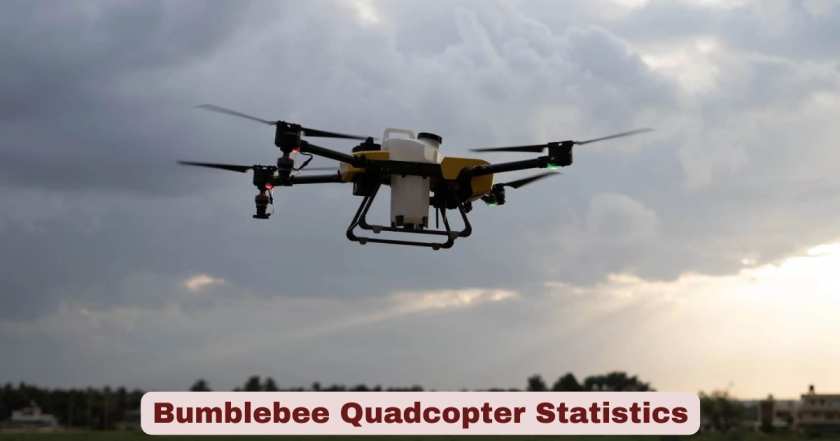
The Bumblebee quadcopter is one of the most consequential small unmanned aircraft systems to emerge from the new wave of AI-powered battlefield technology — a compact, first-person-view (FPV) multirotor drone that destroys enemy drones by physically crashing into them, guided in its final attack phase by onboard artificial intelligence that can complete a kill even when human operators have been jammed out of the control loop. Built by Perennial Autonomy, a defence technology company linked to the broader drone ecosystem funded by Eric Schmidt, former CEO and Executive Chairman of Google, the Bumblebee was quietly deployed to Ukraine as a combat asset — battle-tested against Russian drones, logistics vehicles, and infantry positions — long before the US military publicly acknowledged its existence. The New York Times broke the story in its December 31, 2025 magazine feature titled “In Ukraine, an Arsenal of Killer AI Drones Is Being Born in War Against Russia”, in which reporter C.J. Chivers described watching Bumblebees in live combat operation: pilots flew drones toward a building occupied by Russian soldiers, jamming cut the command link mid-flight, and the AI’s autonomous terminal guidance mode completed the engagement without any human input. What Chivers witnessed was not a prototype test or a controlled demonstration — it was a standard combat engagement using technology that Ukrainian forces had been routinely operating for months.
As of March 14, 2026, the Bumblebee has accumulated a combat record spanning Ukraine against Russian forces, formal US Army procurement through a $5.2 million JIATF-401 contract awarded January 30, 2026, an ongoing operational assessment at Fort Bragg by the US Army’s Global Response Force beginning March 2026, and confirmed deployment alongside Merops and Coyote systems in support of Operation Epic Fury — the US-Israel war against Iran begun February 28, 2026. By spring 2025, Bumblebees had logged over 1,000 confirmed combat flights from Ukrainian positions against Russian targets, with thousands more since. A Russian technical intelligence report recovered by Ukraine acknowledged that Bumblebee drones use “world-class microelectronics” and that “no effective countermeasures exist” against them. Russian soldiers around Kupiansk and Kharkiv reported that the drones “seemed impervious to jamming” — the only confirmed method to stop them was to physically shoot one down. For a drone that costs a fraction of the threats it counters, and that was built from off-the-shelf microcomputers of the kind hobbyists use at home, that combat performance record is nothing short of extraordinary.
Interesting Facts About the Bumblebee Quadcopter 2026
| Fact | Detail |
|---|---|
| Full Product Name | Bumblebee V2 (current production version) |
| Manufacturer | Perennial Autonomy — US defence technology company |
| Eric Schmidt Connection | Perennial Autonomy is linked to the broader drone ecosystem of ventures funded and directed by Eric Schmidt — confirmed by NYT (Dec 31, 2025) and Calibre Defence (Feb 9, 2026) |
| Schmidt’s Drone Venture Names | White Stork → Project Eagle → Swift Beat — the umbrella operation has cycled through multiple company names; Perennial Autonomy is one node within this ecosystem |
| Schmidt’s Self-Description | Schmidt describes himself as a “licensed arms dealer” — stated in NYT feature, Dec 31, 2025 |
| Drone Type | Quadcopter (four-rotor) — also referred to as FPV (First-Person View) multirotor |
| Primary Mission (US Army) | Counter-small UAS (C-sUAS) — physically intercepts and neutralises hostile small drones by collision |
| Secondary Mission (Ukraine) | Offensive strike — used against Russian infantry, logistics trucks, and armoured vehicles |
| Kill Method | Drone-on-drone physical collision — renders both aircraft inoperable on impact |
| No Explosive Warhead | Does not explode, does not fire projectiles — pure kinetic contact defeat |
| AI Guidance System | Onboard AI enables autonomous terminal guidance — identifies, tracks, and closes on target even if command link is jammed |
| Human-Machine Interface | “Human approves, AI executes” — pilot designates target; AI completes the terminal attack phase |
| Jamming Resistance | AI terminal mode operates without GPS or external radio links — jam-proof in final attack phase |
| NDAA Compliance | Fully NDAA (National Defense Authorization Act) compliant — critical for US military procurement (no prohibited foreign components) |
| Named After | Bumblebee — the large, robust, highly manoeuvrable bee known for its ability to fly in conditions that aerodynamic theory historically deemed impossible |
| Complementary Drone (Schmidt ecosystem) | Hornet — fixed-wing strike drone with a 2-metre wingspan, also deployed in Ukraine, also built within Schmidt’s drone ventures |
| Edge Computing Hardware | Systems in this class “often run on off-the-shelf microcomputers like Raspberry Pi” — NYT/Chivers, Dec 31, 2025 |
| AI Hardware Class | Can leverage edge AI processors such as Nvidia Jetson for real-time image recognition and flight control |
| Target Recognition | Software identifies and highlights targets including infantry, vehicles, and bunkers — “autonomous target recognition, often detecting threats faster than a human operator” (Calibre Defence, Feb 9, 2026) |
| Russian Intelligence Assessment | Recovered Russian technical intelligence report: Bumblebees use “world-class microelectronics”; “no effective countermeasures exist” |
| Russian Soldier Reports | Soldiers near Kupiansk and Kharkiv: drones “seemed impervious to jamming” — only way to stop them was to physically shoot one down |
| Schmidt-Zelenskyy Meeting | Zelenskyy watched Schmidt and (then) Ukrainian Defence Minister Rustem Umierov sign a memorandum on long-term strategic partnership — in Denmark |
Source: US Army official press release (February 6, 2026), Stars and Stripes (February 10, 2026), Military Times (February 13, 2026), New York Times (December 31, 2025), Calibre Defence (February 9, 2026), Ukrainska Pravda (July 23, 2025), DroneXL/Medium (January 6, 2026), GIGAZINE (January 5, 2026), Army Recognition (February 2026), Jerusalem Post (February 2026)
The origin story of the Bumblebee is inseparable from the broader narrative of Silicon Valley’s entry into warfare — a phenomenon that the NYT’s December 31, 2025 year-end magazine feature made dramatically public after months of shadowy operations. Schmidt’s drone ventures had been deliberately structured to be difficult to trace: multiple LLC names, secretive operations, minimal public footprint, and the deliberate avoidance of the kind of Pentagon procurement publicity that would draw congressional scrutiny or political blowback from Schmidt’s traditional Democratic donor base. The company names that journalists eventually uncovered — White Stork, Project Eagle, Swift Beat — were not just corporate aliases but a reflection of a strategic communications posture designed to keep one of the most significant private investments in AI warfare below the public radar for as long as possible. When Forbes first exposed White Stork in January 2024, the venture renamed itself. When the NYT went deeper in December 2025, the full picture of an industrial-scale AI drone programme — including the Bumblebee, the Hornet fixed-wing strike drone, and associated targeting systems — became clear to the world.
The Schmidt-Zelenskyy memorandum, signed in Denmark between Schmidt and Ukrainian Defence Minister Rustem Umierov while Zelenskyy personally observed, captures the extraordinary elevation of a private technology executive to strategic military partner of a sovereign nation at war. No major technology CEO in modern history had previously co-signed a bilateral defence partnership memorandum with a sitting head of state — and the fact that it happened in Denmark rather than Washington reflects both the political sensitivity of the arrangement and the degree to which Ukraine had come to depend on Schmidt’s ecosystem for cutting-edge autonomous weapons. Rudolf Akopian, Director of Strategic Communications at Ukraine’s Centre for Unmanned Systems Research, described Swift Beat as potentially becoming “the next Lockheed Martin in the world of AI-powered drones” — a comparison that would have seemed absurd in 2022 but carries real analytical weight by 2026.
Bumblebee V2 Technical Specifications Statistics 2026
| Specification | Data |
|---|---|
| Configuration | Quadcopter — four rotors, multirotor airframe |
| Control Type | FPV (First-Person View) — pilot sees live drone camera feed; transitions to AI autonomous in terminal phase |
| Number of Rotors | 4 rotors |
| Intercept Method | Direct physical collision — kinetic ram |
| Warhead / Explosive | None — no warhead, no explosive charge |
| Kill Mechanism | Contact impact destroys both interceptor and target drone simultaneously — “renders both aircraft inoperable” |
| AI System | Onboard autonomous terminal guidance AI — identifies, tracks, and closes on drone targets |
| Autonomous Terminal Range | Activates in final attack phase — exact metres classified; comparable systems operate from final 400–2,000 metres |
| Direct Hit Rate (claimed) | Over 70% via autonomous terminal guidance — from Perennial Autonomy sales pamphlet, obtained by NYT/Chivers |
| Target Classification | AI detects: enemy drones (C-UAS role), infantry, vehicles, bunkers (offensive Ukraine role) |
| Jamming Resistance | Autonomous mode requires no GPS signal, no external radio link — operates in fully jammed electromagnetic environments |
| Edge Computing | Runs complex image recognition on miniaturised AI processors — commercially available hardware class (Nvidia Jetson / Raspberry Pi class) |
| Operator Workflow | Step 1: Pilot flies drone toward target zone via FPV; Step 2: Pilot designates target on screen; Step 3: AI assumes terminal guidance and executes intercept/strike |
| Semi-Autonomous Classification | Officially described as “semi-autonomous” — human must designate target before AI engages; AI cannot select targets without human approval |
| Collateral Damage Profile | Minimal — no blast radius, no fragmentation field, no falling unexploded ordnance — collision debris only |
| Size Class | Small UAS — small enough for backpack/vehicle transport; exact dimensions not publicly disclosed by Perennial Autonomy |
| NDAA Compliance | Fully compliant — no components from NDAA-prohibited foreign manufacturers (unlike many commercial DJI-derived platforms) |
| Target Drone Classes | Designed primarily against Group 1 and Group 2 small UAS (under 55 lb / 25 kg; under 3,500 ft altitude; under 100 kts) |
| Offensive Capability (Ukraine) | Also used as kamikaze FPV against Russian infantry and armoured vehicles — not the US Army’s primary procurement use case |
| Training Requirement | Designed for unit-level operation — “intuitive handling”; no specialist training cadre required |
| Shown Publicly First | January 28, 2026 — US Army photos from Grafenwoehr Training Area, Germany (Spc. Adrian Greenwood) |
Source: US Army official press release (February 6, 2026), JIATF-401 official statement (February 6, 2026), Calibre Defence (February 9, 2026), Army Recognition (February 2026), NYT/C.J. Chivers (December 31, 2025), DroneXL/Haye Kesteloo (January 6, 2026), The Defense Post (February 10, 2026), Bolt Flight (February 2026)
The technical specification statistics for Bumblebee V2 define a weapon that is deliberately and philosophically different from everything in the existing US military counter-drone inventory. Where Coyote Block 2 uses a turbine jet engine, a fragmentation warhead, and a radar proximity fuze to destroy targets at ranges of 10–15 kilometres, the Bumblebee uses four commercial-class rotors, no explosive, and direct physical contact to destroy targets at close range. These are not competing systems — they are complementary layers of the same defence architecture, each optimised for a different threat geometry. Coyote handles the medium-range, fast-moving, larger-drone threats at altitude. Bumblebee handles the final-hundred-metres close-in engagement where fragmentation effects would be too dangerous near friendly troops, where the threat drone is small and slow enough for a quadcopter to intercept, and where the pilot needs a weapon that will not create secondary hazards if it misses.
The “human approves, AI executes” framework — where the pilot must designate a target before the AI commits to terminal attack — is the single most important legal and ethical design decision built into the Bumblebee system. It is the line that keeps the Bumblebee on the legal side of the international debate about Lethal Autonomous Weapons Systems (LAWS): a human being is always in the loop for target selection, even if not for the physical execution of the intercept. The fact that Russian jamming regularly breaks the FPV command link during combat — which in theory would leave the drone flying without human guidance — is precisely why the AI terminal guidance was built in: not to remove the human from the kill chain but to ensure that when jamming forces the human out of the loop involuntarily, the drone can still complete the engagement the human already authorised. The over-70% direct hit rate achieved through this architecture — compared to rates well below that for unjammed human-only FPV drones — is the statistical validation that the design philosophy works.
Bumblebee US Army Contract & Procurement Statistics 2026
| Metric | Data |
|---|---|
| Contracting Authority | Joint Interagency Task Force 401 (JIATF-401) — Pentagon’s lead counter-drone synchronisation body |
| Contract Award Date | January 30, 2026 |
| Public Announcement Date | February 4, 2026 (JIATF-401 announcement); February 6, 2026 (US Army press release) |
| Contractor | Perennial Autonomy |
| Contract Value | $5.2 million USD (£4.2 million / €5.04 million) |
| Contract Type | Agreement for delivery of Bumblebee V2 C-sUAS system |
| Quantities Ordered | Unspecified — US Army has not publicly disclosed unit quantity |
| Delivery Start Date | March 2026 |
| Delivery Destination | Fort Bragg, North Carolina — initial delivery for operational assessment |
| Assessment Unit | US Army Global Response Force — the Army’s highest-readiness rapid-deployment force |
| Assessment Venue | Lieutenant General James M. Gavin Joint Innovation Outpost (JIOP) — established late January 2026 at Fort Bragg |
| JIOP Mission | “Bridge tactical and operational challenges with rapid innovative solutions” — hub for military personnel, academia, and industry |
| JIOP Establishment Date | Late January 2026 — specifically created to accelerate fielding of technologies like Bumblebee |
| GRF Assessment Purpose | Test suitability for rapidly deployable units conducting high-risk missions worldwide |
| Stated JIATF-401 Purpose | Protect troops on the battlefield AND critical infrastructure in the homeland |
| NDAA Requirement | Contract specifically requires full NDAA compliance — zero prohibited foreign components |
| Previous Training Event | January 28, 2026 — US soldiers at Grafenwoehr Training Area, Germany conducted Bumblebee familiarisation and Train-the-Trainer (T3) certification |
| T3 Training Model | Same as Merops — certified instructors trained to teach others, multiplying capability rapidly across units |
| Brig. Gen. Matthew Ross Quote | “This decision puts kinetic counter-sUAS capability into the hands of our troops immediately. The Bumblebee V2 provides a cost-effective, reliable interceptor that can neutralize threats without endangering our own forces or surrounding infrastructure.” |
| Maj. Cole Price Quote | “The Bumblebee V2 is fully NDAA compliant and is equipped with cutting-edge software that allows it to identify, track, and collide with other drones. This provides a crucial capability for our forces to counter the growing threat of autonomous systems.” |
| Broader Counter-Drone Ecosystem Context | Procured alongside Merops (Project Eagle / $5.2M Merops contract) and Coyote (RTX / $75M+ Block 2 contract) — three complementary systems, each covering a different range and threat profile |
Source: US Army official press release (February 6, 2026), JIATF-401 official statement, Stars and Stripes (February 10, 2026), Military Times (February 13, 2026), The Defense Post (February 10, 2026), Jerusalem Post (February 2026), Executive Gov (February 10, 2026), Calibre Defence (February 9, 2026), Army Recognition (February 2026)
The procurement statistics for Bumblebee V2 tell the story of an extraordinarily accelerated acquisition pathway — one that was made possible only because the system had already been combat-proven in Ukraine before any US military procurement officer ever wrote a requirements document for it. Traditional US defence acquisition follows a process that typically takes 5 to 15 years from initial concept to fielded capability: requirements definition, source selection, engineering and manufacturing development, operational testing, low-rate initial production, and finally full-rate production. The Bumblebee bypassed virtually every step of that process because Ukraine’s battlefield had already performed the operational testing, Russian technical intelligence reports had already confirmed the system’s effectiveness, and the urgency of the drone threat in early 2026 made any delay unconscionable. The result is a $5.2 million contract awarded January 30 with first deliveries in March — a timeline measured in weeks, not years.
The JIOP at Fort Bragg — the Lieutenant General James M. Gavin Joint Innovation Outpost, established in late January 2026, just days before the Bumblebee contract was signed — is the institutional mechanism the Army created specifically to make this kind of rapid acquisition repeatable. Named after General James M. Gavin, the legendary WWII airborne commander who pioneered the use of parachute infantry in combat, the JIOP is designed as a “hub for military personnel, academia, and industry” to collaborate on accelerating the delivery of emerging technologies to warfighters. The deliberate placement of the Bumblebee’s first operational assessment within this new framework signals that the Army intends the JIOP model — rapid technology intake, operational assessment, and tactical integration without the full acquisition bureaucracy — to become the standard pathway for an entire generation of battlefield AI systems. Bumblebee is both a product and a proof of concept for a new way of doing defence procurement.
Bumblebee Ukraine Combat Performance Statistics 2026
| Metric | Data |
|---|---|
| First Ukraine Deployment | Before spring 2025 — exact date classified; confirmed by multiple sources |
| Total Combat Flights (spring 2025) | Over 1,000 confirmed combat flights by spring 2025 |
| Total Combat Flights (ongoing) | “Thousands more since” spring 2025 — NYT/Chivers, December 31, 2025 |
| Direct Hit Rate | Over 70% via autonomous terminal guidance — confirmed in Perennial Autonomy sales pamphlet |
| January 2025 Combat Event | Autonomous Bumblebee attack stopped a Russian logistics truck driving behind enemy lines — first publicised autonomous interdiction |
| April 2025 Combat Event | Two Bumblebees destroyed a Russian armoured vehicle covered in anti-drone protective measures — vehicle absorbed first strike and kept moving; second Bumblebee immobilised it |
| Significance of April 2025 Kill | Demonstrated that sequential drone attacks can defeat armoured vehicles with anti-drone countermeasures — previously considered highly resistant to FPV drones |
| Russian Countermeasure Defeat | Vehicle had “every protective countermeasure Russia could deploy” and was still removed from action |
| Jamming Performance | NYT: Jamming “interfered with the command link, which is common, but the autonomous mode finished the engagement“ |
| Russian Soldier Testimony | Soldiers outside Kupiansk and Kharkiv: drones “seemed impervious to jamming; the only sure way to stop them was to shoot them down” |
| Russian Intelligence Assessment | Recovered technical report: “world-class microelectronics”; “no effective countermeasures exist” |
| Dual Use in Ukraine | Used both as C-UAS interceptor (against Russian drones) AND as offensive FPV kamikaze (against infantry, vehicles, logistics) |
| Building Strike Observed by Chivers | NYT reporter watched a Bumblebee engage a building with Russian soldiers — jamming interrupted link, AI completed attack autonomously |
| Target Range (Ukraine) | Targets included: Russian infantry in buildings, logistics trucks, armoured vehicles — all confirmed by NYT December 2025 |
| Comparison to Merops (same ecosystem) | Bumblebee: close-in quadcopter; Merops Surveyor: fixed-wing 175+ mph interceptor — both built within Schmidt’s drone venture ecosystem, complementary roles |
| Hornet Fixed-Wing (same ecosystem) | Schmidt also deployed the Hornet — a fixed-wing strike drone with a 2-metre wingspan — alongside Bumblebee operations in Ukraine |
| Ukrainian Digital Minister Quote | Mykhailo Fedorov praised Eric Schmidt as “bold and heroic” for his personal frontline visits and contributions |
| NYT Source | Article: “In Ukraine, an Arsenal of Killer AI Drones Is Being Born in War Against Russia” — C.J. Chivers, New York Times Magazine, December 31, 2025 |
Source: New York Times (December 31, 2025, via Calibre Defence, DroneXL, GIGAZINE, Medium/Haye Kesteloo), Ukrainska Pravda (July 23, 2025 and March 2026), Calibre Defence (February 9, 2026), DroneXL (January 6, 2026), Medium/Haye Kesteloo (January 6, 2026), GIGAZINE (January 5, 2026)
The Ukraine combat performance statistics for Bumblebee are remarkable not just in their numbers but in what they reveal about the direction of warfare itself. The April 2025 engagement where two Bumblebees successively attacked a Russian armoured vehicle protected by the full suite of Russian anti-drone countermeasures — and where the first strike failed to stop the vehicle but the second immobilised it — demonstrates something that traditional military doctrine has not yet fully absorbed: when individual drone platforms are cheap enough to be expendable in sequential attacks, tactical failures become strategic wins. A single $30,000 FPV drone that fails to destroy a Russian tank costs less than the tank’s anti-drone mesh cage. Two $30,000 drones that succeed cost less than one hour of Russian maintenance on that vehicle. The economics of attrition have been inverted. The party with the cheaper weapons wins the exchange ratio war even when individual engagements are inconclusive.
The NYT December 31, 2025 feature — which became the most read defence technology article of the year precisely because it described live combat drone AI operations in visceral, reported detail rather than abstract technical language — was the moment the broader public understood what was happening in Ukraine’s AI drone programmes. C.J. Chivers’ description of sitting with Ukrainian pilots as jamming cut the FPV link mid-attack and the AI simply continued the mission captures a threshold that military ethicists, AI safety researchers, and policymakers had long debated in theory but had never seen described in live operational context before. The Russian technical intelligence report’s admission that their most advanced countermeasures are ineffective against Bumblebee is a remarkable concession — one that would normally remain classified forever, but was presumably captured by Ukrainian forces along with the hardware it was found with. That admission, more than any US Army procurement document or performance specification, explains why the $5.2 million JIATF-401 contract was awarded just 30 days after that article was published.
Bumblebee Broader Context & Counter-Drone Ecosystem Statistics 2026
| Metric | Data |
|---|---|
| JIATF-401 Role | Pentagon’s lead organisation for synchronising counter-drone efforts across all departments |
| JIATF-401 Director | Brig. Gen. Matthew Ross — signed off on Bumblebee V2 contract |
| Complementary Systems Procured | Merops V2 ($5.2M, JIATF-401, Jan 2026) + Coyote 2C ($75M, US Army, Jan 2024) + Bumblebee V2 ($5.2M, JIATF-401, Jan 2026) |
| Layered Counter-Drone Architecture | Coyote Block 2: medium range (10–15 km), faster/larger targets; Merops Surveyor: short-medium range (5–20 km), 175+ mph intercept; Bumblebee V2: close-in final-100m collision intercept |
| Total Simultaneous Contracts (Jan 2026) | Two $5.2M contracts signed in the same month — Merops and Bumblebee — reflecting Pentagon urgency |
| Leonidas HPM System (same period) | US Army also invested $43 million in Leonidas High-Power Microwave (HPM) counter-drone system in same procurement wave (Army Recognition, 2026) |
| Allied Nations Adopting Drone-on-Drone | Latvia, Estonia, Belgium receiving Origin Robotics Blaze interceptor UAVs — same collision-intercept concept as Bumblebee |
| Belgium Procurement Trigger | Repeated drone incursions around Belgian critical infrastructure sites — mirrors the NATO eastern flank dynamic |
| Ukraine Normalisation Effect | Ukraine has “normalised low-cost interceptor approaches” — direct US reporting on Bumblebee explicitly links to Ukraine’s tactical doctrine (Army Recognition) |
| FCC Drone Regulation Context | FCC banned all foreign-made drones (Jan 2026) citing national security concerns about 2026 FIFA World Cup and 2028 Olympics — directly drove demand for NDAA-compliant Bumblebee |
| D3 Accelerator (Schmidt) | Schmidt’s D3 defence fund invested in 16 companies — mostly Ukrainian — in drones, AI, EW, and cybersecurity; received $5 million from Danish government (EIFO) in July 2025 |
| Perennial Autonomy Status | Privately held — no public financial disclosures; programme still in “assess-and-scale phase” as of March 2026 |
| Foreign Military Sales (Bumblebee V2) | No confirmed foreign military sales as of March 2026 — programme is US/Ukraine only at time of writing |
| Procurement Quantum Question | US Army has not disclosed unit quantities in the $5.2M contract — assessed as “assess-and-scale” phase before bulk orders |
| Regulatory Dual-Use Risk | Commercial drone analysts warn that Bumblebee’s AI features — autonomous flight, computer vision targeting — are technically identical to consumer drone obstacle avoidance systems; regulatory blowback expected |
| Russia AI Drone Response | Russia also developing AI-enhanced drones; examination of recovered Russian drones shows heavy investment in AI-based target recognition and autonomous flight — AI drone arms race is two-sided |
| Swift Beat Production Scale | Schmidt’s operation has been “mass-producing AI-enabled drones” since 2024 with 2025 expansions delivering hundreds of thousands of units to Ukraine (Paul LeCoque/X, January 2026) |
| Schmidt’s Vision (Akopian) | Swift Beat could become “the next Lockheed Martin in the world of AI-powered drones” — Rudolf Akopian, Centre for Unmanned Systems Research, Ukraine |
Source: US Army press release (February 6, 2026), Army Recognition (February 2026), Calibre Defence (February 9, 2026), DroneXL (January 6, 2026), Ukrainska Pravda (July 23, 2025), Medium/Haye Kesteloo (January 6, 2026), Bolt Flight (February 2026), Jerusalem Post (February 2026), Stars and Stripes (February 10, 2026), Paul LeCoque/X (January 2026)
The broader counter-drone ecosystem statistics surrounding Bumblebee V2 reveal a procurement environment that has undergone a structural transformation in the space of roughly 24 months — from a Pentagon that was primarily relying on Patriot, THAAD, and directed-energy systems for drone defence to one that is simultaneously fielding three complementary drone-on-drone kinetic systems (Merops, Bumblebee, Coyote), a high-power microwave system (Leonidas), and is in the early stages of deploying all of them in a live major-power conflict against Iran. The fact that both the $5.2M Bumblebee contract and the $5.2M Merops contract were awarded in the same month of January 2026 — just weeks before Operation Epic Fury began — suggests that JIATF-401 had intelligence about the coming conflict and was deliberately pre-positioning both systems ahead of the February 28 outbreak. Or perhaps more precisely, the accumulated intelligence from Ukraine operations, where these systems had been performing for over a year, provided the confidence to commit to formal military procurement just as the Iran threat picture was crystallising.
The FCC’s January 2026 ban on all foreign-made drones — citing national security concerns about surveillance risk at the 2026 FIFA World Cup and 2028 Los Angeles Olympics — created an unexpected but powerful procurement tailwind for Bumblebee V2. With DJI and other Chinese-made FPV platforms now prohibited from US military use and from large US public events, the demand for a fully NDAA-compliant American-built FPV quadcopter with military-grade AI became immediate and commercially significant. Every US military unit that previously operated Chinese-manufactured FPV drones for training, reconnaissance, or experimental C-UAS purposes now needs a domestic replacement — and Bumblebee V2, built in the US, NDAA-compliant, and already combat-proven, is the only product in its class that meets all those requirements simultaneously. The regulatory crisis that many commercial drone industry observers feared would damage the FPV market has, from Perennial Autonomy’s perspective, created precisely the captive market their technology was built for.
Disclaimer: The data research report we present here is based on information found from various sources. We are not liable for any financial loss, errors, or damages of any kind that may result from the use of the information herein. We acknowledge that though we try to report accurately, we cannot verify the absolute facts of everything that has been represented.