Unemployment in Australia 2026
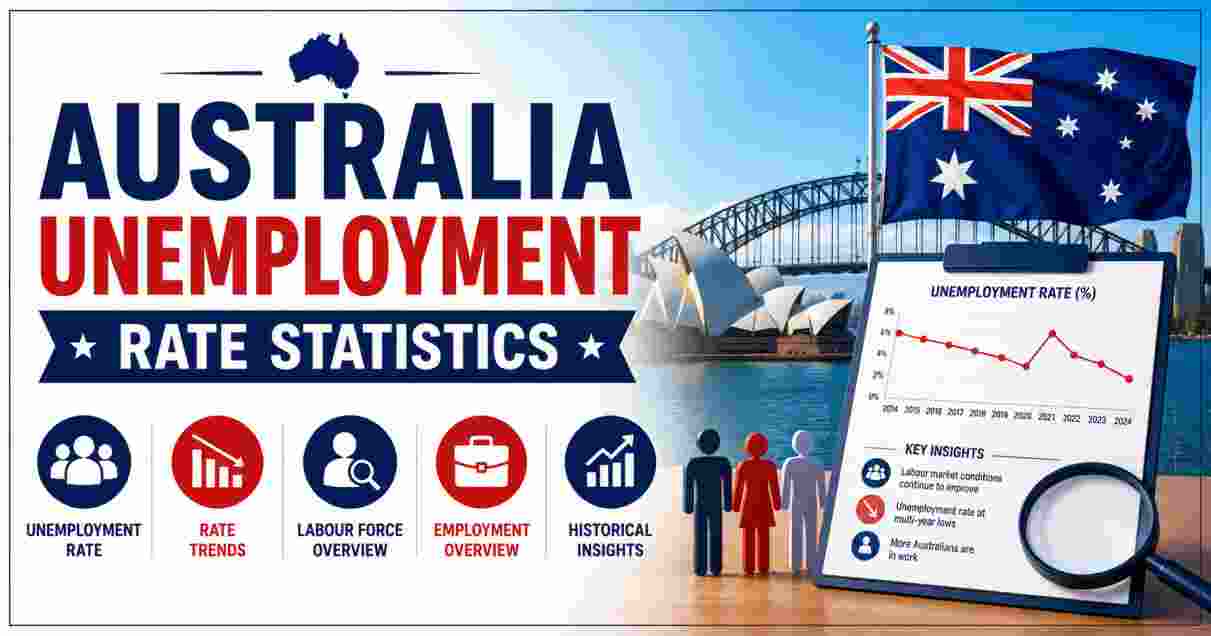
Australia’s unemployment rate in 2026 presents a layered and increasingly complex picture of a labour market caught between post-pandemic resilience and renewed softening. According to the Australian Bureau of Statistics (ABS) Labour Force Survey — May 2026, the seasonally adjusted national unemployment rate stands at 4.4%, representing 671,300 unemployed Australians. This follows a brief spike to 4.5% in April 2026 — the highest level since November 2021 — before partially recovering. The trend rate has drifted upward from a post-pandemic low of 3.5% in September 2022, the lowest in nearly 50 years, and has since settled into a gradual upward trajectory, reflecting moderating labour demand, the impact of elevated interest rates on business investment and consumer spending, and a structural cooling after the exceptional hiring surge of 2022–23.
Beneath the headline figure, the 2026 unemployment landscape reveals important fault lines. Youth unemployment (ages 15–24) hit 11.1% in April 2026 before easing to 10.4% in May — more than double the national rate and a persistent sign that young Australians bear a disproportionate share of labour market risk. The underemployment rate of 5.9% means that when combined with the unemployment rate, the total underutilisation rate sits at 10.2% — indicating that roughly 1 in 10 working-age Australians are either jobless or working fewer hours than they need. The participation rate of 66.7% remains historically high, suggesting Australians are still actively engaged with the labour market even as conditions tighten. State-level disparities remain pronounced: Victoria records the highest unemployment of any mainland state at 4.7–4.8%, while South Australia and the ACT are the tightest markets at 3.9–4.1%.
Key Interesting Facts: Australia Unemployment Statistics 2026
| Fact | Detail |
|---|---|
| National unemployment rate (May 2026) | 4.4% seasonally adjusted — down from April’s 4.5% |
| Total unemployed persons (May 2026) | 671,300 people |
| Peak 2026 unemployment | 4.5% in April 2026 — highest since November 2021 |
| Post-pandemic low | 3.5% in September 2022 — lowest in ~50 years |
| Employment (May 2026) | 14,738,800 employed Australians |
| Employment growth (12 months to March 2026) | +201,300 people (+1.4%) year-on-year |
| Full-time employment (May 2026) | 10,140,800 — 68.8% of all employed |
| Part-time employment (May 2026) | 4,598,000 — 31.2% of all employed |
| Youth unemployment rate (May 2026) | 10.4% (ages 15–24) — down from 11.1% in April |
| Underemployment rate (May 2026) | 5.9% — people in work but wanting more hours |
| Underutilisation rate (May 2026) | 10.2% — unemployment + underemployment combined |
| Participation rate (May 2026) | 66.7% of working-age Australians in the labour force |
| Male unemployment rate (May 2026) | 4.6% |
| Female unemployment rate (May 2026) | 4.1% — decreased 0.2ppt in May |
| Highest state unemployment (April 2026) | Victoria & Tasmania — 4.8% (trend) |
| Lowest state unemployment (April 2026) | ACT — 4.2% (trend); South Australia 4.1% |
| People wanting work but unavailable | 1.1 million (aged 18–75) wanted a job; 1 million available to start within 4 weeks |
| Monthly hours worked (May 2026) | ~2,010 million hours across all jobs |
| Part-time workers wanting more hours | 818,900 — nearly half preferring full-time work |
Source: Australian Bureau of Statistics, Labour Force Australia, May 2026 (Cat. No. 6202.0); ABS Labour Force Australia, April 2026; ABS Labour Force Australia, March 2026; Australian Institute of Health and Welfare, Employment and Unemployment 2025; Department of Employment and Workplace Relations, Data Dashboard April 2026
The interesting facts table above captures the full scope of Australia’s 2026 unemployment picture, and a number of findings stand out sharply. The country’s 671,300 unemployed people in May 2026 exist alongside a record-high employment total of 14.7 million — a combination that reflects both the scale of the Australian labour market and its inherent tensions. The fact that 1.1 million people want a job but are not counted in the official unemployment figure because they are not actively searching — due to disability, caring responsibilities, or discouragement — points to a significant pool of hidden labour market exclusion sitting behind the headline rate. For males specifically, the unemployment rate of 4.6% remains consistently higher than the female rate of 4.1%, a reversal from historical norms where women faced higher rates, reflecting structural shifts in the industries that have shed jobs through 2025–26.
The underutilisation rate of 10.2% is perhaps the most revealing single figure in the table. It captures what the headline 4.4% unemployment rate deliberately does not: the 818,900 part-time workers who want more hours, the workers holding temporary or casual contracts against their preference, and the structural underemployment concentrated in sectors like retail, hospitality, and care work. When nearly 1 in 3 employed Australians hold part-time roles — and nearly half of those who want more hours prefer full-time work — it becomes clear that Australia’s labour market in 2026 is generating employment, but not always the volume or quality of work that people need to build financial security.
Australia Unemployment Rate Trends in 2026 | Historical Data
Australia Unemployment Rate Historical Trend | 2019–2026
──────────────────────────────────────────────────────────────
Month/Period       | Rate  | Bar
──────────────────────────────────────────────────────────────
Feb 2019           | 5.0%  | ████████████░░░░░░░░░
Apr 2020 (COVID)   | 7.5%  | ██████████████████░░░  ← COVID peak
Jun 2021           | 5.1%  | ████████████░░░░░░░░░
Sep 2022           | 3.5%  | ████████░░░░░░░░░░░░░  ← 50-yr low
Jun 2025           | 4.2%  | ██████████░░░░░░░░░░░
Dec 2025           | 4.1%  | ██████████░░░░░░░░░░░
Mar 2026           | 4.3%  | ██████████░░░░░░░░░░░
Apr 2026           | 4.5%  | ███████████░░░░░░░░░░  ← 4-yr high
May 2026           | 4.4%  | ███████████░░░░░░░░░░  ← Latest
──────────────────────────────────────────────────────────────
Scale: Each █ ≈ ~0.4% | Source: ABS Labour Force Australia
| Period | Unemployment Rate | Key Context |
|---|---|---|
| February 2019 | 5.0% | Pre-pandemic baseline |
| April 2020 | 7.5% | COVID-19 pandemic peak |
| December 2020 | 6.6% | Gradual recovery |
| June 2021 | 5.1% | Reopening momentum |
| September 2022 | 3.5% | Post-COVID record low (~50-year low) |
| December 2022 | 3.5% | Rate held at historic low |
| June 2023 | 3.6% | Beginning of gradual drift upward |
| June 2024 | 4.1% | Sustained softening |
| June 2025 | 4.2% | Trend rate in mid-4% range |
| December 2025 | 4.1% | Year-end improvement; record hours worked |
| March 2026 | 4.3% | Unemployment rising; 655,600 unemployed |
| April 2026 | 4.5% | Highest since November 2021; 692,500 unemployed |
| May 2026 | 4.4% | Recovery; 671,300 unemployed |
Source: Australian Bureau of Statistics, Labour Force Australia, monthly releases 2019–May 2026 (Cat. No. 6202.0); Australian Institute of Health and Welfare, Employment and Unemployment 2025
Australia’s unemployment rate trajectory since 2019 tells a story of extreme volatility followed by exceptional strength and now a measured softening. The COVID-19 peak of 7.5% in April 2020 represented the deepest labour market shock in decades, driving nearly 1 million Australians out of work within weeks. The subsequent recovery was faster and more complete than most economists forecast: by September 2022, the rate had fallen to 3.5% — the lowest reading in roughly 50 years — supported by a combination of record job vacancies, skills shortages across multiple industries, and strong household spending sustained by pandemic savings. The ABS Labour Force December 2025 release recorded the strongest employment month since the previous year, with monthly hours worked exceeding 2 billion hours for the first time on record, signalling that the market entered 2026 from a position of genuine strength.
The upward drift visible from late 2025 into 2026 reflects a different set of forces. April 2026’s 4.5% rate — the highest since November 2021 — came on the back of an unexpected employment fall of 18,600 jobs, driven primarily by a contraction in full-time employment of nearly 43,900. The AIHW Employment and Unemployment 2025 report confirms that the unemployment rate in June 2025 sat at 4.2%, still well above the 3.5% low of 2022 and continuing to move away from it. The year-on-year comparison from March 2025 to March 2026 shows the rate climbed 0.2 percentage points, and unemployed people actually rose by 37,600 (+6.1%) over that same window — even as total employed persons grew by 201,300. That combination — rising employment alongside rising unemployment — reflects rapid population growth and a growing labour force that the economy is struggling to absorb at the same pace.
Youth Unemployment in Australia 2026 | Statistics & Rates
Youth Unemployment Rate (15–24) vs. National Rate | Australia 2023–2026
──────────────────────────────────────────────────────────────────────
Period           | Youth Rate | National Rate | Ratio
──────────────────────────────────────────────────────────────────────
2023 (annual)    | 8.4%       | ~3.6%         | 2.3x  |████████░░░░░░░░░░ vs ███░░░░░░░░░░░░░░░
2024 (annual)    | 9.4%       | ~4.0%         | 2.4x  |█████████░░░░░░░░░ vs ████░░░░░░░░░░░░░
2025 (annual)    | 9.6%       | ~4.2%         | 2.3x  |█████████░░░░░░░░░ vs ████░░░░░░░░░░░░░
Mar 2026         | 10.1%      | 4.3%          | 2.3x  |██████████░░░░░░░░ vs ████░░░░░░░░░░░░░
Apr 2026         | 11.1%      | 4.5%          | 2.5x  |███████████░░░░░░░ vs ████░░░░░░░░░░░░░  ← April spike
May 2026         | 10.4%      | 4.4%          | 2.4x  |██████████░░░░░░░░ vs ████░░░░░░░░░░░░░
──────────────────────────────────────────────────────────────────────
Source: ABS Labour Force Australia (monthly); World Bank / Macrotrends; AIHW 2025
| Indicator | Figure | Period/Source |
|---|---|---|
| Youth unemployment rate (May 2026) | 10.4% | ABS Labour Force, May 2026 |
| Youth unemployment rate (April 2026) | 11.1% | ABS Labour Force, April 2026 |
| Youth unemployment rate (March 2026) | 10.1% | ABS Labour Force, March 2026 |
| Youth unemployment rate (annual 2025) | 9.61% | World Bank / Macrotrends 2025 |
| Youth unemployment rate (annual 2024) | 9.41% | World Bank 2024 |
| Youth unemployment rate (annual 2023) | 8.39% | World Bank 2023 |
| Youth vs. national gap (May 2026) | Youth rate is 2.4x the national rate | ABS |
| Employment rate for 15–24 year olds (June 2025) | 63.6% — lowest among all working-age groups | AIHW 2025 |
| 15–19 year old underemployment (December 2025) | Fell 2.1ppt to 17.4% | ABS, December 2025 |
| December 2025 youth contribution | More 15–24 year olds moved into employment — key driver of Dec improvement | ABS |
Source: Australian Bureau of Statistics, Labour Force Australia, monthly releases 2023–May 2026 (Cat. No. 6202.0); World Bank Youth Unemployment Rate data via Macrotrends 2025; Australian Institute of Health and Welfare, Employment and Unemployment 2025
Youth unemployment in Australia in 2026 is one of the most structurally persistent challenges in the country’s labour market, consistently running at more than double the national headline rate. The April 2026 peak of 11.1% for those aged 15–24 represents the sharpest monthly deterioration in youth employment conditions in several years, and while the May reading eased to 10.4%, this remains well above the cyclical lows of 2021–22, when youth unemployment briefly fell below 7% during the post-COVID hiring surge. Year on year, the annual youth unemployment rate climbed from 8.39% in 2023 to 9.41% in 2024 to 9.61% in 2025, an unbroken upward trend that reflects the difficulty young Australians face entering a labour market that increasingly favours experienced workers, specialist skills, and credentials. The employment rate for 15–24 year olds of 63.6% (June 2025) is the lowest of any working-age group — and this cohort also showed the slowest growth in employment rates of any age group over the last 50 years.
The AIHW Employment and Unemployment 2025 report notes that employment rates have increased for all age groups since the ABS Labour Force Survey series began in 1978, but the 15–24 cohort’s gain of just 2.5 percentage points over nearly 50 years contrasts with increases of 11.9–15.8 percentage points for other age groups. The strongest growth has been among workers aged 55–64, whose employment rate rose by a remarkable 21.8 percentage points as retirement ages increased and more older Australians stayed in the workforce longer. That trend directly compresses the entry-level job market for young people, particularly in administrative, retail, and service sectors where older workers now compete. Critically, underemployment among 15–19 year olds remains extremely high — it stood at 17.4% in December 2025 even after a 2.1 percentage point improvement — confirming that even young people who do find work frequently cannot access the hours they need.
Unemployment by State and Territory in Australia 2026
Unemployment Rate by State & Territory | Australia, April 2026 (Trend)
────────────────────────────────────────────────────────────────────
State/Territory       | Rate  | Bar
────────────────────────────────────────────────────────────────────
Northern Territory    | 4.8%  | ████████████░░░░░░  ← Structural issues
Victoria              | 4.8%  | ████████████░░░░░░  ← Highest mainland
Tasmania              | 4.8%  | ████████████░░░░░░
New South Wales       | 4.3%  | ███████████░░░░░░░
Queensland            | 4.2%  | ██████████░░░░░░░░
Western Australia     | 4.2%  | ██████████░░░░░░░░
South Australia       | 4.1%  | ██████████░░░░░░░░
ACT                   | 4.2%  | ██████████░░░░░░░░  ← Historically tight
AUSTRALIA (National)  | 4.3%  | ██████████░░░░░░░░
────────────────────────────────────────────────────────────────────
Source: ABS Labour Force Australia, April 2026 (trend); Tasmania Treasury
| State/Territory | Unemployment Rate (Apr 2026, trend) | Participation Rate |
|---|---|---|
| Northern Territory | 4.8% | 73.6% — highest nationally |
| Victoria | 4.8% | 67.1% |
| Tasmania | 4.8% | 60.1% — lowest nationally |
| New South Wales | 4.3% | 66.0% |
| Queensland | 4.2% | 66.8% |
| Western Australia | 4.2% | 69.1% |
| South Australia | 4.1% | 64.2% |
| ACT | 4.2% | 72.3% |
| Australia (National) | 4.3% | 66.7% |
| NSW employed (March 2026) | 4,559,900 jobs | Largest employing state |
| Victoria employed (March 2026) | 3,804,600 jobs | Second largest |
| Queensland employed (March 2026) | 3,030,300 jobs | Third largest |
Source: Australian Bureau of Statistics, Labour Force Australia, April 2026 (Cat. No. 6202.0, Table 10); Department of Treasury and Finance Tasmania, Labour Force April 2026; ABS Labour Force Australia, March 2026
State and territory unemployment disparities in 2026 reflect both structural economic differences and the varying pace of post-pandemic labour market adjustment across Australia’s regions. Victoria, Tasmania, and the Northern Territory all sit at 4.8% — the highest tier — for notably different reasons. Victoria’s elevated rate reflects the particular softening of its diverse service sector economy, particularly in professional services, retail, and construction, where cost pressures and higher interest rates have moderated hiring. Tasmania’s challenge is structural and demographic: with a participation rate of just 60.1% — the lowest of any state — and an underemployment rate near 7.5%, its labour market carries a heavy combined load. The Northern Territory’s elevated rate reflects long-standing structural challenges including remote communities with high concentrations of non-market employment and limited private sector job density.
At the other end of the spectrum, South Australia at 4.1% and the ACT at 4.2% represent the country’s tightest labour markets, supported by strong government and defence sector employment in the ACT, and robust healthcare and manufacturing employment in South Australia. Western Australia at 4.2% benefits from a resources sector that continues to generate strong employment demand, with its participation rate of 69.1% among the highest in the nation — reflecting the draw of relatively high wages in mining-adjacent industries. New South Wales remains Australia’s largest labour market by volume, with 4,559,900 jobs in March 2026, followed by Victoria with 3,804,600 and Queensland with 3,030,300. The year-on-year data from Tasmania’s treasury confirms that unemployed persons in Tasmania increased 21.6% between April 2025 and April 2026, a significant regional deterioration that underscores the uneven nature of the national labour market in 2026.
Underemployment & Underutilisation in Australia 2026
Underemployment & Underutilisation Indicators | Australia 2025–2026
────────────────────────────────────────────────────────────────────
Indicator                              | Rate    | Bar
────────────────────────────────────────────────────────────────────
Unemployment rate (May 2026)           | 4.4%    | ████░░░░░░░░░░░░░░░
Underemployment rate (May 2026)        | 5.9%    | ██████░░░░░░░░░░░░░
Underutilisation rate (May 2026)       | 10.2%   | ██████████░░░░░░░░░
Female underemployment (June 2025)     | 6.9%    | ███████░░░░░░░░░░░░
Male underemployment (June 2025)       | 5.1%    | █████░░░░░░░░░░░░░░
Historical peak underemployment (2020) | ~8.6%   | █████████░░░░░░░░░░
────────────────────────────────────────────────────────────────────
Source: ABS Labour Force Australia; AIHW Employment and Unemployment 2025
| Indicator | Figure | Source/Period |
|---|---|---|
| Underemployment rate (May 2026) | 5.9% | ABS Labour Force, May 2026 |
| Underutilisation rate (May 2026) | 10.2% | ABS Labour Force, May 2026 |
| Underemployment rate (trend, December 2025) | 5.9% — unchanged through all of 2025 | ABS December 2025 |
| Female underemployment (June 2025) | 6.9% | AIHW 2025 (higher than males) |
| Male underemployment (June 2025) | 5.1% | AIHW 2025 |
| Historical peak underemployment | ~8.6% (March 2020) | AIHW 2025 |
| Part-time workers wanting more hours | 818,900 — nearly half prefer full-time | ABS Labour Force |
| People with job wanting more hours (May 2025) | 1.3 million preferred to work more | ABS |
| Tasmania underemployment | ~7.5% — heaviest state burden | ABS March 2026 |
| NT underemployment | 3.8% — lowest nationally | ABS March 2026 |
| Occupations in national shortage (2024) | 33% of occupations | Jobs and Skills Australia 2024 |
Source: Australian Bureau of Statistics, Labour Force Australia, May 2026 and monthly releases; Australian Institute of Health and Welfare, Employment and Unemployment 2025; Jobs and Skills Australia, Skills Priority List 2024; Reserve Bank of Australia, Unemployment: Its Measurement and Types
Underemployment in Australia in 2026 remains one of the most significant and underreported dimensions of labour market hardship. While the official unemployment rate of 4.4% counts those without work at all, the underemployment rate of 5.9% captures an additional cohort of employed Australians who are working fewer hours than they want and are available for more work. The combined underutilisation rate of 10.2% — roughly 1 in 10 people in the Australian labour force — is the more complete measure of labour market slack. The AIHW’s Employment and Unemployment 2025 report highlights that underemployment has been consistently higher for females than males throughout the ABS series: female underemployment reached 6.9% in June 2025 compared with 5.1% for males, reflecting the concentration of women in part-time roles across care, retail, hospitality, and education sectors. Historically, the underemployment rate peaked at around 8.6% in March 2020 during the first months of COVID, before declining sharply to lows similar to those last seen 17 years prior.
The persistence of 5.9% underemployment through the entire calendar year of 2025 — unchanged in trend terms for 12 consecutive months per the December 2025 ABS release — is telling. It suggests that the Australian economy’s structural tendency to generate part-time rather than full-time employment is not a short-term cyclical feature but an embedded characteristic of the modern labour market. Jobs and Skills Australia’s 2024 Skills Priority List found that 33% of occupations nationally were in shortage — an apparently paradoxical figure when underemployment remains elevated — and one that reveals the mismatch at the heart of Australia’s employment challenge in 2026: demand exists, but the skills are not always where the jobs are. With 818,900 part-time workers wanting more hours and nearly half of those preferring full-time work, the economic cost of underemployment — in lost wages, reduced tax revenue, and diminished household financial security — is enormous and extends well beyond what the headline unemployment rate alone conveys.
Employment Composition & Labour Force Participation in Australia 2026
Labour Force Composition | Australia, May 2026
────────────────────────────────────────────────────────────────────
Indicator                              | Figure       | Bar
────────────────────────────────────────────────────────────────────
Total employed (May 2026)              | 14,738,800   | ████████████████████
Full-time employed                     | 10,140,800   | ██████████████░░░░░░  (68.8%)
Part-time employed                     | 4,598,000    | ██████░░░░░░░░░░░░░░  (31.2%)
Participation rate (May 2026)          | 66.7%        | ██████████████░░░░░
Employment-to-population ratio         | 63.8%        | █████████████░░░░░░
Total unemployed (May 2026)            | 671,300      |
────────────────────────────────────────────────────────────────────
Source: ABS Labour Force Australia, May 2026
| Indicator | Figure | Source/Period |
|---|---|---|
| Total employed (May 2026) | 14,738,800 people | ABS Labour Force, May 2026 |
| Full-time employed (May 2026) | 10,140,800 (68.8% of all employed) | ABS Labour Force, May 2026 |
| Part-time employed (May 2026) | 4,598,000 (31.2% of all employed) | ABS Labour Force, May 2026 |
| Participation rate (May 2026) | 66.7% | ABS Labour Force, May 2026 |
| Employment-to-population ratio (May 2026) | 63.8% | ABS Labour Force, May 2026 |
| Record high employment rate (15–64) | 77.4% — December 2024 all-time high | AIHW 2025 |
| Employment rate (June 2025) | 77.2% (ages 15–64) | AIHW 2025 |
| Female participation rate growth (1978–2025) | Rose from 50.2% to 77.5% | AIHW 2025 |
| Male participation rate (1978–2025) | Fell from 87.1% to 83.8% | AIHW 2025 |
| Part-time share of employment (1978 vs 2025) | Rose from 14.9% to 30.0% | AIHW 2025 |
| Public sector employment growth (2024–25) | +3.3% | ABS, public sector employment |
| Public sector wages (2024–25) | $249.5 billion — up 7.6% year-on-year | ABS |
| Jobless families | 1.4 million — representing 18.5% of all families | ABS |
Source: Australian Bureau of Statistics, Labour Force Australia, May 2026 (Cat. No. 6202.0); Australian Institute of Health and Welfare, Employment and Unemployment 2025; ABS, Public Sector Employment 2024–25; ABS, Labour Force Australia (employment and unemployment detailed data)
Australia’s employed workforce of 14.7 million in May 2026 is near its all-time high in absolute terms, and the participation rate of 66.7% reflects a historically high level of labour force engagement. The long-run transformation of Australian employment over the last five decades has been one of the most significant social and economic shifts in the country’s history. The AIHW Employment and Unemployment 2025 report documents that female participation rates rose from 50.2% in 1978 to 77.5% by June 2025 — an increase of 27.3 percentage points — fundamentally reshaping the composition of the workforce. Over the same period, the share of Australians working part-time doubled from 14.9% to 30.0%, driven predominantly by the rise in female labour force participation and broader changes in industry structure toward services, healthcare, and education. The December 2024 record employment rate of 77.4% (for those aged 15–64) demonstrates just how fully integrated the Australian working-age population is with the formal economy.
Yet despite this headline strength, structural gaps persist in the employment picture. The 1.4 million jobless families — representing 18.5% of all Australian families — sit alongside record total employment, revealing a concentrated disadvantage that aggregate statistics obscure. The most common reasons people who wanted a job were unavailable to start within four weeks were long-term health conditions or disability for men, and caring for children for women — two barriers that reflect deeply structural labour market failures rather than individual choices. Public sector employment grew 3.3% between June 2024 and June 2025 and total public sector wages rose 7.6% to $249.5 billion — suggesting that government employment is a significant and growing anchor of the Australian labour market, even as private sector hiring remains more volatile in 2026.
Causes of Unemployment in Australia 2026 | Key Drivers
Primary Causes of Unemployment in Australia 2026 | Overview
────────────────────────────────────────────────────────────────────────
Cause                                  | Impact Level | Context
────────────────────────────────────────────────────────────────────────
Skills mismatch / structural mismatch  | HIGH  |██████████████████░░  33% occupations in shortage
Interest rates / reduced demand        | HIGH  |█████████████████░░░  RBA rate tightening
Population & migration growth          | HIGH  |████████████████░░░░  Labour force growing faster
Youth entry barriers                   | HIGH  |████████████████░░░░  Youth rate 2.4x national
Disability / health conditions         | MED   |███████████████░░░░░  #1 barrier for men
Caring responsibilities                | MED   |█████████████░░░░░░░  #1 barrier for women
Part-time / casual work trap           | MED   |████████████░░░░░░░░  818,900 want more hours
Regional labour market gaps            | MED   |████████████░░░░░░░░  NT/TAS structural issues
────────────────────────────────────────────────────────────────────────
Source: ABS Labour Force (2026); AIHW 2025; Jobs and Skills Australia 2024
| Cause | Evidence / Data | Source |
|---|---|---|
| Skills and structural mismatch | 33% of occupations in shortage nationally in 2024 — yet underemployment at 5.9% | Jobs and Skills Australia, Skills Priority List 2024 |
| Monetary policy tightening | RBA rate increases raised cost of borrowing, suppressing business investment and hiring | RBA policy record 2023–25 |
| Population and labour force growth | Employed persons rose 201,300 (+1.4%) but unemployed rose 37,600 (+6.1%) over 12 months to March 2026 | ABS Labour Force, March 2026 |
| Youth entry barriers | Employment rate for 15–24 year olds (63.6%) lowest of all working-age groups; youth rate more than double national | AIHW 2025 |
| Long-term health conditions / disability | #1 reason men who want work are unavailable within 4 weeks | ABS Labour Force detailed data |
| Caring responsibilities | #1 reason women who want work are unavailable within 4 weeks | ABS Labour Force detailed data |
| Part-time / casual employment trap | 818,900 part-time workers want more hours; ~46% prefer full-time | ABS Labour Force |
| Regional and structural disadvantage | NT at 4.8%; Tasmania unemployed persons rose 21.6% year-on-year to April 2026 | ABS; Tasmania Treasury 2026 |
| Long-term unemployment concentration | Older workers and those on JobSeeker for 5+ years — ~24% of recipients for 5+ years (as of 2022) | ABS; DSS data |
Source: Australian Bureau of Statistics, Labour Force Australia (monthly 2026); Jobs and Skills Australia, Skills Priority List 2024; Australian Institute of Health and Welfare, Employment and Unemployment 2025; Reserve Bank of Australia; Department of Social Services; Department of Treasury and Finance Tasmania, April 2026
The causes of unemployment in Australia in 2026 are multiple and intersecting, and cannot be reduced to a single economic force. The most significant structural driver is a skills mismatch: Jobs and Skills Australia found that 33% of occupations were in shortage nationally in 2024, meaning Australia simultaneously has unfilled jobs in areas like construction, healthcare, and technology while workers in other sectors struggle to find employment. This paradox — acute skills shortages alongside persistent unemployment and underemployment — reflects decades of underinvestment in vocational training, credential portability, and workforce transition programs. The RBA’s sustained monetary policy tightening from 2022 to 2025 is a second major contributing factor: higher interest rates directly suppressed construction activity, business investment, and consumer spending, softening labour demand across the retail, property, and small business sectors that account for a large proportion of Australian employment.
A third, less frequently discussed cause is demographic and population pressure. Australia’s labour force is growing faster than its economy is creating jobs in 2026: total employment grew 1.4% over the 12 months to March 2026, but unemployed persons rose 6.1% over the same period — because a larger share of new migrants, young people, and returning workers entered the labour force than the jobs market could absorb. The ABS confirms that 1.1 million people who wanted a job were outside the official unemployment count, held back by long-term health conditions (the most common barrier for men) and caring for children (the most common barrier for women). These structural participation barriers — inadequate disability employment support, insufficient affordable childcare, and a casualised labour market that concentrates underemployment among women and young workers — will continue to shape Australia’s unemployment statistics long after current cyclical pressures ease.
Disclaimer: The data research report we present here is based on information found from various sources. We are not liable for any financial loss, errors, or damages of any kind that may result from the use of the information herein. We acknowledge that though we try to report accurately, we cannot verify the absolute facts of everything that has been represented.