
Agricultural Robotics in America 2026
Agricultural robotics is the application of autonomous machines, AI-driven systems, computer vision, drone technology, and precision automation to the full spectrum of farming operations — from planting seeds and spraying crops to harvesting fruit, milking dairy herds, monitoring soil health, and managing livestock. It is one of the fastest-growing technology sectors on earth in 2026, driven by three converging pressures that are simultaneously squeezing farmers worldwide: a chronic and deepening agricultural labor shortage, a rising global food demand from a population approaching 8.2 billion, and an escalating regulatory and consumer push for sustainable, chemical-reducing farming practices that traditional methods struggle to deliver. The United States alone had just 637,000 hired crop workers counted in April 2025 — a number that even the federal H-2A temporary agricultural worker visa program, which issued 310,676 visas in 2023, cannot come close to filling, creating a structural demand for mechanical solutions that no amount of immigration policy can fully address. The result is an industry that is attracting capital, talent, and corporate investment at a pace that makes most other technology sectors look slow: the global agricultural robots market was valued at approximately $9.2 billion in 2026 by Fortune Business Insights, with projections across major research firms ranging from $22.9 billion to $28.2 billion in 2026 depending on the scope of technologies included — all trending steeply upward at compound annual growth rates between 19% and 26% through the end of the decade. Agricultural robotics is no longer a boutique precision farming novelty. It is the fastest-growing segment of the global farm equipment industry, reshaping what it means to run a modern farm.
The competitive landscape of agricultural robotics in 2026 is defined by a dual structure that does not exist in most technology markets: a layer of incumbent industrial giants — John Deere, CNH Industrial, AGCO Corporation, DJI, Kubota, and Lely — with billion-dollar revenues, global dealer networks, and decades of farmer relationships, operating alongside a fast-moving cohort of venture-backed pure-play robotics startups — Carbon Robotics, EcoRobotix, Verdant Robotics, Monarch Tractor, and others — that are developing specific high-value robotic applications with a speed and focus that large OEMs cannot replicate internally. The giants are responding: John Deere acquired Blue River Technology for $305 million, giving it the computer-vision “See & Spray” technology that cuts herbicide use by up to 90%; CNH Industrial spent $2.1 billion acquiring Raven Industries to control its own precision guidance software stack; AGCO and Trimble formed a joint venture (PTx Trimble) closed in April 2024; and Kubota acquired Bloomfield Robotics in September 2024. The startups are also scaling: Carbon Robotics has raised $276 million in total funding through March 2026, has its LaserWeeder active in 15 countries, and has eliminated more than 10 billion weeds since 2022 using AI-guided lasers without a single drop of herbicide. In 2026, the agricultural robotics sector is simultaneously a story of legacy industry transformation and startup disruption — and both are happening at the same time, on the same farms, solving the same problems.
Agricultural Robotics Companies Key Facts in the US 2026
| Fact Category | Key Fact / Data Point |
|---|---|
| Global Agricultural Robots Market Size (2026) | $9.2 billion — Fortune Business Insights; $12.58 billion — Research and Markets; $18.0 billion — Mordor Intelligence (broader scope) |
| Global Market Size CAGR (2026–2034) | 19.2% — Fortune Business Insights; 22.9% — Research and Markets; 18.1% — Mordor Intelligence |
| Global Market Size Projection (2030) | $28.2–$56.26 billion depending on scope and methodology |
| North America Market Share (2025) | 33–38.3% of global agricultural robots market — largest single regional market |
| Top 5 Global Agricultural Robotics Companies | Deere & Company, DJI, CNH Industrial N.V., AGCO Corporation, Lely — per Mordor Intelligence Jan 2026 |
| John Deere Total Revenue (2023) | $61.2 billion with $10.1 billion net income; 83,000 employees globally |
| John Deere AI/Robotics Investment by 2025 | Over $1.6 billion invested in agricultural robotics and equipment innovations |
| John Deere Blue River Technology Acquisition | $305 million — computer vision / “See & Spray” — reduces herbicide use by >90% |
| John Deere Active Patents (Precision/Autonomy) | More than 200 active patents for precision spraying and autonomous navigation |
| CNH Industrial Revenue (2023) | $24.68 billion — up 4.8% vs. 2022 |
| CNH Industrial Raven Industries Acquisition | $2.1 billion — guidance software and precision agriculture stack |
| AGCO Corporation Revenue (2023) | $14.41 billion — up 13.9% YoY; gross profit $3.77 billion |
| DJI Global Ag-Drone Market Share (2024) | 70% share of global agricultural drone shipments — dominant position |
| Carbon Robotics Total Funding (March 2026) | $276 million total raised — 8 funding rounds from 11 investors |
| Carbon Robotics Employees (Feb 2026) | 274 employees |
| Carbon Robotics LaserWeeder Countries Active | 15 countries worldwide |
| Carbon LaserWeeder Weeds Eliminated (2024) | More than 10 billion weeds since 2022 — without herbicides |
| Lely Astronaut Milking Robots Installed | Over 50,000 units installed globally — across 40+ countries |
| Milking Robot Unit Cost | $150,000–$230,000 per robot — capable of milking 50–70 cows each |
| US Hired Crop Workers (April 2025) | Only 637,000 — primary structural driver of agricultural robotics demand |
| UAV/Drone Market Share (2026) | 46.52% of agricultural robots market — largest single product segment |
| Harvesting Robot CAGR (2026–2031) | 18.9% — fastest-growing category in Mordor Intelligence agricultural robots and mechatronics report |
Source: Fortune Business Insights Agricultural Robots Market Report 2025; Mordor Intelligence Agricultural Robots Market (January 6, 2026); Research and Markets Agriculture Robots Market Report 2026 (January 27, 2026); MarketsandMarkets Agricultural Robots Market 2025–2030; GeekWire Carbon Robotics October 23, 2025; Tracxn Carbon Robotics profile (February 28, 2026); Lely.com Astronaut A5 Next product page (2025); NextMSC Agricultural Robots Top Players (December 23, 2025); Farmonaut Agricultural Companies 2026 (February 3, 2026); Mordor Intelligence Agricultural Robots and Mechatronics Market (January 16, 2026)
The dual-layer competitive structure of the 2026 agricultural robotics industry — mega-cap OEMs and scrappy startups — is most clearly visible in the race for herbicide-reducing precision spray technology, which has become the sector’s most commercially contested battleground. John Deere’s See & Spray Ultimate, which pairs 36 cameras with NVIDIA Orin processors to create real-time weed maps and guide sub-centimeter spraying, represents the incumbent OEM approach: high-capital development of a component technology embedded within a larger machine that Deere already sells to its installed base. Carbon Robotics’ LaserWeeder, by contrast, is a standalone AI-guided laser implement that attaches behind any tractor and kills weeds with high-powered CO₂ lasers — no herbicide at all, not even reduced herbicide — cutting weed-control costs by up to 80% and saving farmers over $1,000 per acre according to the company. Both solve the same problem from fundamentally different design philosophies, and both are finding commercial traction in 2026: Deere’s solution is being adopted by large-scale row-crop farmers through its 1,500-dealer North American network, while Carbon’s machines are active on vegetable, specialty, and organic farms in 15 countries where herbicide reduction carries a premium. The market is large enough — and the problem severe enough — that both approaches are scaling simultaneously.
The DJI dominance of the agricultural drone market — with a confirmed 70% share of global ag-drone shipments in 2024 — reflects a competitive reality that no Western agricultural technology company has managed to effectively challenge. Founded in 2006 and originally a consumer-drone company, DJI leveraged its manufacturing scale, component cost advantages, and distribution network to build an agricultural drone product line — the Agras series — that combines GPS-guided autonomous flight, multispectral imaging, and precision spraying capability at price points that European and American competitors cannot match. The July 2025 launch of the Agras T100, T70P, and T25P — and the April 2025 launch of the Agras T50 and T25 — demonstrate that DJI is not resting on its market position but continuing to push the performance and capability envelope. The T50’s ability to spray 40 acres per hour while autonomously navigating field boundaries and obstacles represents a level of productivity that would require dozens of human spray applicators — and at a per-acre cost that makes the economics of drone adoption compelling even for mid-sized farms that would have considered the technology inaccessible just three years ago.
Top Agricultural Robotics Companies Statistics in the US 2026
| Company | HQ | Key Products / Robotics Focus | 2024–2025 Key Milestone | Revenue / Funding |
|---|---|---|---|---|
| Deere & Company (John Deere) | Moline, Illinois, USA | Autonomous 9RX tractor; See & Spray Ultimate; Operations Center; Blue River Technology (acquired) | Jan 2025: Next Generation Perception Autonomy Kits launch; Agritechnica 2025: 2nd-gen 9RX; 1,200 autonomous 8R tractors shipped in 2024 | $61.2B revenue (2023); $1.6B+ robotics investment by 2025 |
| DJI | Shenzhen, China | Agras agricultural drones (T100, T70P, T50, T25P, T25); SmartFarm app; 70% global ag-drone share | July 2025: Agras T100/T70P/T25P launch; April 2025: T50/T25 launch; 35% of China drone-sprayer segment | Privately held; 70% global market share in ag-drone shipments 2024 |
| CNH Industrial | London, UK / Amsterdam | AFS Connect platform; Raven Industries guidance; SenseApply AI sprayer (Case IH, New Holland, Miller); Steyr Smartrac autonomous tractor | June 2025: SenseApply launch — AI camera-based real-time crop/weed detection; up to 80% herbicide savings | $24.68B revenue (2023); $2.1B Raven acquisition |
| AGCO Corporation | Duluth, Georgia, USA | Fendt Xaver GT autonomous seeder; RowPilot; SymphonyVision; PTx Trimble JV; Fuse smart farming platform | Nov 2025 Agritechnica: Fendt Xaver GT launch; PTx Trimble JV closed April 2024; 60% soil-compaction reduction in swarm tests | $14.41B revenue (2023) |
| Lely | Maassluis, Netherlands | Astronaut A5 / A5 Next milking robot; Vector automatic feeding; Juno feed pusher; Lely Hub | June 2025: Astronaut A5 Next unveiled at Future Farm Days — new OS, remote updates, 10% more milkings between alerts | 50,000+ installed milking robots in 40+ countries |
| Kubota | Osaka, Japan | Agri Robo MR1000A rice transplanter; New Agri Concept (electric autonomous vehicle); Bloomfield Robotics (acquired) | Sept 2024: Acquired Bloomfield Robotics; CES 2024 New Agri Concept electric autonomous vehicle launch | ~$20B global revenue |
| Carbon Robotics | Seattle, Washington, USA | LaserWeeder G2; Carbon Autonomous Tractor Kit (ATK); Carbon Ops Center; large plant model (150M+ plant images) | Feb 2025: LaserWeeder G2 launch; Oct 2025: $20M raise + new AI robot hinted; CNBC Disruptor 50 two consecutive years | $276M total funding (March 2026); 274 employees |
| DeLaval | Tumba, Sweden | VMS V300 milking robot; VMS Batch Milking system; Flow-Responsive Milking; herd management software | Jan 2024: VMS Batch Milking launch; Aug 2022: Flow-Responsive Milking launch (reduces milking time 10%) | Privately held (Tetra Laval Group); global dairy automation leader |
| GEA Group | Düsseldorf, Germany | R9500 robotic milker; DairyRobot R9500; barn automation; 45% R&D spend increase 2022–2026 target | R9500 deployed globally; powered North America’s largest milking research facility at UBC | ~$5B+ annual revenue; 45% R&D increase target |
| EcoRobotix | Yverdon-les-Bains, Switzerland | ARA solar-powered weeding robot — cuts herbicide use by 95% | Commercially expanding across EU vegetable growers; attracting farms under strict pesticide regulations | Venture-backed; European market leader in solar weeding robotics |
Source: MarketsandMarkets Agricultural Robots Market 2025–2030; Mordor Intelligence Jan 2026; Agritechnica 2025 report — AgTechNavigator December 1, 2025; GeekWire Carbon Robotics October 23, 2025; Tracxn Carbon Robotics March 2026; MarketsandMarkets Milking Automation Market; Lely.com Astronaut A5 Next; GrandView Research Agricultural Robots Market; DCVC John Deere Blue River acquisition profile; NextMSC Agricultural Robots December 2025
The Fendt Xaver GT’s debut at Agritechnica 2025 — the world’s largest agricultural equipment trade show, held in Hanover in November 2025 — was one of the most closely watched product launches of the year in agricultural technology. The Xaver concept represents AGCO’s vision of autonomous swarm farming: not a single large autonomous tractor performing operations, but a fleet of small, lightweight robotic platforms working collaboratively across a field in coordinated passes, with each unit performing precision seeding and crop care tasks guided by AI. The advantage of the swarm approach — confirmed in testing as delivering a 60% reduction in soil compaction compared to conventional tractors — addresses one of the most persistent agronomic problems in modern arable farming. Soil compaction from heavy tractor traffic reduces crop yields by impairing root growth and water infiltration; eliminating the large, heavy machines in favor of dozens of lighter robots physically transforms the field’s soil biology over time. The fact that AGCO committed to South American investment alongside the Xaver GT’s European launch suggests the company views autonomous small-robot swarms as a globally scalable technology, not just a high-income-market curiosity.
The September 2024 Kubota acquisition of Bloomfield Robotics — a company developing computer-vision-based scouting and crop monitoring tools — is representative of a broader M&A pattern reshaping the agricultural robotics industry: large established equipment companies acquiring niche AI and computer vision startups to accelerate their internal technology stacks rather than building from scratch. Yamaha Motor’s acquisition of Robotics Plus in February 2025 for precise orchard automation, Rockwell Automation’s acquisition of Clearpath Robotics in 2023, and AGCO and Trimble’s PTx joint venture all follow the same pattern. The agricultural robotics landscape in 2026 is therefore being defined not just by what is being built but by who is buying what — and the M&A activity itself is a leading indicator of where incumbents see the technology maturing enough to bet capital rather than waiting for further development.
Agricultural Robotics Market Size and Growth Statistics in 2026
| Market Metric | Data / Projection | Source |
|---|---|---|
| Global Market Size (2026) | $9.2 billion | Fortune Business Insights |
| Global Market Size (2026 — broader scope) | $12.58 billion | Research and Markets |
| Global Market Size (2025) | $8.13–$18.0 billion depending on scope | Multiple sources (Fortune, Mordor, MarketsandMarkets) |
| Global Market Size (2030 Projection) | $28.2–$56.26 billion | Research and Markets; MarketsandMarkets |
| Global Market Size (2034 Projection) | $37.41 billion | Fortune Business Insights |
| CAGR (2026–2034) | 19.2% | Fortune Business Insights |
| CAGR (2025–2030) | 22.9–26.0% | Research and Markets; MarketsandMarkets |
| North America Market Share (2025) | 33–38.3% — largest regional market globally | Mordor; Fortune Business Insights |
| Asia-Pacific CAGR (2026–2031) | 20.8% — fastest-growing region | Mordor Intelligence Jan 2026 |
| UAV/Drones Segment Share (2026) | 46.52% of total agricultural robots market | Fortune Business Insights |
| Farm Production Application Share (2026) | 76.85% of total revenue | Fortune Business Insights |
| Hardware Component Share (2025) | 58.0% of total market | Mordor Intelligence |
| Software Segment CAGR (2026–2031) | 16.7% — faster than hardware | Mordor Intelligence |
| Harvesting Robot CAGR (2026–2031) | 18.9% — fastest growing equipment category | Mordor Intelligence Agricultural Robots and Mechatronics |
| Milking Automation Market (2025) | $2.61 billion | MarketsandMarkets |
| Milking Automation Market (2030) | $3.68 billion — CAGR 7.1% | MarketsandMarkets |
| Milking Robots Market (2025) | $3.35 billion | Research and Markets |
| Milking Robots Market (2026) | $3.85 billion — CAGR 14.8% | Research and Markets |
| VC Funding into Harvesting/Weeding Startups (2022–2025) | Over $1 billion | Mordor Intelligence Jan 2026 |
| Carbon Robotics LaserWeeder Cost Savings | Up to $200 per acre in herbicide/labor reduction | Mordor Intelligence Agricultural Robots and Mechatronics |
| LiDAR Sensor Price Decline (Key enabler) | LiDAR systems now priced under $1,000 — driving design cost reductions | Mordor Intelligence Jan 2026 |
Source: Fortune Business Insights Agricultural Robots Market 2025; Research and Markets Agriculture Robots 2026 Report; Mordor Intelligence Agricultural Robots Market January 6, 2026; Mordor Intelligence Agricultural Robots and Mechatronics January 16, 2026; MarketsandMarkets Milking Automation Market; MarketsandMarkets Agricultural Robots Market 2025–2030; Grand View Research Agricultural Robots Market
The market size variation across different research firms — ranging from $9.2 billion to $18 billion for the same year (2026) — reflects differing scope definitions rather than methodological inaccuracy. Reports that count only purpose-built autonomous robots (laser weeders, autonomous planters, milking robots, harvesting arms) produce smaller figures. Reports that include agricultural UAVs and drones, GPS-guided autonomous tractors, automated irrigation systems, and robotic livestock monitoring produce substantially larger figures. The Mordor Intelligence figure of $18.0 billion for 2026 includes the full breadth of autonomous and semi-autonomous agricultural technology; the Fortune Business Insights figure of $9.2 billion applies a narrower definition focused on robots operating with direct physical autonomy. Both are methodologically defensible, and practitioners in the industry use both figures in different contexts. What is unambiguous across every source is the direction and pace of growth: every research firm covering this sector projects double-digit CAGR through at least 2030, driven by the same structural forces regardless of how the market is sized.
The $1 billion in venture capital directed specifically at harvesting and weeding startups between 2022 and 2025 — documented by Mordor Intelligence’s January 2026 report — is the private-capital expression of the same structural thesis that is driving the large OEMs’ acquisition activity. Venture investors have concluded that the specialty crop harvesting problem (strawberries, apples, tomatoes, lettuce, grapes) and the herbicide-reducing precision weeding problem are both commercially ripe: large total addressable markets, technically feasible solutions now emerging from the lab, a labor crisis making the economic case undeniable, and regulatory tailwinds in Europe and increasingly in the United States pushing farmers away from chemical herbicides. The decline of LiDAR sensor prices below $1,000 — a threshold that makes mass-market agricultural robotics economically viable for mid-tier farms — is the enabling hardware development that has made this investment wave possible, in the same way that the smartphone-grade accelerometer cost collapse of the 2010s enabled the consumer drone industry. The cost reduction curve for agricultural robotics hardware is just getting started, and the investors writing checks in 2025–2026 are betting that the next five years will look like the LiDAR curve accelerating, not plateauing.
Agricultural Drone and UAV Companies Statistics in the US 2026
| Drone / UAV Metric | Data / Details | Source |
|---|---|---|
| Global Ag-Drone Market Leader | DJI — 70% of global agricultural drone shipments in 2024 | Mordor Intelligence Jan 2026 |
| DJI T50 Spray Rate | 40 acres per hour — autonomous precision spraying | Mordor Intelligence Mechatronics Jan 2026 |
| DJI T50 China Market Share | 35% of China’s drone-sprayer segment | Mordor Intelligence |
| DJI July 2025 New Models | Agras T100, T70P, T25P — range covering large farms to small operations | MarketsandMarkets Dec 2025 |
| DJI April 2025 Models | Agras T50 and T25 — T50 for large-scale spraying; T25 compact for smaller farms | MarketsandMarkets Dec 2025 |
| DJI SmartFarm App | Monitoring, mission planning, and data analysis across entire drone fleet | MarketsandMarkets |
| UAV Market Share of Total Agricultural Robots | 46.52% in 2026 — dominant product segment | Fortune Business Insights |
| UAV CAGR (2026–2031) | 21.90% — fastest growing equipment class in ag robots | Mordor Intelligence Mechatronics Jan 2026 |
| Yamaha Motor RMAX Agricultural Helicopter | Task-specific agricultural spray helicopter; undercuts general-purpose drones by 40% | Mordor Intelligence Jan 2026 |
| XAG | Guangzhou, China — major DJI competitor in Asian ag-drone market | Farmonaut Agricultural Companies Feb 2026 |
| AgEagle Aerial Systems | Kansas, USA — agricultural drone systems; listed company (NYSE: UAVS) | Farmonaut Agricultural Companies Feb 2026 |
| Drone Chemical Use Reduction | Ag drones reduce chemical applications by up to 40% via precision targeting | Mordor Intelligence |
| EU AgRibot Project Funding | €4.97 million grant — deploying 6 robotic systems across EU including drone-based precision spraying | Research Nester Dec 2025 |
| Thermal Camera Precision | Drone thermal cameras enable early disease detection, nutrient deficiency identification in crops | Fortune Business Insights |
| Carbon Robotics ATK (AutoTractor Kit) | Drone-adjacent category: autonomous retrofit kit for existing tractors — launched March 2025 | GeekWire October 23, 2025 |
| DroneSeed | Seattle, USA — reforestation and forestry drones; diversifying ag-drone applications | Mordor Intelligence Jan 2026 |
Source: Mordor Intelligence Agricultural Robots Market January 6, 2026; Mordor Intelligence Agricultural Robots and Mechatronics January 16, 2026; Fortune Business Insights 2025; MarketsandMarkets DJI Agricultural Robots December 2025; GeekWire Carbon Robotics October 23, 2025; Farmonaut Agricultural Companies February 3, 2026; Research Nester December 2025
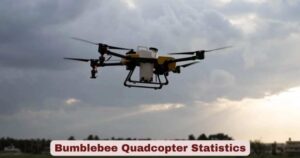
The UAV/drone segment’s 46.52% market share — making it the single largest product category in agricultural robotics — reflects the unique combination of accessibility, versatility, and economics that agricultural drones offer compared to ground-based robotic systems. A DJI Agras T25 that enables a single operator to spray dozens of acres per day costs a fraction of an autonomous ground robot and requires minimal infrastructure investment: no barn modifications, no dedicated charging infrastructure, no soil-compaction management. For the hundreds of millions of small and medium-sized farms across Asia, Latin America, and Africa — where the economics of expensive autonomous tractors simply do not pencil out — a drone that can spray a 5-hectare field in an hour at a commercially viable cost is not a luxury precision-farming tool. It is the most practical immediate application of agricultural robotics available. The fact that DJI has captured 70% of global ag-drone shipments on this basis is less a story of competitive triumph and more a reflection of having correctly identified the market segment where technology, economics, and scale aligned earliest.
The EU’s €4.97 million AgRibot project — funded in March 2025 and deploying six advanced robotic systems across multiple European countries — illustrates the regulatory and policy dimension driving agricultural drone adoption in high-income markets. Europe’s strict and increasingly stringent pesticide regulations have created a commercial environment where precision spraying that reduces chemical use by 40–85% is not merely an operational efficiency improvement — it is a compliance requirement for farms growing crops for European supermarkets that now mandate pesticide reduction plans from their suppliers. EcoRobotix’s ARA solar-powered robot, which cuts herbicide use by 95% and has consequently attracted strong adoption from European vegetable growers facing regulatory pressure, is the extreme case of this dynamic: a product where the regulatory environment has essentially mandated the technology by making the alternative — herbicide-intensive conventional farming — economically and legally untenable in an increasing number of EU crop categories.
Agricultural Robotics Labor Shortage and Adoption Statistics in the US 2026
| Labor / Adoption Metric | Data | Source |
|---|---|---|
| US Hired Crop Workers (April 2025) | Only 637,000 — core structural driver of US agricultural robotics demand | Mordor Intelligence Jan 2026 (citing USDA data) |
| US H-2A Visa Agricultural Workers (2023) | 310,676 temporary visas issued — cannot offset domestic labor exits | Mordor Intelligence Jan 2026 |
| 70% of Specialty Crop Growers (US) | Already investing in farm robots — per Western Growers report 2025 | Carbon Robotics News Page |
| US Agricultural Labor Cost Increase (Trend) | Rising year-over-year; farm minimum wages now exceed $20/hour in California | Various USDA sources |
| Japan Robotic Rice Transplanter Penetration | Kubota Agri Robo MR1000A reached 15% penetration in Niigata Prefecture | Mordor Intelligence Mechatronics Jan 2026 |
| USDA Study — Robotic Milking Net Returns | Robotic milking increases US dairy net returns by 13% on average — USDA ERS Report ERR-356, January 22, 2026 | The Bullvine, citing USDA ERS Jan 22, 2026 |
| Average Milking Robot Payback Period | “Very negative cash flow for first 7 years, then positive for rest of life” — Iowa State dairy economist Larry Tranel | The Bullvine citing Iowa State 2026 data |
| Carbon Robotics Labor Savings | LaserWeeder eliminates need for entire hand-weeding crews — kills 200,000 weeds/hour vs. 10x slower manual rate | Startup Insights 2026 |
| Robotics-as-a-Service (RaaS) Adoption | Growing rapidly — converts capital cost into subscription; accelerating adoption on small and mid-sized farms | Mordor Intelligence Jan 2026 |
| Carbon Robotics RaaS Model | LaserWeeder offered on per-acre subscription basis in some markets — lowers upfront barrier | Carbon Robotics official; CREO Syndicate 2025 |
| Irish Farm — Lely A5 Labor Reduction | Mulligan Brothers 430-cow dairy installed 6 Lely A5s — reduced to single full-time worker for all milking | Research and Markets / Agriland Oct 2023 |
| Precision Dairy Farming Avg Milk Yield Gain | Robotic milking farms show increased voluntary milking frequency and higher average daily yield per cow | USDA ERS ERR-356 Jan 2026 |
| EU Cap Network — GALIRUMI Herbicide Weed Robot | Herbicide-free dairy weed control using EU Galileo satellite system; reduces manual workloads significantly | Research Nester Dec 2025 |
| GEA R&D Investment Target | 45% increase in R&D spend from 2022–2026 | Grand View Research 2025 |
| Global Workforce Requiring Ag-Tech Training by 2030 | Over 40% of agricultural workers will need upskilling — IMF via multiple sources | Agricultural workforce data |
Source: Mordor Intelligence Agricultural Robots Market January 2026; USDA ERS Report ERR-356 January 22, 2026 (via The Bullvine); Western Growers Specialty Crop Growers Survey 2025 (via Carbon Robotics); MarketsandMarkets Milking Automation 2025; Research Nester December 2025 (EU AgRibot, GALIRUMI); Research and Markets Milking Robots 2026; GeekWire Carbon Robotics October 23, 2025; CCFBank Robotic Milking Financial Analysis August 29, 2025
The USDA Economic Research Service’s January 22, 2026 report — Precision Dairy Farming, Robotic Milking, and Profitability in the United States (ERR-356) — is the most authoritative and recent government-published study on agricultural robotics economics, and its central finding deserves careful attention: robotic milking increases U.S. dairy farm net returns by 13% on average, after controlling for the selection bias that stronger-than-average managers tend to adopt the technology first. This is not a marginal improvement — a 13% net return increase applied to a mid-sized dairy farm with $2 million in annual revenue represents a $260,000 per year improvement in profitability, enough to service the debt on a significant robotic milking investment within a reasonable timeframe. Iowa State economist Larry Tranel’s concurrent observation that the cash flow is “very negative for the first seven years, then pretty positive for the rest of the life of the AMS” is not a contradiction of the 13% net return finding — it is the time-value-of-money reality of a capital-intensive investment that pays for itself over a long service life. What both findings together tell a dairy farmer in 2026 is unambiguous: the economics of robotic milking are real and proven, the payback period is long, and the competitive pressure on farms that do not automate is intensifying as early adopters capture the 13% margin advantage.
The “Robotics-as-a-Service” (RaaS) model — in which agricultural robotics companies offer access to their machines on a per-acre or per-season subscription basis rather than requiring upfront capital purchase — is the single most important structural development in agricultural robotics adoption dynamics over the past two years. The barrier for a medium-sized vegetable farm to acquire a $300,000+ autonomous weeding robot is formidable, especially in a capital environment where high interest rates have been increasing financing costs since 2022 and farm equipment sales are, as a John Deere representative observed at Agritechnica 2025, in “a sales trough” as farmers repair old machines instead of buying new ones. But a per-acre subscription that delivers proven cost savings greater than the subscription fee transforms the adoption calculus: it becomes an operating expense with a positive cash return from day one, not a capital investment requiring financing. Carbon Robotics has begun offering LaserWeeder access on subscription terms in select markets. The broader adoption of RaaS across the agricultural robotics industry — accelerated by the same cost-reduction curve in hardware that has driven LiDAR below $1,000 — will be the mechanism through which agricultural robotics moves from serving large commercial farms to penetrating the 640 million small and medium farms globally that represent the long-term market opportunity.
Agricultural Robotics Technology and Innovation Statistics in 2026
| Technology / Innovation | Data / Details | Company / Source |
|---|---|---|
| Machine Vision Weed Accuracy | Distinguishes weeds from crops with 98% accuracy in 50 milliseconds | Mordor Intelligence Mechatronics Jan 2026 |
| Carbon Robotics LaserWeeder Speed | Eliminates 5,000 weeds per minute (200,000 per hour) with laser precision | Mordor Intelligence; Carbon Robotics |
| LaserWeeder AI Dataset | 150 million+ labeled plant images; 30,000+ crop and weed models | The Robot Report 2024 |
| LaserWeeder Processing Rate | Processes 4.7 million high-resolution images per hour using 24 NVIDIA GPUs | The Robot Report 2024 |
| See & Spray Ultimate (John Deere) | 36 cameras + NVIDIA Orin processors; real-time weed maps; sub-centimeter spraying | Mordor Intelligence Mechatronics Jan 2026 |
| Herbicide Reduction — See & Spray | Reduces herbicide use by up to 90% vs. blanket application | DCVC Blue River acquisition profile |
| EcoRobotix ARA Robot — Herbicide Reduction | Cuts herbicide use by 95% — solar powered; no diesel refueling stops | Mordor Intelligence Jan 2026 |
| CNH SenseApply (June 2025) | AI-powered sprayer — real-time crop/weed detection via ML + camera sensing; up to 80% herbicide savings | MarketsandMarkets Dec 2025 |
| Lely Astronaut A5 Next (Mid-2025) | New OS (AOS-2); remote software updates; field trials on 71 farms showed 10% increase in milkings between alerts | MarketsandMarkets Milking Automation 2025 |
| Deere Retrofit 8R Autonomous Tractors | 1,200 retrofit 8R tractors shipped in 2024; expects to double in 2025 | Mordor Intelligence Mechatronics Jan 2026 |
| AgIN Interoperability Platform | Solves cross-brand data compatibility — cloud-to-cloud exchange of machine data, work orders, prescriptions; initial release March 2026, full production September 2026 | AgTechNavigator Agritechnica 2025 report |
| Fendt 700 Vario Gen7 (Nov 2025) | Higher HP + digital control; fuel efficiency + precision farming compatibility | Mordor Intelligence Mechatronics Jan 2026 |
| India’s First Agri-Robotics Lab | June 2025 — Telangana state launched at Prof. Jayashankar Telangana Agricultural University — robotics, AI, planting/spraying/harvesting innovation | Mordor Intelligence Mechatronics Jan 2026 |
| Hybrid Fleet Margin Benefit | Farms using combined air and ground robot platforms show 22% higher net margins vs. single-platform approaches | Mordor Intelligence |
| NVIDIA Role in Ag Robotics | NVentures (NVIDIA VC arm) invested in Carbon Robotics; NVIDIA Orin processors power Deere See & Spray; 24 NVIDIA GPUs in LaserWeeder | Multiple sources |
| CLAAS Prototype Weed Detection AI | Agritechnica 2025 — prototype AI-powered system; CLAAS says farmers “definitely ready for algorithm-driven decisions” | AgTechNavigator December 2025 |
Source: Mordor Intelligence Agricultural Robots and Mechatronics Market January 16, 2026; Mordor Intelligence Agricultural Robots Market January 6, 2026; AgTechNavigator Agritechnica 2025 December 1, 2025; MarketsandMarkets Agricultural Robots December 2025; MarketsandMarkets Milking Automation 2025; The Robot Report (Carbon Robotics GPU/image data); DCVC Blue River Technology acquisition profile
The AgIN interoperability platform — developed under the auspices of the Agricultural Industry Electronics Foundation (AEF) with AGCO as lead, and scheduled for initial release in March 2026 with full production in September 2026 — addresses what has been the single most frustrating obstacle to the widespread adoption of multi-vendor agricultural robotics: data incompatibility across proprietary platforms. Today, a farmer who operates John Deere tractors, DJI drones, and Raven guidance systems must navigate three entirely separate data ecosystems — Deere Operations Center, CNH Raven Autonomy, and AGCO Fuse — that use incompatible formats, protocols, and map layers. The result is either a complete single-vendor lock-in (operationally and commercially constraining), or an expensive and technically demanding middleware integration project that most mid-sized farms cannot afford. AgIN solves this by creating a vendor-neutral cloud-to-cloud exchange framework that allows prescription maps, work orders, machine data, and as-applied records to flow between platforms without proprietary conversion or duplicate subscription costs. This infrastructure development is as important to the long-term growth of the agricultural robotics market as any individual robot product — because the most sophisticated robot in the world delivers limited value if its data cannot be integrated into the farm management system the farmer already uses.
The NVIDIA supply chain’s deep integration into agricultural robotics is one of the more underappreciated structural features of the industry in 2026. Carbon Robotics’ LaserWeeder processes 4.7 million high-resolution images per hour using 24 NVIDIA GPUs, requires real-time edge computing at sub-50-millisecond inference speeds to target individual weed meristems while the implement moves through a field, and runs a large plant model trained on 150 million labeled plant images. John Deere’s See & Spray Ultimate runs on NVIDIA Orin processors. NVentures — NVIDIA’s venture capital arm — has directly invested in Carbon Robotics. The connection between the company that makes the world’s most powerful AI accelerator chips and the companies building AI-guided agricultural robots is not coincidental: the same compute architecture that enables large language models in data centers also enables the real-time computer vision inference at the edge that distinguishes a precision agricultural robot from a simple automated machine. The agricultural robotics industry’s performance trajectory is, in a meaningful technical sense, running on NVIDIA’s innovation roadmap — and as NVIDIA continues to push inference performance and reduce chip costs, the robotics applications it enables on farms will become more capable, faster, and cheaper in direct proportion.
Disclaimer: The data research report we present here is based on information found from various sources. We are not liable for any financial loss, errors, or damages of any kind that may result from the use of the information herein. We acknowledge that though we try to report accurately, we cannot verify the absolute facts of everything that has been represented.